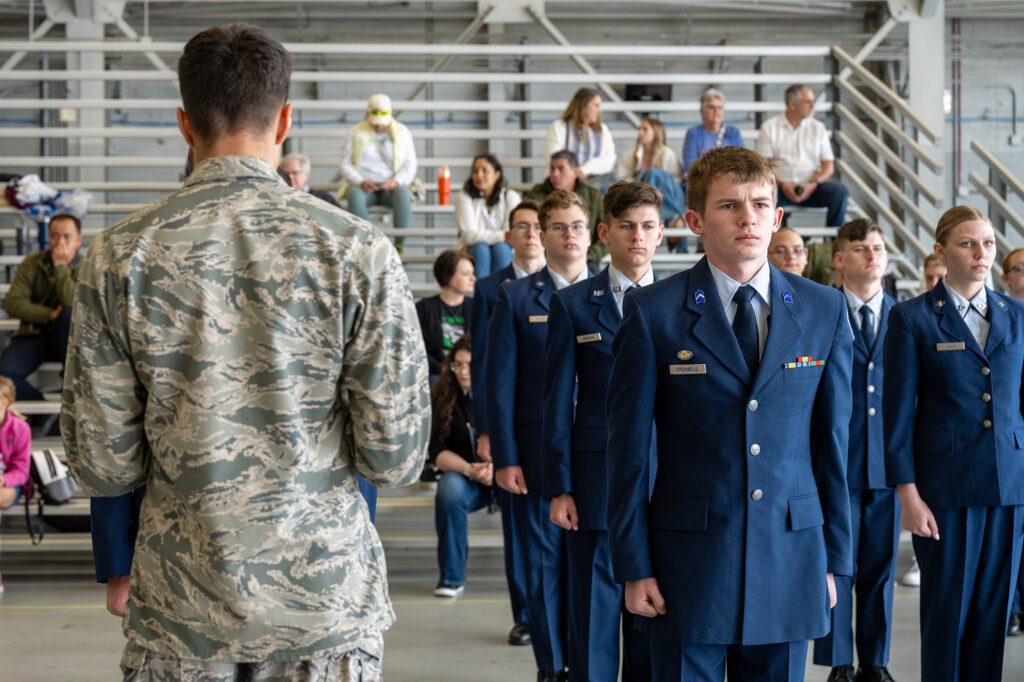
The event, which included six local high schools, marked the first-ever Junior ROTC competition hosted by Hurlburt Field.
“It’s an incredible opportunity to be able to have these teams on our yard,” said U.S. Air Force Col. Allison Black, 1st Special Operations Wing commander, as she offered opening remarks to begin the competition. “We are able to answer our nation’s call because of the support our community provides us and we’re thrilled to have the chance to thank them and to give them a look at what our Air Commandos do.”
Along with the teams’ instructors and families, members of the Hurlburt Field community were also in attendance for the event.
Co-hosted by Hurlburt Field and Fort Walton Beach High School, the competition consisted of several drill components including armed and unarmed regulation, armed exhibition, color guard regulation and color guard specialty.
High School JROTC members participated in a drill competition held on Hurlburt Field. Gulf Breeze High School was the only Santa Rosa County school to participate.
“We wanted to find a memorable place to host the competition and a place that will have an impact for the students,” said retired U.S. Air Force Captain Jason Sawyers, an instructor for Fort Walton Beach High School’s Air Force Junior ROTC program. “We have such a great relationship with Hurlburt Field and thought that the exposure to the base and to the people on base would really add an extra element of professionalism and excitement for everyone.”
In addition to Fort Walton Beach High School, Choctawhatchee High School, Gulf Breeze High School, Niceville High School, Pensacola High School and Walton High School also participated in the event.
The competition is a chance to prepare for state-level events ahead, said Landyn Crandall, a senior competing for Gulf Breeze High School’s Air Force Junior ROTC team.
And for cadets like himself planning to join the military, being on base only inspired him more.
“I like being here and seeing all of the active-duty personnel and all of the things inside of the hangar,” Crandall said. “Seeing what it’s like just pushes me to want to be part of it.”
Participants of the course, both military and civilian, gathered from across the country to take on this four-day course that began with instruction by five highly trained and certified medical entomologists who walked through the entirety of aerial spray application.
“The ultimate goal of pest management is that we want to control every pest the best we can, most effectively and efficiently,” said Lt. Col. Jennifer Remmers, 757th Airlift Squadron medical entomologist. “We want to keep people healthy enough to keep doing their jobs.”
Once the formal instruction portion of the course was complete, the participants took part in an aerial spray demonstration, which was conducted at the Manatee County Airport, Florida. Here, water-sensitive paper was placed across the flightline to test the effectiveness of an aerial spray water application.
On the final day of the course, and prior to departing Florida, all participants were required to take and pass a final exam, which awards them their Category 11 Applicator certification. This certification is required for pest management specialists to carry out their duties.
“As medical entomologists, we hold a pesticide applicator license, which is very unique to the military,” stated 1st Lt. Bethany Eutsey, 757th medical entomologist. “We are very fortunate to have a team of mentors and facilitators for this program.”
This course would not be possible without the expertise and support of the 757th pilots, navigators, flight engineers, spray operators/loadmasters and the medical entomologists that conducted the course, the 910th public affairs office and wing leadership and the Manatee County Mosquito Control Association team.
Additionally, without the support of the 910th spray maintainers, the modular aerial spray systems (MASS) would not be functional for the demonstration portion of the course.
“Spray maintainers are the only Airmen qualified to upload the product into the MASS,” explained Senior Master Sgt. Jeremy Rogers, aerial spray flight chief with the 910th Aircraft Maintenance Squadron. “The spray mission could not happen without the aerial spray maintenance team.”
The 910th is home to the DoD’s only large-area, fixed-wing aerial spray capability to control disease-carrying insects, pest insects and undesirable vegetation and to disperse oil spills in large bodies of water.
Collaboratively, the 910th carries out this mission across DoD installations or in response to disasters/emergencies as declared by the President of the United States.
For more information on the aerial spray mission, please visit our website at https://www.youngstown.afrc.af.mil/About/Fact-Sheets/Article/1807880/aerial-spray-mission/
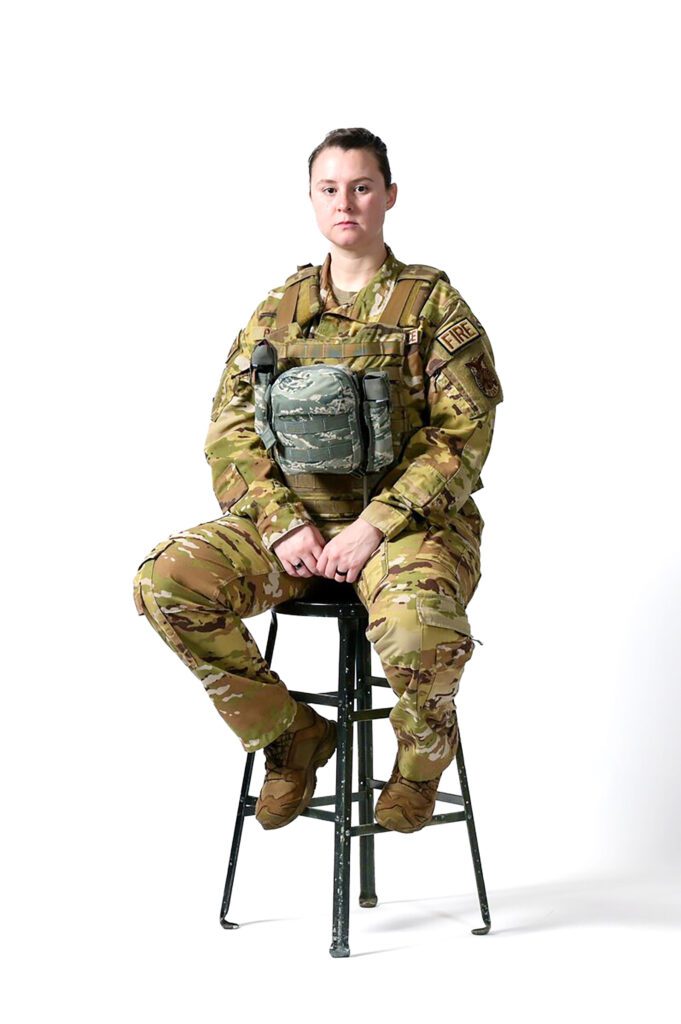
Tech Sgt. Alyssa Poyner, a 1st Special Operations Civil Engineer Squadron lead firefighter, shares her knowledge of Tactical Combat Casualty Care to approximately 375 instructors and faculty members in the Santa Rosa School District.
TCCC was developed by the U.S. Department of Defense, Joint Trauma System and Defense Health Agency to teach evidence-based, life-saving techniques and strategies for providing the best trauma care available on the battlefield. Whether it is in a war zone or a classroom, TCCC can save lives in the same practical ways.
Initially designed for the battlefield, TCCC has proven to be a versatile and indispensable resource applicable in diverse settings, including schools.
“My intention with this program and training is to bring awareness and preparedness to
the faculty members of the schools,” said Poyner. “By providing this training and these skills, we have better prepared our schools for the worst situations.”
In order to kick-off the training, Poyner had to first coordinate between the Hurlburt School liaison, the Safety coordinator for the school district, the principals of the schools and all the instructors. After completing all the necessary preparations, six schools engaged in the program.
The information taught to the participants can be used in real-world scenarios, making the training invaluable.
“The more awareness we bring, the more lives we can [potentially] save,” said Poyner.
Poyner’s enthusiasm for medical and emergency scenarios is the driving force behind her desire to train instructors and faculty members throughout the Santa Rosa School District. She remarked that the information and skills learned are easy to retain and being equipped with those tools can make a big difference in the outcome of a life-threatening event.
“This is important to me because everyone should be aware and know how to handle [life-threatening] situations,” said Poyner. “No matter where you are, these types of situations can happen.”
In addition to all six of the initial schools requesting Poyner and her team return to provide additional training, the schools also requested assistance in the medical supply selection process. Having Poyner and her team provide guidance on what supplies to order not only allows for increased preparedness, but also helps each school utilize their medical supply budget properly.
“Relationships like this deepen the connection and bridge the gap for our mission and the community in which we serve,” said Lacey Allen, Regional School Liaison Program specialist. “I am encouraged and excited about the growth of this partnership and the out of the box thinking to connect beyond the fence line.”
Applying TCCC training in schools reinforces the dedication to fostering safer environments and highlights the adaptability of military training throughout the community.
Having shared crucial insights with numerous instructors and faculty members already, Poyner is committed to advancing the training they’ve received in addition to increasing the number of school participants.
“I’m incredibly thankful for this opportunity to grow our relationship with the schools and to provide them with more knowledge to protect our children,” said Poyner.
Personnel with the 96th Medical Group women’s health clinic, along with multiple helping agencies hosted the event at the Eglin Bayview Club to bring awareness to services, share valuable information aimed at achieving holistic well-being.
“Having all these helping agencies available on base can open their eyes and let them know they are not alone,” said Col. Maribel Orante-Mangilog, 96th MDG cancer program director. “When women are tasked to deploy, it can be daunting, to think about daycare, and who’s going to take care of finances. There’s just so many things you think about when tasked and knowing there are organizations here for them, I think is a wonderful service.”
Beyond personal benefits of the supporting agencies, the focus on overall health enables military personnel to maintain mission readiness, especially when navigating those deployments and having to juggle family responsibilities.
“It can be really hard to get in to see your provider in a short amount of time,” said Capt. Ashley Fournier, 96th MDG OBY gynecology clinic midwife. “For women, things like doing their annual screenings and having all of their blood draws completed when tasked for a deployment can be complicated.”
The Women’s Health Fair included over 50 helping agencies with invaluable information for whole body wellness to scheduling health screenings.
“Each woman has different needs,” said Fournier. “I think it is really important for our health overall as women to anticipate those needs and one way to do that is schedule preventative care, annual screenings, family planning.”
The various booths focused on mental fitness, financial stability, military, and family life consultation to spiritual wellbeing. Special demonstrations and activities were available from yoga to the art rave of zentangle, a way to create intricate images by drawing structured patterns.
“It was really nice to see all the women come out,” said Fournier. “Having all the resources available to them and knowing they can find them all here I think is a great health benefit.”
For those who missed the health fair, resources and educational materials for women’s health are available with Team Eglin’s Helping Agencies Team, HAT.
Gore shares her story of a life-altering decision to recite the oath of enlistment and join the U.S. Air Force, leading her to where she is now.
She joined in her late 20’s, leaving the comfort of her hometown Raleigh, NC, bringing the insight of her previous life to her new one at Hurlburt Field. Gore believed the Air Force was a good career choice because she would be able to travel, meet new people and most importantly serve her country.
She embraced the opportunity to serve, as it allowed her to continue making a positive impact on people’s lives, just in a different way than her previous occupation.
“At my last job I worked in workers comp insurance claims, I felt like I was helping people during that time,” said Gore. “I wanted to continue to do that.”
Initially, Gore was in training to become a remotely piloted aircraft sensor operator, during her technical school she realized that the job was not a good fit for her. She expressed interest in exploring a different role, and as a result she was assigned to a position that brings her genuine enjoyment in personnel.
“Having Gore on our team has been a valuable asset,” said Staff Sgt. Imani Johnson, 720th OSS assistant Non-Commisioned Officer in Charge of supply. “Her professionalism, attention to detail, and commitment to excellence are crucial factors in the overall success and efficiency of our squadron.”
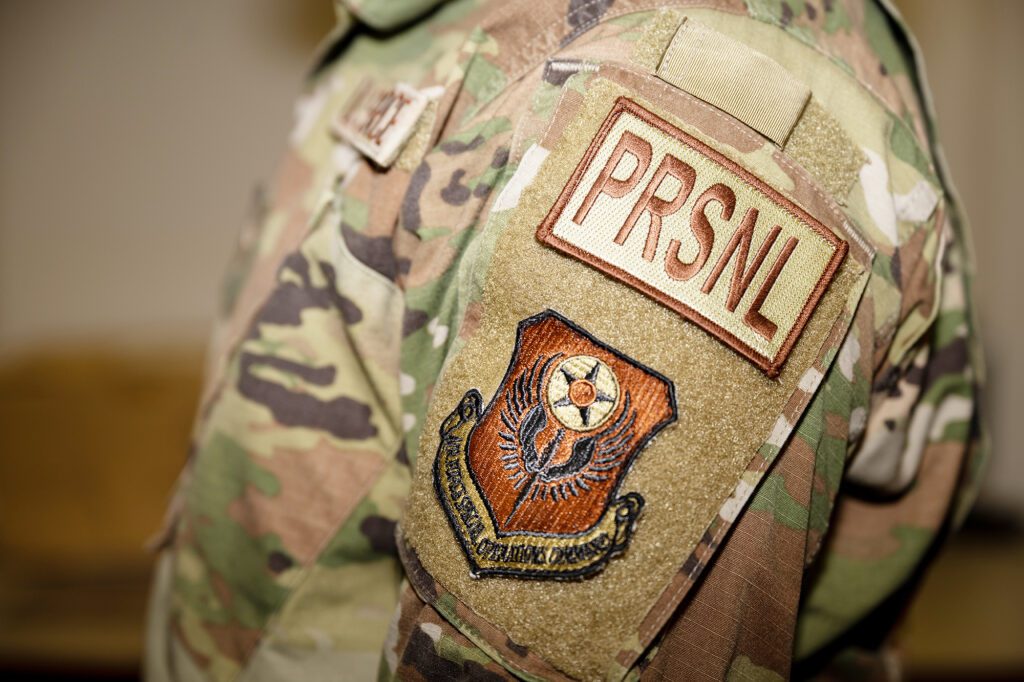
U.S. Air Force Airman 1st Class Sydney Gore, a 720th Operations Support Squadron command support staff technician, poses for a photo at Hurlburt Field, Florida, Dec. 13, 2023. The U.S. Air Force “PRSNL” patch refers to the personnel career field. (U.S. Air Force photo by Senior Airman Calvarese)
In her daily responsibilities, Gore manages various tasks, including the processing of paperwork related to in and out processing, duty information, evaluations, and numerous other military operations. She manages all CSS matters for the 24th Special Operations Wing and the 720th Special Operations Group.
This responsibility puts her in direct communication with Airmen of various ranks within her building, providing a unique perspective and experience in working with personnel at all levels.
“I love interacting with people and helping them with any of their CSS needs,” said Gore. “I know everyone in my building on a first-name basis, and they are all really appreciative of me for what I do.”
Through a career shift, she found fulfillment in serving her country and making a positive impact on people’s lives in a different capacity. From her initial role as an RPA sensor operator to her current position managing crucial CSS matters, Gore’s story shows resilience, adaptability, and a commitment to personal growth.
Now, she looks forward to the future, ready to embrace the next steps in her military career with newfound strength and purpose.
“Since being in the military, I feel like I’ve really grown and become stronger,” said Gore. “I’m ready to see where the next steps take me.”
Whether Gore chooses to serve for 6 or 20 years, she has made an impact on the people around her, just as the Air Force has done for her.
Earning their Aviation Merit Badge became reality with the team effort of the 413th Flight Test Squadron, who hosted the Niceville Scouts BSA Troop 553, Jan. 4, 2023, at Duke Field.
“We are trying to teach a little about aviation, so maybe it inspires them to enter the career field,” said Joel Abrahams, Niceville Scouts BSA Troop 553 assistant scoutmaster. “We really seek to develop high performing members of our society through scouting, whether they be leaders, engineers or whatever sparks their interest.”
The scouts worked with the 413th FLTS to learn about the intricacies of aviation and precision air traffic control specialists and pilots undertake in the skies to earn their career function badges.
“Aviation is a great career field and requires hard work to get qualified,” said Tech. Sgt. Nathan Haney, 96th Operations Support Squadron traffic control specialist. “It involves problem solving talents and dedication, but worth the effort. As a traffic control specialist, I enjoy the job and keeping people safe.”
Aiden Abrahams with the Niceville Scouts BSA Troop 553, sits in the BETA Technologies Alia electric aircraft simulator at Duke Field, Fla, January 4, 2024. Each of the scout members sat in the cockpit to experience flight engineering training.
The troop also conducted a preflight check together with the help of the 413th FLTS on a UH-1N Huey, got a close-up view of the BETA Technologies all-electric aircraft, ALIA, as well as a hands-on opportunity to fly ALIA in the company’s simulator.
“I think these types of new developments in aviation and Air Force can inspire scouts and youth in the community to get involved in aviation,” said Abrahams.”
The 413th FLTS hosts a number of groups at the installation and plan to continue the community outreach as long as it does not interfere with the test mission.
“It’s a great opportunity to inspire our youth,” said Maj. Riley Livermore, 413th FLTS Futures Flight commander. “I am responsible for advancing how we test the next generation of technology and the ability to get the next generation exposure to this technology is crucial to our success.”
Led by the F-35 Joint Program Office, the project requires a “dream team” of uniquely qualified individuals from the JPO, the 388th Fighter Wing, the Ogden Air Logistics Complex and Lockheed Martin. “This is a first for the F-35 program and a very exciting project,” said Dan Santos, F-35 JPO heavy maintenance manager.
After researching the feasibility, the F-35 JPO, working with the 388th Fighter Wing, opted to reconstruct AF-211, an aircraft that encountered a nose landing-gear separation in June 2020.
The nose section of this aircraft is being replaced with the undamaged nose from AF-27, an F-35 that experienced a severe engine fire at Eglin AFB, Florida, in 2014, and is now serving as an Air Force Air Battle Damage and Repair trainer at Hill AFB.
Over the past several years, the F-35 JPO has sought out new opportunities to repurpose useable parts and systems from damaged F-35 aircraft, for continued use and benefit to F-35 maintenance and operations.
Building on experience gained from several recent salvage aircraft re-purpose projects – including the stand-up of the first F-35 maintainer training facility using salvaged aircraft sections, as well as the partial restoration of a salvaged F-35 airframe for use as an ABDR trainer – the F-35 JPO is now taking the effort a step further.
The F-35 JPO leveraged this newly established network of skilled professionals, resources and facilities, all of which are located at Hill AFB, to undertake the “Franken-bird” project.
The Ogden Air Logistics Complex has played a significant role by providing hangar space and heavy equipment for the project, Santos said.
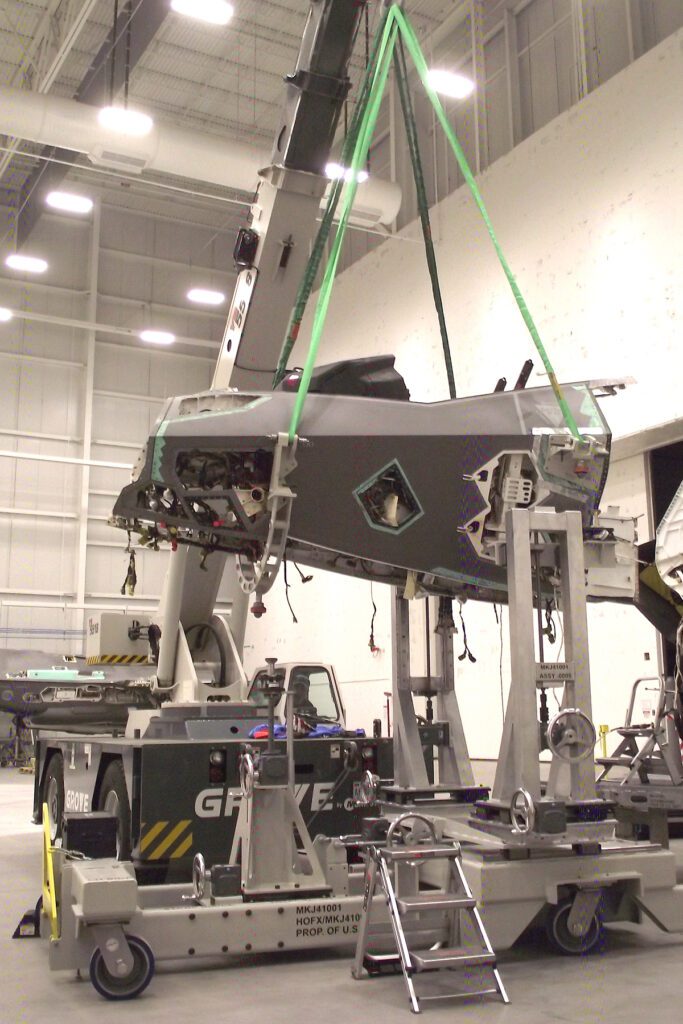
A damaged nose section is removed from an F-35 airframe using a new Mobil Maintenance System at Hill Air Force Base, Utah, in October 2023. The MMS was created to de-mate and re-mate aircraft sections during a total reconstruction project of a wrecked F-35A Lightning II by the F-35 Joint Program Office. The project aims to restore the aircraft to full operational flying status.
“It takes a team to make these types of endeavors successful,” Santos said. “I am very impressed with the collaborative efforts from the various agencies across Hill AFB, working together to make this happen.
Along with Lockheed Martin, the F-35 JPO, and the 388th FW, several units in the Ogden Air Logistics Complex, including the 570th Aircraft Maintenance Squadron, 576th AMS, 809th Maintenance Support Squadron and 309th Expeditionary Depot Maintenance Flight, are among the multiple units providing direct support.
Keith White, 388th FW contracting officer, said while the jet is owned by 388th FW, it’s still part of an F-35 JPO contract, and Lockheed is the contractor responsible for the work.
“Work began on the feasibility of this project in January 2020, when the F-35 JPO reached out to us because we had already accomplished the really big damage restoration projects for the F-22,” said Scott Taylor, Lockheed Martin lead mechanical engineer.
However, unlike previous projects, Taylor said this initiative stands out due to its meticulous documentation, which will be used to establish standardized F-35 procedures that can be seamlessly integrated into routine operations in the future.
“All of the aircraft sections can be de-mated and re-mated theoretically, but it’s just never been done before,” Taylor said. “This is the first F-35 ‘Franken-bird’ to date. This is history.”
To complete the work on site at Hill AFB, entirely new, unique specialized tooling, fixtures and equipment have been designed and built, specifically adapted for mobility. These have potential future uses abroad.
“We’ve designed versatile tooling that fits neatly into a conex box, making it transportable to various locations, including forward operation areas,” Taylor said.
These new mobile fixtures achieve the same results as large, stationary automated manufacturing jigs at the F-35 plant in Fort Worth, Texas, but with a new approach. The additional capability will benefit the entire F-35 program.
“The F-35 program is still young compared to all legacy airframes,” said Dave Myers, F-35 JPO Lightning Support Team lead engineer. “We are doing this for the first time, and organizationally for the future, we are creating a process we can move forward with.”
This project is currently several months ahead of schedule and showing a completion date of March 2025.
“Not only will this project return a combat asset back to the warfighter, but it opens the door for repairing future mishap aircraft using tooling, equipment, techniques, and knowledge that has been developed,” Santos said.
The Enlisted Force Exhibit is the museum’s newest permanent exhibit and honors the highly skilled, trained, and talented enlisted force that has been the backbone of daily operations of the U.S. Department of the Air Force throughout its 76-year history.
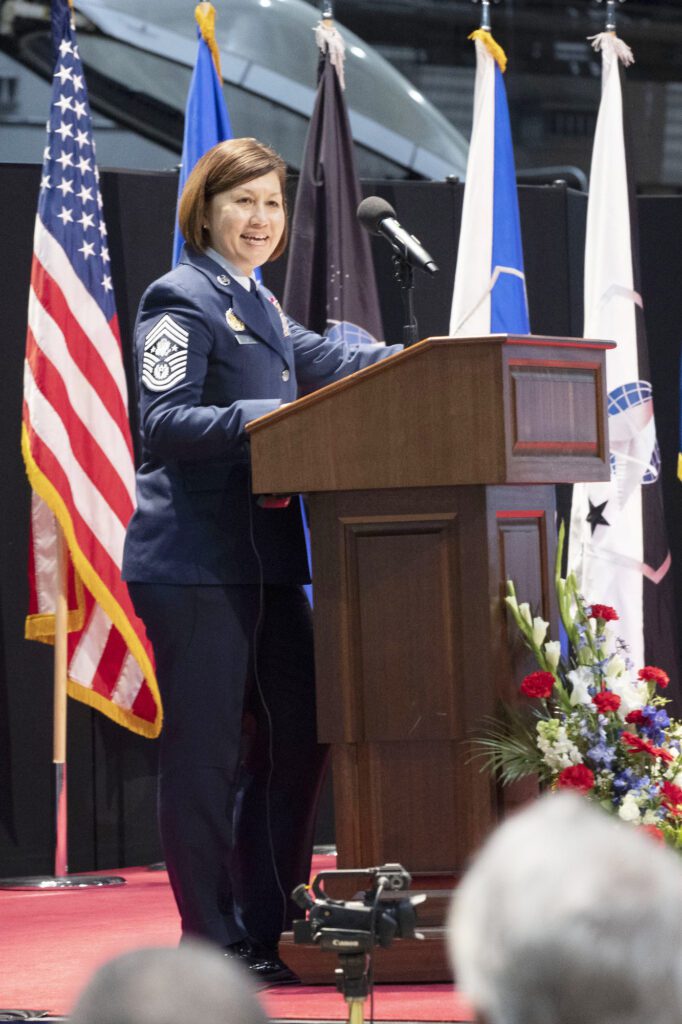
Chief Master Sergeant of the Air Force, JoAnne Bass, was keynote speaker for the opening of an Enlisted Force Exhibit at the National Museum of the U.S. Air Force on November 9, 2023. In the photo Chief Bass stands at a lectern in her blue uniform.
To mark the exhibit opening, the museum hosted a private ceremony to honor exhibit contributors, museum staff and volunteers, and other special guests including Chief Master Sgt. of the Air Force JoAnne S. Bass, Chief Master Sgt. of the Space Force John F. Bentivegna, and former Chief Master Sergeant of the Air Force and Air Force Museum Foundation Vice Chair Gerald R. Murray.
“The men and women of our enlisted corps are not merely participants in the chronicles of our nation’s defense, but they are architects of history,” Bass said. “Our heritage is rooted in the ideals of integrity, service and excellence — a tapestry woven with the threads of sacrifice and valor.”
Today, enlisted Airmen and Guardians represent approximately 80% of the Department of the Air Force and provide a solid foundation for operations in air, space and cyberspace.
The Enlisted Force Exhibit took more than three years to develop and contains more than 40 elements that are thoughtfully placed throughout the museum at locations near the era or artifacts that correlate to their specialty.
Chief Master Sergeant of the Air Force, JoAnne Bass, was keynote speaker for the opening of an Enlisted Force Exhibit at the National Museum of the U.S. Air Force on November 9, 2023 at Wright-Patterson Air Force Base, Ohio. The exhibit, which contains nearly fifty elements, is placed throughout the four buildings and ten galleries of the museum. (U.S. Air Force photo by Ty Greenlees)
Elements of the exhibit include:
A display in the WWII Gallery featuring the story of Staff Sgt. James Meredith, one of the first Black airmen to serve in an all-white squadron
An introduction to Enlisted Maintainers who work in all conditions at all hours to troubleshoot urgent repairs, overhaul complex systems and closely inspect parts to prevent future problems in any number of areas including aerospace propulsion, electrical systems, weapons systems and more
Insight into Musical Ambassadors who serve as musicians, arrangers and audio engineers in the U.S. Air Force bands, providing inspirational performances to honor veterans and connect the public to the Department of the Air Force through music
The uniform worn by Sgt. Benjamin Fillinger, one of 15 airmen from Wright-Patterson Air Force Base who transferred into the U.S. Space Force in 2020. Space Force guardians are top performers in the fields of information technology, cyber security, communication systems and space systems operations
“Today’s Space Force is small. It’s just like the museum when it started as an engineering study collection — very small,” Bentivegna said. “But Guardians are creating our Space Force history each and every day. And one hundred years from now, the Enlisted Exhibit in the National Museum of the U.S. Air and Space Force will be overflowing with that history that we’re making today.”
The Enlisted Force Exhibit is open to visitors daily from 9 a.m.–5 p.m.
This new exhibit was made possible by generous contributions from the Air Force Museum Foundation (Federal endorsement not implied). The National Museum of the U.S. Air Force, located at Wright-Patterson Air Force Base near Dayton, Ohio, is the world’s largest military aviation museum. With free admission and parking, the museum features more than 350 aerospace vehicles and missiles, and thousands of artifacts amid more than 19 acres of indoor exhibit space. Each year thousands of visitors from around the world visit the museum. Visit www.nationalmuseum.af.mil for more information.
The new arrivals bring the Air Force’s total F-15EXs to four, all located at Eglin. The two aircraft belong to the 96th Test Wing (EX3) and 53rd Wing (EX4), who also own the initial two fighters.
“The F-15EX has met every challenge we’ve thrown at it to date and the platform is on the cusp of being ready for the warfighter,” said Lt. Col. Christopher Wee, Operational Flight Program Combined Test Force commander. “The delivery of the new aircraft paves the way for not only the delivery of combat coded aircraft to the U.S. Air Force, but also the continued development of this incredible addition to the USAF inventory.”
The new Eagles bring features and capabilities to be tested that the original two jets didn’t have. The cockpit pressure monitor and warning system is a new addition to EX3 and EX4, as well as an ultra-high frequency antenna for satellite communications. The new Eagles also feature a forward fuselage redesigned specifically for the U.S. Air Force.
The F-15EX test platforms at Eglin will accelerate development of capabilities both for the platform itself, and other combat aircraft.
“Our integrated test approach, which combines developmental and operational test, brings the future faster to the warfighter,” said Brig. Gen. Jeffrey Geraghty, 96th Test Wing commander. “This ensures the U.S. Air Force continues to provide deterrence and readiness for the high-end fight.”
The F-15EX program at Eglin ends this year with two new aircraft, but the combined test wings kept the two available jets in the air for a very busy 2023. In May, those two aircraft flew to Alaska and participated in and supported Northern Edge 2023. In June, the F-15EX executed advanced weapons integration missions to ensure the aircraft and various munitions flew and communicated with each other properly.
After the integration successes, the F-15EXs flew to Hill AFB, Utah, for Combat Hammer, where the aircraft successfully employed advanced air-to-ground weapons for the first time. These and the efforts over the last two years earned the combined test and evaluation team a glowing report from the Operational Test and Evaluation director.
The director’s report stated the F-15EX is operationally effective, suitable, and survivable against threats likely to be encountered while performing its missions in threat environments. This report allows the program to move into a new testing phase.
“I am tremendously proud of the team and their efforts to foster the F-15EX program,” said Wee. “The F-15EX is the most capable Eagle on the planet, and we are just getting started.”
The test wings are scheduled to receive two more F-15EX aircraft in the future.
Ryder, the Pentagon press secretary, said recruiting will remain challenging, but the services are adapting to the challenging environment and there’s reason to be optimistic.
Last fiscal year, only the Marine Corps and the Space Force made their recruiting goals.
Still, there are concerns. Only 23 percent of young people between 17 and 24 even qualify to join the military. Even fewer have expressed the “propensity” to enlist, officials said.
Also working against the recruiting environment is the fact that the military is smaller and in fewer places. Many young people do not know anyone who has enlisted and they do not see service members in their communities or even on a regular basis.
The services are responsible for staffing the force, and they have tried new ways and methods to attract recruits. The COVID-19 pandemic handcuffed military recruiters who were not able to have “the face-to-face kind of communication that is absolutely essential to recruiting efforts,” Ryder said.
That is changing, and military recruiters are making the contacts needed to enlist personnel. “You’re seeing the services look at many different types of ways to get out and engage with today’s youth, as far as highlighting the opportunities that military service and the benefits that it can provide,” Ryder said.
The Army has a program to help recruits qualify for enlistment, and the service works with potential enlistees to meet the enlistment standards. Army officials said 95 percent of those in the program have successfully completed it.
The Air Force has aviation camps where young people get to experience life in the service and the various aviation jobs available to them, Ryder said.
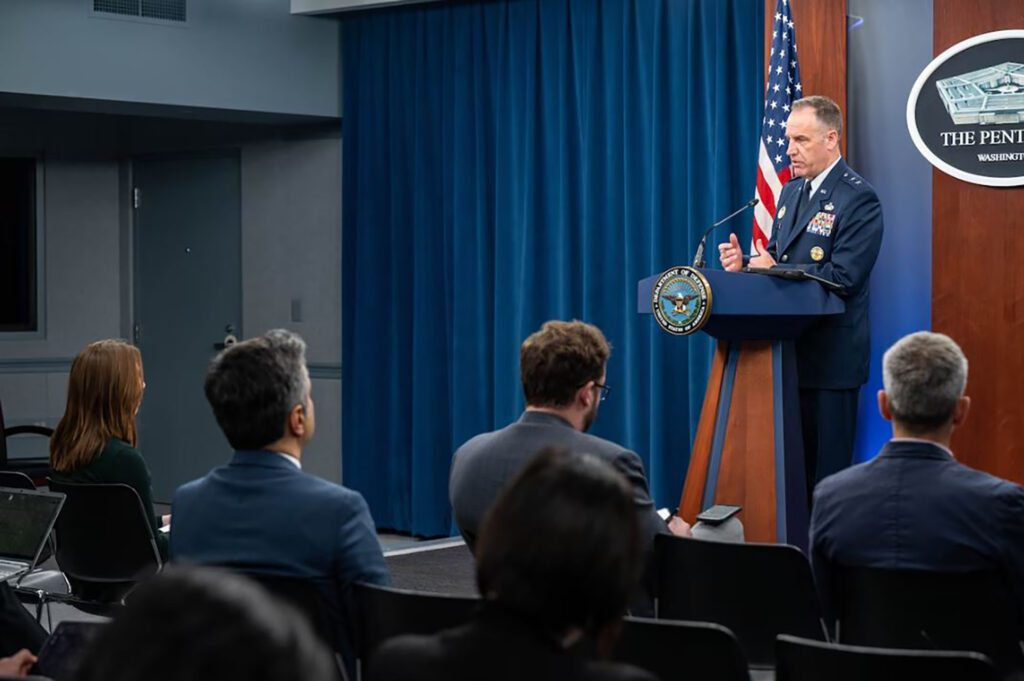
Pentagon Press Secretary Air Force Maj. Gen. Pat Ryder conducts a briefing at the Pentagon, Dec. 21, 2023.
“So, the services continue to be very active and creative in looking at how we can communicate with the public that we serve,” the general said.
Secretary of Defense Lloyd J. Austin III has said that the services didn’t get into this recruiting situation overnight, and it will take time to correct. “But we are confident that we will continue to see those numbers increase, and it’s something that we’ll, obviously, continue to work very hard at,” Ryder said.
DOD and the services are also working to educate the public about the military. This can be done at airshows, parades, sporting events, base tours and more, Ryder said.
“There are many different ways for people to learn about the military,” he said. “But the analysis has shown that at the end of the day, it’s a conversation with someone. Billboards and advertisements are important, but at the end of the day it’s the conversation about, tell me more about it. What does this mean? What does this look like?”
These conversations with someone who has personal experience with the military are important, Ryder said. It helps in “breaking down some of the stereotypes in terms of what military life actually is versus what the perception is based on—popular programming or TV.”
Ryder said potential recruits need to understand that one of the strengths of the U.S. military is the fact that [it] is an all-volunteer force. “Each of us takes … the oath to protect and defend the Constitution by choice,” he said. “No one’s making us do this, and it makes us more resilient. It makes us a more powerful military because we are defending the people from which we come.
“I would tell any prospective recruit the United States military provides an opportunity unlike any you will ever get to experience,” he continued. “It’s an amazing place to develop and … be a part of something bigger than yourself.”