Please ensure Javascript is enabled for purposes of website accessibility
Skip to main content
Advertisement

Crestview City Council agenda: July 11 meeting

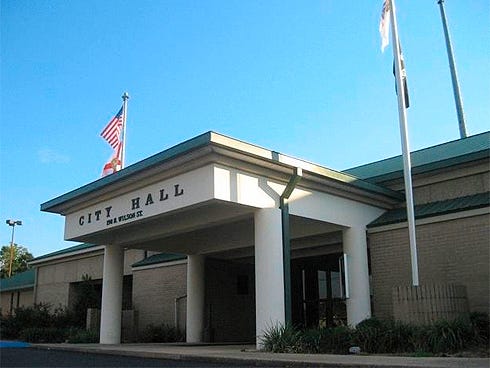
CRESTVIEW — The Crestview City Council will meet 6 p.m. July 11 at Warriors Hall on Stillwell Boulevard.

Here is the meeting's agenda.

REGULAR AGENDA

1. Call to Order

2. Invocation / Pledge of Allegiance

3. Open Policy making and legislative session

4. Special Presentations

a. Mayor Special Presentations

b. Presentation to Mr. Hayes

c. Presentation by Josh Molyneux, Crestview Housing

5. Approval of Minutes

Approval of the minutes from the May 9, 2016 Meeting, May 26, 2016 Special Meeting and May 26, 2016 Workshop.

6. Public Hearings:

7. Public Opportunity on Council proposition

8. Consent Agenda

a. Approval of invoice from Allen, Norton and Blue in the amount of $398.25

b. Approval of invoice from Ben Holley in the amount of $3850.00

c. Approval of the issuance of Certificate of Compliance for Alcoholic Beverage Sales for Casbah Coffee Company, LLC.

d. Approval of the issuance of Certificate of Compliance for Alcoholic Beverage Sales for Rollin EZ Tobacco, LLC.

9. Resolutions

a. Resolution 16-13 – 106 Creek Dr – Growth Management

b. Resolution 16-14 – 2864 Shoffner Ave – Growth Management

c. Resolution 16-15 – 5762 Seminole Dr – Growth Management

This article originally appeared on Crestview News Bulletin: Crestview City Council agenda: July 11 meeting

Grand old flags: Flag display goes up in Crestview's Warriors Hall (PHOTOS, VIDEO)

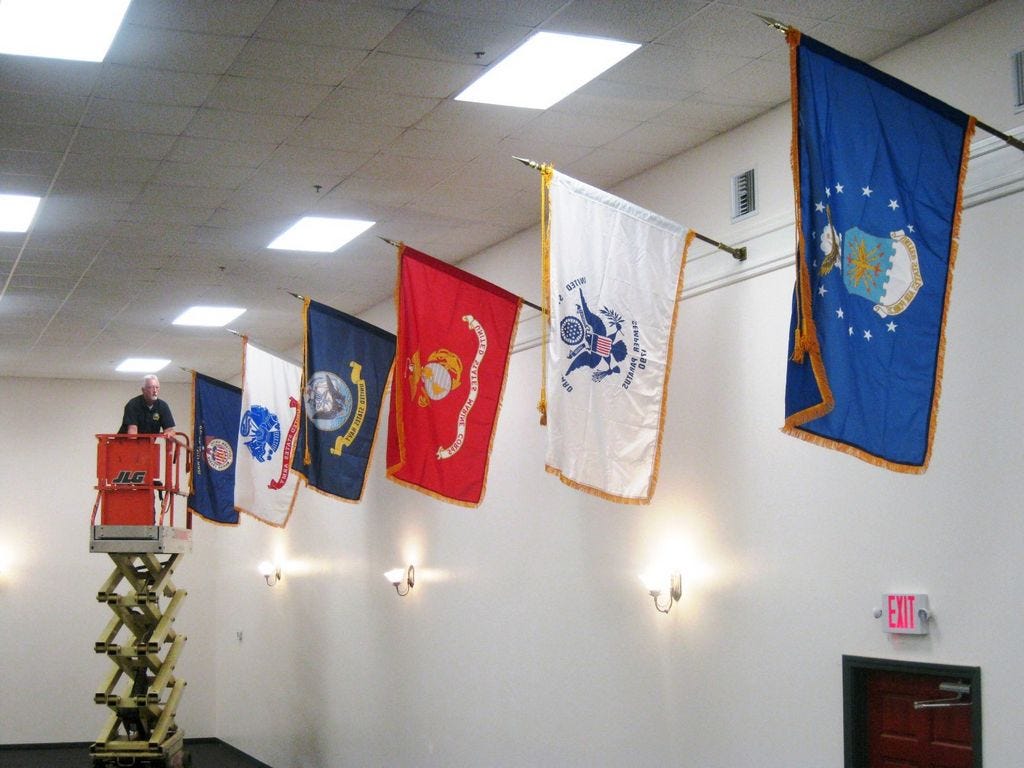
Crestview Public Works assistant director Chuck Powell maneuvers a scissors lift into position as he makes final adjustments to the display of U.S. service branch flags in Warriors Hall. The display includes military service flags displayed in order of the branch's establishment.

The Warriors Hall flag display was hung this week as the nation celebrated its 240th birthday.

PHOTOS: See photos of the flags being hung in Warriors Hall>>

The display, which also includes historic flags that have flown over the area encompassing today’s Crestview, was coordinated by the Friends of the Arts and will be dedicated 5 p.m. at Monday’s Crestview City Council meeting, which is moved to Warriors Hall for the occasion.

Refreshments will follow and the North Okaloosa Community Band will perform.

This article originally appeared on Crestview News Bulletin: Grand old flags: Flag display goes up in Crestview's Warriors Hall (PHOTOS, VIDEO)

Johnny James's property annexed into Laurel Hill

Laurel Hill City Council members Travis Dewrell and Debra Adams check property descriptions on the property appraiser's website to assure Johnny James's property description on the site and in his deed match.

LAUREL HILL — The City Council voted 4-1 Thursday night to annex former Laurel Hill City Councilman Johnny James and his wife Ernestine’s property into the city.

It’s been 20 months since the couple learned their Robbins Road home is adjacent to, but not in, the city limits.

A 1960s clerical error is to blame.

Someone else’s mistake a half-century ago cost James his council seat in April 2015 and launched his $2,050, year-and-three-month quest for annexation into the city he loves, and loved serving.

In April 2015, city attorney Dan Campbell determined that James was ineligible to retain his council seat. James immediately said he would seek annexation.

“I'm a person to do the right thing and I always did the right thing,” James said at the time.

LEAVE OF ABSENCE

At the April 2015 meeting, the council voted 3-1 to reappoint James after annexation to fulfill voters’ mandate to have him as their councilman.

Councilman Scott Moneypenny, who has consistently opposed the James’s annexation, voted nay.

However, Campbell found there is no city charter provision for a council member to take a leave of absence and declared James’s seat was vacant.

In November 2015, the council appointed Travis Dewrell to fill the remainder of James’s term. Now a resident of Laurel Hill, James can run for his former seat in March 2017 if he chooses. 

CONTENTION

Thursday's vote was not without contention. As he has done at previous meetings, Moneypenny produced new arguments not previously disclosed to the council or James on why the annexation should not occur.

His latest salvo involved the property's deed, which Moneypenny claimed was invalid because yet another clerical error listed the wrong parcel identification number.

Moneypenny claimed the number means an estate in Louisiana that holds the same number actually owns the property.

City attorney Dan Campbell, however, said the ID number isn't important.

"The legal description is the only thing that is important," Campbell said. "The parcel ID number is just a convenience for the tax collector. It is not a legal description of the property."

FINAL ATTEMPT

Moneypenny then said that the city's new annexation policy, passed months after James's application for annexation was accepted, should apply retroactively and he thus owed the city more money.

"How long are you going to drag this out?" resident Mike Hanula asked. "You've had him (James) jumping through hoops for more than a year. If you're going to squawk about some kind of application, you should've said something on day 1."

Council members and residents expressed frustration at Moneypenny's continued presentation of impediments.

"Down the road you come up with another ordinance and you try to make him adhere to it," resident Jeff Senterfitt said. "That is not right…(You) come up with another ordinance after you took his money."

"The point is, you go by the legal description and what is real and tangible," Councilman Travis Dewrell said. "The real and tangible facts are that Johnny James owns that property."

"This is one of those things we have been discussing for too long," Councilwoman Debra Adams said.

"Let's get this man annexed into the city and let's move on, for crying out loud," Councilman Daniel Lane said.

Over Moneypenny's protests, Dewrell moved and Adams seconded approval of both ordinances, one approving James's annexation and one amending the city's comprehensive plan to reflect the addition of the property.

The ordinances passed 4-1 with Moneypenny voting nay.

____________________________________

CHRONOLOGY OF AN ANNEXATION

Since April 2015, former Laurel Hill City Councilman Johnny James has been endeavoring to have his property annexed into the city after a 1960s clerical error, discovered in November 2014, forced him to leave his council seat. Here’s a timeline:

●Early 1960s: The Robbins family annexes its Robbins Lane property into Laurel Hill. Through a clerical error, some property on the north side of the street, including that now owned by Johnny and Ernestine James, is accidentally omitted

●March 2009: James is elected to his first term on the Laurel Hill City Council

●March 2013: James is re-elected with 86 ballots cast in his favor

●November 2014: James and more than 20 other Laurel Hill residents are informed that a review of property records indicates they are not city residents as previously thought

●Jan. 8, 2015: James attends his last council meeting as a voting member while city attorney Dan Campbell begins researching his status.

●March 2015: More than 70 residents sign a petition requesting the council allow James to retain his seat

●Feb. 5, 2015: James attends the regular council meeting, but is not a voting councilman. The meeting is cancelled due to lack of a quorum

●April 2, 2015: Campbell declares James ineligible to retain his seat. James steps down after the council votes 3-1 to have him take a leave of absence from the council to annex his property. 

●May 7, 2015: Campbell advises the council that there is no provision in the city charter for a councilman to take a leave of absence, so James’ seat is vacant

●July 18, 2015: James holds a fish fry fundraiser to raise the $2,050 annexation fee charged by Laurel Hill

●July-October 2015: The City Council deadlocks on monthly attempts to fill James’ seat

●Nov. 5, 2015: The City Council votes 3-1 to accept James’ application for annexation, then unexpectedly appoints Travis Dewrell to fill James’ vacant seat. Dewrell had withdrawn his application for the seat Sept. 3, but accepted the appointment.

●March 3, 2016: Ordinance annexing the James property and amending the city’s comprehensive plan to reflect the annexation pass 3-1, with Councilman Scott Moneypenny voting nay both times.

●April 7, 2016: The second reading of the James annexation ordinances was postponed when Moneypenny reported the vote was incorrectly advertised.

●May 5, 2016: Mayor Robby Adams vetoes an ordinance adopted April 7 establishing a city annexation procedure that might be used by opponents to deny the James’s petition for annexation. The veto was nullified because it occurred past the state’s 10-day veto window.  

●June 2, 2016: Re-advertised ordinances annexing the James property and amending the city’s comprehensive plan pass 4-1, with Moneypenny voting nay on both.

●July 7, 2016: After contentious debate, the council approves 4-1 on second reading the ordinances annexing James's property into the city, with Moneypenny casting the nay votes.

Since April 2015, former Laurel Hill City Councilman Johnny James has been endeavoring to have his property annexed into the city after a 1960s clerical error, discovered in November 2014, forced him to leave his council seat. Here’s a timeline:

●Early 1960s: The Robbins family annexes its Robbins Lane property into Laurel Hill. Through a clerical error, some property on the north side of the street, including that now owned by Johnny and Ernestine James, is accidentally omitted

●March 2009: James is elected to his first term on the Laurel Hill City Council

●March 2013: James is re-elected with 86 ballots cast in his favor

●November 2014: James and more than 20 other Laurel Hill residents are informed that a review of property records indicates they are not city residents as previously thought

●Jan. 8, 2015: James attends his last council meeting as a voting member while city attorney Dan Campbell begins researching his status.

●March 2015: More than 70 residents sign a petition requesting the council allow James to retain his seat

●Feb. 5, 2015: James attends the regular council meeting, but is not a voting councilman. The meeting is cancelled due to lack of a quorum

●April 2, 2015: Campbell declares James ineligible to retain his seat. James steps down after the council votes 3-1 to have him take a leave of absence from the council to annex his property. 

●May 7, 2015: Campbell advises the council that there is no provision in the city charter for a councilman to take a leave of absence, so James’ seat is vacant

●July 18, 2015: James holds a fish fry fundraiser to raise the $2,050 annexation fee charged by Laurel Hill

●July-October 2015: The City Council deadlocks on monthly attempts to fill James’ seat

●Nov. 5, 2015: The City Council votes 3-1 to accept James’ application for annexation, then unexpectedly appoints Travis Dewrell to fill James’ vacant seat. Dewrell had withdrawn his application for the seat Sept. 3, but accepted the appointment.

●March 3, 2016: Ordinance annexing the James property and amending the city’s comprehensive plan to reflect the annexation pass 3-1, with Councilman Scott Moneypenny voting nay both times.

●April 7, 2016: The second reading of the James annexation ordinances was postponed when Moneypenny reported the vote was incorrectly advertised.

●May 5, 2016: Mayor Robby Adams vetoes an ordinance adopted April 7 establishing a city annexation procedure that might be used by opponents to deny the James’s petition for annexation. The veto was nullified because it occurred past the state’s 10-day veto window.  

●June 2, 2016: Re-advertised ordinances annexing the James property and amending the city’s comprehensive plan pass 4-1, with Moneypenny voting nay on both.

●July 7, 2016: After contentious debate, the council approves 4-1 on second reading the ordinances annexing James's property into the city, with Moneypenny casting the nay votes.

CHRONOLOGY OF AN ANNEXATION

This article originally appeared on Crestview News Bulletin: Johnny James's property annexed into Laurel Hill

Okaloosa County releases annual financial report

SHALIMAR — The Okaloosa County Comprehensive Annual Financial Report for period ending Sept. 30, 2015 is now available.

The report, required by state law, is conducted by an independent audit firm for compliance standards in financial reporting.

It is available online at http://www.co.okaloosa.fl.us/bcc/budget.

For more information, call the Clerk of Courts office, 651-7200, or 311, the Citizen Information Line.  

This article originally appeared on Crestview News Bulletin: Okaloosa County releases annual financial report

Florida association presents award to Okaloosa commissioner

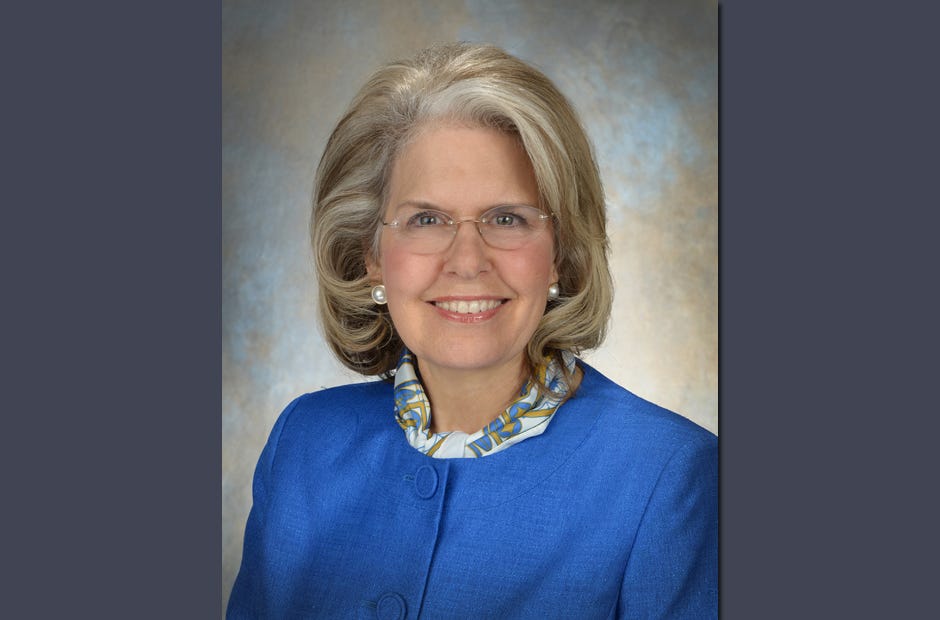
Carolyn Ketchel

SHALIMAR — The Florida Association of Counties presented an Okaloosa County commissioner with the Presidential Advocacy Award during the 2016 FAC Annual Conference & Exposition in Orange County.  

 As a Chair of the FAC Finance, Tax & Administration Committee, Commissioner Carolyn Ketchel’s leadership and commitment to crafting sound policy was an invaluable asset to FAC this year in advancing the Associations legislative program during a challenging legislative session. 

 The Presidential Advocacy Award is given annually to those county commissioners from around the state that who have shown exceptional leadership in partnering with FAC to advance the counties’ legislative agenda.

“I supported Rep. Matt Gaetz’s ‘no tax is safe tax cut plan,’ because it supports small businesses and encourages those who may be interested in relocating or opening a business here, whereby strengthening the local economy, as well as benefitting all Okaloosa County taxpayers,” Ketchel said.

FAC Executive Director Scott Shalley said, “Commissioner Ketchel’s willingness to advocate for counties was not only essential to the success of FAC’s legislative efforts, but it was also of great service to the citizens of Okaloosa County. The commissioner's advocacy was invaluable in helping ensure that local governments are provided the flexibility and tools they need to meet the needs of Florida’s citizens.”

PAC winners in neighboring counties include Rob Williamson, Santa Rosa County; Jayer Williamson, Santa Rosa County, Vice Chair, Finance, Tax & Administration; Guy Tunnell, Bay County, Chair, Public Safety; and Grover C. Robinson IV, Escambia County, Vice Chair, Federal Committee.

This article originally appeared on Crestview News Bulletin: Florida association presents award to Okaloosa commissioner

Evers to attend Crestview veterans job training event

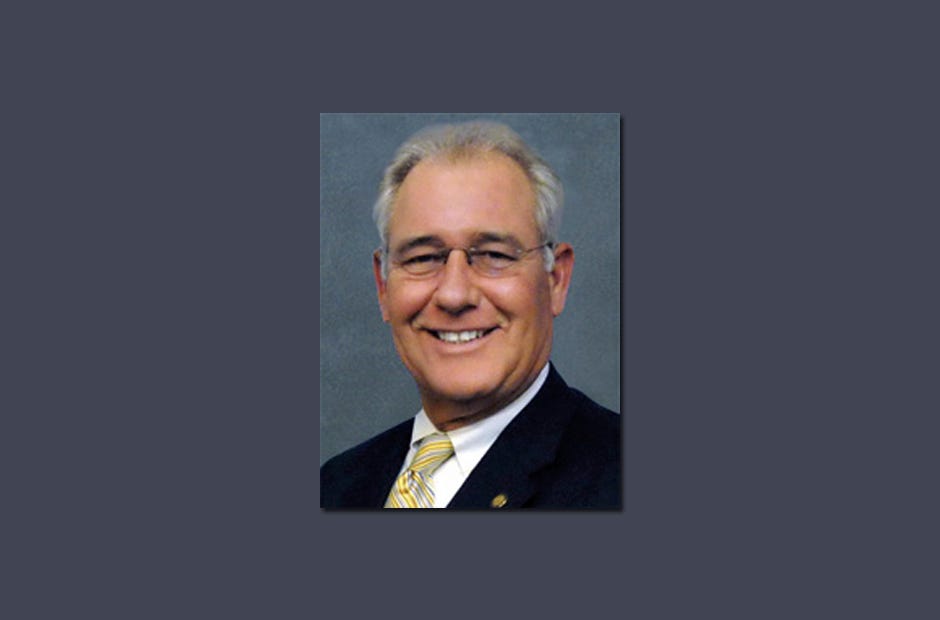
CRESTVIEW — Sen. Greg Evers will be the featured speaker during a community awareness event for a veterans jobs program.

American Legion Post 75 stated in a media release that the event — which is 2 p.m. July 9 at the post, 898 James Lee Blvd. E. — is open to the community, and local veterans, post traumatic stress syndrome outreach, and support organizations are encouraged to participate.

The program will include information about new jobs and training that will be provided locally.

Local dignitaries will also attend, and refreshments will be available.

In the release, post officials also stated that they hope the post will become a service point for the Career Source mobile unit, since the Crestview Career Source office closed in June. Post Commander John Marshall Sr. is to meet with CS Director Linda Sumblin to work out those details.

For more information on the July 9 event, call 669-9030.

This article originally appeared on Crestview News Bulletin: Evers to attend Crestview veterans job training event

PAWS responds to Crestview concerns, criticisms

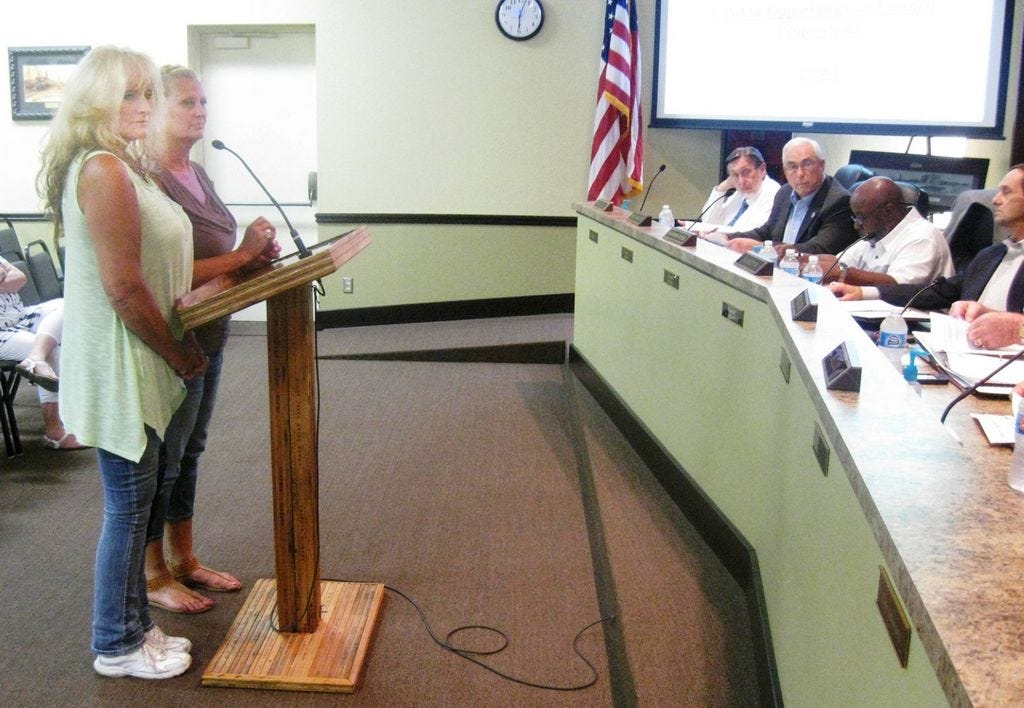
Panhandle Animal Welfare Society Director Dee Thompson and supervisor of animal control Mary Rutter respond to the Crestview City Council's questions.

CRESTVIEW — The city and county’s animal control agency was in the spotlight when Crestview City Councilmen took turns questioning representatives of the Panhandle Animal Welfare Society, or PAWS.

“We've had some concerns and some complaints, and we understand the complaints are not always valid,” Councilman JB Whitten said.

PAWS director Dee Thompson and Mary Rutter, PAWS’ supervisor of animal control, responded to questions during a June 27 workshop.

Q: What kind of training program does PAWS have?

A: PAWS officers are state-certified and take both classroom and field training. Training includes use of equipment, euthanasia and capturing animals using equipment and chemical means, including dart guns.

Q: What is “chemical capture”?

A: “It's like a blow gun; you blow a dart out of a tube,” Thompson said, adding animal control officers also use CO2 dart guns. “It would be like if you have a big dog or a coyote, it can be used to tranquilize them. We don't ever use it on a cat. It's not a weapon of choice because you can't be sure what an animal's going to do. It's a very last resort. Larger animals, it sometimes makes more excited.”

Q: What do you do when the office is closed?

A: Officers respond to emergency situations 24 hours a day. Two officers live in the Crestview area and can respond to local emergencies, such as animals hit by a car “and drunk drivers with their dog with them,” Thompson said. “Why would someone want to take their dog to a bar I don't understand.”

Q: How many cities or agencies does PAWS contract with?

A: Crestview, Fort Walton Beach, Destin, unincorporated Okaloosa County, Eglin Air Force Base and Laurel Hill.

Q: What's PAWS’ average response time?

A: “During business hours it should be pretty quickly,” Thompson said. After hours it depends on where the resident is. “It should be no more than 20 or 30 minutes,” she said.

Q: How much does Crestview pay PAWS for animal control services?

A: PAWS’ fee is based on population, at $4.23 per resident. Crestview pays $85,000 a year. “When we took over you were paying close to $150,000,” Thompson said. “When we took it over we brought it down to $85,000 and we tripled the amount of service.”

Q: Can you address the low satisfaction rating PAWS currently has?

A: “I think because we're dealing with situations where somebody is going to be happy and somebody's not going to be happy, and the people who are not happy talk way louder,” Thompson said.

“They don't want us to kill them (animals) and they don't want us to put them back on the streets. It's difficult to do what we do, but we do it with our heart.”

This article originally appeared on Crestview News Bulletin: PAWS responds to Crestview concerns, criticisms

Crestview's CRA, Part II: Who's behind it and what does it do? (VIDEO)

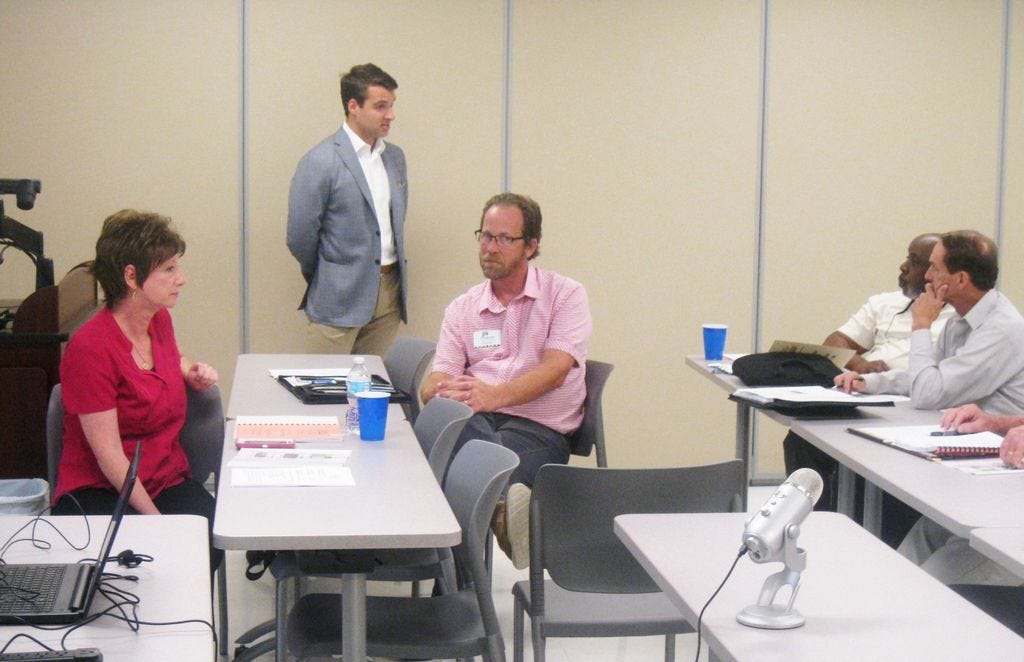
Matt Petro, chief development officer for Retail Strategies, standing, speaks during a June 24 Community Redevelopment Agency meeting. Seated from left are CRA Director Brenda Smith, Petermann Agency senior account executive Stephen Smith (no relation), and CRA board members Shannon Hayes and JB Whitten.

The Crestview Community Redevelopment Agency has frequently been in the news lately. What is it and how does it benefit the community?

CRESTVIEW — Residents may have heard about the city's Community Redevelopment Agency.

But what is its purpose, and who's behind it?

Read Part I of this report here>>

WHO’S IN CHARGE?

Crestview’s CRA oversight falls under the Growth Management Department and, for financial oversight, City Clerk Betsy Roy.

The agency answers to the CRA board, which includes the City Council, plus two appointed members from the district. An attorney, who specializes in CRAs, provides legal advice to the board.

Separating City Council and CRA board responsibilities is important, Crestview CRA administrative team leader Brenda Smith said.

“When they walk in the door they have to think very creatively and strategically,” she said. “They have to be visionaries.”

Hands-on day-to-day operations until June 30 fell under a contracted director. As of July 1, an eight-member team manages the CRA.

THE C.R.A. TEAM

Last week, Smith went from being the agency’s director to a team leader for the CRA’s newly hired advertising and marketing agency.

Hiring the Petermann Agency of Fort Walton Beach was a necessary step in bringing the CRA to the next level as it prepares to tackle serious redevelopment, she said.

“You surround yourself by the experts that know how to redevelop, to transform something from what it is to something totally different,” Smith said. “It’s going to eliminate blight and increase the value of property in the area and everyone benefits.”

Smith said she, with Petermann’s staff of experts, will immediately begin assessing the district and developing a redevelopment plan.

“We need a real good conceptual plan,” she said. “We need to address issues like high vacancy.”

RETAIL DEVELOPMENT

Toward that goal, Petermann brought Matt Petro, chief development officer of Retail Strategies, before the CRA Board’s June 24 workshop meeting.

“(Retail recruitment) is really critical,” Smith said. “When you have a problem, you can sit there and talk about it, but you have to look for a solution.

“There’s a lot of data that these retail companies look at. You have to position yourself and say ‘Hey, look at me! Look at me!’”

While downtown Crestview has often looked toward Fairhope, Alabama’s successful downtown rehabilitation, Smith said that model can’t be cut-and-pasted onto Crestview.

“It’s great to look at other places, but we’re going to be very different from Fairhope,” she said. “We’ll never be a Fairhope. They have different qualities and different planning. We have to be proud of what we have.”

NO FEARS FOR MOM-AND-POPS

Should the CRA contract with Retail Strategies — a year-to-year contract could run as much as $50,000 annually — existing locally-owned Main Street businesses needn’t fear being run off, Smith said.

“If it’s done right, they don’t suffer,” she said. “They grow as well. It makes everybody have to be business savvy and entrepreneurs. It creates entrepreneurial niches, and that’s what you want in your downtown area.”

With her team of experts and her funds in place, Smith sees the CRA district poised to leap into its next phase of redevelopment.

“We’re going forward with some serious stuff,” she said. “There’s enough money that we can have some serious impact on the area.”

Crestview’s Community Redevelopment Agency has spearheaded several downtown improvements, including:

●Three-phase Main Street district streetscape improvements, 1996-2003

●Main Street Crestview Association creation, 1998

●Historic Preservation District designation and documentation of more than 200 downtown structures, 2001-03

●National Register of Historic Districts designation received 2006

●Crestview Centennial Celebration funding begun, 2013-16. Centennial events contracted to Main Street Crestview Association

●Crestview Bark Park dog park planning and fundraising begun, 2015-16

CRESTVIEW C.R.A. PROJECTS

This article originally appeared on Crestview News Bulletin: Crestview's CRA, Part II: Who's behind it and what does it do? (VIDEO)

Crestview's CRA, Part I: What is it anyway?

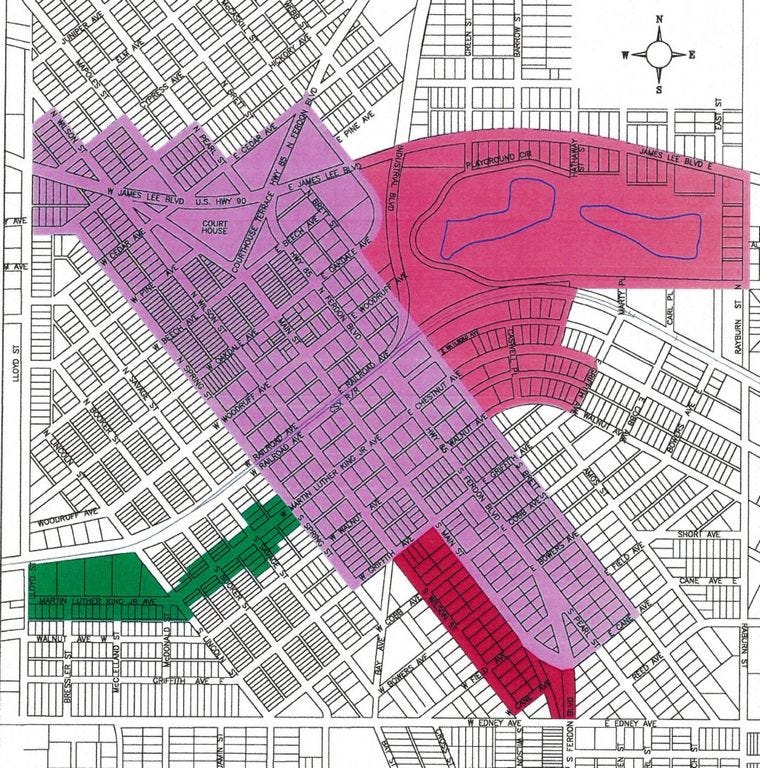
The central purple area is the original 1995 Crestview Community Redevelopment Agency district. It was expanded to include the three smaller areas in 1998.

The Crestview Community Redevelopment Agency has frequently been in the news lately. What is it and how does it benefit the community?

CRESTVIEW — It’s hired an ad agency, is considering engaging a retail recruiter, is funding the city’s centennial events, and spearheaded turning downtown into a mixed-use district.

It’s the Community Redevelopment Agency.

Read Part II of this report here>>

But what is it? How does it function? What is its purpose, and how is it funded?

C.R.A. DISTRICT

Crestview’s CRA district, established in 1995, today encompasses much of downtown, plus Twin Hills Park and Martin Luther King Avenue, areas that were added when the district expanded in 1998.

It aims to combat blight.  

“There has to be some sort of distress or special need with it,” Jack Dorman, owner of municipal consultants J.E. Dorman and Associates, said.

“Typically it’s a lower income area or business failings. In Crestview it was to provide impetus to do things downtown. For example the streetscape, lighting, landscaping, was all done with CRA funds.”

The agency will sunset in 2025, unless the board requests an extension from Okaloosa County.

WHAT IT DOES

“A CRA is designed to improve and enhance the conditions in a specified area,” Dorman said.

Through CRA funds and leverage it provides to obtain grants, the city embarked on a $3.7 million, three-phase downtown streetscape improvement project between 1996 and 2003.

Today that project’s results continue to enhance the historic Main Street area, with brick pavers, new street lighting, landscaping, benches and an events gazebo.

Most recently the CRA spearheaded mixed-use rezoning that reintroduces residences in the district, creating a 24-hour life to a section of town that slows down after hours.

“CRA funded that activity rather than the general fund,” Dorman said. “It’s an activity that was designed — and I believe it’s going to be successful — to bring people downtown who are going to be living, shopping and eating downtown.”

Twin Hills Park improvements, also in the agency’s scope, include a recently proposed dog park to be partially funded by recreation grant money secured by the CRA.

The Main Street Crestview Association program also falls under the CRA, providing events and improvement plans to enhance the historic district.

FUNDING

The Crestview CRA is funded through a process called tax increment financing that keeps some locally generated tax dollars from going to Okaloosa County.

“You establish a  baseline,” Dorman said. “As the property goes up in value, that increase goes to the CRA, not the city, county or general fund. Over time it builds up. It becomes a source of money for the CRA to do things, take action, make improvements.”

For example, if a company in the CRA district paid $1,000 in taxes when the district was established, but was taxed $1,025 the next year when it increased in value, the $25 difference would go to the CRA, rather than the county or city.

Crestview’s CRA was established “for the expressed purpose of development and redevelopment within a defined community redevelopment area, which encompasses all of the downtown area,” according to the city’s website.

Currently the CRA has accumulated more than $1.4 million in available redevelopment funds.

Here’s a look at Crestview’s Community Redevelopment Agency:

●Established in 1995

●Sunsets in 2025

●Current available redevelopment funds: $1,406,128

●Board members: President Joe Blocker, Bill Cox, Doug Faircloth, Shannon Hayes, Dr. Margareth Larose-Pierre and  JB Whitten. One vacancy

●Attorney: community redevelopment specialist Carol Leone

●Marketing and advertising firm: Petermann Agency, Fort Walton Beach

●Program team leader: Brenda Smith

●Main Street Crestview Association manager: Patti Gonzo

●Office: Crestview City Hall

THE CRESTVIEW C.R.A. AT A GLANCE

This article originally appeared on Crestview News Bulletin: Crestview's CRA, Part I: What is it anyway?

Crestview city budgets running on track

Public Works Director Wayne Steele reports on his budget expenditures so far in the 2015-16 fiscal year as Police Chief Tony Taylor listens.

CRESTVIEW — City department heads reported that with the budget year about 60 percent over, their budgets are roughly on track.

During a June 30 City Council budget workshop, City Council President Joe Blocker queried department leaders on 2015-16 spending.

PUBLIC WORKS: Director Wayne Steele reported his budget is between 60 and 70 percent spent, though some line items have reached 100 percent or more.

“Some repairs and maintenance (are) eating me alive,” Steele said. “I've had a lot of lift station repairs, and water wells repairs and a lot of building and maintenance repairs. It's been one of those years. They come in cycles.”

However, Steele said his planned Public Works projects have come in under budget.

“We've had some very good bid responses this year that have come in under our projections,” he said. “Our purchases on equipment, we've been able to get the equipment we needed at lesser cost than projected in our budget.”

POLICE DEPARTMENT: Police Chief Tony Taylor said his department has spent about 65-70 percent of its budget as well. He anticipates carrying between $700-800,000 in cash forward to the next budget year due to vacant positions.

We're one (police officer) position down and anywhere from four to five dispatchers down over the year,” he said.

LIBRARY: While Library Director Marie Heath did not have her expenditures figures with her, she said she expects to carry “a little bit” forward into the 2016-17 budget year, “but not as much as the chief.”

FIRE DEPARTMENT: Fire Chief Joe Traylor said his department, too, had personnel issues that affected his budget. Two firefighters are out receiving workers’ compensation due to injuries; another is in the military reserves and was called up for duty.

Overtime pay has increased as other firefighters fulfill the duties of the three who are out.

“Overall we're about 65 percent of the entire budget, Traylor said. “There are categories within the budget that went over but there is funding within the budget to move.

“We won't go over our total budget. …Part of that is fuel savings because the cost of fuel has not risen but has gone down.”

“Most of the departments are between 5 and 7 percent of where they need to be,” said City Clerk Betsy Roy, whose office oversees the city’s Finance Department.

This article originally appeared on Crestview News Bulletin: Crestview city budgets running on track

error: Content is protected !!