Please ensure Javascript is enabled for purposes of website accessibility
Skip to main content
Advertisement

Deaf advocacy leader seeks 'equal access to information'

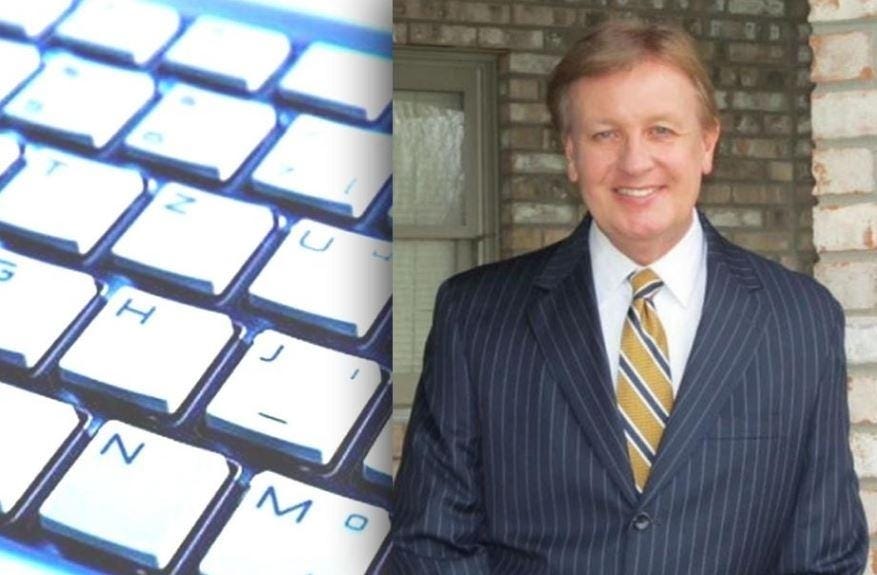
The Rev. Mark Ehrlichmann. [Special to the Bulletin]

Editor's Note: In the coming weeks, the News Bulletin will explore the challenges and discrimination the deaf community often faces.

To begin this series, we met with the Rev. Mark Ehrlichmann, director of the Agency for Deaf Advocacy and Services in Crestview and board member at Helping Educate to Advance the Rights of the Deaf. Answers have been edited for clarity and length.

What would you like the hearing to understand about being deaf?

First and foremost, deaf people can do anything but hear. We are truck drivers, doctors, dentists, lawyers, teachers, businesses owners, scientists, counselors — the list goes on. 

Second, we deserve respect as a community and for our language, American Sign Language. It is the fourth most used language in the U.S. 

Third, simply talk to us; listen. We want your friendship and want to help in any way we can to improve our community together. We struggle to feel included in everyday communication because this world is audio-centric. 

It is time to learn that not all people need sound to live and work. We need visual communication to be a part of this society and you need visual communication, also.

What do the hearing need to know about the deaf community?

Our numbers increase every year due to the excessive use of loud electronics and technology and veterans returning home with war-related hearing loss. About 90 percent of deaf children are born to hearing parents. We are everywhere.

Also, don’t assume that someone who doesn’t respond is ignoring you. Consider they may not have heard you. Look at a deaf person when speaking and not at your computer or note pad. Listen to what the person says. Learn a few words in sign language. If you can, learn to say, “Hi, my name is ________. Interpreter is coming soon.” Learn to say thank you to a deaf customer. That would help a lot.

Be ready with a pen and paper for the deaf person to use. Please understand that ASL is a completely different language from English with different grammar and word order. ASL users may not understand what you write and may not be able to write well enough to make themselves understood.

Can you tell me a little about your organization?

We are a non-profit, community-based social service agency serving the deaf, hard of hearing and hearing individuals who work with deaf people in the northwest panhandle of Florida. The mission of ADAS is to provide social services, resources, advocacy and referrals to other services for deaf, hard of hearing and hearing individuals who work within the deaf community.

We aim to be highly visible and well known in our communities and for people to become fully aware of our services.

Who do you advocate for/what kinds of cases do you consider?

We advocate for deaf, hard of hearing, deaf-blind, anyone with hearing loss, including military veterans and for hearing people who take care of deaf children. 

Issues faced by our clients range from denial of communication access, inadequate resources to help with communication access, discrimination regarding employment or interview opportunities, mentoring on self-advocacy and understanding of ADA rights, education of service providers on their responsibilities in providing access, as well as understanding how to interact with deaf and the impact of hearing loss on communication. 

Our area of advocacy focuses on the educational, medical, legal, law enforcement and correctional systems. 

What makes you passionate about helping the deaf community?

Personal motivation to empower other deaf and hard of hearing individuals to have equal access to communication, so that they may be able to achieve their dreams. 

My own experiences motivate me, as well as the heartache and anger at seeing oppression and discrimination occurring simply because the world does not understand or respect hearing loss on the same level as vision loss.

When did you receive a cochlear implant and how did it affect your way of life?

I received my right cochlear implant in March of 1999 as treatment for a debilitating, life-threatening condition called Tinnitus. The implant saved my life and allows me to work and live in gratitude. I do have a left implant but it is not being used because the cochlea nerve does not function well enough to benefit me. 

The implant is very subjective technology and cannot be seen as a standard fit for all. I encourage families and individuals to research fully all available resources for appropriate measures to assist in their own goals for communication access.

What are some ways the hearing can increase their awareness about the deaf community?

Listen to understand.

If someone requests that you look at them, please look at the person and not the computer screen, notepad or some other device.

Please don’t ignore a deaf person. Often people only pay attention to the person who is speaking and ignore the person who is writing a note with critical information.   

Also, please have some patience. The deaf person in front of you is just as important as anyone else. Take the time to write a note or call for an interpreter.   

Is there anything you'd like to add? 

Technologically speaking, it would be great if there were public videophones in certain areas like hospital or clinic waiting areas and emergency rooms, grocery stores, schools and college campuses, police stations, malls, etc. 

It would also be beneficial to add visual text to public address systems wherever they are used, including transit systems, buses, trains and air travel. 

Any televisions in public areas should automatically have captions on. All internet video content should have captions or subtitles; movie theaters should have captioned movies at all times.

This is about equal access to information. Without access, there is no freedom to make informed decisions about life or work activities, and in emergency situations, it's a matter of life and death.

This article originally appeared on Crestview News Bulletin: Deaf advocacy leader seeks 'equal access to information'

Lions Club member's 'Project Warm' helps homeless

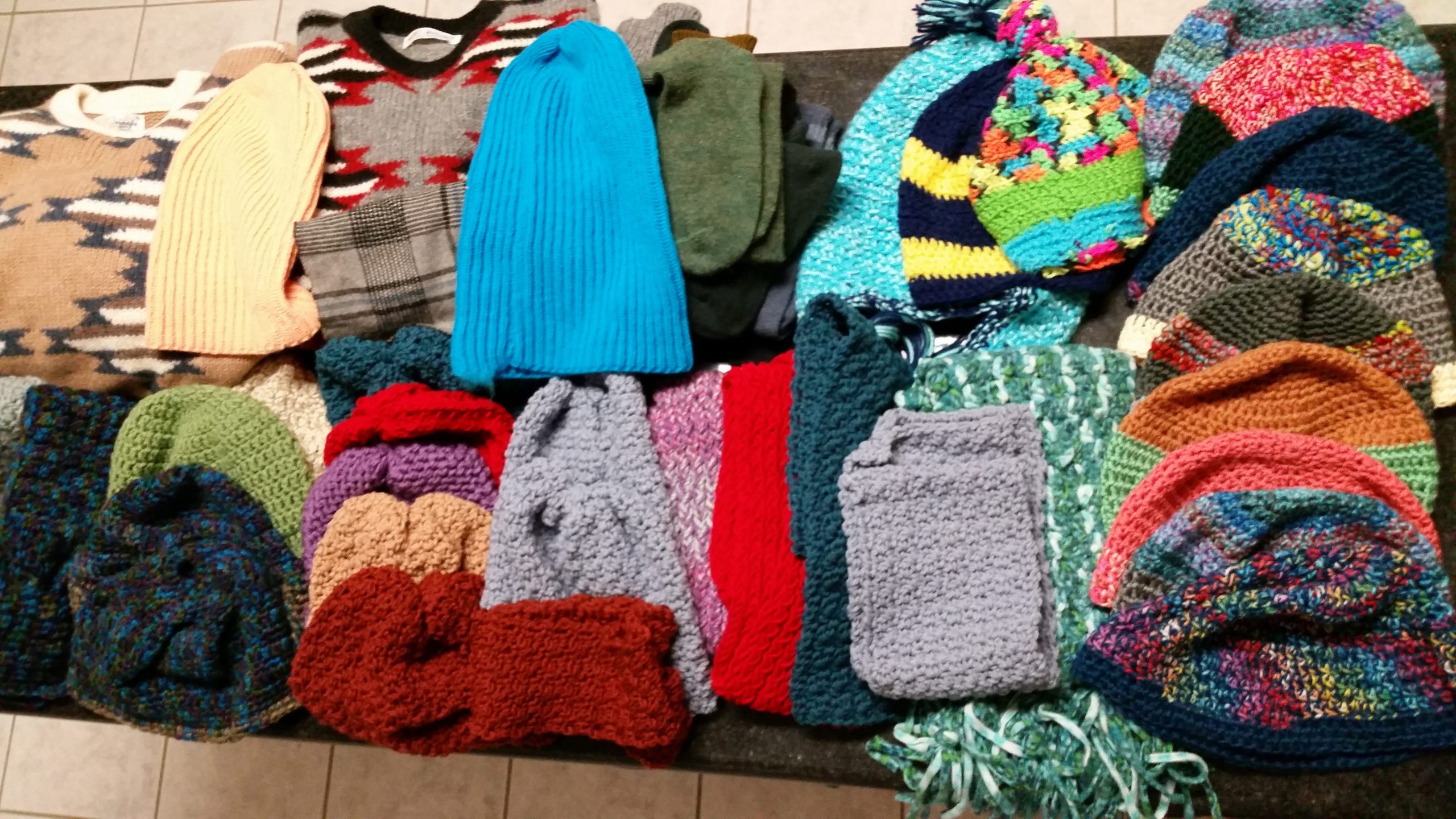
Lions Club members Steve and Deb Lubas of Crestview have been making and collecting warm accessories like new and gently used hats, gloves, scarves and socks to benefit homeless people in Crestview. [SPECIAL TO THE NEWS BULLETIN]

Editor’s Note: This continues our Celebrate Community series on nonprofit organizations that improve North Okaloosa County residents’ quality of life.

CRESTVIEW — Deb and Steve Lubas are working to provide cold weather gear for local homeless people.

The Lions Club members dropped off a package of 20 to 30 hats, scarves and gloves a few weeks ago at the Helping Hands homeless ministry in Crestview, and will turn in another shipment this week.

Steve said his wife, who works for the U.S. Air Force, joined the Lions Club two months ago.

"We did a drop-off about two or three weeks ago. And we're actually doing a drop-off again of hats, scarves, sweaters, gloves. We're trying to see what other needs there are so we can meet the homeless shelter needs in Crestview."

Over 20 people received a hat, scarf and blanket from the first donations, and the Lubass turned in more donations in mid-January.

The Lubases have crocheted scarves and hats for the effort; their fellow Lion, Charlotte Jones, crocheted scarves.

Contributors also include Crestview residents Deb Broxson and Doris Sandvass; Margie’s Sew Much Fun of Crestview, which donated sweaters, socks and knitted hats; Mildred Heaton Real Estate of Crestview, which donated slacks and sweaters; Deb Lubas's sisters, Lorry Moody of Washington, who spun yarn and crocheted hats, and Trudy Woodruff of Mississippi, who crocheted hats and scarves; and unknown Crestview donors who provided blankets.

HOW TO PARTICIPATE 

To help, donate new or gently used hats, gloves, scarves, coats, blankets and socks to Project Warm collection boxes in Crestview.

Locations include Hub City Smokehouse & Grill, 168 Main St. S.; Pic-N-Sav, 310 James Lee Blvd. W, Crestview, U.S. Highway 90 W.; and Tractor Supply Co., 320 James Lee Blvd. W.

Companies or organizations who wish to have a Project Warm box placed at their location may contact Deb Lubas, greenhalghdj@cox.net.

Note: This article has been updated to correct Steve and Deb Lubas's last names.

This article originally appeared on Crestview News Bulletin: Lions Club member's 'Project Warm' helps homeless

NWFSC sets reception for Holzhauer artworks

A reception for the return of 50 Emil Holzhauer works of art will take place at Northwest Florida State College. [PIXABAY.COM]

NICEVILLE — The Mattie Kelly Arts Center Galleries' first exhibition of 2018 is "America — the Dream of an Artist’s Life," featuring the works of Emil Holzhauer.

The exhibition is on view in the McIlroy and Holzhauer Galleries through March 2, and a public reception honoring the artist and his work is 5:30-7:30 p.m. Feb. 3 at the galleries, located at Northwest Florida State College, 100 College Blvd., Niceville.

Local author Dr. Audrey Edwards will be on hand to sign copies of her book, "Emil Holzhauer: The Portrait of an Artist." Light refreshments will be served.

Throughout 2017, 50 works from the Northwest Florida State College Permanent Collection were on loan from the Arts Center Galleries to the Museum und Galerie im Prediger in Schwäbisch Gmünd, Germany, the birthplace of artist Emil Holzhauer.

The works were shown there as part of a trilogy of retrospective exhibitions honoring Gmünd’s most famous artistic exports, all of whom made their names in United States: Holzhauer, Emanuel Leutze and Regina Baumhauer.

"America — the Dream of an Artist’s Life" celebrates the return of Holzhauer’s paintings to Niceville. Accompanying the show in the Corridor Gallery are recent gifts to the Holzhauer Collection, some of which are on public view for the first time.

Since 1967, Northwest Florida State College has worked to preserve the artwork of painter Emil Eugen Holzhauer (1887-1986).

The Mattie Kelly Arts Center Galleries are open 10 a.m. to 4 p.m. Monday through Friday, and 90 minutes prior to most MKAC Mainstage performances. The galleries are always free to visit.

Contact Gallery Director K.C. Williams, 729-6044 or williamk@nwfsc.edu, for more information about the galleries or the reception.

This article originally appeared on Crestview News Bulletin: NWFSC sets reception for Holzhauer artworks

Put a trusted 'quarterback' on your financial team

Yvonne Shanklin is an Edward Jones financial adviser. [SPECIAL TO THE NEWS BULLETIN]

On Feb. 4, the eyes of most of the country — and much of the rest of the world — will be on Minneapolis, site of Super Bowl LII.

As a fan, you can admire the way Super Bowl quarterbacks direct their teams. But as an investor, you can learn something from the big game by putting together your own team to help you achieve your financial goals — and you may find it helpful to have your own "quarterback."

Who should be on your team? Your financial strategy will involve investments, taxes and estate planning, so you will likely need a financial advisor, a tax professional and an attorney.

Ideally, your financial advisor — the individual with the broadest view of your financial situation — should serve as the quarterback of this team. And, just as a quarterback on a football team must communicate clearly with his teammates, so will your financial quarterback need to maintain consistent contact with the other team members.

Let's look at a couple of basic examples as to how this communication might work.

First, suppose you are self-employed and contribute to a Simplified Employee Pension IRA. Because your contributions are made with pre-tax dollars, the more you put in, the lower your taxable income. (In 2018, the maximum amount you can contribute is $55,000.)

Your financial advisor can recommend investments you can choose from to help fund your SEP IRA. Yet you will want your financial advisor to share all your SEP IRA information with your tax professional.

When it's near tax-filing time, your tax professional can then let you and your financial advisor know how much room you still have to contribute to your SEP IRA for the year, and how much you need to add to potentially push yourself into a lower tax bracket.

Now, let's consider the connection between your financial advisor and your attorney — specifically, your attorney handling your estate planning arrangements. It's essential that you and your financial advisor provide your attorney with a list of all your financial assets — IRAs, 401(k)s, investments held in brokerage accounts, insurance policies and so on.

Your attorney will need this information when preparing your important legal documents, such as your will and living trust — after all, a key part of your estate plan is who gets what. But it's imperative that you and your financial advisor convey some often-overlooked details that can make a big difference in the disposition of your estate.

For example, your financial advisor might suggest that you review the beneficiary designations on your IRA, 401(k) and life insurance policies to make sure these designations are still accurate in light of changes in your life — new spouse, new children and others.

These designations are meaningful and can even supersede the instructions you might leave in your will or living trust. Consequently, it's important for you and your financial advisor to share this information with your attorney.

It can be challenging to meet all your financial objectives. But with the right team in place, and a quarterback to help lead it, you can keep moving toward those goals — and you might cut down on the "fumbles" along the way.

This article was written by Edward Jones on behalf of your Edward Jones financial adviser.

This article originally appeared on Crestview News Bulletin: Put a trusted 'quarterback' on your financial team

Start your day with whole grains

Homemade granola should be stored in airtight container for up to two weeks. For added flavor and fiber, add a fruit to your cereal. [SPECIAL TO THE NEWS BULLETIN]

Many people by this time have blown their New Year’s resolutions. Instead of giving up, just take small steps that can make a difference in your health.

Breakfast is an important part of a healthy diet. Most of us struggle with what to have on hand that is quick, healthy and gets us on track for the daily intake of healthy food. Make your resolution to incorporate more whole grains in your diet. This will be an easy one to keep if you focus on the first meal of the day.

There are basically two types of grains: whole and refined. Grain products include foods such as bread, pasta, breakfast cereals, rice, corn and barley.

The U.S. Department of Agriculture (USDA My Plate) recommends that people of all ages get half their grain servings from whole grain sources.

So, how do you determine what is whole grain and what is refined? Read the food facts label and know the symbol for whole grains. The "Whole Grain Stamp" identifies foods approved by the Whole Grains Council.

Also look at the list of ingredients. If whole grains are listed first, chances are it is a good source of whole grains.

Whole grains are good sources of fiber and B vitamins. Fiber is the carbohydrate that is non-digestible. Fiber keeps our digestive system regular and can help reduce blood cholesterol. A good goal for women is to consume 25 grams each day while men need 38 grams for their daily intake.

Visit https://www.choosemyplate.gov for specific recommendations. Other sources of fiber include fruits and vegetables.

So now back to breakfast, the first meal of the day. Making your own cereal can be healthy and nutritious.

Start with a whole grain like oats. This is the base for homemade granola and also can be cooked as a hot cereal. Try this homemade version of a granola recipe to have a whole grain option for breakfast on hand.

Homemade granola

In a large bowl mix the following ingredients:

  • 2 cups of old-fashioned whole grain oats
  • 1/2 cup sliced almonds or other nuts like pecans or walnuts
  • 1/2 cup shredded coconut
  • 2 tablespoons of maple syrup or honey
  • 1 tablespoon of coconut oil (melted to coat oats)
  • 1/4 teaspoon of vanilla extract
  • Optional: 1/2 cup sunflower seeds, 1/2 cup dried fruit

Directions: Preheat the oven to 300 degrees.

Combine all ingredients in a mixing bowl. Mix well and toss to coat; coconut oil can be melted in the microwave for 10 seconds.

Spread the mixture in a thin layer on a baking sheet lined with parchment paper and bake for 10-15 minutes, until very lightly toasted. Allow to completely cool before storing.

Granola can be kept in an airtight container in a cool, dry place for up to two weeks.

To use as a morning cereal, scoop 3/4 cup of granola and cover with milk. For added flavor and fiber, add fresh fruit like blueberries or strawberries. It may also be eaten as a snack or a topping for yogurt sundaes.

Visit our website at http://sfyl.ifas.ufl.edu/Okaloosa, email pha@ufl.edu or call us at 689-5850 for information about upcoming University of Florida Institute of Food and Agricultural Sciences Extension programs in Okaloosa County.

Pamela H. Allen is the interim county director and an agent at the University of Florida's Institute of Food and Agricultural Sciences Extension office in Crestview.

This article originally appeared on Crestview News Bulletin: Start your day with whole grains

Group boosts homeless programs

Becky Horne presents Ann Sprague with $1,000 for the Crestview Area Shelter for the Homeless. [SPECIAL TO THE NEWS BULLETIN]

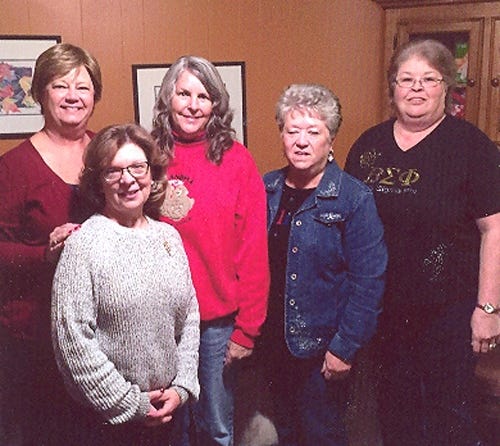
CRESTVIEW — Members of Alpha Beta Upsilon, a local chapter of the Beta Sigma Phi sorority, presented a $1,000 donation recently to the Crestview Area Shelter for the Homeless.

It took the group the previous year to raise the funds as part of their community service projects.

The money will be used by the shelter (also known as Helping Hands) to aid its efforts to provide neceessitites and opportunities for local homeless people.

This article originally appeared on Crestview News Bulletin: Group boosts homeless programs

All about bedtime

Amanda, Hunter (age 2) and Boone (age 1) Harrison listen during Library Class recently in Crestview. The boys are in their pajamas because the theme was "Bedtime." They are Crestview residents. [SPECIAL TO THE NEWS BULLETIN]

CRESTVIEW — The Crestview Public Library recently hosted a Library Class where attendees learned all about beditme.

Have a cute photo of your kids out and about? They could be our next The Bulletin Kid! Email a photo with your child's name, age, hometown and a description of the action to news@crestviewbulletin.com.

This article originally appeared on Crestview News Bulletin: All about bedtime

Act4Mystery to present 'Knock 'Em Dead'

The ladies of "Knock 'Em Dead" are, from left, Augusta Wind (portrayed by Cynthia Bergquist), Marion Haste (Debby Geisen), Royal Payne (Paula Hilton) and Wonderdog Chablis. [CHRISTOPHER MANSON | SPECIAL TO THE NEWS BULLETIN]

CRESTVIEW — A Northwest Florida murder mystery troupe will present two performances of "Knock 'Em Dead," a play by  Paula Hilton.

The first performance is 7 p.m. Feb. 15 at La Paz Destin, 950 Gulf Shore Drive, Destin. Seating begins at 6:30 p.m., with the dinner and show at 7 p.m. The cost is $34.95 for a full fajita bar dinner and the show.

The second performance is 6:30 p.m. Feb. 17 at Samuel’s Roadhouse, 114 John King Road, Crestview. Seating begins at 6 p.m., with the dinner and show at 6:30. Samuel’s serves a three-course meal for $38, which includes the dinner, show, tax and tip. 

Go to www.act4mysterycom to make reservations for either show. V.I.P. packages with special merchandise and recognition, as well as Valentine's Day additions, are also available online.

"Our shows are nothing but fun and games, but remember, someone is going to die!" the troupe stated in a media release. "Will you and your table of sleuths win a prize for guessing whodunit?"

The professional comedy troupe has performed together since 2003, previously under the name Act4Murder.

This article originally appeared on Crestview News Bulletin: Act4Mystery to present 'Knock 'Em Dead'

Don't touch porn stars, celebrities or politicians

Where have people's hands been? When you shake hands with someone at church, the grocery store or a restaurant what kinds of germs are they carrying?

I once shook hands with Hillary Clinton and my wife told me to immediately go and wash my hands. She reminded me that her hands had been on Bill Clinton and that I wasn't touching her until I washed my hands.

Think about the people with whom you shake hands. Would you shake hands with Harvey Weinstein? What kind of serious offensive disease might you contact? Would you shake hands with Anthony Weiner? What about Bill Cosby? Kathy Griffin?

Now our president has been accused of having an affair with a porn star a few years back. There are reports she is starting up a tour to parade herself around the country naked to make money from the allegations.

Have the president's hands been on a porn star? What happened to the $130,000 hush money that was allegedly paid to her?

The truth about hush money is there is no such thing as hush money. If someone is trying to blackmail you, there is no such thing as paying somebody to keep quiet because eventually they tell everything they know.

How many people have come out in the last couple of years talking about stuff they had received money to keep quiet about? Several. They didn't keep quiet and I bet they spent the money.

What about our elected politicians? They lie to us all the time.

They lie about how they want to help us.

They lie to us about how much they care.

They lie about where the money comes from and where it's going.

They make any promise under the sun for your vote.

Do you really want to shake hands with these people? What kind of crud are they carrying?

Today would be a good day to take a break from shaking hands and hugging strangers — at least through about April. Simply put — you don't need the flu or the crud that is going around this country.

My wife and I visited a church [recently] down the street and about 25 people shook hands with us. This was very nice of course. People like to feel welcomed when visiting a church. Many churches have what they call fellowship time when people turn around and shake hands with those around them. Many people enjoy this and greeting people they know or meeting new people.

Unfortunately, this time of year you could be shaking hands with death.

Germs can be contracted anywhere. From the grocery store cart to sitting next to people at sporting events or the movie theatre, there are germs. Few people want to lock themselves in the house with disinfecting wipes or cans of Lysol. On the other hand, nobody enjoys what comes with the flu.

Almost everyday that I turn on the news, one of the top three leading stories is about somebody dying from the flu or the hospitals being overrun with sick people. So far this year, 30 children have died from influenza. Last season, 110 children died.

Every year, according to the Center for Disease Control and Prevention, 12,000 to 49,000 people will die from influenza. Seven hundred thousand people could end up in the hospital, according to the CDC. So many older Americans are impacted that the cases of sickness and deaths of seniors can only be estimated.

While the CDC has statistics on the growing number of influenza cases, we are not totally sure about all the numbers of people infected with various kinds of diseases by shaking hands with or touching many of America's celebrities, politicians and porn stars.

Glenn Mollette is an American syndicated columnist and author. 

What’s your view? Write a letter to the editor.

This article originally appeared on Crestview News Bulletin: Don't touch porn stars, celebrities or politicians

error: Content is protected !!