




Please ensure Javascript is enabled for purposes of website accessibility
Skip to main content
Advertisement

Some misconceptions about fish sources

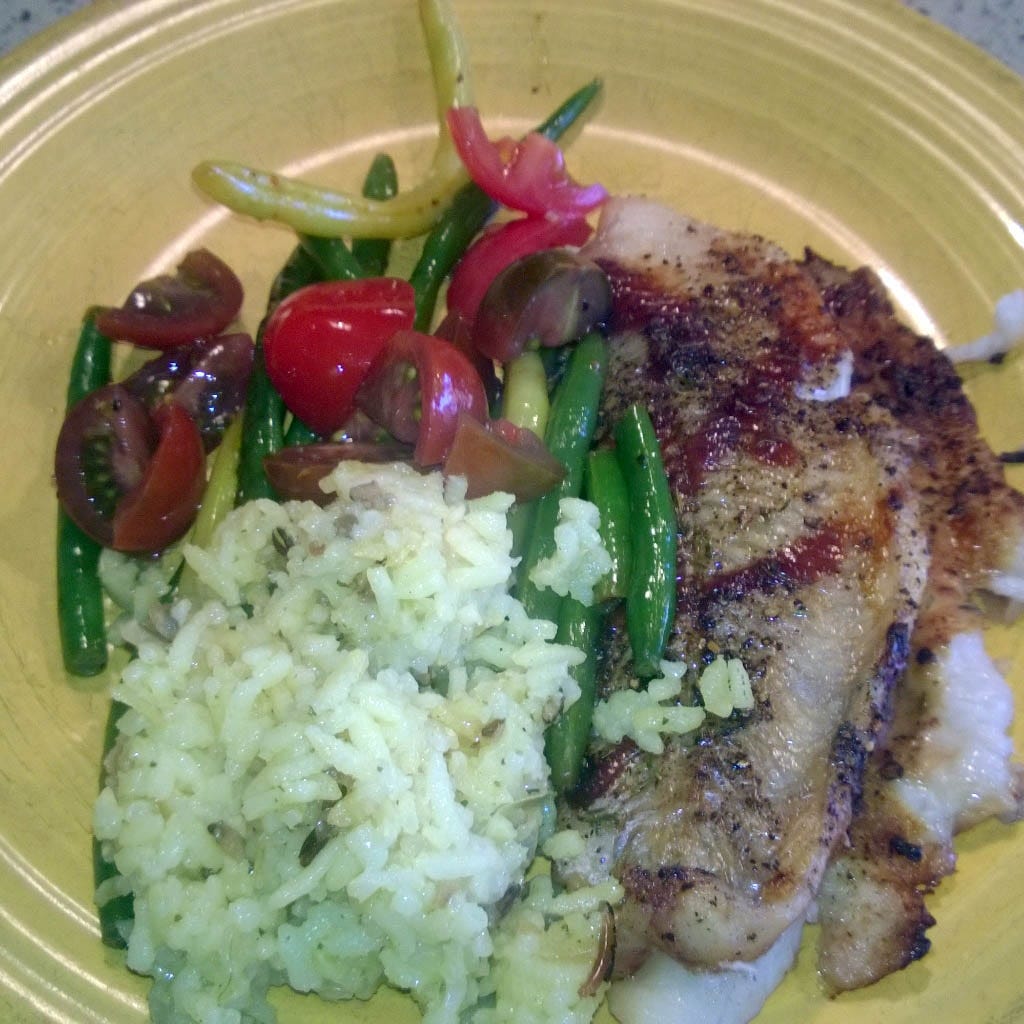
Use wild or farm-raised catfish for dishes such as catfish and mussel fettucini. [LAURA TIU | SPECIAL TO THE NEWS BULLETIN]

I have been involved in the aquaculture industry since the late 1980s, when I got my first job out of college on a tropical fish farm in Plant City. As you can imagine, the industry has changed a lot since then.

When folks find out I have worked in aquaculture, the same question seems to arise: "Is farm-raised fish safe to eat as wild caught?" I would like to say that I don't understand where this question comes from, but over the years I have seen a bewildering number of mass media headlines touting misinformation about farm-raised fish and not enough touting the benefits.

In fact, I saw a post this week on Facebook actually claiming that tilapia have no skin or bones and cannot be found in the wild, both not true. It is no wonder people are so confused. Many of the claims made are not research-based and a quick review of the scientific literature will disprove the statements, but who has time for that?

Aquaculture currently supplies over 50 percent of all seafood consumed and will expand in the future due to a limit on the amount of wild fish that can be sustainably harvested, and increasing demand by a growing population.

Sustainable, responsible aquaculture is needed to fill that gap. Fish are farmed using a variety of production methods including ponds, raceways, recirculating land-based systems and in ocean net pens.

Each one of these fish species and production methods comes with pros and cons, similar to the production of livestock and fruits and vegetables. Each species can be evaluated based on its environmental impact, production method, and even country of origin.

The American Heart Foundation recommends eating fish (particularly fatty fish rich in Omega-3s) two times per week. We currently only consume about half of that.

This recommendation includes a variety of farm-raised and wild-caught fish. Both are crucial to meet current and future demand for seafood and Omega-3 fatty acids.

A common misconception is that farmed fish is not as healthy or nutritionally valuable as wild caught fish, although this claim has been largely disproven. One recent paper (Trushenski et al, 2017) compared the nutritional values of wild-caught and farmed bluegill, largemouth bass and hybrid striped bass and concluded that the farmed fish provided more long-chain polyunsaturated fatty acids (LC-PUFAs) per portion that wild fish. However, both are excellent sources of high quality protein and nutrients.

With the Lenten season upon us — a time of a traditional increase in seafood consumption — there is an easy way to choose wild and farm-raised seafood.

One website and smartphone application that I find easy to use is Seafood Watch (www.seafoodwatch.org). The app uses an extensive evaluation system using research and a panel of experts to label seafood products as green (best choice), yellow (good alternative) and red (avoid) depending on the variety's sustainability.

With this information and a little bit of homework, I hope you come to the same conclusion that I have. Both farm-raised fish and wild-caught fish are delicious, nutritious and great additions to your diet.

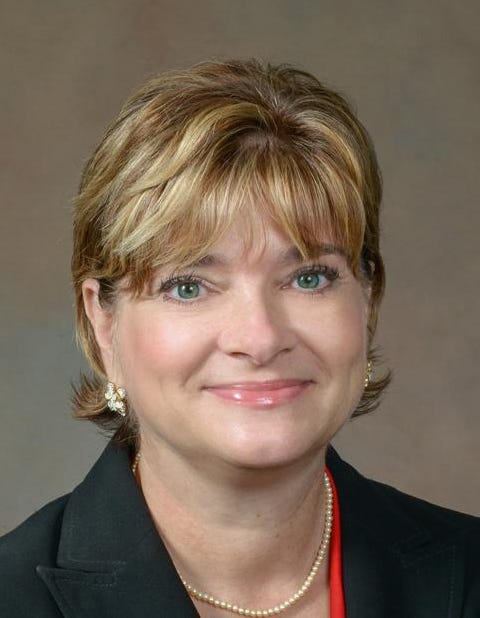
Laura Tiu is an agent at the University of Florida's Institute of Food and Agricultural Sciences Extension office in Crestview.

This article originally appeared on Crestview News Bulletin: Some misconceptions about fish sources

CHECK IT OUT: Get ready for the library bear hunt

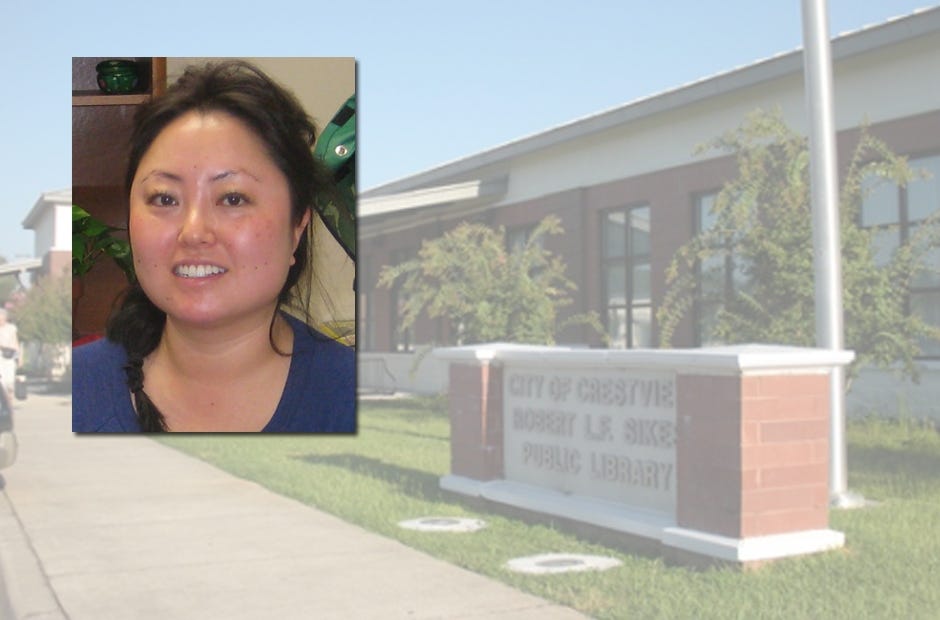
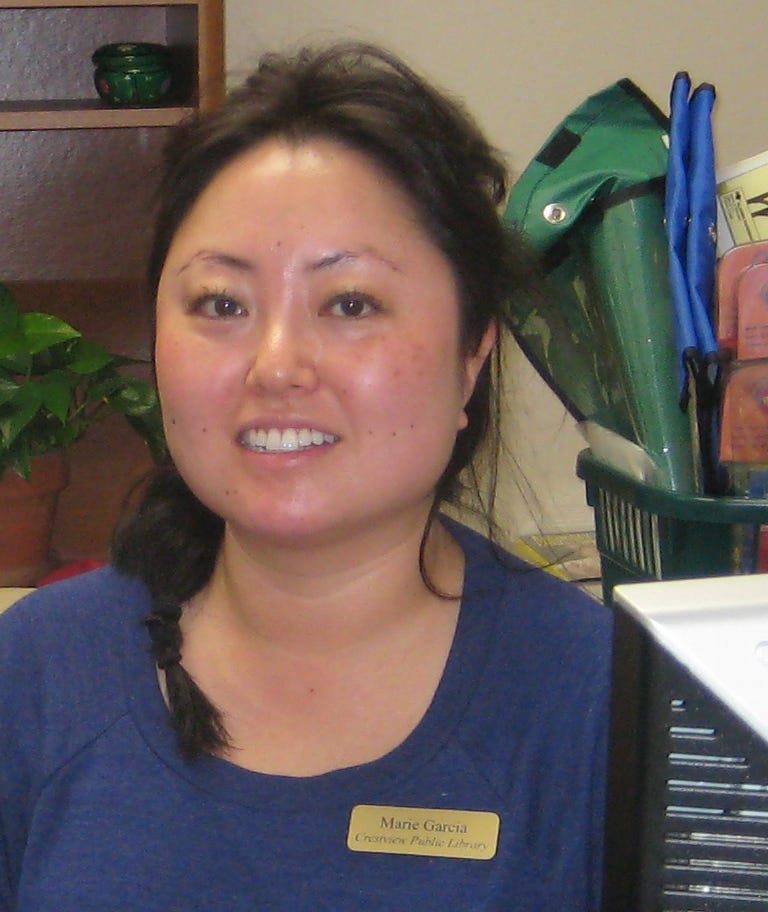
Heather Nitzel is the Crestview Public Library's youth librarian. [Special to the News Bulletin]

We’re going on a bear hunt in the Crestview Public Library on Feb. 23!

In addition to the bear hunt, we will read some stories and treat our bears to a picnic.

Someone in your party must be ages 3-14. Registration is recommended. Please call 682-4432 or come in to register.

Once you’ve secured your reservation, be here by 6:45 p.m. in your modest pajamas.

Bring your teddy bear, flashlight and four cookies to share. (It would help if the cookies are individually wrapped).

We should be finished by 7:30 p.m.

The Crestview library is located at 1445 Commerce Drive.

Heather Nitzel is the Crestview Public Library's youth services librarian.

This article originally appeared on Crestview News Bulletin: CHECK IT OUT: Get ready for the library bear hunt

Master Gardeners elect board members

Here is the newly elected Board of Directors for the Okaloosa County Master Gardener Association: (from left) Lynda Penry, member at large; Dave Gordon, president; Janet Hays, secretary; Debbie Sewell, president elect; and Donna Edmiston, treasurer. [SPECIAL TO THE NEWS BULLETIN]

The Okaloosa County Master Gardener Association has elected new officers for its board of directors.

The board members are President Dave Gordon, President Elect Debbie Sewel, Secretary Janet Hays, Treasurer Donna Edmiston, and Member at Large Lynda Penry.

Call 689-5850 during business hours to have Master Gardeners answer lawn and gardening questions.

Okaloosa County master gardeners also hold office hours at three locations:

  • Crestview: 3098 Airport Road, 8 a.m.-5 p.m. Monday-Friday, 850-689-5850
  • Niceville: 200 Campbell Drive (inside youth center), 11 a.m.-1p.m. Monday
  • Fort Walton Beach: 127 Hollywood Blvd. SW, 9:30 a.m.-12:30 p.m. Friday, 850-651-7476

The Florida Master Gardener Program is a volunteer-driven program that benefits UF/IFAS Extension and the citizens of Florida. It relies on volunteers who have an interest in gardening and in giving back to their community. The Master Gardener mission is to assist Extension agents in providing research based horticultural education to Florida residents. The vision of the Master Gardeners is to be the most trusted resource for horticultural education in Florida.

The UF/IFAS Extension Okaloosa County is the outreach arm of the Institute of Food and Agricultural Sciences at the University of Florida.

For more information, visit www.ocmga.org.

This article originally appeared on Crestview News Bulletin: Master Gardeners elect board members

New business offers tasty gourmet gifts

Fruitable Flowers sells edible fruit bouquets, dipped fruit and fruit baskets. [AARON JACOBS | NEWS BULLETIN]

CRESTVIEW — There’s a new store on Main Street that offers a different kind of gift for most occasions. Fruitable Flowers, located at 321 N. Main St., offers fresh fruit arrangements, chocolate-covered strawberries and more.

They offer a variety of edible bouquets, as well as chocolate-covered strawberries, chocolate-covered pineapple, and more. They are expanding their selection as well, with new creations already in the works.

“We are not only going to do just dipped strawberries and bouquets,” Owner Melissa Carter says. “We are gonna kind of lean towards some of the gourmet-type fruit atmosphere.”

One of their original creations is the Strawberry Surprise, which is a large strawberry filled with cream cheese and special ingredients, dipped in chocolate and topped with roasted coconut or caramel. There is also a special surprise that Carter says is still in the works.

Carter said the idea came to her when she wanted to order a fruit bouquet for her mother, but wasn’t able to find anyone in the area who delivered to Crestview.

“My mother is someone that has everything, so I wanted to get her something that was different,” Carter says. 

After learning that no one could deliver, she decided to try starting her own business that would serve the Crestview area. When the opportunity arose to open a store downtown, Carter jumped at it.

“I had always said if I ever opened a business up, I would like for it to be a small business, and I love for it to be on Main Street,” she says. “I’ve always loved downtown Main Street, the old antique buildings and just the look, and how they have made the improvements to the buildings.”

The store opened Feb. 5, and Carter says neighboring business owners have been welcoming and helpful over the first couple weeks.

“It’s awesome,” she says. “It feels like family here, and that’s what we like.”

Fruitable Flowers is open from 10 a.m.-6 p.m. Mondays through Fridays and 10 a.m.-4 p.m. Saturdays. For more information, call the business at 850-423-7306 or visit its website at www.fruitableflowers.com.

This article originally appeared on Crestview News Bulletin: New business offers tasty gourmet gifts

Monthly Box of Food for Our Poor

Back in the seventies, my dad brought some delicious cheese home from our local town. "They were giving this cheese out in front of the courthouse so I picked some up," he said. The cheese was all part of the so-called fight against poverty. My dad was a hard-working, coal mining man so we had food to eat. However, who is going to turn down free cheese? The cheese was actually pretty good.

Processed cheese developed by James L. Kraft of Illinois in 1916 became a mass-production of Colby and cheddar with curds and emulsifiers that tasted good and had a very long shelf life. The cheese would become a staple of the American diet but also a symbol of American poverty. Through the Temporary Emergency Food Assistance Program, a significant portion of America's low income people were eating cheese packaged and distributed by our government.

The seventies were a while back but today we are hearing that America is going to advance to a new solution for feeding our hungry. The current administration is proposing that America help the hungry with government-picked, nonperishable food every month instead of food stamps or at least replacing some of the Supplemental Nutrition Assistance Program known as SNAP. Of course this sounds better than passing out cheese to low income families. Digestive systems respond differently to the intake of cheese. Distributing healthy food to low income families sounds interesting. We all need to eat healthy.

When I was a child, my first encounter with helping out the hurting was watching advertisements on television about donating for CARE packages to the poor in other countries. We now are hearing about a CARE package from Uncle Sam to America's low income people. I do not know what the packages will contain but I have heard canned fruit, chicken or fish, beans and among other things peanut butter. You can never go wrong with peanut butter. What about nuts? I've heard a handful of nuts every day are good for you. What about salmon? Alaska has a lot of salmon. I would like to see more wild Alaska salmon distributed in America instead all the farm raised salmon, which is not supposed to be very healthy.

Unfortunately, I don't think the CARE package to America's low income families is the solution to saving America. The idea behind this new endeavor is to cut America's costs. We are trillions of dollars in debt and now the current administration with this new budget is recommending increasing our debt even more to so we can increase defense spending. I'm not opposed to increasing our defense spending. I am very opposed to all of the wars in the Middle East and nation-building which is driving us further into debt.  Why would we jump on America's most vulnerable hurting people to solve our nation's economic woes?

I agree the food stamp or SNAP program needs help. The overhaul should limit Americans to five years of lifetime use of the program. No one should be allowed to buy soda pop, cookies and candy on the program. I suppose ice cream might be okay. The emphasis should be buying healthy food at the stores. Americans are already very obese and buying junk food through the SNAP program is adding to America's debilitation. I also hear stories of Americans buying a lot of soda pop and selling it cheap for cash to buy drugs. There definitely must be some reform on how much junk food can be bought through the SNAP program.

Sending low income Americans a box of food or requiring them to line up at a government distribution center reminds me of something I've seen on television maybe like from Russia or Germany. Are we going to force our poor to line up and get their food rations for the month?

I think the idea of America's corporations paying less in tax dollars should be good for America if it will keep factories in our country. I agree with this move. We need the jobs. However, if we are going to make up the difference by cutting back on Social Security, Medicare and SNAP recipients then we are not a very good people. The idea of corporations paying less in taxes is to stimulate our economy which should mean more cash flow, more tax dollars to help our nation and more money to pay down our debt if that's how we are going to use the extra money.

Charities across America give out water, food baskets and used clothing. Most of them provide a respectful service. The government of the United States of America can do better by our poor than a monthly box of food.

Glenn Mollette is an American syndicated columnist and author. 

What’s your view?

Write a letter to the editor.

This article originally appeared on Crestview News Bulletin: Monthly Box of Food for Our Poor

Homeless advocates feed Crestview's hungry

Central Baptist Church (1), Our Savior Evangelical Lutheran Church (2), Lifepoint Church (3), Community of Christ (4), First Presbyterian Church (5), and First United Methodist Church (6), provide meals to homeless people in Crestview Monday through Saturday, respectively. Meal times are 11 a.m. to noon. [GOOGLE MAPS]

CRESTVIEW — While there is no full-time, 24-hour homeless shelter in Crestview, there is a local effort to feed homeless and poor people throughout the week.

Crestview churches and organizations work together to provide soup kitchen services.

The church soup kitchens are all open from 11 a.m. to noon.

Food is served on this schedule:

•Mondays at Central Baptist Church, 951 S. Ferdon Blvd., Crestview, 682-5525.

•Tuesdays at Our Savior Evangelical Lutheran Church, 178 North Ave. W, Crestview, 682-3154.

•Wednesdays at Lifepoint Church, 400 Ferdon Blvd. S, Crestview, 682-3518.

•Thursdays at Crestview Community of Christ: 2781st Ave., Crestview, 682-7474.

•Fridays at First Presbyterian Church: 492 N Ferdon Blvd., Crestview, 682-2835.

•Saturdays at First United Methodist Church: 599 8th Ave., Crestview, 682-2018.

See http://bit.ly/2stAcnq for a Google map of all locations.

The meals feed those who are economically challenged, some of whom are homeless. Facilitators offer a safe environment to fellowship with other people, according to one volunteer, David Hill, who helps at the First United Methodist Church soup kitchen.

He said they feed about 60 to 70 people, of all ages.

"Sometimes we have babies in high chairs and sometimes we have senior citizens and everything in between," he said.

Getting involved was simple for Hill.

"I'd had experience with it when I lived in Atlanta, working in downtown Atlanta in a soup kitchen there that fed 500 a day, and when we came here I was working on the mission group for the mission team at FUMC.

"Some other churches were already doing that under Crestview Area Shelter for the Homeless, and we joined … them under the auspices of that organization."

He said when FUMC first opened its soup kitchen, having enough cooks participate was a problem. That is no longer the case.

"We have people from church and we have other folks just in the community that have volunteered and showed up to help with it, so that problem's really gone away," Hill said.

The soup kitchen outreach began in 2008, according to Ann Sprague, Crestview Area Shelter for the Homeless director.

"Some people at First Presbyterian Church felt called to open a soup kitchen. So they advertised and began serving in 2008. Then a group of people met to talk about how to help the homeless and needy in our area," she said.

"Then we began the cold night shelters. I went around to many churches to ask them if they would like to participate. Several churches responded and we began the soup kitchens.

"The soup kitchens are vital to the survival of the homeless. Often that is the only meal they have for the entire day," she said.

The food provided comes from various sources. Some churches foot the bill themselves, some people donate food, and there is an organization called Destin Harvest that brings food to area soup kitchens.

People who would like to help may contact the church they'd like to assist.

"Give them your name and phone number and they will let you know what time to come," Sprague said. 'You don't have to be a church member to volunteer — (you) just have to be a willing helper.

There is also a need for a Sunday soup kitchen location. Sprague said the problem is exacerbated by churches having services on Sunday, which makes it difficult to provide a meal that day.

"That soup kitchen would not have to be serving from 11 to 12. It could serve from 2-3 or 3-4 (p.m.). If anyone would like to do that and offer a facility where we could have it, they could call me at 850-826-1770," Sprague said.

Approximate numbers of homeless people served per day at each soup kitchen are listed below.

Numbers increase at the end of most months, according to Ann Sprague, Crestview Area Shelter for the Homeless director.

•Mondays, 60-80 people, sometimes up to 100 near the end of the month.

•Tuesdays,  50-60 people. Smallest group due to facility size.

•Wednesdays, 100-125 people

•Thursdays, 60-80 people

•Fridays, 60-80 people, up to 100 at the end of the month

•Saturdays, 75-80 people.

Additional info

•Sprague said there's about 150 homeless people in Crestview.

The organization helped 157 homeless from July 1, 2017 to Feb. 1, 2018 with food, shelter, identification and medical needs. 

More people don't ask CASH for help due to addictions or other reasons, Sprague said.

BY THE NUMBERS

This article originally appeared on Crestview News Bulletin: Homeless advocates feed Crestview's hungry

What to do with your tax refund

While using your tax refund to help fund your IRA is a good move, it's not the only one you can make.

You may not get much of a thrill from filing your taxes, but the process becomes much more enjoyable if you're expecting a refund.

So, if one is headed your way, what should you do with the money?

The answer depends somewhat on the size of the refund. For the 2017 tax year, the average refund was about $2,760 — not a fortune, but big enough to make an impact in your life.

Suppose, for example, that you invested this amount in a tax-deferred vehicle, such as a traditional IRA, and then did not add another penny to it for 30 years.

At the end of that time, assuming a hypothetical 7 percent annual rate of return, you'd have slightly more than $21,000 — not enough, by itself, to allow you to move to a Caribbean island, but still a nice addition to your retirement income. (You will need to pay taxes on your withdrawals eventually, unless the money was invested in a Roth IRA, in which case withdrawals are tax-free, provided you meet certain conditions.)

Of course, you don't have to wait 30 years before you see any benefits from your tax refund. If you did decide to put a $2,760 tax refund toward your IRA for 2018, you'd already have reached just over half the allowable contribution limit of $5,500. (If you're 50 or older, the limit is $6,500.)

By getting such a strong head start on funding your IRA for the year, you'll give your money more time to grow. Also, if you're going to "max out" on your IRA, your large initial payment will enable you to put in smaller monthly amounts than you might need to contribute otherwise.

While using your refund to help fund your IRA is a good move, it's not the only one you can make.

Here are a few other possibilities:

•Pay down some debt. At some time or another, most of us probably feel we're carrying too much debt. If you can use your tax refund to help reduce your monthly debt payments, you'll improve your cash flow and possibly have more money available to invest for the future.

•Build an emergency fund. If you needed a new furnace or major car repair, or faced any other large, unexpected expense, how would you pay for it? If you did not have the cash readily available, you might be forced to dip into your long-term investments. To help avoid this problem, you could create an emergency fund containing three to six months' worth of living expenses, with the money kept in a liquid, low-risk account. Your tax refund could help build your emergency fund.

•Look for other investment opportunities. If you have some gaps in your portfolio, or some opportunities to improve your overall diversification, you might want to use your tax refund to add some new investments. The more diversified your portfolio, the stronger your defense against market volatility that might primarily affect one particular asset class. (However, diversification, by itself, can't protect against all losses or guarantee profits.)

Clearly, a tax refund gives you a chance to improve your overall financial picture.

So take your time, evaluate your options and use the money wisely. 

This article was written by Edward Jones on behalf of your Edward Jones financial adviser.

This article originally appeared on Crestview News Bulletin: What to do with your tax refund

Foster care information meeting scheduled

Individuals and families who would like to learn about the options, processes and needs related to foster care may attend a March 5 information meeting. [MC2 Adam R. Cole | WikiCommons]

CRESTVIEW — Are you interested in learning about adoption and foster care, along with ways to respond to the needs of children who need caring families?

An Adoption and Foster Care information meeting is set 6:30 p.m. March 5 at Emmanuel Baptist Church, 3252 E. James Lee Blvd., Crestview.

Individuals and families who would like to learn about the options, processes and needs related to foster care may attend.

Representatives from Emerald Coast Orphan Care will present information about domestic-infant adoption and international adoption, private adoption and local foster care and adoption.

Free childcare is available with RSVP; RSVP at emeraldcoastorphancare.org.

  • The Panhandle area has one of the highest percentages of children in out-of-home-care in the state
  • Currently, there is a dire shortage of foster and adoptive families in the Florida Panhandle
  • There are over 149 million orphans worldwide in need of forever families.

FAST FACTS

This article originally appeared on Crestview News Bulletin: Foster care information meeting scheduled

Discussing the future of family farms

Jennifer Bearden is an agent at the University of Florida's Institute of Food and Agricultural Sciences Extension office in Crestview.

The question of what happens to the family farm is often riddled with many emotional opinions, so much so that families may not communicate effectively about their wishes or plans.

Many life events can change the dynamics of a family farm. Significant events  — whether marriage, children, divorce, illness, retirement or death — can require a plan or a change in the transition plan.

Planning in advance of a crisis or significant life event increases the chances that the family farm will successfully transition to someone who is ready to carry on the family business.

Having a plan can also lead to clear communication that reduces the likelihood of family conflict and stress. Yet, four out of five Florida farmers do not have written estate plans.

You can take steps to protect your family and your family farm by attending one of the University of Florida Institute of Food and Agricultural Sciences Extension’s workshops on "Ag Saves: Preparing for your farm’s financial future."

This workshop will help you ensure that your wishes are honored when the time comes.

You and your partners are invited to learn how to:

•Discuss the future of the farm

•Assess your future financial needs

•Talk with local experts in financial planning, estate planning and taxes

Join us for this complimentary program on Feb 21. Lunch and materials will be provided. Program sponsors include the University of Florida Institute of Food and Agricultural Sciences Extension, U.S. Trust, and Merrill Lynch.

The local presentation is 9 a.m. to 1 p.m. Feb. 21 at the UF IFAS Extension office, 3098 Aiport Road, Crestview.

Register at http://bit.ly/2AOv0JC by the Feb. 14 deadline, or contact Jennifer Bearden at bearden@ufl.edu for more information.

The program will be presented simultaneously at two other satellite sites, 9 a.m. to 1 p.m. Central and 10 a.m. to 2 p.m. Eastern, at 2729 W. Washington Highway, Monticello; and 2140 W. Jefferson St., Quincy.

Contact Julianne Shoup, 850-342-0187 or juliannes@ufl.edu, about the Monticello presentation, or Laurie Osgood, 850-875-7255 or osgoodlb@ufl.edu, about the Quincy presentation.

Jennifer Bearden is an agent at the University of Florida's Institute of Food and Agricultural Sciences Extension office in Crestview.

WHAT: "Ag Saves: Preparing for your farm’s financial future," a workshop that will help ensure your wishes are honored

WHEN: 9 a.m. to 1 p.m. Feb. 21

WHERE: University of Florida Institute of Food and Agricultural Sciences Extension office, 3098 Aiport Road, Crestview

NOTES: Attendees can discuss the future of the farm, assess their future financial needs and talk with local experts in financial planning, estate planning and taxes. Lunch and materials will be provided.

Register at http://bit.ly/2AOv0JC by the Feb. 14 deadline, or contact Jennifer Bearden at bearden@ufl.edu for more information.

WANT TO GO?

This article originally appeared on Crestview News Bulletin: Discussing the future of family farms

Free film screening scheduled

Two collaborators, Pulitzer Prize-winning historian David M. Kennedy and former U.S. Secretary of State Condoleezza Rice, teamed up to investigate the idea of a unifying American creed. That’s the subject of the new documentary, “American Creed.” [Special to the News Bulletin]

CRESTVIEW — WSRE, PBS for the Gulf Coast, will present a film screening for "American Creed."

The event — set 7–9 p.m. Thursday at the Elegant Vue Event Center, 544 Main St., Crestview — is free to attend.

However, attendees need to register at http://bit.ly/2soQRs9.

Around the country, people are talking about how Americans are divided as a nation. The documentary asks the question, "In a fractured nation, what ideals do we share in common?"

Two collaborators, Pulitzer Prize-winning historian David M. Kennedy and former U.S. Secretary of State Condoleezza Rice, teamed up to investigate the idea of a unifying American creed.

Through stories from around the country, the documentary wrestles with immigration and assimilation; the dwindling economic prospects of many people in a nation that aspires to opportunity for all; the notion that individual ambition and achievement can raise up communities; and the meaning of citizenship and the challenge of meaningful civic participation and dialogue.

WSRE was one of 10 public television stations selected for hosting community events in conjunction with the film’s national premiere.

The station is offering three ways to join the national conversation sparked by this film:

A storytelling project going on now through March 1

The free film screening of "American Creed" on Thursday in Crestview

A Public Square Speakers Series screening featuring Tegan Griffith and Terrence Davenport (from the film) on Feb. 20 in Pensacola

See wsre.org/AmericanCreed for more information.

WHAT: Film screening for "American Creed"

WHEN: 7–9 p.m. Thursday

WHERE: Elegant Vue Event Center, 544 Main St., Crestview

COST: Free

WANT TO GO?

This article originally appeared on Crestview News Bulletin: Free film screening scheduled

error: Content is protected !!