Please ensure Javascript is enabled for purposes of website accessibility
Skip to main content
Advertisement

OAKES & WILKEN: 4 ways to eliminate back-to-school stress

Teens play with Embryology chicks this summer at the Eglin Air Force Base Youth Center. [SPECIAL TO THE NEWS BULLETIN]

After a summer full of vacations, swimming, and camps, our children have begun school again in Okaloosa County. To keep you and your family stress-free this busy back-to-school season, we’ve created a list of helpful tips.

ORGANIZE: Print out the school schedule for specific holidays and deadlines that apply for your family. Incorporate the school schedule with your appointments, meetings, etc. to create a one-stop shop for all of your family’s important dates, times, and deadlines. With a little bit of time you can create a simple, but efficient family command center.

ROUTINE: Children stayed up late and slept in throughout the summer. Now that school, homework, and sports are back in session, a proper sleep schedule will be imperative for you and your family’s health.

A child’s sleep needs vary depending on their age. School-aged children are recommended approximately nine to eleven hours and teenagers need eight to ten hours per night. To begin the new sleep schedule, begin with setting bedtimes and wake-up times that would be similar to their school sleep and awake schedules. The sooner that your children adjust to their altered sleep schedule, the sooner they aren’t in a bad mood or falling asleep in their classes.

PREPARE: It is important to be ready for the day ahead and the easiest way to accomplish this is to arrange the child’s clothes and figure out their lunches the night before. The lunches do not have to be gourmet, but having an idea if the child will have a packed or paid for lunch will ease you and your family’s stress.

CREATE BALANCE: Homework and grades are important, but their extra-curricular activities allow your children to learn important life skills. Their activities should incorporate leadership skills, communication, teamwork, and patience all while your child is having fun. Throughout the school year our school, community, and the 4-H program provide events and activities for your child to learn, succeed, and have fun.

Our 4-H year is full of events, day camps, and after-school programs.

This fall we are encouraging our Okaloosa County schools to participate in the state-wide public speaking contest, Tropicana. This event teaches and encourages youth in fourth through sixth grade to participate in public speaking and communication.

In the spring, 4-H will once again be providing the embryology program in the Okaloosa County schools and military bases. Students will observe and learn about the life cycle of chickens of multiple breeds while learning the responsibility of taking care of animals. For more information about of school enrichment programs, in-school/out of school clubs, community clubs, or becoming a volunteer please contact us at the information below.

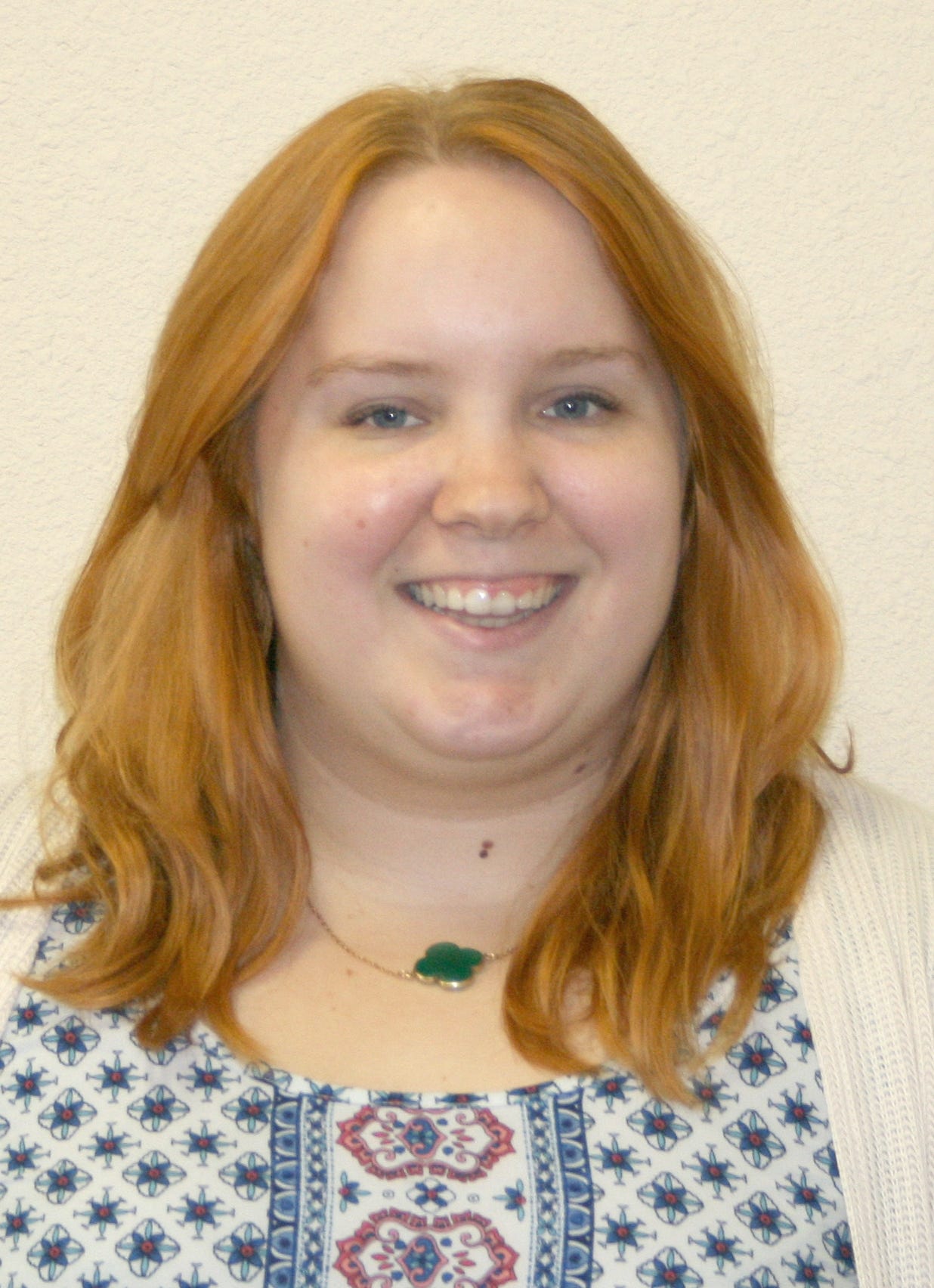
Katie Oakes and Taylor Wilken are agents at the University of Florida's Institute of Food and Agricultural Sciences Extension office in Crestview.
This article originally appeared on Crestview News Bulletin: OAKES & WILKEN: 4 ways to eliminate back-to-school stress

Crestview airman serves in Japan

Airman Paris Alexander, left, of Crestview, and Aviation Boatswain's Mate (Handling) Airman Terrence Garcia, from El Paso, Texas, stand by to hoist the national ensign on the flight deck of the Navy's forward-deployed aircraft carrier, USS Ronald Reagan (CVN 76) as it pulls into Commander, Fleet Activities Yokosuka after a patrol in Japan. Ronald Reagan, the flagship of Carrier Strike Group 5, provides a combat-ready force that protects and defends the collective maritime interests of its allies and partners in the Indo-Pacific region. [KENNETH ABBATE | U.S. NAVY]

YOKOSUKA, Japan — A Crestview resident is among Americans serving in Japan.

Airman Paris Alexander was recently pictured aboard the U.S. Navy's forward-deployed aircraft carrier, USS Ronald Reagan (CVN 76) as it pulled into Yokosuka in July after a patrol.

This article originally appeared on Crestview News Bulletin: Crestview airman serves in Japan

Crestview-based company addresses security threats

Trei McMullen

CRESTVIEW — Guards, threat assessments and concealed-carry weapons training are among security services Trei McMullen offers at SYOTOS, LLC.

He and a staff of 10 have clients including the Destin Yacht Club; Brotula’s Seafood House & Steamer; and most recently the Emerald Coast Convention Center.

McMullen was a counter-intelligence special agent in the U.S. Army, and medically retired in 2013 after 10 years with the 7th Special Forces. He started SYOTOS as a military contractor overseas. He began running it from his home in 2017.

"SYOTOS stands for 'See You on the Other Side,'" the Crestview resident said. "It's a company that I dedicated to all my brothers and sisters that I've lost in this battle against terrorism."

SYOTOS also takes on insider threats and vulnerability issues a client may experience. He said criminals may gain access to sensitive company information by connecting with company employees on a social level.

"People may target them in online dating or Facebook or something like that. They need to be aware of these type of things so that they can kind of prevent themselves from falling into a situation where they're wrapped up in a trial because they didn't even know that a person was using them until it was too late," McMullen said.

SYOTOS helped a Destin client end theft and trespassing issues by improving security measures.

"This place was super secure. They had cameras. Every door has a locked code, and somebody still broke into their (business)," McMullen said.

He said companies and high-net-worth individuals who need executive protection should consider their security efforts before they even break ground on a home or business.

"If you had the idea, think about security. A lot of people will get cameras or an alarm … and that's great, but who's reviewing that 24 hours of footage? So you actually don't know if anything happened or not. You just know you have cameras, and since you don't see anything missing, you didn't know it. But really, there was a whole group of people that came up and have been casing your business for the last two weeks every day.

"Plus … violence is kind of going up. Believe it or not. There's been a lot of more … terrorist-like attacks, and this area is not (immune). So I would rather them be more prepared, and it never happen, than be unprepared, and something happens," McMullen said.

McMullen is writing a book, available by the fall of 2018 called "Taking the Hard Rights," about his life experiences and his advice for people undergoing some of the same things he has.

He and his wife, Lesby, have two children.

Note: This article has been updated to list the full name of Brotula’s Seafood House & Steamer.

This article originally appeared on Crestview News Bulletin: Crestview-based company addresses security threats

'Practice love' at a new yoga studio in Crestview

CRESTVIEW — Soft sounds of a river resonate throughout room at Grateful Hearts Yoga in Crestview amidst the chatter from “yogis”—participants of the yoga practice—reuniting after their last session.

Gracie Simmons, the owner of the yoga studio, begins the Wednesday morning practice by giving everyone stress relief essential oils to rub on their palms and having each woman in the studio proclaim their energy level from one to 10.

Anna Summers, a returning “yogi,” said her energy level was an 11.

Summers has been coming to the yoga studio since she won a free year of yoga at the open house and said she plans on returning to the “bright and cheery” studio.

During her Wednesday practice, Simmons said yoga was not a religion.

“You can be in a room full of people each with different ethnicities, backgrounds, religions, gay, transgender, bisexual, any sexual orientation. It doesn’t matter. You can all just practice love,” Simmons said. “I think that’s what our country needs right now.”

Simmons grew up in Baker and graduated from Baker School. Although she calls herself a “Baker girl,” she currently resides in Escambia Farms.

Love, Namaste, mindfulness, and grateful—all of these words will be heard at some point during a yoga practice and summarize the mindset Simmons had when she and her husband opened Grateful Hearts Yoga in Crestview.

Simmons' husband of nine years gave her the yoga studio as a gift. Grateful Hearts Yoga is located in a strip owned by Simmons’ father-in-law.

Simmons said she knew there was a need in Crestview for a yoga studio.

“There’s a lot of depth to yoga,” Simmons said. “A lot of people think it’s just headstands or handstands, but there’s much more involved in being present in the moment, calming your mind, letting go of any stress that you may be holding.”

For the Simmons family, yoga is more than just a good form of exercise.

Simmons said yoga has even affected the way her family interacts with each other because they have learned to approach situations with more composure.

“My oldest daughter will tell me, ‘Yoga has changed our lives.’ She even left me a Google review … I cried. It was so sweet,” Simmons said.

In July, Grateful Hearts Yoga hosted a week-long kid’s camp where Simmons’ 11-year-old daughter helped teach some of the classes. Simmons said her daughter will also start teaching a regular class on Thursday afternoon for kids.

“I think everyone should do yoga, but kids especially because they can get some of that extra energy out,” Simmons said. “They can learn some mindfulness and how to love themselves and love others.”

This article originally appeared on Crestview News Bulletin: 'Practice love' at a new yoga studio in Crestview

USA Games athlete awarded 'key to the city of Crestview'

CRESTVIEW — Special Olympics USA Games athlete and gold medalist was awarded a "key to the city of Crestview" during the city council's regular meeting on Aug. 13.

Crestview resident Harrison Mauldin competed in July at the 2018 Special Olympics USA Games in Seattle, Washington.

Mauldin explained his medals to the crowd at the city council meeting. He was sporting two gold medals, one bronze medal, and a quartz medal around his neck. He received the gold medals after placing first in the 10,000-meter run and the 4-by-400-meter run.

Mayor David Cadle then asked Mauldin about his experience.

"It was wonderful. To be honest, the weather over there was a bit nicer. It's still nice here," Mauldin said.

After Mauldin spoke about his experience, Cadle then presented Mauldin with the wooden plaque with a large golden key placed at the top. "The key to the city" award is typically given to honor someone of significance to a city.

"You did us proud. The highest award that I can present to you is the key to the city," Cadle said. "The key to the city is presented to Harrison Mauldin … Congratulations."

Mauldin received a roaring applause and standing ovation from the crowd at the city council meeting. According to a Facebook post on the Special Olympics Florida Okaloosa County page, Mauldin and his family members finished out the night with a celebratory dinner at Hideaway Pizza.

Cadle also awarded six firefighters for reaching their 10-year anniversary with the Crestview Fire Department.

"I appreciate you guys very much," Cadle said. "I'm always talking about firefighters. You see a fire. You run towards it. I'm running the other way."

Fire Chief Anthony Holland spoke about his firemen before receiving a 25-year service award from the mayor.

"It's been an honor to work with each one of these guys. They all have contributed to the growth of the department," Holland said.

Click to listen:

LISTEN: From the Newsroom

This article originally appeared on Crestview News Bulletin: USA Games athlete awarded 'key to the city of Crestview'

Okaloosa community briefs

CRESTVIEW — Here are some of the latest Okaloosa events from area organizations.

FWC receives applications for ‘BearWise’ funding 

The Florida Fish and Wildlife Conservation Commission will provide up to $500,000 in BearWise funding to local governments to help reduce human-bear conflicts. The funding helps offset some of the costs for residents and businesses to acquire bear-resistant trash cans and dumpsters. Okalooosa, Santa Rosa and Walton are among the eight counties and two cities that have applied for funds. Their requests total $935,181.  

Gov. Rick Scott and the Florida Legislature approved the $500,000 for the BearWise grants under the condition that 60 percent of the funding goes to communities with BearWise ordinances that require residents and businesses to keep their trash secure until the morning of garbage pickup.

Applicants with BearWise ordinances include Lake, Orange, Santa Rosa and Seminole counties. The city of Apopka is currently in the final stages of consideration for their ordinance, and if approved, would be the second city in Florida to have passed a BearWise ordinance. The first was Fort Walton Beach. 

Last year, the FWC distributed over $500,000 in BearWise funding to seven counties and two homeowner’s associations. The funds paid for almost 3,000 bear-resistant trash cans, 3,800 sets of hardware to secure regular trash cans, and to modify 54 dumpsters to keep bears out. A total of 66 percent of last year’s funding was provided to communities with BearWise ordinances.

For more information on Florida black bears, including how to reduce conflicts with them, visit MyFWC.com/Bear and click on Live BearWise, watch the BearWise Communities video and read the brochure, A Guide to Living in Bear Country. 

Bill includes provision for disabled veterans, Eglin assisted living

The U.S. Senate recently approved a $716 billion annual defense spending bill for the next fiscal year. The legislation, which now heads to the president’s desk to be signed in law, includes several items affecting the military and veterans. 

Some of the bill's provisions, which Senator Bill Nelson sponsored, do the following:

•Allow disabled veterans with a permanent disability rating of 100 percent to travel on military aircraft when there are available seats. 

•authorize the U.S. Air Force to transfer land necessary to build a new assisted and independent-living care facility for veterans and wounded warriors near Eglin Air Force Base.

•Authorized the Department of Defense to provide grants to state and local governments to help make infrastructure improvements around military installations. Nelson’s provision will allow the Department of Defense to help pay for roads, schools, hospitals, utility infrastructure and other community support infrastructure around them.

•streamline launch approval process at Cape Canaveral, making it easier for commercial space companies to launch from there. It eliminates overlapping Air Force and Federal Aviation Administration approval processes for commercial space companies.

•use $106.8 million to improve and modernize the military’s testing and training ranges, including the testing and training range in the Eastern Gulf of Mexico. Increasing the military’s investment in the range will help defend against future attempts to allow offshore drilling there. 

•Require a report to better manage public access to Naval Air Station Pensacola, which will help in increasing tourism while protecting our servicemen and women at the same time.

This article originally appeared on Crestview News Bulletin: Okaloosa community briefs

Help prevent fatal deer disease

Tony Young

Chronic Wasting Disease, or CWD as it’s more commonly called, has most recently been detected in Mississippi. This is the closest the fatal deer disease has been to our Florida border.

"We’re fortunate that CWD has not been found in Florida or our immediate neighboring states, but it’s going to take the help of hunters to keep it that way," Cory Morea, Florida Fish and Wildlife Conservation Commission’s Deer Management Program coordinator, said. "Anyone planning to hunt deer, moose or elk out of state needs to be aware of certain laws and regulations aimed at preventing CWD from coming into our state." 

CWD is a transmissible disease caused by an abnormal protein called a prion. It affects the brains of infected, eventually causing them to become emaciated, display unusual behavior and die.

"While there’s no evidence that CWD can be transmitted to humans or livestock, the impacts of this disease can have a significant negative impact on deer populations and our traditional hunting activities," Morea said.

Transmission occurs by direct contact with infected deer or by consuming prions that have been deposited into the environment. Once present, prion stays in the soil and can remain infectious for years.

To date, CWD has been found in mule deer, white-tailed deer, moose and elk in these 25 states: Arkansas, Colorado, Illinois, Iowa, Kansas, Maryland, Michigan, Minnesota, Mississippi, Missouri, Montana, Nebraska, New Mexico, New York, North Dakota, Ohio, Oklahoma, Pennsylvania, South Dakota, Texas, Utah, Virginia, West Virginia, Wisconsin and Wyoming. It also has been detected in Canada (Saskatchewan and Alberta), Norway, Finland and in South Korea.

Rules for out-of-state hunting

Hunters are prohibited from bringing into Florida whole carcasses of any cervid from any of the above listed CWD-positive states or countries. From these areas, hunters can only bring back deboned meat, finished taxidermy mounts, cleaned skulls, antlers and hides – as long as all soft tissue (meat) has been removed.

The importation of live deer into Florida is also prohibited. The public is encouraged to report any possible violations to the FWC by calling the Wildlife Alert Hotline, toll-free, 888-404-FWCC (3922).

How to help

Another way to help is by reporting deer that are sick or found dead from unknown causes to FWC’s toll-free hotline, 866-293-9282. Warning signs that hunters can look out for while in the field include deer that are extremely thin or appear sick, or those exhibiting odd behavior such as staggering, walking in circles, standing with a wide stance or head tremors. Do not handle the deer. The FWC will collect the whole carcass and conduct an examination.

To learn more about CWD, visit MyFWC.com/CWD. 

Tony Young is a columnist for the Florida Fish & Wildlife Conservation Commission.

This article originally appeared on Crestview News Bulletin: Help prevent fatal deer disease

Bulletin Kids learn about popcorn, enjoy music

Crestview residents Amanda, Boone (age 1) and Hunter (age 2) Harrison ring bells as Library Class attendees sing recently in Crestview. [HEATHER NITZEL | SPECIAL TO THE NEWS BULLETIN]

CRESTVIEW — Area attendees represented popcorn kernels and made music during classes at the Crestview Public Library.

Have a cute photo of your kids out and about? They could be our next The Bulletin Kid! Email a photo with your child's name, age, hometown and a description of the action to news@crestviewbulletin.com.

This article originally appeared on Crestview News Bulletin: Bulletin Kids learn about popcorn, enjoy music

Dogwood Garden Club releases schedule, resumes meetings

The Dogwood Garden Club meetings include programs on various topics. [PIXABAY.COM]

CRESTVIEW — Dogwood Garden Club will resume meetings in September. 

Club members meet 10:30 a.m. first Mondays from September through May, usually in members' homes. This year, the September meeting is being pushed to the second Monday, Sept. 10, due to the Labor Day holiday.

Meetings include refreshments and a program on an aspect of gardening.

Schedule

•10:30 a.m. Sept. 10, Crestview Public Library, 1445 Commerce Drive. Program: Planting a Spaghetti Garden.

•10:30 a.m. Oct. 1, location to be announced (TBA). Program: Trees of the Bible.

•10:30 a.m. Nov. 5, TBA. Program: Falling for Autumn

•10:30 a.m. Dec. 3, Crestview Woman’s Club, 150 Woodlawn Drive, Crestview. Program: Christmas auction and party.

•10:30 a.m. Jan. 14, TBA. Program: Go Wild.

•10:30 a.m. Feb. 4, Riverwood Apartments Office, 342 Riverwood Drive, Crestview. Program: Container Gardening.

•10:30 a.m. March 4, TBA. Program: Bulbs and Perennials.

•10:30 a.m. April 1, TBA. Program: Wrap It Up.

•10:30 a.m. May 6, TBA. Program: Salad Luncheon, Woman of the Year Award and Installation.

The group's mission is to encourage interest and knowledge in horticultural practices, civic beauty, and the conservation of natural resources through instruction and by example of good stewardship in the protection of our environment, beautification of our homes and community.

Dues are $25 a year.

Call 682-2691 or 683-0839 for TBA meeting locations or more information about the club.

This article originally appeared on Crestview News Bulletin: Dogwood Garden Club releases schedule, resumes meetings

3 tips to prepare lawns for winter

Pay attention to fertilizer analysis percentages when preparing lawns for winter, esepcially when it comes to the amounts of potassium and nitrogen. [SPECIAL TO THE NEWS BULLETIN]

While suffering through the dog days of summer, we need to begin preparing our lawns for the winter.

Lawn winterizing products will soon be in local stores. Unfortunately, many products marketed as “winterizers” contain a high percentage of nitrogen fertilizer.

If nitrogen is applied in the fall, it should be done at least eight weeks before the average first frost date, which is typically the first week in November here in Northwest Florida. This allows time for the turfgrass to go dormant before cold weather can cause injury.

When applied too late, nitrogen fertilizer will promote shoot growth at a time when the grass metabolism is slowing. This results in a depletion of carbohydrates and stress on the plant. The new growth has a low cold tolerance and is often killed. Additionally, the nitrogen is available to the developing cool-season weeds and may increase the incidence of large patch disease.

The fertilizer analysis gives the percentage of available nitrogen (N), phosphorus (P), and potassium (K) in the product. Potassium plays the key role in winterizing because it has been shown to enhance cold tolerance of turfgrasses. If selecting a winterizer fertilizer containing nitrogen, be sure that the nitrogen content is low compared to the potassium.

Potassium is integral to many growth processes in plants, including: photosynthesis, starch and protein production, enzyme reactions, water movement, protein synthesis, cell wall components, and fruit development. Sandy soils tend to be more deficient in potassium, because it is leached easily. Soils with a low pH (acidic soils) may contain enough potassium, but it is not available to plants. Having a soil test performed is the best way to determine the need for potassium. Kits are available at the University of Florida Extension offices.

Besides applying potassium, there are cultural practices that help warm-season turfgrasses maintain optimum health through the winter.

•First, increase sunlight to the turf. As deciduous trees defoliate, keep the fallen leaves off the lawn. The turf that has been growing in shade has experienced reduced photosynthesis and, therefore, less carbohydrate production. Carbohydrates are needed for increased cold tolerance.

•Second, loosen compacted soils through spike aeration. However, core or plug aeration should not be done until after spring greenup.

•Finally, raise the mowing height in late summer. Not only will this promote deeper rooting, but will leave more leaf tissue for photosynthesizing and shading out weed seed.

Sheila Dunning is an agent at the University of Florida's Institute of Food and Agricultural Sciences Extension office in Crestview.

This article originally appeared on Crestview News Bulletin: 3 tips to prepare lawns for winter

error: Content is protected !!