



Please ensure Javascript is enabled for purposes of website accessibility
Skip to main content
Advertisement
Advertisement

Help prevent fatal deer disease

Tony Young

Chronic Wasting Disease, or CWD as it’s more commonly called, has most recently been detected in Mississippi. This is the closest the fatal deer disease has been to our Florida border.

"We’re fortunate that CWD has not been found in Florida or our immediate neighboring states, but it’s going to take the help of hunters to keep it that way," Cory Morea, Florida Fish and Wildlife Conservation Commission’s Deer Management Program coordinator, said. "Anyone planning to hunt deer, moose or elk out of state needs to be aware of certain laws and regulations aimed at preventing CWD from coming into our state." 

CWD is a transmissible disease caused by an abnormal protein called a prion. It affects the brains of infected, eventually causing them to become emaciated, display unusual behavior and die.

"While there’s no evidence that CWD can be transmitted to humans or livestock, the impacts of this disease can have a significant negative impact on deer populations and our traditional hunting activities," Morea said.

Transmission occurs by direct contact with infected deer or by consuming prions that have been deposited into the environment. Once present, prion stays in the soil and can remain infectious for years.

To date, CWD has been found in mule deer, white-tailed deer, moose and elk in these 25 states: Arkansas, Colorado, Illinois, Iowa, Kansas, Maryland, Michigan, Minnesota, Mississippi, Missouri, Montana, Nebraska, New Mexico, New York, North Dakota, Ohio, Oklahoma, Pennsylvania, South Dakota, Texas, Utah, Virginia, West Virginia, Wisconsin and Wyoming. It also has been detected in Canada (Saskatchewan and Alberta), Norway, Finland and in South Korea.

Rules for out-of-state hunting

Hunters are prohibited from bringing into Florida whole carcasses of any cervid from any of the above listed CWD-positive states or countries. From these areas, hunters can only bring back deboned meat, finished taxidermy mounts, cleaned skulls, antlers and hides – as long as all soft tissue (meat) has been removed.

The importation of live deer into Florida is also prohibited. The public is encouraged to report any possible violations to the FWC by calling the Wildlife Alert Hotline, toll-free, 888-404-FWCC (3922).

How to help

Another way to help is by reporting deer that are sick or found dead from unknown causes to FWC’s toll-free hotline, 866-293-9282. Warning signs that hunters can look out for while in the field include deer that are extremely thin or appear sick, or those exhibiting odd behavior such as staggering, walking in circles, standing with a wide stance or head tremors. Do not handle the deer. The FWC will collect the whole carcass and conduct an examination.

To learn more about CWD, visit MyFWC.com/CWD. 

Tony Young is a columnist for the Florida Fish & Wildlife Conservation Commission.

This article originally appeared on Crestview News Bulletin: Help prevent fatal deer disease

Bulletin Kids learn about popcorn, enjoy music

Crestview residents Amanda, Boone (age 1) and Hunter (age 2) Harrison ring bells as Library Class attendees sing recently in Crestview. [HEATHER NITZEL | SPECIAL TO THE NEWS BULLETIN]

CRESTVIEW — Area attendees represented popcorn kernels and made music during classes at the Crestview Public Library.

Have a cute photo of your kids out and about? They could be our next The Bulletin Kid! Email a photo with your child's name, age, hometown and a description of the action to news@crestviewbulletin.com.

This article originally appeared on Crestview News Bulletin: Bulletin Kids learn about popcorn, enjoy music

Dogwood Garden Club releases schedule, resumes meetings

The Dogwood Garden Club meetings include programs on various topics. [PIXABAY.COM]

CRESTVIEW — Dogwood Garden Club will resume meetings in September. 

Club members meet 10:30 a.m. first Mondays from September through May, usually in members' homes. This year, the September meeting is being pushed to the second Monday, Sept. 10, due to the Labor Day holiday.

Meetings include refreshments and a program on an aspect of gardening.

Schedule

•10:30 a.m. Sept. 10, Crestview Public Library, 1445 Commerce Drive. Program: Planting a Spaghetti Garden.

•10:30 a.m. Oct. 1, location to be announced (TBA). Program: Trees of the Bible.

•10:30 a.m. Nov. 5, TBA. Program: Falling for Autumn

•10:30 a.m. Dec. 3, Crestview Woman’s Club, 150 Woodlawn Drive, Crestview. Program: Christmas auction and party.

•10:30 a.m. Jan. 14, TBA. Program: Go Wild.

•10:30 a.m. Feb. 4, Riverwood Apartments Office, 342 Riverwood Drive, Crestview. Program: Container Gardening.

•10:30 a.m. March 4, TBA. Program: Bulbs and Perennials.

•10:30 a.m. April 1, TBA. Program: Wrap It Up.

•10:30 a.m. May 6, TBA. Program: Salad Luncheon, Woman of the Year Award and Installation.

The group's mission is to encourage interest and knowledge in horticultural practices, civic beauty, and the conservation of natural resources through instruction and by example of good stewardship in the protection of our environment, beautification of our homes and community.

Dues are $25 a year.

Call 682-2691 or 683-0839 for TBA meeting locations or more information about the club.

This article originally appeared on Crestview News Bulletin: Dogwood Garden Club releases schedule, resumes meetings

3 tips to prepare lawns for winter

Pay attention to fertilizer analysis percentages when preparing lawns for winter, esepcially when it comes to the amounts of potassium and nitrogen. [SPECIAL TO THE NEWS BULLETIN]

While suffering through the dog days of summer, we need to begin preparing our lawns for the winter.

Lawn winterizing products will soon be in local stores. Unfortunately, many products marketed as “winterizers” contain a high percentage of nitrogen fertilizer.

If nitrogen is applied in the fall, it should be done at least eight weeks before the average first frost date, which is typically the first week in November here in Northwest Florida. This allows time for the turfgrass to go dormant before cold weather can cause injury.

When applied too late, nitrogen fertilizer will promote shoot growth at a time when the grass metabolism is slowing. This results in a depletion of carbohydrates and stress on the plant. The new growth has a low cold tolerance and is often killed. Additionally, the nitrogen is available to the developing cool-season weeds and may increase the incidence of large patch disease.

The fertilizer analysis gives the percentage of available nitrogen (N), phosphorus (P), and potassium (K) in the product. Potassium plays the key role in winterizing because it has been shown to enhance cold tolerance of turfgrasses. If selecting a winterizer fertilizer containing nitrogen, be sure that the nitrogen content is low compared to the potassium.

Potassium is integral to many growth processes in plants, including: photosynthesis, starch and protein production, enzyme reactions, water movement, protein synthesis, cell wall components, and fruit development. Sandy soils tend to be more deficient in potassium, because it is leached easily. Soils with a low pH (acidic soils) may contain enough potassium, but it is not available to plants. Having a soil test performed is the best way to determine the need for potassium. Kits are available at the University of Florida Extension offices.

Besides applying potassium, there are cultural practices that help warm-season turfgrasses maintain optimum health through the winter.

•First, increase sunlight to the turf. As deciduous trees defoliate, keep the fallen leaves off the lawn. The turf that has been growing in shade has experienced reduced photosynthesis and, therefore, less carbohydrate production. Carbohydrates are needed for increased cold tolerance.

•Second, loosen compacted soils through spike aeration. However, core or plug aeration should not be done until after spring greenup.

•Finally, raise the mowing height in late summer. Not only will this promote deeper rooting, but will leave more leaf tissue for photosynthesizing and shading out weed seed.

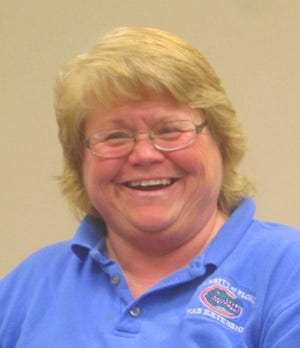
Sheila Dunning is an agent at the University of Florida's Institute of Food and Agricultural Sciences Extension office in Crestview.
This article originally appeared on Crestview News Bulletin: 3 tips to prepare lawns for winter

Say hello, not see ya later to the new alligators at the Emerald Coast Zoo

CRESTVIEW — The Emerald Coast Zoo welcomed the newest members of the zoo family—alligators.

It was a warm, sunny summer Friday at the zoo.

A lion rested on the cool dirt in his cage staring across the road at one of the newest members of the zoo family—a female alligator—who was receiving attention from visitors at the zoo.

John Decker, formerly on Discovery Channel’s “Swamp Brothers”, held the four foot female gator and waited for the next zoo-comers who wanted to meet her.

Decker doesn’t work at the Emerald Coast Zoo. He’s from Miami but came to the zoo to help the owner, Rick de Ridder, with the gator encounter.

The Killens family made their way to see the alligator.

Josh Killens and his sister, Isabella Killens, were excited to hold the 4-foot alligator. Josh is still celebrating his birthday that was a few days before.

As the kids sat down on the bench, de Ridder and Decker each grabbed one end of the gator and placed it on the children's laps.

“Hold that rascal,” Decker said.

Isabella and Josh didn’t flinch and held onto the gator while their mother, Lisa Killens, snapped a photo.

“There’s a future gator hunter,” Decker said.

After they held the 4-foot gator, Rick brought the baby gators to the kids.

The zoo currently has two large-sized gators and about five baby gators. The alligators came from Cocoa Beach where the de Ridder family previously lived. De Ridder said Decker brought them to the zoo.

De Ridder, or “Rick the Reptile Guy” as some call him, said this is not his first rendezvous with alligators.

“I used to own the biggest alligator north of Florida at 14 feet 1,000 pounds … I’ve always been into reptiles. Sucked at school, loved reptiles,” de Ridder said.

The zoo is currently working on building a “huge” pond a new alligator park, de Ridder said. Visitors will be able to take photos and feed the gators using bamboo poles for an additional price.

“We’ll do alligator shows where we’re swimming with them inside the pond. So, I think that’s going to be so cool for kids to see,” de Ridder said.

De Ridder said Jimmy Riffle from Animal Planet’s show “Gator Boys” is bringing him a 12 to 13-foot alligator to add to the “gator park.”

The alligators are currently in a temporary location until pond construction is complete.

The new pond is only part of the new changes coming to the Emerald Coast Zoo. De Ridder said they are also looking into starting a new show at the zoo, but he couldn’t provide anymore details at the moment.

This article originally appeared on Crestview News Bulletin: Say hello, not see ya later to the new alligators at the Emerald Coast Zoo

Do what you enjoy

Dr. Glenn Mollette

I started out thumping on a mandolin and then a guitar when I was child. My brother had a mandolin and so I learned a few chords and then eventually learned a few chords on a guitar. My first cousin James Webb across the road where I was raised in Stidham, Kentucky taught me G, C and D, E and A and I was on my way. I played music and basketball as a kid and not always in that order. Music was something I could do regardless of the weather and basketball was just great exercise and fun. I only had one television channel and watched plenty of TV but my hobbies of music and ball were clean and entertaining.  My father found things for me to do to like mowing lots of grass with a push mower and cutting bushes on hillsides. Life was good. 

I had some friends I played music with growing up. We weren't that great but we played music together for hours and had a lot of fun. Music or playing ball never got us in trouble. Our energy was focused on being creative and having good fun. 

I put my guitar down when I was about sixteen. I had played for about eight years and was getting better. I had a cheap electric guitar that came from G.C. Murphy's and James; an instrument craftsman today, eventually made me one. By the time I was eighteen I had given up music and traded that guitar to my brother Clyde for an eight-track tape player. Yes, really stupid. 

I started speaking in church when I was sixteen. Yes, I was too young but youth always excels and is greatly sought after. Churches and organizations are starved for youth who stand up and demonstrate leadership. By the time I was seventeen I had an old car and was driving everywhere preaching sermons and speaking to church groups. Several small churches called me to serve as their pastor and they all came back to life. I enjoyed it. I still enjoy it today. After 40 years I still am thrilled to talk about God's grace and love in most any pulpit in America. I have not found any place today that is not starved for grace and love. For fifteen years I have been privileged to work with men and women around the planet who are training for Christian service and ministry. I have a great privilege. 

However, as I said many years ago I had laid down my guitar. Most of the church people were glad about that because I didn't play traditional church songs. Over the years I totally lost my ability to sing in front of people. I actually tried a few times and I was a nervous wreck.  I had lost it.  The old saying is true if you don't use it you will lose it. 

The way to get better is to keep trying. Over the last five years or so I've sung in front of several groups and messed up plenty. However, in the process of trying I've regained my confidence, which is the coolest part of it all. It's been like climbing a mountain in a way. 

I may never sing in front of a group again and we never know. However, I don't worry that much about messing up.  I just have fun.  Doing something we enjoy is what it's all about. 

Find something to do that inspires and motivates you. It may be writing, golf or gardening. You need a meaningful hobby and an outlet of your energy. Have some fun; it's good for you.

Glenn Mollette is an American syndicated columnist and author.

What’s your view? Write a letter to the editor.

This article originally appeared on Crestview News Bulletin: Do what you enjoy

Community Bank has local roots

CRESTVIEW — Christie Austin serves as Assistant Vice President and Loan Officer in Community Bank’s Crestview Office, which serves all of North Okaloosa County and its surrounding areas. A Crestview native, Christie is heavily involved in the local community. She has served as a member of the Board of Directors for the YMCA, Healthy Woman, and Kiwanis. She has also volunteered locally with Covenant Hospice and United Way. Christie actively serves the Crestview Chamber of Commerce as a past Chairman of the Board, and currently as Treasurer. Christie, along with her husband and 9-year-old son, are members of First United Methodist Church of Crestview. 

When you combine Christie’s 12 years of banking experience, her extensive knowledge of the banking industry and her understanding of the Crestview community, she is equipped to help you not only reach, but exceed your financial goals. Whether you are looking at your personal finances or your business, Community Bank’s cutting-edge product suite has a solution that will fit your needs. Christie and our entire Crestview staff are eager to make sure you have the best banking experience possible. 

Community Bank is one of the South’s fastest-growing financial institutions. By employing a unique approach to one of America’s most routine industries, today Community Bank is now $3.1 billion in assets with 47 offices and over 750 staff members stretching across the Southeast in four states: Mississippi, Tennessee, Alabama and Florida. Conveniently located at 345 E James Lee Boulevard, Christie and the Community Bank team are ready to walk with you through your financial journey, whether that be consumer or business needs. You can reach out to Christie at 850-683-8822 or drop in the Crestview office 8:30 a.m. to 4:30 p.m. Monday to Thursday and 8:30 a.m. to 5:30 p.m. on Friday.

Community Bank – Member FDIC. Equal Housing Lender.

This article originally appeared on Crestview News Bulletin: Community Bank has local roots

Service, camaraderie part of radio club's efforts

Rodney Ryals, a North Okaloosa Amateur Radio Club member from DeFuniak Springs, said the group's 70-plus members come from across Northwest Florida. He talked to several people nationwide during the group's Library on the Air broadcast. [RENEE BELL | NEWS BULLETIN]

CRESTVIEW — One area club goes beyond its members participating in a shared hobby and assists local authorities in real life emergencies and public events. That is the North Okaloosa Amateur Radio Club.

Amateur radio is described as a hobby that brings people, electronics and communications together, according to a club brochure.

"People use ham radio to talk across town, around the world, or even into space all without the Internet or cell phones," the brochure states.

Club members Alex Barthe and Richard Girardin took a few minutes to explain some of the club's activities during the Crestview Public Library's Aug. 4 Library on the Air event. Group members spoke via radio with people across the country during the event.

The club provides communication services during community events like the Crestview Christmas and Veteran's Day parades, and even provides emergency communication services during weather watches.

The local club also participates in city parades and community events.

Barthe said members station themselves along the routes and remain in contact with the event organizers and participants to ensure a smooth event.

The group also becomes a vital part of communications during more serious situations, like hurricane watches or evacuations.

"The North Okaloosa Amateur Radio Club members man part of the emergency operations center at Northwest Florida State College," Barthe said.

"We also have an operation cell with the City of Crestview, and then people like Richard and myself can also man shelters when they're activated, if there's hurricanes, if there's other kinds of situations," Barthe said.

The middle schools, which sometimes function as shelters during those times, are all outfitted with antennas and radios at the members' expense to facilitate ham radio help.

Rodney Ryals, an NOARC member from DeFuniak Springs, was manning a radio that afternoon.

He had talked to at least 12 people so far, but said that fewer people are on at the point.

"With it being midday, from about 10 o'clock to 2 o'clock … with the sun out heavy, it interferes with some of the signals, but you can get some people here and there," Ryals said.

He spoke to about 12 people from areas including Idaho, New Jersey and Texas.

The club meets at 7 p.m. the second Thursday of the month at Live Oak Baptist Church, Crestview, for club business, and 7 p.m. on the fourth Thursdays at the church for its "tech nights," a great time to learn about the hobby.

Visit the group's website, www.w4aaz.org, or email activities@w4aaz.org for more information.

This article originally appeared on Crestview News Bulletin: Service, camaraderie part of radio club's efforts

error: Content is protected !!