Please ensure Javascript is enabled for purposes of website accessibility
Skip to main content
Advertisement

Gov. DeSantis gives update on Panhandle storm response

A tornado watch will remain in effect for the Florida Panhandle and Suwannee River Valley through 2 p.m. EST for the following counties: Bay, Calhoun, Columbia, Dixie, Franklin, Gadsden, Gilchrist, Gulf, Hamilton, Holmes, Jackson, Jefferson, Lafayette, Leon, Liberty, Madison, Suwannee, Taylor, Wakulla, Walton and Washington.

There is an enhanced risk for severe thunderstorms across the Florida Panhandle, Big Bend, Nature Coast, and through the Suwannee River Valley advancing eastward. West-Central Florida is expected to experience severe thunderstorms by early afternoon today.

In anticipation of severe weather conditions, multiple counties closed schools and campuses ahead of January 9, 2024. School closures for Wednesday, January 10, will be announced throughout the day. School and campus closures can be found on the Florida Department of Education Storm Information page here.

There are over 87,700 accounts reported without power due to the severe weather event. Florida’s utility providers pre-positioned crews across the state to respond and are actively working to restore power where it is safe to do so. The Florida Department of Transportation continues to coordinate with Florida utility providers, counties, and municipalities on roadway conditions to ensure roadways are cleared with power restoration in mind.

State Response Efforts

  • The Florida Division of Emergency Management (FDEM) is leading the State Emergency Response Team (SERT) for the multi-hazard severe weather event.
  • The SEOC has been activated to a Level 1 with all Emergency Support Functions (ESF’s) present and coordinating.
  • The SERT is hosting twice daily calls with all county emergency management offices to address any reported unmet needs.
  • For information on school closures, road closures, and other vital updates, visit FloridaDisaster.org/StormInfo.
  • The Florida State Guard was activated by the Governor to support preparation and response efforts in coordination with the Florida Division of Emergency Management and other state partners. The activation of the following volunteers and resources has been initiated:
    • A  logistics team deployed to Camp Blanding Joint Training Center (CBJTC) within six hours of activation to pre-stage vehicles and prepare route clearance equipment and recovery supplies.
    • 31 soldiers are staged and will deploy to assist with damage assessments and other missions as requested. Additional soldiers are on standby to assist impacted counties with distributed logistics as needed. 
  • The Florida Department of Law Enforcement (FDLE) is actively coordinating with local law enforcement agencies to address unmet needs as a result of the severe weather event.
  • FDLE has prepared a mobile command vehicle, command post and sleeping unit ready for deployment.   
  • The Florida Fish and Wildlife Conservation Commission (FWC) distributed instructions to vessel owners in the projected path of the storm to secure their boats ahead of severe weather. 
  • FWC officers throughout North Florida have transitioned to an increased state of readiness to respond to wind-damaged areas or high-water events. 
  • The Florida Department of Environmental Protection (DEP) is prepared to provide assistance to drinking water, wastewater and hazardous waste facilities affected by today’s severe weather. 
  • DEP is prepared to conduct post-storm beach surveys to determine impacts to shorelines and erosion, as well as inspect damage to beach projects. 
  • State parks in the Florida Panhandle have delayed opening and will resume normal operations as weather permits. Visitors are encouraged to visit FloridaStateParks.org to check the status of individual parks. 

Health and Human Services

  • The Florida Department of Health (DOH) in Calhoun County and Liberty County have prepared to open Special Needs Shelters if needed.
  • The following County Health Departments Offices are closed on Tuesday, January 9, 2024: Leon County, Franklin County, Wakulla County, Gadsden County, Gulf County, Madison County and Duval County. DOH will provide updates regarding reopenings and service availability as this information becomes available. 
  • Women, Infants, and Children (WIC) clients have been contacted regarding access to remote services due to closures or limited operations in the following counties: Santa Rosa County, Escambia County, Okaloosa County, Franklin County, Wakulla County, Jefferson County, Madison County, Taylor County, Leon County, Bay County and Gulf County. 
  • The Agency for Health Care Administration (AHCA) has remained in contact with hospitals and health care facilities in the impacted areas.
  • The Agency for Persons with Disabilities (APD), is continuing to work to contact clients, providers and partners to determine safety and wellbeing and assess unmet needs.  
  • The Department of Elder Affairs (DOEA) Area Agencies on Aging are monitoring the severe weather.
    • The Area Agency on Aging of Pasco-Pinellas shared emergency information with their local aging network and asked to be notified if any unmet needs arise.

Infrastructure, Roads, State Closures and Outages

  • Florida Department of Transportation (FDOT) initiated statewide coordination calls on Monday and is actively monitoring the storm including flood-prone areas, winds for potential bridge closures in coordination with Florida Highway Patrol, and road maintenance.
  • Overnight Monday, FDOT Road Ranger operations in the Northwest FL region extended hours of service to cover overnight needs for roadside assistance.
  • As of Tuesday morning, FDOT maintenance crews have cleared downed trees on I-10 in Walton and Holmes counties.
  • Additionally, FDOT maintenance crews have cleared downed trees along State Road 285 in Okaloosa County, State Road 69 in Jackson County, and US 90 in Leon County.
  • In Tampa, the Howard Frankland construction barges have been secured for potential wind and wave impacts.
  • FDOT crews engaged in pre-storm preparations, which include checking roadways for potential drainage concerns, placing additional team members on standby, securing operations yards and staging equipment as needed across the state.
  • As conditions are rapidly changing, please refer to FL511.com for real-time road and bridge closures.
  • The Florida Department of Education is consistently updating its website with school district closures, as well as State University System and Florida College System Closures. 

Resources for Employees and Businesses

  • Florida Commerce has activated the Florida Private Sector Hotline (850-815-4925). Inquiries may also be emailed to ESF18@em.myflorida.com.
  • Today, FloridaCommerce and the State Emergency Response Team (SERT) activated the Business Damage Assessment Survey in response to January severe weather. Businesses can complete the survey online by visiting www.FloridaDisaster.biz and selecting “January Severe Weather” from the dropdown menu.

Closures

  • CareerSource Closures
    • CareerSource Citrus Levy Marion
    • CareerSource Capital Region
    • CareerSource Gulf Coast
    • CareerSource Chipola
    • CareerSource Okaloosa Walton
    • CareerSource Escarosa
  • The Department of Business and Professional Regulation (DBPR) has suspended certain provisions of section 489.113(3), Florida Statutes to allow certified or registered general, building, or residential contractors to subcontract roofing work for the repair or installation of any roof type in listed counties:
    • Registered contractors are not subject to geographic scope limitations or requirements in section 489.513(5), Florida Statutes, when providing services in listed counties, subject to additional requirements outlined in the emergency order.
    • Registered contractors are required to provide their state registration, proof of compliance with applicable workers’ compensation, and liability and property damage insurance to the jurisdiction in which the work is being performed.
  • DBPR encourages Florida’s licensed contractors who are looking to help property owners in need of post-storm construction-related services to register with its Florida Disaster Contractors Network at DCNOnline.org. Once homeowners are safely able to assess their home repair needs, DBPR encourages them to log onto DCNOnline.org and search by county for a list of Florida-licensed contractors providing these services in their community.
  • Florida Department of Highway Safety and Motor Vehicles (FLHSMV) is in close communication with law enforcement and transportation partners and stands ready to assist for potential storm impacts.
  • The Florida Highway Patrol is prepared to implement altered shifts in preparation for any potential storm response.
  • The Florida Highway Patrol is monitoring bridges and prepared to close certain bridges in the event of dangerous conditions.

Follow @FLSERT and @GovRonDeSantis on X, formerly known as Twitter, for live updates. Visit FloridaDisaster.org/ for more information.

Severe storms likely overnight Tuesday, Jan. 24

This potent system may produce gradient winds sustained at 35 mph with gusts to 50 mph outside of any thunderstorms (high wind advisory in effect). Some stronger storms may contain large hail and gusts of 70 mph. There is a threat of tornadoes.

The line of severe storms expected to move through Okaloosa County early Wednesday morning may affect morning commutes. Okaloosa County advises people to have multiple ways to stay informed and stay weather aware.

To receive up to date information and alerts, every home should have a NOAA weather radio, the first line of defense before relying on alerts through a smartphone.

Smartphone weather apps are also an excellent delivery source of severe weather information and other disaster updates – especially in the overnight hours.

The County wants people to be sure that they have not disabled your alerts on their phone and that it is fully charged and within reach. If you use the “Do Not Disturb” feature on your phone at night, turn it off so that any emergency calls may come through.

Having a kit with supplies ready to go when a tornado warning is issued. Suggested items to include are:

•             A bike helmet or some form of head protection for each family member.

•             A flashlight or electric lantern.

•             Charged cell phone power bank.

•             A whistle or air horn in the event you are trapped under debris.

•             First aid kit.

It is important to know where you will go (interior rooms, basement – never a car or mobile home) if a tornado warning is issued and don’t forget your pets!

For current weather events, visit www.weather.gov/mob

Dry, windy weather in forecast, fire danger increases

“With the conditions – dry and windy – any new fire has the potential to become a problem,” David Smith, Operations Administrator for Blackwater, said. “The southern-most end of our area received some rainfall Monday evening, but we are very dry with no rain in the extended forecast.”

Current forecasts call for low humidity (below 35% during the day) for the next several days and north winds up to 20 mph. No burn authorizations will be issued for prescribed burns or pile burns until conditions improve, and residents are asked to refrain from any outdoor fire activity for the time being.

The Florida Forest Service said residents should always be prepared for the possibility of a wildfire as Florida experiences a year-round fire season that typically peaks from April to June in our area. The Florida Forest Service offers tips and advice on how to prepare yourself and your home in case you are impacted by a wildfire online at www.BeWildfireReadyFL.com.

The Florida Forest Service, a division of the Florida Department of Agriculture and Consumer Services, manages more than a million acres of state forests and provides forest management assistance on more than 17 million acres of private and community forests. Florida Forest Service is also responsible for protecting homes, forestland and natural resources from the devastating effects wildfire on more than 26 million acres. Learn more at FDACS.gov/FLForestService.  

Another reason to hate hurricanes: Agressive spiders

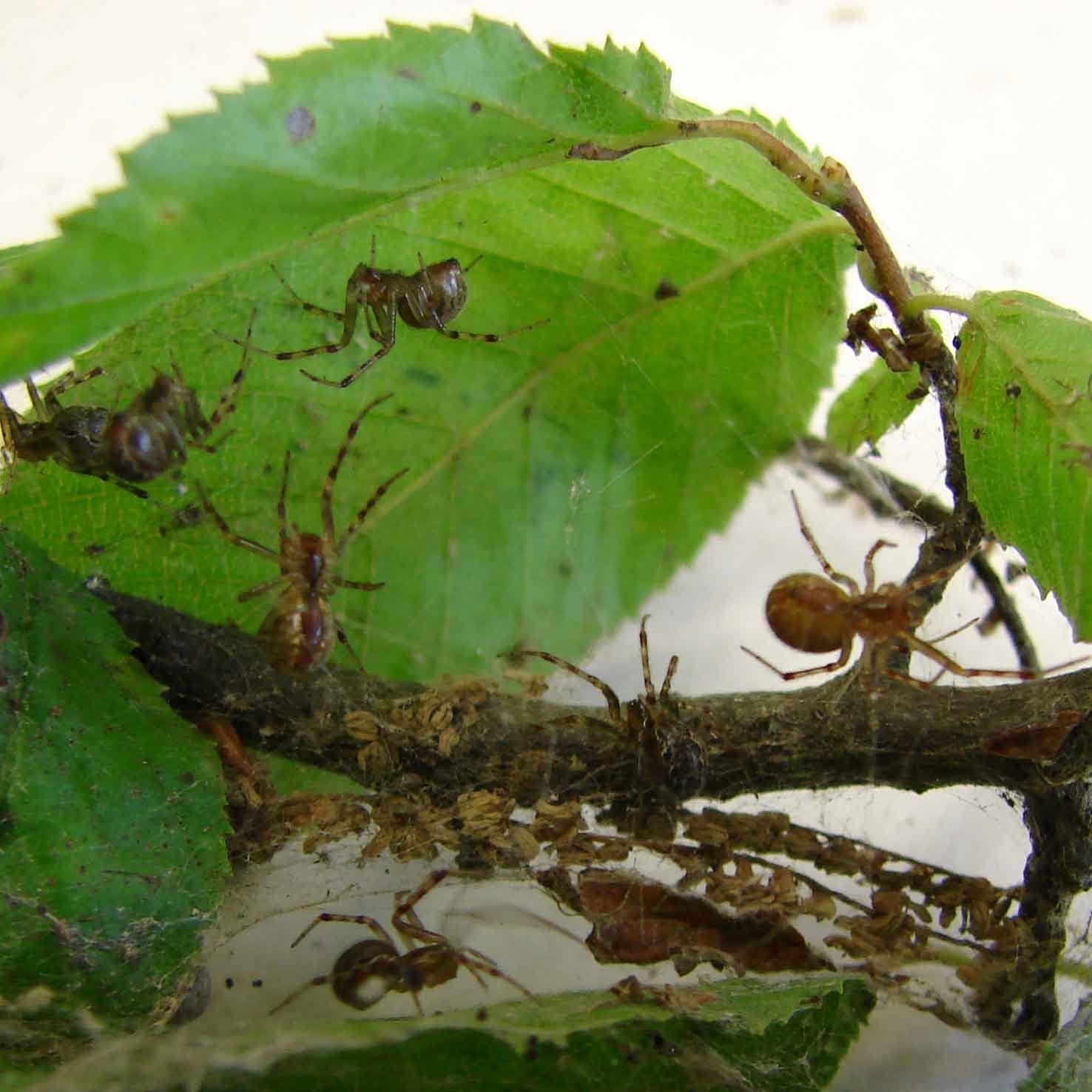
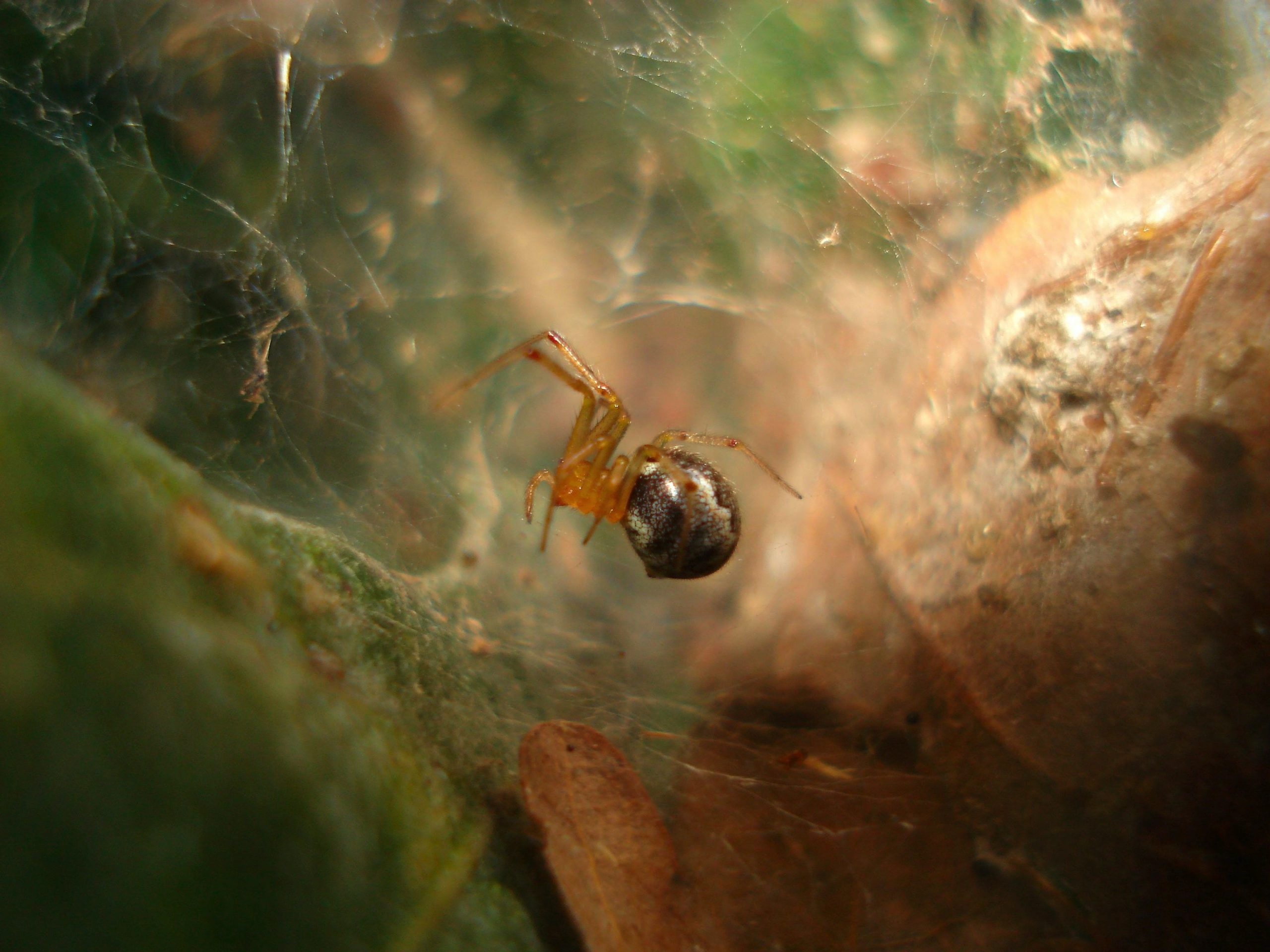
Jonathan Pruitt, a researcher with McMaster University in Hamilton, Ontario, Canada, examines spiders in the southeastern United States after a hurricane. Pruitt's research shows that female tangle web spiders become more aggressive following a hurricane. [Provided by Jonathan Pruitt, McMaster University]

No one ever forgets what life is like in the days after a hurricane. Heat. Humidity. No air conditioning. Raw emotion. But it turns out human survivors aren't the only ones traumatized by hurricanes and tropical storms.

A recent study by a group of researchers at universities in Ontario and California shows the tangle web spiders that weave messy clusters of webs in low-hanging trees and shrubs over waterways across the Southeast, suffer both direct and indirect impacts that eventually produce more aggressive females.

After a hurricane, less aggressive spiders either don't survive or produce fewer baby spiders, said Jonathan Pruitt, research chair in the Department of Psychology, Neuroscience & Behaviour at McMaster University in Ontario, Canada. Pruitt co-authored a study with researchers from the University of California at Santa Barbara, published recently in the journal Nature Ecology and Evolution.

It's sort of like what might happen, for example, if the people brawling in gas station lines after a hurricane were the only ones who produced children in the years after the storm.

This week, while people throughout the Southeast were fleeing Hurricane Dorian in droves, two of Pruitt's students rushed to Florida and the Southeast to observe ahead of and after the hurricane's arrival. One of Pruitt's study locations is Bulow Creek State Park, north of Ormond Beach.

Pruitt's paper is the second in the past year to look at the impact of hurricanes on ecosystems. Colin Donihue, a post-doctoral fellow at Washington University in St. Louis, Missouri, published a paper a year ago about lizards on Turks and Caicos surviving hurricanes. The work they're doing is among the first of its kind to delve into how hurricanes change the natural world, not just in the short term, but also in the long run.

Much like wildfires promote plant growth and wildflower blooms, Pruitt, a native of Haines City in Polk County, suspected the disruption brought by tropical storms and hurricanes might have an effect on insects and other creatures who survive the dramatic chaos of a hurricane.

“Some animals have to be in hog heaven,” he said. “Suddenly there are abundant leaves on the ground or more light gets to the forest floor. For some, it’s their perfect day.”

But for others, “it’s not their best life,” he said. “It’s not part of their evolutionary plan, but it’s a wrench thrown in.”

He chose the golden-colored tangle web spider because they're "almost everywhere."

Why spiders? “I guess it’s because they’re easier than studying lions,” he joked. “They’re wonderful predators and have lots of different kinds of strategies to capture prey. They don’t demand a lot of space, I can keep several hundred spiders in a desk."  

Pruittt traveled to several sites before the 2018 hurricanes Florence and Michael to study the behavior of the spiders and then returned immediately after the storm and a few weeks later. They observed 211 colonies, recording the height of the nests above water, the web volume, the number of females and the number of spiders that attacked the vibration.

He put the web on a sheet and used a vibrating toothbrush to disrupt the spiders and measure how they reacted. He returned to the nests in December to study the spiderlings that survived.

Ultimately, he found that some of the spiders produced fewer egg cases and, of the egg cases they produced, very few offspring survived. About three-fourths of the colonies survived but the number of eggs cases were fewer, he said. He suspects post-tropical cyclone environments may reduce prey variability and enhance natural selection on aggressiveness.

On sites that get hit by tropical storms all the time, such as coastal Florida,  the spiders “are more aggressive on average."

"Even if you weren’t hit this year, we could tell how many times you were hit over 100 years,” he said. “We can tell based on your behavior now how frequently that area has been hit by tropical cyclones over the last 100 years.  Aggressive females give rise to aggressive offspring."

He conducts his research in “fairly remote regions,” so one of the challenges is getting to the study sites within 48 hours after a storm moves through, because there are trees and power lines down.

“Fortunately, the locals who aren’t busy using chainsaws are very helpful in helping me get back to my site,” he said. He returns to the sites in early winter.

Donihue began his project by serendipity in 2017. He had been down in Turks and Caicos studying a little brown anole. Four days after he left, Hurricane Irma struck the island, giving them a perfect opportunity to go back and see how the lizards fared.

"We went back three weeks after the hurricane, and found the population had shifted," he said, towards lizards that could hold on better in the wind.

"We discovered that lizards actually did look consistently different, and those differences seem to be related to how well they could hold on in the wind," he said, in part because they have specialized toes. "It turns out the longer the toes, the stronger you can hold on.

 "When we measured this in the population immediately before and immediately after a hurricane, on average the survivors had significantly larger toe pads, meaning they had grippier feet," he said. "It seems like the best grippers were most likely to survive in the storm."

Donihue said his research and Pruitt's research are the first to look at natural selection due to hurricanes. Donihue's study was a case of being in the right place at the right time, he said. Pruitt's research, on the other hand, "was very unique and clever."

In Darwin's day, evolution was thought to be this slow process that took place over millennia, Donihue said. "Now we're realizing very short bursts of natural selection can drive evolutionary changes."

This story originally published to news-journalonline.com, and was shared to other Florida newspapers in the GateHouse Media network via the Florida Wire. The Florida Wire, which runs across digital, print and video platforms, curates and distributes Florida-focused stories. For more Florida stories, visit here, and to support local media throughout the state of Florida, consider subscribing to your local paper.

This article originally appeared on Crestview News Bulletin: Another reason to hate hurricanes: Agressive spiders


error: Content is protected !!