Please ensure Javascript is enabled for purposes of website accessibility
Skip to main content
Advertisement

859th SOS, TFI partners reach milestone in Wolfhound

By Staff Sgt Dylan Gentile

Aircrew from the Active Duty’s 524th Special Operations Squadron, and their Reserve counterparts in the 859th SOS, recognized the significance of the achievement while also thanking those who made the occasion possible.   

“These aircraft are doing the mission every day operating from locations all over the world, racking up hours,” said Lt. Col. Michael Clapp, 859th SOS assistant director of operations. “I think this milestone is pretty significant. I would love to get to 300,000 hours in [the Wolfhound].”

Leadership from both squadrons came together with contractors from Sierra Nevada Company, who maintain the aircraft, in recognition of the milestone.

The respective organizations filled up a hangar where they discussed their feats onboard the Wolfhound and the camaraderie they’ve formed along the way. A representative from SNC gifted lithographs featuring the plane to the squadrons to show appreciation for the mission.

“The entire community came together in one place to honor the feat which made it special for everyone,” said Emily Smithwick, 524th SOS resource advisor. “No one knew how long this program was going to last, so hitting 200,000 flying hours is a really big deal.”

The C-146A primarily serves as a troop carrier and has austere international destinations. The aircraft can carry a maximum of 27 passengers, 6,000 pounds of cargo, or up to four litters for medical evacuation patients. It arrived at Duke Field in 2012, and according to event attendees, it took some time for others to appreciate the aircraft’s strategic capabilities and cement it within Air Force Special Operations Command inventory.

The April 5th date was especially exciting to the aviators. On top of their new milestone, the ribbon was cut on their new state-of-the-art non-standard aviation facility at Duke Field. With the finishing touches complete, Air Commandos from the 524tht SOS and their 859th SOS counterparts could begin moving into the space and working together.

“It’s not every day you hit 200,000 flying hours but doing it with these people at this time was awesome,” said Smithwick. “I’m stoked, [working with the Wolfhound] was a huge opportunity for my family and me to be a part of this community. Getting to stay here and be at Duke has been great.”

Base access procedures to change in May

Visitors who do not have a DOD issued ID card will need to get a visitor pass.

“Our current security and information environment requires us to make this policy change,” said Brig. Gen. Jeffrey Geraghty, 96th Test Wing commander. “We’re committed to safeguarding Eglin’s vital national resources.”

Uniformed service members, their dependents (over the age of 16), DOD employees, and retirees can sponsor these passes, which can be obtained at the East Gate and West Gate visitor control centers until the new Air Force Armament Museum VCC opens in May. To prevent traffic at the gates, it is recommended people start getting their visitors passes now.

Passes are good for up to 60 days. However, if a visitor pass is required for more than 60 days, a commander’s approval is needed and can then be issued for up to a year except for retirees. Retirees will need to renew their visitor’s pass every 60 days. Passes should be shredded or turned back into the VCC when no longer needed.

People can also process REAL IDs into the Defense Biometric Identification System, a networked database system designed to easily verify access authorization of people entering military installations at the VCCs.

Registering a REAL ID in DBIDS will alleviate gate congestion if an ID card holder forgets it at home or in a CAC reader. The REAL ID can also be used by retirees to access the base if they lose their ID or it’s expired.

For more information, please contact the 96th Test Wing Public Affairs Office at 850-882-3931.

Navigating life’s balancing act

By Senior Airman Alysa Calvarese

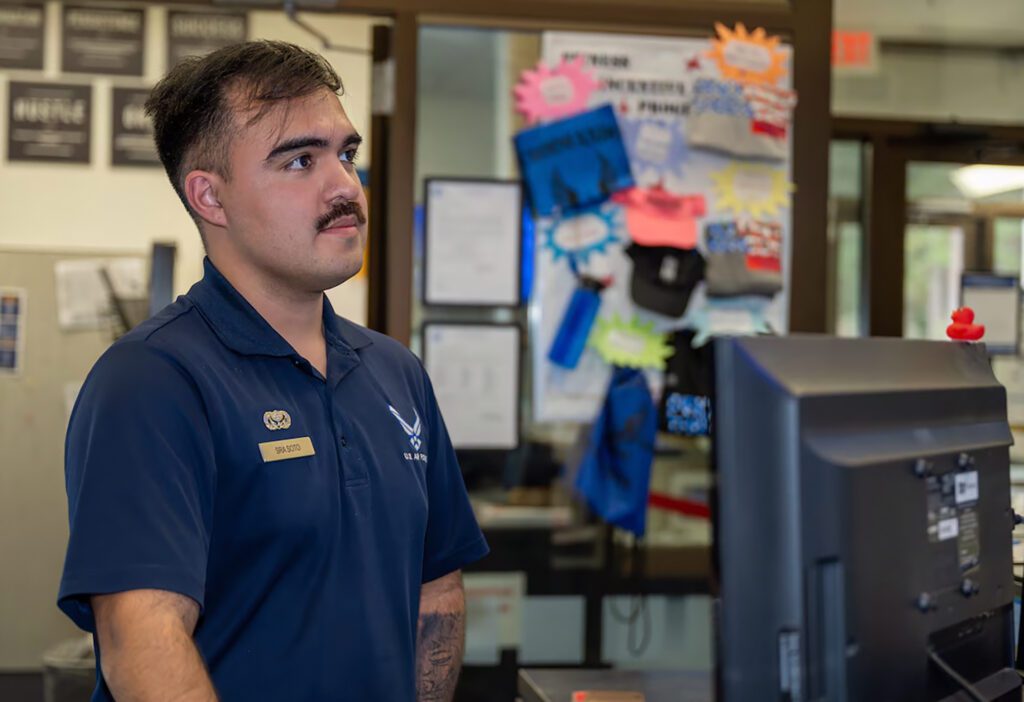
That is exactly what Senior Airman Andy Soto, a 1st Special Operations Force Support Squadron fitness specialist, experiences as he navigates being a single parent in the Air Force.

He spends his workdays performing a wide range of duties from managing personnel training contacts to ensuring the upkeep of fitness facilities. After work, Soto turns on ‘dad mode’, he prepares dinner for himself and son. Once that is completed the rest of the night is spent bonding by playing with toys, watching his son’s favorite television shows or playing video games together.

Four-year-old Miguel, also known by his nickname, Miggy, is a “well-behaved, loving son” to Soto.

“Being a father is the most rewarding experience I could ever have, but it does come with its challenges,” said Soto.

Like many Airmen, Soto’s family doesn’t live in the local area, but Soto said he has fortunately been able to rely on his coworkers to help look after Miggy when needed, or utilize the Family Child Care program.

“The FCC program offers specialized services for military members to support the mission,” said Eleanor Hale, child development specialist and palace acquire intern. “On top of regular hour care, they also provide extended duty childcare, respite care, infants and school-age children care, care during swing and midnight shifts, and various other care options.”

The FCC is an alternative childcare option for service members or Department of Defense civilians, which provides care for children in a family environment within a provider’s home. FCC providers are able to be flexible in their hours of operation and they can provide part-time or hourly care.

“Being able to have daycare outside of the Child Development Center hours has played a really big part in Miggy’s care,” said Soto. “It’s been a lot of help.”

Another challenge Soto has noticed since being a single father is finding time to take care of himself.

“When I’m at work I am constantly on the move, and when I get home, I am still go go go,” said Soto. “It’s difficult to find time for myself.”

However, Soto explained that it’s nice when he can catch up on some much-needed rest while his son is at the CDC and he has the day off work.

Data from a 2022 report by Military One Source stated that there are approximately 44,000 active-duty military members that are single parents, which equates to 4% of the total force. This statistic emphasizes the importance of understanding and supporting single parents within the military community.

Soto’s best advice to single parents serving in the military is to have a good support system that can help out in a time of need.

Although balancing his work and home life can be challenging, Soto stated that he wouldn’t have it any other way.

“You’re my best friend,” Miggy said to Soto.

Just as he says, Miggy is his.

Red Flag-Nellis 24-2 shapes the future of air combat

This exercise presented a prime opportunity to forge pathways for collaboration with joint services and NATO countries. It showcased the cutting-edge capabilities of fifth-generation F-35 Lightning II’s and sophisticated threat replication techniques.

“Operations with our fifth-generation platform, the F-35, are critical to us,” said Air Commodore Johan van Deventer, commander of the Royal Netherlands Air Force Air Combat Command. “It’s an information platform that uses forward sensors to exchange that information, and it can go to a high-threat area. This is the place where we can practice that together with our coalition partner, the U.S., and we need to do that in the high-end fight. That’s why we come to Nellis.”

The evolving security landscape in Europe underscores the importance of not only possessing advanced aircraft, but also seamlessly integrated tactics within the NATO alliance. By operating with a common platform and leveraging advanced communication systems, enhanced coordination and joint operations during critical missions can be achieved. These advanced aircraft bring unprecedented capabilities, including enhanced stealth, sensor fusion, and network connectivity, which contribute to maintaining air superiority and deterring potential adversaries.

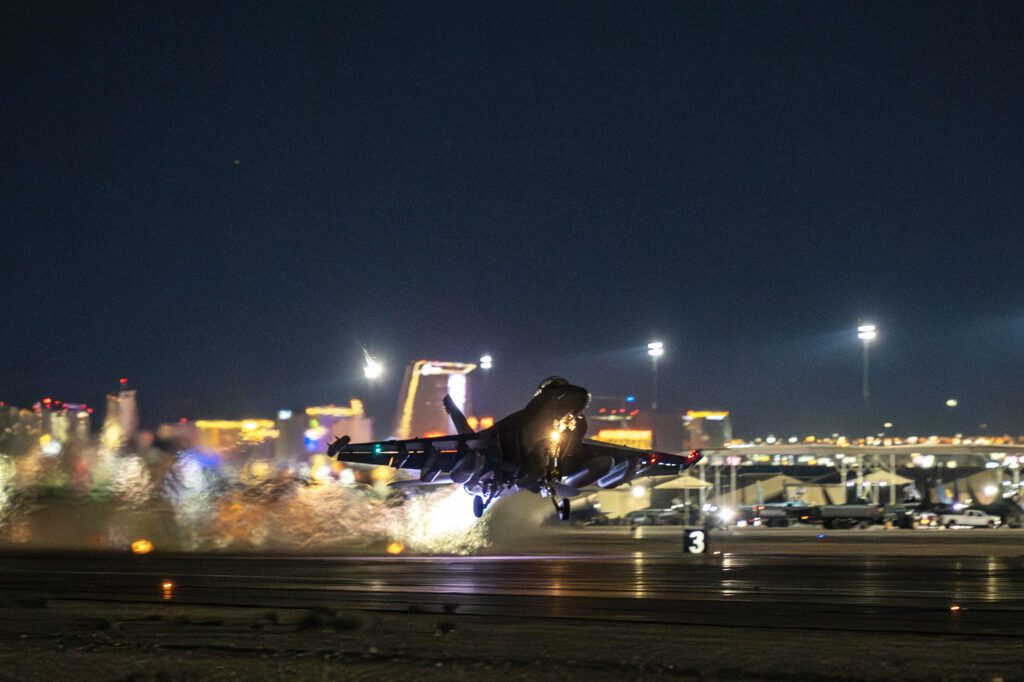
A U.S. Navy EA-18G Growler takes off for a Red Flag-Nellis 24-2 night mission at Nellis Air Force Base, Nevada, March 18, 2024. Red Flag provides participants the opportunity to plan and employ together in the air, domain (supported by space, and cyber) in a contested, degraded and operationally limited environment. (U.S. Air Force photo by 1st Lt. Jimmy Cummings)

“Integrating these capabilities is essential to deterring our adversaries and assuring allies,” said Col. David Stamps, 366th Operations Group commander. “Red Flag 24-2 affords us the opportunity to fully integrate the joint force with our NATO allies to solve the most complex tactical problems in a peacetime environment. We plan together, fly together, and debrief together as one team across all combat specialties.”

Reflecting on the significance of the joint training during Red Flag 24-2, Stamps emphasized, “Our alliance needs to be deeper than a piece of paper. Meaning we must put actions to our words. Red Flag 24-2 brings together our joint services and NATO allies in a very tangible way that allows us to learn ways to employ integrated airpower better and celebrate victories along the way.”

Amidst the expansive Nevada Test and Training Range, NATO partners integrated seamlessly with U.S. joint services. This exercise marked one of the most extensive fifth-generation Red Flag exercises to include NATO and joint partners.

“Nellis is the best place on Earth to simulate ‘tomorrow’s’ fight,” Stamps said. “The professionalism of the “Aggressors” is unmatched, and they are essential to the development of integrated Blue Force tactics. The dedication of all the services maintenance teams proves no one on the planet generates combat airpower better than the United States and our allies and partners.”

Inside a Civil Air Patrol SAR mission

By Staff Sgt. Adam R. Shanks

Secretary of the Air Force Public Affairs

The search efforts included members of Civil Air Patrol, who along with firefighters and other state, federal and local agencies located the aircraft the next day. Unfortunately, all five Marines on board were confirmed deceased.

“The night of the crash, we were alerted to the missing aircraft and spun up resources to find it,” said Lt. Col. Steven DeFord, incident commander for CAP’s California Wing. “Due to the bad weather in the area, we activated two aircraft from Arizona and got a ground search team to begin a search.”

DeFord explained members of CAP’s National Radar Analysis Team quickly found a radar track for the missing helicopter and gave the teams a helpful last-known position, which was roughly 300 feet away from the actual crash site. CAP began sharing the data with search parties within 30 minutes.

NRAT’s mission is to “shorten the crash to rescue time” by using advanced technologies and data sources developed by the experienced team. Once this team is activated, analysis and actionable data can be provided to others in minutes.

“With our analysis team’s 15 years of experience, and our team-built tools, we’ve become very skilled at analyzing radar data to determine where a probable crash site is located,” said Lt. Col. John C. Henderson, NRAT vice commander.

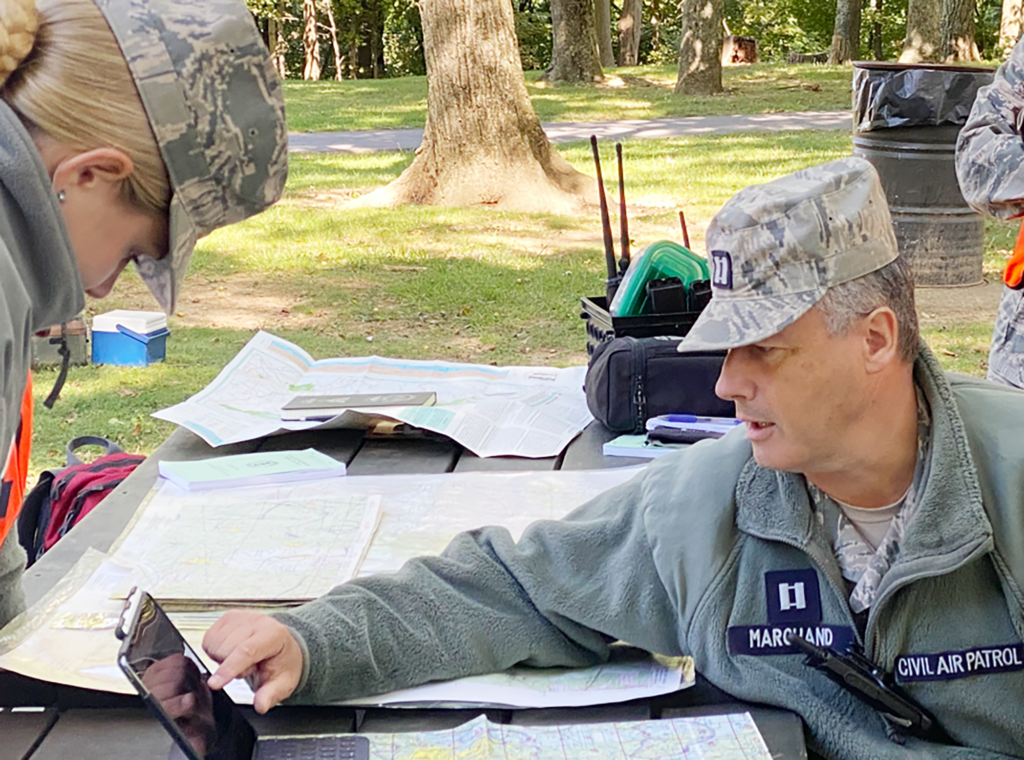
Using search and rescue software, Civil Air Patrol personnel track the position of ground teams in real-time during a tasked-based exercise. CAP’s 37,000 professionally trained volunteer emergency responders conduct about 85% of inland search and rescue in the U.S. as assigned by the Air Force Rescue Coordination Center.

During the search, 35 CAP volunteers from across Nevada, Arizona and California collaborated to find the aircraft. The Air Force Rescue Coordination Center, located at Tyndall Air Force Base, Florida, was responsible for alerting local CAP agencies, allowing the Air Force to mediate between the other state and federal agencies on scene.

“We had two liaison officers interfacing with the numerous other agencies to coordinate our response,” DeFord added. “CAP provided radar forensics and ground electronic search capabilities, while other agencies provided mobility support and a location for a joint incident command post.”

Founded in 1941 and established as the official civilian auxiliary of the U.S. Air Force seven years later, Civil Air Patrol is chartered by Congress as a nonprofit organization for the purposes of youth development, aerospace education, and to promote general aviation. In an auxiliary role as a Total Force partner of the Air Force, CAP operates the world’s largest fleet of single-engine aircraft for search and rescue, disaster relief, training, and education. The all-volunteer force is made up of more than 66,000 members nationally.

The California Wing engages in multiple exercises weekly, aiding mission partners such as the U.S. Coast Guard by flying multiple aircraft throughout the state to ensure direction-finding coverage to support their lifesaving missions. Additionally, its volunteers stand by to support in-state and federal search and rescue missions looking for emergency location transmitters and missing persons.

No matter the outcome, CAP and its volunteers work alongside the Air Force to provide trained search and rescue professionals and crash data analytics to quickly respond to any event to which they’re called.

Female Defender Initiative: Breaking down barriers

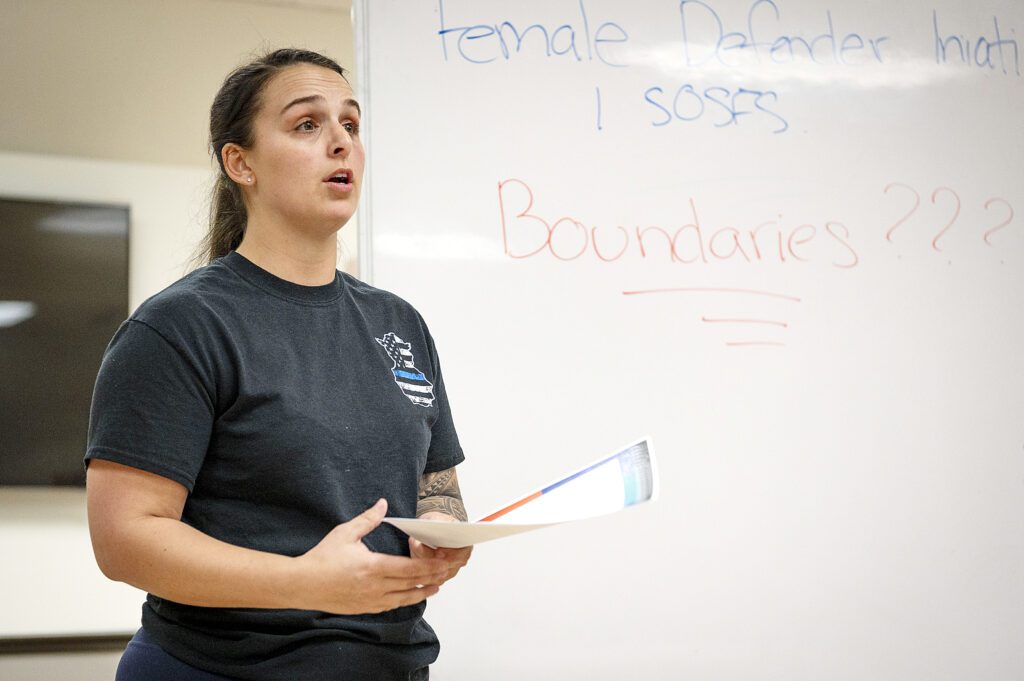
Staff Sgt. Jessica Poteet, 1st Special Operations Security Forces Squadron Base Defense Operations Center controller, Staff Sgt. Hunter Thomas, 1st SOSFS Alpha Flight sergeant, and Staff Sgt. Ta’kia Clark-McGirt, 1st SOSFS Non-Commissioned Officer in charge of physical security, brought the Female Defender Initiative to Hurlburt Field, Florida.

“I first heard about FDI when I went to deployment training,” said Poteet. “I had really awesome cadre who briefed us about it after training one day, and they shared some of their own personal stories. It honestly felt like a safe space for us to talk about hard situations us female defenders have endured throughout our time in the military. I have been in for 16 years and wish this was around when I was coming up in my career.”

The sergeants have laid the groundwork for Hurlburt’s newly formed FDI, conducting several trainings designed for participants to openly discuss ways to work through barriers within the squadron. Both men and women are encouraged to, and have, attended.

U.S. Air Force Staff Sgt. Hunter Thomas, 1st Special Operations Security Forces Squadron Alpha Flight sergeant, trains members of the 1st SOSFS during a Female Defender Initiative meeting at Hurlburt Field, Florida, Feb. 21, 2024.

“I want us to stand together as a force,” said Thomas. “Even though we are different, I want you to understand me, and I want to get to know you and how you operate.”

The team is working toward making FDI a more collaborative effort, being there to assist each section in the squadron as they alternate taking the lead on trainings.

“Everyone wants to be included, and once you are a part of something you can build friendships, connect with each other and network,” said Clark-McGirt. “Say an Airman feels like they don’t have anyone to talk to, they can come to FDI to connect with others.”

The group has already started to implement changes, addressing topics ranging from gear upgrades to reinforcing boundaries in the workplace.

“I want our defenders to feel like they are valued, their voice matters and they can lean on their defender family,” said Poteet.

Women’s History Month: Reflect, celebrate, inspire

By Senior Airman Alysa Calvarese

1st Special Operations Wing Public Affairs

In 1987, the National Women’s History Project successfully petitioned Congress to include all of March as a celebration of the diverse and impactful roles women have played in shaping our society, culture and progress.

Women’s History Month is celebrated throughout the world, shining a light on the countless moments women have made noteworthy changes in history.

“During Women’s History Month, we honor those who paved the way, inspiring my daughter and others to believe in limitless possibilities,” said Staff Sgt. Vanessa Murdock, a 15th Special Operations Squadron aviation resource manager. “Together we empower and uplift, embodying the spirit of service and equality.”

Since the beginning of the women’s equality movement, there have been significant changes in women’s rights, especially in the U.S. military.

In the decades since, women have fought for the right to serve while pregnant, hold pilot roles, lead majority-male units, fight in combat and various other opportunities that were not previously available to women.

Women across all military branches have been paving the way for future female members since the first women joined the military in 1917. Women are now a crucial part of the nation’s Armed Forces and a core part of the military community.

“As a woman serving in the Air Force, I bring diversity and unique perspectives, shaping a legacy for future generations,” said Murdock. “I am thankful and honored to serve this country.”

Data from a 2022 report by Military One Source stated that there are approximately 17.5% of female active-duty members and 82.5% of male active-duty members. While male active-duty members still outnumber their female counterparts, the rate of women has increased over the years.

“The over 3 million women who have served in or with the armed forces since the American Revolution have contributed immensely to the strength and resilience of our armed forces,” said Patricia Montes Barron, Military Community and Family Policy deputy assistant secretary of defense.

Women’s History Month provides an opportunity to reflect on the past, celebrate the present, and inspire a future where women can continue to work toward a more inclusive and equitable future for all.

Changing of the guard

By Airman 1st Class Bailey Wyman

1st Special Operations Wing Public Affairs

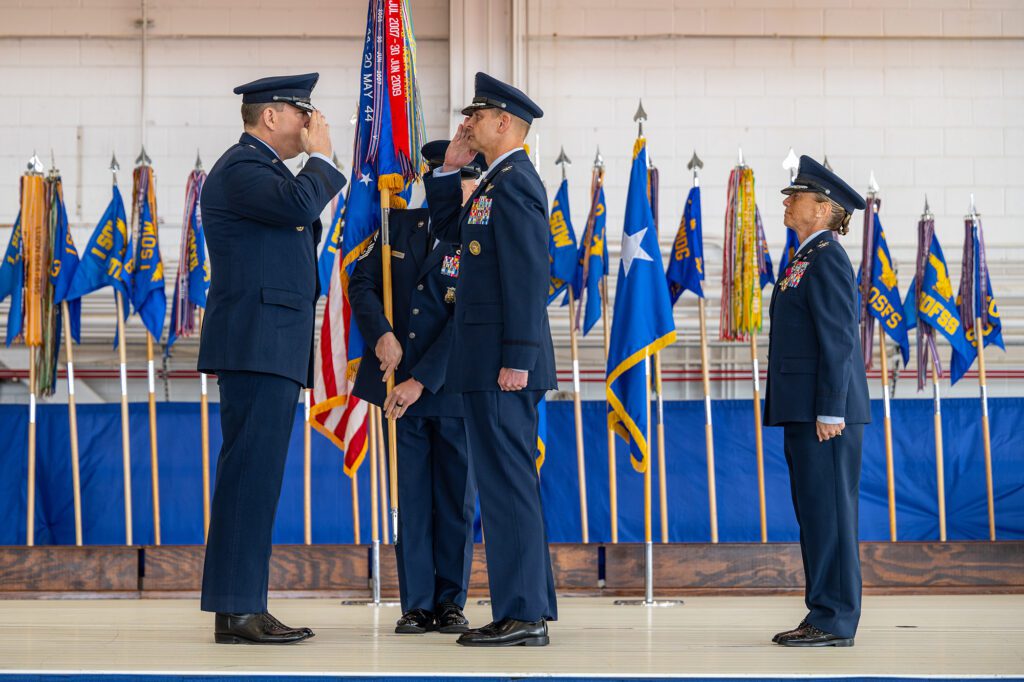
Dierig assumed leadership of the 1st Special Operations Wing during an official change of command ceremony at the Freedom Hanger on Hurlburt Field, Florida, Feb. 23, 2024.

“As I prepare to step aside,” said Col. Allison Black, 1st SOW outgoing commander, “I do so with a smile and the confidence that our next 1 SOW commander, Col. Dierig, is ready.”

Black, who had led the 1st SOW since July 2022, passed the guidon, symbolizing the transition of command. Presiding over the ceremony was Lt. Gen. Tony Bauernfeind, commander of Air Force Special Operations Command.

“We look forward to seeing the 1 SOW thrive under [Dierig’s] command,” said Bauernfeind. “You’ll continue to provide our nation with specialized air power across the spectrum of conflict.”

Dierig’s military career began in 2001 after graduating from Xavier University with a Bachelor of Liberal Arts, starting as a navigator and electronic warfare officer.

Becoming a Master Navigator, Dierig accumulated over 2,600 flight hours in the AC-130U “Spooky” gunship and MC-130H Combat Talon II, participating in combat missions in Afghanistan and Iraq.

“I’m proud to call Col. Dierig a teammate and a friend,” said Black. “He’s here today because he has the confidence to stand alone, the courage to make tough decisions, and the compassion to listen to the needs of others.”

Before assuming leadership of the 1st SOW, Dierig served as commander of the 479th Flying Training Group at Naval Air Station Pensacola, Florida.

U.S. Air Force Lt. Gen. Tony Bauernfeind, Air Force Special Operations Command commander, left, renders a salute after passing command to Col. Patrick Dierig, 1st Special Operations Wing commander, middle, as Col. Allison Black, 1st SOW outgoing commander, right, stands at the position of attention during the 1st SOW change of command ceremony at Hurlburt Field, Florida, Feb. 23, 2024. As the new commander of the 1st SOW, Dierig will oversee over 4,600 military personnel and 80 aircraft. (U.S. Air Force photo by Airman 1st Class Bailey Wyman)

Reflecting on his diverse experiences, Dierig expressed the vast knowledge imparted on him from his mentors, friends, and family that have prepared him well for the challenges ahead in his new role.

“There’s an entire line of AFOSC general officers here today,” said Dierig. “If they hadn’t invested in me and mentored me for the last two decades, I would not be here.”

The 1st SOW, with its motto “Any Time, Any Place,” plays a vital role in providing airpower for special operations missions globally. Its operations encompass a wide array of tasks, including air support, precision aerospace firepower, specialized aerospace mobility, intelligence, surveillance, reconnaissance operations, and agile combat support.

As one of five active-duty special operations wings under AFSOC, the 1st SOW comprises four groups and 24 squadrons.

“For the Airmen of the 1 SOW, this day is about you,” said Dierig. “You’re the focus of this mission, and I look forward to getting to know you, your missions, and your challenges.”

In addition to leading the wing, Dierig also oversees numerous tenant units at Hurlburt Field, underlining the breadth of his new responsibilities.

“I look forward to removing the hurdles as we move forward,” said Dierig. “Let’s build on the efforts of what you’ve all been undertaking to make this a world class installation for both the execution of the mission and your quality of life.”

Air Commandos navigate long-distance co-parenting

By Senior Airman Alysa Calvarese

1st Special Operations Wing

U.S. Air Force Tech. Sgt. Timothy Dailey, 1st Special Operations Security Forces Squadron noncommissioned officer in charge of standardization and evaluations, was on a deployment for six months and had not even returned home yet before finding out his wife was tasked with a remote unaccompanied tour.

“It wasn’t overwhelmingly negative, it was just, ‘let’s find out the details, and let’s do what we need to do,” said Timothy. “As service members it’s a part of the job. This is what we signed up for.”

As one parent arrived home, the other departed, transforming their duo parenting scenario into a form of long-distance co-parenting, and Timothy had to take on the role of both parents, as his wife had done while he was deployed.

“Be flexible and give yourself the grace to accept that it’s not easy being separated for such a long period,” said Master Sgt. Melissa Dailey, 1st Special Operations Wing superintendent and wing executive admin. “There will be hard times, but we will continue to communicate as often as possible and share our feelings with each other.”

Timothy explained how over the years of being in the military he and his wife have learned to balance life during this time, creating reminders, having a shared calendar and a support system, such as his parents, good leadership and base programs.

He stated that his parents live approximately seven minutes down the road from him, and they help take care of the two younger children, ages ten and seven, when he needs assistance.

“I feel very fortunate to have my parents here to help,” said Timothy. “Having that support system of my parents to be able to ask for help picking up the kids when I have to work late has been super helpful.”

Achieving a balance between work and home life is essential for overall well-being and sustaining long-term professional success, and having good leadership has allowed Timothy to better balance his life.

When Timothy returned home from his most recent deployment, he worked with his leadership to look for different job opportunities within the 1st SOSFS that would better accommodate his family’s current situation. He explained that after applying for various jobs, he received a position that better aided his predicament but also aligned with the requirements of the Air Force.

“Having a good office and a fantastic supervisor that shows that they care, know what you’re going through and take the time to check up on you, that’s been great,” said Timothy.

Another helpful resource for Timothy has been the Military and Family Readiness Center. They assist and educate military families during times of deployments and remote assignments.

The M&FRC has the Hearts Apart program which offers monthly events for families of deployed members to connect, childcare vouchers, and resources for spouses and children to gain a deeper understanding of the deployment cycle and prepare themselves for the return of their loved one.

“Adjust, adapt and lean on those around you, you would be surprised by the amount of support that you will get and how helpful that can be,” said Timothy.

AF to re-introduce warrant officer rank, other major changes

By C. Todd Lopez

That change was among two dozen announced by senior Air Force officials. Each change is specifically designed to prepare the service for strategic power challenges from competitors like China and Russia.

“Both China and Russia are actively developing and fielding more advanced capabilities designed to defeat U.S. power projection,” said Secretary of the Air Force Frank Kendall. “The need for modernization against capable, well-resourced strategic adversaries never stops. But modernization isn’t the only thing we need to do to be competitive. Today we are announcing 24 key decisions we have made to improve both the readiness of the current force and our ability to stay competitive over time, to continuously generate enduring competitiveness.”

Those changes, Kendall said, focus on people, readiness, power projection and capability development and are implemented within the Department of the Air Force, the Air Force and the Space Force.

Spotlight: Science and Tech

Within the Air Force, Allvin explained, the service is looking to better attract and develop cutting-edge talent, specifically within information technology and cyber fields. The service plans to expand technical tracks for officers and create technical tracks for enlisted, and to also reintroduce the rank of warrant officer within the information technology and cyber fields as a way to maintain technical leadership with those skills.

“We know there are people who want to serve. They just want to code for their country. They would like to be network attack people and do that business,” Allvin said. “But everybody needs to see themselves into the future beyond just this assignment or the next. So, developing that warrant officer track for this narrow career field, we anticipate will drive that talent in and help us to keep that talent. There’s something specific about this career field, why it’s attractive and it’s a nice match for a warrant officer program. The pace of change of the cyber world, the coding world, the software world — it is so rapidly advancing, we need those airmen to be on the cutting edge and stay on the cutting edge.”

The Air Force had warrant officers when it was created in 1947, after being split off from the U.S. Army. But the service stopped appointing warrant officers in the late 1950s.

Allvin also discussed changes in the way the Air Force will conduct exercises. The plan is for the service to implement large-scale exercises and mission-focused training which encompasses multiple operations plans to demonstrate and rehearse for complex, large-scale military operations, he said.

“We’re going to reorient ourselves to more large-scale exercises rather than a smaller scale that have been a product of the last two to three decades,” Allvin said. “Large-scale means multiple weapons systems, multiple capabilities, coming together in a combat-simulated environment and showing our ability to execute the mission that’s going to be expected of us in the high-end conflict.”

Exercises in recent years, he said, have already been getting bigger. But those enhancements have been driven at the local level, not from the top down. That will change.

“Our Air Force needs to institutionalize this,” he said. “And we’re going to do that.”

He said the Air Force is looking at fiscal year 2025 for its first large-scale, multi-combatant command exercise targeted at Indo-Pacom.

Chief of Space Operations Gen. Chance Saltzman said a change underway within the Space Force is to enhance readiness by implementing standards that reflect operations under contested conditions rather than those of a benign environment.

“The legacy force that we had, our roots … were built around efficiency, built around a benign environment,” he said. “So, the standards for readiness that we kind of held our forces to was different. It wasn’t built for the domains that we’re facing, a contested domain.”

Now, Saltzman said, the Space Force must rewrite its standards for readiness centered around a contested domain, rather than an uncontested domain.

Spotlight: DoD Space Strategy

That, he said, means in part having the right mix of officers, enlisted personnel and civilians in Space Force units. It also means training must be aimed at more than just procedural competency.

“As soon as you put a red force in the mix, as soon as you put a threat in the mix, it radically changes your training,” he said. “You have to have advanced training, you have to have tactics training, you have to understand how you work together, in-comms, out of comms, with other units, in order to continue to achieve the kinds of effects in a contested domain when an adversary, a capable adversary, is doing everything they can to stop you from being successful.”

Space Force, he said, will build a training infrastructure and a test infrastructure to validate its tactics so operators will know more than just how to operate equipment — but will be successful against an adversary.

Kristyn Jones, who is currently performing the duties of the under secretary of the Air Force, also pointed to changes at Department of the Air Force level. There, she said, among those changes, the department expects to create an Air Force Integrated Capabilities Office to lead capability development and resource prioritization. The office is expected to drive Department of the Air Force modernization investments. “We’ll be looking at capabilities across our services, not in stovepipes,” she said. “We’re enabling end-to-end creation of effects. This organization will help us to prioritize our investments and will be responsible for working with us to determine the next iteration of operational imperatives.”


error: Content is protected !!