Please ensure Javascript is enabled for purposes of website accessibility
Skip to main content
Advertisement
Advertisement

Okaloosa County releases mosquito control schedule

[Pixabay.com]

The Okaloosa County Mosquito Control Program began spot spraying this month. Within the next couple of weeks, the standard evening broadcast spray schedule will begin based on mosquito surveillance data and other factors.

The following is the Okaloosa County spray route schedule.

MONDAYS

North County:

  • John Riley Barnhill Road to Escambia Farms, Vinson Ray Road, Beaver Creek to north Baker, Highway 90 East from Shoal River to County Line Road and north to Poverty Creek Road
  • Crestview: Rattlesnake Bluff and Little Silver Road, Aplin Road south to Live Oak Church Road

South County:

  • Wynnehaven Beach, Florosa and Valparaiso
  • Destin: Destin Bridge to Airport Road

TUESDAYS

North County:

  • East side of Highway 189 to Highway 602; Four Flags area, Baker and Holt South of Highway 90,
  • Crestview: Aplin Road north to Highway 90; Old Bethel Road past Sioux Circle, Old Antioch Road to Highway 90 west of Highway 85

South County:

  • Airport Road to Walton County line, Mary Esther/Fort Walton Beach and Bluewater Bay

WEDNESDAYS

North County:

  • Holt north of Highway 90, Baker West of Galliver Cutoff, Laurel Hill to County Line, Highway 393 N, Steel Mill Road
  • -restview: Old Bethel Road to Airport Road, Highway 90 from Fairchild Road to Highway 85, north to Airport Road

South County:

  • Streets off of Lewis Turner Boulevard to Carmel Drive, Rocky Bayou, Fort Walton Beach from Brooks Bridge to Memorial Parkway

THURSDAYS:

North County:

  • Poverty Creek Road, Highway 393 to Campton, Baker from Galliver Cutoff to Old River Road,
  • Crestview: Lake Silver Road to Airport Road to Auburn area

South County:

  • Shalimar, Ocean City, Mooney Road area and Niceville

Okaloosa County Mosquito Control and the Florida Department of Health urge the public to remain diligent in their personal mosquito protection efforts. These should include remembering to remember the acronym SWAT.

    1. Stay inside with screened doors and windows when mosquitoes are biting (dusk and dawn). 
    2. When outside, wear clothing that covers skin. 
    3. Apply mosquito repellant that includes DEET [N, N diethyl-m-toluamide] on your skin when you are outside
    4. Turn over standing water where mosquitoes lay eggs or better yet – rid your outdoor area of standing water in which mosquitoes can lay their eggs.

Remember to apply all mosquito repellants in accordance with the recommended frequency and methods suggested by the manufacturer.

The Florida Department of Health now recommends the following mosquito-borne illness recommendations:

Drain standing water to stop mosquitoes from multiplying —

•Drain water from garbage cans, house gutters, buckets, pool covers, coolers, children’s toys, flower pots or any other containers where sprinkler or rain water has collected.

•Discard tires*, drums, bottles, cans, pots and pans, broken appliances and other items that aren't being used.

•Empty and clean birdbaths and pets water bowls at least once or twice a week.

•Protect boats and vehicles from rain with tarps that don’t accumulate water.

•Maintain swimming pools in good condition and appropriately chlorinated. Empty plastic swimming pools when not in use.

Waste tires can be disposed of for free at the South Okaloosa County Transfer Station and the Baker Landfill. Free disposal applies only to local households and not businesses. Tire sizes are limited to passenger car and light truck tires. The limit is five tires per household per month.

Cover skin with clothing or repellent —

Clothing: Wear shoes, socks, and long pants and long-sleeves. This type of protection may be necessary for people who must work in areas where mosquitoes are present.

Repellent: Apply mosquito repellent to bare skin and clothing. Always use repellents according to the label. Repellents with DEET, picaridin, oil of lemon eucalyptus, and IR3535 are effective. Use mosquito netting to protect children younger than 2 months old.

Cover doors and windows with screens to keep mosquitoes out of your house —

Repair broken screening on windows, doors, porches, and patios.

The County Mosquito Control Program sprays for mosquitoes county-wide excluding federal and state-owned land. Mosquito spray trucks generally operate starting 2 hours before sunset and/or in the 2 hours after sunrise. Surveillance activities may indicate certain types of mosquitoes known to be disease vectors that are active during time periods other than noted. If this is the case, the County will respond appropriately.

In addition to spraying, the County has an aggressive larviciding program that includes more than 1,500 sites treated and are checked on a regular basis. Additionally, more than 750 ponds and areas with standing water are treated with gambusia fish which eat mosquito larva and are able to reproduce at a high rate.

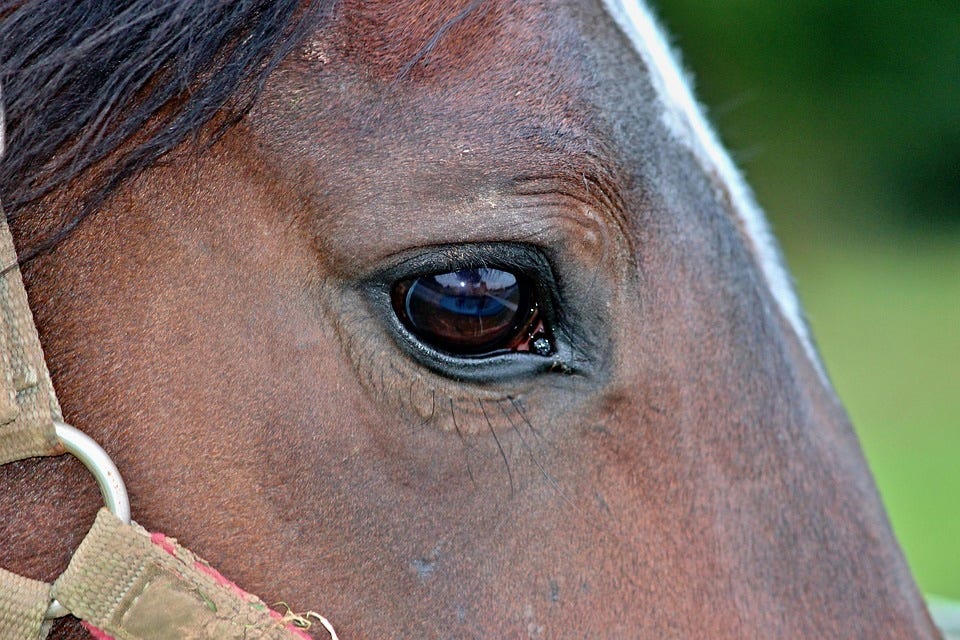
Residents are also reminded to have outdoor animals vaccinated against mosquito borne disease. Horses should be vaccinated against Eastern Equine Encephalitis (EEE). Although West Nile and EEE can occur throughout the year, peak season is August, September and October. Horses must receive two vaccine injections 3 to 6 weeks apart and then it is recommended every 3 to 6 months. Dog owners are also reminded to have pets treated for heartworms since certain mosquitoes present in Okaloosa County carry the disease as well.

The Mosquito Control Division of Public Works is open 8 a.m. to 4:30 p.m. Monday through Thursday and may be reached at 651-7394 or 689-5772. Mosquito spray schedule, preventative tips and other related information is available on the County’s web site at www.myokaloosa.com.


This article originally appeared on Crestview News Bulletin: Okaloosa County releases mosquito control schedule

BBQ and Bands fill Spanish Trail Park

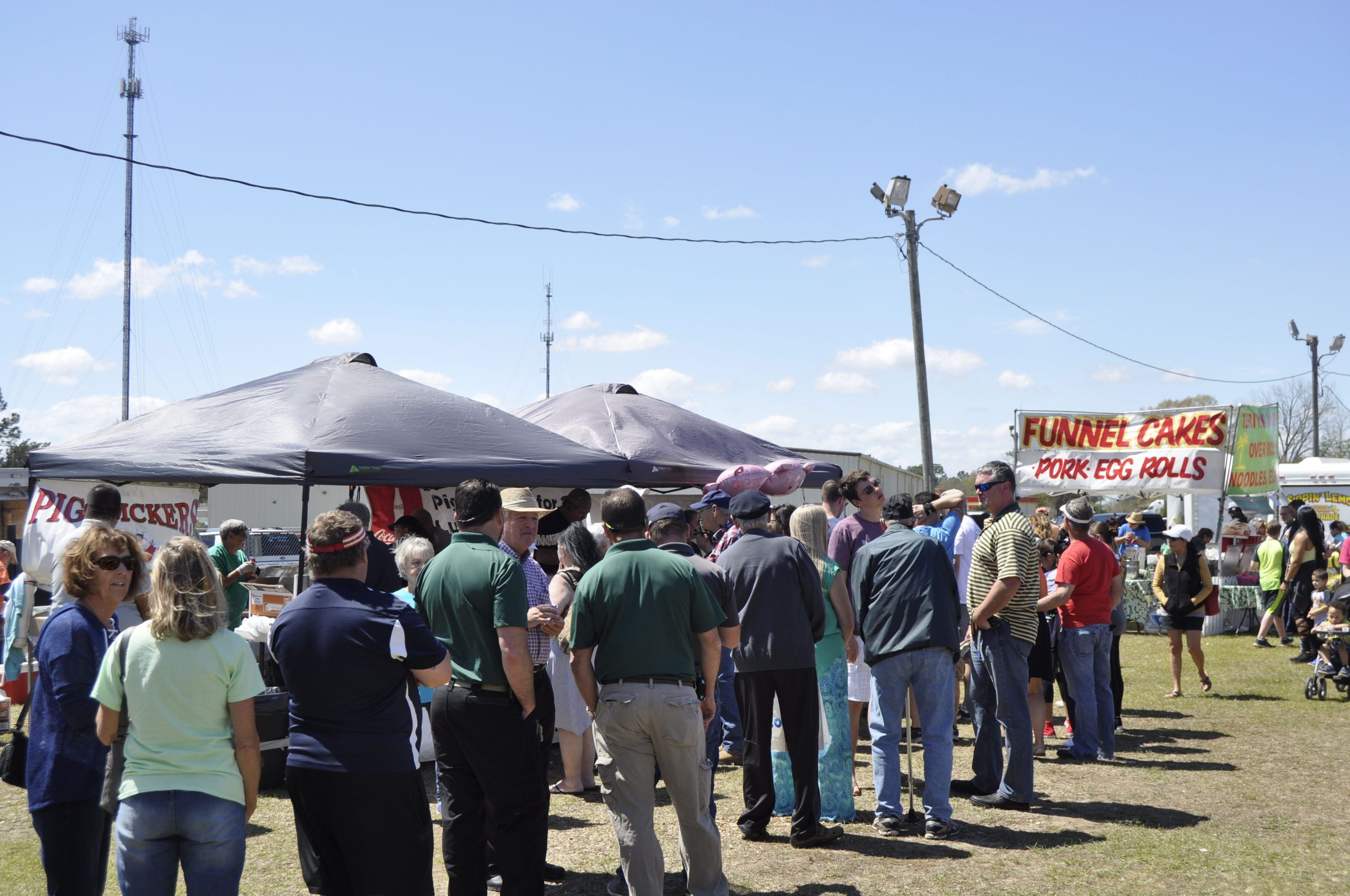
Triple B attendees line up to get some barbeque at Ranch House Kitchen. Ranch House took home four awards, including Grand Master Champion. [AARON JACOBS|NEWS BULLETIN]

CRESTVIEW — It was a breezy but sunny day Saturday, near-perfect weather for sampling some of the area’s best barbeque.

The 14th annual Blackwater, Bands and BBQ Cookoff came and went March 24 at Old Spanish Trail Park. The wind threatened to take off with some of the many canopies lining the park, but it was an otherwise beautiful Spring day in Crestview.

Five local barbeque businesses competed for the title of Grand Champion, with Bruce Nidy’s Ranch House Kitchen of Florala, Alabama taking home the honor. Nidy also took first place in the pulled pork, chicken and brisket categories, nearly making a clean sweep.

The only category Nidy didn’t win was ribs. That honor went to Karl Wiggins of Po Wiggs BBQ. The Fort Walton Beach eatery also won the title of Reserve Champion. Mark Thompson of Pigstickers, a former Crestview favorite, took home the People’s Choice award, showing it’s still popular in town more than three years after officially closing its doors.

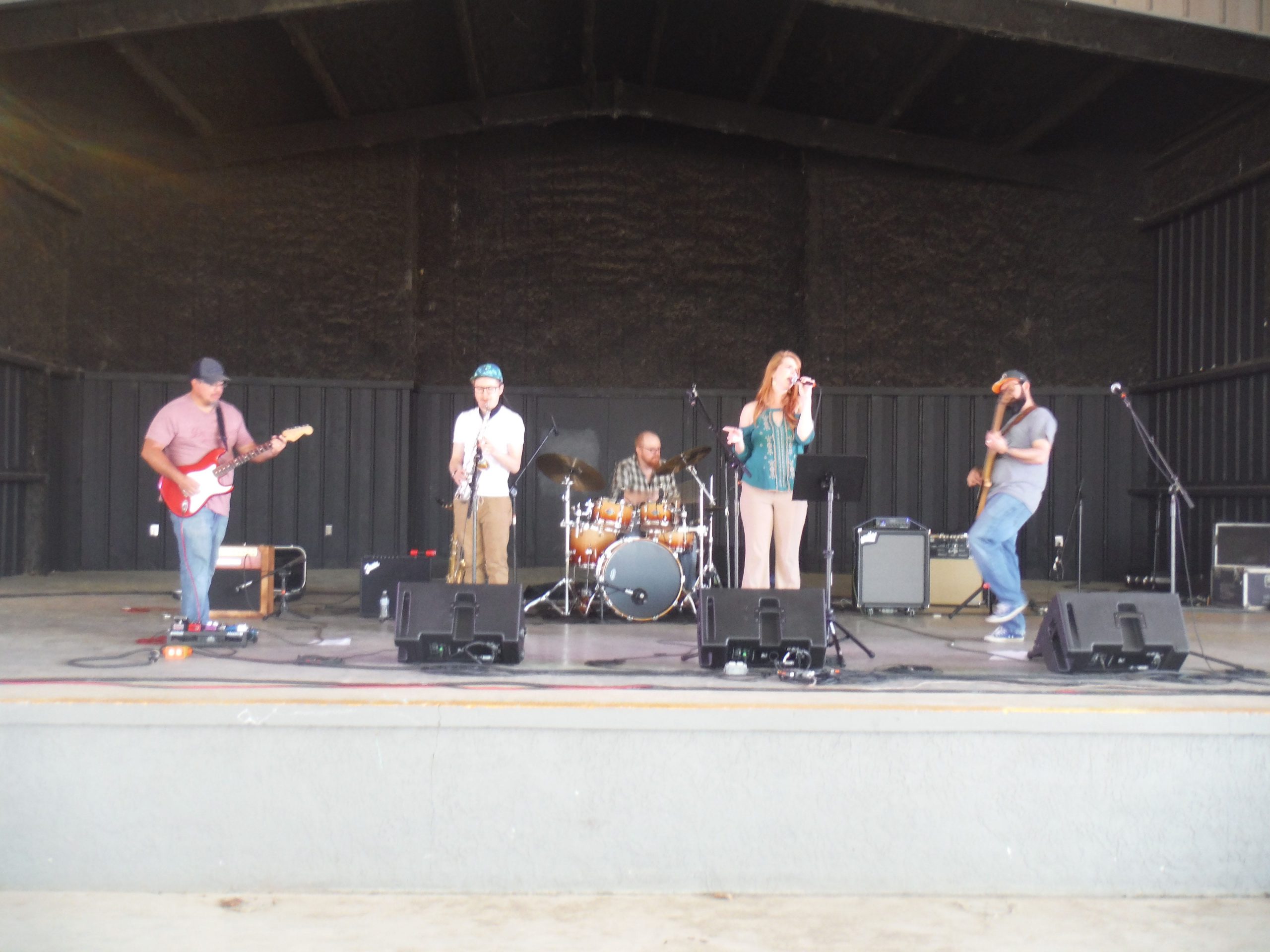
Three bands played under the large pavilion in the park, which also housed a small beer garden area for the first time at Triple B. Local bands New Earth Army, Schatzi and the String Boffin, and Still Standing entertained patrons taking a break from the sun under the shade of the pavilion.

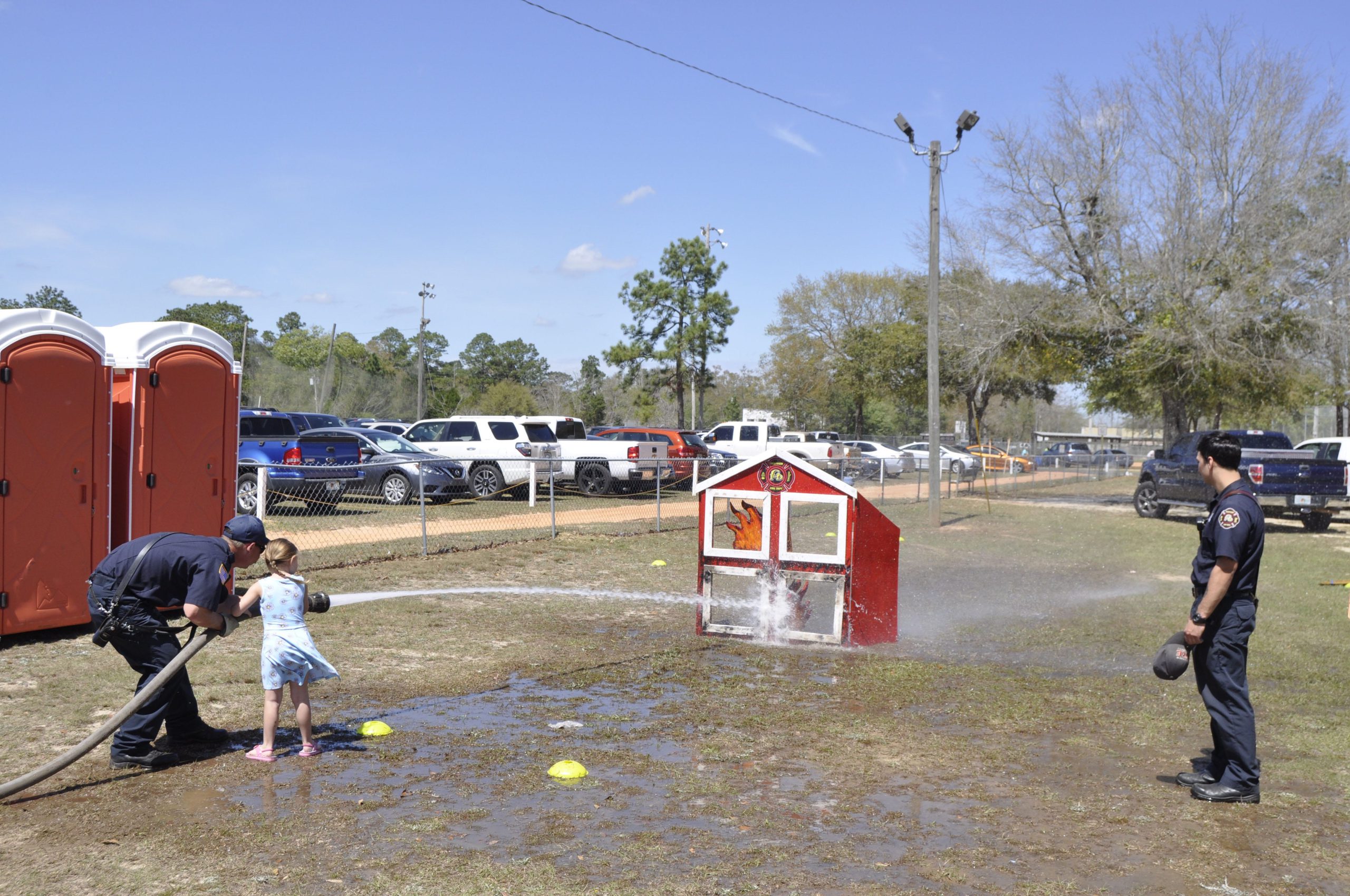
There was plenty of kid-friendly fun to be had as well. Crestview Fire Department brought an inflatable fire safety house, and kids lined up to get a tour of one of their fire trucks and operate a real fire hose.

Crestview Area Youth Association was also on hand with a football toss and dunk tank. Many other vendors offered similar games, demonstrations and small prizes.

This article originally appeared on Crestview News Bulletin: BBQ and Bands fill Spanish Trail Park

Laurel Hill Master Gardener offers advice to gardeners

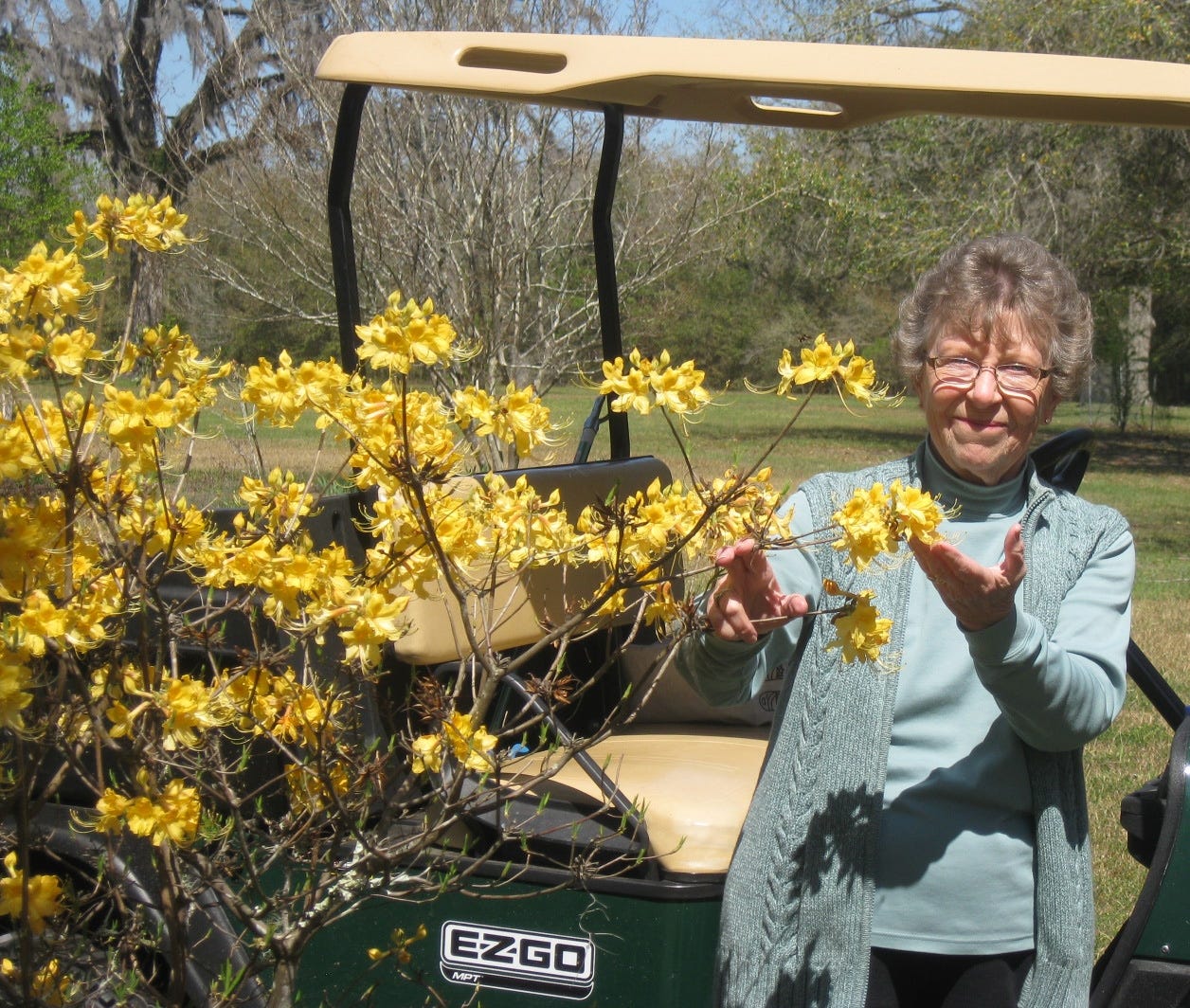
Sarah Petty, an Okaloosa Master Gardener, said her motorized wheelbarrow is one of the best tools in her arsenal. "I couldn't do much of the gardening without (it)." [RENEE BELL | NEWS BULLETIN]

LAUREL HILL — Sarah Petty is looking forward to the longer days of summer. More daylight will give her more opportunities to do her favorite pastime — gardening.

The Okaloosa Master Gardener and her husband Jim enjoy getting outdoors and tending to the plants around their Laurel Hill home.

Their yard sports various items, among them an eye-catching giant azalea bush someone planted well before they bought their home; a young Japanese maple caged in a metal fence to protect it from deer who visit the couple's yard and help themselves to their garden for lunch; blueberry bushes, daffodils and brightly colored verbena.

Among Petty's favorite plants is a native yellow azalea she was able to grow.

She said beginning gardeners should add perennials and bulbs like amaryllis and daffodils (the varieties that grow well in North Florida). She also said they should start with ones that are native to Okaloosa County, like stokesia plants, just to get a good variety.

"If they're just getting into planting," Petty said, "it's better for them to start getting their garden and add perennials of different types, and they can get some ideas by going to plant sales and finding what kind of perennials to add."

"Those are the plants that will just continue growing year after year. You don't have to replant them. They'll be like azaleas and camellias…And that way, if you put a plant in like a perennial, then you don't have to do it again. You don't have to do it every year — plant plant plant. It's one of those that you can put it in, and if it likes where it is, it will come back every year for you," Petty said.

For all of Petty's favorites, there was only one "ugly duckling" of a plant on the Dogwood Garden Club member's list.

"Weeds…they're always there…and you've got summer weeds and winter weeds," she said. "You have to keep after 'em, but it gets you outside."

•Master Gardeners are available to answer gardening questions at local extension offices in Crestview, Fort Walton Beach and Niceville.

•The Dogwood Garden Club of Crestview meets at 10:30 a.m. first Mondays of the month in various locations, including members' homes. Contact President Ruth Herington, 683-0839, for details on upcoming meetings.

Gardening in Okaloosa County

This article originally appeared on Crestview News Bulletin: Laurel Hill Master Gardener offers advice to gardeners

Keeping lawn and garden pests under control

Ants are a common pest in Northwest Florida. [PIXABAY]

CRESTVIEW — The return of warm weather means the return of something else all too common in Northwest Florida: bugs.

While some insects irritate people, few insects are harmful to plants. Less than one-tenth of a percent of all insects in Florida are damaging to plants, according to Larry Williams, an expert in residential horticulture at the University of Florida’s Institute of Food and Agricultural Sciences Extension office in Crestview.

“The vast majority of insects that you’re going to encounter are either of no consequence to your lawn, landscape or garden, or they are beneficial,” Williams said. “A lot of folks think that every six-legged critter needs to be killed.”

Some bugs, like the chinch bug, can take over a lawn. According to Williams, they are the number one pest found in lawns seeded with St. Augustine grass, and can kill a lawn if left unchecked. Lush, green lawns attract more insects, including chinch bugs, which will choose greener grass to lay eggs.

Nitrogen is critical for healthy lawns as well as insect development. However, too much nitrogen in soil can lead to more insects due to healthier offspring.

Other insects, like the ladybug or lady beetle, can be beneficial by keeping other common garden pest populations in check.

The overuse of insecticides to indiscriminately kill off any insects living in lawns and gardens can actually make things worse. By killing beneficial insects, the pest population can worsen each year. It can also lead to resistant populations of insects, including those harmful to plants.

Fire ants

The fire ant is a common pest that can be found indoors as well as outdoors. The fire ant is a non-native species believed to have stowed away on ships from South America.

The most visible sign of an ant colony is a mound of loose dirt, but a single mound is only the tip of the iceberg. The nest below can extend to five or six feet deep and be much larger than the diameter of the mound.

According to Williams, a single ant colony can house upwards of 300,000 ants. A queen can lay around 2,000 eggs per day for six years or more. Despite the rapid speed at which they multiply, ant populations can be controlled, if you don’t try to eradicate them altogether.

“If you have a fire ant mound in the back yard in the corner somewhere that you don’t frequent and kids don’t play, leave it alone,” Williams said. “Concentrate your control efforts closer to the home, where kids play, where you frequent.”

Studies have shown that eradicating ant populations entirely can lead to much larger populations turning up in the same area within weeks.

Williams also cautioned not to disturb the mound, no matter how tempting it is. When the mound is disturbed, the ants will instinctively move the queen and eggs to the safety of a new area, where they will build a new mound. This can lead to a never-ending cycle of chasing ant hills around a yard.

One way to stop the spread of an ant colony is to use commercially-available ant bait, but it takes patience. Williams said the ants will eventually take the food back to the queen, but it could take days to weeks for them to bring enough poison back to kill her.

Powdered poisons can also work, but should be spread around the mound in a circle, then spiraled inward toward the center of the mound. These types of poison can work quicker than bait poisons, but also risk disturbing the mound, which could cause the colony to spread.

“They’re all different,” Williams said. “It’s important to read the label and understand how they’re used to achieve control. But you never want to disturb the mound in the process.”

Fungal pests

Not all garden pests in Northwest Florida are insects. Fungal diseases play a large role in the destruction of crops in this area.

“The lengthy period of warm weather we have, the host plant material, the moist environment, high humidity, lots of rainfall, that’s fungal heaven,” Williams said. “The vast majority of plant diseases are caused by some kind of fungus.”

Fungal infections are heavily dependent on moisture. People who think that they have to overwater due to the sandy soil can contribute to the problem, according to Williams.

This article originally appeared on Crestview News Bulletin: Keeping lawn and garden pests under control

5 tips for a healthier lawn this summer

Most lawns need a half-inch to three-quarters of an inch of water within several hours to develop a strong, healthy root system. [PIXABAY]

CRESTVIEW — Are you your lawn’s worst enemy?

Cultivating a healthy lawn in Florida is no easy task, but there are some things you may be doing that hurt more than help.

Larry Williams, an expert in residential horticulture at the University of Florida’s Institute of Food and Agricultural Sciences Extension office in Crestview, offers tips for growing and keeping healthy grass.

“There are common mistakes people make that result in the lawn either costing them more money than it should or causing the lawn to thin out and actually die,” he said.

Williams said there are five areas people need to pay attention to in order to maintain a healthy lawn: grass type, square footage, water levels, mowing height and fertilizer.

1. Grass type

“All of the lawn grasses that we grow are foreign,” Williams said. “They did not exist here. They were brought here from other countries. You’re kind of starting out with trying to grow something that’s not in their element.”

Centipede grass and St. Augustine grass are the two main types of grass used residentially in Northwest Florida. It’s important to know what type of grass you’re working with, because weed killers and herbicides do different things to different grasses. A particular weed killer can be bad for one type of grass, but perfectly fine for another.

2. Yard size

It is also important to know the size of the yard you’re working in. Most pesticides, weed killers and fungicides recommend amounts to use based on the square footage of the lawn. This means not only measuring the size of your yard, but subtracting the size of any area where grass doesn’t grow, such as pools and sheds.

Williams says people almost always use two to three times the amount of fertilizer that they need in one application. They also fertilize too early, too many times during the year and too late.

“They’re really overdoing it, and that lawn is costing them more than it should,” Williams said. “And some lawn grasses, especially centipede grass, are unforgiving. It will not forgive you if you’re slightly heavy-handed with fertilizer.”

3. Water levels

Whatever kind of grass you’re using, it needs the right amount of water to develop a strong root system.

An in-ground irrigation system can often water too frequently for too-short periods of time, leading to a weak, shallow root system, according to Williams.

Residents, he said, should measure the amount of water their yard is getting by setting out straight-sided cans, like empty tuna cans, at different points around the yard and letting them collect water for a period of time.

“In doing that, most people would find they’re not getting as uniform coverage as they thought they were,” Williams said. “You might have a can in one corner of the yard that gets a few drops of water in it, but in the middle or on the other side you have a can that’s half-full.

“What you’re really trying to find out is how long it takes to put out a half-inch to three quarters of an inch of water.”

If the amount of water your lawn is receiving within several hours is within that range, it will saturate the ground six to eight inches deep and encourage a healthy root system.

4. Mowing height

“I’ve seen people solve their entire lawn problem by raising the mowing height, not cutting the grass as low,” Williams said.

Mowing height is another situation where the type of grass matters. Centipede grass does best at a height of between 1.5 and 2.5 inches – longer is better during the hot summer months – while St. Augustine grass is better off at 3 to 4 inches.

5. Fertilizer ratios

The key to fertilizer is to get your numbers right, referring to the balance between nitrogen, phosphorus and potassium, according to Williams.

“It’s critical to use a fertilizer in a Florida lawn that has equal amounts nitrogen and potassium,” he said. “Our lawns don’t need the equivalent amount of phosphorus.”

Many people make the mistake of using too much nitrogen in relation to the potassium. Williams says this can cause the grass to “starve to death” due to a potassium deficiency. Potassium helps grass deal with stresses such as hot and cold snaps, pressure from pests and even routine foot traffic.

“Potassium is critical for the long-term health of a lawn,” Williams said. “If the lawn has adequate potassium, it can overcome and survive and do much better.

“Lawns in Florida are frustrating. Even when you’re doing everything right, you don’t have control over the weather. You don’t have control over the pests that happen to come in that year. You don’t want to add to the problem by being a pest yourself.”

This article originally appeared on Crestview News Bulletin: 5 tips for a healthier lawn this summer

Planting seeds in lives

Esther Phelps (left) and Cathy Ward pose for a photo a the Common Ground Community Garden. [AARON JACOBS|NEWS BULLETIN]

CRESTVIEW — A hidden gem in the heart of Crestview is entering it’s fifth year on Main Street.

With spring officially here since March 20, the Common Ground Community Garden is in a state of transitioning out of fall and winter crops and into the new season. They’ve already started moving seedlings outside in anticipation of transplanting them.

Since it began, the garden has been an outlet for people from all walks of life to work together on a community-level project. The garden allows members of the community to come in and work a small plot, or multiple plots of land, regardless of skill level, ability or even income.

“We want money to never be an impediment for somebody starting to garden with us, and so we’ve got all the hand tools, gloves, seeds, seedlings,” Director Cathy Ward said. “It’s a really neat project because somebody can not know anything and not have anything and not be able to afford anything and we can help them get started.”

The garden holds regular workdays on Tuesdays starting at 9 a.m. After the work is done, they get together for a potluck-style picnic lunch, which usually incorporates ingredients picked right from the garden. Anyone is welcome to attend the lunch, which can be a way to learn more about the garden.

It can also be a place to earn community service hours, whether those hours are part of a program like Bright Futures or other civic-minded organizations, or they are mandated by the court system.

Ward said the garden has had people who started working in the garden as part of their community service who stayed on when their service period was up, and that working the garden has been a positive force in their lives.

“When you plant seeds, you don’t know what the yield will be,” Ward said. “It’s that way with people, too. Working in the garden can be planting a seed in their life and it may blossom into something lovely and productive.”

Ward is especially eager to get children involved in the garden. The garden recently hosted an event for kids that involved activities like rock painting, and of course, working in the garden.

“It’s a perfect place to bring kids to teach lessons,” Ward said. “It’s a perfect thing to engage kids. It’s just a great enrichment activity.”

Much of the produce grown in the garden ends up at the Okaloosa County Farmers Market. The market is open from 7 a.m. until 1 p.m. Tuesdays, Thursdays and Saturdays. The Crestview location is at Old Spanish Trail Park.

Esther Phelps, one of the gardeners who is involved in the farmer’s market, talked about the diversity of the gardeners.

“We have a lot of different skill levels here,” Phelps said. “People come from everywhere. We hardly have anyone who was born and raised here. We have to adapt to our community as best we can.”

The garden is a non-profit run by volunteers, and like any non-profit, it relies on donations to stay afloat.

“We’re not going for government grants,” Ward said. “We’re doing this on a shoestring budget to show that it can be done on a shoestring. We’re trying to mix it up and do this in ways that conserve money and resources.”

Ward has worked with six other community gardens both locally and in other states to help get them up and running. She said most of them have come out to see the garden in action.

“I think every city should have several,” she said.

Click to listen

LISTEN: This Day in History

This article originally appeared on Crestview News Bulletin: Planting seeds in lives

City or County: Where is the line?

The red tinted areas in this map show what areas are within Crestview's city limits. [GOOGLE MAPS]

CRESTVIEW — Have you ever looked at a map of Crestview’s city boundaries? It might look a little peculiar.

If you were to drive north on Highway 85, the city limits would begin to run alongside the left of the highway at the start of the Shoal River Bridge. You would not enter the city limits until you were in front of the auto dealerships just north of Riverwood Drive. You would then exit the city limits at Stillwell Boulevard before re-entering the city limits in front of Crestview High School. Finally, you would end up back in the county after crossing Airport Road.

The line between city and county affects everything from emergency services to infrastructure to the ability to vote in municipal elections. Strangely-shaped city outlines are not rare, especially in Florida where the city limits are determined mainly by voluntary annexation, but Crestview looks more extreme than some of its neighbors.

Voluntary annexation means that land owners must petition the city government to make their piece of land part of the city. It happens often with new or proposed subdivisions, as developers will apply for annexation to take advantage of the benefits of being within city limits.

“There are many reasons why developers want to build in the city and why people want to live in the city," Crestview Growth Management Director Teresa Gaillard said, "utility services, potable water, sanitary sewer, storm water retention and maintenance; life safety services such as fire and police protection, which can also factor into homeowners' insurance savings."

The way the boundaries are drawn creates an unusual dynamic. Aside from the example of driving along Highway 85, City Council President J.B. Whitten offers an even starker example.

“(Police Chief) Tony Taylor walks out of the police station and he’s on city property,” Whitten said. “If he walks over to the back of CEFCO, he’s on county property. As he’s crossing (highway 85), he’s back on city property.”

Emergency services

Even in the middle of what most would consider to be Crestview, you might find yourself in an unincorporated area of the county. For example, if you lived on Garden Street – which runs just south of Crestview High School – and you had an emergency, Crestview Police might show up at your door, while your next-door neighbor would get a visit from the Okaloosa County Sheriff’s Office.

“The irregular boundary and the inconsistency of adjacent parcels being city and county has caused concern for the emergency service providers,” Gaillard said. “However, most calls are address-related, and the service providers work diligently in maintaining up-to-date address and roadway records coupled with the latest GIS/GPS equipment.”

Infrastructure

Traffic is a well-known problem in Crestview, and solutions are slightly complicated by the fact that key road sections cross over city and county lines. Part of the proposed improvements centering on an interchange at Interstate 10 and Antioch Road is the development of Raspberry Road. While most of Raspberry Road runs through the city, a short stretch in the middle of it is on county property.

The situation forces the city and county to work together on solutions to traffic problems. Whitten and County Commissioner Graham Fountain have both said that the two entities are now working together well to resolve these issues.

Municipal Elections

If you ever decide to run for city council or even mayor, you might want to double-check that map to make sure you actually live in the city first.

The neighborhoods north of Stillwell Boulevard are in the county, as are most of the areas off John King Road. If you live in the Lee Farms subdivision west of town, you’ll need to think about running for county commissioner instead, even though the neighboring subdivisions to the east and west are both located in the city.

The same idea applies to voting. The city charter, which defines Crestview’s three voting precincts, states that qualified electors must come from inside the voting precincts of the city limits.

For a local example of this, look no further than Laurel Hill where city councilman Johnny James was found in 2015 to reside outside the city limits. He was forced to step down until his property, which was adjacent to Laurel Hill’s borders, was formally annexed into the city.

Getting into the city

Florida’s voluntary annexation laws do give people the option to become part of a city under certain conditions. First, your property must be adjacent to the current city limits. If your property shares a boundary with the city, you meet this first requirement.

Second, you have to own the property to be annexed. If there are multiple owners of a property, they all have to sign the petition. This becomes complicated in the case of subdivisions outside city limits, where a certain percentage of the homeowners have to be on board with the annexation plan.

After that, the petition is submitted to the city council for annexation and rezoning. If your property meets all the requirements and is approved by the city council, you can officially become part of Crestview.

“It’s really an easy process,” Gaillard said.

This article originally appeared on Crestview News Bulletin: City or County: Where is the line?

Both West teams win in 2018 Subway High School All-Star Basketball Games

[Pixabay.com]

PENSACOLA — This was the fourth game of the 2017-18 Subway High School All-Star Series.

The West Girls defeated the East Girls 79 to 67. The East Girls MVP was forward Amber Leggett of Choctaw High School with 13 points. The West Girls MVP was guard Lauren Walker of Washington High School with 10 points.

The West Boys defeated the East Boys 109 to 87. The East Boys MVP was guard Marquis Jackson of Choctaw High School with 10 points. The West Boys MVP was guard Blake Lewis of Pine Forest High School with 17 points.

The East won the All-Star Volleyball Game Nov. 16 on four sets to two. The East defeated the West Dec. 16 in football 34-28 in overtime. On March 1, the East Girls defeated the West 9 to 1, and the East Boys Defeated the West 1 to 0.

The remaining game of the 2017-18 Subway HSAS is baseball and softball June 7 at the University of West Florida.

This article originally appeared on Crestview News Bulletin: Both West teams win in 2018 Subway High School All-Star Basketball Games

John Skipper, Blackmail in America – Who needs that?

There is no such thing as buying someone's silence. Silence really doesn't exist. If people want to tell the world it's easy to do. Tell one other person in the world and if the information is grimy enough it will be retold a thousand or a million times. Bad news travels fast. Sordid news for some reason always rises to the top. Regardless of how hard you try to cover it, you can't. Blogs, news media, social media and the massive ability to communicate around the globe sends bad news out faster than a Texas tornado. 

Bad news was hushed a bit back in the day. We've heard rumors and stories for years about President John F. Kennedy. Many years later they have been retold and written about so many times. Of course is there any real proof that any of the rumors were true? Did anybody actually see with their own eyes Kennedy doing things he wasn't supposed to be doing? There are those out there in media/gossip land who will rise to say yes while others will attest either the stories were fabricated or not accurate. Of course you have the famous stripper Blaze Starr who said her encounters with Kennedy before he was President were more than about social issues. 

Of course Kennedy was assassinated at such as young age he never had to face buying somebody's silence on a major publicized scale that we know about. Who knows what kind of little back room deals or power moves were made to keep Kennedy's mistakes submerged? In the day in which Kennedy lived the question must also be asked did anyone else care about what he was doing with Marilyn Monroe, Blaze Starr or the many other names who are out there? Obviously, yes, people always raise an inquiring eyebrow but it didn't hit the fan like it does today. 

Today we have our current President who is being alleged to have a past involvement with a porn star. Allegedly his attorney paid her $130,000 to keep quiet about an affair with President Trump before he began his actual campaign for office. Has Stormy Daniels kept quiet? Apparently $130,000 doesn't buy silence. With all the media attention surrounding President Trump and Daniels she knows there is much, much bigger money to be made. A hardback book deal can easily make her a million dollars and probably several million.

Someone will want to make it into a movie thus more mega dollars. Someone might offer her a cable television show that would run for a few weeks or some kind of crazy radio deal where she might talk about her allegedly nasty details with Trump. Possibly another way to look at Daniels being quiet is that $130,000 buys silence until one learns they can get more money. My question though is who really wants to hear the details? If there is truth to it I don't want to hear about it. I got so tired of hearing about Clinton, Monica and a cigar. Who wants to hear this stuff?

 Just recently the sad news about ESPN President John Skipper broke. He met with the executives of the Disney Corporation that owns ESPN and sadly disclosed that he had a problem with cocaine. Someone he had bought cocaine from was threatening Skipper about breaking the news pertaining to his problem. Thus what Skipper thought was something the drug world people would keep under wraps and protect their own was a mistake on his part. He is just too big a fish for some dope head to keep confidential about. After all, there might have been big money to be made from blackmailing Skipper. He did the right thing by coming out with his problem with corporate executives. His loss is personally crushing to him and the sports world. After all, who wins from any of this? The answer is nobody. However, the extortion jerk has not profited any more with his tidbit of information that he has about Skipper that we know about. 

In short – there is no such thing as buying silence. People tell what they want to tell. Usually it's to protect themselves, build themselves up, make someone look bad or to gain attention or cash. Sometimes it's ugly blackmail or extortion that is taking place and who needs that?

Glenn Mollette is an American syndicated columnist and author. 

What’s your view?

Write a letter to the editor.

This article originally appeared on Crestview News Bulletin: John Skipper, Blackmail in America – Who needs that?

error: Content is protected !!