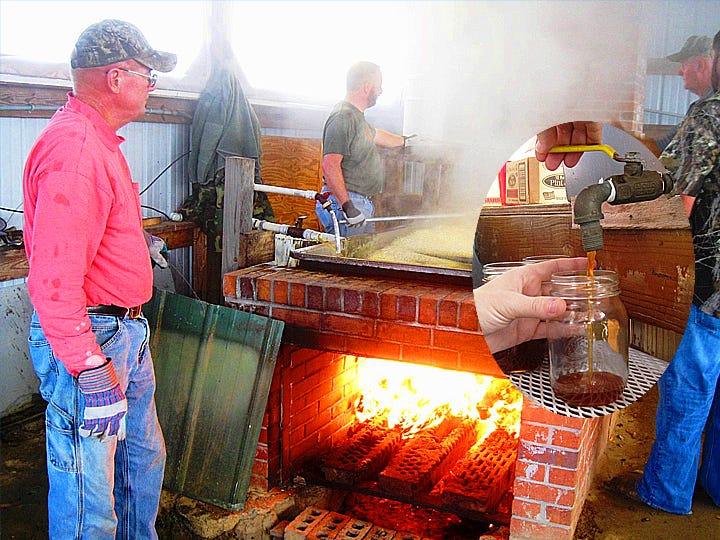
ESCAMBIA FARMS — Despite a winter freeze and low summer rainfall, cane syrup-making day at the Youngblood family’s farm yielded about 50 gallons of the sweet, sticky pancake and biscuit topping.
“It is more than we thought we’d make,” David Youngblood said, noting they usually produce 60-70 gallons. “It’s not bad for an off-year.”
See photos of syrup making in Escambia farms here>>
Family members and friends annually gather in a festive atmosphere centered on the family’s cane mill and syrup boiling shed. Children scamper around outside, senior citizens reminisce about the farm’s heyday, and a lazy Sheltie dozes — oblivious to the hubbub around him — under a wooden picnic table laden with freshly baked biscuits, butter and a few dozen Good Things donuts.
STALK TO SYRUP
Cane stalks, stunted by the year’s adverse weather, are fed into the mill, which grinds out clear, butter-colored syrup that flows through piping 20 feet down the hill to a boiling shed.
As it gushes from a spigot into the pan, Youngblood, his brother, Wayne, and a number of helpers watch the juice boil. Carl Ellis wields a flat, shovel-like skimmer as he removes impurities that boil to the top.
Moonshiners used to use the green sludge when they couldn’t get enough cane juice, David said. “We used to feed the skimmings to the hogs to watch them get drunk,” he said, with twinkling eyes.
Lighter wood keeps a fire roaring under the pan and, combined with the bubbling juice, contributes to the shed's warm, steamy atmosphere.
A 70+ YEAR TRADITION
The Youngbloods have been making cane syrup since 1938 or longer, said David’s sister, Carolyn Youngblood Spiers. It began with her grandfathers, David Bailey Youngblood and Sherman Kennedy.
The Youngbloods' cane mill and boiling pan often produced syrup for neighboring cane farmers as well as themselves.
“Back then, they could sometimes be at (syrup making) for two or three weeks at a time,” Spiers said. “They’d do it for other people, too.”
“One time we and her daddy made syrup for seven days straight,” family friend Alan Sloan said. “We took Thanksgiving off and went right back to it. I tell you what, you get plenty tired doing that.”
Syrup making is now primarily a family tradition rather than the farm’s main produce, David Youngblood said.
“We just do it in one day,” he said. “Nowadays we just do it mostly for family, with a little left to sell.”
During Saturday’s syrup-making, Spiers’ adult sons, Josh and Stephen, had a production line going. Stephen unpacked Mason jars, Josh filled them with fresh, hot syrup, and their mom screwed on the lids.
As hot jars of syrup cooled, they emitted pops as the resulting vacuum sealed the lids on tight.
David tossed several more lighter logs into the furnace and replaced the sheet metal stop-gap.
“Mostly you can say we just do it because we’re too stubborn to quit," he said.
Email News Bulletin Staff Writer Brian Hughes, follow him on Twitter or call 850-682-6524.
This article originally appeared on Crestview News Bulletin: Poorer cane crop yield doesn’t hamper syrup making tradition (VIDEO)