Please ensure Javascript is enabled for purposes of website accessibility
Skip to main content
Advertisement

Boyles: School resource officer issue between school board and sheriff

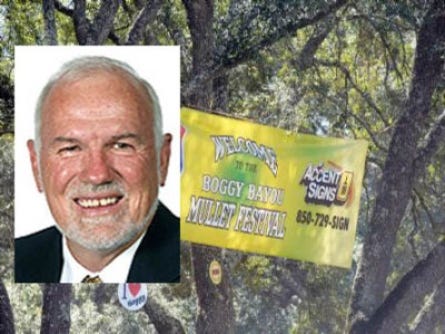
Nathan Boyles, Okaloosa County commissioner (District 3)

CRESTVIEW — Whether all Okaloosa County elementary schools should have school resource officers is a matter between the school board and sheriff, County Commissioner Nathan Boyles said.

Since Sheriff Larry Ashley ordered 26 sheriff’s deputies be shifted from regular duties to elementary schools following the Dec. 14 Sandy Hook Elementary shooting, residents have been vocal about how to deal with gun violence. 

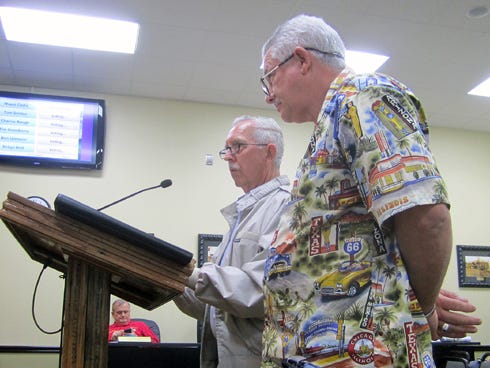
Thursday, during a Friends of the Library meeting, Harry Tipton of Crestview said he thought the matter was being blown out of proportion.

"A lot of this is overkill and hype because of the excessive publicity," he said. "We don't really need a resource officer at every school."

Boyles, the library’s guest speaker, said the issue rests between the school board and sheriff. Commissioners decide on the sheriff's office budget and Ashley decides on the best uses for that budget, he said.

Still, Boyles said, he favors the decision to have an officer in elementary schools.

"I went to Baker School and I remember both of the resource officers that we had in a positive way," he said. "I think it's a way to expose our children to the positive side of the law."

Boyles stated that he supports the Second Amendment and that he and his wife have gun permits.

RESTORE Act funds

The county commission will establish an advisory committee to help decide how to spend BP’s RESTORE Act fund from the Deepwater Horizon oil spill.

Individuals with expertise in education, environment and the economy would comprise the committee, which is subject to Florida open meetings laws.

"This (committee) would make recommendations to the board of county commissioners with regard of the expenditure of those funds," Boyles said. 

County commissioners would have final say on how the funds would be spent, he said.

Friends of the Library members said they gained insight on Okaloosa County current events after Thursday’s meeting.

Several were impressed with what Boyles had to say.

"I think he is an very bright young man, very sharp," Tipton said.

Ruby Frabott of Crestview agreed.

"That was the first time I have heard him speak; I'm very impressed with the young man," Frabott said.

"It went well," Boyles said. "I got to speak with some of my constituents. They certainly had plenty of questions to ask."

Contact News Bulletin Staff Writer Matthew Brown at 850-682-6524 or matthewb@crestviewbulletin.com. Follow him on Twitter @cnbMatthew.

This article originally appeared on Crestview News Bulletin: Boyles: School resource officer issue between school board and sheriff

Okaloosa considering more money for sheriff, tighter swimming rules

The board will consider Okaloosa County Sheriff Larry Ashley’s request for more money to help fill 26 vacant positions. The slots were left empty when Ashley placed deputies in every school in the county following the shooting rampage in Newtown, Conn., last month

Most commissioners have supported Ashley’s decision. But now they must decide whether to help him replenish his deputies or allow him to operate with a staff cut by about 11 percent.

“I don’t know where the money is going to come from,” County Commission Chairman Don Amunds said. “Right now it would have to come out of general fund reserves.”

The 26 deputies placed in the elementary schools were pulled from several units — beach and marine patrol, civil processing, court security, detention and booking, street crimes and traffic enforcement.

The beach and marine patrol, street crimes and traffic enforcement units were depleted and will be inactive until new deputies are hired.

County commissioners also are expected to vote on several proposed changes to the ordinance governing county parks.

Under the changes, beachgoers would be prohibited from swimming more than 300 feet from shore. The proposal includes a ban on swimming, diving, surfing or watercraft use within 150 feet of the Okaloosa Island Fishing Pier.

Beach safety officials say the restrictions are needed to discourage “extreme swimmers” who insist on swimming in red and double-red flag conditions.

Those swimmers can prompt wide-scale emergency responses and put rescuers at risk, officials say.

“It’s really designed for when you have a problem person who’s really creating a life-threatening situation,” County Administrator Jim Curry said. “You’ve got to have a rule that says, ‘This is not allowed.’ ”

Another proposal would make it illegal to leave items such as chairs, coolers, toys and tents on the beach unattended between midnight and 7:30 a.m.

The abandoned items block the county’s beach cleaning service, which sweeps the sand each morning. County officials say the debris also causes problems during sea turtle nesting season when the beach must be kept clear, according to a federal mandate.

WANT TO ATTEND?

The Okaloosa County Commission will meet at 8:30 a.m. Tuesday at the Water and Sewer Administration Building at 1804 Lewis Turner Blvd. in Fort Walton Beach.  

Contact Daily News Staff Writer Kari C. Barlow at 850-315-4438 or kbarlow@nwfdailynews.com. Follow her on Twitter @KariBnwfdn.

This article originally appeared on Crestview News Bulletin: Okaloosa considering more money for sheriff, tighter swimming rules

Crestview's $27,000 software update could save priceless information

Billing clerk Tammie Godwin helps Forrest Jenkins establish water service at his new Crestview residence.

CRESTVIEW — The City Council’s unanimous action on Monday moved Crestview closer to complying with a recommendation to integrate all city services into a comprehensive computer system.

This comes more than a year and a half after a Utilities Billing Department forensic audit.

Former City Clerk Janice Young’s investigation of billing discrepancies evolved into a forensic audit after her July 2011 retirement. Then-acting city clerk and Finance Director Patti Beebe ordered the audit, which O’Sullivan Creel consultants conducted with the council’s direction.

The audit found discrepancies between departments within the city clerk’s office and, during subsequent investigation, between other city departments.

Monday, the council, Beebe and Roy recommended amending the city’s contract with SunGard Public Sector, provider of the city’s records and billing computer system. This was in accord with O’Sullivan Creel’s recommendation to integrate all the city’s revenue stream systems into SunGard.

An advantage of upgrading the city’s SunGard system, which will incur a one-time set-up and $27,000 implementation cost, involves two off-site backup systems, in different locations, if there were loss of City Hall facilities, Roy said.

“This brings us into compliance with the continuity of operations (plan) and what the council has already asked in forensic audits, and it brings us into a situation where if the system blows up, we won’t lose anything,” she said.

The city’s operations continuity plan ensures residents can access most city services amid disasters and that city records can be preserved.

“If this building was hit by a tornado tomorrow, it would cost a lot more than $27,000 to replace all of our information,” Roy said.

In addition to updating and maintaining software for utilities billing, business tax receipts and asset management, the proposal would add the Code Enforcement and Permitting departments to the system. Planning and Zoning, Public Works and Parks and Recreation have not been integrated into SunGard.

Public Works Director Wayne Steele said a firewall prevented the city’s technology consultant from bringing his department — including Parks and Recreation — into SunGard. A firewall digitally shields a computer from malicious attacks; in this case, it prohibited Steele’s departments’ systems from communicating with SunGard.

City Planner Eric Davis said his department uses a system called Blueprints, which it chose after analyzing systems of other cities, including Fort Walton Beach’s planning and zoning department.

Davis said SunGard has not offered a demonstration of its capabilities for his staff and he would “hate to see us spend money on a new program that does not do as well as what we have now.”

Councilwoman Robyn Helt encouraged department heads to finish integrating all the city’s computer systems in SunGard as soon as possible, including resolving any impediments the information technology contractor has encountered.

“If by the next meeting they are not able to resolve the firewall issue, I want to see a recommendation by the clerk for a new company to resolve that issue,” Helt said.

Contact News Bulletin Staff Writer Brian Hughes at 850-682-6524 or brianh@crestviewbulletin.com. Follow him on Twitter @cnbBrian.

This article originally appeared on Crestview News Bulletin: Crestview's $27,000 software update could save priceless information

Florida court upholds pension law repealing cost of living increase

Governor Rick Scott

TALLAHASSEE, Fla. (AP) — A law championed by Gov. Rick Scott that requires teachers, state and county workers and some municipal employees to contribute 3 percent of their pay to the state's pension plan was narrowly upheld by the Florida Supreme Court on Thursday.

The 4-3 decision reversed a trial judge's ruling that the law violated the collective bargaining, contract and property rights of about 600,000 public employees including police, firefighters and other first-responders.

The law, which went into effect on July 1, 2011, also repealed 3 percent annual cost of living increases for benefits accrued after that date.

The ruling was vindication for the Republican governor — who had sought an even bigger 5 percent employee contribution — and the GOP-controlled Legislature. The decision was a bitter defeat for public employee unions, led by the Florida Education Association, which had challenged the law.

"The court's ruling today supports our efforts to lower the cost of living for Florida families," Scott said in a statement. "This means even more businesses will locate and grow in our state."

Scott argued it was unfair that Florida's public employees didn't contribute because workers in most other states and the private sector are required to help pay for their pensions if they still have that benefit.

The public employees' contributions, though, were not used to strengthen the Florida Retirement System, already one of the nation's strongest pension plans. Instead, they reduced contributions made by state and local government employers.

"Balancing the state budget on the backs of middle-class working families is the wrong approach," teachers union president Andy Ford said in a statement.

A ruling against the contribution law would have created a nearly $2 billion budget gap for state and local governments because they then would have had to return the employee contributions.

"We still believe that a promise is a promise," Ford said. "We are more determined than ever to change the face of the Florida Legislature. The next elections in 2014 can turn this decision around."

Although Democrats, who are closely allied with the unions, picked up a few seats in the Legislature last year, Republicans continue to hold large majorities in both chambers.

"The changes made to the Florida Retirement System reflect the Legislature's efforts to maintain a sound retirement system for our hardworking state and local government employees as well as the reality that Florida taxpayers can no longer bear the full cost of this benefit," said Senate President Don Gaetz, R-Niceville.

A key legal issue was how to interpret a law passed in 1974 that declares the retirement rights of public employees are contractual in nature. That year, the Legislature, then led by Democrats, also eliminated employee contributions to the pension plan.

The high court majority cited a 1981 Supreme Court opinion that said the law protected rights and benefits already earned but did not preclude the Legislature from altering benefits prospectively for future service.

Justice Jorge Labarga wrote for the majority that the same principle applied to the new law that restored employee contributions, so it does not violate employees' contract rights nor take away property in the form of their pension benefits.

The new law also doesn't violate collective bargaining rights guaranteed by the Florida Constitution for public and private employees because it doesn't prohibit such negotiations between unions and employers, Labarga wrote.

"Although I understand the frustration of state employees, who have in effect taken a 3 percent pay cut in addition to years without cost-of-living adjustments, this case is not about the wisdom or fairness of the Legislature's decision," Justice Barbara Pariente wrote in a concurring opinion.

Labarga and Pariente were joined by Chief Justice Ricky Polston and Justice Charles Canady, the high court's two most reliably conservative members.

In a dissent, Justice James Perry argued the 1981 ruling was wrong and the high court should have receded from it. Justices R. Fred Lewis and Peggy Quince concurred with Perry.

"The retirement benefits protected by contract, as established by the Legislature, were simply taken from our first responders, those who protect us, those who teach and protect our children and others who have provided us services every day, to be used for other purposes," Lewis wrote in a separate dissent.

Un-rebutted expert testimony shows the law will cost each public employee from $12,446 to $329,684 over the span of their working years, Lewis noted. He pointed out the employee contributions, meanwhile, saved the state $861 million in the 2011-12 budget. That's money the state didn't need because the budget also included $1.2 billion in unspent general revenue, he contended.

Lewis wrote that the law also effectively, although not explicitly, impaired collective bargaining rights because "the Legislature has unilaterally predetermined the term or condition (of employment) through statute, rendering any subsequent negotiations futile."

This article originally appeared on Crestview News Bulletin: Florida court upholds pension law repealing cost of living increase

Crestview City Council considering donated building's possible uses

City council members are discussing possible uses for a storage building on Cadle Drive in southwest Crestview.

CRESTVIEW — A garage to store and investigate impounded vehicles?

A recycling center?

A community meeting hall?

These are among the possible uses city officials have suggested for a building that Gulf Power donated to the city.

The Crestview City Council on Dec. 10 unanimously agreed to accept the donation of a 3,552-square-foot warehouse sitting at the end of Cadle Drive off P.J. Adams Parkway.

The utility only required that the city disassemble and move the building.

Public Works Director Wayne Steele investigated the structure, praised its solid construction, metal truss roof, skylights and HardiePlank siding, and said his department could store the disassembled building until the council decides a use for it.

It would be disassembled using inmate labor at relatively little cost to the city, he said.

After discussion with Council President Ben Iannucci III, Steele said the building could be a city recycling center, and could be reassembled for that use on city-owned property off Brookmeade Drive.

Councilwoman Robyn Helt at Monday’s meeting suggested a different use.

“I am recommending that immediately upon disassembly, the building be immediately reassembled in Country View Park to provide an additional service for our citizens,” she said.

The building could provide a community center for “Zumba classes or any other kind of recreational facility,” she said. “That facility (Country View Park) is in need of improvement and it’s been in need for quite some time.”

After discussions with Steele, Helt said the building could be split in half and provide the city with two new buildings.

Crestview Police Chief Tony Taylor had a suggestion for one half, Steele said.

 “The police chief has … asked me about having a portion put up at his location to house confiscated vehicles in an area that is secure,” Steele said. “They only have room to park one car in their current area.”

City planner Eric Davis told­­ the council that city codes would require landscaping and adequate parking whether the building is split in half or relocated intact.

Council Members Tom Gordon and Tim Grandberry agreed with Helt, but requested more time to study the matter before the council makes a decision.

Iannucci — who supports the recycling center as part of green initiatives he is pursuing for the city — agreed.

“We don’t want to sit on the building, but I don’t like the ‘dartboard’ way of making a decision. I want to make sure we address all these possibilities and make the best decision. I think we need input from the citizens about what we should do with the building.”

Iannucci proposed a workshop to discuss all the ideas before making a decision.

The council then voted unanimously to add discussion of what to do with the building to a previously set Feb. 9 workshop.

Want to go?

The Crestview City Council will hold a public workshop 8 a.m. Feb. 9 at City Hall to discuss, among other matters, possible uses for a building that Gulf Power donated to the city.

Contact News Bulletin Staff Writer Brian Hughes at 850-682-6524 or brianh@crestviewbulletin.com. Follow him on Twitter @cnbBrian.

This article originally appeared on Crestview News Bulletin: Crestview City Council considering donated building's possible uses

Scott does about-face on early voting

TALLAHASSEE (AP) — Gov. Rick Scott — who slashed early voting from 14 to 8 days, then defended the decision in court — said Thursday he thinks returning to 14 early-voting days will help ease long lines and delays in counting ballots that once again made the rest of the country question whether Florida knows how to run an election.

The Republican governor also wants more early-voting sites and thinks ballots should be shorter. The 2012 ballot was unusually long after the Republican-dominated Legislature crammed 11 proposed constitutional amendments onto it and didn't stick to the 75-word ballot summary that citizens groups must adhere to when placing a question on the ballot by petition.

"We need shorter ballots. We need more early voting days, which should include an option of the Sunday before Election Day. And, we need more early voting locations," Scott said in his statement.

In 2011, Scott signed an elections bill that cut early voting from 14 to 8 days and eliminated the Sunday before Election Day as an early voting day — one that was used by many black churches for "souls to the polls" voting drives.

When voter rights groups sued to stop implementation of the law, Scott not only defended in court, but repeatedly backed it in interviews. When many called for him to issue an executive order extending early voting to alleviate long lines, as his predecessor Gov. Charlie Crist did in 2008, Scott continued to stand by the law.

Republican lawmakers had passed the law, which also included tighter restrictions on voter registration drives, after President Barack Obama carried Florida in 2008 in large part due to strong advantages in voter registration and in ballots cast during in-person early voting.

The state, however, was widely criticized last fall for six-hour-long voting lines and for not being able to confirm for days that Obama narrowly carried the state over Republican Mitt Romney.

The changes Scott is calling for are supported by county elections supervisors, who have already made the same recommendations.

The League of Women Voters of Florida and the American Civil Liberties Union of Florida praised Scott's announcement, even though they said he had caused the problems to begin with.

"Politicians don't generally take responsibility for their screw ups," said ACLU of Florida executive director Howard Simon. "These problems occurred because he signed that bill into law. I know he's been trying to evade responsibility saying, 'It wasn't my idea, it was the Legislature's bill,' but the fact of the matter is he signed it into law. And more than that he spent a good deal of the state's money defending in federal court precisely what he announced today that he's prepared to scrap."

Follow Brendan Farrington on Twitter: http://twitter.com/bsfarrington.

This article originally appeared on Crestview News Bulletin: Scott does about-face on early voting

Dept. of Transportation secretary to propose toll authorities

Ananth Prasad, secretary of the Florida Department of Transportation, delivers the keynote speech Wednesday during the Emerald Coast Transportation Symposium at the Emerald Coast Conference Center.

OKALOOSA ISLAND — Florida must begin looking for alternatives to gas tax revenue to pay for future road work, state Department of Transportation Secretary Ananth Prasad said Wednesday.

That was one of Prasad’s main messages during his keynote speech at the first Emerald Coast Transportation Symposium at the Emerald Coast Convention Center.

The one-day event drew almost 200 people from Escambia to Gulf counties.

“The gas tax as a funding source is not sustainable,” Prasad said.

With the advances in fuel-efficient vehicles, that revenue is dwindling fast, he said. Prasad predicted the state is about 10 years away from a “gas tax cliff.”

Although Floridians are driving the same amount, they are using less gas. That means less money goes into the state’s Transportation Trust Fund.

Prasad said one solution is for the state to offer incentives to counties that join forces to fund transportation projects.

“It’s important that we think about transportation as a regional idea,” he said. “Congestion doesn’t end at the county line.”

Another solution is to move toward more user-financed infrastructure such as toll roads — and give local governments the flexibility to build them, Prasad said.

“Tolls are user fees,” he said. “You use the road, you pay for it. You don’t use the road, you don’t pay for it.”

Prasad said he intends to propose to state lawmakers in the coming days a plan to form three new tollway authorities, two of them in Northwest Florida.

The Okaloosa-Bay Regional Tollway Authority would encompass Okaloosa, Walton and Bay counties. The Northwest Florida Regional Tollway Authority would encompass Escambia and Santa Rosa counties. The third, the Suncoast Regional Tollway Authority, would include Citrus, Levy, Marion and Alachua counties.

Prasad said his proposal needs the support of Northwest Florida and its lawmakers. He also urged officials to be willing “to use new tool boxes” and get creative with the way they finance transportation improvements.

In a question-and-answer session after his talk, he said the DOT has no plans to consolidate the state’s bridge authorities under Florida’s Turnpike Enterprise. But he noted that his toll road proposal calls for the Mid-Bay Bridge Authority to be placed under the umbrella of the proposed Okaloosa-Bay Regional Tollway Authority.

That move “would allow the Mid-Bay Bridge Authority to expand its footprint,” Prasad said.

Contact Daily News Staff Writer Kari Barlow at 850-315-4438 or kbarlow@nwfdailynews.com. Follow her on Twitter @KariBnwfdn.

This article originally appeared on Crestview News Bulletin: Dept. of Transportation secretary to propose toll authorities

State Rep. Matt Gaetz continues fight to end ethanol mandate

FORT WALTON BEACH — Last year state Rep. Matt Gaetz was able to neuter but not kill a state requirement that Florida service stations pump only gasoline containing ethanol.

His fellow lawmakers refused to take the 2008 Renewable Fuel Standard Act off the books, but they did agree to remove provisions through which merchants could be punished for ignoring it.

“Only in government do you get a compromise like I got,” Gaetz told the Okaloosa League of Women Voters recently. “We still have the mandate, but you don’t get in trouble for violating it.”

This year he and state Sen. Greg Evers of Baker have vowed to try again to do away with the ethanol mandate.

Gaetz, who has already filed House Bill 4001 to eliminate the ethanol mandate, said he learned Tuesday that Adam Putnam, commissioner of Florida’s Department of Agriculture and Consumer Services, was dropping his opposition to it.

“Last year Commissioner Putnam’s opposition was a major hurdle for us,” said Gaetz, R-Fort Walton Beach.Gaetz said Putnam decided to drop his opposition after learning that BP, which had considered building a major ethanol refining plant in Central Florida, was backing off the idea.

“They’ve decided ethanol production in Florida is not viable,” he said.

The Renewable Fuel Standard Act was passed in response to a federal decree that states begin moving toward using gasoline containing more ethanol.

What Gaetz has called “a feel-good attempt to use alternative energy” became state law, he told the League of Women Voters, at a time in Florida when “Gov. Crist was being politically romanced by Gov. Arnold Schwarzenegger in California.”

Ethanol is a product created by fermenting and distilling starch crops that is said to help lessen the amount of carbon dioxide released in the air as fossil fuels are consumed.

When the act was implemented in 2010, all the gasoline sold in Florida was required to contain between 9 and 10 percent ethanol.

A ruling by a Federal Court of Appeals this week opened the door to distribution of fuels with a 15 percent ethanol concentration, The Hill website reported Tuesday.

Christina Martin, executive vice president of the national Renewable Fuels Association, said, “Now is not the time for Florida to stick its head in the sand and deny its role as a potential leader in biofuels.”

“At this time, next generation ethanol companies are starting up like the one in Vero Beach, which is currently generating 400 direct and indirect jobs and will result in 60 full-time jobs,” Martin said in an email.

"The state is implementing a vision to improve infrastructure for moving ethanol product," Martin said.

“Florida should be proud.  It should lead, not run from a future that is more energy independent and economically secure,” she said.

The Gaetz-Evers bill introduced last year added language making that there would be no penalty for distributors or retailers who provide gasoline without ethanol, Gaetz said.

He argued last year that ethanol had proven to be hard on some engines and reduced a vehicle’s miles-per-gallon performance, and that the energy required to produce ethanol negated any savings that might be realized.

He said he wants to finish last year’s work “to send the right message of freedom in every corner of the market.”

Gaetz also said eliminating the Renewable Fuel Standard Act will clear up any existing controversy for gasoline distributors and retailers.

“I think at a minimum they are confused,” he said.

Contact Daily News Staff Writer Tom McLaughlin at 850-315-4435 or tmclaughlin@nwfdailynews.com. Follow him on Twitter @TomMnwfdn.

This article originally appeared on Crestview News Bulletin: State Rep. Matt Gaetz continues fight to end ethanol mandate

Okaloosa to form committee for RESTORE Act (DOCUMENT)

FORT WALTON BEACH — Okaloosa County commissioners will form a nine-member advisory committee to help decide how RESTORE Act money should be spent locally.

Take a look at the meeting agenda and its PowerPoint presentation. >>

Commissioners discussed the county’s treatment of RESTORE Act funds during a workshop Tuesday night attended by a large crowd of local business owners, government officials, educators and residents.

County Commissioner Dave Parisot, who briefed the board on the RESTORE Act, said the county must demonstrate that it has a plan in place to keep state and federal officials from “interceding and making decisions for us.”

Although the fines against BP for the April 2010 Deepwater Horizon oil spill have not been finalized, the county should begin developing its multi-year plan for how the money will be spent.

“We must press forward with planning activities to be ready when the funds are made available,” Parisot said.Under the RESTORE Act, which was approved last year, Florida, Alabama, Mississippi, Louisiana and Texas will receive 80 percent of all the fines levied against BP for its role in the environmental disaster. The eight

Northwest Florida counties directly touched by the oil spill will receive 75 percent of Florida’s share.

For example, if BP were assessed $10 billion in fines, Okaloosa, Walton, Santa Rosa, Escambia, Bay, Gulf, Franklin and Wakulla counties would receive about $420 million. Of that total, Okaloosa County’s share would be about $63.9 million.

The RESTORE Act requires that every county establish an advisory committee and distribute its funds according to specific rules set forth by the U.S. Treasury Department.

Under a tentative consensus, Okaloosa commissioners decided that its advisory committee will include representatives from cities, education, economic development, chambers of commerce, the lodging and tourism industry, the seafood and fishing industry and environmental protection.

Committee members will be selected by the commissioners through an application process except for the city representatives, which will be selected by the Okaloosa County League of Cities, and the economic representative, which will be chosen by the Economic Development Council of Okaloosa County.

Commissioners are set to approve the committee’s structure at its Feb. 5 meeting. The board also will discuss whether to hire a company to help guide the county in allocating the RESTORE Act money or use a new contracted staff position.

Most of the commissioners voiced support for hiring a consulting firm to help develop its spending plan.

When Commissioner Nathan Boyles noted that a staff position might be cheaper, Commissioner Kelly Windes said that shouldn’t be the county’s top concern approaching the RESTORE Act funds.

“This is not the time where you want to try and save a penny,” Windes said.

He said the county was going to receive “so many millions of dollars” that it needs to have a national firm with the proper expertise to oversee the distribution.

County Administrator Jim Curry told the board the RESTORE Act money will present a challenge for the county.

"I think this is a major event that is going to take place in our community,” said Curry, who added that it would be smart to “bring in some expertise to help us craft a plan.”

Contact Daily News Staff Writer Kari Barlow at 850-315-4438 or kbarlow@nwfdailynews.com. Follow her on Twitter @KariBnwfdn.

This article originally appeared on Crestview News Bulletin: Okaloosa to form committee for RESTORE Act (DOCUMENT)

Okaloosa legislative delegates plan Jan. 30 public hearing

SHALIMAR — The Okaloosa County state legislative delegation’s public hearing is 5-6:30 p.m. Jan. 30 at Niceville City Hall, 208 N. Partin Drive.

Public comments will be heard on proposals for the 2013 regular session of the Florida Legislature.

Contact Lauren Williams, assistant to Rep. Matt Gaetz, at 833-9328 or lauren.williams@myfloridahouse.gov no later than 5 p.m. Jan. 25 to be placed on the meeting agenda.

The Okaloosa County Legislative Delegation includes Sens. Greg Evers and Don Gaetz, and Reps. Doug Broxson and Matt Gaetz.

This article originally appeared on Crestview News Bulletin: Okaloosa legislative delegates plan Jan. 30 public hearing

error: Content is protected !!