Please ensure Javascript is enabled for purposes of website accessibility
Skip to main content
Advertisement

Let's fix Obamacare the right way
In large measure, the reason Donald Trump was elected against the desires of the GOP, and later the Democrats, is that he is neither.

The inability to get the health care revision bill passed emphasizes why Americans elected Trump: to break up the caucuses driven by special interests and to get things done in Washington. He is not a politician, which is why this seems so awkward, but it’s for the best.

Obamacare needs major changes. It is like one of those cheap hospital gowns that ties in the back that nurses give you. It makes you feel like you are covered, but you know your backside is exposed.

The Dems know Obamacare is in a “death spiral,” as Aetna’s  CEO recently said. They are just looking for someone to blame. As Trump said, it would be smarter politically for Republicans to watch it explode further on the American people, since all the goodies were front-end loaded and the costs were put in like a time bomb to explode when Obama was gone.

In short, bad will get worse.

So this is a chance to get it right, not rush it through like then-House Speaker Nancy Pelosi did with her infamous words, “We have to pass the bill so you can find out what is in the bill."

Somehow, Americans think that insurance companies will not increase prices when they are forced to cover somebody's lay-about kid until he is 26 or walks in with a pre-existing condition, like needing a heart transplant. A recent and astonishing CBS poll of millennials found they do not consider themselves adults until age 30. Think we have coddled them too much?

There is no such thing as a free lunch. Somehow, liberals are shocked by such a hard economic truth: Businesses charge extra when you make them provide more.

Now deductibles are higher and premium costs in some states have increased over 100 percent. Yes, there are more people covered, but when a law is passed that if you do not buy health insurance from us you go to jail, of course, more people are forced to have coverage.

Most were eligible for Medicaid anyway.

It is a shell game, hard to untangle in just one bill. All I know is competition, tort reform and a true free market pricing of insurance are the answers.

Health insurance is the only business where the consumer, you, has no idea of the price, does not shop for best quality, has no idea who is paying for it and what he or she will owe. You can thank regulations.

Consumer choice is the key. Under Obamacare, the only choices were to buy the farm, sell the family jewels, or push up daisies.

If the hard right prevents Obamacare reform from happening, Trump needs to work with moderate Democrats to get it done.

He is one of the few presidents in modern times who could artfully do a “deal.”

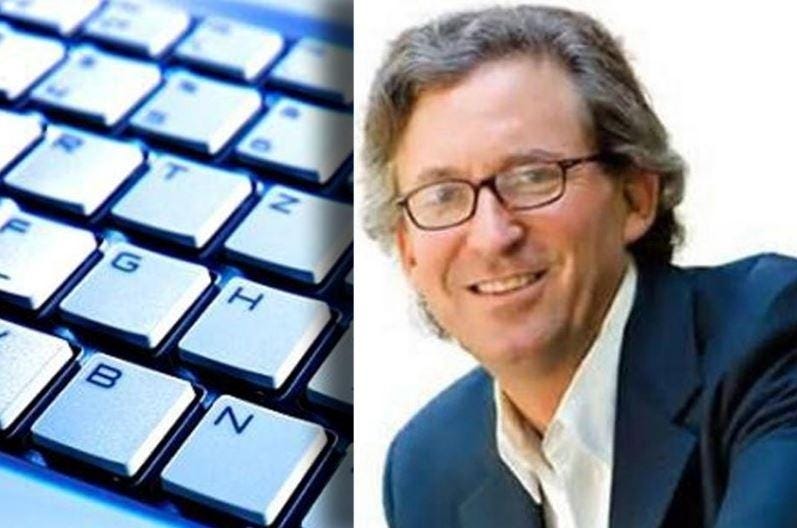
Ron Hart, a libertarian op-ed humorist and award-winning author, is a frequent guest on CNN. Contact him at Ron@RonaldHart.com or @RonaldHart on Twitter.
This article originally appeared on Crestview News Bulletin: Let's fix Obamacare the right way

4-H is about more than farm animals

Veronica Graham is the 4H Program Assistant for Okaloosa County. [Special to the News Bulletin]

Many people, when asked what 4-H is, immediately come to one conclusion: farm animals.

Though much of 4-H is about animal science and livestock, there is a world beyond these areas of focus that truly makes 4-H shine.

For instance:

  • It is the largest youth development program in the nation.
  • It focuses on teaching our children through hands-on learning and strives to make our youths productive and caring citizens.
  • Under the large umbrella term 4-H, we find over 50 different curriculum and project areas ranging from public speaking to environmental science to green engineering.

Projects serve more than one purpose. Children are learning a new specialty area, but they are also meeting new people and expanding their social skills. During school vacations, youths in our area can participate in day camps or attend overnight camps offered by 4-H.

Some of the many topics explored during day camps include sewing, canning, soap making, robotics and nutrition.

Overnight camps during the summer help our youths develop leadership skills, as well as meet other young people in our area.

So, though farm animals are a large part of what 4-H does, it is certainly not what defines this expansive organization.

For those interested in joining 4-H, there are several clubs available locally. Some of these clubs include vet science, dog specialties and archery.

We are always looking for individuals willing to donate their time to become club leaders and start new 4-H clubs for our youth.

Contact me at vgraham@co.okaloosa.fl.us or 689-5850 for details on becoming a volunteer or starting a new club in a project area that has yet to be explored in our area.

Veronica Graham is the 4-H Program Assistant for Okaloosa County.

This article originally appeared on Crestview News Bulletin: 4-H is about more than farm animals

Use tax diversification to help manage retirement income

Yvonne Shanklin is an Edward Jones financial adviser. [Special to the News Bulletin]

You need to save and invest as much as possible to pay for the retirement lifestyle you've envisioned. But your retirement income also depends, to a certain degree, on how your retirement funds are taxed.

And that's why you may be interested in tax diversification.

To understand the concept of tax diversification, you'll need to be familiar with how two of the most important retirement-savings vehicles — an IRA and a 401(k) — are taxed. Essentially, these accounts can be classified as either "traditional" or "Roth."

When you invest in a traditional IRA or 401(k), your contributions may be tax- deductible and your earnings can grow tax deferred. With a Roth IRA or 401(k), your contributions are not deductible, but your distributions can potentially be tax- free, provided you meet certain conditions. (Keep in mind, though, that to contribute to a Roth IRA, you can't exceed designated income limits. Also, not all employers offer the Roth option for 401(k) plans.)

Of course, "tax-free" sounds better than "tax deferred," so you might think that a Roth option is always going to be preferable. But that's not necessarily the case. If you think your tax bracket will be lower in retirement than when you were working, a traditional IRA or 401(k) might be a better choice, due to the cumulative tax deductions you took at a higher tax rate. But if your tax bracket will be the same, or higher, during retirement, then the value of tax-free distributions from a Roth IRA or 401(k) may outweigh the benefits of the tax deductions you'd get from a traditional IRA or 401(k).

So making the choice between "traditional" and "Roth" could be tricky. But here's the good news: You don't necessarily have to choose, at least not with your IRA. That's because you may be able to contribute to both a traditional IRA and a Roth IRA, assuming you meet the Roth's income guidelines. This allows you to benefit from both the tax deductions of the traditional IRA and the potential tax-free distributions of the Roth IRA.

And once you retire, this "tax diversification" can be especially valuable. Why? Because when you have money in different types of accounts, you gain flexibility in how you structure your withdrawals — and this flexibility can help you potentially increase the amount of your after-tax disposable income.

If you have a variety of accounts, with different tax treatments, you could decide to first make your required withdrawals (from a traditional IRA and 401(k) or other employer-sponsored plan), followed, in order, by withdrawals from your taxable investment accounts, your tax-deferred accounts and, finally, your tax-free accounts.

Keep in mind, though, that you may need to vary your actual sequence of withdrawals from year to year, depending on your tax situation.

For example, it might make sense to change the order of withdrawals, or take withdrawals from multiple accounts, to help reduce taxes and avoid moving into a different tax bracket.

Clearly, tax diversification can be beneficial.

So after consulting with your tax and financial advisors, consider ways of allocating your retirement plan contributions to provide the flexibility you need to maximize your income during your retirement years.

Edward Jones wrote this article for use by your local Edward Jones Financial Advisor.

This article originally appeared on Crestview News Bulletin: Use tax diversification to help manage retirement income

Northeastern ‘outsider’ attacked Crestview

Joe Blocker [FILE PHOTO]

I, as current president of the Crestview City Council, feel that I must respond with my thoughts on the presentation delivered before our City Council meeting on Feb. 27, 2017 by a Mr. Larry Harris, a representative from the Mason-Dixon Polling Company.

And myself, as officiating president, had to force myself to sit silent and allow Mr. Harris, a resident from some northeastern state, attack the people of my city, simply because he doesn't like or appreciate our form of government here in Crestview.

What was really hard to accept was not being able to review Mr. Harris' presentation prior to the meeting time of Feb. 27, 2017. I have never had a doubt that yes, possibly, we need some serious changes to our current form of government to meet the requirements, present and future.

At the beginning of Mr. Harris' proposal, I sensed the council body immediately realized that we did not have sufficient information to base or render any action on his proposal at this moment.

To have an outsider come before a public meeting of our City Council, and assault our city and my fellow team of elected and appointed leaders, alluding to just how much ignorance is in our leadership team — and its daily operational task that has been in force for now 100 years, (which) proves to me our system yet has merits.

I, speak(ing) for myself personally on this issue, will never allow the people that I honorably represent, approaching 25,000-plus, to be pressured into accepting this so-called proposal for change of our government without allowing the citizens of Crestview to have their say in this issue.

Let the people make the decision whether they desire to totally change our form of government.

If it is the wishes of the majority of our residents of Crestview to change our current form of government, I'll gladly abide by their decision.

Again, I take offense to the offensive approach on our city, and its leaders, that we heard from this representative from Mason-Dixon Polling Company.

Joe Blocker is the Crestview City Council’s president. 

This article originally appeared on Crestview News Bulletin: Northeastern ‘outsider’ attacked Crestview

How America's refugee problem affects everyone

America has been flooded with immigrants. We cannot continue receiving 100,000 to 150,000 illegal immigrants.

Regardless of how sorry you feel for the hurting people from other countries, how many people can we absorb into our schools? How many can we absorb into our welfare system? How many Americans who have been here for years can afford to lose his or her job to someone who is willing to come and work for slave wages?

How many refugees can we bring into our country? Since the 1980 Refugee Act, we have averaged 98,000 refugees per year.

These nonprofit organizations make millions of dollars every year by bringing anybody they can into this country: U.S. Conference of Catholic Bishops, Lutheran Immigrant Aid Society, International Rescue Committee, World Relief Corporation, Immigrant and Refugee Services of America, Hebrew Immigrant Aid Society, Church World Service, Domestic and Foreign Missionary Service of the Episcopal Church of the USA, and the Ethiopian Community Development Center.   

Below are some of the sources of income for these Voluntary Agencies, or VOLAG:

  • $1,850 per refugee (including children) from the State Department.
  • Up to $2,200 per refugee by participating in a U.S. Department of Health Human Services program known as Matching Grant. To get the $2,200, VOLAG need only show it spent $200 and gave away $800 worth of donated clothes, furniture or cars.
  • The U.S. government pays all VOLAG expenses and overhead in the Washington, DC headquarters.
  • For their refugee programs, VOLAG collects money from all federal grant programs: "Marriage Initiative,” "Faith-based,” "Ownership Society,” etc., as well as from various state and local grants.

When you start multiplying 70,000 to 100,000 refugees times even just $1,000, you come up with a nice profit. VOLAG gets millions of dollars of other support from foundations and other nonprofits and many community volunteers who help them with assimilating refugees into their community.

The nonprofit agencies only have to spend four months with the refugee until they are free to be anywhere in the United States doing whatever they want to do.

The refugee program is a multi-million-dollar moneymaker to these nine nonprofits. Catholic Charities is the largest group and, surprisingly, they have been bringing in thousands of Muslims who in turn have been buying their old churches and turning them into mosques.

So let's get this straight: Our federal tax dollars are funneled into a Catholic charity, a Lutheran charity and seven other charities. This money is supposed to be used to bring 70,000 to 100,000 refugees to America. This number changes year to year. These people come from all parts of the world.

Federal programs available to refugees include:

  • Temporary Assistance for Needy Families
  • Medicaid
  • Food stamps
  • Public housing
  • Supplemental Security Income
  • Social Security Disability Insurance
  • Administration on Developmental Disabilities (direct services only)
  • Child Care and Development Fund
  • Independent Living Program
  • Job Opportunities for Low Income Individuals
  • Low-Income Home Energy Assistance Program
  • Postsecondary Education Loans and Grants
  • Refugee Assistance Programs
  • Title IV Foster Care and Adoption Assistance Payments (if parents are qualified immigrants)
  • Title XX Social Services Block Grant Funds

The numbers of people coming to your state are not exactly proportionate. Delaware receives hardly any refugees. Other states, like Florida, New York, Texas, Maryland and Kentucky, have been bombarded with refugees.

How many thousands can any one city and state take on? Since 1980, we have taken in over 3 million refugees. The additional cost to the welfare system is between $10 billion and $20 billion.

There must be major curtailing of this program until we can get this nation on its feet.

Americans hope that Congress and President Trump will help us.

Will jobs come back to America?

Will Congress cut the corporate tax rate and make it more affordable for corporations to operate in this country?

We need jobs. Our children are graduating high school and college every year. They want to move on with their lives and have a life. We need to help them.

Our veterans struggle with employment, housing and medical care.

Our military is surviving in old beat up barracks. They often do not even have air conditioning in the summer and have decrepit furnace systems in the winter. They are driving old equipment that mechanics work on every day to keep running.

Over the years, our government has lessened the numbers of our service members, making it more difficult for soldiers to advance.

We can only hope our elected leaders will work to help this nation and preserve an America that our grandchildren might wake up to enjoy.

Thanks to refugeeresettlementwatch.wordpress.com for their statistics and information.

Glenn Mollette is an American syndicated columnist and author.

This article originally appeared on Crestview News Bulletin: How America's refugee problem affects everyone

Life's more than the good or bad parts

The Rev. Mark Broadhead is pastor at Laurel Hill Presbyterian Church and First Presbyterian Church of Crestview. [File photos | News Bulletin]

Richard Foster said, "Even when all we see are the tangled threads on the backside of life's tapestry, we know that God is good and is out to do us good always."

There are times when someone will come to me and say, "I've really messed up." Then, a lengthy explanation of what that means unfolds.

I have heard admissions of breaking the law, infidelity, abuse. There is a very long list. I have listened to persons' frustrations with an unruly child, a wayward spouse, a tedious job or a lack of direction in life. I have also heard stories of great joy, of celebration, of overwhelming pride in something well done.

Life is never completely a smooth ride. There are all sorts of experiences tangled together. The ups and downs, the ins and outs are experiences of life.

Yes, sometimes things in our lives look like a huge tangled mess. We have hurts from our past, joys we have experienced, confusions that loom, reasons to celebrate.

Nearly everyone will "mess up" at one point or another.

Nearly everyone will experience the wonderful joys in life.

To look at each experience individually or in small clusters might cause you to think, "My life is a mess," but I encourage you to take a step back and look at the whole of your life to this point. Every experience you have gone through, positive or negative, has helped shape who you are today.

If all you notice are the trying and difficult times, you may have a dour attitude toward life. If all you look at are the happy times, you may have a "pie in the sky" attitude toward life. Both extremes are rather unhealthy.

But when you pay attention to all the experiences in your life as a whole, you will come to appreciate how all of them helped shape who you are right now.

What you thought was a tangled mess is actually a beautiful tapestry. Each event in life — positive or negative — has added its influence, its lesson, its perspective. How you focus on events will determine if you are a bitter or grateful person.

The trick is to step back, look at the whole picture, and give thanks to God for all you have become.

Then, as 2 Peter Chapter 1, verse 5 states, "Your faith will produce a life of moral excellence. A life of moral excellence leads to knowing God better."

The Rev. Mark Broadhead is pastor at Laurel Hill Presbyterian Church and First Presbyterian Church of Crestview.

This article originally appeared on Crestview News Bulletin: Life's more than the good or bad parts

Medical care answers for America

Medical care continues to dominate our attention in this nation. I hope we don't have millions of people without health care in the next year or so.

However, in reality we already do.

A 50-year-old told my wife and I that she seriously needs a knee replacement but she can't pay her deductible and 20 percent. Together, they would cost several thousand dollars; and, on her waitress salary, she can't afford the surgery.

She has medical care but she can't afford to have a very needed surgery.

If she falls over with a heart attack and is rushed to the hospital, her insurance will, of course, pick up a major part of her treatment but she will still be stuck with a big medical bill. That would be another crisis. I wonder if her heart would be able to withstand the shock of her medical bill.

The answer to medical care in America is to put everyone 65 and over on Medicare. We pay for it so we should receive it when the time comes. Make Medicare pay for everything and get rid of the supplemental insurance.

We pay into Medicare all of our lives and then have to worry about supplemental insurance at 65. Congress should eliminate that hassle. Medicare should cover everyone over 65.

Many will go throughout life and pay very little, if any, into Medicare. Obviously, our country has major debt. Therefore, we should take some of our foreign aid to cover anyone left out.

The very poor in America should be on Medicaid. Doctors and hospitals must be required to accept Medicaid patients. I realize they have to make money but a 10 percent to 15 percent load of Medicaid patients is not asking too much for a doctor. People with pre-existing conditions should be able to buy into Medicare. Allow working Americans to buy medical insurance across state lines so we can shop for affordable insurance that fits our budgets. 

Open pharmacies in Canada so we can shop for cheaper medicines.

Find a cure for cancer.

Give Americans a serious tax break if they keep their body mass index at 26 or below.

There is a further question as to whether we should keep poor senior Americans on Medicaid or, as I previously said, move them into Medicare as well. If Medicaid covers all medical treatment, it won't matter. However, if Medicaid is not accepted by all of the medical society, then we still have major issues.

Funding Medicaid and Medicare is the major part of this battle. It's time we start using casino taxes, marijuana taxes, cigarette taxes, alcohol taxes, fast food taxes, obesity taxes and soft-drink tax money to fund Medicare and Medicaid.

We could raise a lot of money and probably eliminate having two different systems, thus going to one system, which would be a national medical card for those over 65, those with preexisting conditions and the very poor.

Finally, make Congress shop for and buy their health care. Limit Congress to five terms and senators to two terms. Eliminate insider stock trading information, which is illegal for average Americans yet Congress racks up millions over the course of their tenures.

Many of our problems would be solved if Congress had to live like average Americans.

Another problem would be solved if insurance company and drug manufacturing company lobbyists are barred from Capitol Hill. Congress should be barred from receiving money in any way from these people.

Then they might make some decisions for the American people instead of what is in the best interests of their financial supporters.

Glenn Mollette is an American syndicated columnist and author.

This article originally appeared on Crestview News Bulletin: Medical care answers for America

On Gorsuch, too many laws and gay marriage

It’s Trump’s first spring as president; hopefully, he will do some “spring cleaning” in Washington. Liberals will name it "Springtime for Hitler,” but there is real work to be done.

It seems every time Democrats try to oppose Trump they end up disappointed. However, Trump must use his honeymoon period judiciously, and not have fights over trivial matters, as he seems prone to do.

What does matter is that Trump will appoint his first Supreme Court justice. I know this will not mean as much to many Americans as when “American Idol” had to appoint a new judge to replace Simon Cowell or Paula Abdul, or “Celebrity Apprentice” appointed Arnold Schwarzenegger to that post, but it’s important.

Like everything Trump does, it gets a lot of press. He narrowed his choices down to two guys and finally gave the rose to Neal Gorsuch, announcing his choice on live TV. It was the first time an episode of “Judge Judy” was interrupted for a judicial announcement.

Chuck Schumer, speaker for an opposition who dramatically ties themselves to the railroad tracks for everything Republicans try to do, said this of nominee Gorsuch in a New York Times op-ed piece: “The judge was clearly very smart, articulate and polite, with superb judicial demeanor.”

This, of course, means, Schumer is against him.

I hope it’s not a contentious vote. In the last 26 years, the narrowest margin in a Senate confirmation for a Supreme Court Justice was Samuel Alito; the vote was 58 for and 42 against. To demonstrate how rancorous the process has become, Reagan nominee Antonin Scalia was confirmed with a 98 to 0 vote.

There are areas of agreement on which we could focus. Libertarians and Democrats can agree with most Republicans that we imprison too many people in the USA. According to Hillary Clinton and Rand Paul, we have 5 percent of the world’s population and 25 percent of the prison population. It’s costly and often based on selective prosecution. This is happening against a backdrop of decreasing crime in the last 20 years. As government grows, our freedoms diminish.

We need fewer laws. Who can marry and where they potty in North Carolina should be none of the government’s business. They cannot even plow the streets in Boston and NYC.

Let gay marriage stand; it is not hurting anyone. For a crime, there really needs to be a victim who is actually damaged. Gay marriage is between two willing parties.

If we keep legally tinkering with bathrooms and gay marriage, the next frontier would be a ruling on bisexuality. Which could go either way.

Ron Hart, a libertarian op-ed humorist and award-winning author, is a frequent guest on CNN. Contact him at Ron@RonaldHart.com or @RonaldHart on Twitter.

This article originally appeared on Crestview News Bulletin: On Gorsuch, too many laws and gay marriage

Watch out for these 2 scams

Janice Lynn Crose, a former accountant, lives in Crestview with her husband, Jim; her two rescue collies, Shane and Jasmine; and two cats, Kathryn and Prince Valiant.

If the people who create scams to steal money from hardworking people and seniors would put their creativity to good use, they might be able to cure cancer.

One of the best ways to protect oneself from telephone scams is to never answer a phone call from "unknown" or from someone you don't know. If the call is legitimate, the caller will leave a message.

One of the newer telephone scams is this: A caller from an unknown number tells you they are with the NSA (National Security Agency) and it is a matter of national security that you allow this caller access to your computer.

If you allow access, the scammers now have control of any personal information on your computer, including your passwords and access to your online banking and credit card information.

Hang up on anyone claiming they need your personal computer for national security and notify the Crestview Police Department or Okaloosa County Sheriff's Office.

The IRS published their annual scam list.

Here are two of the top scams:

•Phishing — Even if the email looks legitimate, if someone is requesting personal information, do not give it out.

If the email has the IRS or a bank logo, call the number from your bank statement or the IRS at 800-829-1040 and talk with them.

Generally, these emails are not legitimate.

In addition, if you receive an email from someone you don't know, it is best to ignore it and leave it unopened.

•The ever-popular phone scam, with criminals pretending you will be arrested if you don't pay an overdue IRS penalty immediately by gift card, iTunes card or wiring money to them.

Remember: The IRS sends letters through the mail. They don't call and threaten taxpayers. If you think you may owe taxes, call and speak with the IRS directly.

Identity theft is always on the rise around income tax time. Keep your Social Security card at home and only give your number to a trusted, legitimate income tax preparer. Many public libraries and senior centers have income tax help.

Never give any personal information that you are uncomfortable disclosing. The more private you keep your personal information, the better.

Be alert for potential scams.

Janice Lynn Crose, a former accountant, lives in Crestview with her husband, Jim; her two rescue collies, Shane and Jasmine; and two cats, Kathryn and Prince Valiant.

This article originally appeared on Crestview News Bulletin: Watch out for these 2 scams

School gardening promotes healthy eating

Bob Sikes Elementary fourth-graders in Jordan Appelberg's fourth grade class enjoy planting and working in their raised bed garden. [Special to the News Bulletin]

Children learn best when they are actively involved, doing something. Gardening is a great way to include children in experiential learning that promotes hands-on activities in an outdoor classroom.

This year, our Okaloosa County Master Gardener volunteers, 4-H and the Family Nutrition Program have teamed up to reach several local schools and provide the expertise and resources to use gardening and teach youths about science, biology and nutrition.

At Bob Sikes Elementary School, teams built six raised beds so that each fourth-grade class could plan and prepare, and then care for their class garden. The enthusiasm is evident each week as youths get to plant, weed and water plants.

Lessons for the week center on science and biology; students learn how plants grow, and receive education on nutrients needed for plants and problems like good bugs and bad bugs.

As students learn and take care of their garden, nutrition lessons center on vegetables they will soon harvest. Tasting sessions and basic nutrition are taught in hands-on activities that allow students to experience new food and learn about healthy eating.

Introducing children to gardening lets them see where their food comes from, and helps them understand the importance of eating whole foods locally grown and harvested.

Teachers who participate also use the garden as a place for other enrichment activities like sitting in the garden and writing a paper or using the ambience to create artwork.

If you have children at home and want to try an easy planting activity, grow potatoes in a laundry basket or other large container.

You will need one laundry basket, which can be purchased at a local dollar store.

Here’s what to do:

  • Fill the baskets with about 2 inches of soil and compost.
  • Put two to three seed potatoes into each basket. Cut each potato into three pieces with two to three eyes each. Only use certified seed potatoes. Certification ensures that the seed tubers are free of disease. You can buy certified seed from local garden centers.
  • Cover the potato pieces with soil just barely to the top. Keep doing this until you have half the basket full of growing potatoes and soil.
  • As the potatoes grow, add soil to the basket to keep the tops just above the soil; this simulates "hilling" the potatoes in a garden.
  • Water the basket slowly; holes on the sides can make it challenging if you get in a hurry.

Potatoes are ready within 100-110 days, depending on the variety. One of the most common varieties, Red Pontiac, can be found locally.

Pamela H. Allen is an agent at the University of Florida's Institute of Food and Agricultural Sciences Extension office in Crestview.

Children can help prepare these simple recipes in the kitchen featuring commonly grown vegetables.

Crispy Potato Wedges

Ingredients

  • 4 potatoes, scrubbed clean
  • 1/4 cup extra virgin olive oil
  • 1/4 teaspoon salt
  • 1/4 teaspoon garlic powder
  • 1/2 teaspoon paprika
  • 1/4 teaspoon black pepper
  • 2 tablespoons chopped fresh parsley leaves
  • 1/4 cup grated parmesan cheese

Directions

  • Cut potatoes into wedges by cutting lengthwise in half then slice each half into three slices.
  • Place the salt, garlic powder, paprika and black pepper in a mixing bowl. Add potatoes and toss them in the spices. Next, add the olive oil to the bowl and toss until potatoes are coated.
  • Place coated potato wedges so they are in a single layer on a nonstick baking pan.
  • Bake at 450 degrees for 30 to 35 minutes until the potatoes are cooked through, browned and crispy.
  • While potatoes bake, chop the parsley and grate the parmesan cheese. Place both into a large mixing bowl.
  • After baking and while still hot, toss potato wedges in the mixing bowl with parsley and cheese.

Serves 4–6.

Raw Veggies with Yogurt Dip

Ingredients

  • 1 cup nonfat plain yogurt
  • 1 package ranch dressing
  • Veggies (may use any raw vegetable grown in the garden)
  • Carrots
  • Broccoli
  • Green or red bell peppers
  • Cucumbers — washed and thinly sliced

Directions

  • Wash hands and surfaces.
  • Wash vegetables using a vegetable brush. Pat dry and cut vegetables into bite-size pieces.
  • Mix yogurt with ranch dressing mix in a medium bowl.
  • Place vegetables and dip on a tray and enjoy.
  • Immediately refrigerate leftovers.

Serves 6–8.

Do try this at home

This article originally appeared on Crestview News Bulletin: School gardening promotes healthy eating

error: Content is protected !!