Please ensure Javascript is enabled for purposes of website accessibility
Skip to main content
Advertisement

FROM THE PULPIT: Watch for signs of the Second Coming, not 2013

Frequently, at each Christmas season’s end, I hear people say, “Next year, I’m not going to do all this running around and extra spending. Christmas is getting too exhausting!”

My silent reply is, “Speak into the microphone. I want to record this as a reminder for next year.”

Though some seasonal preparations can be important, I also believe they can be huge distractions. These kinds of preparations — the weeks that go into Thanksgiving, Christmas and New Year’s Eve party planning — can be downright exhausting.

Moreover, they cause us to miss another aspect of preparation that is infinitely more important.

Yes, we are to prepare our minds and hearts. Not for Santa Claus, not for Christmas Day and not for the most fashionable New Year’s Eve party.

Rather, we should prepare our minds and hearts for eternal matters.

The scripture readings for the Sundays in Advent all follow a pattern: preparing for the Son of God’s return, often called the Second Coming.

We don’t talk much about that eventuality, but God has promised it will happen when we least expect it.

Jesus talks about it coming unannounced like a thief in the night. He describes it as a bridegroom arriving unannounced, saying those who are ready will go with him, and those who are not will be left behind.

No one knows the day or the hour. Jesus said that he himself doesn’t know the day or the hour.

I shake my head at the arrogance and pride of men and women who attempt to predict when certain milestones like the end of the world — Dec. 21 passed uneventfully — and the Second Coming will take place.

If Jesus doesn’t know, how do people think they can outsmart God by figuring out His plan?

Jesus says to watch for the signs, not to predict.

As we watch for the signs, we must prepare ourselves to be ready to go at a moment’s notice.

Prepare your heart and mind as we approach 2013.

Focus on things eternal more than you focus on things temporary.

Make time each day — even if it is a few minutes — to think about your spiritual health, your state of mind and heart. If you find your spirit dragging, it will be time to stop what you are doing and regenerate your soul.

Find a place to worship. Find a place that will help you focus on God. Ask God to give you the kind of insights that will help you properly prepare — not only for 2013, but also for the fulfillment of God’s promises.

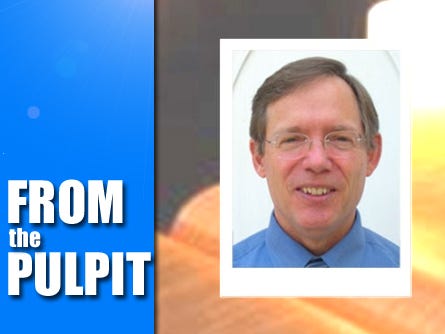
The Rev. Mark Broadhead is pastor at Laurel Hill Presbyterian Church and First Presbyterian Church of Crestview.

This article originally appeared on Crestview News Bulletin: FROM THE PULPIT: Watch for signs of the Second Coming, not 2013

FROM THE PULPIT: Reflecting on Christmas

As we reflect on the Christmas season, consider these awesome truths.

First, God knows us and we are important to him. Remember, God announced His son’s birth to shepherds.

Shepherds were at the social strata’s opposite end from King Herod and influential people. They lived in fields with their animals. Still, God’s angel came to them and said, “Unto you is born this day in the city of David a savior who is Christ, the Lord.”

Throughout scripture, we see God honoring and using people and things that the world often overlooks. You may not be a rich corporation president, a political leader or an accomplished athlete. But God announced the savior’s coming to people like you and me.

Second, our lives matter because God loves us.

Imagine those shepherds sitting around the campfire after God’s announcement. Perhaps they were thinking, “What difference does it make if we watch the sheep or not?”

Sometimes, you may think, “What difference does it make if I get up every morning or not? My life is like an endless cycle of things that don’t mean anything.”

But God made His announcement to the shepherds. He was saying to them and to us, “Your life is worthwhile. It is my gift to you. Therefore, live every golden moment of it because your life does matter to me.”

It is impossible to live, even for a few days, and not influence someone. Therefore, we are important to God. And He loves us.

Third, our faith matters too.

Shepherds were men of faith. They looked for a messiah who would deliver them from poverty, enslavement and exile. When things got tough, they would think about God’s promise that one day a savior would come.

But on that very special day, while they were tending to their daily chores, God came because He loved them so much that He fulfilled His promise.

As we get involved so deeply in life that we wonder if there is a point, God says, “I know you and I love you; your life matters to me, and I want you to trust me. I will be your friend and your Savior.”

And, if we will, he will.

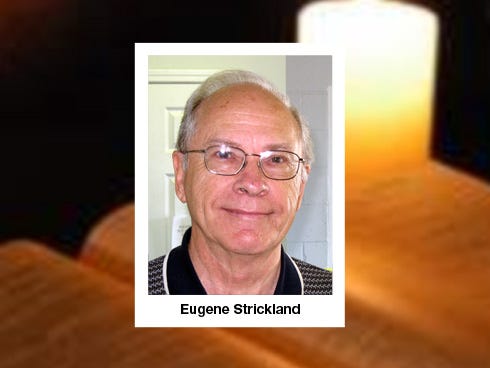
Eugene Strickland is the Okaloosa Baptist Association’s missions director.

This article originally appeared on Crestview News Bulletin: FROM THE PULPIT: Reflecting on Christmas

FROM THE PULPIT: Preparing for Christmas

When I was growing up in Crestview, we decorated the house inside and out.

It was not quite like the display in “National Lampoon’s Christmas Vacation," but lights went up outside the house and we got a real tree and decorated it. Mom painted a picture in the living room’s big picture window. We were preparing for the celebrating of the birth of Christ.

Not unlike the Magi.

Present-day astronomers, in Christ’s time, were priestly men called stargazers. The term "Magi" possibly referred to a certain Persian priestly order.

Let me paint you a picture of Matthew 2: 1-12: Several men gaze into the heavens, day in and day out, for particular signs.

Then, it happened.

A very unusual star appeared from nowhere. To these men, it was a sign that someone very special would be born or had been born. They excitedly checked the star's origin, its continuing appearance, and its unusual brilliance. They tracked the star to Christ in the manger and paid tribute.

Today, we prepare for vacations in a similar way.

These men needed to plan a trip. They decided how many would go, provisions needed, gifts to take as tribute, best routes, and their destination.

Preparation sometimes took two years. AAA couldn’t tell them what interstates and highways to take. They received no recommendations for restaurants or hotels. Servants may have handled these duties.

Today, we get in the car and go. We stop at a motel, spend the night and continue the journey the next day.

However, ancient people planned for hardships, rested several days before continuing onward, and sometimes bought more animals during the journey because of sickness or injury.

Then the big day came when they started the journey.

There is no known diary for the Magi, but I imagine they experienced sandstorms, desert heat, robbers and thieves. They probably couldn’t find water, encountered path hazards and lost servants.

At some point, the star disappeared, but they continued their journey. Then they entered Israel’s borders and continued on to Jerusalem to see the king.

Herod the Great was ruler during Jesus' birth. The Magi expected to find the new "King of the Jews" in the palace’s fine splendor, but he was not there. Herod, half-Jewish and half-Edomite, asked the priests and scribes about the Messiah’s birth. Armed with new information about Jesus' birth, the Magi continued on to Bethlehem.

Here, they found the Christ child — who was no longer an infant — and they worshipped him.

The men bowed, acknowledged Christ as King, and presented Him with gifts of gold, frankincense and myrrh.

Gold — the finest of all medals; the only metal fit for a king — indicated the child’s divinity.

Frankincense is the gift for a priest. People used this sweet perfume when they made sacrifices during temple worship. Priests open the way for people to find God. Jesus made it possible for us to enter the very presence of God.

Myrrh — a gift for the dying — was used in spices in the burial cloth that Jesus was wrapped in. Jesus came into this world to die for our sins.

This year, as you prepare for Christmas Day, seek the King of Kings who has opened the way for us to enter God’s presence. He died on the cross at Calvary for our sins.

Merry Christmas to you. May God bless you richly.

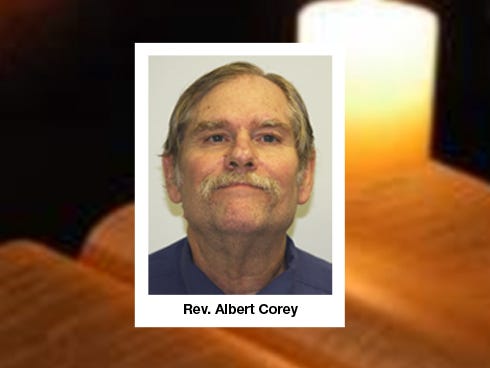
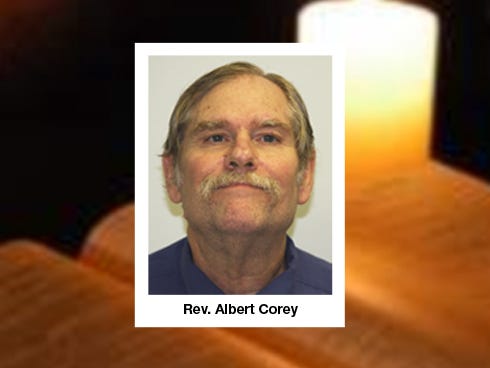
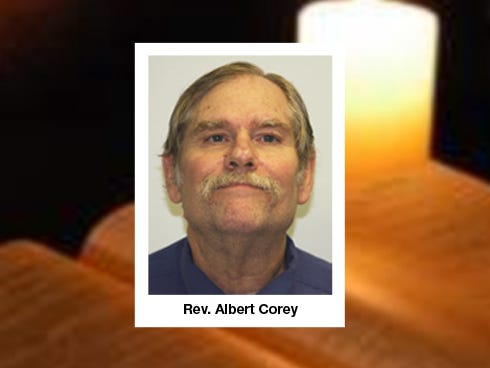
The Rev. Albert Corey is pastor at Oak Ridge Assembly of God in Crestview.

This article originally appeared on Crestview News Bulletin: FROM THE PULPIT: Preparing for Christmas

FROM THE PULPIT: Find happiness in Jesus, not things

One of my favorite stories is about a Navy officer who always dreamed of commanding a battleship. He finally achieved that dream and received commission of the fleet’s newest, proudest ship.

One stormy night, as the ship plowed through the seas, the captain was on bridge duty when, off to the port, he saw a strange light rapidly approaching his own vessel.

Immediately, he ordered the signalman to flash a message that said, “Alter your course 10 degrees to the south.” Only a moment passed before the reply came: “Alter your course 10 degrees north.”        

Determined that his ship would take a backseat to no other, the captain snapped out the order: “Alter course 10 degrees — I’m the captain.”

The response beamed back was, “Alter your course 10 degrees — I’m Seaman 3rd Class Jones.”

Infuriated, the captain grabbed the signal light and fired off, “Alter your course — I am a battleship.”

The reply came back, “Alter your course. I am a lighthouse.”

Sometimes, being headstrong and belligerent can cause a person some trouble. One such example appears in the Old Testament, where we read about Jacob. He had been successful throughout his life — at least, according to society’s definition. All his life, however, he had been a scoundrel, a conniver. He was a schemer, a manipulator and was quite greedy. He didn’t care what it took to get what he wanted. By one method or another, he had acquired great wealth and status.

You may remember how, in the Old Testament, Jacob had manipulated his twin brother, Esau, to make him give up his right to the family inheritance for a bowl of soup.

You may remember how Jacob outwitted his blind father, Isaac, by putting on sheepskin to trick him into thinking Jacob was Esau who had come to receive the family inheritance.

Then, in fear of revenge, he fled home and got as far away from Esau as he could because Esau had vowed to kill his brother. 

Later on, Jacob turned the tables on his father-in-law, Laban, who had tricked Jacob into working for him for free for 14 years. Jacob later turned the tables on him with his own trickery, and became quite wealthy at Laban’s expense.

Yes, Jacob had done some nasty things, and had gotten some important people very angry with him. For him to enjoy his wealth, he had to flee for his life and live in another country.

Do you know people like that — people who don’t care who gets in the way, or who gets hurt as long as they get what they want? They leave a wake of emotional destruction behind them. They enjoy that they are getting what they want, no matter the cost to others. My heart goes out to people struggling to fill some void in their life, a void created by some hurt or neglect forced upon them.

The unspoken question that drives many of us is, “Am I happy?” If the answer is “no,” you seek ways to change things to become happy.

Unfortunately, most people seek change in the wrong way. What usually gets changed is their job, spouse, clothes or where they live. They keep bouncing around from one thing to another, hoping the next discovery will make them happy. Unfortunately, this kind of searching continues to turn up short-term happiness or purely empty results, and never addresses the deeper need within them.

My question for you is, “Are you happy?”

If you are, I celebrate with you.

If not, I ask you to ponder why you are not.

Material possessions do not make one happy, although they can sometimes help. Rather, relationships bring the most happiness and joy into life.

But the ultimate relationship — one with Jesus Christ — brings the ultimate joy.

Give thanks to God.

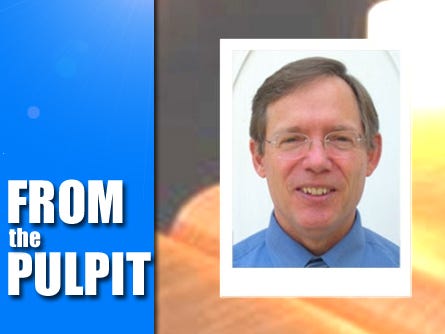
The Rev. Mark Broadhead is pastor at Laurel Hill Presbyterian Church and First Presbyterian Church of Crestview.

This article originally appeared on Crestview News Bulletin: FROM THE PULPIT: Find happiness in Jesus, not things

FROM THE PULPIT: Humble yourself before He humbles you

God chooses to fill empty vessels, but He cannot fill people with the Spirit if they are already full of themselves, and there is a real danger in the church of having a sufficient spirit. That is why we don’t see many revivals; people thinking they have a sufficient, satisfied spirit.

When we humble ourselves, God promises to hear and respond — and he never breaks that promise. You will never find a time in the Bible when men humbled themselves before God and he did not hear and respond. God puts the responsibility to humble ourselves on us.

Seeking humility means we confess our burden for the way things are. The circumstances of people carrying crosses, living far from God, precede every revival in the Bible.

We must feel a burden for our own lack of righteousness.

Fast, weep and mourn

Why do we get upset when sinners sin? What do we expect them to do? They don’t have the truth of God, the cover of the blood of Christ or the Holy Spirit to guide them.

God says in Joel 2, "Even now, return to me with fasting and weeping and mourning. Rend your heart and not your garments. Return to the Lord, your God, for He is gracious and compassionate, abounding in love and He relents from sending calamity."

That’s what it means to humble ourselves, to feel that burden. However, I wonder if we have become too proud to rend our hearts, weep and mourn.

Even in desperate times, we have one great source of hope. We can move God’s heart by our pleas, and a passionate calling on God’s name by his people always precedes revival.

However, God is moved by someone’s kneeling, not his or her standing.

God tells us repeatedly that if we are serious about humbling ourselves, we must pray and fast.

Jesus, in His teaching, did not say “if” you fast. He said “when” you fast.

Fasting is one of God’s ordained ways of humbling ourselves.

Psalms 35:13 says, "I put on sackcloth and humbled myself with fasting."

In Ezra 8:21, the prophet Ezra proclaimed a fast so that he and his companions might humble themselves before God.

Fasting is a sign of humility to the Lord God because it is our attempt to subject our desires so we can focus on God’s desires. Also, fasting communicates availability and yielding to God for whatever He wants instead of what we want. Most of all, fasting enables us to give our full attention to God’s leading and not to our own agenda.

Fasting means you are willing to give up something your body demands to fervently seek something you spirit needs.

Overcoming fear

You want revival? Pray and fast.

So why don’t we?

First, we are afraid because some denominations don’t do it.

The second reason is pride. It is humbling to fast. If you decide to pray, mourn and fast, some people will ridicule you because you are doing something radical and not going with the crowd. See Psalms 69:10-13.

Revival doesn’t come because we see the importance of humility and declare its virtues. Revival comes because we intentionally seek it.

God clearly says, "This is what you do if you want to humble yourselves before me."

The question is, are we too proud to do it? Humility means we have a burden with present conditions — and then we pray, fast and start addressing our desperate need for holiness.

Revival always makes us address our need for holiness. I have wondered why revival comes so slowly and so infrequently, when every church would say they are for revival. So why do we rarely see it?

Many people ask for revival because they think it would be fun. They have never been in a revival.

Long term, revival is glorious; short term, it is painful. Because if there were a movement of the Spirit in church, there would be a conviction of sin like we have never seen before. And are we sure we want that?

Every time you start to tell a dirty joke, or keep your money from God, make a dishonest deal or skip church over some silly, selfish reason, do you really want the spirit to crush you so that you have to fall to your knees and ask for forgiveness?

That is what you are asking for if you are asking for a revival.

Peter says in the fifth chapter of his first letter that we need to clothe ourselves with humility because God opposes the proud but gives grace to the humble. Therefore, we must humble ourselves under God’s mighty hand.

Humble or be humbled

Every time something bad happens, we are too quick to say, "That must be spiritual warfare." Many times, it is God’s discipline. It is God keeping his promise to humble the haughty in spirit.

Do you remember how proud and arrogant King Nebuchadnezzar was before God, even though he had been warned in a dream to humble himself? He didn’t, of course. Therefore, God sent him into the wilderness for seven years to live like an animal. In Daniel 4:37, he says, "I learned a great lesson. I learned that all those who walk in pride He is able to make humble."

The Bible says that one day every knee will bow. We are not talking about whether you will be humble before God. We’re just talking about when you will humble yourselves and how. God will humble all that do not humble themselves, The Bible says.

If you will not fall flat on your face before God, he will put you flat on your back — but one way or the other, you’re going down.

If you want purity and rightness in your life and in this church, you must humble yourself and ask God for revival.

Rev. Albert Corey is pastor of Oak Ridge Assembly of God in Crestview.

This article originally appeared on Crestview News Bulletin: FROM THE PULPIT: Humble yourself before He humbles you


FROM THE PULPIT: Revive us again, Lord

The word revival says that something is alive but is about to die; it struggles with life and needs awakening.

If you’re not a Christian, you don’t need revival; you need regeneration. If you are a Christian, there is a good chance that during your Christian life, you will need a few revivals.

Revival happens when God visits His people and wakes them up spiritually. It can happen on many levels. For example, revival can happen at the individual, group or community level — and even the national level. One of the most famous revivals was the Great Welsh Revival at the turn of the 20th century, when more than 100,000 people came to Christ in five months.

This revival was so powerful, they closed bars and pubs because people stopped going to them. They closed prisons because there was no one to put in jail. Amazingly, mines had trouble getting mules to work because so many miners converted to Christ and the mules only worked while cursed. The whole nation of Wales experienced revival.

The best definition of revival from the Bible is in Acts 3:19, where Peter says, "Repent, then, and turn to God so that your sins may be wiped out and that times of refreshing may come from the Lord

When revival comes, great things happen. God’s people have a new passion for prayer, worship and God’s Word — you won’t have to beg them to come to church. You see renewed, even ruthless confession of sin and renewed commitment to holiness. Many of the things God’s people used to tolerate in their lives will not be tolerated anymore. You will see an increased burden for the lost and an emphasis on evangelism. Great numbers of people coming to Christ usually follows revival.

Revival cannot be manufactured; rather, it is heaven sent. God can’t be forced to send revival by anything we do.

We are prone to let our love for God grow cold. The Lord fills us up with the Holy Spirit and he starts a fire in our hearts, but after a while, that fire doesn’t burn as hot as it once did.

Ask yourself if these apply to you:

• Prayer is no longer a vital part of your life.

• You have grown content with your Biblical understanding and you don’t hunger anymore.

• You don’t anticipate church gatherings.

• Pointed spiritual discussions embarrass you.

• Certain sins don’t bother your conscience.

• Divisions in fellowship don’t bother you.

• Injustice and human misery rarely cross your mind.

• The loss of people without Christ never crosses your mind.

• You never think about or sense God’s presence.

• A desire to praise the Lord rarely wells up in your heart.

Are you thirsty for more of God than you have been experiencing of late?

I believe that God will light the fire when you get on the altar. The heart can be rekindled with the fire of the spirit’s presence.

I don’t know how or when God will send revival to America, but open a way for God to come into your heart.

Ask God to light the fire — to rekindle those feelings you once had.

The Rev. Albert Corey is pastor at Oak Ridge Assembly of God in Crestview.

This article originally appeared on Crestview News Bulletin: FROM THE PULPIT: Revive us again, Lord

error: Content is protected !!