



Please ensure Javascript is enabled for purposes of website accessibility
Skip to main content
Advertisement

FROM THE PULPIT: The church transcends denominations, methods

In 1 Corinthians 12, the Apostle Paul presents an idea of God’s design for the church: “For just as the body is one and has many members, and all the members of the body, though many, are one body, so it is with Christ.”

“If one member suffers, all suffer together with it; if one member is honored, all rejoice together with it,” he said.

God created a system of interdependence. If one part of the human body suffers — like, say, a bone gets broken — all the other parts are affected. Within the Body of Christ, it is the same. At least, it is supposed to be the same. We cannot escape the reality that we belong to one another, that we each fit together.

I am the pastor at two churches. Each is unique, but has the same purpose. Ultimately, we strive to achieve the joy of knowing and worshipping God; to exercise the privilege of sharing Jesus Christ and his teachings with others; and to share our Lord’s hospitality with God’s children, whether they are a part of our congregations or not.

These two churches have one purpose but diverse methods. That’s because the two congregations comprise people with different skills and abilities.

It is the same for all of our Lord’s churches, regardless of denomination or the congregation's composition. We are one in purpose, but diverse in our methods.

When the Body of Christ as a whole is functioning well in design, diversity and display, it is something to behold! This is what Christians around the world should strive for. Remember: There are numerous traditions because there are different parts to the Body of Christ.

This does not mean that because someone does something differently they — or we — are wrong. We are all simply different parts of the same body. We have different gifts and different functions.

God is marvelous! In his wisdom he permits diverse denominations to allow for different styles of worship, different avenues of thought and different ways of speaking to people’s hearts to meet the multitude of different personalities and cultures.

Unfortunately, some people feel they must take issue with others, which causes dissension among the body. It’s like acid reflux that causes heartburn, which keeps a person focused on the discomfort and pain instead of being able to enjoy a meal or conversation. The focus gets skewed, and the greater good is missed.

Yes, there are different parts of the body, but they all function together for the good of the whole.

The human body is a miracle of God’s engineering, different parts all working together for the common good.

The Body of Christ is a miracle of God’s engineering: diverse, different, distinctive and striving to convey the message of God’s love, grace and forgiveness through Jesus Christ.

The Rev. Mark Broadhead is Laurel Hill Presbyterian Church and First Presbyterian Church of Crestview’s pastor.

This article originally appeared on Crestview News Bulletin: FROM THE PULPIT: The church transcends denominations, methods

FROM THE PULPIT: Practicing your faith takes courage and discipline

Do you have the courage to follow Jesus Christ?

When Christians say they are Jesus’ disciples, it means they are his students. They learn from him and practice lessons that come from him.

This means practicing those lessons that contradict society’s ways.              

Jesus talks about the love of money being the root of all evil. How much do you love money? Do you pursue it with a vengeance to the detriment of other obligations?

The Bible teaches that everyone is created in God’s image, that everyone is equal in God’s sight. As a student of Jesus Christ, do you think you are better than some people — or many people? Do you think there are persons or groups of persons that are inferior… different nationalities, different skin colors, different ways of interpreting the scriptures? Do you carry any prejudices, whether it is about race or economic status?

Jesus teaches that Sabbath rest is important. He practiced this himself by spending time alone to pray and have focused time with God. Do you practice Sabbath rest, or are you active seven days a week? Do you declare that you deserve to have fun, and by so doing have no thought for your relationship with God?

Jesus teaches that we must stand firm in our conviction of him. He says to let our yes be yes and our no be no.

How well do you do with this?

Jesus says we must not commit adultery — as it says in the Ten Commandments — but he takes it farther. He says that if anyone looks at another with lust, adultery has already been committed in their heart.

Have you committed adultery in your heart?

Jesus calls his followers salt and light. Salt brings out the flavor in foods and was used as a preservative. Jesus’ disciples should help add richness to life and share the Gospel. As light, his disciples should be beacons of hope, expectation, joy, love, grace and forgiveness.

Do you represent these traits?

Many pastors today try to convey that it’s easy to follow Jesus. I have occasionally been guilty of this. But being a Christian — a disciple of Jesus Christ — is not easy! It is challenging because Jesus’ teachings, and the call for disciples to follow and live those teachings, go against everything the world says is OK.

So, I’ll ask again: Do you have the courage to follow Jesus? Being a Christian is not for sissies. It is not for the faint of heart. It is not for those who would be wishy-washy when confronted by challenges.

Being a Christian means taking a stand for Jesus Christ, every moment of every day.

The Rev. Mark Broadhead is Laurel Hill Presbyterian Church and First Presbyterian Church of Crestview’s pastor.

This article originally appeared on Crestview News Bulletin: FROM THE PULPIT: Practicing your faith takes courage and discipline

FROM THE PULPIT: God is with you every step of the way

Editor’s Note: This concludes the story of Moses, his excuses and God's replies. Parts one and two appeared in the Sept. 14 and 21 editions of the News Bulletin.

To recap: Moses fled Egypt after killing an Egyptian guard. While away, he met a beautiful woman, married her, had several children, tended her father’s sheep and was comfortable. One day, he saw a talking enflamed bush that wasn’t burning — a sight right out of “The Twilight Zone.” It turns out, God wanted Moses to return to Egypt to free the slaves. Moses offered many excuses to disobey God’s command, but God countered each one.

And now, the story continues…

Moses tried one last excuse: “God, you know I don’t speak well; I stutter. I have ever since I was a child. I have all kinds of thoughts — good ones — but can’t speak well enough to get them across. I’m no good at public speaking — and don’t tell me to picture people in just their loin cloths; it doesn’t help. It actually makes me more nervous.”

God started to reply, but Moses jumped in and cut him off. “You know my brother, Aaron. Well, Aaron can sing like an angel. Why don’t you send him instead? Not me. Please?” 

God was ready with a lightning bolt, but kept himself in check. “OK, Moses,” God said. “I will make a deal with you: I’ll send the two of you off together. I am going to give you my words, you are going to give my words to Aaron, and Aaron will speak my words. As this happens, the Pharaoh will eventually hear my demands and let my people go.”

Moses finally ran out of excuses and did as God had said. 

Did you notice that each of Moses’ excuses had a personal reason attached to them? Moses said he didn’t have authority so no one would listen to him. He feared returning to Egypt and being put to death. He felt that since he could not speak well, it would reflect poorly on him.

Each excuse had nothing to do with the benefits of what God could do through him. It was all about Moses. 

But God had an answer for each excuse that Moses threw out. God said, “Just do it. I am going to give whatever it takes to get the task done.”

Sometimes, we have excuses, too. There is often hesitation or unwillingness to recognize that God will provide what is necessary to get the job done. It is not about taking a turn. It’s not about feeling inadequate. It’s about being faithful to God’s call. 

Moses eventually gave up giving excuses. He did what God said, and God did tremendous things through Moses. It wasn’t perfect — there were lots of bumps along the way — but God’s will was accomplished. 

So if God calls you, how will you respond? 

You could say, “God, would you believe I can’t do this?”

But if you do, God will say “No, I don’t believe you cannot do this. You can do it, because I am going to be with you every step of the way.”

The Rev. Mark Broadhead is Laurel Hill Presbyterian Church and First Presbyterian Church of Crestview’s pastor.

This article originally appeared on Crestview News Bulletin: FROM THE PULPIT: God is with you every step of the way

FROM THE PULPIT: Hear God’s call, follow him

Last week’s column left off with the excuses Moses gave when God gave him a mission.

God persisted; he wanted Moses to be his representative in Egypt — and Moses gave another excuse.

 “God, I am a wanted criminal back in Egypt,” Moses said. “Shoot, they will catch me and cut off my head if I go back there!” 

“No they won’t,” God said. “I’ll protect you. Don’t worry about it. Everything will turn out just fine.”

“How can you protect me against those Egyptians?” Moses asked — not realizing he requested a challenge.

“Moses, take your hand and stick it inside your robe,” God said.

Moses did so.

“Now take it out,” God said.

Moses’ hand was covered with leprosy. Can’t you imagine him thinking, “What am I supposed to do now? I can’t eat properly, I can’t drink properly. I can’t even see my wife and children anymore!” 

God said, “I will show you my power. Stick your hand back into your robe.” 

Moses put his hand back into his robe and took it out again; it had returned to normal. Moses was struck speechless.

Then, God asked Moses to throw his shepherd’s staff the ground.

Can you just imagine Moses thinking, “This staff is the only thing I can call my own, and you want me to throw it down? Please don’t take this away from me.”

Still, Moses threw the staff on the ground, and the rod turned into a hissing snake.

Now, I don’t know about you, but if I had a rod in my hand and it turned into a hissing snake, I wouldn’t wait around to see what happened next. But Moses didn’t have that option: God asked Moses to pick up the snake by the tail.

Moses did, and the snake immediately turned back into a shepherd’s staff. 

God calmly said, “Do you see what I am trying to say to you? With me showing you what to do — backing you up — you are going to be able to take that shepherd’s staff and part the sea. You will be able to lead the Hebrew people out of bondage and out of Egypt to freedom. You are going to be able to use that staff to strike Pharaoh dead.

“All of this because you heard my call and followed me.”

What about you? Do you make excuses for not serving God’s will? Are you focused on yourself, not wanting to rock the boat or do something to cause others to shy away from you?

When God calls you to do something, God will give you whatever is necessary to accomplish the task. Don’t make excuses — just trust God.

There is just a little more of this story to share with you.  Look for the final “chapter” in the Sept. 28 edition.

The Rev. Mark Broadhead is Laurel Hill Presbyterian Church and First Presbyterian Church of Crestview’s pastor.

This article originally appeared on Crestview News Bulletin: FROM THE PULPIT: Hear God’s call, follow him

FROM THE PULPIT: Even Moses made excuses to God

Editor’s Note: This story about Moses, his excuses and God’s replies continues in the Sept. 21 edition.

The story I’m about to share with you is from the Bible — with some humor tossed in. It’s divided into three parts.

Moses was born when the Egyptians enslaved the Hebrew people and killed off their first-born males. To protect him, Moses’ mother placed him in a waterproof basket and sent him up the river.

The basket was found by the Pharaoh’s daughter, who took Moses and raised him as her own. Moses’ own mother wound up being his nursemaid.

His real mother was there to raise him, nurture him, and teach him the Hebrew people’s ways. As Moses grew, he was told to keep his heritage a secret. 

As a young adult, Moses developed quite a temper. One day, he witnessed an Egyptian guard beating a Hebrew slave and killed the batterer. He didn’t think anyone had seen him so he dragged the body out of view and buried it.

A couple of days later, Moses saw two Hebrews arguing with each other. He went over to them and told them to stop. And one of them turned to him and said, “Why, are you going to kill us just like you did the Egyptian?”

Moses panicked.

He knew if the Hebrews had seen him kill the Egyptian guard, someone else might have, too. He ran into the wilderness. There, he met a beautiful young woman whom he married. Moses tended his father-in-law’s sheep, his wife bore several children, the years passed, and they lived a comfortable life.

It seemed that all that had happened back in Egypt was forgotten.

One day, one of the sheep went missing and Moses searched for it. As he searched, he saw what looked like flames coming from the center of a bush, but the bush remained intact. Moses got closer and then something weirder happened: The bush started talking. 

But what really freaked out Moses was that the talking bush knew his name. 

“Moses!” the bush said. “Don’t get too close. And by the way, take off your sandals because you are standing on holy ground.” 

He did as he was told. 

Then, the voice in the bush identified itself as being God. And God said, “I have heard the cry of my people down in Egypt and they are being treated poorly. I want you to be my voice in Egypt. Go there and tell Pharaoh to let my people go.”

Well, Moses had all kinds of excuses. He said, “Now look. You know and I know that no one is going to listen to me because I don’t have any authority. You heard how those Hebrews treated me when they saw I killed somebody. How can I convince them to come with me so I can be their leader?” 

God said, “Don’t worry about that. I will give you all the authority you will need.”

Moses said, “Yeah, right. How are they going to believe that I was sent by you? What’s your name?”

God said “I AM.”

Moses said, “Is that supposed to get people to follow me? By saying ‘I AM sent me?’” 

God said, “I am who I am, and on that alone I give you the authority you need to do what must be done.” 

How about you? 

When you sense that God wants you to do something, do you make excuses?

You are not alone.

The Rev. Mark Broadhead is Laurel Hill Presbyterian Church and First Presbyterian Church of Crestview’s pastor.

This article originally appeared on Crestview News Bulletin: FROM THE PULPIT: Even Moses made excuses to God

FROM THE PULPIT: Trust God and receive his promises

How deeply are you willing — or unwilling — to trust God to be good to his word, to be good to his promises?

In the book of Genesis, God calls Abraham to leave the country in which he lives. “Go from your country and your kindred and your father’s house to the land that I will show you,” God says. “I will make you a great nation; I will bless you, and make your name great so that you will be a blessing.”

The Bible says that Abraham did as God said. He packed up his wife Sarah and his very large extended family, his livestock and everything he owned, and started walking. They had no clue where they were going; they just set out walking. God would show them where to go, and in which direction to head. The people trusted Abraham, who trusted God absolutely.

Can you imagine having trust like that? By today’s standards, most people would call such a person naive, foolish or impetuous.

However, I believe that if we had the same level of trust in God that Abraham displayed when he accepted God’s call to go wherever God would lead, life would be different from what it is now.

It’s never too late to learn to trust God implicitly or to obey God without question. It’s never too late to learn to swallow your pride, need for control or need to be correct so you can follow God without question.

Can you trust God enough to follow him? Will you?

The Rev. Mark Broadhead is Laurel Hill Presbyterian Church and First Presbyterian Church of Crestview’s pastor.

This article originally appeared on Crestview News Bulletin: FROM THE PULPIT: Trust God and receive his promises

FROM THE PULPIT: Let’s avoid major causes of spiritual failure

Hebrews 3:12-4:11 discusses the need for diligence in people who serve God. As Christians, let’s learn the Israelites’ example and not succumb to major causes of spiritual failure.

Unbelief

Unbelief steals what is rightfully ours through Jesus Christ —evident in the Old Testament, when God rescued the Israelites from Egypt’s bondage and brought them to the Jordan River’s shore. God delivered them from Pharaoh’s army by parting the Red Sea, and covered the Egyptian army with the sea; archaeologists have found Egyptian chariots, dated to that era, in the Red Sea to prove the story.

God sustained Israelites in the wilderness with manna and quail, and provided water for them, their flocks and livestock.

Still, when the Israelites spied out the land, they doubted that they could take it from the inhabitants. That generation lost what was promised to them by a mighty God.

Worldliness

James 4:4 says “that friendship with the world is enmity with God. Whoever therefore wants to be a friend of the world makes himself an enemy of God.”

What does the world offer in comparison to what God has? Nothing. Look at the news: The world is so messed up. 1 Peter 2 says Christians must lay aside many things to succeed. We must get rid of malice, guile, hypocrisy, envy and evil speaking.

People will do anything to procure position, wealth or fame.

Romans 6:23 says, “For the wages of sin is death, but the gift of God is eternal life in Christ Jesus our Lord.”

Fear

Often, Jesus told His disciples, “Fear not." Fear robs us of what God has for us. Fear grips us and keeps us from receiving what God wants to give to us. Fear keeps us from obtaining and claiming promises that God has given us in His Word.

Isolation

As humans, we desire companionship. We need to love and to be loved, and we need to sense that we belong. We don’t want to be isolated or have others avoid us.

Christians have that sense of belonging. God tell us that He loves us; see John 3:15-17 and 1 John 4:7-11. He loves us and, because of that, we love Him. 

Misplaced confidence

This world says money, possessions, status and power make us successful.

TV ads repeatedly say we will find satisfaction in buying this car or having that financial portfolio with money, real estate and holdings.

But true security, true satisfaction, comes from knowing Jesus Christ. When we lie down to sleep, it is with real joy and peace in knowing that if we don’t wake up, we are secure in Christ and have entered eternal rest.  

God wants to minister to your every need. Do not allow these five causes of spiritual failure to take root in you.

The Rev. Albert Corey is Oak Ridge Assembly of God's pastor.

This article originally appeared on Crestview News Bulletin: FROM THE PULPIT: Let’s avoid major causes of spiritual failure

FROM THE PULPIT: Determining children’s age of accountability

What is the age of accountability? That depends largely on the child’s household.  

Accountability varies according to the child’s training. Some children learn about God and the Lord Jesus very early in life; others learn later.There is no set age for

when a child realizes right from wrong, but whenever the time comes — whether it's 4 or 14 years old — that is when the child must be saved.

Jesus went to the temple at age 12, but that’s not necessarily the age for which a child’s personal responsibility begins.

Jesus went to the temple under Jewish law, which has nothing to do with the age of accountability

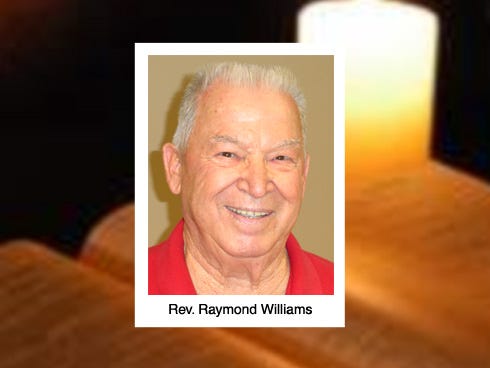
The Rev. Raymond Williams is pastor at New Beginnings Church in Crestview.

This article originally appeared on Crestview News Bulletin: FROM THE PULPIT: Determining children’s age of accountability

FROM THE PULPIT: Learn from Jonah and live God’s will

Running away is a common threat with young children. 

Parents tell them to do something. The child doesn’t want to. An argument ensues. The child throws a temper tantrum and threatens to run away. 

Did you ever threaten to run away when you were a child? 

Have you ever threatened to run away — or even actually done it as an adult? 

It can happen after a severe argument, a breach in trust or a dumb decision.

The same can be true when it comes to God telling us he has something for us to do. We don’t want to do it, so we ignore God and walk away.

God wanted Jonah to be his prophet to Nineveh. God had heard things were happening in Nineveh that were very upsetting, so God wanted Jonah to warn the Ninevites that if they didn’t stop it and repent, God would wipe them out.

When Jonah heard this, he not only said, “No!” he said, “Heck no!” You see, Jonah had a deep-seated anger toward the Ninevites.

Jonah refused to see the big picture. He ran, not because of personal danger. Rather, he ran from his calling, his vocation, as a prophet of God. He ran because of a conflict of wills and purpose. God wanted to redeem the people. Jonah wanted to see the people destroyed. Jonah wanted God on his side, and God wasn’t.

Even if we try to run from God — physically, emotionally or spiritually — God still knows who we are and where we are.

Yes, we can pretend to ignore God, but we are never out of his presence.

As Paul reminds us in Acts 17:28, “In him we live and move and have our being.” God is at the very root of our existence.

When God calls people to do something for him, some folks react like Jonah. They attempt to run and hide.

Their reasoning is like Jonah’s: “I don’t like that person and I want nothing to do with them.” 

Or it might sound like, “That doesn’t sound like any fun at all” or “I don’t have the time to do that.”

But when it comes to God’s call, let’s remember it is not all about “me.” It is all about God and what God wants. 

I have reacted like Jonah on occasion during my ministry. Years ago, I stopped doing ministry as a full-time calling so I could pursue a new avenue: teaching computer science.

It was something I wanted to do, and I was good at it — but it wasn’t what God wanted me to do. God wouldn’t let go. He used several different people and circumstances to get my attention and I returned to full-time ministry.

You see, God’s will is going to be accomplished. I would encourage any who would attempt to run and hide from God to not bother. If God really wants you to do something, you will eventually recognize he has called you for a special purpose. 

Different people react differently when they hear God’s call. If you are a person like Jonah, you might want to run. But remember, if you must run, don’t run away from God; run toward him.

The Rev. Mark Broadhead is Laurel Hill Presbyterian Church and First Presbyterian Church of Crestview's pastor.

This article originally appeared on Crestview News Bulletin: FROM THE PULPIT: Learn from Jonah and live God’s will

FROM THE PULPIT: Let’s simplify faith

A manufacturer placed thousands of tubes of toothpaste into individual boxes and prepared them for shipping every day.

Soon, the machinery started to malfunction somehow and some boxes arrived for shipping without anything in them.

The company’s owner hired a consulting team to come in and evaluate what and where the problem was, and determine what was needed to fix it.

The company spent $8 million after consultants investigated the problem, made recommendations and installed new machinery.

A retrofit discovered empty boxes by automatically weighing each box before it shipped. When an empty box hit the scale, it registered as being too light, an alarm sounded and all the plant’s machinery stopped so the empty box could be filled.

The system seemed to work well. The number of empty boxes diminished greatly, and the company’s CEO was pleased with the better numbers.

Soon, when no empty boxes arrived at shipping, the skeptical CEO investigated whether the numbers were correct.

When he got down to the production line he noticed a large fan blowing across the conveyor right before the belt reached the weigh station. On the other side of the belt was a large cardboard box that held a number of empty toothpaste boxes. When an empty box came along the conveyor belt, it would be so light the fan just blew it into the waiting box.

Asking who came up with that idea, the CEO was told it was the custodian, who got tired of having to reset the conveyor belt and all the machinery for every empty box.

 Sometimes people think the big, fancy solution is the best.

We tend to forget that often the simple answer works even better.

Many folks try to make the Christian faith difficult. There is no need to because it is actually very simple.

God is our Creator. Jesus is our Redeemer. The Holy Spirit is God's power that works in us and through us.

Now, isn't that simple?

I think so.

The Rev. Mark Broadhead is Laurel Hill Presbyterian Church and First Presbyterian Church of Crestview's pastor.

_______________

This article originally appeared on Crestview News Bulletin: FROM THE PULPIT: Let’s simplify faith

error: Content is protected !!