Please ensure Javascript is enabled for purposes of website accessibility
Skip to main content
Advertisement

DoD report: Value of F-35 student training is limited (DOCUMENT)

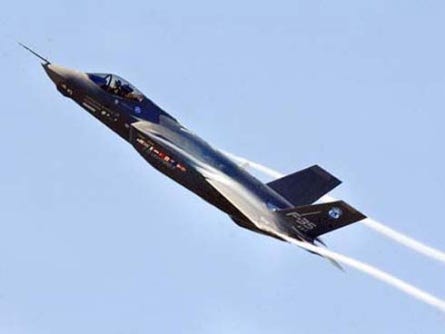
A recent Defense Department analysis has reported that there is limited use to training students on the F-35 fighter jet because it is still in development and substantially limited in capability.

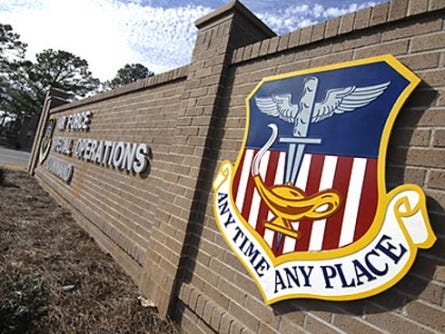
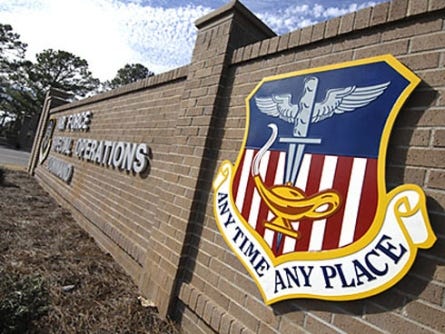
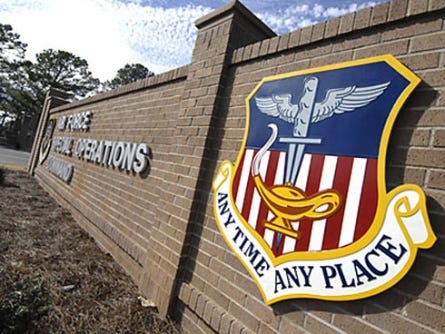
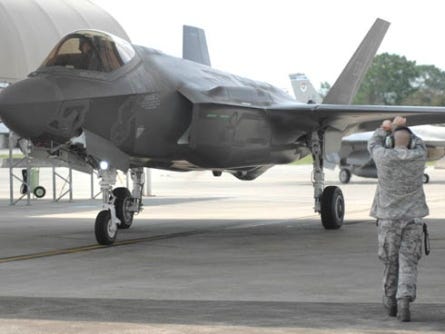
Student pilots officially began training at Eglin Air Force base this year.

The report provides a snapshot of what the military’s newest and most-expensive fighter jet is capable of — but mostly what it’s not — 12 years after work on the program began. It also points to several potential safety and procedural issues with the aircraft, including lack of radar capability and deficiencies in the oft-lauded and highly expensive helmet-mounted visual displays.

Read a copy of the report for yourself.

Air Force and F-35 program officials say the program is designed so that pilot training develops along with the aircraft, and that the training is valuable to the progression of the program. They noted that when the Air Force evaluated the training at Eglin last fall, it found no critical problems that would deter training from continuing.

Four test pilots were followed through the program between September and November to determine whether the school was ready for its first official class.

The Air Force gave it the go-ahead in December.

The program

The Defense Department’s Department of Testing and Evaluation had recommended the Air Force delay its evaluation of the training program until the F-35 possesses combat capability, the DoD report states. The Air Force went ahead with it and the Testing and Evaluation Department was tasked with reviewing its findings for its recent analysis, which was released in February.

It shows a snapshot of a program still in its infancy, only one-third of the way through development, the report states.

The F-35, which has variants for the Air Force, Marines and Navy, is going through development, production, training and testing at the same time, a process dubbed concurrency that the jet’s developer Lockheed Martin originally touted as a way to save money and time.

The first years of the program have instead been plagued by cost overruns and delays.

A report released last week from the Government Accountability Office states the program has made significant developments in the past year and seems to be getting back on track, but rising long-term costs remain a major concern.

Acquisition of 2,457 jets was estimated to cost $395.7 billion in March 2012. That’s up from the $233 billion for 2,866 jets that was estimated in 2001 when the program was conceived, according to the GAO report.

The costliest development phases are still ahead, it states.

The schoolhouse

All students learning to fly the F-35 must attend the courses at Eglin. Currently, only experienced pilots are training on the jets, and they will become instructors for future classes, said Col. Andrew Toth, commander of the 33rd Fighter Wing, which hosts the school.

The pilots now are training on an early version of the jet, called Block 1, that has limited capability.

The planes can provide basic pilot training but have no combat capability. The pilots also are very restricted in what they are allowed to perform in the aircraft, according to the DoD report.

“The utility of training with an aircraft this early in development is limited because of the extreme aircraft operating limitation and lack of mission capability,” the report states. “There are a number of restrictions on the aircraft that are typical of a test aircraft only partway through its flight test program, but very atypical of a fighter aircraft used for student training.”

For example, the F-35s soaring over Northwest Florida are prohibited from performing aerobatics, descending at more than 6,000 feet per minute, exceeding Mach 0.9 speed or maneuvering at more than 5 Gs. They can’t take off or land in formation, fly at night or use instruments to fly during weather events, the report states.

Winslow Wheeler, who released the report last week on the website of the Project for Government Oversight, said the analysis indicates that student training started too soon.

“The airplane is so immature that the pilots are getting very little out of it,” he said of the DoD report. “The training exercise turns out to be clearly premature and should have been held off for another couple years until more competent airplanes are available for pilots to fly.”

Toth said training student pilots, even on the limited-capability aircraft, allows them to set a foundation for the future of the program and create a cadre of instructor pilots.

In addition to the pilot training, a large number of aircraft maintainers are receiving hands-on experience with the jet and learning what it takes to get it off the ground each day, he said.

“When the aircraft is fully functional and capable, we will already have the maintainers in place and we will have pilots that are already able to operate the aircraft,” he said.

Although full functionality is still several years off, Eglin is set to receive jets with additional capabilities this year.

By the end of the month, the first Block 2 jets should be delivered to Eglin, said Kyra Hawn, a spokeswoman the F-35 Joint Program office. The jets will have additional weapons engagement capabilities.

Eglin should receive a second Block 2 jet shortly after and have a total of 24 by the end of the year, Toth said.

Eventually, the Block 1 aircraft also will be upgraded, although that was not initially in the plan.

Toth said Lockheed Martin has realized those planes also must be upgraded to be functional for the services.

Hawn said the malfunctions with the helmet-mounted display and the radar are being addressed, and were not designed to be fully functional with the early-version aircraft at Eglin now.

The DoD report states the training at Eglin was sufficient for the limited number of students that went through last fall, but with the new aircraft will come a new course syllabus and additional training requirements.

The Air Force had to provide substantial resources and work-arounds to meet the requirements of the limited syllabus in the fall, and it likely will have trouble keeping pace with a more advanced syllabus and an increased student load, the report states.

The Air Force provided additional F-16 jets to fly as chasers behind the F-35s in the cases when enough F-35s weren’t cleared for flight. Those jets won’t be available after this month.

Even so, Toth is optimistic, especially with the commitment of the men and women working on the program at Eglin.

The first official class of Air Force pilots has completed academic training and is starting flight tests. Another class started this month.

All three branches hope to put more than 50 pilots through training by the end of the fiscal year, Toth said.

More than 600 maintainers already have been trained, and that number should more than double this year, he said.

Toth said 19 sorties were launched Wednesday, the most in one day at Eglin.

“This program continues to grow on a daily basis and it’s all a credit to all of our maintainers and pilots that are making this happen,” he said.

Contact Daily News Staff Writer Lauren Sage Reinlie at 850-315-4443 or lreinlie@nwfdailynews.com. Follow her on Twitter @LaurenRnwfdn.

This article originally appeared on Crestview News Bulletin: DoD report: Value of F-35 student training is limited (DOCUMENT)

Air Force suspends airmen's tuition assistance due to federal cuts

RALEIGH, N.C. — The U.S. Air Force joined other military branches Tuesday in suspending tuition assistance that thousands of active-duty service members rely on to pay for college classes.

Air Force spokeswoman Lt. Col. Laurel Tingley said airmen were notified by email that new applications for tuition assistance won't be accepted because of the $85 billion in automatic federal spending cuts that went into effect March 1.

The U.S. Army, U.S. Marine Corps and U.S. Coast Guard quietly suspended their assistance programs last week. A decision by the U.S. Navy is pending.

The tuition assistance programs pay up to $250 per semester hour for active duty personnel, or as much as $4,500 per year. Payments already approved under the program will still be paid, but the changes are expected to leave military personnel scrambling to figure out how to pay for classes for the summer and fall semesters.

"This suspension is necessary given the significant budget execution challenges caused by the combined effects of a possible year-long continuing resolution and sequestration," said Army spokesman Troy A. Rolan Sr. "The Army understands the impacts of this action and will re-evaluate should the budgetary situation improve."

Service members may still qualify for aid under the G.I. Bill, which has so far not been affected.

U.S. Sen. Kay Hagan, a member of the Senate Armed Services Committee, released a letter Tuesday urging Defense Secretary Chuck Hagel to find another place to cut.

"I believe that denying educational opportunities to our service members is the wrong way to find savings, and I fear this decision will inhibit the Air Force, Army and Marine Corps from developing the highly skilled forces they need to succeed in this current environment," said Hagan (D-North Carolina). "Completely suspending this program, rather than simply reducing its funding by an amount proportionate to the cuts mandated by sequestration, is an alarming decision."

This article originally appeared on Crestview News Bulletin: Air Force suspends airmen's tuition assistance due to federal cuts

Duke Field Air Reserve veterans breakfast every first Thursday

Carl Gay, co-founder of the monthly Duke Field veterans' breakfasts, sips his coffee as George Kilcrease, left, and Gene Rein swap stories.

CRESTVIEW — Some of them may not move as fast as they once did, and some may forget things now and then, but when the first Thursday of the month rolls around, 30 or more Duke Field Air Reserve Technicians, or ART, veterans make a beeline for breakfast.

Uncle Bill's Family Restaurant, which doesn't normally open for breakfast, is soon abuzz as old friends catch up over coffee, eggs, grits, sausage and French toast. There are backslaps and guffaws as a favorite joke is recited — again — and expressions of concern over pals who are absent or sick.

"Everybody catches up, tells war stories and lies a little," six-year Army and 28-year ART vet Russ Chamberlain says.

Breakfast with patriots

The monthly breakfast gatherings started in 1984, just a couple years after Carl Gay, Clyde Spencer and Ronnie Adams retired from Duke Field.

"We'd meet at Hardee's, just the three of us," Gay says. "We'd have a good talk and coffee and say, 'See you in a month.'”

More veterans learned about the gatherings and joined them; eventually, they moved the breakfasts to a bigger place.

"We enjoy having them," restaurant owner Bill White says. “We give them a little discount and they have a good time. (Server) Sheila (Kurpil) takes good care of them."

Still, it’s first come, first served, as 26-year ART veteran Mary Alberts learns when she plunks her plate down on a table she shares with Chamberlain and Conrad Rhoads.

"You men got all the eggs!" she laments.

"You should've gotten your food instead of yakking to everybody," Rhoads says.

Sharing memories

Some of the vets served in the Vietnam War, some served in Desert Storm, and veterans of other conflicts are in the mix.

"I missed Vietnam. I went to Germany and got drunk and chased women instead," Chamberlain says straight-faced as Rhoads and Alberts laughed.

"He doesn't let the truth get in the way of a good story," Rich Tyler interjects, teasing his friend.

"In '89, we went down to Panama and overthrew Noriega," Chamberlain continues, barely missing a beat. "We were called back to active duty for Desert Storm and then again after 9/11."

Korean War veteran Bob Mury, now in his 80s, is one of the group's oldest members. He retired in 1988 or '89 — "I don't remember exactly when, to tell you the truth," he says.

But when it comes to recalling his basic training at Lackland Air Force Base in San Antonio, Mury remembers the details: It was cold that winter. An overflow of inductees into the fledgling U.S. Air Force caused a barracks shortage.

"They had a bunch of people there," Mury said. "Some died. They were living in tents. We had some boys come down from New York. They didn't think it got cold in Texas."

All are welcome

The ARTs began gathering in the Crestview area soon after former Congressman Bob Sikes secured funding to establish an Air Force Reserve unit at Duke Field in the 1970s. The group first worked on the AC-130 "Spectre" gunship.

After 20 years, "we went from the gunships to the combat (T-38) Talon," Chamberlain says.

Their bonds are strong, but it doesn’t matter if breakfast attendees are not ART vets, or even Air Force.

"We don't stop people coming in the door. We're open to everybody," Chamberlain says. "But we're always glad to see Air Force veterans."

"Or Army or Navy," Rhoads says.

"Yeah, we don't throw them out the door," Chamberlain says.

Want to go?

Retired Duke Field Air Reserve Technicians gather for a monthly breakfast between 7 and 10 a.m. every first Thursday at Uncle Bill's Family Restaurant, 252 S. Ferdon Blvd. The breakfast buffet is $7.95, or $6.95 for vets on motorcycles. All military veterans are welcome.

Contact News Bulletin Staff Writer Brian Hughes at 850-682-6524 or brianh@crestviewbulletin.com. Follow him on Twitter @cnbBrian.

This article originally appeared on Crestview News Bulletin: Duke Field Air Reserve veterans breakfast every first Thursday

Local bases step up war against sexual assault

HURLBURT FIELD — Over the past year, the base has upped its sexual assault response training.

The number of trained sexual assault victim advocates has doubled, and this past month Hurlburt Field expanded the training to instructors at its airman leadership school.

The training program is designed to grow the support system for victims and encourage them to come forward to talk about assaults.

It is also part of a larger mission to try to eliminate a culture in the military that may allow sexual assaults to occur and discourage victims from reporting them.

Janet Morrison, the sexual assault response coordinator at Hurlburt, was excited to teach the advocate course to five instructors at the Vincent Airman Leadership School, which trains all airmen being promoted to management as staff sergeants.

The instructors will use what they learned to supplement the lessons they already teach on sexual assault.

“This will help the instructors better explain the consequences and the issues surrounding sexual assault in the military and pass on that information to our future leaders,” Morrison said. “We may be able to change the culture of the military by starting with these leaders.”

Four other airmen attended the 40-hour, weeklong course that wrapped up Feb. 22. That brought the total number of trained victim advocates at Hurlburt to 38.

That’s up from 19 in 2011, when Morrison took over the program. A similar program at Eglin has about 60 victim advocates.

They are all volunteers, and Morrison said interest is growing.

The Air Force has put greater emphasis on stopping sexual assaults in recent months. Last year, a sex abuse scandal came to light at Lackland Air Force Base in San Antonio, Texas, where every recruit attends basic training.

More than 30 instructors are being investigated in connection with more than 60 victims who have alleged some type of sexual misconduct there.

In November, Secretary of the Air Force Michael Donley sent a letter to airmen stating that sexual assaults will not be tolerated and that every airman must combat the problem. Although final numbers have not been released, the Air Force expects more than 700 airmen to have reported sexual assaults in 2012. However, the actual number likely is much higher because many victims do not report them.

Donley called on airmen to intervene when they see potential for harm, discourage sexist behavior and attitudes, and provide victim care.

While all airmen receive some sexual assault training, the victim advocate course goes into more depth about the problem, what types of responses the victim might have and what resources are available to help.

If a victim comes forward and chooses, Morrison can call on an advocate in the age range, sex and line of duty that they request.

“The advocates can follow them throughout the whole process and be on call 24/7 for that person and whatever they might need,” Morrison said.

Their duties can run the gamut — from taking victims to the hospital to offering them support in interviews with law enforcement and helping them through the court process.

In accordance with a law passed last year, discussions between an advocate and victim are confidential; law enforcement cannot compel their disclosure, Morrison said.

The training course also teaches about the type of culture that can make perpetrators feel they can get away with sexual assault, which includes sexist or racist attitudes or behavior, Morrison said. Advocates can take that knowledge back to their units.

“Having that awareness, now when they see something that they previously might have thought harmless, they can set the standard by saying we don’t tolerate this,” she said.

Master Sgt. Paola West, head of the Airman Leadership School at Hurlburt, said her instructors requested the additional training to use during the 45-minute sexual assault segment they teach as part of the five-week leadership course.

About 420 airmen go through the course each year.

The training helps West’s instructors answer questions the students may have about sexual assault.

She said it’s important for new airmen moving into front-line supervisory positions to have learned about sexual assault response and prevention.

“The more we talk about it, the more we can assure that it’s minimized,” she said. “The biggest thing we emphasize is if you see something, say something.”

That thing could be as simple as a joke, she said.

“We want to hold our airmen accountable to be professional airmen,” she said.

Contact Daily News Staff Writer Lauren Sage Reinlie at 850-315-4443 or lreinlie@nwfdailynews.com. Follow her on Twitter @LaurenRnwfdn.

This article originally appeared on Crestview News Bulletin: Local bases step up war against sexual assault

Two special ops units to move from Eglin to Hurlburt

Two squadrons at Eglin Air Force base are being sent packing — across town.

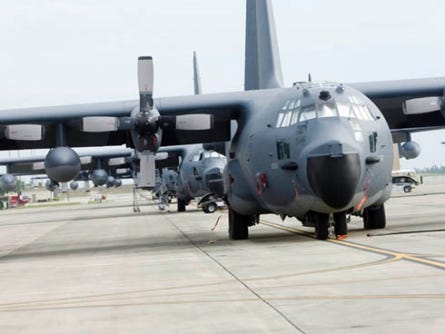
About 400 people with the 9th Special Operations Squadron and the 1st Special Operations Maintenance Squadron will move to Hurlburt Field this spring and take their fleet of MC-130P Combat Shadow aircraft with them.

The move will at last unite all 1st Special Operations Wing squadrons at Hurlburt. It also will allow for more efficient aircraft maintenance because the newcomers will be able to work closely with squadrons maintaining very similar planes at Hurlburt.

The 9th Special Operations and the 1st Special Operations Maintenance squadrons have been at Eglin under various names for years.

When the 1st SOW at Hurlburt took over the 9th SOS in 1989, the squadron remained at Eglin because that’s where it always had been, said Maj. Zak Blom, who is overseeing the move as the 1st SOW’s chief of programs.

“Since then it was known that the right answer was for them to be at Hurlburt,” he said. “Things just never worked out to make it happen.”

Blom said the effort to move the squadron gained momentum again in the last year. He’s been tasked with the project since last March.

“It has support from all levels of leadership now,” he said. “We’ve been able to show that we can do the move not only at very little cost, but we can actually save a lot in manpower, resources and efficiencies by bringing the two units that belong to the 1st Special Operations Wing to Hurlburt with the rest of their assets.”

The real savings will be in maintaining the planes, he said.

Hurlburt already has a fleet of sister MC-130Hs that are very similar, especially in maintenance and support, Blom said.

“The biggest gain is on the maintenance side,” he said. “We’ll have the equipment to support both these aircraft all co-located and won’t have to maintain duplicate equipment.”

He said the units also will be able to train more efficiently and operate more effectively by being on the same base as their command.

“Being geographically separated from your bosses, there’s a lot of time spent going back and forth,” he said.

The 9th SOS uses MC-130Ps to support special operations forces, primarily through nighttime, low-level flying missions. They insert, extract and resupply special ops teams, as well as refuel helicopters in flight.

The 1st Special Operations Maintenance Squadron ensures the planes are mission capable.

Blom is also an MC-130P pilot. He was assigned to the 9th SOS for a year and a half before being tasked with overseeing the move to Hurlburt.

He said in general the people in the squadrons are excited about the move.

“I think anytime there is change there’s always going to be a little trepidation involved,” he said. “There’s going to be some obstacles up front, but I think everyone realizes you overcome those obstacles to get to the better end state in the long run.”

Blom said a lot of the effort in organizing the move has been devoted to getting approvals from high-level staff. Those approvals are now in place.

They also had to conduct a lot of analysis to make sure Hurlburt had enough resources to take on the squadrons.

“There’s manpower challenges across the board in all the support functions on base, but we’ve determined that they can handle the two units and the aircraft,” Blom said.

The squadrons will be housed in existing facilities. The move required no new construction, which drove down cost, he said.

Blom said Eglin’s command staff has been helpful throughout.

“Eglin has been gracious through this whole process and supported the move from start to finish,” he said.

Anyone affected by the move who lives in Eglin housing will be allowed to stay if they choose, Blom said.

The move is set to take place in May and June. An official ceremony is tentatively set for May 22, the anniversary of Air Force Special Operations Command standing up at Hurlburt in 1990.

Col. William Holt, vice commander of the 1st SOW, said the move is a great step forward.

“By moving the two squadrons to Hurlburt, we will consolidate resources and gain significant efficiencies with our MC-130 maintenance teams,” he said in a written statement.

“I thank Team Eglin for the tremendous support they have provided to our MC-130Ps, and I look forward to having the entire 1st Special Operations Wing co-located at Hurlburt Field.”

Contact Daily News Staff Writer Lauren Sage Reinlie at 850-315-4440 or lreinlie@nwfdailynews.com. Follow her on Twitter @LaurenRnwfdn.

This article originally appeared on Crestview News Bulletin: Two special ops units to move from Eglin to Hurlburt

Eglin general: Furloughs just one part of sequestration

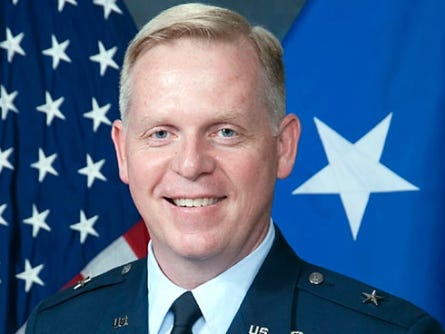
Brig. Gen. David Harris

FORT WALTON BEACH — The civilian furloughs have been announced, but more impacts from the $45 billion in sequestration cuts to the Department of Defense could soon hit Eglin Air Force Base.

Brig. Gen. David Harris, commander of the 96th Test Wing, was the guest speaker at Wednesday’s lunch meeting of the Rotary Club of Fort Walton Beach. Harris gave an overview of the base and discussed the effects sequestration has had and will have on Eglin.

Harris said he received the final cut numbers for Eglin on Tuesday. The budget reductions were about 10 percent more than he expected.

The furloughs, in which all civilian and contract employees must take off one unpaid day a week for 22 weeks, will only account for about $5 billion in savings for the DoD. The remaining $40 billion must be cut from the department’s budget by Sept. 30, the end of the fiscal year.

“We’re about halfway through this fiscal year, which means we have even less time to react to that,” Harris said. “The furlough is one piece. The other eight-ninths of that are going to be reductions that we’ll feel in a variety of forms. Cuts to our operations and management budgets and infrastructure improvement, investment accounts, those will all have an effect on Eglin Air Force Base in one way or another.

“Reduced flying hours, reduced operations and our ability to maintain our facilities and things like that (will also be affected),” he added.

Harris said the civilian furloughs will hurt productivity.

“If you think I can do what I did with a furloughed workforce that I did with a non-furloughed workforce, then the answer is absolutely, positively not,” Harris said. “We are going to take a productivity hit. We are not going to get the throughput that we wanted. We’re not going to able to provide the level of care that we wanted to provide. We’re not going to be as relevant as you normally would. You just don’t take a cut like that and expect the product to be the same.”

He doesn’t expect cuts to active military at Eglin related to sequestration. If there are, he said they likely would be minimal.

However, there could be some cuts to military personnel at Eglin not associated with sequestration. Harris said Congress has set a reduction of slightly more than 3,000 active-duty airman across the entire Air Force to meet end-strength goals. Some of those cuts could be made at the base.

One program Harris doesn’t believe will be affected by sequestration is the F-35.

“There will be some tangential impacts to the F-35 because they are residents on my base, for instance, that provides them with a runway and provides them with utilities and those types of things,” Harris said. “So they’ll feel some of those effects, but for the most part the F-35 is being shepherded through its early development.”

Harris said the nation’s debt in general is making the country weaker and must be addressed. He said about $300 billion is spent each year on just the debt’s interest.

“We need to attack this because it is threatening our nation,” Harris said. “This is a really onerous burden that we are having to bare. But like when we’re fighting any enemy, it’s going to be uncomfortable and the conditions are not going to be ideal, but it’s worth the sacrifice to attack that which is not helping our nation to become stronger.”

Contact Daily News Business Editor Dusty Ricketts at 850-315-4448 or dricketts@nwfdailynews.com. Follow him on Twitter @DustyRnwfdn.

This article originally appeared on Crestview News Bulletin: Eglin general: Furloughs just one part of sequestration

F-35s cleared to resume flights

2012 was the year the F-35 finally took off at Eglin Air Force Base.

EGLIN AFB — The three variants of the F-35 fighter jet have been cleared to fly again.

The 33rd Fighter Wing at Eglin Air Force Base received word from the F-35 Joint Program Office on Thursday evening that the Air Force’s F-35A and the Marines’ F-35B can resume training flights, according 33rd spokeswoman Maj. Karen Roganov.

The F-35B is scheduled to resume training flights this afternoon. The F-35A’s next scheduled flight will be Tuesday, Roganov said.

The Navy’s F-35C also has been cleared to fly.

All three variants of the military’s newest fighter were grounded Feb. 21 after a crack was discovered on the engine blade of an F-35A during a routine inspection Feb. 19 at Edwards Air Force Base in California.

It was the sixth time one or all variants of the F-35 had been grounded.

The 33rd at Eglin has 22 F-35s for the Air Force and Marines. Pilots and maintainers from both branches have been training at the base for months.

The Navy also has pilots, maintainers and support staff at Eglin. Although no F-35Cs are at the base, maintainers are training on the other variants and pilots are going through the academic program and using flight simulators.

The first F-35C took off in Fort Worth, Texas, last month. Seven of the jets are scheduled arrive at Eglin in April.

This article originally appeared on Crestview News Bulletin: F-35s cleared to resume flights

Local civilian military workers worry about sequestration

James Blount is worried about his family’s future.

Last week the Department of Defense announced its intention to make civilian employees take unpaid leave if Congress doesn’t avert the some $85 billion in budget cuts set to take effect by the end of the week.

For Blount, a civilian carpenter at Eglin Air Force Base, that could mean he won’t be able to pay his bills. The 32-year-old is the primary earner for his wife and toddler.

“This is the only check for my family,” Blount said. “This is not only going to affect my job, but my future — probably for a long time.”

He said he already has contacted his mortgage company and credit lenders to try to get payments lowered to brace for the possible loss of income.

Even so, he knows he likely won’t be able to make all the scheduled payments.

“You’ve got to feed the child first before you pay the other bills, so that’s where the money is going to be going,” he said. “We will probably be in a lot of debt trouble. My credit is going to go to nothing.”

About 3,700 civilian employees work at Eglin Air Force Base and another 1,400 work at Hurlburt Field.

The final implementation plan hasn’t been released, but the Secretary of the Air Force said in a memo Monday that affected employees would be subject to furloughs, or unpaid leave, for up to 22 discontinuous workdays.

That’s if Congress doesn’t agree to avert the budget cuts, or sequestration, by Thursday, the memo said.

Eglin anticipates that if the furloughs go into effect, most civilian employees will not report to work one day a week from the end of April to the end of September, said Andy Bourland, a spokesman for Eglin.

For Blount, that could mean a loss of about $800 a month, or 23 percent of his pay, he said.

The Iraq war veteran served six years in the Air Force before leaving to join the civilian workforce.

He said he feels like he has a good-paying job, but that he’s budgeted his life for that income and a sudden cutback will quickly lead to hard times for his family.

Curt Kirkland, 48, is a civil engineer at Eglin. His wife is also a civil employee there.

He also is concerned the cuts will prevent his family from being able to meet their financial obligations, from house and car payments to their son’s college tuition.

His job requires security clearance that depends on a clean financial record, so if his credit takes a beating he is worried he eventually could lose his job.

Amanda Patterson, a 33-year-old civilian employee at NAS Pensacola with two children, said she may try to pick up a delivery job on the days she is required to take off to make up for the loss of income.

Civilian employees already haven’t had a cost-of-living pay raise for several years, Blount said.

“There is a lot of animosity in the local shops,” he said. “Morale has not been good.”

Local federal workers’ unions are concerned.

“We just continue to support the mission and do what we do,” said Thaddeus Wallace, president of the American Federation of Government Employees Local 1897, which represents thousands of local blue collar civilian military employees.

“This is another extremely hard hit to take,” he said.

Wallace said he’s worried not only about his workers’ pay, but also about possible impacts to the military’s mission that relies on civilian support work and how the loss of income will affect local businesses that civilian workers frequent.

Because of that, he questions whether laying civilians out on the chopping block is the best way to cut the military’s budget.

“I think overall we can look at how we spend in general,” he said. “There’s lots of ways to address this. Just looking down at the civilians at this particular point is a method that can have long-range effects on our economy.”

The civilian workforce makes up about 10 percent of the military’s total personnel budget, which includes military, civilian and contractors, according to a Department of Defense document from 2011. Contractors are the costliest, at about 50 percent of the total personnel budget.

While many employees are scrambling to try to plan for the pay cut, Rocky Tasse, president of the American Federation of Government Employees Local 1942, is bracing for a fight.

According to the Air Force, the unions have until early March to propose their own plans for implementing the furlough.

Tasse said he met with other union presidents representing Air Force civilian employees last week. He said they will likely propose that the furlough days be consecutive: up to 22 days off in a row without pay.

That would allow workers to file for unemployment benefits in most states to help make up for the loss of income, he said.

The employees could schedule their unpaid leave over a five-month period.

If implemented that way, it would have the added benefit of threatening to interrupt day-to-day Air Force base operations, which may be unpalatable enough to stave off or weaken the furlough, Tasse said.

“I want to make this so painful that they will never, ever consider doing this again.”

To learn more, visit the Air Force Material Command's information page.

Contact Daily News Staff Writer Lauren Sage Reinlie at 850-315-4440 or lreinlie@nwfdailynews.com. Follow her on Twitter @LaurenRnwfdn.

This article originally appeared on Crestview News Bulletin: Local civilian military workers worry about sequestration

F-35s grounded again

For the second time in five weeks, the most advanced fighter jet in history has been grounded with mechanical problems.

The Department of Defense on Friday announced that the Air Force, Marine and Navy variants of the F-35 were grounded after a crack was discovered on the engine blade of an Air Force F-35A at Edwards Air Force Base in California.

Unlike the most recent nearly one-month flight suspension that affected just the F-35B Marine variant, all three variants were grounded Thursday.

“In this situation, the F135 engine, the core of the engine, is the same for all variants of the F-35,” said Col. Andrew Toth, commander of the 33rd Fighter Wing at Eglin Air Force Base, where pilots and maintainers train.

Toth said it was hard to speculate how long the F-35s would stay on the ground. A full analysis of the engine and the cracked blade is needed to determine the cause of the problem. The evaluation will be conducted at Pratt & Whitney’s Engine Facility in Middletown, Conn.

The crack was discovered during a routine inspection Tuesday, according a news release from the F-35 Joint Program Office.

Toth said maintainers conduct thorough borescope inspections of the engine and all of its blades before every 25 hours of engine time.

“As young as the system is as we’re going through, these types of things are expected to happen occasionally,” Toth said. “The great part about that is we have a great team here and at the Joint Program Office on down that looks at this stuff and makes sure we can continue safe and effective flying operations.”

This is the sixth time one or all variants of the F-35 have been grounded.

Lockheed Martin, the prime contractor for the F-35, released its own statement Friday.

“Lockheed Martin is fully engaged and working closely with the JPO and Pratt & Whitney to determine the root cause of the blade crack found during a routine inspection of an F135 engine on an F-35A at Edwards Air Force Base, Calif.,” the statement said. ”Safety is always our first consideration, and the joint inspection team is focused on ensuring the integrity of the engines across the entire fleet so the F-35s can safely return to flight as soon as possible.”

Eglin has 22 F-35s for the Air Force and Marines. The Navy’s F-35Cs are scheduled to arrive in April.

Toth said there will be plenty to keep pilots and maintainers busy while flights are suspended.

“The benefit about this is we can still conduct standard maintenance activity on the aircraft out there for the guys who are working on the flight line,” Toth said. “As far as maintenance goes, we can do our routine maintenance, continue to work on the aircraft. There will be no shortage of things for our maintainers to do.

“As far as the pilots go, another bonus here is we’ve got the simulators, and they’ll still be up and running,” he added. “So they’ll have an opportunity to go and maintain as much currency as possible and practice emergency procedures in the aim to improve their capabilities.”

Contact Daily News Business Editor Dusty Ricketts at 850-315-4448 or dricketts@nwfdailynews.com. Follow him on Twitter @DustyRnwfdn.

This article originally appeared on Crestview News Bulletin: F-35s grounded again

Civilian employees brace themselves for possible sequestration

EGLIN A.F.B. — The impact of civil service employee furloughs would be felt throughout the community if sequestration is activated March 1, Crestview City Council President Ben Iannucci III said.

"How many people in Crestview either are in the military or work for the military — it's a lot of people in our community…. That's going to affect everything from shopping to people thinking of coming here on vacation."

Eglin Air Force Base's civilian employees were notified Wednesday to prepare for possible furloughs if congressionally mandated sequestration is activated. The law requires a half-trillion-dollar across-the-board government-spending cut following the bi-partisan Joint Select Committee on Deficit Reduction's failure to arrive at a plan for reducing the national deficit.

The committee announced its inability to reach agreement on Nov. 21, 2012. Sequestration would have begun Jan. 1, but Congress gave a three-month extension. President Barack Obama has shielded active duty military members from furloughs.

With a large segment of the north county's workers employed in civil service, sequestration would have a local economic impact.

"It would definitely cause me to cut back on spending," Crestview resident Matthew Smith, a civilian worker at the Eglin Air Force Base Test Support lab, said. "I think I would be OK because of the way I set up my house payments, but it would make my finances tighten up."

Furloughs could occur one day a week beginning April 1 for up to 22 weeks through the fiscal year, defense contractor InDyne General Manager Jim Heald said.

"That's a 20 percent hit," Heald said. "I'm very nervous for my workforce. I have about 800 great patriots working for me. Hopefully Congress will do its job."

InDyne, a private company, could be affected by furloughs because it receives government oversight during tests on the range.

"It may slow things down. If we can't do testing on the day the government employee isn't there, we'll have to do something else — and we hope that 'something else' is not furlough."

This article originally appeared on Crestview News Bulletin: Civilian employees brace themselves for possible sequestration

error: Content is protected !!