Please ensure Javascript is enabled for purposes of website accessibility
Skip to main content
Advertisement

OUTTA THE WOODS: Expect changes for hunting zones A, D this fall

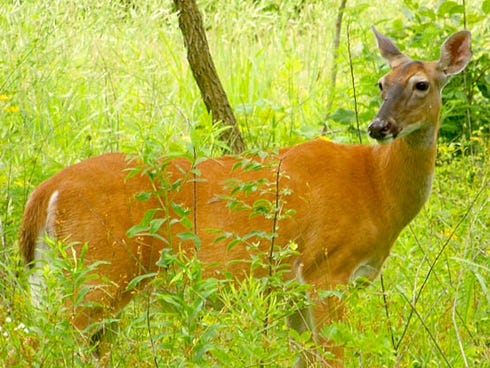
If you hunt in Zone D (which includes Okaloosa and Walton counties), there are several major changes this year to fall hunting regulations that you need to know about. And, if your hunting spot was in the northern portion of Zone A, you might be hunting in Zone C now.

If you hunt in the Panhandle in Zone D, that zone has now been divided into two deer management units (DMUs), each with its own unique set of antler regulations and antlerless deer harvest days.

This new change is part of a larger, statewide project aimed at managing deer on a more local level and providing hunters, landowners and other stakeholders a greater say in deer management.

The FWC conducted a public outreach and input process in northwest Florida during the first quarter of 2013. During that period, the Commission received input and comments from hunters, farmers and the general public regarding how they would like to see deer managed in the newly proposed DMUs. A technical assistance group made up of deer enthusiasts was then formed, and this team developed goals and objectives for the two DMUs.

As a result of this outreach process and ideas provided by the group, the FWC passed rules for both public and private lands in both of the newly created DMUs in Zone D, with Interstate 10 being the dividing line between the two DMUs. North of I-10 is DMU-D2, and south of I-10 is DMU-D1.

The new regulations require that bucks harvested north of I-10 in DMU-D2 must have antlers with at least 3 points (each point having to be at least 1 inch long) on one side OR have an antler with a main beam length of at least 10 inches. 

South of I-10 in DMU-D1, the minimum antler requirement is now two points (each point having to be at least 1 inch long) on one side. The antler regulations in each DMU are intended to protect most 1.5-year-old bucks from being shot, while allowing the harvest of most 2.5-year-old and older bucks. Since antler development is different within the units, different antler regulations were needed to accomplish this goal.

However, youth (15 years old and younger) are exempt from these new antler requirements in both DMUs, and they may continue to harvest bucks that have an antler that is at least 5 inches long. This was important to hunters who indicated they wanted to encourage youth to hunt. These new antler regulations and youth exemption apply to both private lands and wildlife management areas within Zone D.

There are also changes to the antlerless deer season (“doe days”) on private lands within Zone D.

In DMU-D2 (north of I-10), antlerless deer season is now eight days distributed across four weekends. These weekends are the Saturday-Sunday after Thanksgiving, the first weekend of muzzleloading gun season, the third weekend of general gun season and the weekend after Christmas.

In DMU-D1 (south of I-10), the antlerless season is now four days consisting of two popular holiday weekends – the weekend after Thanksgiving and the one after Christmas.

The purpose of modifying the antlerless deer season is to spread out the hunting opportunity, so that more hunters could participate without reducing deer populations. There are differences in the current deer density between the two DMUs, and that is why there are fewer days to take antlerless deer south of I-10. These changes will be monitored to measure any impacts they may have on the deer harvest and hunter satisfaction within each DMU.

If you hunt in southern Manatee County, Sarasota County, southwest DeSoto County, west Charlotte County, southeast Okeechobee County, south St. Lucie County, Martin County or north Palm Beach County, you now have later fall hunting season dates than what you’re used to, because the boundary line between the two zones has been adjusted.

The boundary line used to be State Road 70, but hunters had noted, and recent biological surveys have confirmed, that deer living in the above-mentioned areas have a breeding period that occurs later than that of most of the deer in Zone A. These deer actually have a breeding period more in line with deer living in Zone C.

It is because of this that a number of local hunters asked the Florida Fish and Wildlife Conservation Commission (FWC) to move the boundary line between hunting zones A and C, so that all or parts of these counties would instead be included in Zone C, which has the later hunting season dates that better align with when the rut occurs in these areas.

The new boundary line between hunting zones A and C begins at the Gulf of Mexico and runs northeast through Charlotte Harbor and up the Peace River until it intersects with S.R. 70. The line then follows S.R. 70, running east until it meets U.S. 441 north of Lake Okeechobee. It then follows U.S. 441 south, where it proceeds around the eastern shore of Lake Okeechobee. The line then turns off U.S. 441 and onto S.R. 80 and runs just a few miles before turning east and following County Road 880, running just a few miles before joining back up with U.S. 98/441/S.R. 80/Southern Boulevard until it reaches the Atlantic Ocean.

This new line separating hunting zones A and C affects only the fall hunting seasons. Spring turkey season dates remain unaffected and will continue as they have been. In other words, spring turkey season south of State Road 70 will continue to open the first Saturday in March, while north of State 70 in the rest of the state, the season will continue to open the third Saturday of March. The daily bag limit for turkeys during the spring and fall hunting seasons has been increased to two on private lands. However, you may still take only one turkey per day on wildlife management areas, and in Holmes County, the daily and season limits remain one turkey during the spring, with no fall season. In the rest of the state, the fall and spring season bag limits have not changed and are still two.

The FWC’s Deer Management Program has been working with the public in zones A, B and C to get preferences for DMUs within these hunting zones. Be on the lookout for proposals as a result, and you may keep up with any proposed changes at MyFWC.com/Deer.

Tony Young, FWC columnist, always gets excited this time of the year as hunting season, cooler weather and football season are just around the corner . . .

This article originally appeared on Crestview News Bulletin: OUTTA THE WOODS: Expect changes for hunting zones A, D this fall


Mission moves Baker youths to renovate homes, touch hearts

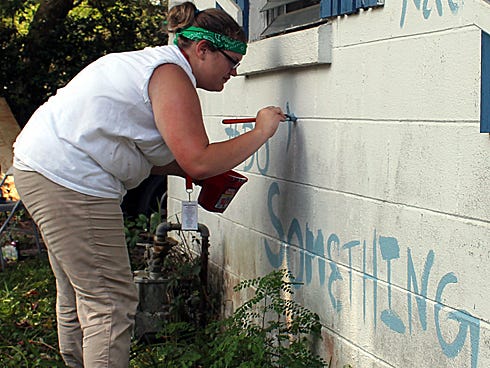
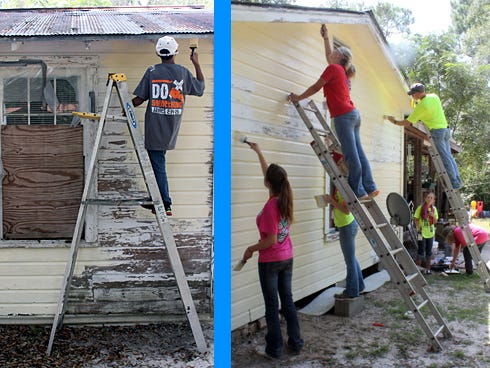
Natalie Mize, 14, tags the front of a Baker house with the hashtag #DoSomething and her seven teammates’ names before covering it with a fresh coat of paint.

BAKER —  Brooms and brushes are moving this week as four church youth groups renovate seven houses.

Pilgrim Rest Baptist Church and Shady Grove Assembly of God often collaborate for annual church functions, but this year’s Do Something youth camp also includes Mount Repose Baptist Church from Ohio and West Haven Baptist Church from Tennessee.

The camp, which started Monday and ends Saturday, has eight youth members stationed at one house on Ray Street.

Commentary: "Baker youth groups are certainly keeping the faith">>

Homeowner George Dean, 82, said the group came to his door to ask if they could help him with external home repairs.

The Navy veteran stood alongside the team as they took down lingering Christmas lights and scraped his chipped wooden siding clean before brushing on a new coat of blue paint.

“I think it’s a blessing, myself,” he said. “I’m proud the teenagers, kids, churches can … go together to do this for people in the community.”

Ryan Gelb, 14, of Pilgrim Rest, said there was one big reason why he’s excited to help Dean in particular.

“He served for me first,” he said.

Down the street, another team worked on the first coat of a different house.

Olivia Hurley, of Pilgrim Rest, said she wasn’t there for the homeowner's gratitude. She doesn’t want to remember just helping someone fix their house.

“More than just the before-and-after picture, I definitely want to remember lives being saved … all of us growing spiritually together,” the 13-year-old said.

The coolest part, she said, was that Sunday night, no one knew each other, but they all worshipped, worked and grew together Monday morning.

“We’re four different churches, but one church body,” Hurley said.

Bob Cooper, site supervisor and one of Pilgrim Rest’s youth teachers, agreed.

“It’s neat how they come together as a team even though, as of last night, they were strangers,” he said.

He’s also a strong believer in the camp’s mission.

“We hope that it’s more than just a repair project and a renovation,” he said. “It’s more to kind of touch the hearts and have people ask, ‘Hey, why are you doing this?’ and then we can explain it’s Christ in us, that’s motivating us to do this.”

This article originally appeared on Crestview News Bulletin: Mission moves Baker youths to renovate homes, touch hearts

Baker, out-of-state church members to improve homes, minister to residents

BAKER — Pilgrim Rest Baptist Church and Shady Grove Assembly of God youth groups are matching their faith with deeds this week.

Members — along with volunteers from Mount Repose Baptist Church in Miami, Ohio, and West Haven Baptist Church in Knoxville, Tenn. — have vowed to "Do Something," and help the community in the process.

200 youth and adult church members working at eight residential work sites are repairing Baker homes and ministering to residents during the week-long "Do Something" camp. Members, under adult and volunteer contractors' supervision, will dig drainage ditches and perform painting and roof work. Materials have already been provided through previous church fundraisers, event organizers said.

In addition, the work groups will present backyard bible clubs for residents they help.

Baker School will provide the volunteers' lodging throughout the camp, which will also feature a guest speaker and ministry from a Christian band.

“I think this an awesome image of the body of Christ: for all of us to come together on this (project),” said event organizer Justin Douglas, Pilgrim Rest's youth pastor.

Shady Grove's 12-member youth team also looks forward to camp, Brandon McMackin, the church's youth pastor, said.

“They are chomping at the bits to get in the community and do something,” he said. 

And to do it again.

 “We are already planning on doing this next year,” McMackin said. “We plan on getting more churches involved.”

Email News Bulletin Staff Writer Matthew Brown, follow him on Twitter or call 850-682-6524.

This article originally appeared on Crestview News Bulletin: Baker, out-of-state church members to improve homes, minister to residents

Crestview Teen Center hosts foster parent information program

The West Florida Foster Care of United Methodist Children's Home will present an information session July 31 at 6:30 p.m.

The presentation is located at 120 Duggan Ave. in Crestview.

For more information, contact Charlotte Thomas at 995-9600, or email charlotte@umch.net.

This article originally appeared on Crestview News Bulletin: Crestview Teen Center hosts foster parent information program

EXTENSION CONNECTION: Lichens on plants indicate poor plant growth

Do you have trees or shrubs with trunks and branches covered with gray-green crusty growths?

These growths — called lichens — are harmless and do not cause plants' poor growth or decline.

Lichen is an alga and a fungus growing together in a symbiotic relationship. The alga supplies the fungus with carbohydrates through photosynthesis; the fungus protects the alga from drying. Lichens are not pathogens, nor are they parasitic to plants. They simply need something to structurally support them.

As a tree or shrub declines in health, the canopy thins, allowing more light to penetrate the plant. The additional light and the plant’s slow growth allow lichens a better environment to grow.

When lichen growth is abundant on dying limbs and branches, ask, “Why is the plant growing poorly?” Diagnosing the problem may be difficult, requiring considerable plant knowledge.

Reasons for a plant's poor health range from incorrect plant placement or poor growing conditions to injuries from mowing equipment and misplaced lawn chemicals. Trees and shrubs planted too deep will usually be in a state of poor health. The plant may be declining from lack of fertilizer or because the pH is incorrect. Or, it may be due to an older plant's natural decline.

Correctly identifying and correcting the causes for poor growth will allow the plant’s health to improve, and lichens will gradually disappear.

Your local University of Florida/Institute of Food and Agricultural Sciences Extension Office can assist with identifying the possible causes for poor plant growth.

Larry Williams is an agent at the University of Florida's Extension office in Crestview.

This article originally appeared on Crestview News Bulletin: EXTENSION CONNECTION: Lichens on plants indicate poor plant growth

FINANCIAL FOCUS: Protect your retirement against market volatility

Financial markets always move up and down over the short term.

During your working years, you may feel that you have time to overcome this volatility. And you’d be basing these feelings on evidence: the longer the investment period, the greater the markets tend to “smooth out” their performance.

But what happens when you retire? Won’t you be more susceptible to market movements?

You may not be as vulnerable as you might think. Given our growing awareness of healthier lifestyles, you could easily spend two or even three decades in retirement — so your investment time frame won't necessarily be that compressed.

Nonetheless, time may well be a more important consideration during your retirement years, so you may want to be particularly vigilant about taking steps to help smooth out market volatility's effects.

Here are a few suggestions:

• Allocate your investments among a variety of asset classes. Proper asset allocation is a good investment move at any age, but when you’re retired, you want to be especially careful that you don’t “over-concentrate” your investment dollars among just a few assets. Spreading your money among a range of vehicles — stocks, bonds, certificates of deposit, government securities and so on — can help you avoid taking the full brunt of a downturn that may primarily hit just one type of investment. (Keep in mind, though, that while diversification can help reduce the effects of volatility, it can’t assure a profit or protect against loss.)

• Choose investments with demonstrated solid performance across many market cycles. As you’ve probably heard, “past performance is no guarantee of future results,” and this is true. Nonetheless, you can help improve your outlook by owning quality investments. So when investing in stocks, choose those with actual earnings and a track record of earnings growth. If you invest in fixed-income vehicles, pick those considered “investment grade.”

• Don’t make emotional decisions. At various times during your retirement, you will, in all likelihood, witness some sharp drops in the market. Avoid overreacting to these downturns, which will probably just be normal market “corrections.” If you can keep your emotions out of investing, you will be less likely to make moves such as selling quality investments merely because their price is temporarily down.

• Don’t try to “time” the market. You may be tempted to “take advantage” of volatility by looking for opportunities to “buy low and sell high.” In theory, this is a fine idea —unfortunately, no one can really predict market highs or lows. You’ll probably be better off by consistently investing the same amount of money into the same investments. Over time, this investing method may result in lower per-share costs. However, as is the case with diversification, this type of “systematic” investing won’t guarantee a profit or protect against loss, and you’ll need to be willing to keep investing when share prices are declining.

Joe Faulk is a Crestview financial adviser.

This article originally appeared on Crestview News Bulletin: FINANCIAL FOCUS: Protect your retirement against market volatility

Florida Department of Health dedicates new annex

FORT WALTON BEACH — A ribbon cutting and grand opening for a new Clinic Annex in Fort Walton Beach is planned by the Florida Department of Health in Okaloosa County. The park landscape will be dedicated in the name of Okaloosa County's Public Health hero, Liza Jackson.

The event starts at 10 a.m. July 30 at the FDOH, 221 Hospital Drive NE, Fort Walton Beach.

RSVP by contacting Donna Harty at 833-9245 or Donna.Harty@FLHealth.gov.

 The Clinic Annex is a modular building of 3,300 square feet generously donated by Twin Cities Hospital. The newly renovated space includes seven exam rooms, which will enable FDOH to improve efficiencies in providing affordable access to care for patients in Okaloosa County.

Tour the new facility and learn more about the medical services provided by the Florida Department of Health in Okaloosa County.

This article originally appeared on Crestview News Bulletin: Florida Department of Health dedicates new annex

March of Dimes reminds parents to immunize children for the new school year

MAITLAND — March of Dimes, the leading organization for mom and baby health, urges parents to immunize their children against infectious diseases before the beginning of the 2014-2015 school year. Influenza, pertussis (whooping cough), and measles are just a few of the serious vaccine-preventable diseases that still affect children and adults in the United States today.

“Immunizations are as important today as they were in the age of polio in the 1950s, when the March of Dimes funded the pioneering work that resulted in the vaccine that still is used today against this deadly disease,” said Dr. Karen Harris, Program Services Committee chair for the March of Dimes Florida Chapter. “Back-to-school season is the time of the year when we especially encourage kids to get their shots to protect their health.”

Even small groups of unimmunized people can quickly spread disease, Dr. Harris says. In the US, both measles and whooping cough are at epidemic rates.

According to the Florida Department of Health, the most recent school year (2013 – 2014) immunization status reports for all 67 Florida counties indicate rates of:

•Kindergarten: 93.2 percent (state and national goal is 95 percent)

•Seventh grade: 96.6 percent (state goal is 95 percent; national goal is 90 percent)

•Two-year-old children (2013): 86.72 percent (state and national goal is 90 percent)

Flu shots

The Centers for Disease Control and Prevention says diseases can spread when infected people cough, sneeze, or even talk. Children may spread the flu virus for up to three days before they show any symptoms and for longer than a week after getting sick, putting their classmates at risk of becoming sick, too.

The CDC, the March of Dimes, and the American College of Obstetricians and Gynecologists all recommend that, in addition to children, all pregnant women and those planning to become pregnant should get an annual flu shot in the fall. The normal biological changes of pregnancy put pregnant women at increased risk of the harmful effects of flu. Recent research suggests that the flu vaccine may also lower a woman’s risk of having a stillbirth or miscarriage. “The flu vaccine helps protect your body from infection, and this protection is in turn passed on to your baby during pregnancy,” adds Dr. Harris, explaining that immunization during pregnancy helps keep the newborn safe during the first few months of life until he or she is ready for the first set of vaccinations.

Pertussis

Parents, grandparents, caregivers, and anyone in close contact with an infant should get an adult pertussis vaccine to help protect themselves and to help stop the spread of the disease to the newborns in their lives.

Newborns are most at-risk for this highly contagious and often serious disease because they don't begin receiving their own vaccinations until they are two months old and may not be protected until they have received at least three doses of an infant pertussis vaccine.

This year, the March of Dimes continues their work on the Sounds of Pertussis Campaign, a national education campaign started in 2009 to help raise awareness about the potential dangers of pertussis and the importance of adult vaccination.

March of Dimes also supports the “Word of Mom: Celebrating Generations of Healthy Advice” campaign, which empowers moms to make the best health decisions for themselves and their families by making sure their families’ immunizations are up to date.

March of Dimes continues to fund vaccine research and to work with international coalitions seeking to improve immunization rates and eliminate preventable diseases that threaten babies and children. More information on baby vaccinations is available from the March of Dimes website.

This article originally appeared on Crestview News Bulletin: March of Dimes reminds parents to immunize children for the new school year

Emmanuel Baptist benefit serves 'greater purpose' for families interested in adoption

Kids' Big Splash Day raised almost $500 for Crestview Orphan Care, an Emmanuel Baptist Church ministry, according to church officials.

CRESTVIEW — Crestview Orphan Care has almost $500 in additional funding after a water-filled day of fun at Emmanuel Baptist Church.

More than 100 children enjoyed two inflatable water slides during the Kids' Big Splash Day, a Wednesday benefit at the church.

Baker resident Dr. Mary Starr Carter said getting her children, Sarah Grace and Joshua, to the event was easy.

“What kid wouldn’t want to do this all day?” she asked as she watched her 4-year-old son take numerous trips down the water slides.

Still, Carter didn't lose sight of the real cause.  

Funds raised will benefit the church’s adoption fund, which provides grants to church members looking to adopt a child.

“The greater purpose is to help (the church) raise money,” she said. “I’ve noticed … that this church is big into helping parents with adoption, because we know how expensive that is.”

Parents likely will get more help next year, based on this event.

“I think we will be doing this again, especially in the summertime,” said Justin Wyatt, the church’s pastor of worship and missions.

Email News Bulletin Staff Writer Matthew Brown, follow him on Twitter or call 850-682-6524.

This article originally appeared on Crestview News Bulletin: Emmanuel Baptist benefit serves 'greater purpose' for families interested in adoption

Weekly Crestview concerts please patrons, expose up-and-coming musicians

Cellist Montavius Diamond performs his first Music at the Library concert Tuesday evening.

CRESTVIEW — The strains of Frédéric Chopin and Giacomo Puccini mingle with the tomes of William Shakespeare and F. Scott Fitzgerald at the Crestview Public Library many Monday and Tuesday evenings.

The library expands its scope of services with programs such as the Music at the Library concert series, which has grown in attendance.

Tuesday evening, Crestview cellist Montavius Diamond performed a program of classical and American folk music.

Some library patrons pulled up chairs to listen to the concert while others continued to work or read. Many applauded after each number.

The concerts provide patrons a cultural opportunity or just simply pleasant background music while they study, read or do research, library staffers say.

CLASSICAL PREFERED

“They appreciate especially the calmer, classical instrumental type music,” reference librarian Sandra Dreaden said. “Someone stopped at my desk while Montavius was playing and said, ‘This is just marvelous,’ and wanted to know if we have it regularly.”

Past performers have included violinist Meagan Jackson, a Crestview High School student saxophone quartet and a local dulcimer band. 

Dreaden, who coordinates the Music at the Library performances and art or cultural exhibits, said the more mellow performances are most popular.

“When we had a louder, vocal performance, that was not appreciated,” she said. “We do have patrons who are trying to get work done on the computers.”

“I like it,” Rocky Bayou Christian School rising senior Ian Kampert said. “A lot of people use the library as a place to study and music helps people remember what they studied.”

PLEASANT SURPRISE

Some patrons attend the concerts specifically to hear a performer or to enjoy a particular instrument, Dreaden said.

“People are also just pleasantly surprised in the evening when they walk in and hear the music,” she said.

One was Justin Thompson, a rising Crestview High senior who was looking for books on a particular subject.

“I enjoy the music,” Justin said, saying it was the first time he heard one of the performances. “It adds dramatic effect to book searching.”

For younger or amateur musicians seeking performance opportunities and exposure, Music at the Library is an excellent experience, Dreaden said.

“I like seeing a young guy just starting out who’s trying to get his name out there have a chance like this,” patron Alan Pinker said while using a public computer as Diamond played in the background.

Dreaden said any area musician or small group interested in performing may contact her. If the performer donates a CD of their music, the library will catalog it and add it to its collection, she said.

WANT TO GO?

WHAT: Music at the Library performances

WHEN: 6-8 p.m. Monday and Tuesday nights, as scheduled:

July 28, Aug. 25: Viola performance by Diego Castellanos

Aug. 26: Cello performance by Montavius Diamond

WHERE: Crestview Public Library

NOTES: Free concerts. Contact reference librarian Sandra Dreaden, 682-4432, to perform

Email News Bulletin Arts Editor Brian Hughes, follow him on Twitter or call 850-682-6524.

This article originally appeared on Crestview News Bulletin: Weekly Crestview concerts please patrons, expose up-and-coming musicians

error: Content is protected !!