Please ensure Javascript is enabled for purposes of website accessibility
Skip to main content
Advertisement

Urgent need for O Negative blood donations

The supply of O Negative blood has reached extremely low levels due to high usage in area hospitals.  An immediate appeal is being issued for all O Negative donors to donate at OneBlood, the local blood center, as soon as possible.

O Negative blood is the universal blood type, meaning any patient can receive O Negative blood regardless of the recipient’s blood type.  O Negative is critical for trauma patients, premature babies, cancer patients and emergency surgeries.

Generally healthy people age 16 or older who weigh at least 110 pounds can donate blood.

The nearest donor center is 2400 S. Ferdon Blvd., Suite B, Crestview. 

This article originally appeared on Crestview News Bulletin: Urgent need for O Negative blood donations

Crestview hospital aims to reduce elective early deliveries (VIDEO)

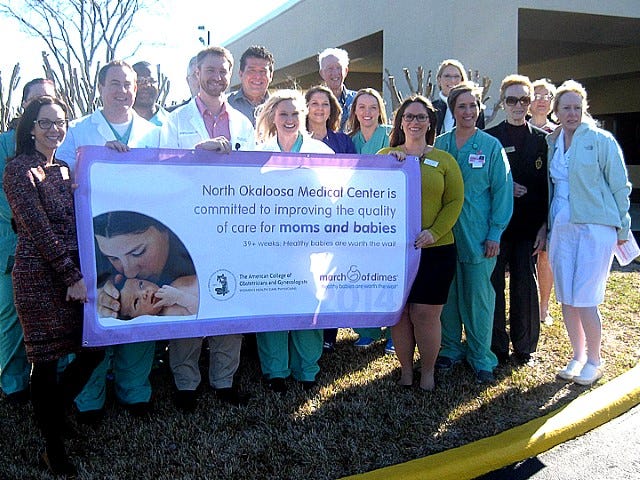
North Okaloosa Medical Center OB/GYN physicians, medical professionals and board members — pictured with the American College of Obstetricians and Gynecologists and March of Dimes representatives — work at one of just two hospitals in the county embracing the “39 Weeks” initiative.

CRESTVIEW — North Okaloosa County mothers-to-be hoping to cut a few weeks off their pregnancies for other than non-medical reasons better find another facility than Crestview’s hometown hospital for elective inducements and cesarean deliveries.

That’s because North Okaloosa Medical Center has embraced the American College of Obstetricians and Gynecologists and the March of Dimes “39 Weeks” initiative for reducing the number of elective early deliveries.

“We’re in the business of healthy babies and we want to make sure babies are not delivered before 39 weeks, which gives us healthy organs, healthy eyes, healthy everything and more weight,” NOMC Chief of Nursing Nina Perez said.

The program aims to reduce the number of “convenience” deliveries, March of Dimes Community Director Dannon Byrd said.

“Mothers say, ‘Oh, it’s so uncomfortable,’ or ‘My doctor’s going out of town, let’s schedule a C-section,’” Byrd said. “Thirty-nine is a magic number for babies. Anything less than that and they’re at greater risk for poor organ and eye development.”

March of Dimes Division Director Michele Redmond said the recognition is given very selectively. Fort Walton Beach Medical Center is the only other hospital in Okaloosa County to receive it.

“There are only several of these that have been given and we’re so excited because we want our area to be the best when it comes to healthy babies,” she said.

ACOG representative Dr. Julie DeCesare of Florida State University and Sacred Heart Hospital said the recognition will assure mothers-to-be that the community hospital is committed to their babies’ health.

“We know in terms of infant mortality we’ve been going in the wrong direction so we hope programs like this will get it going in the right direction,” DeCesare said.

“It’s a good thing for the community,” hospital Chief Executive Officer David Fuller said. “The biggest thing is making sure our youngest, tiniest citizens get a good start and stay inside of mama as long as possible to get a healthier start in life.”

Email News Bulletin Staff Writer Brian Hughes, follow him on Twitter or call 850-682-6524.

This article originally appeared on Crestview News Bulletin: Crestview hospital aims to reduce elective early deliveries (VIDEO)

Father's involvement with daughters may lead to safer sex

GAINESVILLE ─ To paraphrase an old TV show title, Perhaps “Father (does) Know Best.”

Female students who said their dads were “involved” in their lives as teens are more likely to use protection when having sex in college, a positive sign for fathers in an era of increasingly single-parent homes, according to new University of Florida research.

For her master’s thesis in the UF/IFAS Department of Family, Youth and Community Sciences, Caroline Payne-Purvis analyzed responses from 748 college students in an introductory course at a large public southeastern university. About 60 percent were females, and 40 percent male.

Students answered 73 questions, which tried to find out, among other things, aspects of the participants’ adolescent years, their parents’ level of involvement when the students still lived at home, how often they now engage in sexual behaviors, including intercourse and their contraception use during various sexual behaviors.

Payne-Purvis found female students who said their father was “involved” in their lives as teens used condoms more frequently during intercourse.

Females who reported higher rates of father involvement reported engaging in sexual intercourse less frequently and with fewer partners. Furthermore, the more involved mothers were doing a female college student’s adolescence, the more often the young women used hormonal contraceptives.

Payne-Purvis, now an assistant professor in health and kinesiology at the Mississippi University for Women, said it’s hard to explain the finding. One possible explanation she offers in the paper is that the presence of a father figure in females’ adolescent lives reduces the desire for male attention outside the home.

“The main lesson to take from this study is that in an era of single families, high divorce rates and dual working families, fathers continue to have an impact on their daughters’ lives,” she said. “Additionally, it indicates that situations and relationships from one’s adolescence carry over into early adulthood.”

In the paper, published in the Journal of Adolescent and Family Health, Payne-Purvis wrote that mothers have historically taught their daughters about sex, while fathers have educated their sons about the birds and the bees.

Payne-Purvis’ study was part of a larger examination of contraceptive use among college students. She wrote the paper with Professor Rosemary Barnett and Associate Professor Larry Forthun, both in the UF/IFAS’ family, youth and community sciences department.  

This article originally appeared on Crestview News Bulletin: Father's involvement with daughters may lead to safer sex

Boston butts on sale for a cause

CRESTVIEW — Want something tasty to eat while watching the Super Bowl?

Duke it Out's American Cancer Society Relay For Life team is selling Boston butts for $25.

Supply is limited. Call Loney Whitley, 537-4654, to order; pickup is available 4-5 p.m. at the Publix on South Ferdon Boulevard in Crestview.

Learn more about the ACS fundraiser on the "Relay For Life of Crestview" Facebook page.

This article originally appeared on Crestview News Bulletin: Boston butts on sale for a cause

Flu season in full swing, but shots still available

CRESTVIEW — North Okaloosa Medical Center's staff has seen a growing number of flu-symptomatic patients in the emergency room since late November, according to a hospital spokesperson.

Numerous patients have also been admitted for treatment of flu-related complications.

Flu activity in the U.S. commonly peaks between December and February, but can continue as late as May.

In the meantime, it's not too late to get the flu shot. Even if the flu season peaks soon, the virus will still be around for months.

Here are three tips to stay safe:

•Vaccinate. Get the flu shot for yourself and everyone in your family. It’s available at your doctor’s office and many urgent care centers in the area, with many offering same-day appointments.

The Centers for Disease Control and Prevention recommend everyone older than 6 months, except people with severe egg allergies, be immunized. Both shot and nasal spray vaccine forms are safe and effective and rarely have side effects.

"Vaccination is the simplest step you can take to protect yourself," said Vicente Mendez, M.D., North Okaloosa Physician Group. "More often than not, the patients I see who have the flu did not take this action to protect themselves or their family."

•Get treatment. If you do get the flu, your doctor or an urgent care center can prescribe antiviral medication to treat flu illness and prevent serious flu complications.

Children, the elderly, pregnant women and people with chronic illnesses are particularly vulnerable to catching the flu and experiencing complications. It’s important to treat high-risk individuals promptly to avoid hospitalization.

Antiviral medication works best when begun within 48 hours of getting sick, but can still be beneficial when given later in the course of illness. These drugs can also lessen serious flu complications.

•Prevention. Avoid sick people and wash your hands frequently to reduce the spread of germs. Cover your mouth and nose when you sneeze, and resist touching your eyes, mouth and nose.

In addition, avoid close contact with people who have the flu or symptoms; and, if you’re sick with the flu, stay home from work or school to prevent spreading it to others.

“Though this year’s flu vaccination is not a perfect tool, it’s the best way to protect against flu infection,” Mendez said. "Caregivers at our clinic and North Okaloosa Medical Center take the safety of our patients seriously, and we’ve had a high participation rate with voluntary vaccination efforts among our clinicians and physicians."

DID YOU KNOW?

Flu is one of the nation's leading causes of death, with roughly 24,000 people a year dying from flu and its complications.

Latest figures released by the Centers for Disease Control and Prevention show the flu hitting hard in all but seven states this year.

MORE DETAILS

Visit the flu section at www.northokaloosa.com.

This article originally appeared on Crestview News Bulletin: Flu season in full swing, but shots still available

Hospital helps residents sign up for health insurance

CRESTVIEW — If you’re uninsured, there’s still time to sign up for health insurance on the Health Insurance Marketplace and avoid the penalty.

Based on household income and dependents, some individuals may qualify for financial assistance from the government — or subsidies — toward the cost of the premium and other financial obligations like co-pays or deductibles.

“This is where North Okaloosa Medical Center can help the uninsured in our community,” said David Fuller, the hospital's CEO. “With many people lacking access to a computer or just (needing) help maneuvering through the enrollment website, our application counselors can help.

"We can (help) individuals and their families evaluate the available health plans and determine if they’re eligible for Medicaid or other insurance options."

Personal assistance is available 2-4 p.m. Thursdays, beginning Jan. 15 and ending Feb. 12 at NOMC's Community Resource Classroom, 127 E. Redstone Ave., Suite A. No appointment is necessary.

In all states, Medicaid provides health coverage for some low-income people, families and children, pregnant women, the elderly, and people with disabilities. In some states, the program covers all low-income adults below a certain income level.

“Even though Florida has chosen not to expand Medicaid, there are still many individuals in our community who qualify for Medicaid coverage,” Fuller said. We can help screen these individuals and, if they qualify, we can enroll them at any time, with health coverage beginning immediately.”

BUY OR FACE PENALTY

Under the Affordable Care Act, 2015 is the first year that Americans must prove they had qualifying health insurance — or an approved exemption — for the previous year, when filing 2014 taxes.

Or they face a tax penalty.

If you don’t obtain insurance by Feb. 15, the last day of the Open Enrollment period, the penalty will be applied to your annual taxable income for each full month you don't have health insurance in 2015. The penalty fee is $325 per adult, $162.50 per child — up to $975 per family or 2 percent of family income, whichever is higher. And, without insurance, you will be financially responsible for all of your medical costs.

Call North Okaloosa Medical Center, 689-8170, if you'd like to make an appointment for enrollment help for the Health Insurance Marketplace or Medicaid.

This article originally appeared on Crestview News Bulletin: Hospital helps residents sign up for health insurance

March of Dimes offers tips to prevent birth defects

MAITLAND — March of Dimes is raising awareness about the leading cause of infant mortality during National Birth Defects Prevention Month.

Each year in Florida, about 6,460 babies are born with a birth defect, including heart defects, cleft lip/palate, Down syndrome and spina bifida (open spine). Some defects have minor effects on a baby’s health; others cause lifelong disabilities.

In some cases, birth defects can be treated to improve the baby’s quality of life.

Among preventive measures is the mother's consumption of folic acid. Women of childbearing age are also encouraged to eat foods rich in folate, such as leafy green vegetables, oranges, peanuts and beans.

Other steps they can take to help prevent birth defects and have a healthy baby are:

•Reach and maintain a healthy weight.

•Talk to a health care provider about taking proper medications.

•Avoid alcohol, smoking and illicit drugs.

•See a health care provider regularly and discuss family history and use of medication.

This article originally appeared on Crestview News Bulletin: March of Dimes offers tips to prevent birth defects

Sacred Heart among top 5 for patient engagement

PENSACOLA — A new hospital study that examined patient engagement ranked Sacred Heart Health System’s three hospitals among the five best in Florida.

Becker’s Hospital Review and Axial Exchange developed the 2014 Hospital Patient Engagement Rankings based on readmission rates, patient satisfaction, patient education and community social media engagement.

Sacred Heart Hospital on the Emerald Coast in Miramar Beach ranked No. 1 in Florida and No. 23 in the nation for patient engagement. Sacred Heart Hospital Pensacola and Sacred Heart Hospital on the Gulf in Port St. Joe ranked No. 3 and No. 5, respectively, of 160 Florida hospitals included in the study.

Becker’s Hospital Review defines patient engagement as the process by which patients become invested in their own health.

This occurs when facilities:

•Provide patients with information and tools that support self-care

•Have low 30-day readmission rates

•Have high patient-satisfaction scores

•Enable patients to have rich online interactions with the health system through patient portals and social media.

This article originally appeared on Crestview News Bulletin: Sacred Heart among top 5 for patient engagement

Crestview’s only day care for medically complex children

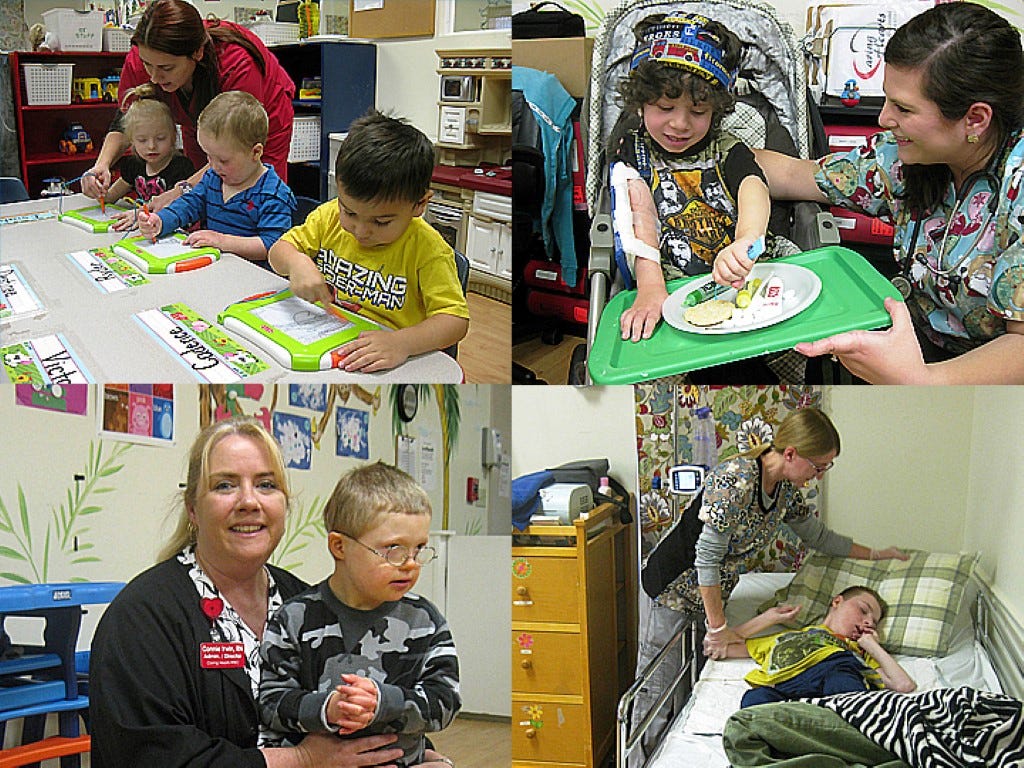
Clockwise from top left: Medical technician Natasha Andrus supervises a group of medically complex children as they draw on erasable tablets at Caring Hearts. Registered nurse Emily Loflin helps a boy decorate Christmas cookies as he undergoes an infusion at Caring Hearts. Licensed practical nurse Angela Pocock tends to a bedridden child. Caring Hearts administrator and Director of Nursing Connie Irwin hugs one of the facility’s 28 medically complex children.

CRESTVIEW — Administrators at Caring Hearts demand more from their nursing staff than just the prerequisite minimum of two years of pediatric experience.

They want nurses who really love tending to medically complex and medically fragile children.

“It takes a special kind of person to work here,” Caring Hearts administrator and Director of Nursing Connie Irwin said.

“In a hospital, you see a patient and then they go home. Here, you can see them progress. That’s the reward. As a nurse, that’s something you don’t usually see in a hospital,” Irwin said.

Caring Hearts vice president Dr. Amanda Wheeler said the facility’s prescribed pediatric extended care is a medical service assured by state legislation.

Costs are often fully covered by Medicaid, but surprisingly, many families don’t know about the service to take advantage of it, Irwin said.

“There are so many people who qualify for the service who don’t know we exist,” Irwin said.

A SPECIAL KIND OF DAY CARE

The 28 children under the care of Irwin and her staff mostly look, sound and play like most other kids. And Caring Hearts, at casual glance, seems like most other day care facilities.

Kids’ toys and belongings are stashed tidily in cubbies, bright graphics enhance the rooms, colorful toys encourage individual development, and group activities build social skills.

“It looks like a regular day care, but when you look at their charts, you’re like, ‘Oh my God, some of these kids are lucky to be alive,’” Wheeler said. “There’s nothing like seeing kids who weren’t supposed to survive, or not supposed to walk or talk, exceeding expectations.”

Wheeler’s parents, Betty and Gabriel Tejerina, founded the company of prescribed pediatric extended care facilities, opening the Crestview office at the invitation of Sacred Heart Hospital in 2005.

DAILY NURSING ASSESSMENTS

Each child receives a daily head-to-toe nursing assessment.

“When you have medically complex children, you have to do these assessments that parents may not be able to do,” Wheeler said.

“A lot of parent education goes on here,” Irwin added.

In a quiet corner, a group of children sat eagerly around a medical technician as she read a Christmas story. This week, the kids had a pajama party and watched “How the Grinch Stole Christmas.”

During the day, kids are often removed from activities for medical treatments or speech, physical or occupational therapy.

On a recent morning, while three kids nearby drew pictures on erasable tablets, a boy with a huge ear-to-ear smile and bushy brown hair worked hard decorating Christmas cookies.

On closer examination, an intravenous tube could be seen running into his arm.

“I got a shot!” he said proudly, noting he didn’t cry at all.

“That’s because you’re a big boy,” registered nurse Emily Loflin told him encouragingly.

The kids see nothing unusual in other children who have physical differences, use wheel chairs or wear medical equipment.

“The children are very accepting of each other,” Wheeler said.

And Caring Hearts fosters an atmosphere to encourage that acceptance.

“We try to make sure they have the best day possible, from the time they get on the transportation until it’s time to go home,” Irwin said.

PRESCRIBED PEDIATRIC EXTENDED CARE

Caring Hearts is Crestview’s only PPEC facility. Services are covered by Medicaid, and allow parents the opportunity to return to school or jobs while skilled nursing staff tend their medically complex or fragile children. For information contact Connie Irwin, RN, 380 Medcrest Dr., 689-1376, cirwin@caringheartsfl.com.

Email News Bulletin Staff Writer Brian Hughes, follow him on Twitter or call 850-682-6524.

This article originally appeared on Crestview News Bulletin: Crestview’s only day care for medically complex children


Boston butt benefit scheduled in Crestview

CRESTVIEW — Duke it Out's American Cancer Society Relay For Life team has scheduled a Boston butt fundraiser for Christmas and New Year's Eve.

Fully cooked butts will be available for pick-up 4-5 p.m. Dec. 24 and Dec. 31 in the Crestview Publix parking lot. The cost is a $25 donation.

Contact Loney Whitley, 603-3500 or 537-4654, to place your order.

This article originally appeared on Crestview News Bulletin: Boston butt benefit scheduled in Crestview

error: Content is protected !!