Please ensure Javascript is enabled for purposes of website accessibility
Skip to main content
Advertisement

Only two parks receive advisories for hazardous water

FORT WALTON BEACH — Two Okaloosa County parks may have potentially hazardous bathing water, the Florida Department of Health in Okaloosa County stated this week.

On April 1, Liza Jackson Park, Fort Walton Beach, and Fred Gannon Rocky Bayou State Park, Niceville, failed tests based on EPA-recommended enterococci standards.

Enteric bacteria’s presence indicates fecal pollution from stormwater runoff, pets and wildlife or human sewage.

Call 689-7859 or 833-9247 for more information.

This article originally appeared on Crestview News Bulletin: Only two parks receive advisories for hazardous water

Crestview boy to pitch for epilepsy research

Joey Cruz, 3 — seen playing on the beach last summer — will toss the Blue Wahoos’ season opener pitch April 9. He earned the opportunity when his family won a two-week online fundraising competition through the Epilepsy Foundation.

CRESTVIEW — Joey Cruz will be the center of attention April 9, when he will throw the first pitch during the Pensacola Blue Wahoos season opener against the Biloxi Shuckers.

The Crestview 3-year-old earned the opportunity when his family won a two-week online fundraising competition through the Epilepsy Foundation. The Cruzes raised $463 in donations, his dad, retired Marine Joe Cruz said.

While Joey hasn’t quite embraced the game — “He’s only 3. We’re working on him," Cruz said — his family sure has. “My oldest son, Troy, plays baseball for Shoal River (Middle School). We’re all fans, and we’re excited we get to go out there and support the Blue Wahoos and, at the same time, support epilepsy, which is a battle in itself.”

For his part, Joey likes playing on the beach, trick-or-treating and interacting with friends in Southside Center's pre-kindergarten program.

ROUGH START

Helen Cruz said Joey had three seizures the day she delivered him. Nine more followed the next day. He has since been hospitalized seven times, has had four MRI’s and eight electroencephalograms, which detect the brain's electrical activity.

“Joey has been diagnosed with epilepsy, ketotic hypoglycemia, mild cerebral palsy, autism, and is developmentally delayed,” Helen Cruz said. Still, "he is amazingly strong, always brave and a very loving little boy.”

With help from Southside Center teacher Liz Havard and Joey’s speech and occupational therapists, the boy has started putting words together and communicating, playing and interacting with other special needs children, Helen Cruz said.

CHALLENGES AND SUPPORT

While his youngest son combats epilepsy, June will mark Joe Cruz's fifth year with stage four Hodgkin lymphoma. If his tests this summer are negative, he will be considered in complete remission.

But Joey remains his foremost concern.

“My son has a lot of issues. We support every cause we can because every little bit helps,” Cruz said. “Those battles can be very tough: not only on the person, but (also) on the caregivers.”

Cruz said he, Helen, Joey, seventh-grader Troy, and daughter Sydney, who’s dual-enrolled at Crestview High and Collegiate High School, are fortunate to have family and friends' support.

“Regardless of what’s going on, we’re not alone,” Cruz said. “There are people out there who can help out.”

WANT TO HELP?

The Cruz family has started Team R.A.I.S.E. (Raising Awareness In Support of Epilepsy) The goal is to stop seizures or control them as best as possible. See http://bit.ly/1N0NsQB for more details.

Email News Bulletin Staff Writer Brian Hughes, follow him on Twitter or call 850-682-6524.

This article originally appeared on Crestview News Bulletin: Crestview boy to pitch for epilepsy research

Crestview luminaria ceremony to honor people with cancer

CRESTVIEW — A ceremony next month will honor those who have survived cancer and those who have died from it.

The luminaria ceremony, one of Crestview Relay For Life's most meaningful events, is 9 p.m. April 24 at Shoal River Middle School. Lighted bags set around the track will identify people affected by cancer. Relay participants will walk a lap in silence to honor them.

Luminarias do not have a set price. Bags and decorating supplies are available on site at the luminaria table until 8:45 p.m.

They may also be dedicated at www.relayforlife.org/crestviewfl until the day before the event.

This article originally appeared on Crestview News Bulletin: Crestview luminaria ceremony to honor people with cancer

Commentary: Trisomy does not mean 'incompatible with life'

"Just like that, because our child had trisomy 13, doctors viewed the situation as impossible."

Recently, I have been reading up on the policy of doctors using the term “incompatible with life” while explaining trisomy to parents expecting children with this diagnosis, specifically trisomy 13 and trisomy 18.

Trisomy occurs “with the presence of an extra third chromosome” which is placed among two strands of DNA, according to Chad Haldeman-Englert, MD, of the Wake Forest School of Medicine. An infant may be born with multiple defects and/or intellectual disabilities. (These could include cleft lip or palate, seizures and extra fingers or toes, according to the U.S. National Library of Medicine National Institutes of Health.

After giving birth to a child with trisomy 13 in June 2014, this topic is very emotional for me.

My unborn son was diagnosed with trisomy 13 when I was 21 weeks pregnant. My husband and I were heartbroken, and we decided to pray as hard as we could and hope for the best.

I delivered our beautiful baby at 36 weeks, and despite low expectations, he lived, and we were able to take him home and give him our love for 23 days.

When we went home, we had hospice care, and the nurses were very caring and had so much hope for our son. It was even suggested for us to take measures to increase his likelihood of survival rather than wait for the inevitable.

However, on the 22nd day, our beautiful baby boy began to struggle with breathing. We took him to the emergency room and were transferred to the regional pediatric hospital. When we got there, we were told that our son was dying. Rather than suggesting we do something to increase his chances of survival, the doctors acted hopeless and suggested that we let him go.

Just like that, because our child had trisomy 13, doctors viewed the situation as “impossible.”

 Hours before our son passed, we held him and kissed him and told him we loved him; we watched him become more and more exhausted as he struggled to oxygenate his body until his life left him.

I’ve done a lot of research and have joined social groups where other parents have faced the same issue and have suffered, and it seems we all feel the same.

A trisomy diagnosis should not mean “incompatible with life.”

These children should be allowed to receive the same medical treatments and be viewed with the same opportunities as others who face severe illnesses.

Ashley Seder is a past Crestview resident and a student at the University of West Florida for social work.

This article originally appeared on Crestview News Bulletin: Commentary: Trisomy does not mean 'incompatible with life'

April 20-25 named Relay For Life Week in Crestview

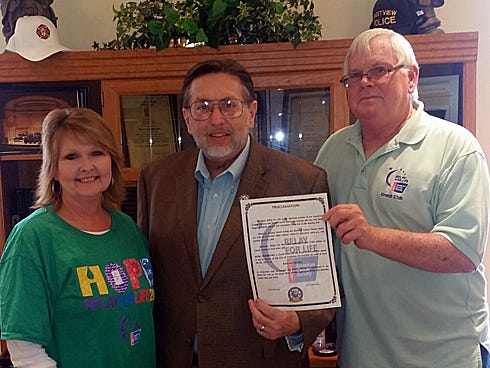
2015 Relay For Life committee members Melanie Fullerton — standing in for 2015 chair Megan Bowersox — and Loney Whitley flank Crestview Mayor David Cadle. April 20-25, 2015 is American Cancer Society Relay For Life Week by Cadle's proclamation.

CRESTVIEW — Mayor David Cadle proclaimed April 20-25, 2015, American Cancer Society Relay For Life Week. 

Relay For Life, an ACS fundraiser, is scheduled for 6 p.m. April 24 at Shoal River Middle School. 

Sponsored teams of organizations, churches, friends and family members annually spend one night camping out, take turns walking and running on a racetrack and remember those diagnosed with cancer and those who have died from it.

It's still not too late to form a team or be a sponsor. Contact Loney Whitley, 603-3500, for more information.  

Learn more on Relay For Life Crestview's Facebook page>>

This article originally appeared on Crestview News Bulletin: April 20-25 named Relay For Life Week in Crestview

Fundraiser set for Crestview baby

A Boston butt fundraiser is planned for Nathaniel Bowersox, born Feb. 5.

CRESTVIEW — Duke it Out's Relay For Life team will have a Boston butt fundraiser for Nathaniel Bowersox on April 4. 

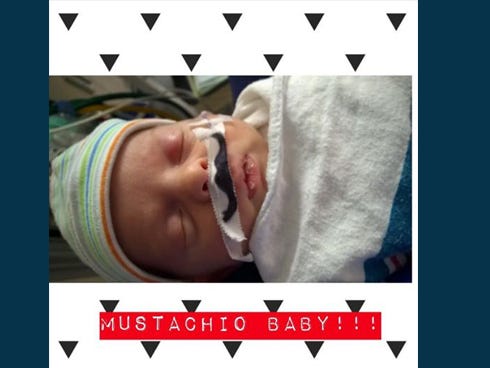
Nathaniel, the son of Megan and Daniel Bowersox, was born prematurely Feb. 5 — almost a month before he was due. His second night at North Okaloosa Medical Center, nurses determined his stomach was distended and referred him to Sacred Heart Hospital in Pensacola.

"He had what is called meconium ileus — basically, his first bowel movement got stuck in his small intestine, causing it to droop, twist and rupture," Megan, said. "Thankfully, we all have a lot of intestine to work with … a surgeon had to remove part of his small intestine to remove the blockage, all before he turned three days old.

"He now has part of his small intestine poking out of his abdomen with a colostomy bag attached to the end. He will have to undergo a second surgery to piece his intestines back together."

Duke It Out's team scheduled the Boston butts fundraiser to help cover Nathaniel's treatment expenses. Megan is the 2014 and 2015 Crestview Relay For Life chairperson.

The Boston butts cost $30 each and can be ordered by calling Loney Whitley at 603-3500 or 537-4654.  The butts can be picked up at the Crestview Publix from 4 to 5 p.m. April 4.

This article originally appeared on Crestview News Bulletin: Fundraiser set for Crestview baby

THIS WEEKEND: HIV awareness takes focus in Crestview

CRESTVIEW — HIV awareness takes center stage on Saturday.

“Divine Love Begins With Me" is scheduled for 6 p.m. March 7 at Carver Hill School Center, 461 School Ave., Crestview.

Speakers will include Krissy Morgan, AIDS activist, and Dr. Juan Mosley, of FAMU, among others.

Pop – A – Soul will provide music.

Cost: $10 per person; $18 per couple. Details: Tonsiaweda Hayes, 621-4187.

This article originally appeared on Crestview News Bulletin: THIS WEEKEND: HIV awareness takes focus in Crestview

'MORE OF A LUXURY NOW': Hearing aids have changed over the years

Clockwise, from left: Body-style transistor hearing aid. Eyeglass hearing aid. Behind-the-ear aids (classic). -(Photos by Joe Haupt) Today's hearing aid. (Photo by Thomas Boni)

CRESTVIEW — Aging, genes, medications and loud, noisy work environments can contribute to hearing loss, according to the Mayo Clinic.

Many people rely on hearing aids to effectively communicate. And over the years, this basic necessity has become more user-friendly. 

"In the past, hearing aids were more of a nuisance," said Cameron Yordon, a licensed hearing aid specialist with Beltone in Crestview. "But nowadays, with this new technology, it's more become a lifestyle change. It's more of a luxury now."

Remote controls, iPhones and iPads can adjust a hearing aid's volume, and an app can even track lost hearing aids with GPS. Relatives can Skype or listen to music, with audio from a computer feeding directly into the hearing aids. And hearing aids can adapt to outdoors or restaurants settings with the touch of a button.

"It's become so much simpler now," Yordon said. 

Here's a history of the device:

Body-style transistor hearing aid. "People had a box about the size of a beeper with a cord that went up to your ear with the ear mold in it," Greg Yordon, Beltone's Northwest Florida manager, said.

Though bulky compared to today's devices, the transistor hearing aid — manufactured throughout the late 1940s and 1960s — was still stylish.

For instance, Beltone's 2-ounce Largo model — 2 1/2 by 1 5/16 by 5/8 inches — featured a brushed stainless steel case over a black plastic chassis, according to HearingAidMuseum.com.

Eyeglass hearing aid. For more than 20 years, a device that improved not just audio but also vision was in demand.

Beltone's "Invisible" series — among a number of eyeglass products  the company manufactured from 1955-1979 — hid the microphone and battery door inside the eyeglass frames' temple pieces, according to HearingAidMuseum.com.

At one point, in the late 1950s, these hearing aids made up 50 percent of the market, according to the Washington University School of Medicine.

Though available past its peak, the eyeglass hearing aid was a trend that Sharon Yordon, who also manages Beltone's Northwest Florida offices, was glad to see go away.  

"Eyeglasses were very hard to adjust and we were always having to coordinate with the eye centers and so forth to do that … that was difficult," she said.

Behind-the-ear aids. This analog device — such as Beltone's "Minuet II," which became available in 1976 — trimmed some of the bulk and added convenience.

Users could control volume and replace batteries directly on the earpiece, the only piece.

BTEs gave way to later models and innovations, including in-the-ear models, those worn entirely in the canal, and programmable hearing aids that allow more fine tuning, Greg said.

"As hearing loss changed, we were able to keep up with it," providing smoother sounds with just the touch of a button, he said.  

Customers notice the difference, Sharon said.

"When they walk in with a problem, you could just hook it up to the computer, make adjustments and they're like, 'Wow, what a difference! That's terrific!" she said. "And they're out the door."

LEARN MORE

Want to learn more about hearing aids? Beltone's new Crestview office is located at 2670 S. Ferdon Blvd., Unit 105. Call 683-8777 for free hearing screenings.

This article originally appeared on Crestview News Bulletin: 'MORE OF A LUXURY NOW': Hearing aids have changed over the years


COLUMN: Protect patients' rights; end step therapy protocols

Pam Langford, president of Hepatitis Education Awareness and Liver Support.

More than 15 years ago, I was diagnosed with Hepatitis C. While the disease created a number of challenges, one particular problem has been obtaining coverage for medications my physicians prescribe.

I've been forced into fail first, or step therapy, protocols. 

These management processes require a patient to try the least-expensive treatment of medication to address a problem, despite what his or her physician recommends.

Only after trying — and failing — on the least expensive option, and possibly additional treatments, can a patient receive coverage for the medication the physician originally prescribed.

In 1998, my physician advised me to try a recently approved Hepatitis C treatment, Ribavirin, meant to be taken in addition to Interferon, which treats Hepatitis C. My insurance company required me to go fail on Interferon by itself before I could get the superior combination of the two prescribed by my doctor.

Instead of enduring an inappropriate or incomplete treatment, my physician should have been the determiner of the treatment's duration and recommendations on when to receive treatment or switch to a new treatment.

Restraints on access to treatment do not protect patients; they just interfere with the doctor-patient relationship, and allow patients' conditions to deteriorate while they wait for appropriate medications.

Later, without proper treatment, these patients will often require more costly treatments, such as hospitalization.

Rather than have physicians spending excessive time on administrative tasks associated with step therapy and prior authorization, we should allow them to focus on providing relief and comfort to their patient through immediate treatment options.

Patients and physicians should work together to determine the best course of action without insurance companies and bureaucrats setting forth excessive protocols that interrupt proper treatment.

Our legislators have the opportunity this year to support legislation designed to address problems with excessive use of prior authorization and step therapy.

Bills to examine these access limitations' medical appropriateness — and to provide a clearer path for physicians to better navigate the prior authorization and step therapy processes — are being considered by lawmakers in Tallahassee. 

Support of these bills will put Florida in line with a number of other states that have enacted similar measures to protect patients from administrative denials.

Pam Langford is president of Hepatitis Education Awareness and Liver Support, or H.E.A.L.S. of the South. 

This article originally appeared on Crestview News Bulletin: COLUMN: Protect patients' rights; end step therapy protocols

NOMC raises awareness for women's heart disease, stroke

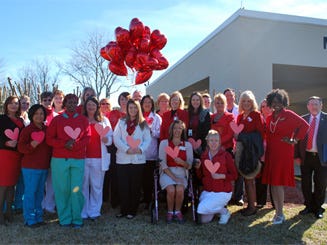
Pictured are Melody Miller-Collete, Chat Long, Gloria Addison, Teresa Lloyd, Nina Perez, Samantha Vi, Carol Barberree, Carrie Bryant, Sherrie Scott, Terri Unger, Carol Richards, Mary Alice Daigneault, Marian McBryde, Angela Carden, Crestview Mayor David Cadle, Valerie Manley, LeAnn Holcombe, Elaine Demandre, Ruth Link, David Fuller, Teresa Balcerak, Jennifer Bray, Dr. Tommy Noggle and Dorothy Weisz.
Special to the News Bulletin

CRESTVIEW — Did you know one in three women annually die of heart disease and stroke?

Raising awareness is the point of the American Heart Association's Go Red for Women.

February is American Heart Month, according to the Centers for Disease Control and Prevention. The national effort aims to prevent 1 million heart attacks and strokes by 2017.

The key?

Ensuring Americans know their blood pressure; if it's too high, the goal should be to control that number, the CDC states.

North Okaloosa Medical Center's staff wore red to bring attention to the issue on Feb. 6.

Learn more about controlling your blood pressure at www.cdc.gov/features/heartmonth.

This article originally appeared on Crestview News Bulletin: NOMC raises awareness for women's heart disease, stroke

error: Content is protected !!