Please ensure Javascript is enabled for purposes of website accessibility
Skip to main content
Advertisement

Crestview High, NWFSC alumnus preparing Gulf for tidal waves (VIDEOS)
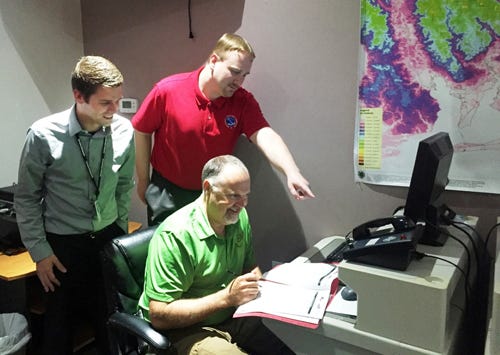
Crestview High School alumnus and Gulf Coast coordinator of the National Tsunami Hazard Mitigation Program Chayne Sparagowski reviews Santa Rosa County tsunami preparedness plans with Jason Beaman of the National Weather Service Mobile office, standing, and Brad Baker, Santa Rosa County Division of Emergency Management director.

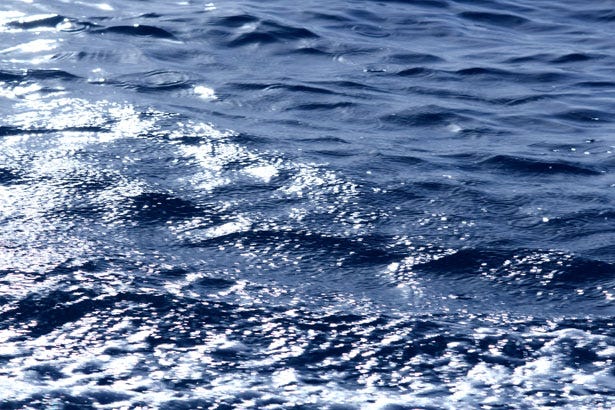
CRESTVIEW — The chances of a tsunami hitting Destin or Fort Walton Beach are slim, but the potential exists.

And if it does, a Crestview High School and Northwest Florida State College alumnus wants his native Okaloosa County to be ready.

See video of Sparagowski discussing the Gulf Coast's tsunami risk>>

See part 2 of Sparagowski discussing the Gulf Coast's tsunami risk>>

In 2015, Chayne Sparagowski, now an emergency management specialist in Corpus Christi, Texas, was appointed the Gulf Coast’s coordinator of tsunami preparedness for the National Weather Service’s National Tsunami Hazard Mitigation Program.

Wednesday Sparagowski was back in the area, certifying Santa Rosa County as not just Florida’s first tsunami-ready Gulf Coast county, but the first in the entire five-state Gulf of Mexico region.

Sparagowski said several Atlantic coast Florida counties are also certified.

OKALOOSA, ESCAMBIA NEXT?

Okaloosa and Escambia Counties are currently considering certification, a process that took Santa Rosa about a year, Sparagowski said.

“Basically, there’s a set of requirements that they have to work towards, which include several components,” he said.

Per federal requirements, a county must have the ability to receive a tsunami warning, procedures to notify the public, and conduct public education and readiness exercises.

One of Santa Rosa’s the biggest hurdles, Sparagowski said, was convincing the Board of Commissioners to fund beachside informational signage.

“It is not an easy feat in a place where tsunamis are not usually heard of,” he said.

COMPUTER MODELING

Currently Texas A&M University in Galveston is preparing high-resolution tsunami inundation computer models to help Okaloosa and Escambia prepare for certification.

The results probably won’t be ready until the end of 2016 because of the complexity of programming multiple scenarios, Sparagowski said.

But already preliminary modeling is showing a higher risk than previously thought, he said.

“The risk is there,” he said. “The probability is low but it’s a very high-consequence hazard. Originally along the Gulf Coast, before the high resolution models, we were thinking in terms inches and it was something we wouldn’t have to worry about, but as we started researching we saw it was feet. The maximum possibility is 15 to 20 feet.”

LAND-SLIDE DRIVEN

The closest geological fault lies in the south Caribbean Sea. It generated an early 20th-century tsunami off the coast of Puerto Rico that struck Texas.

But a Gulf Coast tsunami would more likely be caused by underwater land slides, Sparagowski said.

“It’s not going to be an earthquake-driven event,” he said.

Unlike storm surges, tsunamis strike quickly and with more strength, Sparagowski said.

“Generally speaking, along the Gulf Coast, you’re not going to see any inundation very far inland. It’ll be along the immediate coast and the barrier islands,” he said.

“Most of Destin would probably be OK. Okaloosa Island would probably have inundation in the areas along (U.S. Highway) 98 that normally flood in a storm surge.”

Sparagowski emphasized the “probably.”

“Because there’s been no actual modeling done in this area, we won’t know for sure yet,” he said.

BE TSUNAMI AWARE

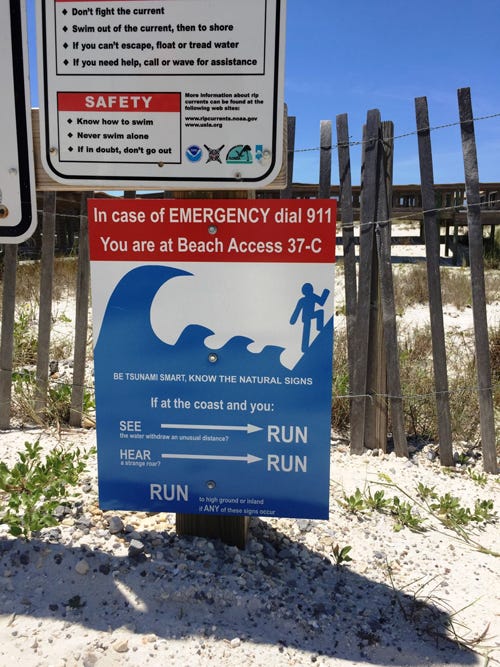
A tsunami, a tidal wave generated by offshore seismic activity such as an underwater earthquake or land slide, often gives advance warning. According to National Weather Service advisories, if on the coast and you:

●See the water withdraw an unusual distance out to sea, run to high ground or inland

●Hear a strange roar, run to high ground or inland

Source: Santa Rosa County Emergency Management

A tsunami, a tidal wave generated by offshore seismic activity such as an underwater earthquake or land slide, often gives advance warning. According to National Weather Service advisories, if on the coast and you:

●See the water withdraw an unusual distance out to sea, run to high ground or inland

●Hear a strange roar, run to high ground or inland

Source: Santa Rosa County Emergency Management

BE TSUNAMI AWARE
This article originally appeared on Crestview News Bulletin: Crestview High, NWFSC alumnus preparing Gulf for tidal waves (VIDEOS)

July 4 weekend blood donations wanted

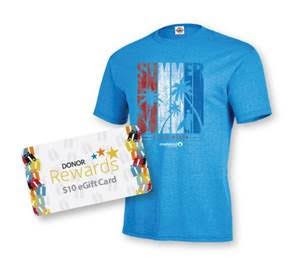
Donors who give blood at donor centers from July 1 to 5 will get a 4th of July Summer T-shirt a $10 gift card, and a buy-one-get-one-free admission to Crayola Experience.

CRESTVIEW — One Blood is accepting blood donations for the Independence Day weekend.

Donors who give blood at donor centers from July 1 to 5 will get a 4th of July Summer T-shirt and a $10 gift card.

Donors also get a wellness check-up of blood pressure, pulse, temperature and iron count, a cholesterol screening, and a buy-one-get-one-free admission to Crayola Experience.

The Crestview Donor Center, located at 2400 Ferdon Blvd. S, is open 8 a.m. to 5:30 p.m. July 1 and 5; noon to 5 p.m. July 3; and 10 a.m. to 5:30 p.m. July 4.

Generally healthy people age 16 or older who weigh at least 110 pounds can donate blood. Photo ID is required.

For more information go to oneblood.org or call 1-888-936-6283.

This article originally appeared on Crestview News Bulletin: July 4 weekend blood donations wanted

Okaloosa health department releases water quality results

FORT WALTON BEACH — The Florida Department of Health in Okaloosa County has announced water quality test results for local parks.

Four Okaloosa County parks have potentially hazardous bathing water, according to a June 22 FDOH media release.

Garniers Park, Fort Walton Beach; Wayside Park, Okaloosa Island; Fred Gannon Rocky Bayou State Park, Niceville; and James Lee Park, Destin failed tests based on EPA-recommended enterococci standards. Enteric bacteria's presence indicates fecal pollution from stormwater runoff, pets and wildlife or human sewage.

This article originally appeared on Crestview News Bulletin: Okaloosa health department releases water quality results

UPDATE: Health department reveals source of Okaloosa's first Zika case

CRESTVIEW — The Florida Department of Health announced today that a travel-related case of Zika virus was reported in Okaloosa County, making this our area's first known instance of Zika. 

However, that's all the department will say. 

"Due to patient confidentiality we cannot disclose where the person lives other than that they are an Okaloosa resident who acquired Zika in St. Lucia," Mara Gambineri, the state DOH's communication director, said.

PREVIOUS COVERAGE:

CRESTVIEW — One incident of travel-related Zika virus has been reported in Okaloosa County, according to the Florida Department of Public Health.

There are seven new travel-related cases today with three in Broward, one in Miami-Dade, one in Okaloosa, one in Osceola and one involving a pregnant woman, according to a DOH media release.

The declaration of Public Health Emergency has been amended to include Okaloosa County.

On Feb. 3, Gov. Rick Scott directed the State Surgeon General to issue a Declaration of Public Health Emergency for the counties of residents with travel-associated cases of Zika.

Okaloosa County is now included in that declaration.

Now, there are 23 counties included in the declaration – Alachua, Brevard, Broward, Clay, Collier, Duval, Escambia, Hillsborough, Highlands, Lee, Martin, Miami-Dade, Okaloosa, Orange, Osceola, Palm Beach, Pasco, Pinellas, Polk, Santa Rosa, Seminole, St. Johns and Volusia.

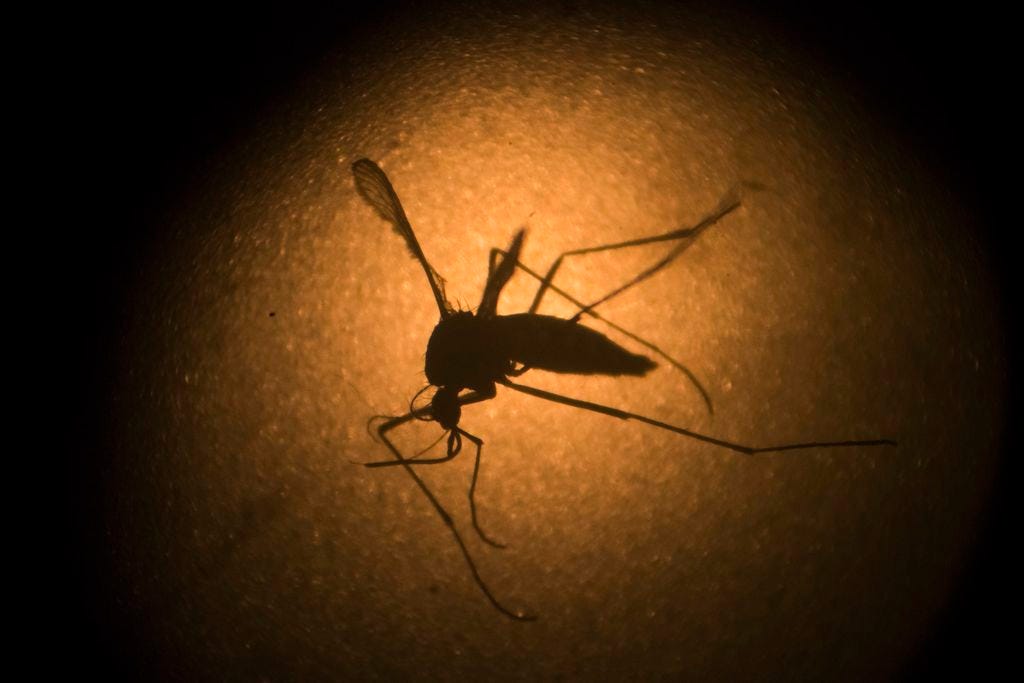
DOH encourages Florida residents and visitors to protect themselves from all mosquito-borne illnesses by draining standing water; covering their skin with repellent and clothing; and covering windows with screens.

DOH has a mosquito-borne illness surveillance system and is working with CDC, the Florida Department of Agriculture and Consumer Services and local county mosquito control boards to ensure that the proper precautions are being taken to protect Florida residents and visitors.

Of the cases confirmed in Florida, 19 are still exhibiting symptoms. According to CDC, symptoms associated with the Zika virus last between seven to 10 days.

CDC recommends that women who are pregnant or thinking of becoming pregnant postpone travel to Zika affected areas. According to CDC guidance, providers should consider testing all pregnant women with a history of travel to a Zika affected area for the virus. CDC recommends that a pregnant woman with a history of Zika virus and her provider should consider additional ultrasounds.

Florida has been monitoring pregnant women with evidence of Zika regardless of symptoms since January. The total number of pregnant women who have been monitored is 40, with 11 having met the previous CDC case definition.

This article originally appeared on Crestview News Bulletin: UPDATE: Health department reveals source of Okaloosa's first Zika case

ZIKA UPDATE: Okaloosa now included in Declaration of Public Health Emergency

CRESTVIEW — One incident of travel-related Zika virus has been reported in Okaloosa County, according to the Florida Department of Public Health.

There are seven new travel-related cases today with three in Broward, one in Miami-Dade, one in Okaloosa, one in Osceola and one involving a pregnant woman, according to a DOH media release.

The declaration of Public Health Emergency has been amended to include Okaloosa County.

On Feb. 3, Gov. Rick Scott directed the State Surgeon General to issue a Declaration of Public Health Emergency for the counties of residents with travel-associated cases of Zika.

Okaloosa County is now included in that declaration.

Now, there are 23 counties included in the declaration – Alachua, Brevard, Broward, Clay, Collier, Duval, Escambia, Hillsborough, Highlands, Lee, Martin, Miami-Dade, Okaloosa, Orange, Osceola, Palm Beach, Pasco, Pinellas, Polk, Santa Rosa, Seminole, St. Johns and Volusia.

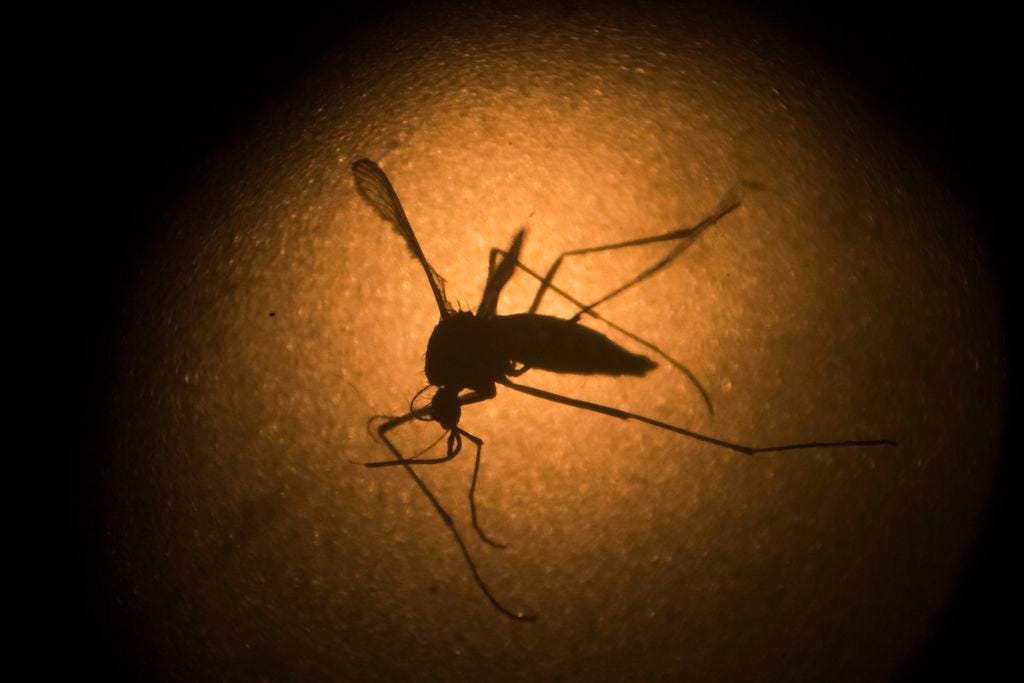
DOH encourages Florida residents and visitors to protect themselves from all mosquito-borne illnesses by draining standing water; covering their skin with repellent and clothing; and covering windows with screens.

DOH has a mosquito-borne illness surveillance system and is working with CDC, the Florida Department of Agriculture and Consumer Services and local county mosquito control boards to ensure that the proper precautions are being taken to protect Florida residents and visitors.

Of the cases confirmed in Florida, 19 are still exhibiting symptoms. According to CDC, symptoms associated with the Zika virus last between seven to 10 days.

CDC recommends that women who are pregnant or thinking of becoming pregnant postpone travel to Zika affected areas. According to CDC guidance, providers should consider testing all pregnant women with a history of travel to a Zika affected area for the virus. CDC recommends that a pregnant woman with a history of Zika virus and her provider should consider additional ultrasounds.

Florida has been monitoring pregnant women with evidence of Zika regardless of symptoms since January. The total number of pregnant women who have been monitored is 40, with 11 having met the previous CDC case definition.

This is a developing story. Please check back for updates.

This article originally appeared on Crestview News Bulletin: ZIKA UPDATE: Okaloosa now included in Declaration of Public Health Emergency

Crestview teen to tour Washington D.C., raise support for children's hospitals

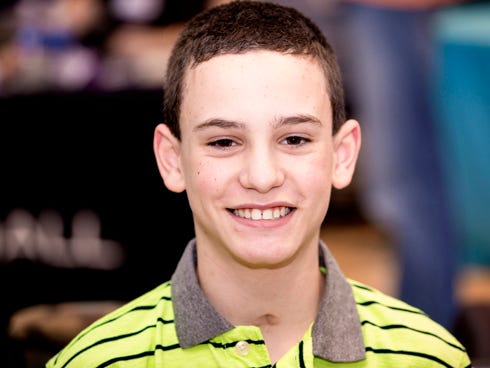
CRESTVIEW — Drew Barefield of Crestview will join pediatric patients from each state on Saturday during an Ambassador Tour for Children's Miracle Network Hospitals.

Champions and guests will fly into the District of Columbia, courtesy of Delta Air Lines, and will be welcomed by Champion alumni and supporters at the JW Marriott Washington, DC.

Throughout the week, Champions will share their stories to encourage charitable support for children’s hospitals. Opportunities include touring Marriott International headquarters to thank associates and leadership for their continued support, attending Senate meetings on Capitol Hill, generating awareness at a Washington Nationals game and participating in a satellite media tour with TV stations across the country.

Drew, 14, was treated for multiple traumatic injuries at The Studer Family Children’s Hospital at Sacred Heart, one of 170 member CMN Hospitals. After being struck by a boat, he spent 75 days in The Studer Family Children’s Hospital at Sacred Heart in Pensacola and underwent 13 surgeries. During his treatment, he showed a positive, “can-do” attitude and genuine concern for other pediatric patients.

“Drew Barefield is a remarkable young man who inspires others to live each day to the fullest,” says Carol Carlan, president of the Sacred Heart Foundation. “We are honored to have Drew represent the thousands of children treated each year as he meets with senators and our CMN Hospital partners in DC. Miracles are happening in our community. Drew Barefield is showing our community, that miracles and life-saving care are being provided at The Studer Family Children’s Hospital at Sacred Heart, your Children’s Miracle Network Hospitals.”

“The specialized care children’s hospitals provide is only partially funded by government and insurance programs,” says John Lauck, president and CEO of Children's Miracle Network Hospitals. “As our Champions demonstrate, local donations are crucial to ensure children’s hospitals are able to fund pediatric research, equipment, treatments and services necessary to save and improve kids’ lives.”

The 2016-17 Champions program is presented by Delta Air Lines, Marriott International, Chico’s FAS, Inc. and Ace Hardware. 

This article originally appeared on Crestview News Bulletin: Crestview teen to tour Washington D.C., raise support for children's hospitals

RECALLED: Toss these skinless, boneless fillets

U.S. Cado Holdings, Inc., a Santa Anna,Calif. establishment, is recalling approximately 25,760 pounds ofimported, frozen Swai fillets products that were distributed into U.S. commerce without meeting federal requirements, the U.S. Department of Agriculture’s Food Safety and Inspection Service (FSIS) announced today.

The skinless and boneless Sea Queen brand Swai Fillet items were produced and packed on March 30, 2016, in Vietnam by Golden Quality Seafood Corporation. The following products are subject to recall:

  • 2-lb. (32-oz.) packages containing individually wrapped pieces of “Skinless and Boneless Swai Fillets.”

The products subject to recall bear plant number FN1158, lot number SW1601-02-16090, and have a “best by” date of March 30, 2018. These items were shipped to Aldi distribution centers in Connecticut, Georgia, Maryland, Pennsylvania, and Tennessee.

The problem was discovered when the customer and import establishment notified FSIS personnel of Swai products entering U.S. commerce without meeting FSIS regulatory requirements for imported Siluriformes.

The products were imported from Vietnam and failed to comply with FSIS requirements concerning residue sampling and testing prior to entry into United States commerce. There have been no confirmed reports of adverse reactions due to consumption of these products. Anyone concerned about a reaction should contact a healthcare provider.  

Consumers who have purchased these products are urged not to consume them. These products should be thrown away or returned to the place of purchase. 

This article originally appeared on Crestview News Bulletin: RECALLED: Toss these skinless, boneless fillets

RECALLED: 18 chicken products may have sand, soil in them

WASHINGTON – GNP Company, a Cold Spring, Minn. establishment, is recalling approximately 55,608 pounds of chicken products that may be contaminated with extraneous materials, the U.S. Department of Agriculture’s Food Safety and Inspection Service announced.

The chicken products were produced on various dates from June 6 to June 9, 2016. The following products are subject to recall:

40-lb. cases containing “Gold’n Plump CHICKEN WINGETTES & DRUMMETTES 32900” with a use-by date of 6/18/2016 and 6/20/16.

40-lb. cases containing “Gold’n Plump Chicken Tenders 34400” with a use-by date of 6/16/2016, 6/18/2016, and6/19/2016.

40-lb. cases containing “Gold’n Plump BONELESS SKINLESS CHICKEN BREAST PORTIONS 24700” with a use-by date of 6/29/2016.

40-lb. cases containing “Gold’n Plump CHICKEN LEG QUARTERS 20500” with a use-by date of 6/20/2016,6/21/2016, and 6/22/2016.

40-lb. cases containing “Gold’n Plump CHICKEN DRUMSTICKS 30800” with a use-by date of 6/20/2016.

40-lb. cases containing “Gold’n Plump BONELESS SKINLESS CHICKEN BREAST PIECES 36400” with a use-by date of 6/22/16.

40-lb. cases containing “Gold’n Plump CHICKEN THIGHS WITHOUT BACKS 37800” with a use-by date of6/20/2016, 6/24/2016, and 6/26/2016.

40-lb. cases containing “Gold’n Plump CHICKEN DRUMSTICKS 20800” with a use-by date of 6/18/2016 and 6/23/2016.

40-lb. cases containing “Gold’n Plump UNDER GRADE CHICKEN WING SEGMENTS 22900” with a use-by date of 6/17/2016, 6/19/2016, 6/20/2016, and 6/21/2016.

40-lb. cases containing “Gold’n Plump CHICKEN WINGS 31100” with a use-by date of 6/17/2016, 6/20/2016, and 6/21/2016.

40-lb. cases containing “Gold’n Plump CHICKEN LIVERS 31300” with a use-by date of 6/18/2016.

40-lb. cases containing “Just BARE BONELESS SKINLESS WHOLE CHICKEN LEG 37200” with a use-by date of 6/22/2016, 6/23/2016, 6/24/2016, and 6/25/2016.

40-lb. cases containing “Gold’n Plump CHICKEN WHOLE LEGS 20700” with a use-by date of 6/20/16.

40-lb. cases containing “Gold’n Plump CHICKEN GIZZARDS 31200” with a use-by date of 6/20/16 and6/23/2016.

40-lb. cases containing “Gold’n Plump Chicken Wingette and Drummettes 33000” with a use-by date of 6/22/2016and 6/24/2016.

40-lb. cases containing “Gold’n Plump Chicken Tenders 34900” with a use-by date of 6/23/2016 and 6/25/2016.

24-lb. cases containing “Just BARE WHOLE CHICKEN 59405” with a use-by date of 6/26/2016.

40-lb. cases containing “Just BARE CLIPPED CHICKEN BREAST TENDERS 53200” with a use-by date of6/18/2016 and 6/20/2016.

The products subject to recall bear establishment number “P-322” inside the USDA mark of inspection. These items were shipped for food service and retail distribution nationwide.

The problem was discovered when the establishment notified FSIS that sand and black soil were found in some of their products. The source of the contamination is currently under investigation by the establishment and law enforcement.

There have been no confirmed reports of adverse reactions due to consumption of these products. Anyone concerned about an injury or illness should contact a healthcare provider.

Consumers who have purchased these products are urged not to consume them. These products should be thrown away or returned to the place of purchase.

This article originally appeared on Crestview News Bulletin: RECALLED: 18 chicken products may have sand, soil in them

2 Okaloosa parks receive advisories for hazardous water

FORT WALTON BEACH — Two Okaloosa County parks have potentially hazardous bathing water, the Florida Department of Health in Okaloosa County stated June 15.

Fred Gannon Rocky Bayou State Park, Niceville, and Liza Jackson Park, Fort Walton Beach  failed tests based on EPA-recommended enterococci standards. Enteric bacteria's presence indicates fecal pollution from stormwater runoff, pets and wildlife or human sewage.

This article originally appeared on Crestview News Bulletin: 2 Okaloosa parks receive advisories for hazardous water

Urgent need for O Negative, O Positive and AB Plasma blood donors after Orlando mass shooting

ORLANDO — There is an urgent need for O Negative, O Positive and AB Plasma blood donors following a mass shooting in Orlando, Florida.  Dozens of people have been injured and taken to area hospitals.  

See Crestview OneBlood donation center availability>>

See Milton OneBlood donation center availability>>

Generally healthy people age 16 or older who weigh at least 110 pounds can donate blood. To learn more about the importance of blood donation and how donors can target the power of their blood type visit oneblood.org.

This article originally appeared on Crestview News Bulletin: Urgent need for O Negative, O Positive and AB Plasma blood donors after Orlando mass shooting

error: Content is protected !!