Please ensure Javascript is enabled for purposes of website accessibility
Skip to main content
Advertisement

Things to consider when moving in Crestview

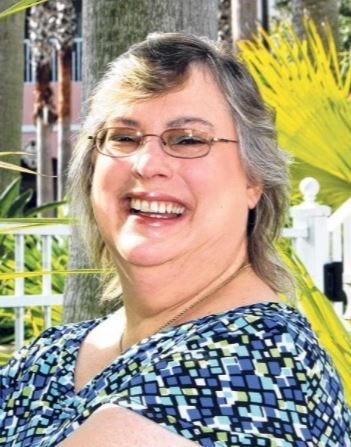
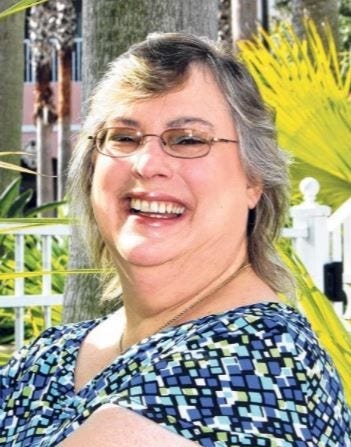
Janice Lynn Crose, a former accountant, lives in Crestview with her husband, Jim; her two rescue collies, Shane and Jasmine; and two cats, Kathryn and Prince Valiant.

If you were going to "sell" Crestview to a potential resident, what would you say about our area?

Would you mention that we are a safe, friendly town in which to live?

Would you mention our great schools and churches?

Would you mention what services we have available; that we have good doctors and a hospital here in town?

Would you stress how beautiful this area is, and as an added bonus that we are only about 40 minutes from the beach for those who love the waves and sand?

We are blessed to live in the Crestview area.

We are looking for a different house, and what an adventure that is becoming.

There are so many decisions to make, such as:

•Do we want to live at the north or south end of town?

•Do we want to be in a neighborhood or do we want acreage?

Do we want separate residences, a "guest house" and main house?

What size house do we want/need? How many bedrooms and bathrooms?

Do we want a new house or one that already exists?

How many modifications can we make on an existing home?

What do we keep, donate or toss?

How much will we have to spend to buy, sell and move two households?

As you can see, there are many things to consider. We have looked at a few homes, but there could be more looking in our future.

We have very specific needs since we are moving family members across the country. It is always difficult to move and leave loved ones and to learn to call a new area "home."

The good news is that there are very nice homes for sale in the Crestview area and we seem to have a variety from which to choose.

We all want a single-story home as stairs get more and more difficult as one gets older. Fortunately, there are many ranch style homes in our area.

We are embarking on a new journey in our life — one that will take some time, but will bring joy in the long run.

Janice Lynn Crose, a former accountant, lives in Crestview with her husband, Jim; her two rescue collies, Shane and Jasmine; and two cats, Kathryn and Prince Valiant.

This article originally appeared on Crestview News Bulletin: Things to consider when moving in Crestview

In this Crestview barber shop, everything old is new again

“Walking into the Hub City Barbers truly feels like you are stepping back into a bygone era,” Barbara Dale writes. [BARBARA DALE | News Bulletin]

You have heard the saying, "Everything old is new again"; well, when it comes to Hub City Barbers & Tattoo, they have that down to a fine science.

My husband first alerted me to this new barber shop when he had an appointment not long after they opened, and he was so impressed with it that I talked our 16-year-old son into allowing me to take him there for an overdue haircut. 

Apparently, there is something so unappealing about teenage boys having their haircut that we actually made the deal that the shave and haircut was his Christmas gift to me, his long-suffering mother.

I must preface the experience with this small insight; I was born and raised in South Australia and remember my Dad using a bristle brush with shaving foam and warm water, to take his daily shave. Photos of my father when he was a young boy in the 1950s show the "short back and sides" was the normal haircut for all males, regardless of age. Men took great pride in their hair and were always well groomed!

Walking into the Hub City Barbers truly feels like you are stepping back into a bygone era. The furnishings, posters, product placement and indeed the barber chairs are steeped in history, yet the whole place has a ‘now’ vibe too. 

It is obvious that the barbers take great pride in their work, and they take their time with their customers.

My son enjoyed a traditional straight-razor shave, loving the hot towels that almost sent him to sleep! I was able to sit and watch young men undergoing a transformation, leaving the shop with a definitive style and subsequent air of confidence about them.

The traditional barber products they use and sell are from London and Rotterdam. Beard oils and balms and pomades mean our guys can keep up their new looks between visits.

Anyone can cut hair — not everyone gives a cut above the rest.

Hub City Barber does. 

Barbara Dale is the Crestview News Bulletin’s receptionist. Email her at bdale@crestviewbulletin.com.

This article originally appeared on Crestview News Bulletin: In this Crestview barber shop, everything old is new again

MLK’s lesson — Being American is not a spectator sport

This year marks the 50th anniversary of the Rev. Martin Luther King Jr.’s death, and it is not yet understood or believed by some that his work and sacrifice were on behalf of all Americans.

By the end of his brief life, his mission had expanded to protesting war in Vietnam and to taking up the cause of poverty, which knows no color line.

He did it because he believed, deeply, that America was worth the trouble.

We are unique among the nations of the world in that we bought into the radical idea of self-governance from the start. No kings were beheaded. No emperors were overthrown. We unshackled ourselves from the British Empire and set out to determine our own destiny through a democratic republic.

Consider the audacity of this. It had not been attempted anywhere in the world since the Greeks. For centuries, common people were assumed to be incapable of making laws and creating frameworks for human rights. Such power was thought to be the purview of kings.

But we pulled off the impossible. As such, we alone are responsible for whatever state of government we happen to have at the moment.

If government is ineffectual, if it’s mired in cynicism, greed and failure, it isn’t only because the Russians bought Facebook ads. It’s because we’ve abdicated our citizenship, choosing instead to gorge on outrage and demagoguery.

No one else is responsible for maintaining vigilance of our freedoms, and make no mistake, if we leave it to others, it will be at our own peril. There are people among us who would like nothing better than for us to remain spectators, even as they chip away at our rights.

EVERY STEP 

King taught us the push for freedom is constant. Though citizenship is ours by law and birthright, the leaders of the civil rights movement understood no one was going to hand black Americans their rights on a platter. The roots of resistance to their equality were as old as America itself.

No, the new freedom would have to be fought for, bled for and marched for, every day, along every mile on the way to Montgomery. In every step across the Edmund Pettus Bridge. At every lunch counter and polling booth.

King’s example teaches us that change can’t occur apart from that most-American of attributes: public dissent.

He taught us that if injustice is ever to get a fair hearing, then the truth must be made inconvenient for someone else.

He taught us that people in power aren’t always willing to do what’s right, but persistence leaves them with little choice.

GOLIATH SLAIN 

America’s prophet, he taught us that citizenship requires action, risk and courage; that thoughts and prayers are not enough; not then, not now.

He showed us that truth is more powerful than money. He led an army of unarmed, politically powerless foot soldiers, and they slayed a Goliath, one whose hatred and hypocrisy defiled America’s declaration to the world that all men are created equal.

But Goliath keeps trying to come back from the dead.

Though King’s love for America was unrequited, he taught us time is the greatest arbiter, that what encounters resistance today will be seen as righteous tomorrow, and we must be willing to be criticized, even hated, for taking a stand for what’s right.

By his life, and in his death, Martin Luther King taught us, in the words of Lincoln, that "A government of the people, by the people and for the people," is worth fighting for.

Reach Charita M. Goshay at 330-580-8313 or charita.goshay@cantonrep.com.

This article originally appeared on Crestview News Bulletin: MLK’s lesson — Being American is not a spectator sport

Celebrity award season begins on a smug, self-congratulatory note

Seth Meyers personified the predictably smug and self-congratulatory Golden Globe Awards Sunday.

The Golden Globes ceremony is the January ritual that kicks off the actors' awards season, when actors give each other awards and which lasts through November.

It is good to see these stars finally getting some recognition.

These award shows are the only way to see that many Hollywood stars together eating, drinking and mocking Middle America without donating to a $25,000-a-plate Harvey Weinstein Democrat National Committee fundraiser.

From the way celebs attack President Trump in lockstep, I am not entirely sure that the statuettes they hand out this awards season do not depict John Wilkes Booth.

For being part of an industry that lauded and harbored Harvey Weinstein for 30 years, they seem so happy with themselves. They admire their own courage for the hash tags they re-tweeted this year: #MeToo. They all got together and wore black, which was a huge personal sacrifice because some of them look better in red couture.

There is nothing heroic or noble about kicking Harvey Weinstein now that he's down. The real cowardly act was doing nothing for decades about this "open secret" in Hollywood. If they want to be like sports, take away the Oscars and other awards from actresses who slept with Weinstein to get roles.

The entertainment business should apologize for Harvey Weinstein.

Besides getting the memo to wear black, actors who predictably and viciously attack Trump in their self-righteous tone pre-planned not to trash Trump too much at this awards ceremony. The calculus was that the late-night comics viciously forgo humor and attack the president every night in their monologues, and because we expected that most would feel sorry for Trump, they didn’t attack too much.

If there is a Best Actor Award, it should be for all the late night comics like Seth Meyers, who "act" as if they are not some DNC Super PAC using the public airways to promote their political agendas and savage the GOP. Sadly, there is no way to not be bombarded with smug Trump- or GOP-bashing propaganda on TV these days.

When you hate and call 51 percent of the country "stupid," even Hollywood knows it is getting tiresome and chose not to do it on prime-time network TV. Perhaps seeing what has happened to the NFL ratings of late, they made a business decision on this one.

I get that Hollywood, the epicenter for sexual harassment, has a much-needed platform for addressing this problem. Except for Judge Roy Moore (probably a political hit job given the timing) and George Herbert Walker Bush, the 90-something-year-old former president who is accused of groping a woman from his wheelchair, by my calculations 90 percent of those accused of sexual misconduct are leftist Democrats.

It is their proud history of the Party of Ted Kennedy (the Chappaquiddick swim champion), Bill Clinton and Anthony Weiner that they can see that women took a backseat to men. The narrative the leftists advance is that their GOP opponents wage a "war on women." Recent events add to the long list of reasons that this "war on women" narrative is simply manufactured leftist dogma.

In fact, there are so many lefties caught up in last year’s tidal wave of the trendy worry of #MeToo, I thought the "In Memoriam" section of the awards show would list all the actors and directors whose careers died over sexual misconduct allegations.

All this light being shined on sexual harassment and "casting couches" in Hollywood is good for women. It is just the smug, self-laudatory way stars did it on Sunday that makes me feel not so good about the way they deflect this.

Stars have always been held to a different standard; there are two sets of rules — one for us and one for them.

Ron Hart is a libertarian op-ed humorist and award-winning author. Contact him at Ron@RonaldHart.com or @RonaldHart on Twitter.

What's your view? Write a letter to the editor.

"These award shows are the only way to see that many Hollywood stars together eating, drinking and mocking Middle America without donating to a $25,000-a-plate Harvey Weinstein Democrat National Committee fundraiser."

This article originally appeared on Crestview News Bulletin: Celebrity award season begins on a smug, self-congratulatory note

Let's show kindness to servers and restaurants

Jim, my husband, and I went out to dinner locally the other night, and were shocked by the customers at a table near us.

The woman complained about absolutely everything, from her drink to her food and so on; it became apparent that she hoped that if she complained enough their meals would be compensated (given to them free) by the restaurant.

As a paying customer, it angers us when people pull these shenanigans because we are really paying for the scam artist's "free" meals. Someone has to pay the food cost and this cost will be paid by raising customer prices.

I understand that there are legitimate reasons to return food — over/under cooked meat, the wrong food, and so on — but the nit picking that can go on can be ridiculous. I want the food I paid for to be hot and delicious and I don't expect inferior food, but there is a limit as to how much one should gripe.

Be reasonable, and if you truly do not like the food or service, don't patronize that establishment. Don't continue to frequent a restaurant you dislike and make everyone's life miserable.

Servers are just that, at the restaurant to take our food order and serve our food; they are not the attentive servant of one table. Don't be that person who is so needy you tie up the server to the exclusion of any other table. This drastically cuts into the server's tip income, which is a major portion of their pay.

Unfortunately, the customer is not always right and bad behavior on the part of a customer shouldn't be tolerated. Also, people who order food excuse themselves to the restroom or for a cigarette, and then leave without paying should be prosecuted, as that is stealing.

Please don't take advantage of the business establishment, and do make sure that you tip fairly and treat your server with kindness. "Please" and "thank you" go a long way in a restaurant.

Last of all, if you desire to go out and can't afford to tip, go to a fast food establishment where tips aren't part of the wages.

Janice Lynn Crose, a former accountant, lives in Crestview with her husband, Jim; her two rescue collies, Shane and Jasmine; and two cats, Kathryn and Prince Valiant.

This article originally appeared on Crestview News Bulletin: Let's show kindness to servers and restaurants

Trickle down or trickle up

The newspapers gave us PEARL HARBOR-sized headlines telling us that we had a new tax law.

In the fine print, it said that the new law would generate a $1 trillion deficit. It was Everett Dirksen, an iconic senator from Illinois, who famously said, "A million here and a million there, and the first thing you know it will run into real money."

Dirksen had other things to say that were quote-worthy as well.

"I am a man of fixed and unbending principles, the first is to be flexible at all times," he said. It seems that the Republican Party has taken that statement to heart. After years of fighting the deficit, citing the inevitability of economic disaster if the national debt, now at the $20 trillion level, continues to rise, the GOP has capitulated and promoted a major tax cut.

Perhaps, as former Vice President Dick Chaney (R) said, "Deficits don’t matter." Actually, the full quotation was, "Reagan proved that deficits don’t matter. We won the elections of ’84 and ’88 and the mid-terms in between when the deficit ballooned after the (Reagan) tax cuts."

Evidently, his success/failure criteria related not to the economy but to winning elections.

President Reagan was an advocate of "trickle-down" economics. He believed that if you gave tax savings to industries that are run by the wealthy, they would spread the money to their workers. Thus, price increases would be held down, research and development would be enhanced and the total economy would benefit.

Did it work in the 1980s? Unfortunately, it worked for a time, and then brought us a major recession.

In contrast, getting more money to the masses has always fueled the economy. That was true whether it was government efforts during the depression years or in the 1950s when unions were in their heyday demanding higher pay and benefits for their members. In short, the approach some refer to as "trickle-up" has been shown to work over and over in past years.

What has been proven is when you give large numbers of people more money to spend, they spend it. In contrast, if you give more money to those who have large financial reserves, they tend to keep it. The former stimulates the economy; the latter doesn’t. As old Casey Stengle, former manager of the New York Yankees, used to say, "You could look it up."

I confess to being a long-time registered Republican. Why am I out of step with the majority of my party here in 2018? The answer is in my natural inclination, which is to be an historian. I love history, studied history, and at this age have lived a good bit of it. I have watched the economy boom and tank over the years. We generally have a strong economy for several years and then, on the average, we enter a recession about once a decade. Economists tell us that recession is a natural adjustment made in a capitalistic (free) economy from time to time. I have been watching this wolf and warp for about 60 years now.

When we artificially stimulate the economy as we are currently trying to do, we generally find ourselves in recession a few years later. Seemingly, the harder we try to stimulate the economy the deeper the recession that follows. Our economy works better when the natural business cycles are allowed to ebb and flow as opposed to being artificially stimulated. The highs are not as high but the lows are not as low.

Along with the Pearl Harbor headlines about pending deficits are articles about who won and who lost in the newly minted tax law. The consensus is that the wealthy won and the middle and lower economic classes lost.

Considering "winners" and "losers," another Everett Dirksen quotation is appropriate here: "The winners never remember and the losers never forget."

For sure, history never forgets.

Dr. Mark L. Hopkins writes for More Content Now and the Anderson Independent-Mail in South Carolina. He is past president of colleges and universities in four states. Contact him at presnet@presnet.net.

This article originally appeared on Crestview News Bulletin: Trickle down or trickle up

7 tips for corporations in 2018

Lost in the Democrats' lock-step opposition to any tax cuts for individuals, and especially corporations, is the fact that free-market capitalism is a far more virtuous and moral system than government.

The leftist narrative (which presupposes the evils of capitalism and capitalists in order to sell their statist/socialist agenda), is that government knows better what to do with your money than you do.

The facts are clear: Free-market capitalism has done far more to improve the lot of humankind wherever it is allowed to flourish. Until this tax bill passed, the U.S. taxed that virtue at the highest levels in the industrialized world. Now we are about the same.

To see the abundance that our historically free enterprise system has bestowed on us, compare the U.S. to the rest of the world. Travel to any third-world country with a strong central government and a stranglehold on business, and witness the poverty, crime and misery spawned in places like Venezuela, North Korea and Cuba.

Virtue is also reflected in that businessmen have to resign when faced with sexual harassment allegations; politicians just use taxpayer money or campaign funds to quietly pay off accusers and keep their positions. With this trend, 2018 will prove to be the hardest year ever to sleep your way to the top.

Trump had to disband his White House Business Council after CEOs ran scared and began quitting over his Charlottesville/Confederate monuments stand. Even the head of Kentucky Fried Chicken's parent company distanced himself from Trump. With his KFC business, that CEO must live in fear that the Confederate monument protestors will be all over him if they ever connect the dots on Colonel Sanders.

Given what we taxpayers have done for corporations, I ask corporations to do this for us in 2018:

1. The government-controlled airline industry has to price its product reasonably. Because they are given monopoly routes, an Atlanta to Memphis flight costs $850, while a flight to Dallas (where Southwest competes) is $225. And treat customers better. If we have to change our flight, do not double our fare that day if you have open seats. Also, quit nickel-and-diming us on fees. The United Airlines passenger who was beaten and dragged off his plane feels just about how we all do.

2. Fast food places, start rounding up to a nickel on purchases. We do not want to be handed pennies or a receipt when we buy something from you. Wendy’s, do not hand me a receipt. It is like saying, "Here, you throw this away." I am just buying a Frosty; there's no need to bring paperwork into it.

3. Target or any online retailer, when we buy something, do not hound us with your emails. I just ordered some socks from you to be delivered; that does not make us pen pals. These companies make opting out of their email database harder than solving a Rubik's Cube — just to stop emails.

4. Shampoo and conditioner makers, make the labels on your damn bottles clearer. You have us in a very vulnerable state, in the shower with no eyeglasses on. Do not always write "shampoo" and "conditioner" on your bottles so small that you know we will waste your product and use more of it. You know what you are doing. Stop.

5. Printer ink makers, we are on to you too. Stop selling us $38 printers with ink refills that only you sell and which cost $75 a pop.

6. Coffee makers and heat/air control manufacturers, stop making them so complicated that we need an engineering degree for a simple on and off.

7. And fried chicken restaurants like Chick-fil-A, quit portraying as healthy the "chicken" you sell in commercials where cows say it is healthier than red meat. Fried chicken has killed more Southerners than the Union Army, the lottery and three-wheeler ATVs combined.

Those are the main areas in which businesses continue to play games with us, but they are a tiny fraction of the games government pulls on us each day.

Ron Hart is a libertarian op-ed humorist and award-winning author. Contact him at Ron@RonaldHart.com or @RonaldHart on Twitter.

What's your view? Write a letter to the editor.

This article originally appeared on Crestview News Bulletin: 7 tips for corporations in 2018

New Year's hopes and dreams

Growing up in Southern California, every year we children would anxiously look forward to the Rose Parade. The floats, the bands and the equestrian units are so exhilarating to watch. I hope that you tuned in this year and saw the amazing artistry and animation on the gorgeous floats.

All of us have goals, hopes and dreams and a new year is the ideal time to put them into practice. What goals would you like to accomplish? Do you want to exercise more, eat healthier foods, save more money, spend more time reading the Scripture, or take a class at Northwest Florida State College?

Our lists for self-improvement could be endless. We all have areas in which we would like to improve.

I generally pick out a few items to work on; here is my 2018 list:

• Save more money; be frugal with what I spend

• Get rid of items we no longer use; donate them to a good cause

• Spend more time reading the Bible and in prayer

• Share my musical gifts more frequently with others

• Make the time to visit those I love and care about

• Share my faith in Christ with those who need Him; our lives can change in a split second

• Listen more and talk less

• Ride my bike more

My list could go on and on, but I know from previous experience that I need to carefully choose the items I am most likely to work on.

As a group, we can be kinder to one another and display good manners. We can smile at every person we meet and lend a helping hand. Do you have elderly neighbors that could use help taking their trash can to the curb and back, or need you to pick up groceries for them? Many little ways we can help others take little time or effort and make a huge difference to those who need help.

Don't forget to change the batteries in your smoke alarms. They need to be changed on a yearly basis and the first part of January is a good time to do this simple task so the smoke alarms will work properly. 

Janice Lynn Crose, a former accountant, lives in Crestview with her husband, Jim; her two rescue collies, Shane and Jasmine; and two cats, Kathryn and Prince Valiant.

This article originally appeared on Crestview News Bulletin: New Year's hopes and dreams

Drug court works, but enrollment is on the decline

Countless state and local government bodies have taken action in response to the opioid crisis. However, the death toll continues to rise.

The New York Times estimated that 59,000 people died of drug overdoses in 2016, and based on projections by the Centers for Disease Control and Prevention for 2017, an estimated 66,000 people will die of drug overdoses.

Data for this year is still incomplete because of the time it takes to conduct death and toxicology investigations. However, Bob Anderson, chief of the mortality statistics branch at the National Center for Health Statistics, says the 2017 estimates are alarming.

"The fact that the data is incomplete and they represent an increase is concerning," he said.

"Our current addiction crisis and especially the epidemic of opioid deaths will get worse before it gets better," President Donald Trump said as he formally declared the crisis a public health emergency in October.

One effort to tackle the nation’s exploding opioid crisis is legislative action to impose lighter sentences for drug offenders. The Justice Reinvestment Initiative — implemented in more than half of the states — has been praised as a forward-thinking solution to a host of criminal justice problems, including overcrowding of prisons and jails.

Reducing sentences for drug offenders opens prison beds for violent offenders and others the court deems likely to commit major crimes. Fewer inmates means lower prison costs, freeing up state dollars to reinvest in treatment programs and other long-term solutions to criminal activity.

However, the unforeseen consequence of lighter sentences is a nationwide drop in enrollment of highly successful drug courts.

Drug court is a minimum 12-month intensive, court-supervised program. Drug-dependent offenders are enrolled in drug courts in lieu of traditional justice system case processing. According to the National Association of Drug Court Professionals, drug court participants are provided with treatment services that help them get sober, and stay sober.

Participants are held accountable by the drug court through regular drug testing; frequent court appearances to enable the judge to review progress; and rewards for doing well or sanctions when not complying.

Researchers in a number of studies found that drug courts reduced recidivism. According to the National Institute of Justice, one study found that within a two-year period, the felony re-arrest rate decreased from 40 percent before the drug court to 12 percent after the drug court started in one county, and the felony re-arrest rate decreased from 50 percent to 35 percent in another county.

Few policymakers saw that removing the threat of a felony conviction — and a lengthy sentence — would inadvertently reduce the incentive for offenders to choose to participate in drug court.

According to Governing Magazine, drug court was an attractive alternative for someone facing a five-year sentence and a felony conviction on his or her record. Now according to Brent Kelsey, assistant director of the Utah Division of Substance Abuse and Mental Health, when the potential penalty is a few days or months in jail, drug offenders are less likely to enroll in a 12-month drug court.

In November 2014, California passed Proposition 47, The Safe Neighborhoods and Schools Act. The voter-approved referendum reduced penalties for drug possession and other non-violent felonies, including commercial burglary, forgery, grand theft and possession of a controlled substance.

San Bernardino County District Attorney Michael A. Ramos said that without the bargaining chip of lowering felonies to misdemeanors, Proposition 47 has erased any incentive to compel defendants into drug court.

"Our drug court’s basically non-existent," Ramos told the Victorville Daily Press.

The evidence is clear that drug courts have a positive impact.

Will the same be true for reforms driven by Justice Reinvestment Initiatives?

Matthew T. Mangino is of counsel with Luxenberg, Garbett, Kelly & George P.C. You can reach him at www.mattmangino.com and follow him on Twitter @MatthewTMangino.

This article originally appeared on Crestview News Bulletin: Drug court works, but enrollment is on the decline

I’m going to keep being wrong in 2018

Every December brings the entertaining and often inspiring opportunity to consider New Year’s resolutions.

The calendar changes. You get a fresh start.

You get a chance to accomplish all of the things you didn’t last year, and the year before that and the year before that, etc.

Everyone knows the typical resolutions. Some people want to quit smoking or drinking. I usually have a resolution to lose weight — thanks to a timely bout of food poisoning, I’ll be closer to my goal from a year ago.

I even dated a girl once who made a resolution on my behalf. She set a goal for how many times I would send her flowers that year. She also set her own weight-loss goal for me. She wasn’t all bad. But even Hitler liked cute kittens, right?

When I started considering facets of my life that could benefit a new start, I instead decided to resolve to continue something I am already doing.

In 2018, I will continue to be wrong when I write columns.

Sometimes when I write columns, sparks fly off the keyboard like lightning from Heaven is moving my fingertips across the keys. Other times, I read columns from a couple of weeks prior and wonder if I have been getting enough sleep.

I started writing columns when I was 23 years old. I also began managing a newsroom at that age. I thank God often that, as a publisher, I have never had to deal with "young Kent" the editor.

Early success went to my head. I was brash and bold. I could never be wrong. "Look at these awards. Could a guy who was wrong win them?"

Soon enough, I learned the answer was an emphatic "yes."

Giving myself the right to be wrong was a great gift.

I no longer had to pretend to believe the same uninformed things I had said one week, one month or one year ago. Being able to admit you were wrong before allows you to be right now. People learn. We see evidence we haven’t seen before. We have new experiences that inform opinions and make them closer to perfect.

Two trips to Ethiopia opened my eyes in ways I couldn’t have imagined. The older I get, the more I meet and relate to people who have had direct experience in life situations that I have only read about. Understanding debates through real-life lenses and not animated anecdotes have helped me grow beyond churlish one-liner opinions designed to fit on political protest signs.

It isn’t just 23-year-old editors who benefit from experience.

Imagine if conservatives in Congress or the Kansas and Oklahoma state legislatures gave themselves the right to admit they could never cut enough waste to make up the revenue they have given away to campaign donors. These policies hurt real people but they won’t ever admit it. Changing your mind or softening a stance is seen as weakness in politics. That’s a shame.

One of my favorite pastors is Matt Chandler from The Village Church in Texas. He never got to learn tough lessons at a small church. He made the mistakes of his youth in the spotlight. He even wrote an article called, "Clouds on the horizon" about the problems caused by multi-site churches. He had concerns that if churches began following the trend of having multiple sites under one pastor, that there would end up being a half-dozen spiritual teachers in America. Then his church became one of the multi-site churches.

"Give me a little grace, I was in my 20s when I wrote that," he said in a recent sermon.

Exactly. You can believe something now and discover you are wrong later without jeopardizing all of your beliefs.

Being wrong isn’t a sin. Being too intellectually dishonest to admit you are wrong probably is. But I’m not God. This is just my opinion. I might decide that it’s wrong later.

In fact, The Village Church recently spun one of their main satellite sites back into a freestanding church on its own with its own pastor and Chandler recently announced that they hoped to do the same with the other satellite locations in the next five years.

Sometimes things are right today, but tomorrow another answer makes more sense. Sometimes, you just make a mistake. Either way, holding onto yesterday’s answers won’t solve tomorrow’s problems.

Because I believe that. I will continue to be wrong occasionally in 2018. That’s one of my resolutions. I’m not afraid of it.

I’m not trying to solve 2018 problems with 2017 solutions. I will learn more, become a better version of myself and create new ideas and solutions that make me a better friend, father and leader.

I’m more than happy to be wrong yesterday if it means I am more right today.

Kent Bush is publisher of the Shawnee (Oklahoma) News-Star and can be reached at kent.bush@news-star.com.

This article originally appeared on Crestview News Bulletin: I’m going to keep being wrong in 2018


error: Content is protected !!