Please ensure Javascript is enabled for purposes of website accessibility
Skip to main content
Advertisement

HUBBUB: Questioning Crestview attorney's pay; cats have ulterior motives

Editor's Note: Our Facebook fans shared their thoughts on a number of issues. Today, we feature comments about these three stories: the Crestview City Council's decision to re-hire Ben Holley; Newman, Crestview Manor's death-predicting cat; and the city's decision to move Confederate Park to private property.

Questioning city attorney's pay

$3,500 a month?! There are people he will be serving who have less than $500 to get through a month — what a slap in the face this is.

Bonny Ann

 ●●●

About Crestview Manor's death-predicting cat

Newman is a very beautiful cat. The Manor is lucky to have him.

I do believe cats comfort people when they are sick or near the end. My cat, Miss Lady, is always near me. When I was very sick last year, she stayed by my side.

I got her from S.O.C.K.S three years ago. Well, she picked me to be her owner/ caretaker, and has helped me through many tough times.

Jennifer Reynolds 

 ●●●

Cats have ulterior motives

Fact is, the cat is claiming you, waiting. Dogs will wait days and weeks without eating their dead owners, while a cat will start to nibble within 24 hours.

Troy Siron 

●●●

Confederate flag removal not trivial

This may seem like a trivial issue to some, but it is not. The City of Crestview made great strides (Monday) night toward growth and attractiveness of our city to new businesses; more residents. And with that will come traffic solutions and other growth management solutions. This was the right decision.

Erica Louise 

 ●●●

Flag decision was political

It only goes to show you what can happen when people don't know history and allow political agendas to govern their decision making.

AW Ratliff 

 ●●●

Majority wanted flag to stay so…

It's time we as the people make sure our elected officials reflect our own values and beliefs.

Dorrian Vance

Join the conversation on our Facebook page>>

This article originally appeared on Crestview News Bulletin: HUBBUB: Questioning Crestview attorney's pay; cats have ulterior motives

DICKSON : Football stays with you

Like most high school football fans, I often get caught up in the glitz and glamour of high-profile athletes.

I marvel at a Marquis McClain or Denzel Ware's skills. Only a small number of players have been blessed with the talent to play major college football.

Think about it:

●Most high school football players will never play at the next level. The majority of those who do have a chance to play college football are more likely to end up at a school like the University of West Florida than the University of South Carolina.

●Most high school football players don’t even have a UWF football career in their future. The average high school player is too small, too slow or too weak to play at the next level. Just a fortunate few might have a growth spurt that allows them to play college football.

●Most high school football players are like Baker’s Dillon Nixon, playing the game they love as long as they can. It doesn’t matter what position they play as long as they are on the field. Just being on the team is enough for some players.  

In many ways, a high school football player always remains a football player. We take pride in our team and being a part of something bigger than ourselves.

Many former high school football players spend the rest of their life looking for something to replace that feeling of team.  They look at  each other as brothers who once were united in a common cause of youth.

Perhaps the hardest thing about having been a football player is not having any more football to play.

My best friend, Ken Hardy,  played college football at Auburn University. One evening, his wife, Helen, his son and I were talking about playing football when she turned to Ken and asked why she had never heard him talk about missing the game.

He admitted missing it greatly, but he also said that talking about missing it wouldn’t turn back the clock to the time he was playing the game he loved so well.

Football does have a way of getting in your blood. Football beckons you when you are young and teases you the rest of your life on autumn Friday nights.

This article originally appeared on Crestview News Bulletin: DICKSON : Football stays with you

HUBBUB: Bus drivers love their jobs, Comments about bus driver 'made me sick'

Editor's Note: These featured comments are the most thoughtful or eloquently stated comments from our Facebook page and crestviewbulletin.com and do not necessarily reflect the newspaper management's views.

TOP COMMENT

By Mechelle Prevoznik

Bus drivers love their jobs

Bus drivers, as a rule, are looked at as being at the bottom at the educational food chain. People tend to think that we are uneducated or unable to obtain another job.

Fact: a lot of drivers are retired from other careers; some hold more degrees than some of the teaching faculty.

We are, in fact, a bit crazy! We choose to work in conditions that no sane person would want to.

Most of us drive buses with no air conditioning in the summer; insufficient heat in the winter.

Drive a lot of children that are loud, and act as if they've had no home training!

We've all had to put up with verbally abusive parents that believe their little Johnny or Susie is perfect.

On a daily basis, I have people pass my stop signs — unfortunately, a lot of them are parents! I see their children strapped in car seats in the back of their cars, as they're texting or talking on the phone; never looking up, just flying through my stop sign.

Or the person that crosses the double yellow line because they don't want to be stuck behind a bus!

As bus drivers, we are underpaid given the responsibility that we have; underappreciated by parents for our job.

Most the duties I do on my bus are no different than what I do as a parent.

So, given everything that I just described about our jobs, someone might ask why we do this.

I'm a bus driver because I choose to be. With all the negativity that goes with the job, there's a lot of positive things. I've been on my route for four years; I've gotten to watch children grow and learn from little guys to young adults.

In an average day from my little guys, I get 167 hugs and several "I love you Miss Mechelle"s — that alone makes everything worthwhile.

Most of us drivers love our jobs and can't imagine doing anything else.

●●●

Comments about bus driver 'made me sick'

I cannot believe how little empathy the people in this area have. First of all, everyone is acting like these are elementary-aged kids, when they were middle school and high school students.

Are they at risk when they wait at the bus stop before it arrives? Do you think some sexual predator or kidnapper would approach 50 teenagers and try to snatch one of them when they would be so greatly outnumbered? Kids that age are allowed to walk to neighbors' houses and to the store. Yet they wouldn't be safe in such a large number waiting for another bus for 30 minutes?

… Second, we don't know how sick the bus driver was … Now many are angry that she was on paid leave. Some are suggesting criminal charges… After I read the comments in the paper (Sunday), all but one just made me sick. Sure, our kids are precious to us, but too many of you were acting like these kids were toddlers left on the side of the road.

… I hope when each of you have a health scare or severe illness that you think back on how cruel your comments were toward the sick bus driver.

Nannette McGowan

●●●

Students can walk to school

When I was in middle and high school, I walked to school. What are you people doing, raising full-grown infants who can't stand on the side of the road?

Guy Gordon 

 ●●●

Challenging Pastor's Perspective column on Kim Davis

Sir, I respect you and anyone else for your religious beliefs. However, if you are in a position of operating under the guidance of law, you cannot pick and choose how to administer those laws.

Simply put, if her beliefs are so strong that it impedes her from lawfully carrying out her duties, she should find another line of work.

Mark Purvis 

  ●●●

Cures are bad for business

If there are cures in medicine, that's bad for business. Sad but true. There is no money in health.

Pharmaceuticals need sick people to stay in business. If there was a cure for cancer, there would be no more need for overpriced drugs.

I'm sure there have been big breakthroughs, but the government won't allow it, or stops it once found. Corporations buy the government and tell them what to do.

We are not a democracy, but rather being taken over by corporations who buy people out to get what they want. Medicine is just one of the many aspects of this.

Daniel Rivera 

 ●●●

Rethinking prescription medication prices

I think the solution for medication is a complicated issue.

The businesses producing medication need to make a profit to continue production, and expenses continue to rise alongside the cost of living as it rises.

We need to reintroduce checks and balances into the economy. Society as a whole has become dependent on loans that not everyone pays back.

Sabrina Knost 

Join the conversation on our Facebook page>>

This article originally appeared on Crestview News Bulletin: HUBBUB: Bus drivers love their jobs, Comments about bus driver 'made me sick'

HELMS: Keep warning, preaching and testifying while you can

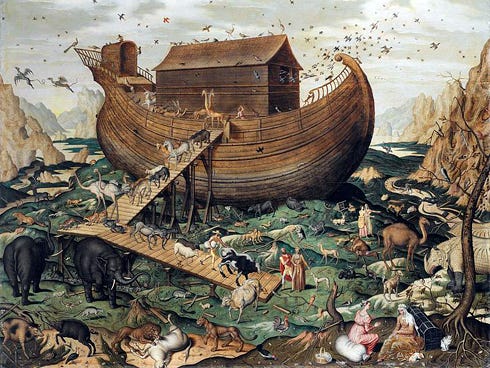
Simon de Myle's 1570 painting, "Noah's Ark on the Mount Ararat," depicts two of each species leaving the ark after it weathers a catastrophic flood. The Rev. Richard Helms says people today could learn a few lessons from Noah, who tried to warn others about punishment for their sins.

'Tis the season to be jolly — in September? 

I have a son-in-law who loves the Christmas season and decorating his home; he's already making preparations and testing sound equipment. His zeal and joy over this is exciting and, I must admit, contagious.

Incidentally, this is also the bow-hunting season.

It seems that everyone is preparing for something — a holiday, special event or retirement.

In the Bible, Noah was told to build an ark for a promised flood.

I can imagine God telling Noah it would rain — and Noah nodding along, all the while wondering what rain was! After God explained, the prospect of water falling from the sky must have been very frightening to Noah. (Editor's Note: Some Christians believe scriptures support the notion that it did not rain before the flood.) 

I can also imagine those around Noah, scoffing at his work to build the ark, stating that "rain" could never happen.

I believe that Noah and his family got a lot of grief for their belief, simply because others could not — would not — grasp the concept that water could fall from the sky, or even that God would destroy them for their wickedness. 

Still, Noah built the ark. God filled the ark with animals, and Noah's family, and shut the ark.

Picture those scoffers as they realized that what Noah heard had indeed come true; imagine their panic as they raced toward the ark with hopes of salvation.

I wonder if Noah and those inside heard the screams and pleas of rescue, the banging on doors and walls — the absolute terror of those who did not heed the cry.

Dear friend, there is coming a judgment from God's throne, and we have been given an ark of safety called salvation. We did not build it, but we embrace it. 

We may be accused of judging people, but we still must warn of sin's consequences and salvation's rewards.

To not  "push our beliefs upon others," as is often stated, is to show that we do not care for them. 

I've had the agony of being beside individuals who left this earth, screaming and begging to be saved from the stench, the flames, those things tearing at them. 

This sobering sight strengthens my resolve to do better to warn others. 

I have also had the opportunity to sit beside those who have accepted His offer of salvation as they too leave this earthly realm. Their bodies relaxed, they smiled and their hands reached out in joy. 

At that time, you can almost sense that someone greater has entered the room to lovingly take that person home. 

Christ, walking into the room, is who we seek.

Keep warning, preaching and testifying while you can. Stay prepared. Look for God, and take as many as you can with you. 

Be blessed. God does love you!

The Rev. Richard Helms serves at Miracle Acres Ministries, 3187 E. James Lee Blvd., in Crestview.

This article originally appeared on Crestview News Bulletin: HELMS: Keep warning, preaching and testifying while you can

SHANKLIN: When is it time to make portfolio changes?

The kids are back at school and summer vacations are now fading memories, so it must be autumn.

But the seasons don’t just move on the calendar — they also change in your life.

And, speaking of changes, you’ll have to make many of them as you move through the years — and that includes changes to your investment portfolio.

But how will you know when it’s time to take action?

Just as Mother Nature sends “signals” to indicate a change in seasons — blooming flowers, falling leaves, warmer or colder temperatures, and longer or shorter days — your portfolio will frequently “tell” you when you need to make adjustments.

Here are a couple of indicators you may want to heed:

• Out-of-balance portfolio — Even the best stocks can lose value when the overall market is down, but if you only own stocks, you could take a big hit during a downturn — and if it happens repeatedly, you may find it hard to even stay invested.

After all, stocks will always fluctuate in value, and protection of your principal is not guaranteed. Yet you can at least help defend yourself against market volatility by balancing your portfolio with a mix of stocks, bonds, government securities, certificates of deposit and other investments, with the percentage of each type of asset based on your individual goals, time horizon and risk tolerance.

• “Overweighting” of individual investments — Related to the point made above, you can also have too much money kept in a single investment, such as an individual stock or bond.

Sometimes, this “overweighting” can happen almost on its own, as when a stock, or stock-based vehicle, has increased so much in value that it now takes on a larger percentage of your portfolio than you had intended — possibly bringing with it more risk than you had intended, too.

As a general rule, no single investment should take up more than a small percentage of your entire portfolio.

Your own life may also send you some messages regarding changes you may need to make to your investment and financial strategies.

Here are just a few of the milestones that may trigger necessary moves:

• New child — You’ll need to review your life insurance to make sure it’s sufficient to help provide for a newborn or newly adopted child, should anything happen to you. You may also want to begin investing in a college savings vehicle, such as a 529 plan.

• New job — Assuming your new job offers you a retirement plan, such as a 401(k) or similar vehicle, you’ll have some choices to make. How much can you afford to contribute? How should you allocate your dollars among the investment choices offered in the plan? How can you best integrate your 401(k) or other plan into your overall investment portfolio to avoid duplication?

• Impending retirement — As you enter retirement, you may want to adjust your portfolio to help reduce its short-term fluctuations and to provide more current income opportunities. At the same time, you may still need to invest for growth — you could be retired for two or three decades, and you’ll need to stay ahead of inflation.

Pay close attention to the messages coming from your portfolio — and from your life. These “signals” will give you a good idea of when it’s time to make the right investment-related moves.

This article was written by Edward Jones for use by your local Edward Jones financial advisor.

This article originally appeared on Crestview News Bulletin: SHANKLIN: When is it time to make portfolio changes?

ANDERSON: Prevent this fungus from killing Okaloosa trees

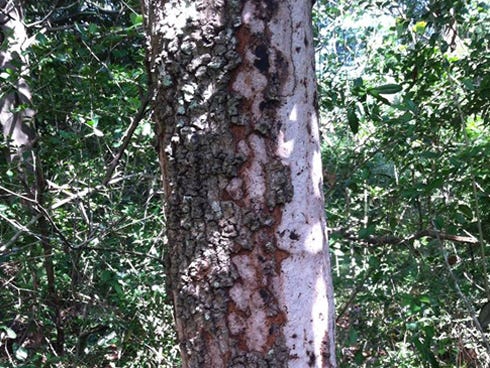
Hypoxylon canker usually appears as pale patches on the tree's trunk, where bark is missing. Unfortunately, once it becomes enough of a problem to be noticeable, there are no easy options to fix it. In fact, the fungus itself is almost always a secondary problem; it moves in when other factors weaken the tree.

Many Okaloosa County residents have had problems with their oak trees this year.

Some trees have declined in health; others died. Several factors contribute to this issue, and not every tree may be suffering from the same combination of things.

However, one major culprit is hypoxylon canker, which is caused by a fungus normally present in oak trees' outer bark and usually doesn’t hurt them.

When other sources of stress weaken the tree, the fungus can quickly take over and eventually kill it.

Hypoxylon canker usually appears as pale patches on the tree's trunk, where bark is missing.

Unfortunately, once it becomes enough of a problem to be noticeable, there are no easy options to fix it. In fact, the fungus itself is almost always a secondary problem;  it moves in when other factors weaken the tree.

Instead of trying to treat the canker, it is better to prevent sources of stress that could lead to disease such as hypoxylon canker taking over.

When planting trees, choose a location that's not too close to other trees, gets plenty of sunlight, and is not waterlogged or too dry.

Owners of pastures where animals — such as cattle or horses — graze should ensure that soil around the tree does not become too compacted. Exclude animals from the area where most roots are present or by aerating the soil.

Controlling moisture levels, if possible, can also help; too much or too little water for an extended period can cause stress.

If a tree succumbs to the disease, remove it. Dispose of the debris by burning to avoid spreading spores to other nearby plants.

Evan Anderson is an agent at the University of Florida's Institute of Food and Agricultural Sciences Extension office in Crestview.

This article originally appeared on Crestview News Bulletin: ANDERSON: Prevent this fungus from killing Okaloosa trees

CROSE: Is your focus on heavenly or earthly gain?

"For all the saints, who from their labors rest…" is a hymn we sing at church. 

From what labors did you rest on Labor Day? 

Many of us enjoyed the day off work, but we still labored in different ways, such as cleaning the house or mowing the lawn. Others enjoyed barbecues, playing at the beach and shopping. (In my case, I wrote a newspaper article.)

Many people, especially those in retail, worked on Labor Day.

That's fine, too, because our hard work is a gift from God.

In the Bible, Ecclesiastes 3:13 states, "Every man who eats and drinks sees good in all his labor — it is the gift of God."

My husband and I have always felt that, whatever job we have, we are to do our work as unto the Lord, as it also states in the Bible.

Colossians 3:23-24 states, "Whatever you do, do your work heartily, as for the Lord, rather than for men; knowing that from the Lord you will receive the reward of the inheritance. It is the Lord Christ whom you serve." 

We may have a job we don't love, or a boss who can be difficult, but the Lord will bless the work of our hands when we work for His glory. 

This verse also applies to household chores we hate, such as scrubbing floors, cleaning litter boxes, doing laundry, yard work and so forth. 

It also applies to those who work or volunteer at churches, including nursery workers, Sunday school teachers, choir members, Bible study leaders and those who cook meals.   

As a Christian, I am to work for the Lord and, after my career is finished, I am to continue to do the Lord's work, bringing others to Christ.

Our labor on behalf of the Kingdom of God should never cease; God created us with a purpose; we are to please and enjoy Him with our entire being.

So, for whom do you work?  Where is your focus — on the prize of heaven, or earthly gain?

Janice Lynn Crose lives in Crestview with her husband, Jim; her two rescue collies, Shane and Jasmine; and two cats, Kathryn and Prince Valiant.

This article originally appeared on Crestview News Bulletin: CROSE: Is your focus on heavenly or earthly gain?

LADD: Drug price controls will hurt patients

Patients are raving about a series of newer, more effective medicines.

There's just one catch.

These drugs are really expensive. Xeljanz, a new rheumatoid arthritis drug, costs $25,000 a year. Sovaldi, a breakthrough hepatitis C cure, costs $84,000.

To contain rising healthcare spending, some policymakers want the government to impose price controls on medicines. They believe price caps will help patients by making medications more affordable.

In reality, price controls will bring drug development to a standstill, depriving patients of future medications that could improve or even save their lives. To ensure patients have access to groundbreaking medical advances, lawmakers must avoid short-sighted price controls.

The average medicine requires an investment of $2.6 billion and over a decade of research. Just 12 percent of medicines that enter experimental human testing receive FDA approval. That means revenue from successful drugs must also cover costs of those that never make it to market.

If price caps prevent companies from recovering steep costs associated with drug development, firms will stop investing in risky research projects that lead to breakthrough treatments and cures.

According to a National Bureau of Economic Research study, price controls that cut drug prices by 40 or 50 percent would decrease early stage development projects by up to 60 percent.

That'd be devastating for patients with chronic diseases like Alzheimer's. By 2050, Alzheimer's will afflict 14 million Americans, and annual treatment costs will reach $1.1 trillion. A new treatment that delays the disease by just five years annually would save the healthcare system $367 billion.

Such a treatment likely will come from private-sector drug companies, which fund almost 80 percent of experimental Alzheimer's drug testing. With a 99 percent failure rate, Alzheimer's drug trials are a risky investment. Drug companies won't pour billions into highly uncertain research if they know price caps will make it impossible to recoup costs.

The lack of price controls has already yielded better treatments for 50 million Americans who live with autoimmune diseases, which cause the body's immune system to attack healthy cells.

In 2011, drug companies introduced Benlysta, the first treatment targeted specifically at lupus in over a half-century. In 2012, the FDA approved Xeljanz, designed for rheumatoid arthritis patients who hadn't responded to earlier medications.

These life changing treatment advances wouldn't have been possible under a price control regime.

Policymakers can make drugs more affordable for patients without jeopardizing research. Prohibiting insurance companies from charging high co-pays and co-insurance would lower patients' out-of-pocket expenses. Stronger trade agreements would prevent other companies from freeloading off American research spending.

Affordability is a real concern for today's patients. But price controls aren't the answer. 

Virginia Ladd is the president of the American Autoimmune Related Diseases Association.

What's your view? Write a letter to the editor or tweet @cnbeditor.

This article originally appeared on Crestview News Bulletin: LADD: Drug price controls will hurt patients

BROADHEAD: We are all children of God; we all matter

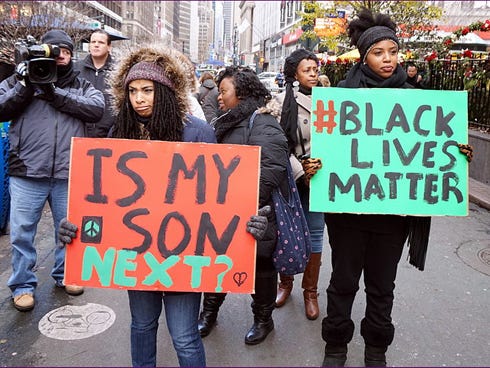
"We hear, 'Black lives matter!' 'White lives matter!' 'Latino lives matter!' and so on," the Rev. Mark Broadhead says, referring to recent protests. "And I agree. Life matters! What I cannot comprehend, in my naiveté, is why it seems as though each proclamation is made to exclude the value of others."

When it comes to the bigger picture, I am pretty naïve. There is much I don’t understand or comprehend.

For instance, I do not understand fanaticism. Some people are extremely passionate about certain aspects of their lives, to the point where it is “us” versus “them.”

Take sporting events. Many people have a favorite team; they are dyed in the wool fans. That team is “us.” The opponent is “them.” And “them” is on the wrong side and must be defeated. 

I understand the notion of sports. But when a person is a rabid fan of one team, excluding all others, I believe a line has been crossed. There have been far too many arguments and physical altercations to say otherwise.

Many other examples of fanaticism cause people to cross the line of decency. We hear, “Black lives matter!” “White lives matter!” “Latino lives matter!” and so on. And I agree. Life matters!

What I cannot comprehend, in my naiveté, is why it seems as though each proclamation is made to exclude the value of others.  And, like many other “us-versus-them” scenarios, if you are not one of “us,” you are one of “them” — and you are of less value and must be shunned.

This is lunacy.

No color of skin is more or less important than another! In Jesus Christ, we have received the message about how each person is a child of God — no more, no less.

The apostle Paul said in his letter to the Galatians: “There is no longer Jew or Greek, there is no longer slave or free, there is no longer male and female; for all of you are one in Christ Jesus.”

In Him we are one. Human beings are the ones who make distinctions. And if we make distinctions, we can certainly rediscover our similarities.

What parent doesn’t ultimately love his or her child?

Who doesn’t bleed red when cut?

Who doesn’t grieve after a loved one dies?

Who doesn’t long to be loved and accepted?

Who doesn’t desire to live a long, full and enjoyable life?

Yes, there will always be differences between persons. But that is no reason to allow hatred toward others who are different to grow to the point of physical or rhetorical violence. 

Fanaticism — which, for some, is simply an excuse for legitimating violent tendencies — must end. 

We are all children of God. We all matter.

 The Rev. Mark Broadhead is pastor at Laurel Hill Presbyterian Church and First Presbyterian Church of Crestview.

This article originally appeared on Crestview News Bulletin: BROADHEAD: We are all children of God; we all matter

CROSE: Pick a day to unplug from life's distractions

Listening — hearing someone talk without thinking about forming a response — is an important communication skill, Janice Lynn Crose says. "But many teens and millennials, as well as some parents, won't put down their cell phones or tablets long enough to have face-to-face conversations."

Last week, I wrote about the importance of listening.

Interestingly, the Scripture lesson for Sunday's service was James 1, verse 19, which states, "Wherefore, my beloved brethren, let every man be swift to hear, slow to speak, slow to wrath."

Perhaps the No. 1 attribute to being a good listener is to pay attention to what is being said, without regard to formulating an answer. Also, becoming an effective listener means slowing down how much we talk; let others speak.

Of course, the electronic world we live in doesn't make this easy. Many teens and millennials, as well as some parents, won't put down their cell phones or tablets long enough to have face-to-face conversations.

Jim, my husband, and I were in a restaurant recently, and we saw a family of four having dinner — no one was talking with each other; they were all busy on their phones. This isn't family time at its best. 

In some restaurants, servers are so busy on their phones, they ignore their customers. This isn't customer service.

Teaching, in this age of electronic devices, also has increasingly become a challenge. One of my nieces told me that in one college class it was an automatic "fail" for the day if the professor caught anyone with a cell phone or tablet out.

This seems appropriate, given the lack of attention many students pay while looking at their phones; and apparently cheating during tests has become rampant with these devices.

Why don't we turn off electronic devices and enjoy the company of our families, friends and neighbors? This week, pick a day and unplug yourself from the electronic leash.

Enjoy the sunshine and rejoice in all the blessings the Lord has bestowed upon you and your family.

Janice Lynn Crose lives in Crestview with her husband, Jim; her two rescue collies, Shane and Jasmine; and two cats, Kathryn and Prince Valiant.

This article originally appeared on Crestview News Bulletin: CROSE: Pick a day to unplug from life's distractions

error: Content is protected !!