Please ensure Javascript is enabled for purposes of website accessibility
Skip to main content
Advertisement

DICKSON: Not my idea of football
A funny thing recently happened to me. I covered a football game and it ended up with a basketball-like score.

Baker School’s 65-48 loss to Walton would have been a nice score for basketball, but in my opinion, that’s not the score one should expect from a football game.

I’m old school in the way I think football should be played. I like the old, “Three yards and a cloud of dust,” mentality.

Don’t get me wrong, I’m not opposed to the forward pass, but I think it’s a bit overrated.

And don’t even get me started on the hurry-up and spread offenses most teams at every level run today. From the National Football League to Pop Warner, ball offenses are trying to line up quickly and keep the pedal to the metal.

I understand the philosophy behind the fast-break offenses. The quicker an offense can run a play, the less chance a defense has of substituting or getting in the right set. It’s a football version of chess on steroids.

Some of the first football players I learned about were guys named Larry Csonka, Ray Nitschke and Dick Butkus. And let’s not forget Bronko Nagurski.

In 1929, Nagurski became the only player in college football history to be named an All-American at two positions — fullback and defensive tackle — in the same season.

Csonka, Nitschke, Butkus and Nagurski sound like football players, and each is a Pro Football Hall of Fame member. All but Nitschke also are College Football Hall of Fame members.

The attributes of size, speed, strength and intelligence that made great football players in generations past are still sought in the modern game. Coaches look for the biggest players who can run the fastest.

Most coaches will tell you it is easier to control the clock when playing a little smash mouth football. In reality, the best football offenses mix the run and the pass.

Crestview’s passing attack functions best when an opposing defense must respect the run. Baker runs the ball best when there is a threat of quarterback Jon Beck delivering a strike downfield.

Ultimately, a balanced offense — or at least one that presents both a run and pass threat — usually has the best results.

I still think football is one of the two greatest sports. And, if you come to my house on any given Saturday or Sunday, you will find me watching college or professional football.

That doesn’t mean I still don't long for the days of Butkus, Csonka, Nagurski and Nitschke playing when football meant 3 yards and a cloud of dust.

This article originally appeared on Crestview News Bulletin: DICKSON: Not my idea of football

SHANKLIN: Tips for setting — and pursuing — financial goals

Some athletes have lucky charms to help them achieve success. But when it comes to financial matters, you’re better off not counting on Lady Luck — focus instead on setting and pursuing goals.

You can get lucky by finding a parking meter with time left on it.

You can “luck out” by having nice weather on your vacation.

You can even be lucky at love.

But when it comes to financial matters, you’re better off not counting on Lady Luck — and focusing instead on setting and pursuing goals.

Here are some suggestions for establishing and pursuing your financial objectives.

●Be specific. You probably have a lot of ideas about what you want to do, but if you’re going to turn these wishes into reality, you need to get specific.

For example, instead of telling yourself that you want to retire early, set a goal of retiring at, say, 62. You can use this target number to help guide your overall investment strategy.

To illustrate: You can determine that you need to invest a certain amount of money each year, and earn a certain rate of return, to be able to retire at 62. You can also estimate about how much money you can afford to withdraw from your investment accounts each year to sustain a retirement that begins at 62.

●Prioritize your goals. Of course, you want to achieve all your financial goals —and you can have a better chance of doing so if you rank these goals in terms of both importance and timing.

For example, you may want to send your kids to college, purchase a vacation home and still be able to retire at age 62.

How should you allocate your resources to each of these goals? Should you invest more at any given time for a specific goal? What types of investments are best for each of these goals?

Prioritizing your goals can help you answer these and other questions — and help direct your overall investment strategy.

●Be prepared to change your goals. Over time, your family and financial circumstances can change considerably — which means you shouldn’t be surprised, or alarmed, if you have to change your goals accordingly.

And you’ll find it easier to maintain this flexibility if you’ve worked diligently to create an investment portfolio with sufficient resources to allow you to change direction, as needed.

●Review your progress regularly. If you’re going to eventually achieve your goals, you absolutely need to measure your progress along the way.

Are your investments performing the way you had anticipated? Are your goals becoming more expensive than you had initially envisioned? To achieve these goals, are you taking on too much — or too little — risk?

To answer these types of questions, it’s a good idea to review your overall progress at least once a year and then make whatever adjustments may be necessary.

As you can see, it will take considerable effort to set, review and (hopefully) achieve your goals.

And it can be somewhat complex, too, so you may want to work with a financial professional — someone who takes time to talk with you about your goals, understands your risk tolerance and family situation, and has the training and experience necessary to help you work toward your objectives.

But in any case, think hard about your goals and how you might accomplish them. And don’t delay in taking action — because goals are generally easier to attain if you have time on your side.

This article was written by Edward Jones for use by your local Edward Jones financial adviser.

This article originally appeared on Crestview News Bulletin: SHANKLIN: Tips for setting — and pursuing — financial goals

BROADHEAD: People disappoint, but God remains faithful

Physical injuries can result in lifelong scars. With each painful step, each push of a wheelchair, or each glance in the mirror, the reminder is there. That much is certain; but emotional and spiritual wounds also have long-lasting effects, the Rev. Mark Broadhead says.

Everyone has been hurt or wounded — whether physically, emotionally or spiritually. The lasting effects can be devastating.

Those hurt physically may carry scars the rest of their lives, a constant reminder of their negligence or the negligence of others. With each painful step, with each push of a wheelchair, or each glance in the mirror, the reminder is there.

Emotional injuries also last a long time, and their effects can be passed on to others — either consciously or unconsciously. Think about those who treat their spouses or children the same way they saw a parent treat another; or how those who were bullied turn into bullies later in life.

Spiritual wounds also have long-lasting effects. Through another Christian's careless words, false hopes that can be instilled, prayers answered in a way not liked or understood and church-goers' seeming hypocrisy, people can feel disillusioned, angry or bitter.

Yes, other people fail us. We fail them, too. We are all human beings and fall far short of perfection.

Please remember, however, that you have been loved long before the world knew who you were or hurt you.

Long before physical scars appeared, long before emotional bruises set in and long before people of faith disappointed you, God knew you and loved you.

A loving God brought you into this life. The world may appear to not care one whit about you. People may continue to dig at you emotionally. People in church — including pastors — may continue to disappoint you. But God is always faithful.

God never acts with evil intent. God never acts maliciously. God is constantly faithful and loving — which sometimes includes disciplining his children, just as any loving parent must do.

If you doubt God’s love for you and how God wants what is best for you, look at what he has done to prove it.

He came to Earth in the person of Jesus Christ and allowed Jesus to be nailed to a cross. That sacrifice alone — as unloving as it may appear on the surface — was the greatest act of love the world has ever seen.

The Rev. Mark Broadhead is pastor at Laurel Hill Presbyterian Church and First Presbyterian Church of Crestview.

This article originally appeared on Crestview News Bulletin: BROADHEAD: People disappoint, but God remains faithful

CROSE: Autumn — and wreath crafting season — are here

A basic fall wreath is simple to make and could be a fun family project, Janice Lynn Crose says.

Autumn has officially arrived, and the weather has finally cooled some.

My collies — who spent most of the hot summer in the house — love playing in the backyard again. I enjoy watching them frolic outdoors, but I really look forward to turning off the air conditioning for the season.

And fall projects.

What do you plan to accomplish? Working in the yard and planting beautiful flowers? Painting a room in your home?

The leaves will turn magnificent colors soon; there are mums in lovely colors, and my potted hibiscus plants are still blooming. I enjoy seeing all the gorgeous flowers.

And making wreaths.

Have you made a wreath that incorporates all the lovely fall colors for your front door?

A basic wreath is simple to do and would make a great family project, so get the kids involved!

There are lots of instructions online. For instance, try this link:www.ehow.com/how_12340285_make-fall-elements-wreath.html.

I want to make a Mickey Mouse-inspired fall wreath.

What will you make?

Share photos of your hand-crafted wreaths on the Crestview News Bulletin's Facebook page. Just search for "Crestview Bulletin."

Please say "hi" if you see me on my jaunts around town.

Janice Lynn Crose lives in Crestview with her husband, Jim; her two rescue collies, Shane and Jasmine; and two cats, Kathryn and Prince Valiant.

This article originally appeared on Crestview News Bulletin: CROSE: Autumn — and wreath crafting season — are here

DREADEN: Chilton free auto repair support available online

If you have an older car, you need access to authoritative auto repair guides to save money by doing work yourself and to understand “mechanic-speak!” 

With the city's new budget year, the Crestview Public Library has been able to re-subscribe to ChiltonLibrary. Now you can access Chilton’s car manuals — a trusted reference for more than 100 years — from any computer with an internet connection with your Crestview Public Library card.

The dynamic Chilton search engine helps users find specific procedures quickly and offers these benefits:

•Domestic and import vehicle information through the current model year

•Individual tables for repair, maintenance, labor estimating and bulletin/recall information

•ASE test prep quizzes for the most popular certification  exams

•Step-by-step instructions

•Videos and animations that show how to complete repairs

•Close-up photos and images to enhance understanding

•Wiring and vacuum diagrams

•Troubleshooting and diagnostic information, including “trouble code” explanations

•Maintenance and specification tables

•A print button that allows you to easily print out what is needed. 

Take ChiltonLibrary on a test drive today.

Sandra Dreaden is the Crestview Public Library's reference librarian.

Crestview Public Library card holders can access Chilton’s car manuals — a trusted reference for more than 100 years — from any computer with an internet connection.

DID YOU KNOW?

This article originally appeared on Crestview News Bulletin: DREADEN: Chilton free auto repair support available online

Crestview neighborhoods showing support for those who protect and serve (PHOTOS)

CRESTVIEW — During these uncertain times, local law enforcement officers can be sure of one thing: they have friends in Crestview.

PHOTOS: http://bit.ly/1OLPwyd

As the nation debates relations between police officers and civilians, a number of residents throughout Crestview, Florida and the country are showing their support for those who protect and serve.

Many supporters now use the ‪BlueLivesMatter hashtag on social media like Facebook and Twitter to display solidarity with police officers and sheriff's deputies.

Other efforts — particularly in Countryview Estates in south Crestview — include tying blue ribbons around utility poles, stop signs, lamp posts and even pets to spread the message.

A San Antonio, Texas man painted a blue strip on the curb in front of his home and others, including some Crestview residents, plan to do the same.

Relations between civilians and police officers have been frosty in some locations throughout the country, particularly since last year.

Viral videos and widely shared stories of isolated incidents demonstrating perceived police brutality or injustice spurred riots and social media campaigns opposing all law enforcement.

This article originally appeared on Crestview News Bulletin: Crestview neighborhoods showing support for those who protect and serve (PHOTOS)

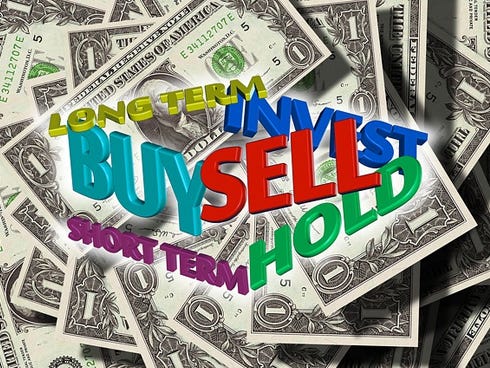
SHANKLIN: Short-term vs. long-term investments — here's the difference

At various times, many people may feel frustrated by the their investments' performance.

For example, they expect growth, and they don’t get it — or they think their investment's value won’t fluctuate much, but it does.

However, some of this frustration might be alleviated if investors were more familiar with the nature of their investment vehicles. Specifically, it’s important to keep in mind the difference between long-term and short-term investments.

What defines long-term and short-term investments?

Long-term investments are those vehicles that you intend to hold for more than one year — in fact, you generally intend to hold them for several years.

On the other hand, you usually hold short-term investments for one year or less.

You can find several key distinctions between short-term and long-term vehicles. Here are a few to consider:

They carry different expectations. When you purchase an investment that you intend to keep for many years, you may be expecting the investment to increase in value so that you can eventually sell it for a profit. In addition, you may be looking for the investment to provide income.

When you purchase a short-term vehicle, you are generally not expecting much in the way of a return or an increase in value. Typically, you purchase short-term investments for the relatively greater degree of principal protection they are designed to provide.

They meet different needs at different times of life. You will have different investment needs at different times of your life.

When you’re young, just starting out in your career, you may require a mix of long- and short-term investments. You might need short-term ones to help pay for a down payment on a home, while long-term ones could be used to help build resources for your retirement.

But later in life, when you’re either closing in on retirement, or you’re already retired, you may have much less need for long-term vehicles, with a corresponding increase in your need for short-term investments.

They can satisfy different goals. If you purchase investments that you intend to hold for the long term, you probably have a long-term goal in mind — such as building resources to help pay for a comfortable retirement or leaving a legacy.

On the other hand, a short-term investment would be more appropriate if you know that you will need a certain amount of money at a certain time — perhaps to purchase a car or to fund a vacation.

They carry different risks. All investments carry some type of risk. One of the biggest risks associated with long-term investments is volatility, fluctuations in the financial markets that can cause investments to lose value. On the other hand, short-term investment vehicles may be subject to purchasing power risk — the risk that your investment’s return will not keep up with inflation.

As an investor, you’ll probably need a mix of long-term and short-term vehicles.

By knowing the differences between these two categories, you should have a good idea of what to expect from your investments — and this knowledge can help you make those choices that are right for you.

This article was written by Edward Jones for use by your local Edward Jones financial advisor.

This article originally appeared on Crestview News Bulletin: SHANKLIN: Short-term vs. long-term investments — here's the difference

DUNNING: Tracking Florida's early native plant uses

September's fourth Friday is set aside to honor and celebrate Native Americans. 

So on Sept. 25, let’s reflect on how Northwest Florida tribes used plants native to the area. This science is referred to as ethnobotany.

Generally, we can group plants' ethnobotanical uses into six applications: food, fiber, medicinal, construction materials, transportation and miscellaneous uses.

 INDIGENOUS PLANTS'  INFLUENCE

 Let's focus on the first three applications, so you can grasp native plants' influence.

Food: Many plants were food sources for Native Americans and early settlers in Florida.

Food plants included fruits, nuts, roots, grains and greens that varied by habitat, region and time of year.

Two examples of important food plants are fruits from saw palmetto, and starch from coontie roots. The heart of the cabbage palm — commonly called swamp cabbage — is still eaten in many rural areas. 

Fiber: Various plants' fiber was used for many purposes. For instance, cordage (rope) makes baskets, clothing and other everyday materials. Muscadine grapes' long stems were used to make deer snares. Palms provided fiber and construction material for shelters. Other fiber sources included wire grass and switch grass.

Dyes — which played important roles in Native American life, just as they do today — were used in coloring textiles, in craftwork (for pottery and basketry) and in ceremonies (for face painting and objects). Tickseed, Goldenrod and Wax Myrtle are used to create yellow hues. Elderberry and Pokeweed produce rosy red colors. 

Medicinal purposes: Perhaps one of  ethnobotany's most intriguing aspects is the use of native plants for medicinal purposes.

Red Maple was used for liver and skin disorders. Witch-hazel could be used to treat hemorrhoids and insect bites, as well as for teething infants.  Black-eyed Susan could be used to treat a cold, soothe earaches or ease pain and swelling from snakebites.

But don't attempt to replicate traditional herbal remedies. Many traditional herbal medicines are complex mixtures of different plant parts that must be gathered and prepared at different times of the year, mixed in specific proportions, and administered in scheduled doses of particular size and dilution. 

LOST INFORMATION

In the southeastern United States, including Florida, evidence indicates indigenous tribes traded or exchanged goods throughout eastern North America.

During the Mississippian Culture Period (1000 to 1700 A.D.), transfer of goods continued, and these uses began to be better documented. This provided information currently available about plants and their uses.

Spanish explorers, missionaries and settlers also brought new plants and information to Florida.

However, Native American peoples who lived in Florida during European settlement were destroyed by introduced diseases, forced labor, physical conflicts and other factors.

As a result, information on native plant species, and how they were used, was lost or destroyed.

Sheila Dunning is a commercial horticulture agent at the University of Florida's Institute of Food and Agricultural Sciences Extension office in Crestview.

As much as half of popular pharmaceuticals today reportedly have ethnobotanical origins. For instance, aspirin comes from willow trees' bark.

However, in the United States, herbal remedies are classified as nutritional supplements, rather than drugs, because most companies supplying herbal remedies cannot or will not pay for extensive clinical testing that the U.S. Food and Drug Administration requires.

DID YOU KNOW?

This article originally appeared on Crestview News Bulletin: DUNNING: Tracking Florida's early native plant uses

BROADHEAD: Let your speech convey God's greatness

The Letter of James describes the tongue as “a restless evil, full of deadly poison" — it certainly can be, the Rev. Mark Broadhead says. But the tongue is not the whole problem; after all, it simply conveys what is in the mind and heart. "And what is in our hearts condemns us," Broadhead says.

Verbal communication has three components: words, tone and body language.

Words make up 7 percent of the message; tone makes up 38 percent; and body language makes up 55 percent. When all three components convey the same message, our communication is fully integrated.

However, when talking on the telephone, we cannot see body language so we lose over half of our ability to communicate effectively.

When texting, emailing or writing, we lose 93 percent of our ability to communicate. Punctuation, capitalization, formatting and emoticons help, but do not make up the difference.

How about that!

Is it any wonder there is so much misunderstanding and miscommunication in the world?

Words are extremely important. The words we use can build up or tear down. They can stain lives and do irreparable damage; they can create enemies; they can cause strife; and they can break hearts.

The Letter of James describes the tongue as “a restless evil, full of deadly poison" — it certainly can be. But the tongue is not the whole problem; after all, it simply conveys what is in the mind and heart.

And what is in our hearts condemns us.

Jesus said, “What comes out of the mouth proceeds from the heart, and this is what defiles.”

James almost sounds fatalistic when he says, “But no one can tame the tongue — a restless evil, full of deadly poison. With it we bless the Lord and Father, and with it we curse those who are made in the likeness of God. From the same mouth come blessing and cursing.”

Are people really that double-minded? It seems like it.

You have heard people who one minute praise God for all his blessings; the next, they complain about not having enough. One minute, they praise God for the life they have in Jesus Christ; later, they complain when they face trials. One minute, they give thanks for food on their table; later, they complain that they have to work to pay the bills.

James makes an obvious admonition: “My brothers and sisters, this ought not to be so.”

How true.

If we are to bless our Lord, if we are to recognize we are children of God — as is everyone — our words must convey this. We must let God's loving presence permeate our whole life. And all our words need to reflect the loving grace we have received from God through Jesus Christ our Lord.

We ought not speak contradictory messages. Your words, your thoughts, your hearts all need to be integrated in such a way that you convey, in all times and places, God's greatness.

Remember: 55 percent of your message is through body language — what you do. How you live your life, the words you choose and how you say them convey what is in your heart.

The Rev. Mark Broadhead is pastor at Laurel Hill Presbyterian Church and First Presbyterian Church of Crestview.

This article originally appeared on Crestview News Bulletin: BROADHEAD: Let your speech convey God's greatness

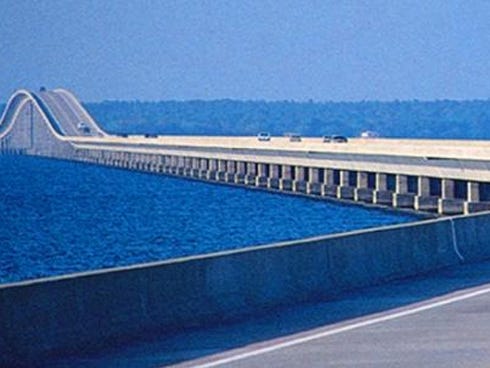
CROSE: Mid-Bay Bridge Authority should explain tolls

Crestview resident Janice Lynn Crose says she's concerned about the Mid-Bay Bridge. "I have read the newspaper reports and still cannot figure out why principle payments were not made, while debt was substantially increased," she says. "A family couldn't run their household in this manner."

While I realize the Mid-Bay Bridge doesn't affect all of us in Crestview, it seems most of us go to Destin at one time or another and many use the bypass and bridge. 

Alas, the Mid-Bay Bridge Authority is once again raising tolls. 

I have read the newspaper reports and still can't believe how the debt ballooned the way it did.

As taxpayers, as well as users of the bridge, we deserve clear answers, not ambiguous excuses.

Blaming Regions Bank and the Florida Department of Transportation doesn't cut it. Why doesn't MBBA executive director Van Fuller have more answers?

Salaries are meant to be earned. Why, with a budget of millions, is the MBBA unaccountable to county commissioners, the taxpayers or the state?

What are other MBBA directors' salaries? I'll sign up to be a director — and you can be sure that consistent principle payments would be made.

It is time for the MBBA to open its books and be accountable for all the money it collects and spends.

In the meantime, I think many of us will space our trips across the bridge farther apart and come up with alternative places to shop and eat, further decreasing the amount of tolls collected.

My husband and I travel to Destin for the cats' veterinarian appointments, and occasionally for dinner and shopping, but when we return home, Jim inevitably takes U.S. Highway 98.

It's a circuitous route, but a pretty drive with no tolls. 

Janice Lynn Crose lives in Crestview with her husband, Jim; her two rescue collies, Shane and Jasmine; and two cats, Kathryn and Prince Valiant.

This article originally appeared on Crestview News Bulletin: CROSE: Mid-Bay Bridge Authority should explain tolls

error: Content is protected !!