Please ensure Javascript is enabled for purposes of website accessibility
Skip to main content
Advertisement

SMITH: Donation helps fund Okaloosa 4-H Archery Club
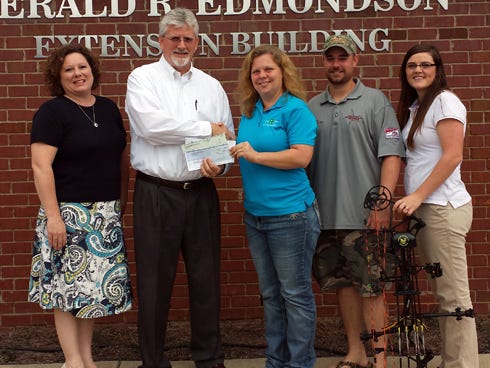
Legacy Insurance — a Crestview agent of Gainesville-based Tower Hill Insurance — donated $1,500 to Okaloosa County's 4-H program. Pictured, from left, are Dawn Mann and Allen Bell of Legacy Insurance; Misty Smith, Okaloosa County 4-H Extension agent; and George and Carrie Cook, volunteer 4-H Archery Club leaders.

Okaloosa County's 4-H program has received a $1,500 donation from Legacy Insurance and Tower Hill Insurance Companies to help start an archery club.   

The donation will help purchase equipment to start the club, along with T-shirts for youth members and volunteers, and a banner the club can use when traveling to 4-H state competitions.

The archery club will continue a 4-H tradition: focusing on developing youths as individuals and responsible, productive citizens.

The 4-H Shooting Sports Program stands out as an example. Youths learn marksmanship, safe use of firearms, the principles of hunting and archery.

The program's activities and adult leaders' support provide young people with opportunities to develop life skills, self-worth, and conservation ethics.

Local 4-H Shooting Sports clubs are open to all youths ages 8 to 18.

Shooting sports can be gratifying for youngsters, especially those who aren’t athletes. The program provides a supportive environment in which young people can experience hands-on, fun learning experiences.

4-H also offers youths opportunities to acquire knowledge, develop leadership skills, and form attitudes that will enable them to become self-directing, productive and contributing community members.

The programs are offered in volunteer-run project and community clubs. 

If you are interested in becoming a volunteer for 4-H, contact Misty Smith at mismith@ufl.edu.

If your children are interested in joining the 4-H Archery Club, contact club leaders George and Carrie Cook at cld020411@gmail.com.  

Misty Smith is an agent at the University of Florida's Institute of Food and Agricultural Sciences Extension office in Crestview.

This article originally appeared on Crestview News Bulletin: SMITH: Donation helps fund Okaloosa 4-H Archery Club

HELMS: Mourning the handwritten word

"We no longer have a commitment to sit down and write something. No more personal contact, no long lasting memories."

Cell phones and social media can be a blessing — keeping us connected with faraway loved ones, for instance — but they also can be massive problem makers.

Often, I see children trying to talk to parents in restaurants, at parks and other places, and they get ignored because someone is on the phone.

Our ability to personally interact with one another, and with God, has been seriously damaged when we allow these items to occupy our minds, eyes and hearts.

I mourn the demise of the ability to use the handwritten word. I still have letters from my great-grandmother, great-uncles, grandparents, and yes, small handwritten notes from my wife.

When I see the writing on them, based on their style alone, I can picture loved ones as though they are standing right there. 

Paul, in writing several of his letters, stated they were indeed written by his own hand. This would have given a sense of authority, intimacy, and emotion. In essence, he was stating that he cared enough about a situation to sit down and write a personal letter instead of dictating it to Luke or someone else.

We no longer have a commitment to sit down and write something. No more personal contact, no long lasting memories.

 I wonder sometimes if we have gotten too convenient for our own good.

Perhaps if we shut down these devices, spend some time with our children without the distraction, and learn to respond to one another, the world could be a better place.

Or would we rather tune out and ignore those around us, even our children, to their detriment?

Our first major piece of communication came in the form of letters, written by men as they were given inspiration and instruction.

God's written word is to us a letter of confirmation of his great intentions for us.

When he put flesh upon His Word, and that flesh became his son Jesus, he was not tuning out, but expressing with his own hand that his love is so great toward us.

Tune in to him today. Unplug, and live.

The Rev. Richard Helms serves at Miracle Acres Ministries, 3187 E. James Lee Blvd., in Crestview.

This article originally appeared on Crestview News Bulletin: HELMS: Mourning the handwritten word

CROSE: Mind your driving manners

When my husband and I moved to Florida about 11 years ago, I read a humorous Dave Barry column that stays with me today.

He stated that anyone could get a driver's license in Florida — even a whale that washed up on the beach.

In that same column, Dave Barry said speed limits in Florida were merely "suggestions."

It appears he was right. I am amazed at how fast people drive when the posted speed limit is 45 mph.

Driving south on State Road 85 these days shows total disregard for speed limits.

Due to construction on S.R. 123, the speed limit slows down to 45 on S.R. 85, and remains there all along S.R. 123. This is reasonable, given the workers and trucks entering and exiting while working on the new road. 

Apparently, the slower speed doesn't suit a vast majority of drivers who tailgate and impatiently whip around when they reach the passing lane.

One would think the extra two or three minutes they spend obeying the speed limit would ruin their entire day.

I learned to drive in California, home of fast freeways, mountainous roads and unlicensed drivers. We were taught "safety first."

We were also taught to follow the road conditions, no matter the posted speed limit. If it is foggy or rainy, slow down until you are driving at a safe speed.

Additionally, we were taught to leave a minimum of two seconds between us and the car ahead of us for a safe stopping distance. When I do this here, a car inevitably cuts into that safe space.

Serious, even fatal, accidents can be avoided by obeying speed limits and other traffic laws.

We are entering the holiday season — please slow down. 

Nothing, not even that electronics bargain, is worth getting seriously injured or killed over.

Another five minutes of driving time won't hurt, and it may save your life or that of another. 

Please be safe out there when you are driving.

Remember: a little consideration and slowing down will make our roads safer here in Crestview and surrounding areas.

Janice Lynn Crose lives in Crestview with her husband, Jim; her two rescue collies, Shane and Jasmine; and two cats, Kathryn and Prince Valiant.

This article originally appeared on Crestview News Bulletin: CROSE: Mind your driving manners

LEWIS: Do you know the history of Veterans Day?

Today, we celebrate Veterans Day and honor those who served in the United States Armed Forces.

As you meet veterans today, thank them for their service and let them know they are honored and appreciated.

Here is a timeline of the federal holiday's origin:

●On the 11th hour of the 11th day of November, 1918, World War I ended with armistice, or an agreement, between the Allies and Germany.

●On Nov. 11, 1919, President Woodrow Wilson proclaimed that date as Armistice Day.  

He said, "To us in America, the reflections of Armistice Day will be filled with solemn pride in the heroism of those who died in the country's service and with gratitude for the victory; both because of the thing from which it has freed us, and because of the opportunity it has given America to show her sympathy with peace and justice in the councils of the nations.”

●On June 4, 1926, the United States Congress requested that President Calvin Coolidge issue a proclamation making Nov. 11 a legal holiday, and observing it with appropriate ceremonies. This was approved May 13, 1938.

●In 1947, World War II veteran Raymond Weeks presented the idea of making Armistice Day a day to celebrate all veterans, not just those who died in World War I. Weeks became known as the “Father of Veterans Day.”

●In 1954, Congress replaced “Armistice” with “Veterans,” and Nov. 11 has been known as Veterans Day since.

Jean Lewis is the Crestview Public Library's director.

This article originally appeared on Crestview News Bulletin: LEWIS: Do you know the history of Veterans Day?

BROADHEAD: Fight temptations and follow God's path

"Saying no is sometimes necessary to say yes to following God's path," says the Rev. Mark Broadhead.

Sometimes, it can be easy to say no. "No new taxes!" "No more utility rate hikes!" No to this candidate or that candidate.

But fighting temptations, especially when we can rationalize giving in to them, is difficult.

Jesus was confronted with three temptations tailor-made for him, just as ours are for us. On the surface, they sounded reasonable.

"If you are the Son of God, command these stones to become bread," the Devil said.

Yes, Jesus was hungry. On the surface, this temptation was for him to take care of his own physical need. But it went much deeper than that: namely, it tested his obedience and fidelity to God. If he created bread in the wilderness, Jesus would have engaged in an act of willful disobedience to God. Such behavior would undercut Jesus’ identity as the obedient, loyal son of God.

To the Devil’s temptation, Jesus said, "No!" He would stand firm in his obedience to God, no matter what.

The second temptation was to cast himself off the temple roof. This way, Jesus could prove he was God’s son by demanding God keep him from harm.

Again, Jesus responded with no. He was not going to intentionally demand that God prove himself. He was not going to prove his unique relationship with God by making a public display of himself.

The third temptation was to worship the Devil, and the Devil would see to it that Jesus controlled all the world's kingdoms. Jesus was being offered the keys to secular power. He would be seen as a hero.

Jesus responded again with "No!" Then he said, "Worship the Lord your God, and serve only him."

Stones into bread and a high-dive spectacle would have wowed the people. Restoring the people of Israel to God during his lifetime would have elated the people.

But it would have cost Jesus everything because he would have been disobedient to God. He would have been unfaithful to God. 

Saying no is sometimes necessary to say yes to following God's path. Jesus said no to the Devil because he already said yes to God.

In matters of faith, you can say no to this world's powers and principalities by saying yes to the ultimate power and authority — God.

The Rev. Mark Broadhead is pastor at Laurel Hill Presbyterian Church and First Presbyterian Church of Crestview.

This article originally appeared on Crestview News Bulletin: BROADHEAD: Fight temptations and follow God's path

CROSE: Mourning the fall of civility

Webster's 1828 online dictionary defines civility as "the state of being civilized; refinement of manners; politeness.

"Complaisance; courtesy; decorum of behavior in the treatment of others — civility respects manners."

Not too long ago, we could have a conversation with another person about something which we didn't agree upon and still walk away as friends; we would agree to disagree.

These days, a disagreement over certain subjects is likely to turn angry, cause hurt feelings and, in some cases, even cause a shouting match.

Obscenities may even begin to be hurled.

I think reality television's shout fests have perpetuated some of this, but I also think a general lack of civility in our culture foments the philosophy of "you must agree with me or an eruption may occur." 

What has happened to cause this and why, as a society, do we allow it? 

While I agree we all have our own thoughts and views about a subject, can't we be polite to those who don't share our view point?

Our society now tolerates the shootings of police and deputies, firefighters and EMTs; teachers are attacked and raped in their classrooms; politicians holding meetings are shouted down; and stores are looted, homes are robbed and strangers walk up and knock out random people just for fun.

We do not love our neighbor.

When I went to school, we were taught deportment (the manner in which one conducts oneself, behavior); in fact, we received a grade in deportment.

We were taught to hold our tongues, tempers, fists and bad attitudes, and to show good manners at all times, even under difficult circumstances.

Our civility has deteriorated partly because of social media's anonymity; one can make random comments without any consequences.

Another reason is that schools no longer have time to teach manners, and many parents are frazzled from work.

We all want to be right, but sometimes we aren't. We need to graciously allow another to have an opinion that differs from ours, and be kind in what we say and do. 

After all, that is what the Lord commanded when He said in Matthew 22:39, "You shall love your neighbor as yourself." 

Janice Lynn Crose lives in Crestview with her husband, Jim; her two rescue collies, Shane and Jasmine; and two cats, Kathryn and Prince Valiant.

This article originally appeared on Crestview News Bulletin: CROSE: Mourning the fall of civility

HELMS: God bless those who help children

"Youth pastors, Sunday school teachers, bus drivers — any and all involved with our young people — you are my heroes," the Rev. Richard Helms, of Crestview, says.

While October was Pastor Appreciation Month, it's now November, and I would like to recognize a certain group of people in our churches. 

Many times, those who do this do not get the accolades they truly deserve, and are often referred to as having a "nice" ministry. 

Their hearts will be broken time and again, and they will see the miracles of healing and sweet tenderness mixed with unfettered anger and brutally honest statements.

For children and youth pastors, Sunday school teachers, bus drivers — any and all involved with our young people — you are my heroes. 

Having had the privilege of being a district youth director for several years, and seeing some of the finest and best out there, I appreciate all that you do. 

Our soul's enemy is after our families, and would love to stop today's young ones from realizing their full potential. 

Abortion is an example of such attacks.

 The heartaches and disappointment you see and feel are also the result. 

And that anger that comes from some people?  You have to spend a lot of time in prayer to fully minister to one child.

You see, when you win one adult, you may win a family, depending on the age. But to win a child and capture their imagination means to bring about change in an entire generation. 

What a difference. 

Again, you are my heroes, and you have this pastor's ear and attention. 

May God bless you deeply.

The Rev. Richard Helms serves at Miracle Acres Ministries, 3187 E. James Lee Blvd., in Crestview.

This article originally appeared on Crestview News Bulletin: HELMS: God bless those who help children

DICKSON: Memories shared between old Crestview Bulldogs, Gulf Breeze Dolphins

Crestview banker and former Crestview High School athlete Dale Rice Jr. and I share one or two memories — just from a different perspective.

Dale graduated from Crestview in 1977; I graduated from Gulf Breeze in 1976.

We competed with, and against many, of the same athletes. I can say the same thing about Crestview High Principal Dexter Day, a 1978 CHS grad.

Dale recently shared a story with me about a night he will never forget. It’s also a night I won’t forget. When Crestview’s football team travels to Gulf Breeze on Friday to play the Dolphins, it will mark that night's 40th anniversary.

That long-ago November night in 1975 was the final game of the season for the Dolphins and Bulldogs. Back then, only the district champion made the playoffs.

I don’t know what the Bulldogs were playing for, as far as pride, but I do know my Gulf Breeze teammates and I wanted to win badly so we could finish the season with a 5-5 record.

Dale remembers the game well. He told me Gulf Breeze was driving for what would have been the winning touchdown late in the game when he intercepted a pass that sealed Crestview's victory.

I still get an empty feeling in my stomach when I think about that night. The feeling of losing one’s last high school game sticks with you. It has stuck with me 40 years, and will stay with me the rest of my life.

The feeling I have about losing that game might never leave, but my feeling about the Crestview community and Crestview High School has.

I no longer see the Bulldogs as my enemy. I have great respect for many of the coaches, athletes and former athletes I’ve gotten to know the past several years.

I realize that Dale and the other Bulldog players that night were giving their all for Crestview, just as my Dolphin teammates and I were giving our all for the blue and gold.

I won’t be wearing Crestview’s red and black, or Gulf Breeze's blue and gold, on Friday. For a few hours, I’ll set aside my ties to my old school and just be a newspaper man.

But forgive me if I get a little teary eyed when I hear my Gulf Breeze fight song or alma mater as I’m reminded of my days as a Dolphin.

This article originally appeared on Crestview News Bulletin: DICKSON: Memories shared between old Crestview Bulldogs, Gulf Breeze Dolphins

DUNNING: Get fall color without harming local habitat

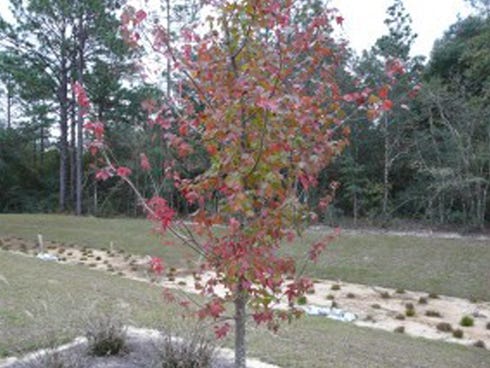
This young trident maple with fall foliage is an alternative to a popcorn tree, which displaces natural plant species.

As trees turn various shades of red, thoughts turn to popcorn trees.

Their autumn coloration is one reason they were introduced to the Florida environment, but it took years for us to realize what a menace popcorn trees become.

The Chinese tallowtree or popcorn tree, was introduced to Charleston, S.C., in the late 1700s for oil production and candle making.

Since then, it has spread to every coastal state, from North Carolina to Texas, and inland to Arkansas. In Florida, it lives as far south as Tampa.

In the process, it displaces other native plant species in those habitats. Therefore, the Florida Department of Agriculture and Consumer Services Noxious Weed List named Chinese tallowtree a harmful weed in 1998. Possession with the intent to sell, transport or plant it is illegal here.

Although Florida is not known for the brilliant fall color of northern and western states, many trees provide North Florida landscapes similar color.

Red maple provides brilliant red, orange and sometimes yellow leaves; the native Florida maple displays a combination of bright yellow and orange color during fall; and many Trident and Japanese maples provide striking fall color.

Blackgum — another native tree, which slowly grows, sometimes, up to 75 feet in height — provides the earliest show of red to deep purple fall foliage. 

Others include persimmon, sumac and sweetgum.

In cultivated trees that pose no threat to native ecosystems, crape myrtle offers varying degrees of orange, red and yellow in its leaves before they fall.

There are many cultivars — some grow several feet; others reach nearly 30 feet in height. Chinese pistache can deliver a brilliant orange display.

Many oaks offer fall color, too. Shumardi, southern red and Turkey oaks have dark green, deeply lobed leaves during summer, turning vivid red to orange in fall.

Turkey oak holds onto its leaves all winter as they turn brown and are pushed off by new spring growth.

Our native yellow poplar and hickories provide bright yellow fall foliage. And it’s difficult to find a more crisp yellow than fall Ginkgo leaves. 

These trees represent just a few choices for fall color. Including one or several of these trees in your landscape, rather than allowing popcorn trees to grow, will enhance the season while protecting the ecosystem from invasive plant pests.

Sheila Dunning is a commercial horticulture agent at the University of Florida's Institute of Food and Agricultural Sciences Extension office in Crestview.

This article originally appeared on Crestview News Bulletin: DUNNING: Get fall color without harming local habitat

SHANKLIN: Term vs. permanent life insurance: which is right for you?

"You may have heard that you might be better off by 'buying term and investing the difference' ... However, this strategy assumes you will invest the savings rather than spend them, and it also assumes you will receive an investment return greater than the growth potential you receive from permanent insurance."

What’s your most valuable asset? While you are still working, this asset may actually be your future income — so you need to protect it.

And you can do so by maintaining adequate life insurance, which can help provide your family the financial resources necessary to meet critical expenses — such as mortgage payments, college tuition, and so on — should you die prematurely.

But what type of insurance should you purchase?

There’s no one right answer for everyone, but by knowing some of the basics of different polices and how they relate to your specific needs, you can make an informed decision.

As its name suggests, term insurance is designed to last for a specific period, such as five, 10 or 20 years. You pay the premiums and you get a death benefit — that is, your policy's beneficiaries will collect the money when you die.

In general, term insurance may be appropriate for you if you only need coverage to protect a goal with an end date, such as paying off your mortgage or seeing your children through college. Term insurance may also be a reasonable choice if you need a lot of coverage but can’t afford permanent insurance.

Why is permanent insurance more costly than term?

Because, with permanent insurance, your premiums don’t just get you a death benefit — they also provide you the potential opportunity to build cash value.

Some types of permanent insurance may pay you a fixed rate of return, while other policies offer you the chance to put money into accounts similar to investments available through the financial markets.

These variable accounts will fluctuate in value more than a fixed-rate policy, so you will need to take your risk tolerance into account when choosing among the available permanent insurance choices.

Permanent insurance may be suitable if you want to ensure a guaranteed death benefit for life, rather than just for a certain period.

Permanent insurance may also be the right choice if you have a high net worth and seek tax-advantaged ways of transferring wealth.

Still, you may have heard that you might be better off by “buying term and investing the difference” — that is, pay the less costly premiums for term insurance and use the savings to invest in the financial markets.

However, this strategy assumes you will invest the savings rather than spend them, and it also assumes you will receive an investment return greater than the growth potential you receive from permanent insurance.

Both assumptions are just that: assumptions, not guarantees.

If you are considering the “buy term and invest the difference” route, you will need a consistent investment discipline and a willingness to take a greater risk with your money, in hopes of higher returns.

In any case, your financial professional can review your situation with you and help you determine whether term or permanent insurance is best suited for your needs.

But don’t delay. If you have even one other person depending on your income to maintain his or her lifestyle, you need to be covered — and once you are, you’ll consider those premium dollars to be well spent.

This article was written by Edward Jones for use by your local Edward Jones financial adviser.

This article originally appeared on Crestview News Bulletin: SHANKLIN: Term vs. permanent life insurance: which is right for you?

error: Content is protected !!