Please ensure Javascript is enabled for purposes of website accessibility
Skip to main content
Advertisement

HELMS: Learning from Bartimaeus’ example
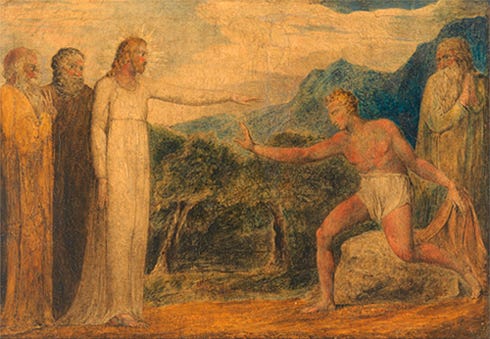
“If we will cast off our garments of unrighteousness, doubt — anything that trips us up, as a blind man's robes might — we can approach Him for our needs,” the Rev. Richard Helms says.

In the book of Mark, chapter 10, beginning in the 46th verse, we read the story of Bartimaeus, a blind man whom Jesus healed. 

Bartimaeus was begging for assistance for his livelihood; evidently, he had heard of Jesus and His miracles, and had enough faith to cry out in the hope that Jesus would notice him. 

Even though he was told to be quiet, he yelled out more and, amid all those crying out to the Savior, the excited comments, and the day’s general noise, he somehow got Jesus' attention.  

Jesus stood still.  His attention had been drawn to this blind man, and He called for the blind man to come to Him.

Bartimaeus threw off his outer garments and went to the Master. The request was made known, and his healing was granted. Then Bartimaeus followed Jesus down the road. 

If we cry out to Jesus, I know from experience and His Word that He would stand still to hear our cry. 

If we will cast off our garments of unrighteousness, doubt — anything that trips us up, as a blind man's robes might — we can approach Him for our needs. 

God will hear our plea and our spiritual sight, as well as physical needs, can be granted. 

However — and this is where many stumble — we must follow Him. 

God is willing to stop and assist any who call earnestly upon His name, yet pride stops us; so does shame from sins we have committed. 

You can hide nothing from God, so you cannot surprise Him, but if you approach Him in desperation, or in need, He can surprise you with the great love that He has for His creation — you! 

The Rev. Richard Helms serves at Miracle Acres Ministries, 3187 E. James Lee Blvd., in Crestview.

This article originally appeared on Crestview News Bulletin: HELMS: Learning from Bartimaeus’ example


SHANKLIN: Which IRA is better for younger workers?

If you're at the beginning of your career, you might not be thinking too much about the end of it.

But even younger workers should be aware of — and saving for — their eventual retirement.

And since you've got many years until you do retire, you've got a lot of options to consider — one of which is whether an IRA may be appropriate for you and, if so, which type.

Essentially, you can choose between a "traditional" IRA and a Roth IRA. (Other types of IRAs are available if you're self-employed.)

With a traditional IRA, you contribute "pretax" dollars, so your contributions are generally tax-deductible, depending on your income limits and whether you also have a 401(k) or other retirement plan at work.

In 2016, you can contribute up to $5,500 to your traditional IRA, although the limit rises once you reach 50.

You can fund your IRA with many types of investments — for example, stocks, bonds and government securities — and your earnings grow on a tax-deferred basis.

A Roth IRA has the same $5,500 annual contribution limit and can also be funded with many types of investments.

But there are some key differences.

You can only contribute to a Roth IRA if your income is below a certain threshold, but that threshold is quite high, especially for younger workers starting their careers. So you'll likely be eligible.

However, your contributions are never tax-deductible, so you're basically funding your Roth IRA with money on which you've already been taxed. But your earnings can grow tax free, as long as you don't start taking withdrawals until you're 59 1/2 and you've had your account at least five years.

Assuming you can contribute to either a traditional or a Roth IRA, which should you choose?

There's no one right answer for everyone, but as a younger worker, you may be able to gain two important benefits from contributing to a Roth.

First, since you're probably earning much less now than you will later in your career, you're likely in a relatively low tax bracket. So it may make sense to pay income taxes now on your Roth contributions, rather than pay the taxes later on withdrawals from a traditional IRA.

And second, a Roth IRA may provide more flexibility than a traditional IRA. Usually, the only way to get money from a traditional IRA before you retire is through a short-term loan; otherwise, you can get hit with both taxes and penalties on early withdrawals.

But with a Roth IRA, you can withdraw your contributions (not the earnings) penalty free to help pay for your first house or to go back to school.

Still, as mentioned above, there's no hard and fast rule as to which IRA is better for younger workers.

For example, if you are certain you'll be in a lower tax bracket when you retire, you might be better off by taking the yearly tax deductions from your traditional IRA and then paying taxes on the withdrawals when you retire.

But that's a hard prediction for anyone to make.

Your tax adviser may be able to provide some guidance on whether a traditional or a Roth IRA is better for you — but either one can be a valuable resource for that day, many years from now, when you say "goodbye" to work and start a new phase of your life.

This article was written by Edward Jones for use by your local Edward Jones financial adviser.

This article originally appeared on Crestview News Bulletin: SHANKLIN: Which IRA is better for younger workers?

NITZEL: Hands-on animal presentation scheduled in Crestview

A tarantula, hissing cockroaches, and snakes are among the animals possibly available for handling during a Crestview library visit with Nonie's Ark Animal Encounters.

Nonie’s Ark Animal Encounters, a hands-on show, provides a wildly educating, entertaining special family event. If you love animals and like to be up close and personal with them, this event is perfect for you!

Nonie’s Ark sails into the Crestview Public Library at 6:30 p.m. on Tuesday, April 19.

Nonie, an “edutainer” — part educator, part entertainer — has an extensive background in zoo animal technology and wildlife education, and her fondest joy is helping children learn about wildlife.

This event, free to attend, is sponsored by the Okaloosa County Recycling Office. You must be age 4 or older and register to attend.

Seating is limited to the first 40 children who register, and their adult(s). Call 682-4432 or come in to register.

Heather Nitzel is the Crestview Public Library's youth services librarian.

This article originally appeared on Crestview News Bulletin: NITZEL: Hands-on animal presentation scheduled in Crestview

SHANKLIN: Give your investment portfolio a 'spring cleaning'

Now that spring has officially sprung, you might look around your home and decide it's time for some sprucing up. But you don't have to confine your efforts to your house and yard – you can also engage in a little "spring cleaning" in your investment portfolio.

Here are a few suggestions for doing just that:

●"Dust off" your investment strategy. Dusting is a big part of spring cleaning. Light fixtures, shelves, windowsills – they can all acquire layers of dust and grime that need to be whisked away. And if you've left your investment strategy unexamined for a long period, it too may need to be "dusted off" and reevaluated. Over time, your financial goals, family situation and even risk tolerance can change, so it's a good idea to review your overall strategy to make sure it's still appropriate for your needs.

●Get rid of "clutter." Once you start tidying up your house, you might be surprised at all the "duplicates" you find – a broom in a bedroom, another broom in the laundry room, a third in the garage, and so on. Just as you probably don't need multiple brooms, so you may find that you have many versions of the same type of investment in your portfolio. If you own too many of the same investment, and a market downturn affects that particular asset, your portfolio could take a big hit. You may be better off by selling some of the too-similar investments and using the proceeds to diversify your holdings. (However, while diversification can reduce the impact of volatility on your portfolio, it can't guarantee profits or protect against loss.)

●Remove "stains" on your portfolio. As you clean your carpets and furniture, you might notice some stains that should be removed. And when you look through your portfolio, you might find some "stains" in the form of chronically underperforming investments. Instead of holding on to these vehicles with the hope that they will eventually turn around, you might consider selling them and using the proceeds to purchase new investments, which can help fill any gaps you may have in your holdings.

●Consolidate your accounts. Have you ever discovered a stapler in one drawer, a roll of tape in the linen closet and a bunch of marking pens on your desk? All these items may be useful, but for the sake of efficiency (and to cut down on frustrating searches), you might want to consolidate them in one place. And you could do something similar with your investments. Specifically, if you have some stocks here, a couple of certificates of deposits there, and some IRAs at still another place, you might consider consolidating them with one financial services provider. With all your investments in one place, you could possibly reduce the fees and paperwork associated with maintaining your accounts. And when you eventually start taking withdrawals from your IRA and 401(k), you may find it easier to calculate these required distributions if they're coming from just one place. But just as importantly, when you consolidate your investments with one provider, you may find it easier to follow a single, unified investment strategy.

So, there you have them – some spring cleaning ideas to help you update and energize your investment portfolio. And you won't even need a dustpan.

This article was written by Edward Jones for use by your local Edward Jones financial adviser.

This article originally appeared on Crestview News Bulletin: SHANKLIN: Give your investment portfolio a 'spring cleaning'

BROADHEAD: God holds the key to your self-made prison

Sin makes people captive, the Rev. Mark Broadhead says, but God holds the key to a self-made prison.

Say to those with a fearful heart, “Be strong, do not fear! Here is your God. He will come with vengeance, with terrible recompense. He will come and save you.

“Then the eyes of the blind shall be opened, and the ears of the deaf unstopped; then the lame shall leap like a deer, and the tongue of the speechless sing for joy,” Isaiah 35:4-6 states.

This promise — delivered long before Jesus’ time — speaks of a future for which many longed. People hoped for the time when oppression would cease and they could live in comfort.

Centuries later, when Jesus began preaching and healing, people wondered if he could be the Messiah. He made the blind see and the deaf hear. He healed the sick and lame. For those whose hearts were receptive, Jesus fulfilled God’s promise.

Today, this promise is available to all; the challenge comes in recognizing and accepting it.

Many individuals have imprisoned themselves through poor choices, taking chances that leave them crippled physically, mentally, financially or spiritually, lives become devastated. Disobedience, a sense of entitlement, haughtiness, ego, and more keep many from recognizing a greater authority, one that has promised to wipe out life’s aspects that weigh them down.

Still, people seek relief from those things that oppress them, that make them afraid, that cause them to doubt there is anything good in life. But one major roadblock prevents the kind of freedom they seek. It is the difficulty in saying, “I was wrong. There truly is a power greater than myself. I was foolish to think otherwise.”

Pride makes such a realization difficult, but it is necessary to acknowledge the Lord is greater than you. It is important to understand he desires your heart more than you desire his. It is necessary to recognize God has fulfilled his promise to come and relieve your fear, oppression and doubt.

When you can humble yourself, you can recognize God’s promise right before you. God simply waits for you to open your eyes, ears, heart and mind to be aware of our Lord’s presence.

He holds the key to opening the door of your self-made prison.

The Rev. Mark Broadhead is pastor at Laurel Hill Presbyterian Church and First Presbyterian Church of Crestview.

This article originally appeared on Crestview News Bulletin: BROADHEAD: God holds the key to your self-made prison

DICKSON: Rethinking middle school athletes playing high school sports

The Florida High School Athletic Association allows middle school students attending K-12 schools to compete on high school varsity teams.

I’ve always thought it was a good idea to help smaller schools fill out the rosters for junior varsity and varsity teams. After all, there have been cases where sixth- or seventh-grade boys were big enough to play high school football or baseball.

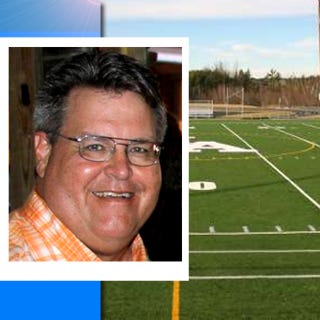
Former Kansas City Chiefs offensive lineman Jeff Smith started six years at Meigs County High School in Tennessee. He was close to 6 feet tall and weighed 230 pounds by the time he was in the seventh grade. And Baker School cross country and distance runner Maya Espinosa competes with high school runners while still in middle school.

 But it’s one thing for Smith to have played high school football and Espinosa to race against upperclassmen at such young ages. It’s another thing for, say, an undersized sixth-grade boy to compete against seniors — grown men — in baseball or football.

When Laurel Hill hosted Baker in baseball on Feb. 26, it was a mismatch with athletes’ ages. The Hoboes, under first-year Coach Andrew Wirth, are laying a foundation in hopes of rebuilding the program; many of the players are in middle school.

At times, I was afraid for some of the pint-sized Hoboes who might have to run into Baker catcher Bubba Ellis — the Gator football team’s standout defensive end, one of those grown men standing 6 feet, 2 inches tall and weighing close to 220 pounds. Ellis would never intentionally injure an opponent, but collisions happen in every sport.

When I was in the sixth grade, I was a pint-sized kid playing city league baseball against kids my age. The very thought of playing with juniors or seniors in high school would have never crossed my mind because I knew I wasn’t physically ready to compete with the big boys.

City recreation departments have age restrictions in every sport and size restrictions in football for a reason. They do it for the safety of the kids and so boys and girls learning to play a game can compete against others with similar skill sets and development.

I know struggling high school programs need middle school athletes to field a team. Often, the middle-schoolers are good enough to actually contribute in baseball, football or basketball.

I’m not suggesting we ban middle-schoolers from playing high school sports, but I do think we need to take a step back and look at the safety factor involved.

Why would any state high school athletic association or school district allow athletes to compete against those six or seven years older when no city recreation department would dream of such a thing?

This article originally appeared on Crestview News Bulletin: DICKSON: Rethinking middle school athletes playing high school sports

HUBBUB: Readers' thoughts on adequate Crestview recreational facilities, restaurants

Editor's Note: Our website and Facebook fans shared their thoughts on Crestview development and a textbook the Okaloosa County School District removed from fifth-grade classrooms.

What about North Crestview?

How about a decent restaurant (I am thinking a 24-hour place like IHOP, Denny’s, etc.) on the north end of Crestview and some more places to shop up here?

Wal-Mart never has enough cashiers, and is a pain to get to/from during most of the day, and Staples is a pain to get in and out of due to traffic.

Plenty of places to build in North Crestview, but we seem to be forgotten.

Mike Sharp

●●●

Adequate recreational facilities needed

It is great to look at the things we do have; I am a fan of The Wild Olive, Happy Lark Art Studio, (the) walking trail and the movie theater (among other places such as my church, and my kids love Chill).

I do not, however, believe we have adequate recreational facilities for our children in Crestview. It is tough getting time in for kids to play basketball, and it would be great if our town could update the facility to meet the needs of the amount of people in the Crestview area.

The kids here need more things to do to stay active, and a bigger facility could provide that.

Amanda Converse

●●●

Next up: world religions

If a statement of fact like that (“Muslims pray to Allah”) bothers you this much in fifth grade, then you probably need to pull your kid out of public school now. Your head is going to spin later, when your kid gets an appropriate and accurate education in world history, which includes world religions.

Krystal Wilber

●●●

Other cultures exist

Christianity isn't the only religion in the world. Parents are only depriving their kids of diversity. Get off your high horses. I'm so thankful to have grown up in Philadelphia and learned that other races and cultures exist.

Mandy Gonzalez

Join the conversation on our Facebook page, and your comment could be featured! >>

This article originally appeared on Crestview News Bulletin: HUBBUB: Readers' thoughts on adequate Crestview recreational facilities, restaurants

SHANKLIN: Do you have a financial umbrella in place?

SHANKLIN UMBRELLA.jpg

National Umbrella Month can inspire us to extend the observance's definition and protect our financial goals.

April showers may bring May flowers, but March is National Umbrella Month.

While ranking high on the list of truly obscure celebrations, this “month” can still teach us a few things — especially if we think about “umbrellas” that can help us protect our financial goals.

Consider these key areas:

Your vulnerability to emergencies. It’s a good idea to maintain an emergency fund containing three to six months’ worth of living expenses.

Without such a fund, you may need to dip into your long-term investments to pay for unexpected, and unexpectedly large, expenses such as a new furnace or a big bill from the doctor.

You’ll want to keep your emergency fund in a liquid, low-risk account.

Your family’s financial situation. If something happened to you, how would your loved ones be affected?

Would your family be able to stay in your house? Could your children eventually go to college? Would your surviving spouse have enough retirement income to maintain the lifestyle he or she has envisioned?

Having adequate life insurance in place can help ensure all your hopes and plans don’t fall apart upon your passing. Different types of life insurance offer different features.

For example, “term” insurance, as its name suggests, is designed to provide a death benefit for a certain number of years.

On the other hand, “permanent” insurance, such as whole life or universal life, can be kept in force indefinitely. This type of coverage may also offer a cash value component.

Your current income. If an illness or injury keeps you out of work, even for a little while, the loss of income could disrupt your family’s ability to pay its bills, leading to potentially big problems down the road.

Your employer may offer some type of disability insurance as an employee benefit, but the coverage may be insufficient. So you may want to consider purchasing an individual disability policy.

Your ability to live independently. If you’re fortunate, you may never need to spend time in a nursing home or require any other type of long-term care. But no one can predict the future — and it pays to be prepared, because long-term care costs can be catastrophic.

In fact, the annual average cost for a private room in a nursing home is more than $90,000, according to the 2015 Cost of Care Survey produced by Genworth, a financial services company.

A financial professional can help you find an appropriate way of paying for these types of costs.

Your capacity to protect your biggest assets. Your home is probably going to be the biggest asset you ever own — so you need to protect it properly, with adequate homeowners insurance.

It’s also important to have sufficient insurance for your other major assets, such as your car, boat and so on.

Your exposure to property loss or liability. You may someday face costs associated with repairing or replacing your home, auto or boat, or even liability-related expenses.

Additional liability insurance — known as an “umbrella” policy — is designed to kick in when your standard coverage on other policies, such as home or auto, has been exhausted.

The sun may be shining in your life today, but it’s always wise to be prepared for the proverbial “rainy day.” So have your umbrellas ready.

This article was written by Edward Jones for use by your local Edward Jones financial adviser.

This article originally appeared on Crestview News Bulletin: SHANKLIN: Do you have a financial umbrella in place?

WILLIAMS: The plan to save the bobwhite quail

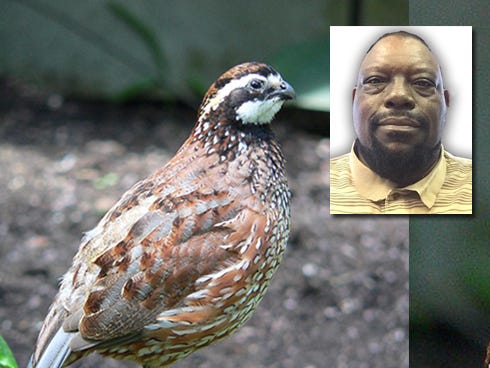
Quail photo by BS Thurner Hof | WikiCommons. Inset: Darryl Williams | Special to the News Bulletin

There may be no game bird more enjoyed or more studied than the bobwhite quail.

Hunters, bird watchers, farmers, suburbanites — it seems everyone likes to see a covey of quail and hear the distinctive “bob…white” call.

But the bobwhite population has been on a downward spiral. In the past 35 years, the northern bobwhite quail population has plummeted 70-90 percent in some areas, according to the United States Department of Agriculture’s Natural Resources Conservation Service Wildlife Habitat Management Institute.

What happened?

Wildlife experts point to degradation and loss of quail habitat as major factors.

Farming methods changed rapidly after World War II — fences and hedgerows were eliminated as fields grew larger. Pastures that had been choice quail habitat were cleared of brush and resulted in crops that don’t provide the food or cover quail need.

Herbicides and insecticides became widespread control methods for weed and insect pests on agricultural lands. But those same insects and weeds are essential to quail’s diet.

So, for the past 40 to 50 years, as brush was cleared and weeds were controlled, fields became larger, pasture makeup changed, forest became denser and quail lost much of their prime habitat. Gone was much of the diversity of “early successional” (grasses and herbs, shrubs and young forest), and once-common fringe or “edge” habitat.

But this bird’s revival is promising.

A southeast study group has developed a habitat restoration plan to restore populations to 1980 levels, with a goal of improved habitat on millions of acres to help produce 2.7 million new quail coveys.

Congress included in the previous and current, 2014 Farm Bill provisions to improve northern bobwhite quail habitat on privately owned working lands.

The Natural Resources Conservation Service has locally awarded cost-share contracts over the years to qualified landowners to install conservation practices on cropland, forest and pasture lands.

In addition, conservation practices such as prescribed burn, fire-breaks, brush management, planting native, warm-season grasses and reducing agriculture pesticides and herbicide use help with quail habitat management.

Darryl L. Williams is a district conservationist with the United States Department of Agriculture’s Natural Resources Conservation Service, 938 N. Ferdon Blvd., Crestview. Call him at 682-3714, extension 109.

Male and female bobwhites select a nest site and build a nest together. Both sexes are known to incubate eggs and brood young chicks.

UPCOMING

The United States Department of Agriculture’s Natural Resources Conservation Service and partnering agencies will host a free quail management workshop.

Registration starts 8 a.m. March 31 at Gum Creek Lodge, 5899 Buckward Road, Baker, and the workshop ends at 3 p.m.

Lunch will be served, free of charge, to those who register by March 25. Call Billie Clayton, 767-3634, to sign up.

DID YOU KNOW?

This article originally appeared on Crestview News Bulletin: WILLIAMS: The plan to save the bobwhite quail

HELMS: How many souls have you helped save?

We need revival in North Okaloosa County. I am not talking about a series of services designed to enhance our emotions and feelings, but rather, real soul searching. 

A true refreshing from God can come when people hunger and thirst after His righteousness.

God and His righteousness, when rightly seen through the eyes of His Word and through His sweet spirit, will show us areas where we need to do better. It is not God that needs to do more, it is us.

True revival will result in people turning from sinful habits and seeking a better relationship with Him.

Is this necessary?

I believe it is for God's perfect love to be manifested to all mankind.

We need to carefully guard our testimony. If we cannot turn from those things that cloud our testimony, God and His love cannot shine through us and you will not be the individual whom God desires for you to be. 

Perhaps you feel that your relationship with God is personal, nobody's business, and you may be happy with that relationship. While this is possible, I believe for others to see Christ in our lives, we must be willing to deepen that relationship by giving into His will. 

In the book of John, chapter 15, Jesus talks about how we are to be in Him and bear much fruit. He states in verse 5 that those who spend time with Him will bear much fruit, for we cannot do it ourselves. 

Your salvation, your relationship should be everybody's business, so we can and will bear much fruit.

If you want to gauge how you are doing, look around at those you have won. Will many stand with you in heaven? 

So many Christians have won no one to Christ in their lifetime — do not be one of those.

The Rev. Richard Helms serves at Miracle Acres Ministries, 3187 E. James Lee Blvd., in Crestview.

This article originally appeared on Crestview News Bulletin: HELMS: How many souls have you helped save?

error: Content is protected !!