Please ensure Javascript is enabled for purposes of website accessibility
Skip to main content
Advertisement

HOLMES: For Trump, it's all about Trump
The newspaper editorial board meeting is more like a job interview than any other stop on the campaign trail.

Editors pepper candidates with questions on a wide range of topics, not just the day’s headlines. They probe to see if the candidate can back up his talking points, has thought through the implications of his positions, has studied the issues and mastered the details.

They take the measure of his temperament, his intellect, and how quick he is on his feet.

As a longtime editorial page editor, I’ve presided over hundreds of ed board interviews, with candidates for school board, for governor and every office in between. I’m not likely to get Donald J. Trump into our conference room for an hour-long interview, so I settled for the next best thing, listening to his meeting with the editorial board of The Washington Post.

You can listen too, and read the transcript, on the Post’s website. And you should if, like me, you’ve wondered if behind Trump’s campaign shtick hides a calculating mind with a passing knowledge of public policy, capable of handling the highest office in the land — or any office, for that matter.

My answer is no. With the possible exception of a landscaper I recall interviewing for a state rep seat, none of the candidates I’ve interviewed are as out of their depth as Donald J. Trump.

On question after question, Trump can’t back up his talking points with either facts or argument. He’s been denouncing the Iran deal for a year, but pressed by the Post editors, he couldn’t come up with anything to say beyond the lines from his stump speech.

The Post editors repeatedly asked Trump for his opinion on whether there are racial disparities in the criminal justice system, and he kept saying the answer is more jobs for the inner cities. Pressed harder about racial disparities, he said “I have no opinion that,” but that “the answer is jobs.”

Over and over again, I was struck by Trump’s lack of preparation. Trump — or at least his staff — had to know the editors would ask about his not-so-veiled threats toward the press and his musings about changing the libel laws. The Post had run editorials fretting about Trump and the First Amendment. Even someone running for state rep would be prepared to respond to criticism the editor he was meeting with had voiced.

Not Trump. He offered no thoughts on the role of the press in public affairs, no concern for the difficult conflicts between the privacy rights of individuals and the freedom of the press, no hint that he had ever spent five minutes contemplating the First Amendment.

“Libel laws don’t even exist in this country,” he said, and launched into a general tirade about how badly he’s been treated. “Look, I’ve had stories written about me — by your newspaper and by others — that are so false, that are written with such hatred,” he said. “I’m not a bad person.”

But how would he like to see the libel laws changed?

“I want to make it more fair from the side where I’m on.”

What you learn from spending an hour with Donald Trump is that his entire frame of reference is himself. That’s all he’s interested in talking about; all he’s capable of talking about. He spent several minutes in the ed board defending the size of his hands, not that anyone asked. “My hands are normal hands,” he said. “Slightly large, by the way.”

Trump doesn’t know much about anything, certainly anything involving public policy — in fairness, the editors didn’t quiz him on golf, skyscraper construction or the gradations of female beauty, three of his alleged areas of expertise.

But what’s more striking is that he shows no interest in learning anything.

He’s been running for president for nearly a year and thinking about it for much longer — he copyrighted the phrase “Make America Great Again,” just days after the 2012 election. But he hasn’t felt the need, let alone the curiosity, to study the material.

“I’m a smart person,” he told the Post editors. “I understand what’s going on.”

No and no.

Earlier in the campaign, I worried that Trump would, at some point, unveil a new script showing that he was more moderate, more perceptive, more presidential than people were giving him credit for; that he would stop saying crazy, offensive things and start winning over middle-of-the-road voters. But that would take brains, knowledge and discipline that he just doesn’t have.

Trump’s foolish talk last week about punishing women who get abortions provides further proof that his brain is mostly there to give his hair a place to perch.

Generations from now, historians may still be trying to figure out how a candidate of such stunning limitations won so many votes.

As for me, I wouldn’t endorse him for state rep.

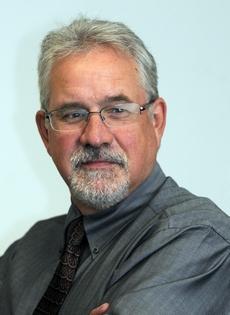
Rick Holmes writes for GateHouse Media and the Metrowest Daily News. Contact him at rholmes@wickedlocal.com, like him on Facebook at Holmes & Co, and tweet him @HolmesAndCo.

This article originally appeared on Crestview News Bulletin: HOLMES: For Trump, it's all about Trump


HELMS: Be open to communication with God

A dead phone signal or hacked email account is unpleasant — and so is the result of losing connection with God when Christians sin, the Rev. Richard Helms says.

Have you ever had your means of communication interrupted?

Whether it was from a computer crash, a dead cell phone or an e-mail hack, it is unpleasant. You may feel that you have been left out in the cold, completely shut off from those around you.

Sometimes, we may feel that we are also shut out from God. You cannot feel His presence, cannot sense His touch. It seems that your prayers go no higher than the roof.

However, during these times, we must depend on our understanding that He will never leave us or forsake us. He has always proven to us that our loss of vision does not mean He doesn't care.

Perhaps we are doing things that cause our prayers to be hacked — sin, stubbornness, ignorance; all are often our go-to answer for unanswered prayers. However, daily life also can be a hacker. Monetary problems, sick children, difficult work and bad weather all can direct us away from precious time with the Father.

My friend, you will never be alone. You cannot shut God out, so why not open up the lines of communication?

Allow Him to get back in to contact with you. He is waiting. 

The Rev. Richard Helms serves at Miracle Acres Ministries, 3187 E. James Lee Blvd., in Crestview.

This article originally appeared on Crestview News Bulletin: HELMS: Be open to communication with God

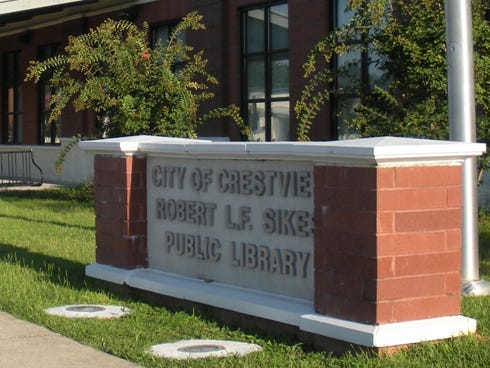
GARCIA: 5 things you can do with your Crestview library card

We all know that you can check out popular books on a variety of subjects and genres at the Crestview Public Library, but did you also know that with your library card you can…

●Check out or place a hold on new movies.

●Take a proctored exam, whether it’s for a distance learning course or for certification.

●Have full access to all six member libraries within the Okaloosa County Public Library Cooperative (Crestview, Mary Esther, Valparaiso, Niceville, Destin and Fort Walton Beach). The OCPLC also offers free courier service, which means you can have items sent to your local library for pickup.

●Download free eBooks and eAudiobooks.

●Get free one-on-one tutoring for basic computer skills or help with your tablet or other mobile device.

We also have many ongoing programs for people of all ages and interests, from Story Time and Lap Sit to open-mic poetry jams. 

Our electronic resources offer a wealth of authoritative information, from free legal forms to interactive language learning programs. 

Check out our website, www.cityofcrestview.org/library.php, visit us at 1445 Commerce Drive (behind the post office), or give us a call at 682-4432. 

Marie Garcia is the Crestview Public Library's director.

This article originally appeared on Crestview News Bulletin: GARCIA: 5 things you can do with your Crestview library card

CROSE: Chamber's new intern reflects Crestview's 20-year relationship with France

I recently had the pleasure of having breakfast with Crestview Area Chamber of Commerce intern Théo Toulat, from the University of Nantes, France. 

This polite young man is here as a result of the Crestview Sister City program's relationship with Noirmoutier, France. 

Here’s more about that relationship.

Last fall, the Sister City Program and local families hosted 21 French students — who temporarily attended Crestview High School — and many adults. All the families involved learned about our cultural similarities and differences.

But that was just one of many trips between the two areas the past 20 years.

Northwest Florida State College has developed a relationship with Noirmoutier and, as a result, we have a relationship with the University of Nantes.

A Noirmoutier area dance troupe, Grain de Sable Dance Company from Soullans, France, is coming to dance with NWF State College dancers. They arrive April 15, and will attend master classes for four days.

Dance Facets 2016 will be presented 7:30 p.m. Friday, April 22 and Saturday, April 23, at the Mattie Kelly Arts Center. Tickets will be $15 for adults and $10 for youth. 

And that’s not all.

In the fall, six French business students will attend classes at NWF State College.

Additionally, NWF State College takes their choirs to Noirmoutier to perform and interact with residents.

We will again host friends from Noirmoutier  beginning Oct. 12 as the local Sister City Program’s 20th anniversary continues.

I anticipate the celebration, as the people I have met from Noirmoutier are as friendly and loving as anyone could be; your life will be enriched by getting to know them.

Janice Lynn Crose, a former accountant, lives in Crestview with her husband, Jim; her two rescue collies, Shane and Jasmine; and two cats, Kathryn and Prince Valiant.

DID YOU KNOW?

The idea of developing friendships with those in other countries originated with Gen. Dwight D. Eisenhower (later President Eisenhower), who felt that a citizens diplomacy initiative would let people from other countries get to personally know each other, overcoming the failure of professional diplomats to prevent World War II. He hoped these relationships would keep countries from warring with one another.

WANT TO JOIN?

Crestview Sister City Program dues cost $20 per individual, $30 per family and $2 per student.

Contact Pam Coffield, 682-8437, or Jim and Isabelle Mills, 682-8215, for more information.

Crestview Sister City Program dues cost $20 per individual, $30 per family and $2 per student.

Contact Pam Coffield, 682-8437, or Jim and Isabelle Mills, 682-8215, for more information.

DID YOU KNOW?

The idea of developing friendships with those in other countries originated with Gen. Dwight D. Eisenhower (later President Eisenhower), who felt that a citizens diplomacy initiative would let people from other countries get to personally know each other, overcoming the failure of professional diplomats to prevent World War II. He hoped these relationships would keep countries from warring with one another.

WANT TO JOIN?

This article originally appeared on Crestview News Bulletin: CROSE: Chamber's new intern reflects Crestview's 20-year relationship with France

TIU: Oil Spill Science — Five years later, what have we learned?

Here's an estimate of what happened to approximately 200 million gallons oil from the Deepwater Horizon oil spill. Data from Lehr, 2014.

The Deepwater Horizon oil spill occurred about 50 miles offshore of Louisiana in April 2010. Approximately 172 million gallons of oil entered the Gulf of Mexico. Five years after the incident, locals and tourists still have questions. This article addresses the five most common questions.

1: Is Gulf seafood safe to eat?

Ongoing monitoring has shown that Gulf seafood harvested from waters that are open to fishing is safe to eat. Over 22,000 seafood samples have been tested and not a single sample came back with levels above the level of concern. Testing continues today.

2: What are the impacts to wildlife?

This question is difficult to answer as the Gulf of Mexico is a complex ecosystem with many different species — from bacteria, fish, oysters, to whales, turtles, and birds.  While oil affected individuals of some fish in the lab, scientists have not found that the spill impacted whole fish populations or communities in the wild. Some fish species populations declined, but eventually rebounded. The oil spill did affect at least one non-fish population, resulting in a mass die-off of bottlenose dolphins. Scientists continue to study fish populations to determine the long term impact of the spill.

3: What cleanup techniques were used, and how were they implemented?

Several different methods were used to remove the oil. Offshore, oil was removed using skimmers, devices used for removing oil from the sea’s surface before it reaches the coastline.  Controlled burns were also used, where surface oil was removed by surrounding it with fireproof booms and burning it. Chemical dispersants were used to break up the oil at the surface and below the surface. Shoreline cleanup on beaches involved sifting sand and removing tarballs and mats by hand.

4: Where did the oil go and where is it now?

The oil spill covered 29,000 square miles, approximately 4.7 percent of the Gulf of Mexico’s surface. During and after the spill, oil mixed with Gulf of Mexico waters and made its way into some coastal and deep-sea sediments. Oil moved with the ocean currents along the coast of Texas, Louisiana, Mississippi, Alabama, and Florida. Recent studies show that about 3-5 percent of the unaccounted oil has made its way onto the seafloor.

5: Do dispersants make it unsafe to swim in the water?

The dispersant used on the spill was a product called Corexit, with doctyl sodium sulfosuccinate (DOSS) as a primary ingredient. Corexit is a concern as exposure to high levels can cause respiratory problems and skin irritation. To evaluate the risk, scientists collected water from more than 26 sites. The highest level of DOSS detected was 425 times lower than the levels of DOSS known to cause harm to humans.

For additional information and publications related to the oil spill, visit https://gulfseagrant.wordpress.com/oilspilloutreach/.

Laura Tiu is an agent at the University of Florida's Institute of Food and Agricultural Sciences Extension office in Crestview. This article was adapted from "Oil Spill Science: Top 5 Frequently Asked Questions about the Deepwater Horizon Oil Spill," published in 2015 by Emily Maung-Douglass, Monica Wilson, Larissa Graham, Chris Hale, Stephen Sempier, and LaDon Swann.

This article originally appeared on Crestview News Bulletin: TIU: Oil Spill Science — Five years later, what have we learned?

BROADHEAD: Light still shines in this world's darkness

A single light in an artist's winter scene can totally change a painting's tone. Similarly, Jesus' lightness can transform a corrupt world, the Rev. Mark Broadhead says.

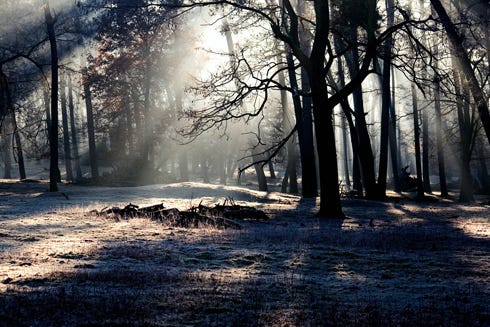
Once, an artist painted a winter scene: a snow-covered ground and pine trees.

The artist’s hand brought the day to a close, and night fell on the canvas, with the entire scene covered in semi-darkness. A grim log cabin was barely visible in the shadows.

Then, the artist dipped his brush in his pallet’s yellow paint and, with a few strokes, placed in one of the cabin windows a lamp’s warm glow. As he finished the painting, the lamp’s golden rays reflected on the fresh snow.

That single light totally changed the picture’s tone, replacing the gloomy, chilled night with a warm, secure homestead.

What happened on that canvas happened 2,000 years ago on the world’s canvas. Jesus entered a world enveloped in darkness and despair, but his light brought hope and anticipation.

Jesus said, “I am the light of the world.  Whoever follows me will never walk in darkness but will have the light of life.”

Many people heard him speak those words, and their perception of life changed. They were filled with hope. They were filled with joy. They were filled with warmth and security.

When Jesus was crucified and placed in a tomb, it seemed the light of the world had been extinguished. But that was a misconception. Because, as bright as the light was during Jesus’ earthly life, that light exploded into mind-boggling brilliance just three days later!

There is light that shines in this world’s darkness. There is hope that shines brightly and glows with the promises of God’s loving presence, of God’s healing powers, of God’s purposes being accomplished.

This is the kind of hope that puts a spring in our step. It is the kind of hope that puts a smile on our faces. It is the kind of hope that enables us to say, “Things are pretty challenging, but I will live today to its fullest to the glory of God.”

And, when today is finished, we look forward to tomorrow, not because we are dissatisfied with today, but because we know God will be with us tomorrow, and the day after that, and the day after that. 

We look forward to how God continues to unfold his promises for us.

The Rev. Mark Broadhead is pastor at Laurel Hill Presbyterian Church and First Presbyterian Church of Crestview.

This article originally appeared on Crestview News Bulletin: BROADHEAD: Light still shines in this world's darkness

CROSE: Volunteering opportunities abound in Crestview

“Don't wait for a crisis to offer your help,” Crestview’s Janice Lynn Crose says. “There are many areas in which to serve.”

Our country used to run on volunteers and, in many ways, still does.

We live in a particularly friendly area of the country, and many of us go out of our way to help others. Because my husband, Jim, and I live in a rural area, we still have volunteer fire departments — such a needed service, and a huge thank you to all the men and women who serve when there is an emergency.

There are many ways to volunteer in our lovely town. For instance, our churches certainly need our help. From teaching Sunday school, working in the nursery and singing in the choir, to cleaning up the grounds and buildings, there is a task for anyone who would like to volunteer.

Your children's school can also use volunteers. Ask at the office what you can do to help — perhaps raise funds for needed equipment, or help with field trips.

One way to really make a difference is to visit the elderly in our nursing homes and rehabilitation centers. Many of these people are lonely and would love some company. Their families usually work and may even live quite a distance away, so they need friendly interaction. This is rewarding, as you gain new friends and they get to have social contact.

Our youths always need volunteers, from Boy Scouts and Girl Scouts, to youth sports teams. Adults are needed to keep these activities viable. Many churches have youth club organizations that also need adult volunteers.

Perhaps you have older neighbors who could use some help. Offer to take them grocery shopping and then carry in and put away their groceries. Some may need transportation to doctor's appointments. Many need help with yard work — offer to mow their grass and hedge, paint their shutters, and take their trash barrel to the curb.

There are so many ways that we as neighbors can help each other.

While I was in the hospital, we had neighbors who kept our lawn mowed and took good care of our pets. What fabulous people they are! And they were very needed during my health crisis.

Don't wait for a crisis to offer your help. There are many areas in which to serve — just be aware that some volunteer positions will require a background check.

Find someplace to volunteer and make a difference!

Janice Lynn Crose, a former accountant, lives in Crestview with her husband, Jim; her two rescue collies, Shane and Jasmine; and two cats, Kathryn and Prince Valiant.

This article originally appeared on Crestview News Bulletin: CROSE: Volunteering opportunities abound in Crestview

SHANKLIN: While paying off student loans, remember retirement

Even if you’ve been out of school for a few years, you may still have a vivid reminder of college: your student loan debt. Since you’ve joined the workforce, you might be paying back your loans as best you can. But can you gradually reduce your debts while still putting money away for your long-term goals – such as retirement?

Of course, you might think it’s premature to even think about retiring, since you probably have decades to go before you say goodbye to the working world.

But the sooner you begin saving and investing for retirement, the more time you’ll have for your money to grow. Plus, your early start will help you avoid having to play “catch up” later.

Still, it can be challenging to juggle payments for student loans and contributions to a retirement account, especially if your loans are sizable. How can you meet these two separate demands on your income?

To begin with, you may have some flexibility in how you repay your student loan. Although you might have selected, or were assigned, a repayment plan when you first begin repaying your student loan, you can typically change this plan to accommodate your financial situation. You’ll need to contact your loan servicer for details on adjusting your repayments.

In any case, though, if you have a large student loan, it’s safe to say that you will be paying it back for quite some time. So, rather than wait for this debt to be cleared before you start saving for retirement, think about how you can take action now.

For one thing, take full advantage of your 401(k) or similar employer-sponsored retirement plan. This type of plan certainly offers some key benefits: Your earnings can grow on a tax-deferred basis, and you typically contribute on a pretax basis, which means the more you put in, the lower your taxable income. Plus, you can fund your plan with a variety of investment choices. But for you, perhaps the biggest benefit is that your employer simply takes the money from your paycheck before you get it and puts it into your account.

You don’t have to pay all your bills first and then hope you still have something left to invest — it’s already been done for you.

Ultimately, contributing to your 401(k) can  be a “painless” way of investing, and it may make it easier, psychologically at least, for you to pursue the two goals of paying your college debts and saving for the future.

If you don’t have a 401(k) or similar plan, you can still follow the same principle of essentially freeing yourself from initiating investment moves, simply by setting up a bank authorization to automatically transfer money from your checking or savings account into an IRA, which offers some of the same features as a 401(k). You can start with relatively small amounts – perhaps as little as $50 per month – and increase your contributions as your income rises.

As you well remember, college wasn’t  cheap. And you don’t want to make it even more costly by having your student loan payments interfere with progress you can make toward your retirement funding goals. So, think about “automating” the contributions to your retirement accounts.

The effort – or rather, the effortlessness – on your part can be well worth it.

This article was written by Edward Jones for use by your local Edward Jones financial adviser.

This article originally appeared on Crestview News Bulletin: SHANKLIN: While paying off student loans, remember retirement

BEARDEN: Strawberries require some care, but are worth the work

A honey bee lands on a strawberry plant at Akers of Strawberries in Baker. Honeybees are important pollinators in the process of making big, tasty strawberries.

Strawberries are deceiving. First, they are not really berries because they have about 200 seeds on the outside instead of inside. And they are actually part of the rose family.

Also, they taste too good to be good for you, but strawberries are low fat, low calorie, high fiber and high in antioxidants and vitamins. Including strawberries in your diet can actually decrease your risk of heart disease and certain cancers.

Here are more facts:

●Strawberries are grown all over America. California and Florida are the nation’s leading producers of strawberries.

●Strawberries in Okaloosa County are planted in the fall and harvested in March through May. The plants are traditionally hand-planted in raised, covered beds, and then watered extensively for 10-14 days.  

●Honeybees are important pollinators in the process of making big, tasty strawberries.

●Strawberries attract several pests like insects and diseases, so they require constant monitoring to produce tasty berries. 

●Farmers are constantly monitoring the nutrient and water needs of the plants and “spoon-feeding” the strawberry plants just what they need at the right time.

And, last but not least: Strawberries are currently available in our area, so stop by a u-pick farm, roadside stand or farmers’ market to get yours today!

This article originally appeared on Crestview News Bulletin: BEARDEN: Strawberries require some care, but are worth the work

CROSE: Volunteering opportunities abound in Crestview

Our country used to run on volunteers and, in many ways, still does.

We live in a particularly friendly area of the country, and many of us go out of our way to help others. Because my husband, Jim, and I live in a rural area, we still have volunteer fire departments — such a needed service, and a huge thank you to all the men and women who serve when there is an emergency.

There are many ways to volunteer in our lovely town. For instance, our churches certainly need our help. From teaching Sunday school, working in the nursery and singing in the choir, to cleaning up the grounds and buildings, there is a task for anyone who would like to volunteer.

Your children's school can also use volunteers. Ask at the office what you can do to help — perhaps raise funds for needed equipment, or help with field trips.

One way to really make a difference is to visit the elderly in our nursing homes and rehabilitation centers. Many of these people are lonely and would love some company. Their families usually work and may even live quite a distance away, so they need friendly interaction. This is rewarding, as you gain new friends and they get to have social contact.

Our youths always need volunteers, from Boy Scouts and Girl Scouts, to youth sports teams. Adults are needed to keep these activities viable. Many churches have youth club organizations that also need adult volunteers.

Perhaps you have older neighbors who could use some help. Offer to take them grocery shopping and then carry in and put away their groceries. Some may need transportation to doctor's appointments. Many need help with yard work — offer to mow their grass and hedge, paint their shutters, and take their trash barrel to the curb.

There are so many ways that we as neighbors can help each other.

While I was in the hospital, we had neighbors who kept our lawn mowed and took good care of our pets. What fabulous people they are! And they were very needed during my health crisis.

Don't wait for a crisis to offer your help. There are many areas in which to serve — just be aware that some volunteer positions will require a background check.

Find someplace to volunteer and make a difference!

Janice Lynn Crose, a former accountant, lives in Crestview with her husband, Jim; her two rescue collies, Shane and Jasmine; and two cats, Kathryn and Prince Valiant.

This article originally appeared on Crestview News Bulletin: CROSE: Volunteering opportunities abound in Crestview

error: Content is protected !!