Please ensure Javascript is enabled for purposes of website accessibility
Skip to main content
Advertisement

CYR: Pope Francis' leadership underscores Catholic Church's global influence
“An eye for an eye, and a tooth for a tooth…,” is a useful starting place for discussion of the influence of Pope Francis, a remarkably active and activist leader of the Roman Catholic Church.

To modern readers, the Biblical quote (Exodus 21:24) may seem brutal, but the Old Testament sentiment actually meant revolutionary progress.

Ancient warfare involved unrestrained killing and pillaging. By contrast, this Hebrew law codified proportionality and restraint. Historically and currently, the Vatican has played an important role in restraining and restricting warfare.

The Roman Catholic Church historically also has given priority to humanitarian relief, an essential point often overlooked in the economically advanced economies and our increasingly secular societies. The inherent tension between the Vatican and modern capitalism tends to be downplayed by the media.

The essential Christian message emphasizes compassion, and the Catholic Church over centuries has played a vital role in relief of poverty and human misery and in promotion of human rights.

The cumulative positive impact is profound among the approximately 1 billion Roman Catholics currently on the planet, and well beyond.

Pope Francis’ April 8 letter on marriage and the family should be viewed in this context. Media commentary emphasizes Rome’s reiteration of commitment to traditional marriage, which is hardly news. The letter emphasizes tolerance for those who do not accept Catholic doctrine; that marks a change, important if overdue.

Both developed and developing economies are growing, but poverty and war have not been abolished.

Last year, Francis celebrated a Catholic mass in Revolution Square in Havana, Cuba. Long-term Vatican efforts to pressure Cuba could prove to be profound.

During the Cold War, Pope John Paul II provided historic leadership in foreign policy. He supported Solidarity, the successful trade union-based reform movement in his native Poland. That, in turn, contributed to the fall of the Soviet Union and satellite states. 

Today, hunger and poverty have been overcome for the great majority in industrialized nations, and political controversies there now generally focus on other topics.

Francis is with political reformers on the left regarding the environment and capital punishment; with political conservatives in opposing gay marriage. Single-issue activists should take note.

Shocking criminal sexual abuse by priests is a principal contemporary challenge. Last year, a Vatican tribunal was established to review and judge cases of sexual abuse. Francis’ predecessor, Benedict XVI, publicly acknowledged the criminal behavior, met with victims and apologized.

Catholic Church emphasis on restraint in war was reconfirmed by vast killing during the 20th century. German Pope Benedict during a 2006 visit to Auschwitz emphasized the grotesque horror of the Holocaust.

Contemporary analysis of ethics and military strategy is spearheaded by Catholic scholars such as J. Bryan Hehir, a senior priest and faculty member at the Kennedy School of Government at Harvard University.

During the Cold War, Fr. Hehir guided the U.S. Catholic bishops’ influential report on use of nuclear weapons. Hehir also bluntly criticized his church for mishandling sex abuse crimes by priests.

On April 11, U.S. Secretary of State John Kerry visited the memorial in Hiroshima Japan, commemorating lives lost from the 1945 atomic bomb attack. He is the first holder of his office to do so, and appropriately described the experience as “gut-wrenching.”

War has not been abolished, but global total war has not been repeated.

Relative security for Americans encourages self-preoccupation. Francis rightly pursues wider collective concerns.

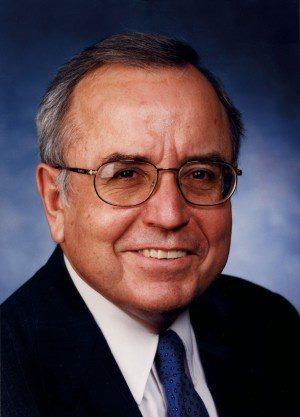
Arthur I. Cyr is a Clausen Distinguished Professor at Carthage College and author of “After the Cold War.” Email acyr@carthage.edu to contact him.

This article originally appeared on Crestview News Bulletin: CYR: Pope Francis' leadership underscores Catholic Church's global influence


HUBBUB: Readers' thoughts on arts education, littering

Editor's Note: These are the most thoughtful comments from our Facebook page and crestviewbulletin.com and do not necessarily reflect the newspaper management's views.

Include more arts education

The arts are not important due to their career-making and wealth-building properties. Starving artists frequently come to mind when I consider all of the wonderful and often undiscovered talent that lives on your street and throughout your city.

Will painting and music yield your family the next Da Vinci, or will they have their solo debut on the stage of Carnegie Hall? I will most likely say no.

The same response can also be applied to every sports program throughout every middle and high school in our communities. No, your child will not gain a full ride to college, and chances are even (slimmer) they will take care of your long-term care needs via their NFL salary.

Horrible basket to have your eggs in.

However, the unequivocal and scientifically proven benefits of world-class arts education cannot be debated against! The arts open up wonder and interest in every subject … I've never met a well trained artist in either painting, music or writing who didn't have a strong understanding of the world around them.

Denying performing arts education in all of its genres is not only a disservice to the enrichment of your child's education but you are denying the future of untapped creative thinking!

We have to incorporate more arts education!

Ryan Mabry

●●●

Pick up the trash, Crestview

Maybe we should revive Woodsy Owl and the “Give a Hoot, Don't Pollute” campaign because I have never lived in a place where so many lazy people find it acceptable to throw their trash on the ground.

Kaye Beck

Join the conversation on our Facebook page, and your comment could be featured! >>

This article originally appeared on Crestview News Bulletin: HUBBUB: Readers' thoughts on arts education, littering

BRESLAWSKI: Here are 5 tips for successful home canning

USDA Complete Guide for Home Canning chart

Right around this time of year, for me, the phone calls begin asking about preserving fresh foods using methods of canning, so I thought it would be appropriate to write a short article of tips to keep in mind for canning season success.

1. Check the condition of your canners on a seasonal basis. Pressure canners should be tested to make sure they are holding the correct pressure and the rubber seal is in good shape. Water bath canners should be free from dents and cracks.

2. Use glass jars that are clean, and free of scratches, cracks, or nicks. Lids are not re-usable and lose their ability to seal after one just use, so you must use a new one each time. Bands can be reused as long as they are in good condition.

3. There are two types of approved canning methods: water bath and pressure canning. Using the incorrect method for canning can result in food-borne illness.

In 2015, home-canned potato salad was pinpointed as the cause for over 20 cases of botulism. This resulted in one death and several hospitalizations. It was determined that the botulism toxins were not killed, because the potato salad was not canned using the correct method.

Generally, high-acid foods can be water bath canned, and low-acid foods should be pressure canned. Refer to the chart from the USDA Complete Guide for Home Canning for direction.

4.       Follow the recipe directions exactly as written. The recipe times and temperature have been carefully calculated to reduce risk of food-borne illness. Adjusting these times or temperatures, or other parts of the recipe, could increase the likelihood of getting sick or food spoilage.

5. When in doubt call your extension agent. Okaloosa County Extension can help you determine which type of canning method to use, make an appointment to test your pressure canner, and help you answer any questions you have about canning.

Good luck this year preserving the bounty!

For more information, contact me at 689-5850 or jbreslawski@ufl.edu.

Jill Breslawski is an agent at the University of Florida's Institute of Food and Agricultural Sciences Extension office in Crestview.

This article originally appeared on Crestview News Bulletin: BRESLAWSKI: Here are 5 tips for successful home canning

HART: The pope knows marriage

After directing the Catholic Church’s focus away from gay marriage, and saying even atheists who do good deeds can go to heaven, the new pope has now decided to lighten up on divorces.

Pope Francis granted more leeway for clergy to give Holy Communion to divorced people. This is evidence the Catholic Church, under a liberal pope, is wrestling internally to evolve its moral teachings.

Full disclosure: My wife is very Catholic (I think she is a Shiite Catholic), which makes me biased or objective. I’m truly not sure which.

And in further disclosure, I lean toward taking my annual Communion at Rosemary Beach Church or the Buckhead Episcopal churches because they offer extensive wine lists — no one can better pair the right wines with Kashi Grain sea salt crackers than an Episcopal priest.

Divorce can be good for Christian kids who want to celebrate two Christmases every year. But the Catholic Church has historically taken a firm stand against it, doing all it can to discourage divorce in favor of keeping families together, which is smart long-term.

The Vatican released the 60,000-word apostolic exhortation (which is like a papal executive order) titled “On Love in the Family.” It is like the Bible and the iPhone User Agreement; we just automatically click “I agree.” It’s much easier that way.

Previous church doctrine said divorced persons could not receive Communion until a church court grants an annulment of their last marriage or they abstain from sex with their new spouses. Both seem practical and workable propositions. Annulments take time and lots of money (interestingly, paid to the Catholic Church or its lawyers). Rich Catholics have famously paid millions for annulments.

Grounds for annulment can include “failure to consummate the marriage.” Annulments are also approved for “psychological immaturity” — a condition affecting nine of 10 American men.

The pope said marriage is “a mixture of enjoyment and struggles, tensions and repose, pain and relief, satisfactions and longings, annoyances and pleasures.”

He is quite the salesman for marriage.

Basically, for every good thing there is an offsetting bad thing. At best it's a 50-50 proposition, which is why kids today are postponing marriage.

It has always interested me that the most prolific sources of advice on marriage and child rearing have been unmarried and childless: Jesus, priests and Oprah. 

The church has modified some of its views on birth control, which historically was: just have unprotected sex and pray for the best. But with the Zika and AIDS viruses, the pope has allowed some leeway on condom use.

He did ask kids today to spend less time on social media and more time on their spirituality. Today's youths cannot understand why Jesus had so many followers when he wasn’t even on Twitter. Having said that, the pope joined Twitter for the first time in an effort to get his message out to young people. 

Social media is so easy today. When I was young, connecting socially was difficult. I had to walk 50 feet through thick shag carpet to the hallway and dial a rotary phone to be online socially. Dialing a rotary phone was difficult. If a friend had more than one 9 in his phone number, I refused to call him.

The Catholic Church has grown worldwide and provides many great outreach programs. The church does produce Mother Theresa-types who do good deeds, educate and care for more people worldwide than any other religion.

The Bible has modern-day appeal with its stories of violence, death, revenge, family fights, debauchery, treachery and adultery — so much so that Fox would like to turn it into a mini-series. The story of the Virgin Mary, if played out today, would be on “The Maury Povich Show.”

Yet the church, while making strides under this liberal, Bernie Sanders-like pope, remains contradictory. 

Its logic is often confusing. The pope is still stridently pro-life and wants his flock to have many kids. Yet he opposes in vitro fertilization and forbids the use of a surrogate mother to have children.

But because the Vatican paperwork would be so extensive, it refuses to excommunicate the Virgin Mary for this.

Ron Hart, a libertarian op-ed humorist and award-winning author, is a frequent guest on CNN. Contact him at Ron@RonaldHart.com or tweet @RonaldHart.

This article originally appeared on Crestview News Bulletin: HART: The pope knows marriage

DREADEN: Several spring home improvement resources available at Crestview library

Spring resources in the library's home improvement collection cover outdoor and indoor projects.

Are you enjoying springtime? Is home improvement on your to-do list?

Then take a look at the Florida Electronic Library’s Home Improvement Collection for access to articles on everything from landscaping and gardening to building a bookcase, plans included. You can even search through the most recent editions of magazines like “Timber Home Living”, “Architectural Digest,” “House Beautiful,” “Popular Woodworking,” and “Mother Earth News.”

The Home Improvement Collection puts the research of hobbyists and professionals alike on a solid foundation with more than five million articles from more than 200 home improvement-focused publications, covering topics including architectural techniques, tool and material selection, zoning requirements, and much more.

From the library website at www.cityofcrestview.org/library.php, go to the Electronic Resources page, click on the Home Improvement Collection icon and enter your library barcode number.

You may also go to the Florida Electronic Library at www.flelibrary.org, choose “All Resources” and scroll down to the same icon.

Sandra Dreaden is the Crestview Public Library's reference librarian.

This article originally appeared on Crestview News Bulletin: DREADEN: Several spring home improvement resources available at Crestview library

SHANKLIN: What golf can teach you about retirement planning

If you’re a golfer, you know the joys (and occasional frustrations) of the game. But you might not realize that some of the lessons you learn on the links can carry over to other areas of your life – such as retirement planning.

So whether you’re already retired or are planning to retire in the next few years, consider the following suggestions:

• Try to overcome the “yips.” When you miss those short puts – the ones you know you should be making – you might be in the grip of your old friend, the “yips.” As you know, it’s not always easy to shake this problem, but many golfers have benefited by working to improve their concentration, especially by adhering to a strict pre-shot and in-shot step-by-step routine. When investing for retirement, or managing their portfolios during retirement, many people can get the investment version of the yips – that is, they get nervous during market downturns, and then they make mistakes, such as selling quality investments when their price has dropped. (Remember the first rule of investing: Buy low and sell high.)

To overcome this type of yips, the solution is the same as for golf: Maintain your focus and concentrate on making appropriate moves, such as building and maintaining a diversified portfolio that’s suitable for your needs, goals and risk tolerance.

• Forget about that hole-in-one. It’s  every golfer’s dream: a hole-in-one. When you tee up on that tempting par 3, and you’re feeling good, you might just want to go for it – but when you do, you could end up overshooting the green or plunking into the water. Many investors also try for a “hole-in-one,” in the form of pursuing that one “hot” stock that’s going to make them rich. However, by the time they hear about such a stock (if it even exists), it may have already cooled off – and, in any case, it might not be right for their needs.

Instead of looking for that ultimate, one-time winner, look for solid investments that you’d be comfortable holding for the long term.

• Study the course. The more you know about a course you’re going to play, the better off you will be. You can plan the approaches you’ll take on various holes and think about how to avoid the sand, water and rough. When planning for your retirement, or even when you’re living it, you also need a strategy, one that addresses questions such as these: How can I structure my investment mix to provide me with a long-term income stream? How much should I withdraw from my portfolio each year? When should I start taking Social Security? Am I doing all I can to control investment-related taxes?

• Visualize. Consider these words from World Golf Hall of Famer Nick Faldo: “Visualization is the most powerful thing we have.” If you can visualize what you want to do on each hole you play, you are well on your way toward a successful round.

The same idea holds true for retirement planning: If you can envision the type of retirement lifestyle you want, you’ll be more likely to achieve it by sticking with appropriate financial and investment strategies.

So, there you have them – some ideas that play well on the golf course and in the retirement arena. Put them to work soon.

This article was written by Edward Jones for use by your local Edward Jones financial adviser.

This article originally appeared on Crestview News Bulletin: SHANKLIN: What golf can teach you about retirement planning

BROADHEAD: As children of God, everyone is worthy of respect

As I write this, I just spent 8 hours traveling from Crestview to Philadelphia for a meeting. With a lengthy layover in Atlanta, I had the opportunity to engage in one of my favorite pastimes – observing humanity.

Years ago comedian George Carlin had a quip that said something along the lines of, "You know you have to kill a lot of time at the airport. And you know there has got to be a spy there somewhere. Your job – find him!" I didn't find a spy.

At the Atlanta airport were thousands of people. They were all shapes, sizes, ages, and colors. There were individual travelers, groups of people, and families. Some people had cell phones plastered to their ears. Some had laptop computers churning away. Some were reading books or newspapers. Others were listening to music through earbuds.

But one thing struck me plainly. Every person in that airport, regardless of what they were doing, with whom they were traveling, or their destination, all had one similarity.

Each one is a child of God. In the very beginning, God said he created human beings in his image. Therefore, every person on the face of this earth has been created in God’s image.

And along with that, each one has feelings and emotions. Each one has had joys and sorrows in life. Each one has the same potential as any other. Each one has hopes and dreams.

Those whom God created filled that airport. I didn't know a single person there in that airport. And yet, I know God knows each of them by name. He knows the number of hairs on their head. He knows their hopes and dreams.

Many were different from me. Did that mean I was free to think less of them? Absolutely not. Did that mean I could judge them because of their appearance or the lifestyle I could assume about them? Absolutely not.

Remember that each person you encounter is a child of our Creator. Each is worthy of respect. Jesus welcomed all persons into his love. He died for all persons. Can we not also welcome all as he did, as we serve as his ambassadors? I believe so.

The Rev. Mark Broadhead is pastor at Laurel Hill Presbyterian Church and First Presbyterian Church of Crestview.

This article originally appeared on Crestview News Bulletin: BROADHEAD: As children of God, everyone is worthy of respect

SHANKLIN: Can you make your investments less 'taxing?'

Tax Freedom Day, which typically occurs in late April, according to the Tax Foundation, is when the nation as a whole has earned enough money to pay off its total tax bill for the year.

So you may want to use this opportunity to determine if you can liberate yourself from some investment-related taxes in the future.

Actually, Tax Freedom Day is something of fiction, in practical terms, because most people pay their taxes throughout the year via payroll deductions. Also, you may not mind paying your share of taxes, because your tax dollars are used in many ways — such as law enforcement, food safety, road maintenance, public education, and so on — that, taken together, have a big impact on the quality of life in this country.

Still, you may want to look for ways to reduce those taxes associated with your investments, leaving you more money available to meet your important goals, such as a comfortable retirement.

So, what moves can you make to become more of a “tax-smart” investor? Consider the following:

Know when to hold ’em. If you sell an investment that you’ve held for less than one year, any profit you earn is considered a short-term capital gain, and it will be taxed at the same rate as your ordinary income. (For 2016, ordinary income tax rates range from 10 percent to 39.6 percent.)

But if you hold the investment for longer than one year, your profit will be taxed at the long-term capital gains rate, which, for most taxpayers, will be just 15 percent.

If at all possible, then, hold your investments at least long enough to qualify for the lower capital gains rate.

Look for dividends. Similar to long-term capital gains, most stock dividends are taxed at 15 percent for most taxpayers. Thus, dividend-paying stocks can provide an additional source of income at a tax rate that’s likely going to be lower than the rate on your ordinary earned income.

As an added benefit, many dividend-paying stocks also offer growth potential. With some research, you can find stocks that have paid, and even increased, their dividends over a period of many years. (Be aware, though, that companies are not obligated to pay dividends, and can reduce or discontinue them at their discretion.)

Use tax-advantaged accounts. Virtually all retirement accounts available to you, whether you’ve set them up yourself or they’re made available by your employer, offer some type of tax advantage.

With a traditional IRA, or a 401(k) or similar employer-sponsored retirement plan, your contributions are typically tax-deductible and your earnings can grow tax deferred.

Contributions to a Roth IRA, or a Roth 401(k), are never deductible, but earnings can grow tax free, provided you meet certain conditions.

The bottom line? Contribute as much as you can afford to the tax-advantaged plans to which you have access.

Tax Freedom Day is here and then it’s gone. But by making some tax-smart investment decisions, you might reap some benefits for years to come.

This article was written by Edward Jones for use by your local Edward Jones financial adviser.

This article originally appeared on Crestview News Bulletin: SHANKLIN: Can you make your investments less 'taxing?'

HUBBUB: Readers' thoughts on garbage pick-up, police chief raise

Editor's Note: These are the most thoughtful comments from our Facebook page and crestviewbulletin.com and do not necessarily reflect the newspaper management's views.

Residents should be able to choose

Why does the county have to dictate what garbage company we use? Residents should be able to pick and choose the company they want. Should be an open market. Whether it be Waste Pro, Waste Management.

Todd Lawrence

●●● 

Give Crestview’s police chief a raise

Give this guy a raise! Much deserved after reading his accomplishments! He has come up with ways to save the city money by refurbishing patrol cars instead of purchasing new ones!

Being a cop is a challenging, dangerous job. To be the top cop, I could not imagine the difficulty.

Thank you for your service!

Julio Escobar

●●●

First, improve the drug problem

I would like to see them improve the drug issues we have in this town. Our young people are finding it way too easy to get their hands on drugs — any type of drug.

How ’bout a raise for those type of improvements instead of a raise for doing what he was hired to do to begin with?

Barbara Williams-Seeley

Join the conversation on our Facebook page, and your comment could be featured! >>

This article originally appeared on Crestview News Bulletin: HUBBUB: Readers' thoughts on garbage pick-up, police chief raise

HOPKINS: Memo to the U.S. Congress — accentuate the positive, please

When democracy was born in ancient Greece they used to vote, just as we will next fall.

There was, however, a significant difference in how they cast their ballots. They would write the name of the candidate they did not want to win on a piece of broken pottery, which they used as their ballot. When the ballots were counted, the candidate with the fewest negative votes won the election.

I’m not exactly sure how that would work in our elections — voting against someone instead of for him/her. But, every time I see another negative commercial, I am strongly inclined to vote against the one who initiated it.

On second thought, the speeches and commercials seem to be encouraging us to do just that.

We have seen a succession of TV commercials where each one seems worse than the last. Most of the time, they provide a long list of the perceived inadequacies of their opponent. They don’t even attempt to tell us anything about what their candidate is for, or what that candidate would do if elected to our country’s highest office.

If anything, the debates have been worse, especially on the Republican side.

It took a dozen debates before we heard the first thing about the issues. If we listened closely, we know which candidate is short, which one is low-energy, and which woman interviewer has “blood in her eye.”

We have heard boasts about accumulated wealth — much of it made on gambling and booze — and even a reference to who has the largest hands.

We have a country that has come through a serious recession over the past several years. Unemployment is only now back to normal. We have been fighting two wars in the mid-east and are considering again sending troops to deal with another manifestation of that festering war that has tortured the region for more than 3,000 years.

In short, we have problems to deal with.

Unfortunately, we have a Congress that has a public image lower than a snake-oil barker and the primary word used to describe that elected body over the past four years is “gridlock.” Absolutely nothing of substance has been accomplished in Congress in recent years. In fact, more than 50 votes have been cast on one issue in the House of Representatives, even knowing that measure won’t pass.

That is a clear case of wasting our time and our money.

Folks, we have dug a deep hole for ourselves and we need to start climbing out of it. Whether it is a child or a country, we must foster growth and development, we must change with new challenges, we must assess current circumstances and handle each problem as it comes.

How we do that should be the responsibility of our best minds elected to lead us. Gridlock is the result of bull-headed, self-centered individuals who seem to think compromise and negotiation are bad words. We should have little patience with those who close their minds and won’t listen to opinions that are not their own.

Elections should be invigorating times. We should have the opportunity to hear new solutions to our continuing problems. We should be able to evaluate the capabilities of our future leadership. Most of all, we should be given the opportunity to see our future through the eyes of the candidates running for office.

Unfortunately, that isn’t happening in this election season. Instead, the sleaze has been so heavy it is hard to imagine it getting worse, but it can and probably will.

Do you remember that old Johnny Mercer song, “Accentuate the Positive?” It told us to “eliminate the negative, latch on to the affirmative, and don’t mess with Mr. In-Between.”

I am not sure if any of our political candidates can sing, but if they could, “Accentuate the Positive” would make a wonderful theme song.

Dr. Mark L. Hopkins writes for More Content Now and Scripps Newspapers. He is past president of colleges and universities in four states and serves as executive director of a higher-education consulting service.

Contact him at presnet@presnet.net.

This article originally appeared on Crestview News Bulletin: HOPKINS: Memo to the U.S. Congress — accentuate the positive, please

error: Content is protected !!