Please ensure Javascript is enabled for purposes of website accessibility
Skip to main content
Advertisement

SHANKLIN: Talk to your adult children about smart financial moves

If you have children who are finishing college or embarking on their first full-time job, you obviously want them to get off to a good start in their adult and working lives.

And by virtue of your years of experience, you probably have some good advice to offer — especially when it comes to making smart financial moves.

Of course, you can find a broad array of financial topics to discuss. But if you want to concentrate on just a few, you might consider these for starters:

Investing for the future. When young people are paying off student loans, they may not think they can also afford to invest for the future.

Indeed, this can be challenging — but it’s not impossible. So, if your children go to work for an employer that offers a retirement plan, such as a 401(k), you may want to point out that they can have money automatically invested — and since they never really “had” this money in the first place, they are less likely to miss it. They can start by deferring small amounts; when their earnings rise, they can increase their contributions.

Buying a home and paying off a mortgage. With interest rates still low, now is not a bad time for prospective first-time homebuyers.

Of course, if your children truly are starting out in the working world, it will likely take them a few years to save up enough for a down payment. But even after they reach that goal, you may want to warn them not to become “house poor” by spending a large portion of their total income on home ownership.

If they do buy a house, though, and their incomes go up as their careers progress, they may wonder if they should pay down their mortgage quicker. While they might feel good about lowering that debt, you may want to point out that an argument could be made for putting money in assets that will likely be more liquid, such as stocks and bonds.

For one thing, if your children were to lose their jobs, and they needed cash to tide them over until they were once again employed, they’d likely find it much harder to get money out of their homes than their investment accounts. Also, in terms of accumulating resources for retirement, they might better off building up their investment portfolios, rather than sinking every extra dollar into their homes.

Using credit wisely. Urge your children to avoid taking on excessive credit card debt and taking out non-essential loans.

As you know, having a good credit score can pay off in several ways, including getting better rates on mortgages. You may want to risk sounding “old fashioned” by encouraging your children to live within their means.

And consider pointing out that it’s often the people who are the most frugal today who may end up with the most money tomorrow.

It’s not always easy for young people to get off on the right foot, financially speaking. But as someone who knows a thing or two about saving, investing and controlling debt, you can help your children out by imparting a few words of wisdom. 

This article was written by Edward Jones for use by your local Edward Jones financial adviser.

This article originally appeared on Crestview News Bulletin: SHANKLIN: Talk to your adult children about smart financial moves


TIU: Tips to protect Okaloosa and Walton's sea turtles

Florida has the highest number of sea turtles of any state in the continental U.S.  Three species — loggerhead, green and leatherback turtles — are common here. 

However, the Federal Endangered Species Act lists all Florida sea turtles as threatened or endangered. So if you see a sea turtle nesting, or nest hatching, stay quiet, keep your distance, and turn any lights off (that means no flash photography).

You should never try to touch a wild sea turtle. Also, do not touch or move any hatchlings. The small turtles need to crawl on the beach to imprint their birth beach on their memory.

During nesting season, keep the beaches "clean, dark and flat." Clean, by removing everything you brought to the beach including trash, food, chairs and toys; dark, by keeping lights off, using sea turtle-friendly lighting and red LED flashlights if necessary; and flat, filling all holes and knocking down sand castles before leaving the beach. 

If you see anyone harassing a sea turtle or a sea turtle in distress, call the Florida Fish and Wildlife Commission hotline, 1-888-404-3922.

If you want to see a sea turtle and learn more about these fascinating creatures, visit the Gulfarium Marine Adventure Park on Okaloosa Island.

Laura Tiu is an agent at the University of Florida's Institute of Food and Agricultural Sciences Extension office in Crestview.

DID YOU KNOW?

●Sea turtle nesting season for the area began May 1, 2016.

●Adult females only nest every two to three years.

●At 20 to 35 years old, adult loggerhead and green female turtles return to the beach of their birth to nest. At this age, they are about 3 feet long and 250-300 pounds. 

●The turtles will lay their eggs from May through September, with 50 to 150 baby turtles hatching after 45 to 60 days, usually at night.

●One female may nest several times in one season.

BY THE NUMBERS


Beach nesting area (miles)

Number of loggerhead sea turtle nests

Number of green sea turtle nests

Number of leatherback sea turtle nests

Okaloosa

24

73

6

0

Walton

30

94

4

3

Source: 2015 Florida Statewide Nesting Beach Survey, available at: www.myfwc.com.

●Sea turtle nesting season for the area began May 1, 2016.

●Adult females only nest every two to three years.

●At 20 to 35 years old, adult loggerhead and green female turtles return to the beach of their birth to nest. At this age, they are about 3 feet long and 250-300 pounds. 

●The turtles will lay their eggs from May through September, with 50 to 150 baby turtles hatching after 45 to 60 days, usually at night.

●One female may nest several times in one season.

BY THE NUMBERS


Beach nesting area (miles)

Number of loggerhead sea turtle nests

Number of green sea turtle nests

Number of leatherback sea turtle nests

Okaloosa

24

73

6

0

Walton

30

94

4

3

Source: 2015 Florida Statewide Nesting Beach Survey, available at: www.myfwc.com.


DID YOU KNOW?

This article originally appeared on Crestview News Bulletin: TIU: Tips to protect Okaloosa and Walton's sea turtles

CROSE: Food service industry work offers life lessons

My mom and I have often commented that McDonald's has helped shape the American work force since so many people find their first job in fast food. 

First jobs tend to be in the food service industry, from busing tables, food preparation or fast food restaurants such as McDonald's, Taco Bell and Sonic.

These entry-level positions teach many lessons that are useful throughout one's life. Crestview High School students, as well as others, learn valuable job and life skills that will stay with them throughout their entire careers.

McDonald's is patient with their young workers, and works with them to teach the skills needed to perform their job at peak efficiency. 

Their managers are kind, yet consistent in making sure these young people become skilled at their job and know what it takes to work as a team. McDonald's seems to be busy most of the day, and there is always work to be done. Food preparation and cleaning seem to be the prevalent things requiring the most attention. 

Some of these skills are taught at McDonald's:

•Promptness — be on time for work

•Good grooming habits — be neat and tidy in appearance

•Following directions

•How to perform basic chores, such as sweeping, mopping floors, wiping up spills, and cleaning up the parking lot

•Loyalty to the company and co-workers

•Value in teamwork — cooperating with others

•Accountability — to supervisors and other team members

•Dependability

•Accuracy

•Quality of work performed

•Value of money — it is harder to spend one's own money than one's parents' money

•Pride in a job well done

•Customer service and interaction — dealing with difficult people

•Safe work habits

Entry-level jobs deserve respect, as they are the first step on the ladder to success. All of the lessons learned will be taken wherever life leads these young workers — perhaps on to college, their next job, graduate school and into their professional lives.

Hopefully these life lessons learned on their first job will help shape their work ethic and outlook on life. 

These disciplines will certainly reap benefits.

Janice Lynn Crose, a former accountant, lives in Crestview with her husband, Jim; her two rescue collies, Shane and Jasmine; and two cats, Kathryn and Prince Valiant.

This article originally appeared on Crestview News Bulletin: CROSE: Food service industry work offers life lessons

DREADEN: 8 historical fiction books you should 'check out'

Historical fiction never goes out of style as a literary genre. No longer derided as “bodice-rippers” with anachronisms or boring textbooks dressed up with poor plots, historical fiction is gaining the respect of critics and readers, and regularly appears on bestseller lists around the world.

Definitions vary as to how far in the past the time setting must be to qualify, but Walter Scott, who is credited with “inventing” the historical novel in English during the early 19th century, provides a useful criterion in the subtitle of “Waverley,” his initial historical novel, the story of Scottish life at the time of the Jacobite Rebellion of 1745: “‘Tis Sixty Years Since.”

Generally, this limits it to events that take place at least 60 years before publication, during a historical period with which the author has no personal experience.

Historical fiction is one of the more demanding narrative forms, as the author must master verifiability and invention. The historical novelist must balance the difficulties of representing history accurately and telling a good story while imaginatively filling in the gaps and lack of historical record. Take too much latitude with the facts of history and the illusion of authenticity is shattered; take too little and the information of history never comes to life.

Booklist Online recently listed these as outstanding historical novels (for both adults and youths) of the past year:

“The Marriage of Opposites” by Alice Hoffman

Opening in 1807 in a Jewish enclave on the Caribbean island of Saint Thomas, home to headstrong yet mystical Rachel Pomié, Hoffman’s rhapsodic novel uncloaks the family history of impressionist painter Camille Pissarro.

“The Secret Chord” by Geraldine Brooks

In her gorgeously written novel of ambition, courage, retribution and triumph, Brooks imagines the life and character of King David in all his complexity, from his humble childhood through old age.

The Sympathizer” by Viet Thanh Nguyen

In this dark and unsettling novel of war and disillusionment, Nguyen portrays a nameless spy, interrogator and Vietnamese Communist sympathizer at the mercy of those he once supported. Winner of the 2016 Carnegie Medal for Excellence in Fiction.

“Villa America” by Liza Klaussmann

Klaussmann fictionalizes the lives of Gerald and Sara Murphy, the well-off, alluringly unconventional expat couple who inspired F. Scott Fitzgerald’s “Tender Is the Night,” in this enrapturing historical novel of a loving marriage complicated by suppressed desire during a time of now-legendary creative ferment.

“Burn Baby Burn” by Meg Medina (for ninth- through 12th-graders)

This atmospheric novel sets Cuban American Nora’s teenage struggles with family and independence against the backdrop of New York’s infamous summer of 1977, marked by blackouts, arson and the Son of Sam killings.

“The Lie Tree” by Frances Hardinge (for seventh- through 12th-graders)

When 14-year-old Faith’s father meets a tragic end, she investigates his death while caring for a dangerous plant specimen. The result is a layered mystery that examines science, religion and gender roles in 1868.

“Lillian’s Right to Vote: A Celebration of the Voting Rights Act of 1965” by Jonah Winter (for first- through fourth-graders)

This vibrantly illustrated picture book follows the footsteps of an elderly African American woman on her way to the ballot box while recalling her family’s journey to obtain the right to vote.

“Salt to the Sea” by Ruta Sepetys (for ninth- through 12th-graders)

Four young people give voice to history’s worst maritime disaster, the sinking of the Wilhelm Gustloff during World War II. With exquisite prose, Sepetys shapes a haunting narrative that won’t soon be forgotten. 

Sandra Dreaden is the Crestview Public Library's reference librarian.

This article originally appeared on Crestview News Bulletin: DREADEN: 8 historical fiction books you should 'check out'

HART: Convention(al) wisdom from the presidential race

Donald Trump sewed up the Republican nomination by appealing to those tired of Washington insiders’ self-serving dealings and to disaffected blue-collar workers whose pay has gone lower under the Democrats’ open borders and slow-growth economy.

Now Trump has his work cut out for him to win over a key demographic holdout: the GOP.

Trump did get some prominent Republicans to fall into line lately with a simple plan: He demolished all of their other 16 options.

He shored up conservative support by releasing a list of 11 judges he would appoint to the Supreme Court; each reflects his judicial temperament — fortunately, he had many options for his pool of Trump-like judges; most on his list will be available because “American Idol” went off the air this year.

The Democrat campaign of envy and hate continues as Hillary and Bernie’s Antiques Roadshow goes from town to town. Bernie is sticking around because he knows Hillary should be indicted over her email crimes. And at 74, Bernie has coeds following him everywhere, screaming his name, and he just doesn’t want it to end.

College kids are scared to death they might have to pay for something someday, so they flock to the socialist’s campaign — Bernie’s shtick plays well to a generation of college kids who have been given everything except discipline and drive.

Bernie won Oregon; he wins pretty much any state where weed is legal. Hillary finished fourth behind a hacky sack and a pair of Birkenstocks. Sanders won West Virginia. In fact, Sanders has won 19 of the last 25 state primaries and caucuses. For a man with "no chance of winning," he seems to win a lot.

Party insiders who created this rigged, Byzantine, Democrat Party nomination system calculate that, if Sanders can just win the rest of the states, Hillary will get the Democrat nomination by a landslide.

Things are so bad that Hillary had to change her slogan to “Stronger Together” because way too many signs with her old slogan, “Ready For Hillary,” were appearing in front of federal prisons.

Bernie Sanders should have a new slogan himself: "This soap opera ain’t over until her staffers sing about the fat lady to the FBI."

Hillary cannot fully devote her time to trashing Trump with Bernie nipping at her pantsuit. She is getting help from her staffers at the NY Times and Washington Post to attack Trump by concocting stories making him out to be a sexist. They are painting Trump as a congenital philanderer and liar. Hillary doesn’t know which instinct to go with here: run negative ads against Trump or marry him.

I fully believe Trump will abolish many of the 650-odd duplicative agencies in D.C. But after reading the NY Times hit piece on him, I feel certain that he will be the first president to appoint a “Federal Bikini Inspector.”  Further, I expect he will elevate it to a Cabinet-level position in his second term.

Bernie Sanders, a geezer who once wrote creepy soft-core porn, has a "women issue," too. Sanders addressed it by saying “he has his girl looking into it.”

The pundits' two articles of faith were that Hillary would quickly wrap up the nomination and that Trump’s campaign would be marred by violence until the GOP convention. The opposite is true. Hillary has a battle all the way to the DNC convention. And all the violence and drama the media said were a part of the Trump campaign have actually been the trademark of Democrat gatherings.

The site of the Democrat National Convention is liberal stronghold Philadelphia. After more violent events at the Nevada Democrat state convention, the mayor of Philadelphia is trying to beef up police presence for the upcoming national gathering.

But, like most Democrat-run cities, Philly is in a financial mess and its police force is in shambles. Since the city is too broke to pay cops overtime to work the convention, the police have been asked to come to the convention to beat up Sanders’ supporters for sport, to become a part of history, and for a chance to be on TV.

Ron Hart, a libertarian op-ed humorist and award-winning author, is a frequent guest on CNN. Contact him at Ron@RonaldHart.com or tweet@RonaldHart.

This article originally appeared on Crestview News Bulletin: HART: Convention(al) wisdom from the presidential race

HUBBUB: Down with tests; respect those who serve food

Our readers shared their thoughts on school art programs, Crestview’s new courthouse and how to treat fast food restaurant staffers.

STOP SUB-PAR EDUCATION PROGRAMS

People incorrectly label talent as the end-all of the arts. Talent is where a person starts and can, at some level, determine a certain amount of natural progression for whatever his or her "talent" is in. Proper instruction develops the talents into something good and useful.

In the college setting, I see more students who have to be taught from the ground up and, as a result, their work is not as good as it could be. This is unacceptable.

If we want to avoid being sub-par, we need to stop having sub-par education programs. Do away with testing! Students are only learning what they're told to learn to pass a test. None of the information is soaking in at a beneficial level unless they're already actively seeking it.

To actively seek it, they must have educators who are allowed to do what they went into the education field for.

Sarah Hawkins

ABOUT THE NEW COURTHOUSE

As long as it comes in at or under budget and it's adequate to do the job for the next 50 years, who cares what direction it faces?

Richard S Singleton

YELLING, CUSSING AND SCREAMING NO SOLUTION

I was in the service industry a long time. Some folks are just angry and need someone to take it out on. Some folks can never be nice or happy. I understand not getting my order right is not necessarily the cashier's fault. I have had tons of wrong orders. When I went up to get them corrected, I have never had anyone be rude to me in a fast food establishment.

You know why? I am NICE. If they were rude to me, I would ask for a manager, if that didn't work I would contact headquarters.

There are channels that can solve problems. Yelling, cussing and screaming are not those channels.

Kathleen Williams Duffey

RESPECT THOSE WHO SERVE

Anyone, any age who is serving you in any way for a living deserves your gratitude and respect.

Ginny Bauer

Join the conversation on our Facebook page, and your comment could be featured! >>

This article originally appeared on Crestview News Bulletin: HUBBUB: Down with tests; respect those who serve food

HOPKINS: The generation gap exists — it's high time we finally accept it

Graduations are going on all over the country. Most families will have someone graduating somewhere, either from high school or college, and this is the time when we all go to show our support for our young people.

Having been a graduation speaker multiple times, I always marvel at the effort of those so anointed to find something new to share with the young people and their families.

A look around most auditoriums should give a hint at a major national issues and yield pertinent information for both young and old to contemplate. The people who fill the auditoriums at graduation range in age from the younger brothers and sisters of the graduates to the grandparents and great grandparents who have come to participate in what has become an annual spring ritual important to families.

Among the things that are most obvious in those auditoriums and our society is the growing distance between the generations.

When I was young, several generations often lived together under one roof. We ate the same food, had the same sort of entertainment, and lived a similar lifestyle. That is a rare happening today. Note the waiting lists to get into our overpopulated assisted living and nursing homes.

In school, we were taught the same things in similar ways, and often to the tune of a hickory stick. We did not have to learn algebra, foreign languages or the new math in grade school. However, history, geography and government were definitely a part of the curriculum. School opened each day with the Pledge of Allegiance and in music class we were taught to sing the national anthem, “The Star-Spangled Banner.” Watch the generation gap in play at your next ball game, and see who can repeat the pledge or sing the anthem.

The most usual controversy at our local churches is the style of music. During a recent church service, our pastor pointed out that the younger population in the worship service did not sing the old hymns so we needed to sing more contemporary songs. I found myself thinking that if we went to contemporary music the older folks would likely be the group not joining in during the song service.

How many ways does the “gap” show itself? Choice of automobiles, fast food, style of clothing, travel, spending patterns, fewer children, computers, cell phones, TiVo, etc. — the list is endless.

Two major things are obvious: There is a much larger segment of society today that is older. The fastest-growing age group in our country is the group over 80 years of age. And, the birth rate continues to decline.

Both of those factors exacerbate our situation. It means that, as we age, there are fewer to share the financial burden — and the gap between young and old is just going to become greater.

Accepting the generation gap as reality and as part of the increasing diversity of 21st century life will help us to navigate the future with more understanding. It is a part of life that isn’t going to go away.

Incidentally, my 4-year-old grandson asked if I ever killed a dinosaur in the olden days.

—                  

Dr. Mark L. Hopkins writes for More Content Now and Scripps Newspapers. He is past president of colleges and universities in four states and serves as executive director of a higher-education consulting service.

Contact him at presnet@presnet.net.

This article originally appeared on Crestview News Bulletin: HOPKINS: The generation gap exists — it's high time we finally accept it

BROADHEAD: A person's worth is without price

Life is priceless, the Rev. Mark Broadhead said. "You are worth more than the $160 of chemicals in your body. You are worth more than the price a sick person might place on your head."

What is the value of a person? If you were to answer this question literally, the amount of chemicals found in the human body would come to around $160.

Then, of course, there are the internal organs —which could be sold at a greater price, but that is illegal, so they don’t count.

In a survey a few years ago, a small percentage of people said they would murder a stranger for $200,000. Some also said they would murder a family member for $2 million.

Now, ask a mother who is cradling a newborn child in her arms for the very first time how much a life is worth. The answer would be, “You cannot put a price on life. This child is perfect.”

The love, joy, excitement, and hope of a parent holding a child in his or her arms is overwhelming. The love felt is so deep, it is so nearly overwhelming, it feels as though the heart will burst.

The joy that is felt is so strong, that there is laughter, dancing, and tears. The excitement that is so palpable needs to be shared. Phone calls and photos are made and the wonderful news is spread abroad.

And the hope for that child is endless. He or she can become anything in life they set their mind on: the president of this country; the discoverer of new worlds; the first person in the family to graduate college; the one to bring an end to world hunger — the possibilities are limitless.

One cannot put a price on any of this. Life is priceless.

No matter how much love, joy, excitement, and hope we might feel about life, it is nothing compared to the depth of love God has for each and every one of his children. We could take the level we feel and multiply it by a gazillion and we would not come close to God’s depth of love.

Ask God how much a life is worth and he would most likely say, “It is worth my leaving heaven to live among you.” He would most likely say, “It is worth my dealing with rejection by fearful, angry persons.” He would most likely say, “It is worth the sacrifice of my Son.”

God demonstrates the value he places on life each and every day. There are no limits to the worth of his children.

You are one of God’s children. You are worth more than the $160 of chemicals in your body. You are worth more than the price a sick person might place on your head.

You are worth everything to God. 

The Rev. Mark Broadhead is pastor at Laurel Hill Presbyterian Church and First Presbyterian Church of Crestview.

This article originally appeared on Crestview News Bulletin: BROADHEAD: A person's worth is without price

BEARDEN: Livestock owners, prepare for an active hurricane season

Hurricane season begins June 1 and runs through Nov. 30. Researchers at Colorado State University and North Carolina State University predict an active season in 2016.

In fact, we have already had a hurricane this year. A rare occurrence, Hurricane Alex, formed in January, affecting Bermuda and the Azores. 

Here are a few tips to prepare your livestock for a possible storm:

●Livestock are safer in a large pasture free of debris.  Barns can easily fail during a storm, leaving animals injured, trapped or dead.  Perimeter fences should be sturdy — preferably woven wire — and not electric in case of power outages.

●Livestock should have enough room to escape fallen power lines, trees and debris. 

●If you have livestock confined to an area smaller than 5 acres, you may consider evacuating with your livestock. 

●If you decide to evacuate, make plans early. Plan your evacuation route and know where you are going. Also, pack an evacuation kit that contains necessary health papers, handling supplies and first-aid supplies. Plan early and leave early. It will take you longer to evacuate with your livestock.

●If you decide to stay, have plenty of supplies such as hay, feed and water stored in a safe place. Depending on the storm’s severity, it is sometimes difficult to transport feed and hay to the area.

Planning ahead always helps during and after a storm.  Make sure to have a first-aid kit for your livestock and your family. 

For more information about preparing for a hurricane with livestock or for livestock shelters in your area, contact your local extension agent.

Jennifer Bearden is an agent at the University of Florida's Institute of Food and Agricultural Sciences Extension office in Crestview.

BEFORE A STORM COMES…

●Have a photo of you and your animal on hand, along with important records and papers

●Know, in advance, pet-friendly hotels or equine shelters where you can stay

●Prepare an evacuation route

●Set up and store a first aid kit

●Pack food, water and medications

●Have a leash, pet carriers and halters on hand

●Have a photo of you and your animal on hand, along with important records and papers

●Know, in advance, pet-friendly hotels or equine shelters where you can stay

●Prepare an evacuation route

●Set up and store a first aid kit

●Pack food, water and medications

●Have a leash, pet carriers and halters on hand

BEFORE A STORM COMES…

This article originally appeared on Crestview News Bulletin: BEARDEN: Livestock owners, prepare for an active hurricane season

GARCIA: Focus on local author Bob Newkirk

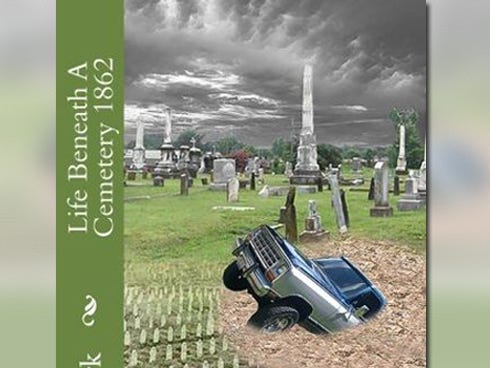
“Life Beneath A Cemetery — 1862,” by Bob Newkirk and edited by Michael J. Veith, is a historical fiction novel that will appeal to readers of Michael and Jeff Shaara, Bruce Catton, Shelby Foote, Larry J. Daniel, Owen Parry and Winston Groom’s works.

The author shares:

“A history professor visits a cemetery in western Tennessee. Through a chain of events he is taken back into the year 1862. In the camp of Confederate Gen. Albert Sydney Johnston, he eavesdrops on high-ranking officers as they plan to attack General Grant’s Union Army camped 20 miles away. He travels north to Pittsburg Landing, where he bears silent witness to the discussions of General Grant and other Union officers prior to the Battle of Shiloh. In the Union camp, he locates his 19-year-old great-grandfather and follows him throughout the two-day battle.

“The professor experiences sights, sounds and smells that cannot be conveyed in history books or photographs. Walking the battlefield after dark, he sees horrendous casualties on both sides and listens to the fears and pleas of the wounded and dying. He witnesses surgeries performed in and around hospital tents and General Grant complimenting his troops after the battle.

“Dodging bullets, soldiers and horses pulling limbers and cannon, he later swims for his life in the Tennessee River. The professor knows he cannot change the outcome of the battle — ‘our two worlds would not connect.’”

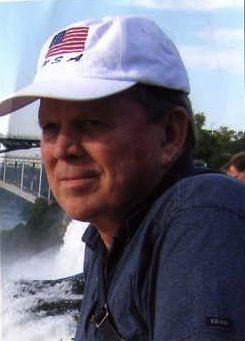
Newkirk — a lifelong student of the Civil War — retired after a 32-year career in air traffic control, serving as a general aviation pilot and a number of years as a federal air marshal. He now volunteers as a guide at the Air Force Armament Museum.

Newkirk’s fishing articles have appeared in The Palm Beach Post and Field & Stream Magazine. Most recently, his articles have appeared in The Retired Eastern Airlines Pilots Association Magazine. 

His book is available for purchase through Amazon and available for checkout in the Crestview Public Library’s local author section. 

Please contact the author at CivilWarNovel1862@gmail.com for more information about his work.

Marie Garcia is the Crestview Public Library's director.

This article originally appeared on Crestview News Bulletin: GARCIA: Focus on local author Bob Newkirk

error: Content is protected !!