Please ensure Javascript is enabled for purposes of website accessibility
Skip to main content
Advertisement

CROSE: Here's some advice for Crestview High School graduates

"Many college graduates will return home to Crestview, begin a career, marry and raise a family. Some, of necessity, will move to larger communities with more job opportunities for their particular career path. Sometimes, a career moves one to a place they never thought they would live," Janice Crose said.

For our high school and college graduates, June is a new beginning. The decisions they must make are numerous.

They have the choice to immediately go to college, work for a year or two, or perhaps join the military before attending college.

Then there is the variety of needed vocations available; many provide an excellent living. We need plumbers, electricians, mechanics, chefs, cosmetologists and so forth. Several of these professions require additional training and education.

Many college graduates will return home to Crestview, begin a career, marry and raise a family. Some, of necessity, will move to larger communities with more job opportunities for their particular career path. Sometimes, a career moves one to a place they never thought they would live.

A Pew Research poll showed that 57 percent of people stay in their hometown; 20 percent remain in the same state.

My friend, Pam, went through school in Crestview, graduated from Crestview High School, attended Florida State University, and then moved to Tampa to begin her career. Once her son was born, she and her husband moved back to Crestview to raise their family because Crestview offers a sense of community, a great lifestyle and a quieter pace to raise a family, and her extended family was here.

Several physicians in our town grew up in Crestview, went to medical school and came back to practice medicine.

Jim, my husband, and I have moved all over the country because of his job. I was a third-generation native Californian with no intention of ever leaving the state.

Do I miss living in California? Yes and no.

Yes, because my elderly parents live there and I wish I could be there to care for them; no, as my friends and church family are here and our life is more tranquil than in Los Angeles.

Graduates: Sometimes, the greenest grass is right where one grew up — in this case, Crestview.

Congratulations, Class of 2016!

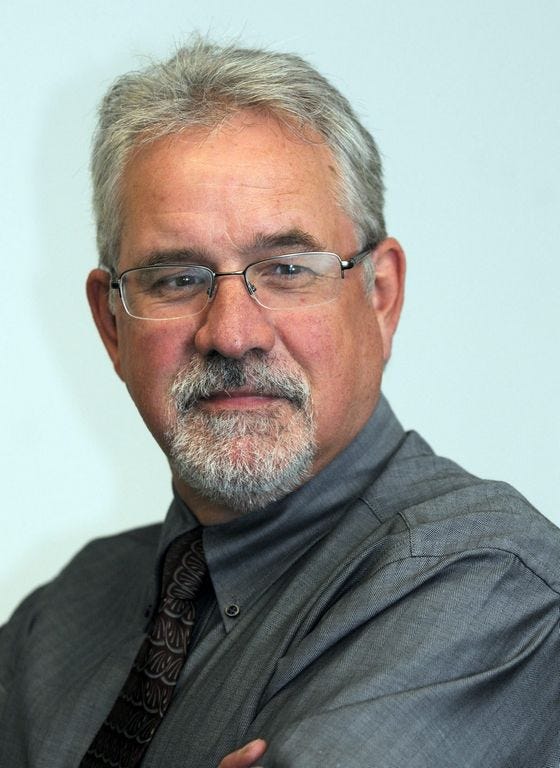
Janice Lynn Crose, a former accountant, lives in Crestview with her husband, Jim; her two rescue collies, Shane and Jasmine; and two cats, Kathryn and Prince Valiant.

This article originally appeared on Crestview News Bulletin: CROSE: Here's some advice for Crestview High School graduates

SHANKLIN: Take steps to prevent identity theft

One way to avoid identity theft is to protect your passwords. Changing them periodically also helps.

Identity theft is a big problem. How big? Consider this: In 2015, about 13 million Americans were victimized, with a total fraud amount of $15 billion, according to Javelin Strategy & Research. That’s a lot of victims, and a lot of money. How can you protect yourself from becoming a statistic?

Here are a few suggestions:

•Secure your Social Security number. Identity thieves eagerly seek Social Security numbers — so don’t give out yours to anyone who asks for it. In fact, as a general rule, be reluctant to give it out at all. Always ask whomever you’re dealing with if he or she will accept another form of identification, or at the very least will take just the last four digits of your number. And never carry your Social Security card with you.

•Shred credit card offers and bank statements. If you’re not going to apply for the credit cards offered to you, shred the offers. Identity thieves have been known to go through garbage, fill out credit card offers and take advantage of them. At the same time, shred your bank and brokerage statements – and any other statement containing personal or financial information.

•Study your credit card bills and checking account statements. Question any credit card charge or checking account activity you don’t recognize as your own.

•Don’t give out your credit card number unless you’re initiating a purchase. Many of us shop online. As long as you’re dealing with a reputable merchant who uses a secure site — i.e., one that has “https” in the web address — you should be fairly confident that your credit card information will be protected. Never give out your credit card number to people or businesses who, unsolicited, try to sell you something over the phone or Internet.

•Protect your passwords. Do you use a password to log onto your computer? If so, don’t share it with anyone, outside perhaps your most trusted family members. And use a strong password – one that doesn’t contain your real name or even a complete word that could be used to identify you. Also, it doesn’t hurt to periodically change your password, whether it’s for your computer logon or for entry to any of your financial or consumer accounts.

Even after taking these steps, you could still run into identity theft. That’s why you need to watch for certain signs, such as the arrival of unexpected credit cards or account statements, denials of credit for no clear reason, or calls or letters regarding purchases you didn’t make. If any of these things happen to you, you may want to place a “fraud alert” on your credit reports and review them carefully.

Three national credit-reporting companies  — Equifax, Experian and TransUnion  — keep records of your credit history. If someone has misused your personal or financial information, contact one of the companies and ask for an initial fraud alert on your credit report. A fraud alert is free, but you must provide proof of your identity. And the company you call must tell the other companies about your alert. (For more information on placing a fraud alert, visit the website of any of the three companies.)

You can help preserve your good name from those who want to misuse it – so, stay vigilant.

This article was written by Edward Jones for use by your local Edward Jones financial adviser.

This article originally appeared on Crestview News Bulletin: SHANKLIN: Take steps to prevent identity theft

BRESLAWSKI: Sunscreen use by Florida residents may protect against skin cancer

The Centers for Disease Control recommends people apply and re-apply a sunscreen with an SPF 15 or greater regularly; stay in the shade; and wear a hat and UV protective sunglasses. When possible, wear protective clothing such as long sleeved shirts and pants, and limit time outdoors in peak sun hours of 10 a.m. through 4 p.m.

In Florida, we are so lucky to have access to beautiful beaches and weather.

There are an infinite number of outdoor activities to do. This past week I tried a new one for me, SUP (Stand Up Paddle boarding). I fell a few times, but finally found my balance and had a blast all day long.

Things changed though when the fun was over and I realized that I forgot to wear a hat and had a blistering burn on my scalp. According to the Center for Disease Control, the sun can burn unprotected skin in as little as 15 minutes.

In order to protect yourself from the sun be sure to apply and reapply sunscreen (at least SPF 15) regularly, stay in the shade, wear a hat and UV protective sunglasses. When possible, wear protective clothing such as long sleeved shirts and pants, and limit time outdoors in peak sun hours of 10 a.m. through 4 p.m.

Oh, so you don’t need to because you tan? Well think again.

Besides leaving you with an awful burn, blisters and flaky skin, sitting out in the sun can cause lines, wrinkles and sunspots, as well as increase your chance of skin cancer.

The American Cancer Society is estimating 6,200 new cases of skin cancer this year in Florida alone.

Most of these cases can be linked to too much sun exposure. Regular sun protection can reduce the risk of developing skin cancer. Regular dermatologist skin checks and self-exams can help identify cases early.

The Skin Cancer Foundation recommends keeping watch for individual moles that are:

●misshapen.

●have uneven borders.

●a variety of colors.

●a diameter of over one fourth of an inch

●have changed in any of the ways listed.

This summer have fun, live in the moment, try something new — but don’t forget your SPF.

For more information, contact me at 689-5850 or jbreslawski@ufl.edu.

Jill Breslawski is an agent at the University of Florida's Institute of Food and Agricultural Sciences Extension office in Crestview.

This article originally appeared on Crestview News Bulletin: BRESLAWSKI: Sunscreen use by Florida residents may protect against skin cancer

HOLMES: Change comes to the bathrooms

This is how change happens.

After a lifetime of isolation and silence, someone finds the courage to say what’s bothering them, and someone else says “Hey, that’s my story too.”

Individuals find their voices, tell their secrets and realize they aren’t alone. And if telling their truth means challenging an assumption as basic as the either-or model of gender, then the world will have to deal with it.

Then a few artists and celebrities add their voices to the chorus — Chaz Bono, Laverne Cox, Caitlyn Jenner — and soon everyone is talking about something most people were uncomfortable even thinking about before. Their stories titillate many and inspire a few.

That’s how a boy who doesn’t feel like a boy, or a girl who believes she’s not really a girl, finds the courage to tell the principal about how awful it is to use the wrong school bathroom.

Middle school is tough for almost everyone; a time when hormones, social pressure and insecurity collide — nowhere more violently than the bathroom. Puberty is awkward for every kid — especially if you’re a kid whose gender identity doesn’t match the symbol on the bathroom door.

A CASE STUDY

The girls room wasn’t right for Brandon Adams when he came out as transgender at 14, so he went to the principal of his Framingham, Massachusetts school. He was told he could use a gender-neutral bathroom, but that made things worse, as his classmates ridiculed him, calling him a “freak” and a “tranny.”

He stopped drinking water, trying to make it through the day without needing the bathroom at all, and that led to headaches and dehydration.

The school eventually relented and let Brandon use the boys’ bathroom. He’s at Framingham High now, where he feels accepted for who he is, not just in the bathroom but everywhere else.

If it took courage for a transgender kid to take his bathroom complaint to the school principal, it took even more for Brandon to tell his story to a panel of state legislators, a full media contingent and an audience of activists on both sides of what has become the most contentious issue of the year.

He testified in favor of a bill prohibiting discrimination against transgender individuals in public accommodations, including bathrooms and locker rooms.

The legislation expands on a bill passed in 2011 prohibiting discrimination against transgender people in housing, employment and education. The current bill has been approved by the Senate and is expected to come up for a vote in the House this week.

STATES REACT DIFFERENTLY

This is how change happens. Individuals demand it, the culture adjusts to it — and then legislatures and courts write it into law.

Change first came to workplace when bathrooms came indoors and when women started working in New England factories. In 1887, in the same building where Brandon testified, lawmakers made Massachusetts the first state to require “separate and distinct waterclosets, earthclosets or privies” plainly designated for each sex.

Other states followed in their own due time.

Change happens unevenly. There are always some people with their feet on the accelerator and some hitting the brakes. The balance of political power between them varies from place to place, from year to year.

That was evident in the reactions to the letter from the U.S. Justice Department recommending “best practices” for schools dealing with transgender students.

In Massachusetts, educators welcomed the suggestions, which mirrored policies they had put in place in response to the 2011 state law — policies Framingham schools followed to make Brandon and other transgender students comfortable. Officials in other states responded with horror at Washington’s “blackmail,” and 11 of them sued the Obama administration over the issue.

SCHOOLS NEED BATHROOM MONITORS

It’s easy to make bathroom jokes, even hurtful ones targeting people who happen to be different.

It’s easy to complain of “political correctness” forcing “special treatment” for some people — as if the ability to answer nature’s call in comfort and security is some rare privilege to be doled out sparingly.

And it’s easy to argue that adults shouldn’t need government to be the bathroom monitor in private businesses. Grownups should be able to work out accommodations that protect everyone’s privacy and comfort.

But schools do need bathroom monitors, and children need adults to protect their privacy and safety. That’s true whether the children are boys, girls, transgender or something in-between.

It’s true whether they live in Massachusetts, North Carolina or any other state, red or blue.

Transgender people live in every state, and they are being empowered by cultural forces no political party can stop. Community by community, election by election, court case by court case, America will adjust its bathroom rules.

That’s how change happens.

Rick Holmes writes for GateHouse Media. He can be reached at rholmes@wickedlocal.com. 

This article originally appeared on Crestview News Bulletin: HOLMES: Change comes to the bathrooms

MOLLETTE: This summer, keep trying

I often meet discouraged people. Recently, I talked to a man unemployed after 17 years of stable $80,000 a year pay. He now works a minimum wage job.

I praised him for staying active, being employed and keeping his mind busy, but I could see the sadness in his eyes.

No one enjoys losing a job, fighting disease, being knocked down and feeling defeated. What is going on with you today? Maybe you are having a child that you did not plan to have. Maybe your spouse or the love of your life has not worked out.

Perhaps someone has disappointed you. Life is filled with disappointments.

We've all been disappointed in presidents, Congress, and frustrated with the world in general.

What can we do? Make changes. Change is not always possible, but when it is, you should.

Change is often the lesser of choices. We get into ruts. We call it stability. Stability is nice, but sometimes it can be a rut we don't have the courage to leave. People hang onto drugs, sad relationships and negative lifestyles because fear holds them back from going forward. We fear leaving the safety of the house to face and conquer what may be in the outside world.

When I was 24, I taught an older lady how to swim. She had always feared the water but has thanked me several times throughout the years.

My youngest son had to take the driver's test three times. We stayed with it and we kept practicing. Today, he drives and travels anywhere he wants to go.

The change you may want to make may be simple and subtle. Nobody may ever notice but you, but you are the one who counts.

This summer, why not take some small risks? I'm not talking about going over Niagara Falls in a barrel. I'm talking about taking some steps forward in your life. The kind of stuff you've thought about doing, wanted to do but just didn't have the heart to try.

Remember, it's okay to fail quickly. Actually, it's better to fail fast than to take five years to fail. However, every now and then something clicks, and you will look back and think, "I'm glad I tried."

What can Americans do this summer? Be willing to try. Be willing to change. Put your disappointments behind you. Some people will embrace you but not everybody is your friend, so get over expecting overwhelming support about almost anything. If you are successful, people will jump on the bandwagon, but that comes later after all of your trial and errors.

This summer, keep trying.

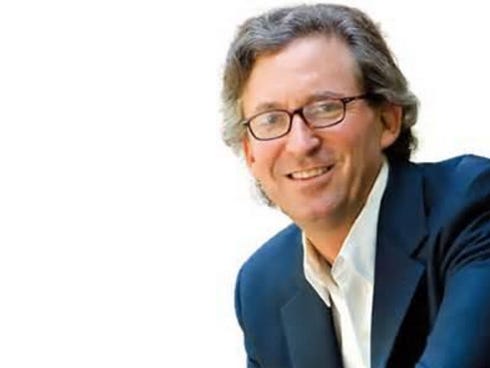
Glenn Mollette is an American syndicated columnist and author. 

“The change you may want to make may be simple and subtle. Nobody may ever notice but you, but you are the one who counts.”

This article originally appeared on Crestview News Bulletin: MOLLETTE: This summer, keep trying

HELMS: Old Testament foreshadows Christ’s coming

In the book of the Exodus, God chose a unique way to lead the children of Israel to the promised land. 

He used a cloud by day, and a pillar of fire by night. When God desired to speak to Moses, He would come down in this cloud to the wilderness temple.

Nehemiah’s writings tells us that God never took these two signs away from the people until they reached their final destination.

So it took them 40 years to reach their destination. Did the cloud get lost?  Did the flame lose its glow? 

Of course not; the people’s stubbornness and unbelief caused them to have to go around the wilderness for that period. People were still trapped in slave mentality. For some, newfound freedom was more than they could bear.

In the Acts of the Apostles, we read of God once again providing a way for His people to know and experience His nearness by providing a cloud of sorts, along with fire. 

In chapter 2, we read of the day that the Holy Spirit came down on the early believers with the sound of a rushing mighty wind (the cloud) and with split tongues as of fire that landed on each of them. 

Jesus, in talking about the Holy Spirit’s role, stated that He will guide us in all truths. This Holy Spirit would fill us and go with us until we reach our final destination, heaven.

God does nothing happenstance — it is all designed for a reason; for our better understanding of His goodness and mercy. His fire and cloud in the Old Testament led the children out of their bondage and guided them to their promised land.

This foreshadowed the Holy Spirit being poured out in the form of the wind and fire to lead us out of sin’s slavery and deliver us. This allowed believers to have Him with us until we reach our final destiny. 

Look for things in the Old Testament that foreshadow events in the new, and you will find a good and mighty God preparing a way for the church, the body of Christ. 

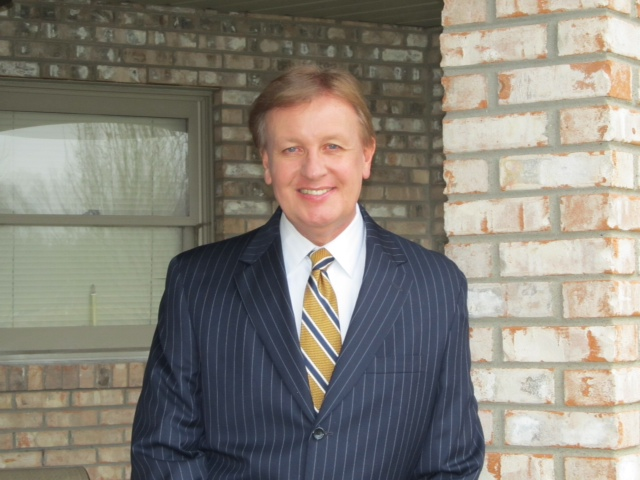
The Rev. Richard Helms serves at Miracle Acres Ministries, 3187 E. James Lee Blvd., in Crestview.

This article originally appeared on Crestview News Bulletin: HELMS: Old Testament foreshadows Christ’s coming

HART: 8 notable moments in recent history

There are so many things going on.  Since I am on vacation, I’ll summarize:

●Obama tried to celebrate the fifth anniversary of his "legacy," Obamacare. His staff brought him a rich white chocolate cake with five candles on it. Instead of blowing out the candles, he ordered a DOJ investigation, and then taxed and regulated the candles until they gave up on their own.

●North Carolina, Texas and other Southern states sued the Obama administration on its sudden obsession with, and intrusive guidelines on, transgender "rights." The first black president is having his federal government tell Southerners which bathrooms they can use. To us Southerners, this seems way too much like payback. He knows this type of transgender in-your-face stuff makes the GOP nuts, so he keeps doing it. In Obama's last executive action, I see him making the Village People’s "YMCA" our national anthem.

●Hillary Clinton will not debate Bernie Sanders, so Donald Trump said he would. Some say it’s a promotional stunt and that Trump is getting way ahead of himself. The debate will take place at the Donald Trump Presidential Library, Golf Resort and Casino in Atlantic City.

●Obama continues pursuing his racial bucket list as a lame duck president. He has now officially banned the words "Oriental" and "Negro" in federal documents. The decree briefly caused concern in Atlanta until rap song writers realized they do not write federal documents.

●Hillary takes criticism well — just not of herself — and facts become less and less important to her over time. She got word of a scathing State Department Inspector General's report that confirms the illegality of what she did with her emails. She refused to be interviewed for this federal investigation, and said that, if they want her to speak, they will have to do what everyone else does: pay the Clinton Foundation $350,000 in small, unmarked bills.

●Trump still has not gained traction with Hispanics. Everyone presumes he will not do well with them in November because he wants to defend our borders and build a wall. Latinos even ridiculed him when he reached out to them on Cinco de Mayo with a tweet showing him eating a taco salad and saying he "loves the Mexicans." There might be a mixed message there. A taco salad is just a salad with a manmade wall around it.

●Trump continues to kill it in the ratings. A study said that couples watching TV turn up the volume when Trump comes on, because when you are married, turning off the television is not an option.

●Our nation had its first penis transplant last week in Boston. It was reported that the recipient is handling it well. No one knows who the donor is, but it is safe to say it’s someone from the Obama Administration's foreign policy team.

Ron Hart, a libertarian op-ed humorist and award-winning author, is a frequent guest on CNN. Contact him at Ron@RonaldHart.com or tweet@RonaldHart.

This article originally appeared on Crestview News Bulletin: HART: 8 notable moments in recent history

YOUNG: Summer's the best time to take hunter safety course

Tony Young, Florida Fish & Wildlife Conservation Commission columnist

TALLAHASSEE — With summer comes so many great fishing opportunities that it’s hard to even think about hunting. But if you’re age 16 to 41 and haven’t completed the state’s hunter safety course requirement, now’s a good time to think about signing up. Don’t put it off – summer is the best time to take a class.

Many of these classes, offered statewide, fill up fast during hunting season as people scramble to get certified. So the summer months offer smaller class sizes and a better opportunity for students to take a class, because they have more free time than they will once school cranks up and they get busy with homework and school-related activities.

People born after May 31, 1975, must complete the Florida Fish and Wildlife Conservation Commission’s (FWC) hunter safety class before they can buy the type of hunting license that allows them to legally hunt alone. A law passed a few years ago by the Florida Legislature enables individuals to hunt without having to complete the state’s hunter safety certification, but they may only hunt while supervised. It’s called the Hunter Safety Deferral, and it allows people the opportunity to purchase a license to hunt while under the supervision of a licensed hunter who is at least 21 years old and meets the hunter safety requirement.

It’s designed to encourage experienced hunters to teach novice hunters safety, ethics, conservation, wildlife and hunting skills, and respect for the great outdoors. And it’s a great incentive for getting more people to try hunting. Also, I hope, the experienced hunters among us can introduce new folks to the sport we love. However, to hunt by yourself unsupervised, you still have to take and pass a hunter safety class, and purchase a regular hunting license.

If you’re a youngster and already a hunting fanatic, I suggest you go ahead and take a hunter safety class before you turn 16. And, you can purchase your very first hunting license that’s good until your 17th birthday.

Even if you were born before June 1, 1975, and are exempt from having to take the class, it’s still a good idea, because you’ll learn so much. The FWC encourages beginning hunters to do so. Even the most experienced hunters will learn something new, which will help them become even better hunters or mentors – and safer ones.

If you’re new to our state, these classes will make you aware of Florida’s hunting laws. Or if you just relocated from another town, the classes are a great way to meet other hunters. You can make some new hunting buddies or maybe even get a line on a great hunt club that’s looking for new members.

You can register for a hunter safety class by going to MyFWC.com/HunterSafety or by contacting your nearest FWC regional office. Also, for your convenience, there are two ways to take the course.

TWO COURSE OPTIONS

There’s the traditional course, which is six hours of classroom instruction plus a six-hour skills day. If you’d prefer to complete the classroom portion from the convenience of your own home, you can opt for taking the online course. But you’ll still have to sign up for the skills-day part of the course, which includes time at a shooting range.

The traditional course is offered during two weeknights or on a Saturday-Sunday. If you take it during the week, each session is three hours and offered after normal working hours. On the weekend, you’ll spend six hours Saturday in the classroom and six hours Sunday morning for the Skills Day.

During the skills day, each segment is roughly 50 minutes long, followed by a 10-minute break. The first thing you’ll learn about is Florida’s hunting laws/regulations. An FWC law enforcement officer gives this introduction. Volunteer hunter safety instructors teach the remaining curriculum.

And speaking of that, if you are older than 18 and would like to give something back to the sport of hunting, you might consider becoming a certified, volunteer, hunter safety instructor in your community. The FWC is always in need of people who possess good hunting and gun safety knowledge. If you’re interested in learning more about this great teaching opportunity, go to MyFWC.com/HunterSafety or call 850-413-0084 to find out how to get involved.

One segment of the program teaches ethics and hunter responsibility. You’ll also learn the parts of a firearm, gun and hunting lingo and the proper way to shoot a firearm. This is the longest section of the program, and you’ll spend approximately two hours going over that.

You’ll learn the differences between all the various bullets, calibers and gauges and how to identify different animal species. You will also hear about wildlife conservation and discover best management practices for native game species.

In addition, you’ll find out about outdoor survival techniques and learn how to administer first aid in the field. You’ll gain knowledge of the parts of, and how to shoot, a muzzleloading gun. Furthermore, you’ll be taught archery and the fundamentals of how to hunt with a bow.

If you choose instead to take your hunter safety class online, you’ll learn all of the material that’s taught in the traditional classroom setting, and you’ll be given a practice test, which will go over what you’ve learned and prepare you for the last segment of the requirement – the skills day. 

SKILLS DAY

Skills day takes about five hours to complete, which includes time on the shooting range and serves as the completion for the traditional course and the online class.

Skills days start with a law enforcement officer discussing hunting laws and ethics. After that session, you’ll pass through four different stations. The first station reviews safety rules, then the students demonstrate proper firearm carry positions, safe zones of fire, how to cross obstacles with a firearm and tree-stand safety.

The second station covers safe, effective shot placement; then students walk down a trail where they are presented with shoot/don’t shoot scenarios. The third station discusses clearing, matching, loading and unloading.

After an instructor’s brief presentation, students practice selecting the proper ammunition, loading each of the five major firearms actions, and demonstrating how to properly clear the firearm of ammunition. At the last station, students review marksmanship skills and have different opportunities to practice or demonstrate their skills.

Most students shoot a rifle from various positions, many get to shoot clay pigeons with a shotgun, and others practice archery skills by shooting a bow. Most courses provide a muzzleloader demonstration, where you’ll have the chance to shoot one if you’d like. All guns, bows, targets and ammo are provided. All you have to do is take aim!

In your last hour of the skills day, you’ll be given a standardized test of true-or-false and multiple-choice questions. You need to score 80 percent or better, and then you’ve completed the course.

THE LAST STEPS

After you pass the test, you’ll be given your hunter safety card. At that point, you can purchase your very first Florida hunting license and be ready for opening day.

Just a couple of things for parents to remember: The course is designed for youth ages 12 to 16. If your child is younger than 18 years old, you must fill out our parental release form and present it to the instructor at all courses. This will enable your child to participate in the live-shooting exercises. Also, if your child is younger than 16, you are required to accompany him or her to all classes.

Register to take a hunter safety class today, because the 2016-2017 hunting season is just around the corner!

Tony Young is a Florida Fish and Wildlife Conservation Commission columnist.

This article originally appeared on Crestview News Bulletin: YOUNG: Summer's the best time to take hunter safety course


BROADHEAD: God made the world to be enjoyed by humanity

"God created this world to be enjoyed by humanity. It is full of wonders and joys. Natural beauty abounds," says the Rev. Mark Broadhead.

Many years ago when I was in college, I decided to drive home for an extended weekend. It was a four-hour drive mostly on I-95, so it was a relatively easy drive.

As I was nearing the Titusville area I noticed a rainstorm off to the east. As I watched, a rainbow started to form. Within a very short span of time, a full rainbow appeared. And it was very bright, standing out vividly from the dark rain clouds behind it.

I pulled to the side of the road so I could appreciate the beauty of it. I wasn’t alone. There were about a dozen other vehicles that pulled over to witness this dazzling spectacle.

In time, the rainbow faded, everyone got back into their vehicles and continued their journey. I was awestruck. I remembered the promise of God to never destroy the earth again with a flood. I marveled at the wonder of God’s creation and the number of things I tended to take for granted. While I drove on I thanked God for the reminder of the wonders of his creation.

God created this world to be enjoyed by humanity. It is full of wonders and joys. Natural beauty abounds. Natural music abounds, whether it is the in the music of a babbling brook, the roar of a waterfall, a wind blowing through the trees, or the singing of birds.

Blessings flow from God unceasingly. They surround us each day. They touch us in many ways. The challenge for us is to not be so distracted by events that we miss noticing and enjoying these gifts, these miracles, these wonders that God gives us.

Psalm 8 answers a question: “Why would God do this for us?” The answer lies in the fact that God created us for his pleasure to love us and shower us with his blessings.

“O Lord, our Lord, your majestic name fills the earth!” God’s handiwork is found everywhere. His name is praised by living creatures. His name is above all names, and we are to proclaim that in our own voices and actions.

“Your glory is higher than the heavens.” God’s majesty, and not ours, is the focus of our worship and our lives. We are to lift God in our hearts, minds, and souls to the highest heights imaginable.

“You have taught children and infants to tell of your strength, silencing your enemies and all who oppose you.” The simplicity of a child’s faith is the very strength of their faith. Jesus reminds us we are to receive him as little children do – without complicating matters, and by maintaining a child-like faith – not a childish faith.

“When I look at the night sky and see the work of your fingers – the moon and the stars you set in place – what are people that you should think about them, mere mortals that you should care for them? Yet you made them only a little lower than God and crowned them with glory and honor.” Compared to the greatness of God, we are nothing. But God has elevated us to a place of honor. He has chosen to create us, to love us, to care for us. We can rejoice in this every moment of every day!

“You gave them charge of everything you made, putting all things under their authority – the flocks and the herds and all the wild animals, the birds in the sky, the fish in the sea, and everything that swims the ocean currents.”

God has given us this whole world to enjoy – not destroy. Everything is under our authority. Can you understand that level of generosity? Can you understand the depth of God’s love for this creation and for each one of us that God has so freely given? When you meditate on this you will begin to get a small inkling of the depth of God’s loving kindness.

“O Lord, our Lord, your majestic name fills the earth!” Yes, his name is majestic. It fills the earth.

It all comes down to the love of God. God has provided so much. He has provided this world as a gift to us. He has provided the gift of free choice. He has provided grace. He has provided the ability for us to turn from our improper and poor behaviors to find forgiveness. He has provided the key to eternal life with him in Jesus Christ, our Lord.

What a generous God we have!

The Rev. Mark Broadhead is pastor at Laurel Hill Presbyterian Church and First Presbyterian Church of Crestview.

This article originally appeared on Crestview News Bulletin: BROADHEAD: God made the world to be enjoyed by humanity

HELMS: What it might be like on the other side

“To be at the gravesite of a loved one and hear 'Amazing Grace' being played on the bagpipes is one of the most moving, saddest sounds … Perhaps the songs on the other side are full of joy,” the Rev. Richard Helms says.

Memorial Day has occurred, and I did not notice the time was slipping away.

One of the toughest times in life is when you, as a pastor or friend, have to find the right words of comfort when brave men and women who’ve served their country go on to meet their Maker in Heaven.

Some go as saints; some do not. All are heroes, at least to me.

To be at the gravesite of a loved one and hear “Amazing Grace” being played on the bagpipes is one of the most moving, saddest sounds. 

On this side, we are doing our best to say goodbye in a way that is fitting and hopeful for those who have gone ahead. Yet what is it like on the other side? We who acknowledge Jesus as the Son of God and have asked Him to forgive our sins have this hope that we will be immediately in His presence the moment we leave this shell called our body. 

Perhaps the songs on the other side are full of joy unspeakable, and full of the glory of God. As one writer put it, how will we react upon seeing Him for the first time? Will we fall to our knees, cry out in joy, shout, or fall as though we are dead before Him?

While on this side we are grieving the loss, on the other side is rejoicing for one who no longer has to deal with pain, suffering or sickness; he or she no longer knows the hate of another person or the ridicule and persecution of life.

I do not have all the answers; maybe He will just open His loving arms and take us in, perhaps even welcoming us to His presence.

Here on this side, there is quiet and reverence, and on the other side rejoicing. Allow me a little humorous illustration of the difference of the two sides of death.

On one side is the sad sound of bagpipes, and on the other side is the sounds of trumpets and other instruments playing that New Orleans favorite, “When the Saints Go Marching In.” 

Hopefully, my version will not be, “When the Saints Come Dragging In”

May God bless you.

The Rev. Richard Helms serves at Miracle Acres Ministries, 3187 E. James Lee Blvd., in Crestview.

This article originally appeared on Crestview News Bulletin: HELMS: What it might be like on the other side

error: Content is protected !!