Please ensure Javascript is enabled for purposes of website accessibility
Skip to main content
Advertisement

HELMS: Paul would be looking for order, substance behind church doors

This painting, “Paul Writing His Epistles,” is attributed to 17th century artist Valentin de Boulogne. The Rev. Richard Helms wonders how the apostle would react if he walked into today’s churches.

If the apostle Paul were to walk into our churches, and knew our lives, how would he react? 

I recently contemplated this scenario and came up with some questions concerning what he would like and dislike. 

Perhaps he would like the large, elaborate places some people have been blessed to build, to hold large audiences and allow for a more comfortable experience, and escape from the weather. 

Getting past the exterior, and getting inside, there he may have a little problem — or, should I say, we might have a problem with Paul.

As you read some of the writings and teachings of Paul, some things stick out more than others, such as the fact that he is deeply dedicated to the teachings of the Bible — the whole Bible, including his contributions to it. 

Then again, he may be a little perplexed at the divisions that have occurred at misunderstandings of certain aspects of his teachings.

I believe that he may come in thanking God for the sanctuaries, the music, perhaps the variety of people and backgrounds represented in today's church. 

But this is Paul; he does not need the fancy places, wonderful music, many programs and multi-faceted uses of our sanctuaries. He is looking for substance behind our doors.

Paul would not be long liked in our churches, for he would truly come to "set in order" the priorities and attitudes, as well as the doctrines, along with the lifestyles of many in our churches today, big or small. 

We would be quick to condemn him for "judging" our intents, our traditions, our hearts and our willingness to cut corners on the unerring efficiency of the Gospel. 

Paul judged pastors; he judged those who claimed to be Christians and their lives were a rotting sepulcher before the Lord. He was quick to remove people from the church who would not abide by teachings of the Word of God. He stood for God, and his judgment was righteous before him. Demons, and many men, feared him — and rightfully so. 

He would condemn us for soft-soaping the Gospel to fill our churches, softening our message against sin to be user friendly and offend no one. Yes, he would be criticized by many churches today for not being up with society’s trends.

And yet, we claim to follow his teachings.

He could be harsh, and he could be loving. I am convinced that he would not be liked here today. 

What convinces me of this?

Because Jesus the Christ Himself is locked out of so many churches today — no standing up for Him; no declaring the hope of the Gospel; loving sin and using His Word to our own way that we may justify our sins. 

Paul may not be walking in, but the Savior will. One day, He will set things in order. I pray that He starts here with me today. 

Will you let Him critique you, and be willing to change? I pray so. May God have mercy.

The Rev. Richard Helms serves at Miracle Acres Ministries, 3187 E. James Lee Blvd., in Crestview.

This article originally appeared on Crestview News Bulletin: HELMS: Paul would be looking for order, substance behind church doors

HART:

Higher education — because it is largely government-funded — has become an overpriced, failing proposition, full of left-leaning political cronies. And bloated colleges with tenured professors who seek to indoctrinate, rather than educate, diminish our country.

Higher education fraud is built on student loan debt. Since any 18-year-old who can fog a mirror can now get a Sallie Mae loan, our nation has more student loan debt than credit card debt ($1.2 trillion, with 7 million debtors in default). Parents’ basements are full of millennials with tons of debt, and employers in a weak job market are unwilling to hire knuckleheads. If free market economics’ tenets were applied to education, kids would not be tenants in their parents’ basements.

When you graduate from many colleges, it just means your check cleared. If you get into an Ivy League school these days, it generally means your parents — or affirmative action — got you in. Trump saw something missing in this racket of a government-funded education system: he wasn’t getting a cut. He tried to get into the business, doing a better job at it than most universities for a lower price. The students — including the lead plaintiff in the politically motivated case against his Trump University — gave him positive reviews.

Partisan prosecutors in NYC blast Trump University as a scam. Say what you will, but a degree from Trump U is worth more than a Gender Studies degree from Wellesley.

The media don’t tell you how the Clintons, smelling money, shook down the “higher education” system.

The Daily Caller — and a few other organizations still willing to practice journalism — offered a detailed report on how Bill Clinton was paid $16.5 million from a shell company that runs for-profit colleges. Hillary Clinton’s State Department funneled 55 million tax dollars to the Laureate Education Inc. founder’s non-profit in return. Aside from the obvious — Why is our State Department giving money to a college shell company “non-profit” that paid the Clintons millions? — where’s the media on this?

In 2015, Slick Willie abruptly resigned as “honorary chancellor” when the report came out. The con was up.

The Clinton scam was for a for-profit college, Laureate Education’s Walden University. According to Forbes, Walden was the biggest beneficiary of student loan borrowing in 2014, at $756 million. All of this is detailed in Peter Schweizer’s book “Clinton Cash.”

The game is easy. Like Freddie Mac and Fannie Mae’s government-backed loans, which caused the great recession and the housing meltdown, easy federal money fuels the disaster. You just get regulators — government cronies — to approve your school. The feds then feed loan money to any stoner whom the college can talk into enrolling. There is no accountability as to your outcome. You keep the money, and the student and government — i.e., taxpayers — take the loan risk.

Laureate’s Walden schools have also been sued for dishonest practices. Trump’s “swing and a miss,” by a private sector businessman with his own money, had better intentions. Walden funneled money to Bill Clinton via the nefarious WJC LLC bank account so it would be hidden.

Laureate has been “ensnared in controversy all over the globe,” says Eric Owens, The Daily Caller’s education editor. The $16.5 million paid to Bill Clinton on the side was for him to legitimize the school and to get the State Department to fund it.

He got his money’s worth; the company has been valued at $3.8 billion. In a Senate investigation of Laureate, the Miami Herald noted that “more than half of Laureate’s online Walden University revenue went to marketing and profit.”

For most colleges, especially Laureate’s Walden University, the school mascot should be a virtual pigeon.

Ron Hart, a libertarian op-ed humorist and award-winning author, is a frequent guest on CNN. Contact him at Ron@RonaldHart.com or tweet@RonaldHart.

This article originally appeared on Crestview News Bulletin: HART:

SHANKLIN: Tips for sharing your retirement, estate plans with family

You might work diligently at building a financial roadmap for your retirement years and a comprehensive estate plan.

But you can’t just create these strategies — you also have to communicate them. Specifically, you need to inform your spouse and your grown children what you have in mind for the future — because the more they know, the fewer the surprises that await them down the road.

Let’s start with your spouse. Ideally, of course, you and your spouse should have already communicated about your respective ideas for retirement and have come to an agreement on the big issues, such as when you both plan to retire, where you’ll live during retirement, and what you want to do as retirees (volunteer, travel, work part time and so on).

But what you both might have let slip through the cracks are the important specifics related to financing your retirement.

You’ll need to answer several questions, including these:

●When will you each start taking Social Security?

●Are there strategies for maximizing both of your Social Security payments?

●When will you need to start tapping into your respective retirement accounts, such as your IRA and 401(k)? And, once you do start withdrawing from these accounts, how much should you take out each year?

You may want to work with a financial professional to address these issues, but however you proceed, you and your spouse need to be “on the same page” regarding the key financial components of your retirement.

Now, consider your grown children. You need to clearly communicate your estate plans to them, not only for the sake of openness and honesty, but also because they may well play active roles within those plans. So when talking to your children, make sure you cover these areas:

●Durable power of attorney — You may well decide to give one of your grown children the durable power of attorney to pay bills and make financial choices on your behalf if you are unable to do so.

●Estate executor — An executor is the person or entity you name in your will to carry out your wishes. An executor has a variety of responsibilities, so you’ll want to choose someone who is honest and capable of dealing with legal and financial matters. Again, you could ask a grown child to serve as your executor, but, to avoid potential conflict of interests among your children, you might want to go outside the family. Talk with an attorney about how best to name your executor.

●Status of will and living trust — Assuming you have already drawn up a will, share it with your grown children. The same is true with a living trust, a popular estate-planning tool that may allow your survivors to avoid going through the time-consuming, public and expensive process of probate.

A will and a living trust will obviously contain a great deal of information your children should know about — so take the time to explain your thinking when you created these documents.

You want to enjoy a comfortable retirement, and you want to leave a meaningful legacy through your estate plans.

To help accomplish both these goals, you need to include your loved ones in your arrangements — so open those lines of communication.

This article was written by Edward Jones for use by your local Edward Jones financial adviser.

This article originally appeared on Crestview News Bulletin: SHANKLIN: Tips for sharing your retirement, estate plans with family

WILLIAMS: Get some American beautyberry in your garden

“American beautyberry is a low-maintenance, native plant with no major pest concerns that can be a nice addition to a North Florida landscape,” says Larry Williams, an agent at the University of Florida's Institute of Food and Agricultural Sciences Extension office in Crestview.
“It is great for low-maintenance landscapes and naturalized gardens. I will always have some in my landscape.”

American beautyberry puts on quite a show during the fall with its bright purple fruit.

The profusion of berry-like fruit found along the thin branches result in the plant taking on a weeping habit.

Each fruit is only about 1/3 inch in diameter but collectively form roundish clusters that encircle the stems. The berries are particularly showy in September and October. They remain on the plant, even after its leaves have dropped, into early winter if not eaten by birds and other wildlife.

Many species of birds — including robins, cardinals, mockingbirds, brown thrashers, finches and towhees — will eat beautyberry fruit. Birds are a major method of seed dispersal for this plant.

Even though I consider the showy fruit its best attribute, the small, lavender flowers tightly bunched together along the stems during June to August are attractive, as well. The plant is not well suited for manicured, formal landscapes but can be useful in a naturalized garden.

American beautyberry is a deciduous shrub without much ornamental value during the winter. But during the growing season, its somewhat course, fuzzy, light-green leaves look good in a setting with other darker-leaved shrubs.

It grows well in part shade/part sun as an understory plant beneath larger trees such as pines and oaks.

Be sure to allow enough room for this sprawling shrub to develop into its mature size of three to eight feet in height with an equal spread.

It may also be used as an informal screen or even as a specimen plant. But avoid using it where it will require regular shearing as the flowers and fruit are produced on new growth.

Thinning out old or low-growing branches is a better method of pruning this plant. American beautyberry may self-seed but I have not seen this to be a bothersome problem.

America beautyberry is somewhat available in the nursery trade and is fairly easy to propagate from stem cuttings. It can be propagated from seeds, as well. In addition to the purple fruiting types, look for cultivars such as 'Russell Montgomery' that produce white fruit. There are also other nonnative species of Callicarpa worth looking at, such as C. dichotoma and C. japonica.

Larry Williams is an agent at the University of Florida's Institute of Food and Agricultural Sciences Extension office in Crestview.

This article originally appeared on Crestview News Bulletin: WILLIAMS: Get some American beautyberry in your garden

GARCIA: Crestview library to participate in world’s largest digital book club

The Crestview Public Library will take part in the Big Library Read. The program is the world’s largest digital book club through public libraries; it connects millions of readers around the world with the same eBook at the same time.

For two weeks beginning June 23, Crestview Public Library users will be able to borrow the eBook, "A Murder in Time" by Julie McElwain (Pegasus Books), from http://okaloosa.lib.overdrive.com and participate in a worldwide version of a local book club. There will be no waitlists for this popular mystery with a twist, which was selected based on a survey of more than 20,000 library readers.

"A Murder in Time" is an intricate mystery about a brilliant FBI agent, Kendra, who finds herself transported back in time to the 1800s. Relegated to the servant class, she stumbles across a gruesome murder, and she alone recognizes there is a serial killer in their midst. Kendra scrambles to solve the case before it takes her own life — 200 years before she was ever born. 

At its core, Julie McElwain’s debut novel is a puzzle, a hunt for a murderer and a quest for justice.

“Throughout my life, I’ve loved all genres of books — mystery, romance, paranormal and historical,” said author Julie McElwain. “Maybe that’s why I’ve included a little bit of all those elements in ‘A Murder in Time.’ I sincerely hope readers enjoy Kendra’s story as much as I enjoyed researching and writing it.”

Big Library Read is a free program. To get started reading, all you need is a Crestview, Destin, Fort Walton Beach, Mary Esther, Niceville or Valparaiso library card.

The book can be read on all major computers and devices, including iPhone, iPad, Android phones and tablets, Chromebook and Kindle. The eBook will automatically expire at the end of the lending period, so there are never any late fees.

Big Library Read is facilitated by OverDrive, the leading platform for eBooks and audiobooks from the library. The program is made possible through a partnership between OCPLC member libraries, OverDrive and Pegasus Books, publisher of the McElwain novel.

For more information on Big Library Read, visit BigLibraryRead.com.

Marie Garcia is the Crestview Public Library's director.

This article originally appeared on Crestview News Bulletin: GARCIA: Crestview library to participate in world’s largest digital book club

MOLLETTE: Gun control debate follows horrific Orlando shooting

Is Afghanistan safer than America?

The horrific murder of 49 people in Orlando this past weekend elevates our country to one of the world’s worst battlefields.

ISIS has accomplished its goal of brainwashing and enlisting everyday American people into their hate army of radical Islam. One individual wreaked more death, wounds and destruction in a single mass shooting than ever before in American history. I don't want to mention the devil's name, as he has already solidified his name in the hall of shame.

What happened in Orlando, Florida early Sunday morning is another sickening shooting of innocent people who were out living their lives and enjoying American freedom.

America is a place where we are allowed to freely pursue happiness. Americans pursue happiness in different ways. We are allowed to do just about anything we want if we are not breaking the law.

Crazy, hate-filled people, like the man who pledged his soul to ISIS in a 911 call, are enraged by America's freedom and people who are happy.

Happiness and joy are like water and fertilizer to people who are filled with hate. Hate mongers see people who are happy and they hate more.

As in the Orlando shooter's case and other cases, they contrive ways to annihilate joy, happiness and love. Haters don't know or understand joy and happiness, and are resolved to eliminate it.

All of this hate is as old as the Bible. Cain resented and hated his brother Abel and murdered him. Joseph's brothers resented their younger brother and almost killed him, but instead sold him into slavery. The story of the serpent talking to Eve in the Bible is nothing more than a story of hate. The serpent hated God's creation and the joy that Eve had in the Garden of Eden. The serpent wanted to destroy the happiness of God's creation. Looking back, I wish Eve had picked up a rock and killed that serpent.

The serpent was allowed to live, unfortunately, for all.

Today, we again go back to the gun debate. Should automatic weapons be outlawed? If they are ever outlawed, there will be a wave of weapons available from Mexico. Black market automatic weapons will flood into this country just like drugs that roll into this country every day. Drug addicts in America get drugs. Bad guys will get weapons.

Essentially, the people at Pulse night club in Orlando, Florida were stripped of weapons. Approximately 300 people were in this night club and, as far as I know, no one had a weapon to defend them.

The bad guy had a gun.

The innocent people all mourn with Orlando and the 49 families devastated with grief. This one lone shooter shot over 100 people. All of these people and families will never emotionally get over this massive rampage.

We must eliminate ISIS. We cannot coddle, and embrace these people. We cannot coddle rattlesnakes and cobras. They will bite — and the result is death.

I do believe in a God of love and truly people do change. However, evil and the devil do not convert to good.

Poisonous vipers do not convert to playful pets.

Glenn Mollette is an American syndicated columnist and author. 

This article originally appeared on Crestview News Bulletin: MOLLETTE: Gun control debate follows horrific Orlando shooting

3 tips for Crestview High graduates to save for the future

Many Crestview High School graduates will get jobs. It may be a full-time summer job, or a part-time job that will be kept once school begins, but these young adults will produce income.

It is never too early to begin saving, both for unexpected expenses as well as for retirement. When one is in their late teens and early 20s, the last thing they want to think about is retirement — we all tend to think we will never grow old. I didn't think I would get old, but I did; it's inevitable.

Here are some suggestions for financial discipline that will last a lifetime: 

Open a checking and a savings account and set up your paycheck for direct deposit. Allocate 25 percent to your savings account and the other 75 percent to your checking account.

The checking account money will be the money that you use to pay any bills you are responsible for, such as a cell phone, vehicle fuel, car insurance and food.

If you have moved from home then you may need to also allocate money for rent, utilities and groceries.

Christians: Tithe 10 percent of your income. Whenever you are paid, take 10 percent of your earnings out of your checking account and donate to your church.  This will keep you from spending your tithe and help develop the habit of tithing. 

Invest. Allow your savings account to accumulate and, when you have about $400, go into the bank, speak with a financial adviser and open an individual retirement account.

Once this account is opened, contribute at least $50 per month into it; as your income grows, so should your monthly IRA contribution.

If one begins at a young age to save for retirement, they will have a nice nest egg at retirement. 

Many Americans are totally unprepared to retire; they don't have the finances that will allow them to quit working. By making this choice when you are young, you are setting yourself up to succeed.

Always have a healthy savings account, as we never know the future. My husband, Jim, and I have certainly found that out first-hand.

Once you are married with a family and home, there are always unexpected expenses, and having that safety net of savings when a car needs unexpected repairs, or the washer quits, or the air conditioner needs replacing, is always welcome. 

Making smart money choices when one is young sets one up for a successful life.

Janice Lynn Crose, a former accountant, lives in Crestview with her husband, Jim; her two rescue collies, Shane and Jasmine; and two cats, Kathryn and Prince Valiant.

This article originally appeared on Crestview News Bulletin: 3 tips for Crestview High graduates to save for the future

NITZEL: Crestview library begins summer reading challenge

Crestview resident Christine Bourque takes a picture of her son Kyle, age 9, while brother Nathan, age 8, hams it up with the drum he made tucked under his arm during an instrument petting zoo May 24 at the Warriors Hall in Crestview.

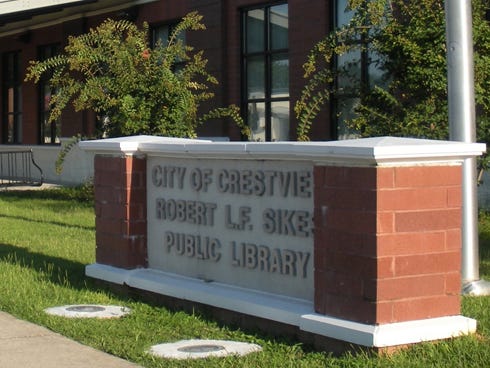
The Crestview Robert L. F. Sikes Public Library officially challenges all children ages 6-14 to exercise your most important muscle…your brain…by reading at least 20 minutes each day from June 10-July 19! 

You can earn 40 Funny Money Dollars by reading every day!  Extra fun reading logs (complete with stickers) are available at the library in front of the Story Room while supplies last. 

Not-as-fun-but-functional reading logs are available at www.cityofcrestview.org/library.php on our calendar. 

Wow next year’s teacher(s) by not letting your brain turn to mush this summer!

This article originally appeared on Crestview News Bulletin: NITZEL: Crestview library begins summer reading challenge

HART: Here's why Democrats fail on the economy

The primaries — where Democrats debate over who loves African-Americans the most, and Republicans who loves Jesus more — are over.

Now they must sell us on who will be best for the economy.

Hillary Clinton said that when she was elected she would put Bill Clinton in charge of the economy. Yes, the feminist icon is letting the man handle the checkbook.

Maybe Bill Clinton’s first move to reduce costs at the White House will be to fire the older salaried employees and hire interns.

In reality, while Obama grasps at taking credit for an economy that will go down in history as the weakest of any president's, he’s only spinning it. Obama will be the only president ever to preside over an eight-year period without a single year of at least 3 percent GDP growth. Oh, and he doubled our federal debt, adding more debt (about $10 trillion) than all 43 presidents before him.

He says he led us out of the recession with all his community organizing skills. He was inaugurated in January, 2009, and the recession ended months later, in June of 2009.

Obama acted like that was such a major accomplishment, but the reality is that we have had 47 recessions since records have been kept in the United States dating back to 1790. Recessions come along every five years or so, and we come out of every one of them.

His right-hand hatchet man, Rahm Emanuel, said it best: “Never let a good crisis go to waste.” Obama preyed on the economic fears of the country to load on big-government regulations and taxes that have, in fact, slowed the economy. Per the Wall Street Journal, “Mr. Obama will likely go down as having the worst economic-growth record of any president since the trough of the Great Depression in 1933 — over eight decades spanning 13 administrations, Mr. Obama thus far has overseen 1.7 percent average annual economic growth.”

Big recessions are historically followed by robust recoveries. This didn’t happen under Obama because he decided to grow government, not jobs and the economy. Reagan inherited a recession from Jimmy Carter in 1981, but he grew the economy an average of 4.6 percent a year afterward by getting government out of the way and cutting taxes.

Obama touts the 5 percent unemployment rate, but that number’s misleading. New unemployment claims slow seven years after a recession ended. Workers can’t claim but about 99 weeks of unemployment. The real number to watch is the dismal labor participation rate, down to 62 percent from 66 percent when Obama took office. The latest bad jobs numbers tell us that 94 million Americans are not in the labor force.

Our country’s safety net has become a hammock. Eighten percent of unmarried males and 23 percent of unmarried women ages 25 to 54 are not in the labor force. It is now cool to be a layabout; Obama blames everyone else, but the mooch.

No wonder Hillary Clinton is distancing herself from Obama’s economic record. He has created costly government, not jobs. He has picked industries he doesn’t like, including coal, for-profit colleges, payday lending, etc., and instructed his goons to regulate them out of business.

Trump is resonating with the American people because this supposed recovery has not helped the middle class, as Democrats had promised.

The average family makes $53,700 per year now, down from about $56,000 when Obama started working his "magic" on the economy.

And now it is estimated that the average family pays $15,000 a year in regulatory costs. The Competitive Enterprise Institute says this hidden tax, in the form of 3,600 new regulations and 175,000 pages in the "Code of Federal Regulations," includes more than 1 million regulatory restrictions that burden every family.

They just don’t see it.

Obama had no business experience. Ditto for other liberal “stewards of our economy,” Nancy Pelosi and Harry Reid.

Ron Hart, a libertarian op-ed humorist and award-winning author, is a frequent guest on CNN. Contact him at Ron@RonaldHart.com or tweet@RonaldHart.

This article originally appeared on Crestview News Bulletin: HART: Here's why Democrats fail on the economy

BROADHEAD: Jesus addresses how to deal with enemies

"If you pray for your enemy, one of two things will happen," says the Rev. Mark Broadhead. "One, God will change your enemy's heart. Or, two, God will change your heart. In either case, that person will no longer be your enemy."

The vast majority of people have had at least one enemy. Those who haven't are an exception to the rule. By simply being Americans, people more than likely have at least one. Certainly Christians have one or more – whether they know it or not.

Almost everyone has at least one – whether real or imagined. An imagined enemy is one who fits into a class of people we have been taught (but not experienced) are "evil" and to be avoided.

A real enemy is one who has stated contempt for a person, and either overtly or covertly wishes harm to that person or to their belief system.

Another type of enemy is someone who has hurt a person in some fashion, and that person wishes harm to them in body or spirit.

The question is, what does a person do about this? Having enemies robs so much joy from life, because a vast amount of energy is spent in being angry toward them, or in plotting how to deal vengefully against them.

Jesus of Nazareth has some great instructions on how to deal with enemies.

●Seek forgiveness. If you realize that you have done something to physically or mentally injure someone, go to that person and ask their forgiveness. The other person may or may not forgive you. If not, at least you tried, and the ball is in their court. If they do, there is reason for great rejoicing.

Pray for that person. Bless those who persecute you. Sounds rather contradictory doesn't it? Most would rather follow the Old Testament teaching of and eye for an eye and a tooth for a tooth.

The logic of Jesus' teaching is excellent. If you pray for your enemy, one of two things will happen.

One, God will change your enemy's heart. Or, two, God will change your heart. In either case, that person will no longer be your enemy.

Will you become friends? Maybe, but not necessarily. But what you will have is a clearer conscience and a purer heart, knowing you have done what is right in the eyes of the Lord.

Making enemies can be easy. Forgiving enemies can be very difficult. Praying for your enemies will have long-lasting, life-giving results. Give it a try.

The Rev. Mark Broadhead is pastor at Laurel Hill Presbyterian Church and First Presbyterian Church of Crestview.

This article originally appeared on Crestview News Bulletin: BROADHEAD: Jesus addresses how to deal with enemies

error: Content is protected !!