Please ensure Javascript is enabled for purposes of website accessibility
Skip to main content
Advertisement

NITZEL: Libraries are for date night

One Friday or Saturday evening, a little too close to closing, a well-dressed couple came into the library and hit the catalog computers with a purpose. Then they split company and scurried through the library gathering their finds.

When they came to the front desk to check out, they explained that they were a married couple on a date. A babysitter was watching their children, and they were at the library looking for children’s books. Only a few were for their children. The goal of the activity was to find their favorite childhood books.

I know someone else whose date took her to a book store, and they each chose three books that represented themselves. What a great way to get to know someone! It happened to be their first date, but it wouldn’t have to be.

So, make the library your next date! If you’re single, and this works for you, we have books to help you plan your wedding!

Speaking of getting married, we’d like to congratulate our library director, now Marie Heath!

Heather Nitzel is the Crestview Public Library's youth services librarian.

This article originally appeared on Crestview News Bulletin: NITZEL: Libraries are for date night

MANGINO: America faces ‘public health crisis of gun violence’

In the aftermath of the horrific slaughter of patrons at an LGBT club in Orlando — the worst mass shooting in American history — we have learned that the homicide rate in major cities across the country also rose dramatically in 2015.

The homicide increase in the nation’s big cities in 2015 “was real and nearly unprecedented,” according to a newly released National Institute of Justice report.

The report’s author, criminologist Richard Rosenfeld of the University of Missouri-St. Louis, said “homicide rates in a sample of 56 large U.S. cities rose by an average of 16.8 percent last year over 2014.”

This is not just a big-city problem. Last year, The Atlantic reported that guns now kill more people under age 26 than automobile accidents. Couple that with the 353 mass shootings in the United States in 2015 — depending on the definition you use — and the crisis comes into focus.

According to the Dallas Morning News, using any definition, the likelihood of being caught in a mass shooting is exceedingly rare — but getting shot is not as rare as one might think. Each year in the United States, more than 32,000 people are killed, and more than 67,000 are injured by firearms.

As a result of Orlando’s catastrophic event and these alarming statistics, the American Medical Association has called gun violence a “public health crisis” and urged that Congress fund research into gun violence.

The AMA said this week it will press Congress to overturn 20-year-old legislation that blocks the Centers for Disease Control and Prevention from conducting research on gun violence.

That lack of research is attributed to language in a 1996 appropriations bill that the CDC, lawmakers, and the media interpret as blocking the agency from research on firearm deaths and injuries. Some suggest that while Congress put constraints on the CDC, it did not ban the study of gun violence. Instead, they say, senior CDC brass made the choice to restrict gun research, rather than risk political retribution. Whatever the reason, research is lacking and people are dying as a result.

Dr. Steven Stack, AMA president, told Reuters, “Even as America faces a crisis unrivaled in any other developed country … Congress prohibits the CDC from conducting the very research that would help us understand the problems associated with gun violence and determine how to reduce the high rate of firearm-related deaths and injuries.”

Why should every American be concerned about gun violence?

There is a real and growing problem with gun violence in this country. Ten big cities produced two-thirds of the homicide increase in 2015; they also experienced a far larger percentage increase than the 56-city sample. The percentage increases in the top 10 ranged from a frightening 90.5 percent increase in murders in Cleveland to a more modest, yet alarming, 12.9 percent in Philadelphia.

The average homicide increase over 2014 in the top 10 was 33.3 percent, compared with a 16.8 percent rise for the sample as a whole.

According to the report, one-year increases of this magnitude in the nation’s large cities, although not unknown, are very rare.

The increase in 2015 was greater than 95 percent of the yearly increases these cities had experienced during the previous three decades. The report suggests that these increases, “If not unprecedented … certainly (deserve) further scrutiny.”

The AMA’s Stack sounded the alarm: “With approximately 30,000 men, women and children dying each year at the barrel of a gun in elementary schools, movie theaters, workplaces, houses of worship and on live television, the United States faces a public health crisis of gun violence.”

Matthew T. Mangino is of counsel with Luxenberg, Garbett, Kelly & George P.C.

You can reach him at mattmangino.com and follow him on Twitter, @MatthewTMangino.

This article originally appeared on Crestview News Bulletin: MANGINO: America faces ‘public health crisis of gun violence’

GUEST COLUMN: The Sunshine State's best-kept solar secret

When the question of solar energy in Florida comes up, many citizens want to know why there isn’t more.

What is one of the biggest barriers holding back meaningful solar development? It’s not the lack of sunshine — Florida has the best solar resource east of the Mississippi. The answer is burdensome taxes on solar equipment, which drive up the cost of solar power.

The Sunshine State should not be taxing people who harness the sun.

Taxes are one reason that Florida has 9 million energy customers but fewer than 12,000 rooftop solar systems. By comparison, New Jersey has over 43,000 rooftop systems installed with half the population and less sun. We can and should do better; after all, we’re the Sunshine State, right?

Florida voters can remove this barrier by voting yes on Amendment 4 on the Aug. 30 primary ballot. Amendment 4 will significantly lower solar energy costs by exempting the value of renewable energy devices, including solar panels, from the assessed value of real property and from the tangible personal property tax — the most burdensome of the taxes — for 20 years.

The solar tax exemption amendment was put on the ballot by the Florida Legislature. House Joint Resolution 193 — sponsored by Sen. Jeff Brandes and Reps. Ray Rodrigues and Lori Berman — passed unanimously in both chambers of the Legislature in the 2016 session.

It’s a bipartisan, sensible, pro-solar ballot amendment seeking to increase the use of solar power, and a policy that all Floridians can support.

Here’s why it matters:

Economics. First, a definition: “ad valorem” means a tax rate applied to a value. So, if the value of a new solar system is $30,000 and a county’s “millage” rate is 2.0 percent, then the first year tangible personal property tax on the solar system is $600. The system is taxed annually on declining value as it depreciates, which means that this tax can kill the economic benefits derived from going solar in Florida.

Demand for energy choice. Look no farther than the excitement generated over the last year and a half by the immense grassroots effort of the Floridians for Solar Choice ballot initiative to understand that Floridians want more energy choices and energy freedom.

Jobs, jobs, jobs. We hear a lot of ‘jobs’ talk in Tallahassee — with a great example being the governor’s recent trip to California to woo companies to Florida because of our pro-business environment. Now, thanks to the legislature, Floridians will have an opportunity to expand an industry that provides well-paying jobs right here at home with Amendment 4 — but voters have to seize the opportunity. The solar industry is creating jobs 20 times faster than the overall economy. One in 83 new jobs created in the U.S. last year was in the solar industry.

Keep energy dollars right here at home. Florida is heavily dependent on a single energy source at present: specifically imported natural gas, which generates almost two-thirds of our electricity. That leaves customers potentially exposed to fuel price spikes on their electricity bills.

How much energy does the Sunshine State generate from solar? Sadly, it’s less than 1 percent. And despite the fact that Florida is one of the largest electricity markets in the country, the ‘Sunshine State’ was ranked just 16th for installed solar in 2015.

Instead of sending our energy dollars out of state, let’s keep that money here, growing our local economy.

Cleaner air and water and a more sustainable future. Solar power is a clea n and safe energy source with zero emissions and zero water usage. Since solar has no emissions, it makes sense to transition our energy sector toward more solar, given that a healthier environment will lead to a healthier economy. By lowering the cost of solar, more people will have access to this clean energy source, leading to a more sustainable future for our kids and grandkids.

Of course, there are other policies that are important for strong solar power development in Florida. But the Amendment 4 tax exemption for solar power is the most immediate action voters can take to jump start meaningful solar power development in the Sunshine State.

Lastly, do not mistake Amendment 4 for the non-consumer-friendly utility funded solar amendment appearing on the November ballot as Amendment 1. Amendment 4 in August benefits everyone in Florida and moves solar policy forward in the Sunshine State.

Endorse Amendment 4 in August — vote yes on solar.

This article originally appeared on Crestview News Bulletin: GUEST COLUMN: The Sunshine State's best-kept solar secret

BROADHEAD: Like a cat seeking comfort, our souls cry out for God

Many people love their pets and will often go to great lengths to ensure their health and well-being.

Many people love their pets and will often go to great lengths to ensure their health and well-being.  My wife and I are no different.

We have a cat we dearly love that is recovering from surgery because of intervertebral disc disease, which is relatively rare in felines. The interior of the spine calcifies and crushes the spinal column. Where the disease strikes determines the kind of paralysis that occurs.

In our cat’s case, he lost all use and control of his hind quarters. Thanks to the Auburn University Small Animal Hospital, our cat can walk again. His tail still cannot function, and his use of the litter box is hit and miss — but mostly miss.

Because of that, we keep him confined in a large area near our family room, cordoned off with a low picket fence. He can watch us and interact with us.  But we won’t let him walk freely about the house as he used to until he regains control of his “biological functions.”

Oftentimes, the verbal interaction we have isn’t enough for him. Usually, reaching over the little fence to pet him isn’t satisfying. He wants and needs more on occasion. When he does, he continuously cries out to let us know of his need.

When one of us enters his pen area and places him in our lap, he becomes very calm and content.  He purrs, settles into the comfort of a loving lap, and will sometimes fall asleep.

As I have reflected on this experience, it made me think about the soul that God has implanted in every person’s heart. Our souls cry out for God, to be loved by God, to be comforted by him, to be reassured of his presence in our times of need, to be joyful with us when we accomplish feats large or small.

At times, we are hurt to the point of spiritual or emotional paralysis. At times, we feel we are left to suffer on our own. Sometimes, we just simply want and need to know we have not been forgotten.

Our souls cry out to God, to the living God, for the reassurance we have not been forgotten. As Psalm 42 starts out, “As a deer longs for flowing streams, so my soul longs for you, O God.”

This is true for every person. It may feel like a restlessness, or being unfulfilled, or even a sense of hopelessness.

Your heart is crying out to God. As you seek God, recognize his presence. Understand that he envelopes you with his loving arms and assures you that all will be well, that all will be peace, that his love for you endures forever.

And then rejoice and be comforted in him.

The Rev. Mark Broadhead is pastor at Laurel Hill Presbyterian Church and First Presbyterian Church of Crestview.

This article originally appeared on Crestview News Bulletin: BROADHEAD: Like a cat seeking comfort, our souls cry out for God

HART: Taking away Americans' guns and freedoms won't win the "War on Terror"

The Orlando gay night club shooter was on the FBI watch list. He was turned in to the FBI again by a gun shop owner for trying to buy 1,000 rounds of ammunition and a bulletproof vest. And he swore allegiance to ISIS in Arabic during the shooting.

Obama’s feds are still trying to find his motive.

Obama’s folks would only care to investigate this hard if the shooter wore a Confederate flag.

The only emotion Obama shows is his contempt for the GOP and for the Second Amendment. He will tear up talking about non-issues the same way Bill Clinton teared up when he spoke about his women issues — until Bill developed a tolerance for pepper spray.

Full disclosure: I have a concealed weapons permit and 10 guns.

No laws Democrats want to pass would have kept Omar Mateen away from a gun. But the liberal premise? Yes, murderous terrorists who kill 49 innocent people will always fill out the right government paperwork for their guns. Murder, yes, but monkey with government forms? Never!

Obama makes this about guns, dodging his terrorism foibles.

Among the gun myths perpetuated by the Left:

●Gun violence is “skyrocketing.” Yet according to Pew Research, it is down about 50 percent since 1993. The more guns, the fewer homicides.

●Gun control works. Cities like Chicago and St. Louis, Baltimore, where gun controls are strongest, have the worst gun violence. Most of the recent violent acts, from Fort Hood, Sandy Hook, the Washington Navy Yard, San Bernardino, to the recruiting station in Chattanooga and now Orlando were committed in gun-free zones.

●Guns harm their owners more than they protect them. It’s a lie. In 2013 there were 505 accidental gun deaths in America. But surveys clearly show that, each year, 100,000 to 2 million Americans use a gun for self-defense, including chasing off a potential robber or rapist. Having a gun provides immeasurable peace of mind for those of us not protected by the Secret Service, as Obama and Attorney General Loretta Lynch are, or by the private, gun-toting security of Hollywood celebs or the corporate security of the New York Times front desk. If you are in a dangerous trailer park or ghetto, a gun provides comfort.

Banning “assault rifles” is stupid. According to the FBI, rifles kill only 323 people a year; knives and blunt objects kill more than 2,100.

U.S. gun laws are stiff. O.J. Simpson went to jail for 15 years for using a gun in a Las Vegas robbery.

Sen. Tom Coburn’s op-ed last week in the Wall Street Journal was titled, “Why Does the IRS Need Guns?” We may need to defend ourselves against our growing government. The IRS has spent $11 million on AR-15s, guns and bullets; that’s $5,000 per each of 2,316 special agents. I guess when you target folks, you need a gun to shoot at them.

Much of the growth in mass shootings can be laid at the feet of the Left’s entertainment industry buddies. Hollywood desensitizes young men to killing via its violent movies and video games. In the James Bond movie franchise, Bond has shot about 400 bad guys and slept with 70 women.

Even leftists know guns are important. MSNBC’s Rachael Maddow shoots a gun, and Brad Pitt, citing his Missouri roots, spoke up for the Second Amendment.

Hillary Clinton said we need a new approach to the left’s new, favorite, focus group-tested phrase, “weapon of war.” She maintains we need her "woman’s touch" to deal with terrorists. Maybe she’s right; we’ve tried everything except the silent treatment.

Bill Clinton gets it; he’s historically been pro-gun. He realizes that guns don’t kill people; husbands armed with a gun who come home early kill people.

Ron Hart, a libertarian op-ed humorist and award-winning author, is a frequent guest on CNN. Contact him at Ron@RonaldHart.com or tweet@RonaldHart.

This article originally appeared on Crestview News Bulletin: HART: Taking away Americans' guns and freedoms won't win the "War on Terror"


MOLLETTE: Prevention, Lane Graves, Disney World, America and Alligators

No one ever went to Disney World expecting to be attacked by an alligator. 2-year-old Lane Graves lost his life to an alligator last week while his family vacationed at Disney's Grand Floridian.

We cannot imagine the emotional horror of the Graves family losing their son while simply wading in shallow water at the small beach adjacent to the hotel.

I've been to Disney World maybe five times in my life. Many Americans have never been. I never really thought about danger in years past when taking my children. Disney World has been the place where Americans and Internationals have sought to get away from it all for a day or two of vacation and happiness.

I've been on some extremely fast roller coasters at Disney World and thought they were scary, but never entertained a thought of being in danger. The parents of Lane Graves never dreamed that they nor their little son were in danger at Disney World.

Florida is filled with alligators and snakes. They are everywhere and growing. Every year there is a hunt on pythons in the Everglades. They have multiplied way of control. Alligators have become a nuisance as well. Who wants to be afraid to walk through their subdivision at night because of the possibility of an alligator attack?

Disney World royally screwed up. They knew alligators existed in their lakes and ponds and should have taken every means possible to protect their patrons. Disney World, and all the tourism it brings, will go on with fun and mega millions of income every week. Lane Graves is dead. His parents will never emotionally get over this trauma. A hundred million dollar settlement will never bring him back nor take away the pain of this family.

News outlets reported new signs and barriers have gone up at this lake and other areas where there might be danger. This is our common reaction to such tragedy. Whenever a car goes over a bad curve and someone is killed, the highway department will put up a guardrail. When a bridge crumbles and hundreds of motorists plummet to their death, the state and federal government will build a new bridge. When terrorists take over airplanes and ram them into our skyscrapers and kill thousands of people, we enact safety measures to try to prevent it from happening again. When ISIS begins driving tanks, armored cars and storming communities and towns on our Mexican border, then what will we do? Will we think, "Hmm, maybe we should build a wall?" Or, will we think, "Hmmm, maybe our citizens need guns to defend themselves after all?"  In most cases, severe loss of life and pain and suffering have taken place before we come up with defense plan.

Disney World now has come up with some measures to warn and prevent further loss of life. They now have signs, barriers and reportedly are getting rid of alligators that they can find in the ponds and lakes. This is all too late for the family from Nebraska. However, hopefully lives will be spared in the future.

Could there be a lesson from Disney World for America? We cannot simply pretend that there is no threat. The threat to our safety in this country is real. ISIS, radical Islam, and a crazy mindset that threatens harm to every American is real. We must use every ounce of prevention available to keep us safe: building a wall, maintaining our Second Amendment rights and keeping Americans warned and abreast that danger truly exists. Police, FBI and local communities must work together to protect our nation.

Mom used to say an ounce of prevention is worth a pound of cure. Disney should have thought ahead and done more. Our country must wake up and do more. Prevention at every level will save our country and way of life down the road. Ignoring prevention will lead to more pain and suffering for our country.

Being proactive and not reactive to everything in this country would save us a lot of grief.

Glenn Mollette is an American syndicated columnist and author. 

This article originally appeared on Crestview News Bulletin: MOLLETTE: Prevention, Lane Graves, Disney World, America and Alligators

SHANKLIN: Give your children the gift of financial knowledge

Father’s Day was Sunday. If you’re a dad with young children, you may have received some nice homemade cards and maybe even a baseball cap.

But, of course, your greatest reward is spending time with your kids and watching them grow.

In return, you can give them a gift — the gift of knowledge. Specifically, in the months and years ahead, teach them the financial skills that can help make their lives easier and more rewarding.

For starters, encourage your children to become savers. You can do this in a couple of ways.

First, set a good example. You might explain to your kids that you want to buy a certain item, but you are waiting for it to go on sale. Or, if it’s a particularly big-ticket item, like an ultra high-definition television, tell your children that you simply can’t afford it now, but that you are putting away some money each week until you can. You might even make a chart showing your progress.

Another way to help your children become better savers is to provide them with a monetary incentive.

To illustrate: For every dollar they put into a “piggy bank” or an actual savings account, tell them you’ll put in, say, 50 cents. They are likely to be pleased and excited by how much faster their money grows with your contribution, and they may well become more motivated to save.

Furthermore, you’ll be giving them a valuable lesson for later on in life, when they work for a business that offers to match their contributions to a 401(k) or other retirement plan.

Unfortunately, many young people, upon taking on their first “career” jobs, either under-contribute to their retirement plans or ignore them completely — thereby making it more likely that, later on in their working lives, they will have to come up with much bigger sums each year to accumulate enough resources for a comfortable retirement.

Learning to save is certainly important — but children should also learn about investing. To help get your children interested in becoming investors, point out that they can actually own shares of companies with which they are already familiar — the companies that make the games they play, the movies they watch and the food they eat.

In fact, you could even simulate the investment process by letting them choose a stock and then follow it.

To make the results more tangible, use “play” money to represent an initial investment, and add or subtract to the pile to track the real stock’s ups and downs.

You might even explain some of the reasons for the stock’s movements; for example, if you and your child are following the stock of an entertainment company, and that company produces a blockbuster movie that leads to sequels, spinoffs and merchandise tie-ins, you can point out how these developments have pushed up the company’s stock price.

You might also explain that while these short-term price movements are interesting — and maybe even fun — to follow, investing is actually a long-term endeavor, and the best investors often hold stocks for many years before selling them.

By following these suggestions, you can help your children acquire good financial habits — and seeing them put these skills to good use can provide you with many happy Father’s Days in the future.

This article was written by Edward Jones for use by your local Edward Jones financial adviser.

This article originally appeared on Crestview News Bulletin: SHANKLIN: Give your children the gift of financial knowledge

DREADEN: Use this website to learn more about computers

The https://DigitalLearn.org website has the tools to help you tackle technology at your own pace, Sandra Dreaden says.

If you are new to computers, haven't used them for a while, are a little unsure and uncomfortable, or just need a bit of a refresher, DigitalLearn.org has the tools to help you tackle technology at your own pace and gain the confidence you need to succeed. 

Sections include:

●Getting started on your computer

●Using a PC (Windows 7)

●Navigating a website

●Basic search

●Introduction to email

●Using a MAC (OS X)

●Microsoft Word

●Creating resumes

●Online job searching

●Cloud storage

●Introduction to Skype

●Introduction to Facebook

●Buying a plane ticket

●Online scams

●Internet privacy

●Why use a computer?

DigitalLearn.org is an Institute of Museum and Library Services grant-funded project of the Public Library Association.

The site, launched in June 2013 and updated in 2016, is intended to build upon and foster the work of libraries and community organizations as they work to increase digital literacy across the nation.

Sandra Dreaden is the Crestview Public Library's reference librarian.

This article originally appeared on Crestview News Bulletin: DREADEN: Use this website to learn more about computers

DUNNING: The chaste tree is easy to grow, drought resistant

The chaste tree is "often planted where beekeepers visit in order to promote excellent honey production or simply included in the landscape for the enjoyment of its showy, summer display of violet panicles," says Sheila Dunning.

The chaste tree makes an attractive specimen as your landscape bed’s centerpiece or in a large container on the deck. 

Easy-to-grow, drought resistant and attractive to butterflies and bees, Vitex agnus-castus is a multi-stemmed small tree with fragrant, upwardly-pointing lavender blooms and gray-green foliage. 

The chaste tree’s divided leaves resemble those of the marijuana plant; its flowers can be mistaken for butterfly bush; and the dry, darkened drupes can be used for seasoning — similar to black pepper — making it a conversation piece for those unfamiliar with the tree.

Vitex — with its sage-scented leaves that were once believed to have a sedative effect — has the common name “Chastetree” since Athenian women used the leaves in their beds to remain chaste during the feast of Ceres, a Roman festival held on April 12. 

In modern times, the tree is often planted where beekeepers visit, to promote honey production; or it’s included in the landscape for enjoyment of its showy, summer display of violet panicles.

Chaste tree is native to woodlands and dry areas of southern Europe and western Asia.

It will thrive in almost any soil that has good drainage; prefers full sun or light shade; and can even tolerate moderate salt air. 

Vitex is a sprawling plant that grows 10 to 20 feet high and wide, and looks best unpruned. If pruning is desired to control the size, do so in the winter, since it is a deciduous tree and the blooms form on new wood. 

The chaste tree can take care of itself, but can be pushed to faster growth with light applications of fertilizer in spring and early summer and by mulching around the plant. 

There are no pests of major concern associated with this species, but root rot can cause decline in soils that are kept too moist.

Sheila Dunning is an agent at the University of Florida's Institute of Food and Agricultural Sciences Extension office in Crestview.

This article originally appeared on Crestview News Bulletin: DUNNING: The chaste tree is easy to grow, drought resistant

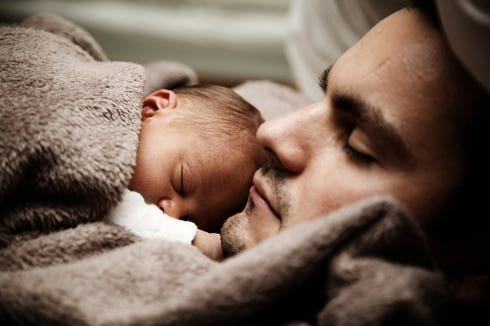
CROSE: A father's love has far-reaching effects

“Watching our fathers interact with our mothers shows us how marriages are to work; they are our role models, teaching us the importance of a loving, respectful relationship, and the value of working together for the good of the family.”

This past Sunday, we celebrated the blessing of our fathers. I feel very fortunate that my Dad is still living; he is 91 years old, and his body has slowed down, but not his mind. My husband, Jim's, father went to heaven 14 years ago. I know that many of you value the blessing of your father and his influence in your lives.

Fathers don't get the amount of recognition that mothers do, yet both are vitally important in the lives of their children. Many Dads work long hours, yet strive to be involved in their children's everyday lives, helping with homework and other activities.

Watching our fathers interact with our mothers shows us how marriages are to work; they are our role models, teaching us the importance of a loving, respectful relationship, and the value of working together for the good of the family. 

Dads also tend to be the ultimate disciplinarian in the home, the one Mom can count on to back her up, so we learn to obey our mothers.

A father's love for his children — while different from a mother's — is just as important. Dads may show their love by spending time teaching children to ride a bike or catch a ball, taking them fishing, or camping, but their love is genuine. 

Those acts of love have far-reaching effects.

From a federal government website, www.childwelfare.gov/pubs/usermanuals/fatherhood/fatherhood.pdf, I found this quote: "Even from birth, children who have an involved father are more likely to be emotionally secure, be confident to explore their surroundings, and, as they grow older, have better social connections with peers.

“These children also are less likely to get in trouble at home, school, or in the neighborhood." 

Be sure you tell your father how much you love him and thank him for all he means to you; life is short, and we never know what tomorrow may bring. 

Of course, we mustn't overlook the role of the perfect Father, the Lord God, and thank Him for all of our blessings.

Three cheers for our Crestview dads. Thank you for being involved in our lives.

This article originally appeared on Crestview News Bulletin: CROSE: A father's love has far-reaching effects

error: Content is protected !!