Please ensure Javascript is enabled for purposes of website accessibility
Skip to main content
Advertisement

Diversification is still important for retirees
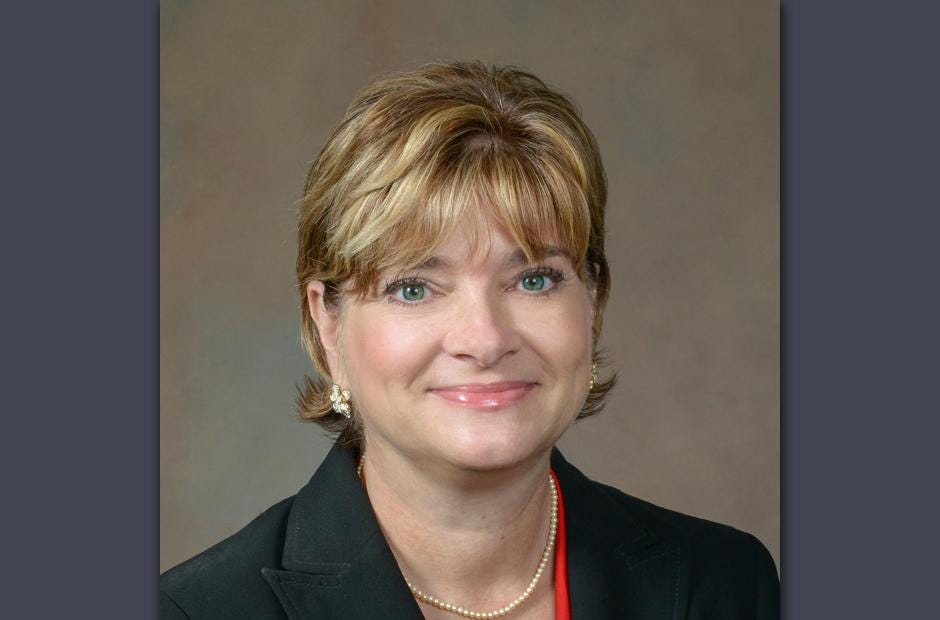
Yvonne Shanklin (Special to the News Bulletin)

During your working years, your primary investment goal is generally growth – you need your money to grow so that you can eventually afford the comfortable retirement lifestyle you’ve envisioned. But when you retire, should you change course and adjust your investment strategy from “offense” to “defense”?

Actually, it’s not quite that simple. To begin with, even while you are working, you don’t want your portfolio to be completely filled with growth-oriented investments, such as stocks. If it were, you would likely be taking on a degree of investment risk that’s too high, because, as you may know, stocks will fluctuate in price – sometimes significantly. And if you only own stocks, you could take a big hit during a market downturn.

That’s why you need to have an array of investments – stocks, bonds, certificates of deposit (CDs) and so on. By spreading your investment dollars this way, you can give yourself more opportunities for success while reducing the impact of volatility on your portfolio. (Keep in mind, though, that diversification, by itself, can’t guarantee profits or protect against all losses.)

Now, let’s fast-forward to your retirement date. Once you retire, you may need to look at your investment portfolio somewhat differently – instead of “building it up,” you may now want to think of “making it last.” So, your first impression might be that instead of maintaining the diversified portfolio you had when you were working, you need to switch to predominantly “safe” investments, such as CDs and Treasury bonds, to reduce the risk of losing principal.

And such a strategy might indeed be effective – if your retirement were only going to last a year or so. But the chances are reasonably good that you could be retired for two, or possibly even three, decades. If that’s the case, then you will have to deal with a threat to your lifestyle that you might not have considered: inflation. We’ve had low inflation for several years, but that could change in the future. Consider this: Even at a relatively low 3 percent inflation rate, prices double roughly every 25 years. And depending on your personal needs and spending patterns, your personal inflation rate might be even higher.

To protect yourself against inflation, you will find that investments such as CDs and Treasury bonds are typically not much help. In fact, in a low-rate environment, your returns on these investments may not even keep up with inflation, much less keep you ahead of it. That’s not to say they have no value – they can provide you with an income stream and help lower your overall investment risk.

But to defend your purchasing power, you will still need some growth potential in your investment portfolio during your retirement years. Your exact percentage of stocks and other growth-oriented investments will depend on a variety of factors – your projected longevity, other sources of income, family situation, risk tolerance and so on. You may want to consult with a financial professional to ensure that your portfolio mix is suitable for your needs.

Many things may change in your life when you retire – but the need for investment diversification is not one of them.

This article was written by Edward Jones on behalf of your Edward Jones financial adviser.
This article originally appeared on Crestview News Bulletin: Diversification is still important for retirees

Some of the benefits of fall weather

Fall is a lovely time of year, one that brings us cooler weather, beautiful shades of orange, yellow and burgundy flowers, and leaves that turn delightful colors.

Fall also brings pollens that cause some of us allergies. Unfortunately, both Jasmine and Shane, my collies, and I suffer from allergies. My poor collies — it is quite difficult to explain to them why they are itchy and "sneezily." (Yes, sneezily, a word I made up by combining sneeze and easily.)

I am allergic, not only to plants, flowers and stinging insects but also fragrance — which makes life quite interesting. Please be kind to allergy sufferers and refrain from wearing fragrances in tight spaces, such as the office, school, meetings or church, as you may unknowingly set off an allergic reaction. Some allergy sufferers get asthma, as well as migraines. Jim and I are blessed that we now live in Crestview, where the pollen is more seasonal than other places we have resided.

The collies are anxiously awaiting cooler weather so they can play outdoors. They love to frolic in the backyard, chase squirrels and lie under the banana tree, but they do not like hot weather. I believe I have totally spoiled them.

I love wreaths and Disney, so I am going to make an easy fall grapevine wreath featuring Mickey Mouse. To make this project yourself, you will need:

•Two 4- or 6-inch grapevine circles

•One 8- or 10-inch grapevine wreath

•Glue gun — hot or cool

•3 yards of fall-colored ribbon for a bow

•Assorted flowers and decorations

Glue the two smaller circles to the larger circle to make the Mickey Mouse head, then add your desired decorations and flowers. Finish with a colorful bow, and if you want, you can attach some lightweight floral wire so that you can hang your wreath more easily.

This project should only take about 45 minutes to an hour. It would be a great project to do with your children or grandchildren.

Be creative and make any type of fall wreath you desire.

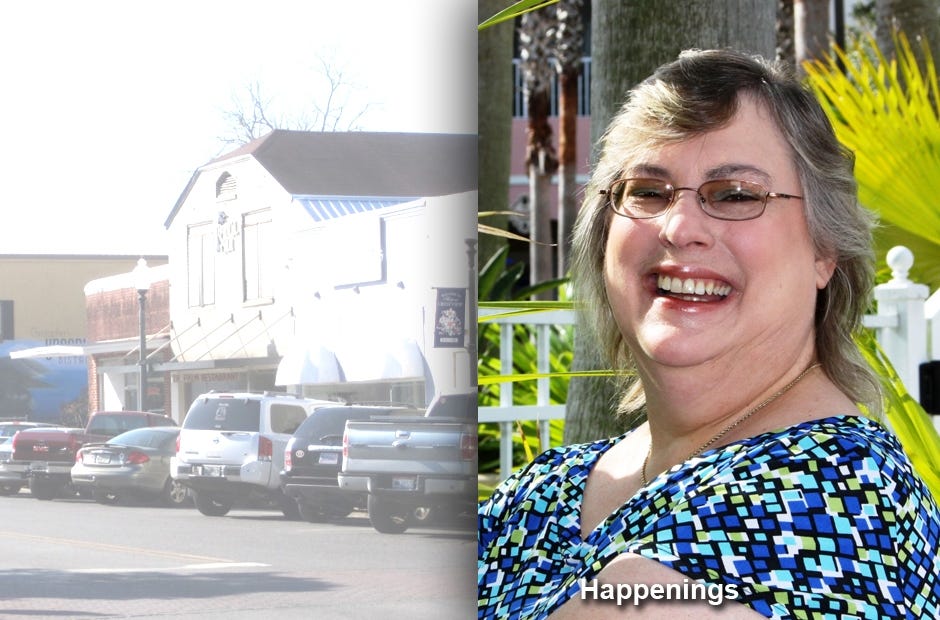
Janice Lynn Crose, a former accountant, lives in Crestview with her husband, Jim; her two rescue collies, Shane and Jasmine; and two cats, Kathryn and Prince Valiant.

This article originally appeared on Crestview News Bulletin: Some of the benefits of fall weather

HOPKINS: Free trade agreements — good or bad for us?

Free trade agreements have come under fire in the presidential campaign and it may be the right time to review such agreements and their relative merits.

The first such agreement that made headlines was in 1985 between the U.S. and Israel. There have been three more major ones and several minor ones since then.

In general, the basic theory of free trade agreements is that if governments, (taxes, duties and tariffs) are not a party to international business transactions the companies involved will increase their income. In fact, that theory has proven to be correct. The downside is that certain jobs in the U.S. have been eliminated to the benefit of other countries

Despite the fact that such agreements in today’s politically heated atmosphere appear to be partisan that is not the case. Such agreements have been sponsored by both Democrat and Republican Presidents.

The 1985 free trade agreement was during the Clinton (D) administration. A second, called NAFTA, was signed in 1994 by George H.W. Bush (R). The Trade Act of 2001, was during the George W. Bush (R) Administration. The most recent one being debated today is under the Obama Administration (D) and is called the Trans-Pacific Partnership. It is a free trade agreement that includes the U.S., Australia, New Zealand, Chile, Peru, Singapore, Vietnam and Brunei.

It is true that many jobs have been discontinued in recent years and that is a tragedy for workers who depended on those jobs. The “rust belt” in the Northeast is symbolic of the loss of our steel plants and other “fabrication” industries. The South has felt the economic pressures of losing the textile mills that were so much a part of both the economic and social well-being of the South.

Unfortunately, no amount of political posturing will bring those jobs back. That ship has sailed.

It might be a shock to learn that though manufacturing jobs have declined over the past 20 years, U.S. manufacturing output has increased by almost 40 percent over that time period. Manufacturing now adds a record $2.4 trillion to the U.S. economy each year.

How could it be that we have lost jobs but gained productivity? Improvement in technology caused about 85 percent of the loss of manufacturing jobs from 2000 to 2010. Free trade agreements accounted for less than 13 percent of the losses.

No amount of political posturing is going to bring manufacturing jobs back to those now defunct industries. If all free trade agreements were wiped out, the primary result would be higher prices in many of those commodity areas. Not only would that adversely affect our economy, but the paying public would be very unhappy with the result.

Better education and job training for our people is the answer to lost jobs. Jobs in more technical areas are listed in the want ads every week and continue to go wanting due to not having enough trained personnel in the marketplace.

Like so many of the issues in our society, solving the problems comes back to education and how to better prepare our people for a more technological workplace. Mercifully, community and vocational schools dot the landscape. We currently have more than 1,500 of them spread across the country. Much of their effort is focused directly on training our people for the job market in the local area.

One of the major discussion topics in the current political campaign focused on providing free education for the first two years of study. Some dismissed that proposal as so much socialistic rhetoric.

Considering our economy’s need for better-trained workers and the number of lost jobs due to the development of technology, we may need to give the “free” vocational training idea another look.

Considering the amount of money we currently have invested supporting those currently out of work with little hope of gainful employment, it doesn’t take genius thinking to apply some of that money to job training in technological areas where the jobs are.

Dr. Mark L. Hopkins writes for More Content Now and Scripps Newspapers. He is past president of colleges and universities in four states and currently serves as executive director of a higher-education consulting service. You will find Hopkins’ latest book, “Journey to Gettysburg,” on Amazon.com. Contact him at presnet@presnet.net.

This article originally appeared on Crestview News Bulletin: HOPKINS: Free trade agreements — good or bad for us?

HUBBUB: Since Okaloosa Lane's getting paved…

CRESTVIEW — Numerous crestviewbulletin.com and Facebook readers shared their thoughts on Crestview Citizen of the Year Mary Jo Woodruff and the county’s plans to pave Okaloosa Lane.

Here is a sample of their comments:

CITIZEN OF THE YEAR ‘A BLESSING’

It is a blessing to have Sister Mary Jo Woodruff as part of our church family here at Central Baptist Church. She and her late husband, Bro. Gene, have served the community sharing Christ's love to all.

From her work in the kitchen to driving buses on many church trips, then on to her integral part as a charter member of our Sunshine Gang, she is a joy to all.

(Through) her work with the Home of Grace and with the Woman’s Missionary Union she has been able to help minister to not just our local community but to our state, our nation and internationally.

To sit and name each group, organization and ministry that she has helped serve in would place us here for days and still probably miss a few. We count it all joy to have Sis. Mary Jo on the journey alongside us here, and look forward to serving her for many more years to come as she serves our Lord sharing His love with others.

CENTRAL BAPTIST CHURCH

SINCE OKALOOSA LANE’S GETTING PAVED…

Now make a bridge over I-10 and connect it to Airman's Memorial and we would have a back road that skips (State Road) 85 and gets you to (Highway) 90.

AUGUSTO BARRETO-MOLINA

GRATITUDE FOR PAVEMENT PLANS

Thank you to all involved in making this happen to make it safer for our kids.

TRISH FULTON

This article originally appeared on Crestview News Bulletin: HUBBUB: Since Okaloosa Lane's getting paved…

Hillary's health — her biggest problem?

Hillary Clinton recently was sick, as the media has reported. We've heard about her pneumonia, saw her coughing at the podium and struggling to stay afoot as she was escorted to her car.

The strenuous pace of campaigning for president of the United States would surely take its toll on any human body.

Clinton has been accused of hiding her illness. Secrecy has been a pattern with her when it comes to emails, Whitewater, Secretary of State activities, the Clinton Foundation, mega-dollar speaking fees from none other than Wall Street and a sloughing off about the lifestyle shenanigans of Bill.

She has denied being the woman in Tammy Wynette's song titled "Stand by Your Man," but she did do a good job of standing by Bill during some tough years of adversity. Bill is now standing with her — and what a better place for him to have eight more years to solidify millions and millions more in contributions to the Clinton Foundation.

Even if money were refused from Middle Eastern powerbrokers during Hillary's presidency, continued relationships will be built for donations for years to come.

Maybe this is part of Hillary's health condition. Sometimes, there is simply too much on the plate.

Possibly, there have been too many powerful Saudis calling on the telephone with political suggestions.

Too much loss of sleep wondering where Bill is and what he is doing.

Maybe there have been too many late hours deleting emails and trying to cover up massive contributions to the Clinton Foundation.

No one knows for sure what is going on with Hillary Clinton's health. She looked tired. Her schedule is crazy. She is probably just worn down. It happens. Anybody can get sick. Trump may turn up with the flu. They just need to say, "I'm sick and I'm going to bed. I'll be back out when I'm feeling better."

All of us battle physical ailments. We are all one heartbeat from death. Flu, viruses and sore throats happen to us all. Franklin D. Roosevelt's paralytic problems began in 1921 when he was 39 years old. Roosevelt was diagnosed with poliomyelitis although years later there were other diagnoses.

He was left with permanent paralysis from the waist down and was unable to stand or walk without support. He laboriously taught himself to walk short distances while wearing iron braces on his hips and legs. He supported himself with a cane, and he was careful never to be seen using his wheelchair in public.

His troubles with illness were well known before and during his presidency and became a major part of his image, but the extent of his illness and physical condition were kept from public view. In other words, he wouldn't call CNN, Fox or NBC for a full video analysis and report of his condition.

Of course, it was a different day. People judged Roosevelt by who he was and what he could do in spite of severe physical limitations. They believed him. They had faith that he was the person to lead this country. He was a proven leader.

Americans aren't that worried about Hillary's pneumonia or Trump's tax returns. If one of them ended up on a walker or in a wheelchair, it would be a moot point.

Americans want somebody to have faith in and believe. Right now, that's our biggest problem.

Glenn Mollette is a syndicated columnist and author of 11 books. His words are read in all 50 states.

This article originally appeared on Crestview News Bulletin: Hillary's health — her biggest problem?

Gary Johnson’s moment: 'What’s Aleppo?' Who’s John Galt?

When Libertarian presidential candidate Gary Johnson was asked by the condescending crew at MSNBC what he would do about Aleppo, Johnson asked, “What is Aleppo?”

Some say it was his Alamo.

Knowing about this obscure city in Syria is apparently the litmus test to be president, according to the Washington, D.C. chattering class — the same ones who said nothing when candidate Obama said he had visited "all 57 states."

Most of us like Johnson’s refreshing admission that he didn’t know. He owned it. He admitted he made a mistake and then went on to discuss his views on Syria. In general, we Libertarians do not bother to learn the names of cities we don’t plan to occupy.

If asked about Aleppo, Trump would instinctively say to bomb the (redacted) out of it. Hillary would call the question sexist and then have her goons go after the questioner, who would soon be found dead of “natural causes.”

I thought Aleppo was a lesser-known Marx brother. Like most Americans, I only learn world geography when we fight there.

If Mike Barnicle wanted to get Johnson to talk about this, he could have simply followed with, "What would you do about the Syrian refugee issue?" The MSNBC host seemed to relish the "gotcha" moment and smugly let Johnson flounder. Barnicle said slowly, “A-lep-po” like he was telling you the name of a fancy restaurant he frequents or an island where he summers.

MSNBC has Barnicle, a plagiarist who lied about it, and Brian Williams, the faux war hero. There’s your “Basket of Deplorables.”

Obama appointee Chris Hill, our recent ambassador to Iraq, appeared on MSNBC right after Johnson and, with a smirky arrogance those types of liberals have, misidentified Aleppo himself. Then the liberal torchbearer, The New York Times, reported on the story and had to correct two mistakes they made explaining Aleppo.

The net of the Gary Johnson/Aleppo gaffe is that now more people know him.

Here’s the real issue. Obama drew a “red line” in Syria that President Assad clearly crossed. He runs foreign policy as if he were afraid some nation might write a sternly worded letter to the UN on him.

The Obama Doctrine seems to be, “Well, we can’t win 'em all.” His Secretary of State, John Kerry, could not break up a catsup fight at a Heinz family picnic. Obama's muddled, passive-aggressive, “The whole world loves me, so it will do what I say” strategy hasn’t worked. We no longer have theaters of wars; we have suburban mall-sized multiplexes of wars.

The libertarian policy of Johnson and our crew would have us less involved in the Middle East. Our non-interventionism would have saved us $2 trillion and not entangled us in wars of choice.

From the Bay of Pigs to the Shah of Iran, from Iraq and Afghanistan to Egypt, Libya and others, the USA just costs itself trillions and never makes the situation better.

If we won one, it would be one in a row. Germany at least lost to us and to Russia; they should be ranked higher in the polls than we are just on strength of schedule.

Hillary and Obama say they have no plans to send ground troops to Syria. When has having a plan ever stopped us? They say they will send “advisers” in. Since Vietnam, we have dropped probably 50 megatons of “advice” on other countries.

Russia and Assad are battling ISIS in Syria. We need to stay out. It’s like me watching Ohio State play USC: I hope it’s a 0-to-0 tie with lots of injuries.

The U.S. has spent $500 million recruiting Syrian rebels to fight. We got three. Not bad for D.C.; the government official in charge of that program probably got a performance bonus.

We like the Free Syrian Army in this battle. If you are wondering who they are, they will be the group we send troops to fight against in about a year.

And we will recognize the weapons they will be using against us because we will have the receipts.

Ron Hart, a libertarian op-ed humorist and award-winning author, is a frequent guest on CNN. Contact him at Ron@RonaldHart.com or @RonaldHart on Twitter.

This article originally appeared on Crestview News Bulletin: Gary Johnson’s moment: 'What’s Aleppo?' Who’s John Galt?

Give God the best part of your week

Many businesses operate 24 hours a day, seven days a week and 365 days a year.

Manufacturers keep factories running.

Places of entertainment — like Disney or Universal entities — operate every day including major holidays.

There is little time for rest. Even when people have the weekend off, many are rushing around doing personal errands and working around the house, among other things.

And if they are not doing chores, they are rushing around finding ways to entertain themselves.

In this third, final article on Sabbath rest, I invite your continued reflection on how much you engage in working, how much you engage in recreation, how much your mind is occupied by entertainment or matters that cause great stress as compared to resting and re-creating.

When do you rest — besides when you sleep? When do you intentionally rejuvenate your body, mind and soul to prepare for the days ahead? When do you focus your attention on God?

God created the Sabbath as one day a week set aside to recharge our body, mind and soul.

Many religious traditions now have Sunday, the first day of the week, as the Sabbath. This recognizes Christians starting the week with the celebration of our Lord rising from the dead on the first day of the week.

When you realize that the Sabbath — the day God declared as holy — is the first day of the week, not the last, it provides a different focus. It means that the week begins with our focus on God and his presence in our lives.

It means we give God the best part of the week, rather than the last part of the week when we collapse and give God what is left over. The week starts with a time of renewal, of rest, of reflection.

We keep the Sabbath holy by attending places of worship with fellow Christians also seeking restoration for their souls.

We do this by setting aside the labors and problems of the previous week.

We do this by focusing our attention on our Lord who created us, loves us and strengthens us for all things.

We do this by setting aside our worldly cares so we can delight in worshiping God, giving him our undivided attention during the day.

God rested from his labors on the Sabbath. Jesus rested from his labors on the Sabbath. Who are we to do otherwise?

The Rev. Mark Broadhead is pastor at Laurel Hill Presbyterian Church and First Presbyterian Church of Crestview.

This article originally appeared on Crestview News Bulletin: Give God the best part of your week

Automatic payments can save people time and money

"Use your calendar to plan ahead and monitor where you are spending your money," Jill Breslawski says. "If you notice a lot of money being spent on one expense and don’t have enough money to cover your needs, make a change and give yourself a spending limit for items considered 'wants.'"

School and sports are now in full swing, vacations are over, and it seems like we are running full speed into the holiday season.

With so much on our plates it can be easy to forget to take care of the day-to-day stuff like budgeting and paying bills.

Why not try setting up automatic payments through your financial institution to cover expenses like utilities or credit card bills? Online banking is usually an easy way to accomplish this.

Often a bank or credit union will allow you to keep track of expenses, and will store your utility or credit card account information on its website. With just a few clicks of a button, you can designate how much money to distribute to each account and how often you pay.

Don’t have online banking? Most companies now will set up their own automatic bill-pay. Just contact their customer service line, or visit their website, and a representative will take your banking account information and will have your funds automatically debited in the amount of your bill.

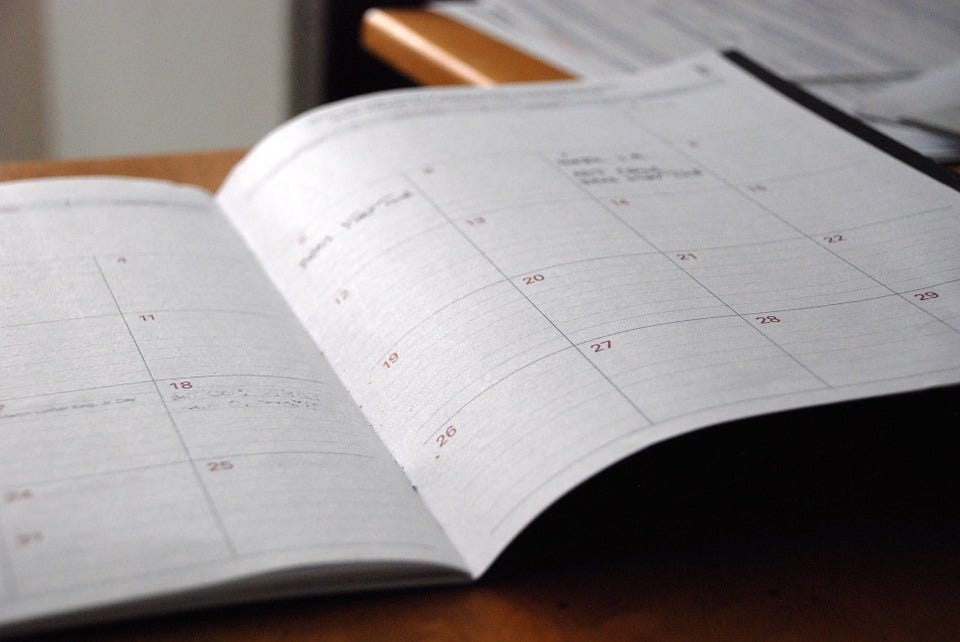
Another way to make sure bills are paid on time and to track your expenses is by using a good old-fashioned calendar. Whether this is one you hang on your wall or one you store on your phone or computer, you can keep track of daily expenses, bill due dates, and income all in one location.

Use your calendar to plan ahead and monitor where you are spending your money. If you notice a lot of money being spent on one expense and don’t have enough money to cover your needs, make a change and give yourself a spending limit for items considered “wants.”

Make a commitment to yourself to save money, reduce debt and build wealth over time. Visit our website, www.okaloosasaves.org, or text “OKSaves” to 95577 to take the Okaloosa Saves pledge. (Standard data and message rates may apply.)

For more information, contact me at 689-5850 or jbreslawski@ufl.edu.

Jill Breslawski is an agent at the University of Florida's Institute of Food and Agricultural Sciences Extension office in Crestview.

This article originally appeared on Crestview News Bulletin: Automatic payments can save people time and money

HUBBUB

CRESTVIEW — Numerous crestviewbulletin.com and Facebook readers shared their thoughts on Crestview gas prices, assault charges against a local teenager being dropped and Colin Kaepernick.

Here is a sample of their comments:


EXONERATE GABRIEL SIMON

This young man deserves to be exonerated in full, and I wish him and his family the best. What a shame that the accuser does not have to apologize publicly for their actions.

Bonny Ann


NEW YORK GAS IS CHEAPER

My mother visiting from Buffalo, N.Y. said that Crestview is charging more for gas than in Western New York!

Jenn Boswell


DON’T BUY GAS HERE

Don't buy in Crestview, that's all. And if you absolutely have no other choice, get only what you need. No fill-ups mean they'll sell less gas and hopefully they'll get the hint.

Diane Marie


LOOK IT UP

Wish someone would address the fact that the football empire itself feeds off the poor, particularly minorities. Look up the documentary “Workhorses.”

Brandi Fickling

This article originally appeared on Crestview News Bulletin: HUBBUB

Ways to care for others

"There are so many ways to give to others," Janice Lynn Crose says. "One way is to simply say 'hello' and smile at each person you meet; that will brighten their day.

Americans are, by nature, a giving and caring group of people. We are generous with our time, talents and money to those who are in need.

There are so many ways to give to others. One way is to simply say "hello" and smile at each person you meet; that will brighten their day.

Another way would be to help your elderly or disabled neighbors with simple tasks, see if they need milk when you are going to the store, offer to take something to the post office, or offer to take their trash barrel to the curb and bring it back up.

These are such small, but needed and kind things to do for others.

My parents, who are elderly, have some wonderful neighbors who help them in many small ways and, in doing so, make my parents' lives much easier.

A friend and I had the opportunity to visit some ladies here n Crestview who don't get out as much as they once did. This made me realize there is a need for regular visits with those who can't drive or get around very easily. Just because someone can no longer drive, it doesn't mean they don't still need and want companionship — and friendly interaction. None of us can ever have too many friends, and we can all use a smile and friendly conversation.

There are several long-term care facilities here in Crestview, as well as assisted living homes. If you feel these types of relationships would fit you, I am sure that your house of worship has a list of people who would love to have visitors, and if you don't belong to a church, then I am sure that the assisted living or convalescent homes would be happy to direct you to residents who have few or no visitors.

If you don't have the time to physically visit those who are shut in or home-bound, cards are always welcome and don't take much time to send. Think of some creative ways you can help and bless others.

What are you doing to encourage your neighbors or those less who are fortunate?

Janice Lynn Crose, a former accountant, lives in Crestview with her husband, Jim; her two rescue collies, Shane and Jasmine; and two cats, Kathryn and Prince Valiant.

This article originally appeared on Crestview News Bulletin: Ways to care for others

error: Content is protected !!