Please ensure Javascript is enabled for purposes of website accessibility
Skip to main content
Advertisement

Nerds are heroes we need now

[ WIKIMEDIA COMMONS ]

Every year as our part of the world stretches toward summer, the warmer weather brings with it a much-needed diversion, be it the Ice Bucket Challenge, planking or throwing slices of cheese at your baby’s head.

James Holzhauer is the hero, the diversion we didn’t even know we need.

A sports bettor by profession, Holzhauer is molly-wopping everyone who contests him in “Jeopardy.” As of Monday, he had won 13 consecutive matches, mowing opponents down like spring grass and closing in a $1 million in winnings.

There are rumors the upcoming Scripps National Spelling Bee is taking out a restraining order.

Holzhauer, who calls being on the show a lifelong dream, is chasing “Jeopardy” legend Ken Jennings, who won $2.5 million over 74 matches. He said he is rooting for Holzhauer.

Rorschach test

In this current age of braying ignorance, when critical thinking is akin to sedition and elitism is dog whistle for literacy, Holzhauer’s astonishing run assures us knowledge still holds value.

His quest couldn’t have come at a better time. In him we have something we all can root for — a pop-culture respite from the knife fights breaking out as a result of the Mueller report, which is shaping up to be the biggest Rorschach test in American history.

We can’t even count on Prince Harry and Meghan Markle, the Duchess of Sussex, who have gone all M-I-6 in wanting to keep the birth of their baby a private affair instead of a mass-media hot mess. How dare they?

Holzhauer’s remarkable run proves yet again it is nerds who rule the world, not the bully boys, the profane or willfully ignorant.

Not the jocks, not the famous, not even the rich. This is America, which means you can stack money to the ceiling and still not know how to spell “capital gains tax.“

Mom next door

It’s easy to forget this country was founded by nerds — people who studied other governments and philosophies to create a nation unique in that it endowed average people with an unprecedented amount of power.

One of them, John Adams, wrote, “Let us tenderly and kindly cherish, therefore, the means of knowledge. Let us dare to read, think, speak and write.”

Nerds are the ones who not only love knowledge, but also the pursuit of it. They find their checkmates by poring over minutiae no one else can be bothered to read.

In congressional hearings, Rep. Katie Porter of California has been making mincemeat out of bankers with her encyclopedic knowledge of finance. Unlike some of her colleagues, Porter isn’t being asked to pose for the cover of “Rolling Stone.” She looks like the mom next door — if that mom was a forensic accounting savant.

If you doubt nerds rule, consider that for all their machismo and swagger, it wasn’t the G-men who got Al Capone.

It was the bookkeeper.

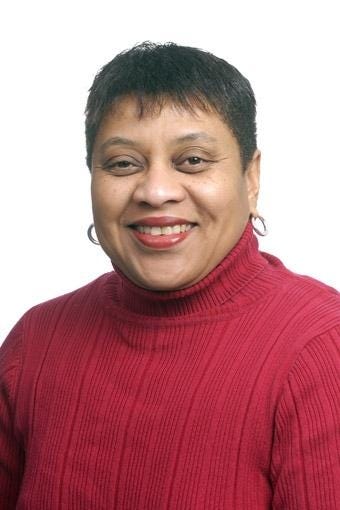
Reach Charita M. Goshay at 330-580-8313 or charita.goshay@cantonrep.com.

This article originally appeared on Crestview News Bulletin: Nerds are heroes we need now

Federal Court rules parking tickets unconstitutional

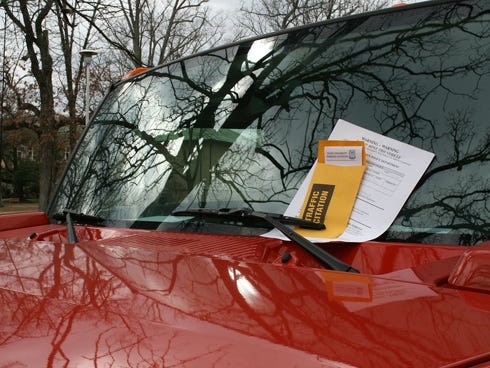
You know that feeling you get when you return to your parked car and there tucked under the windshield wiper is a parking ticket flapping in the wind. First, there is bewilderment. “How could this happen? It’s free parking.” Then comes rage. “Why those rotten @5&%#!” Then there is resignation — the tire is chalked — “They got me.”

Not so fast. The U.S. Court of Appeals for the Sixth Circuit — covering Kentucky, Michigan, Ohio and Tennessee — ruled that marking a car’s tires to gather information is a form of trespass requiring a warrant.

Parking enforcers across the country have been chalking tires for years in areas without parking meters to keep track of time limits and issue tickets. It generates a lot of money but does it also keep streets safe from traffic and congestion?

Allison Taylor was fit to be tied after her 15th parking ticket in Saginaw, Michigan, between 2014 and 2017. The tickets were all from the same parking enforcement officer, Tabitha Hoskins. Taylor filed a federal civil rights suit against the City of Saginaw and Hoskins alleging they violated her Fourth Amendment right against unreasonable searches by placing chalk marks on her tires without her consent and without a valid search warrant.

The trial court dismissed Taylor’s lawsuit, finding that the city did engage in a search as defined by the Fourth Amendment. However, the Court found the city’s search reasonable because there is a lesser expectation of privacy in automobiles and because the “search” deals with community safety and therefore there is no need to get a warrant. Taylor filed an appeal.

There is no question that people driving vehicles, or the passengers in those vehicles, have a lesser expectation of privacy in their cars than in their homes.

Typically, the lesser expectation relates to physical searches of vehicles or its occupants. The reason, a car can be driven away, a house is normally stationary.

The Supreme Court has narrowed some of the broad exceptions to searching a vehicle without a warrant. The High Court has restricted the use of GPS tracking without a warrant, the search of rental vehicles and the search of vehicles in, on, or very near a home or garage.

More troubling was the trial court’s reliance on the community caretaker exception to getting a search warrant. The idea behind community caretaking is that police do not always function as law enforcement officials investigating and solving crimes, but sometimes act as community caretakers designed to prevent harm in emergency situations.

Circuit Court Judge Bernice Bouie Donald reversed the decision of the lower court. She found, as the lower court did, that chalking tires is a search, but she went a step further — she found the practice of tire-chalking is unconstitutional, violating the Fourth Amendment’s bar on unreasonable searches.

If a city wants to chalk tires they need a search warrant.

The judge also pooh-poohed the “caretaker” exception argument, saying that Taylor’s vehicle posed no safety risk. More to the point she wrote — as vehicle operators everywhere already know — parking tickets are not to “mitigate (a) public hazard,” but rather to raise revenue.

Is this the end of parking tickets for cities that don’t want to spring for parking meters? Probably not.

The Washington Post shared a tweet from Fourth Amendment expert Orin Kerr of the University of Southern California law school, “seems easy enough these days for parking enforcers to just take a photo of the car, or even just a close-up photo of the tire, rather than chalk it … No 4A (Fourth Amendment) issues then.”

I’m sure cities across America are scrambling to trade in the chalk for iPhones to insure parking enforcement officers have all the 21st century tools to apprehend those fiendish parking violators.

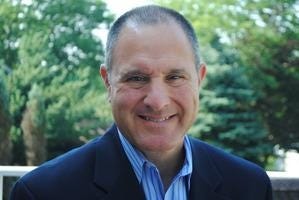
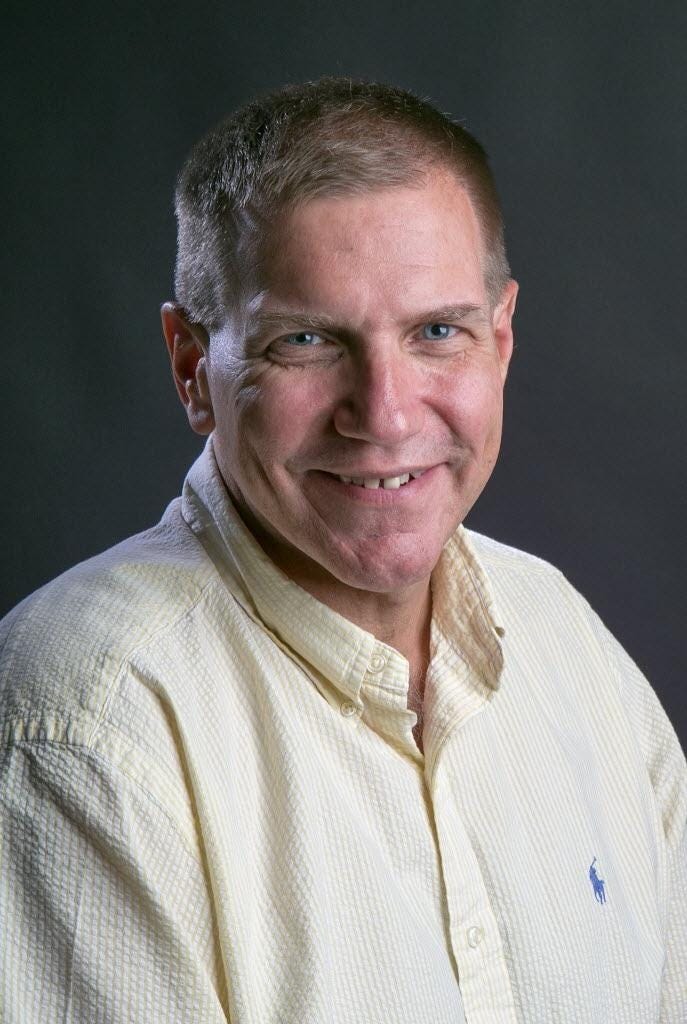
Matthew T. Mangino is of counsel with Luxenberg, Garbett, Kelly & George P.C. His book The Executioner’s Toll, 2010 was released by McFarland Publishing. You can reach him at www.mattmangino.com and follow him on Twitter @MatthewTMangino.

This article originally appeared on Crestview News Bulletin: Federal Court rules parking tickets unconstitutional

It’s Trump’s time to deregulate

[ WHITE HOUSE ]

A photo from a White House event in December 2017 shows President Donald Trump standing between two stacks of paper.

The pile on his right reached half-way up his shins. It was dwarfed by the massive pile on his left that looked like it could fit in a backyard shed and had to be brought in by forklift. Its several columns reached above the head of our 6-foot-2 president.

The stacks vividly illustrated how much we’ve empowered federal bureaucrats by burdening Americans with a ninefold increase in federal regulations from 1960 (about 20,000 pages) versus the present (more than 185,000 pages).

The president then ceremoniously snipped a red ribbon connecting the piles to demonstrate his administration’s commitment to ridding Americans of meddlesome and nettlesome red tape.

The Founding Fathers would cringe, maybe even faint, if they could see how we have overfed our Leviathan.

But regulations are only half the story. Laws, too, contribute to our bind.

In a 2016 study, Paul Larkin and John-Michael Seibler of the conservative Heritage Foundation reported that the federal government has created more than 4,000 criminal laws.

Again, the Founders never intended for our ruling class in Washington to rule over us in such stringent fashion.

To understand how far the tentacles reach, check out the absurdity on a Twitter account called A Crime a Day (@CrimeADay).

Twitter by and large is a cesspool of calumny and hate. Yet this account, the work of Mike Chase, a criminal defense lawyer from Hartford, Connecticut, is one of the most useful things you’ll find on social media.

Chase seeks to count and chronicle every statute in the federal criminal code. His Twitter feed reminds us how ridiculous, mundane and outdated many laws are — and how much liberty we have ceded to our central government. For instance, consider just some of Chase’s offerings from this month.

April 7: It’s a crime “for a brewer to not immediately report an ‘unusual’ loss of beer while the beer was being transported between breweries.”

April 5: It’s a crime “to engage in population control of barn owls in Hawaii by putting oil on their eggs if you don’t use 100% corn oil.”

April 4: It’s a crime “for judges in the Federal Duck Stamp contest to not spend at least two hours reviewing the artwork submitted by duck stamp contestants before the contest begins.”

April 3, whose entry could be applicable to Joe Biden: It’s a crime “for a bathhouse employee, who works in a bathhouse that uses water from Hot Springs National Park, to touch bathers without getting a health examination first.”

April 1, assuredly not an April Fools’ Day prank, but which is enlightening in the wake of Robert Mueller’s pursuit of some Trump associates: It’s a crime “to lie to a National Park ranger, causing them to respond to a fictitious event.”

If you doubt him, Chase helpfully cites the section of the code where the laws can be found.

Chase is performing a valuable public service. Thus, his work deserves more attention. @CrimeADay has 102,000 followers. If they all retweeted his posts, maybe some of the people in power would soon see how ridiculous some of this stuff is — and, more importantly, work to repeal it.

Many regulations in Trump’s big pile likely are necessary to protect Americans’ health and safety. But many others probably further neither, yet come with an economic cost that takes juice out of the economy. As for those dozens of volumes spelling out the federal criminal code, the libertarian journalist Albert Jay Nock has observed we give away something more valuable than cash with pointless laws.

“If we look beneath the surface of our public affairs, we can discern one fundamental fact, namely: a great redistribution of power between society and State,” Nock wrote. ”… Every assumption of state power, whether by gift or seizure, leaves society with so much less power; there is never, nor can there be, any strengthening of State power without a corresponding and roughly equivalent depletion of social power.“

Nock wrote that in 1935. Consider how much power we have surrendered to Washington since then. We need to take some of it back. And Mike Chase has come along to show us where to begin.

Bill Thompson (bill.thompson@theledger.com) is the editorial page editor of The Ledger in Lakeland, Florida.

This article originally appeared on Crestview News Bulletin: It’s Trump’s time to deregulate

In the criminal justice system things are worse than they seem

[ MAXPIXEL ]

In 2009, President Barrack Obama appointed Preet Bharara as the United States Attorney for the Southern District of New York. President Donald Trump unceremoniously fired him in 2017.

Bharara has written a book, as has just about anyone who has been hired, fired or lambasted by Trump on Twitter.

John Pfaff, an author himself, and law professor at Fordham University, recently wrote a review of Bharara’s book, “Doing Justice,” for the Washington Monthly.

Pfaff suggested that the thesis of Bharara’s book can be found near the book’s end, where Bharara writes the criminal justice system is ”(A)n inquiry fairly conducted, and accusation rightly made, a judgment properly rendered.” Pfaff pulls no punches when he responds to Bharara’s thesis, “This is a stunningly sunny take on our criminal justice system, optimistic to the point of being dangerously misleading.”

Are things in the criminal justice system really that bleak?

Here are four things to consider:

  • Incarceration rates;
  • Prison conditions;
  • Oppressive community supervision; and
  • Collateral consequences of crime.

First, incarceration rates rose five-fold between 1970 and 2008. Relative to population, America now locks up seven times as many people as France, 11 times as many as the Netherlands and 15 times as many as Japan.

America imprisons more people for longer periods of time than at any time in history. There is no question that some recent reforms have the potential to reduce prison population. However, insistence on locking up people for non-violent offenses like theft, drug possession and nuisance crimes insures that the system will continue to waste money and waste lives.

Prisons are doing little to deal with recidivism. We know of truly deplorable prisons and jails like Rikers Island in New York and the state prison system in Alabama, but there are systemic problems across the country.

Prisons have become de facto mental health facilities. There are estimates that as many as 56 percent of state inmates have some mental health malady and a significant amount of those inmates have severe mental health problems.

Local jails across the country are loaded with pretrial detainees. People charged with a crime who cannot post bond. Those individuals, not yet convicted of a crime, languish in jail because they are too poor to pay for their release. Those sitting in jail awaiting trial cost taxpayers millions of dollars every day.

After an offender is released from prison the grip of the state is barely loosened. According to statistics compiled by the Department of Justice, one in 38 Americans is under some form of community supervision. Whether house arrest, parole or probation the government can keep close ties on offenders long after they have been released from prison.

Most of those who return to prison do so not because they committed a new crime, but because they violated a condition of community supervision. For instance, an offender on parole who fails to report goes back to prison. A probationer who drinks alcohol goes to jail; an offender on house arrest who leaves her house gets thrown in the hooskal. Who pays the price for an offender who drinks or leaves his house? Taxpayers.

The cost of incarceration in this country, fueled in part by technical parole and probation violators, is $81 billion per year.

Finally, even when a former offender has served his time in prison and successfully complied with parole while on the street they remain hamstrung by the system.

The collateral consequences of crime may keep convicted individuals from getting a driver’s license, housing, employment, a professional license, voting and other entitlements available to “law abiding citizens.” According to The Heritage Foundation, there are an estimated 46,000 state and federal laws that make it difficult for former offenders to get on with their lives.

So what happens when a former offender is thwarted at every turn — no work and no place to live, no driver’s license? That is easy to figure out.

Matthew T. Mangino is of counsel with Luxenberg, Garbett, Kelly & George P.C. His book The Executioner’s Toll, 2010 was released by McFarland Publishing. You can reach him at www.mattmangino.com and follow him on Twitter @MatthewTMangino.

This article originally appeared on Crestview News Bulletin: In the criminal justice system things are worse than they seem

Easter sunrise service scheduled in Laurel Hill

Janice Lynn Crose

In a few short days, we will celebrate the resurrection of the Lord Jesus Christ. Many people around the world celebrate Easter.

The Laurel Hill sunrise service is 6:30 a.m. April 21 at Gene Clary Park, located on the corner of New Ebenezer Road and Park Street. Please bring chairs. Dress in warm clothing and consider bringing blankets if it is cold.

For Christians Easter is the pinnacle of our faith. 

We are in the midst of what is referred to as Holy Week right now. It began with Palm Sunday, which, in the Bible, is the point when the crowds were shouting, "Blessed is He who comes in the Name of the Lord!" as Jesus entered Jerusalem. The triumphant entry was followed by the Last Supper, Jesus' betrayal, his illegal trial by the Sanhedrin, trials by both Pilate and King Herod, being beaten and culminated in His crucifixion. What a devastating week for his followers.

Although Jesus had spoken of His death and resurrection, His followers didn't understand and were confused at this set of circumstances. Mary, Mary Magdalene and Salome, women who followed Jesus, got up early Sunday morning in order to wrap the Lord's body in spices as there hadn't been time on Friday before the Sabbath began. The women were concerned about how they would get the stone rolled away so they could enter the tomb.

Something miraculous greeted them — an angel in dazzling white and an empty tomb.

Matthew 28:5-6 states, "The angel said to the women, 'Do not be afraid; for I know that you are looking for Jesus who has been crucified. He is not here, for He has risen, just as He said. Come, see the place where He was lying.'"

The women were terrified when they saw the angel, but filled with great joy at the news that Jesus was alive. How do we react when we hear that Jesus, once dead, is now alive? Do we rejoice at this news and share it with others?

Without Jesus Christ's death, burial and resurrection we would not have the forgiveness of our sins and eternal life WITH Him when we repent and accept Christ as our Savior.

Have a glorious Easter as we celebrate our Lord's resurrection. He is Risen!

Janice Lynn Crose, a former accountant, lives in Crestview with her husband, Jim; her two rescue collies, Shane and Jasmine; and two cats, Kathryn and Prince Valiant.

This article originally appeared on Crestview News Bulletin: Easter sunrise service scheduled in Laurel Hill

New Chicago mayor faces same old financial crisis

The wide-margin victory of Lori Lightfoot in the runoff election for Chicago mayor is no surprise, and neither is the reaction of many news outlets. In contemporary politics and society, the gender, race and personal life of Mayor-elect Lightfoot get major emphasis.

Meanwhile, there will be no escape from Chicago’s grim fiscal challenges. This is not alarmist rhetoric, but harsh reality.

Chicago historically was respected, indeed by many admired, as “The City that Works,” in several meanings of that word. Illinois poet and Abraham Lincoln biographer Carl Sandburg described the metropolis as the “City of the Big Shoulders,” a reference to the enormous industrial manufacturing base that created jobs and contributed significantly to long-term prosperity for the Midwest and America overall.

Politically, Chicago’s durable political machine provided a reliable base of Democratic Party strength. Jobs were available for immigrant groups, especially but not exclusively the Irish, when widespread prejudice excluded them from the prosperous corridors of established society.

In the past, the Republican Party was also powerful, in the suburbs surrounding city precincts, and throughout most of the rest of the state. This gave Illinois status as a swing state in national elections. Both political parties as well as a range of other organizations held conventions in Chicago.

For two decades following World War II, Mayor Richard J. Daley of Chicago orchestrated and reinforced the strength of his city. This year, the mayoral primary election confirmed the era of Daley family political dominance has passed, at least for now. His son Bill Daley’s defeat in the primary is noteworthy.

Voters want change, which gave Lightfoot a crucial advantage. Cook County Board President Toni Preckwinkle, her general election opponent, represents Chicago machine politics, today a burden. Federal investigation of City Councilman Ed Burke, an ally, is a related wound.

Outgoing Mayor Rahm Emanuel grapples ferociously with massive financial shortfalls. Government overspending is the legacy of his predecessor Richard M. Daley.

In striking contrast to this Daley, the father was a brilliant manager. Richard J. Daley ruled city government, and the Democratic Party, from 1955 until 1976.

Daley Senior in leading Chicago combined an iron fist with a skillful hand. Earlier, he was Director of the Illinois Department of Finance and Clerk of Cook County. In both posts, he developed great skill in financial management, masked by his famous eccentric speaking style. Annual city budget reviews were legendary ordeals in discipline.

This Daley also had great party power. Unlike his son, he was also chairman of the Cook County Democratic Party. Chicago then loomed larger compared with the suburbs, and political practices were less scrutinized. Current party chairwoman Preckwinkle lacks this advantage, and Daley’s unusual skills.

In 1976, Jimmy Carter carried Chicago by a wider margin than John F. Kennedy did in 1960. In consequence, Mayor Daley called Carter to announce the election was in the bag. In fact, Carter lost Illinois but won the election, the first time the state had gone against a presidential winner since 1916. Daley died suddenly in December that year.

The real test of Chicago’s new mayor will be old-fashioned management, not gender, race and lifestyle symbolism. Mayor-elect Lightfoot has impressive related professional experience. She has been a senior partner at respected and influential law firm Mayor Brown LLP. An ally at the firm is Republican leader Tyrone Fahner, former Illinois Attorney General.

Metropolitan Chicago remains a global commercial center. Mayor Emanuel’s elections demonstrate decline of another historic prejudice: Anti-Semitism.

Arthur I. Cyr is a Clausen Distinguished Professor at Carthage College and author of "After the Cold War."

This article originally appeared on Crestview News Bulletin: New Chicago mayor faces same old financial crisis

A time for introductions

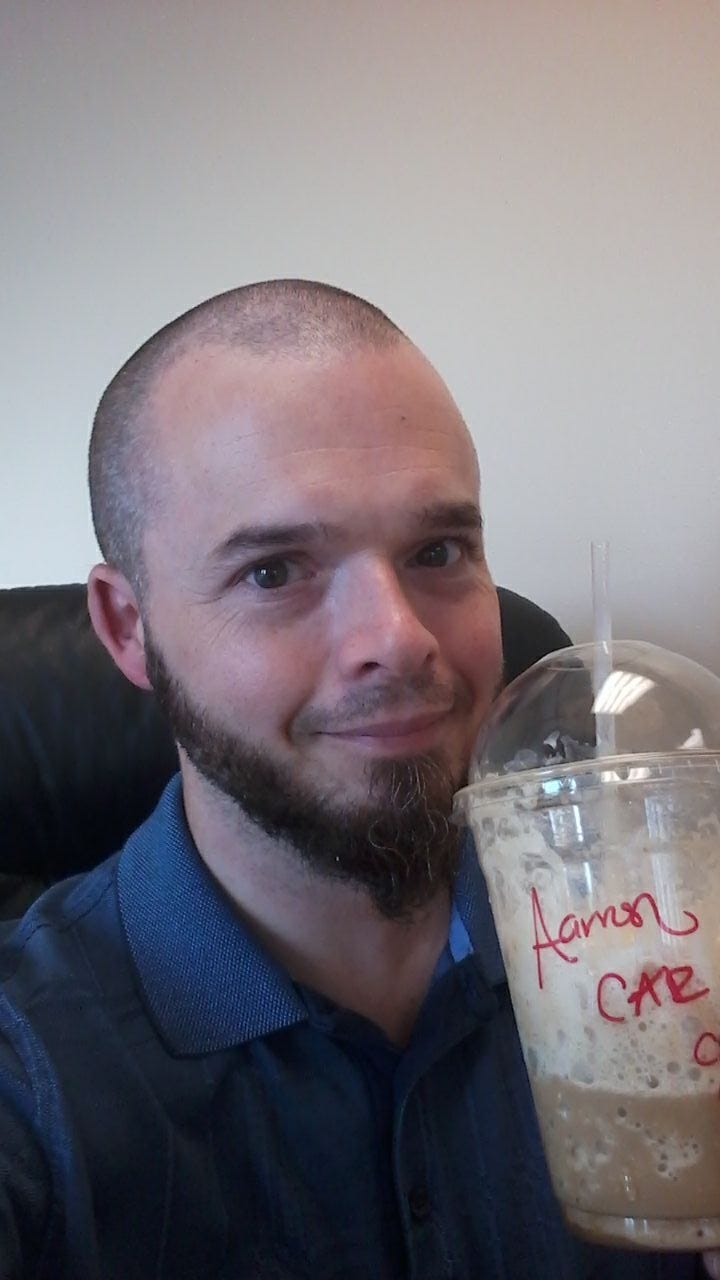
Ladies and gentlemen of Crestview, I apologize for waiting so long to say hi — so hi! I’m Aaron Little, your editor of the Crestview News Bulletin. I wanted to give you some of my background and then let our newest reporter, Ashleigh Wilde, one of the most humble people I’ve met who also happens to be an excellent writer, introduce herself.

I took over for Thomas Boni just over a year ago doing the same daunting job that he did, editing both the Santa Rosa Press Gazette and the Crestview News Bulletin. I was with the Milton paper for four years before that.

My path into journalism wasn’t your typical one. I didn’t have dreams of interviewing a president or celebrities in high school, and I didn’t study journalism in college. My degree is in English literature and creative writing from the University of Arizona.

In school, I made the mistake of not looking for a solid career path while following my dream to write. It turns out most companies want something more than literary analysis and short-story writing abilities. So once I came to Florida, I had to find what I could get.

Long story short, I started as a travel agent for Expedia.com, got off the phone and on my feet as a floor tech for a Gulf Breeze nursing home, then finally decided to seek a job remotely related to my degree and stumbled into an opening at the Milton newspaper.

I work primarily out of the Milton office, but our new reporter, Ashleigh Wilde, lives and works in Crestview. Here's her introduction:

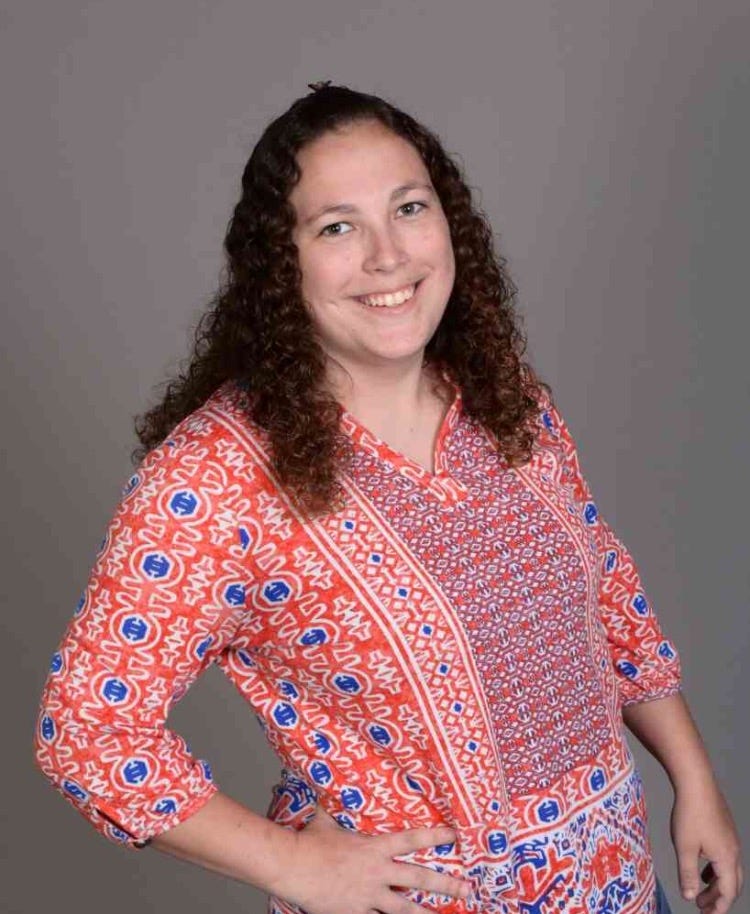
Hello everyone, I’m Ashleigh Wilde, your new Crestview Bulletin reporter. How did I get here? Great question.

I didn’t always want to be a journalist. I started college at the University of West Florida with my mind set on psychology. While I was finishing my general studies, I decided as much as I liked helping people and listening to their problems, I didn’t like science enough to study it for eight years. What did I want to do instead? I didn’t totally know.

All I knew was I loved sports and wanted to do something in sports. After talking with my adviser, I found that I could get the best of both worlds (cue the Hannah Montana song). I landed on a major in journalism, with a concentrated area of study in sports psychology.

Fast forward a couple of years, there I was with a degree, but no job in my career field. I knew it could take a while, especially when most places wanted three to five years of experience. So, I decided to become a substitute teacher for Okaloosa County School District. I thought I’d only have to do that for a couple of months. Man, was I wrong.

It took a year and a half from the day I graduated college to the day I finally started my career. It was a rough road, full of days where I felt defeated and like I should give up. I never did. I just kept trusting God and kept applying, until one day I was offered the job of the new Crestview Bulletin reporter.

Now, it’s been a month and I’m loving it. Crestview is home and I’m glad I get to stay near my friends and family. This is a great place to work and I can’t wait to see what exciting things will come our way. Stay tuned.

Aaron Little is the editor of the Santa Rosa Press Gazette and the Crestview News Bulletin. You can reach him at alittle@srpressgazette.com

This article originally appeared on Crestview News Bulletin: A time for introductions

Better to fix traffic before future influx

Janice Lynn Crose

Being from the suburbs of Los Angeles, California, there are many things that don't bother me the way they do native Northwest Floridians. While I don't enjoy the heavy traffic we have during rush hour, I am more used to it.

It is with both anticipation and trepidation that I read Crestview is estimated to have a population of 43,000 by the year 2030.

The anticipation comes from new residents, meaning more potential friends and more businesses here in Crestview.

The trepidation is from foreseeing major gridlock unless the traffic issues get resolved. These new residents will not only need a place to live, but also need to be able to drive to the grocery store, church, jobs, schools, restaurants and so on.

Many of us read that the Crestview bypass has been approved, but when will this bypass be completed?

An article in the March 25 Crestview News Bulletin (https://bit.ly/2uAS3Hn) stated, "County officials plan to eventually spend a total of $25 million to $30 million on the bypass project, the overall cost of which is close to $200 million. County Public Works Director Jason Autrey recently said the county is leveraging its funding for the bypass with participation from the Florida Department of Transportation and Triumph to complete the upgrades."

Jim, my husband, and I have lived in Crestview for 15 years and have been told that traffic gridlock will be relieved "soon." Now that monies are available due to the half cent sales tax, apparently things can begin to move forward. How quickly can this project get started?

Crestview needs traffic relief now. Some days it is a nightmare to drive from one end of town to the other. Imagine what it will be like with more residents.

We don't need to wait years before this project is completed to help alleviate the daily congestion we face.

There are days it takes over 30 minutes to drive from Old Bethel Road south on State Road 85 down to Cracker Barrel, which is approximately 7 miles.

If the traffic situation doesn't change we will see people move away from the area because of it. Crestview residents don't want to have the gridlock usually associated with large metropolitan centers.

The charm of Crestview lies in our small town feel, which will be lost if we don't get a handle on the traffic issues.

Janice Lynn Crose, a former accountant, lives in Crestview with her husband, Jim; her two rescue collies, Shane and Jasmine; and two cats, Kathryn and Prince Valiant.

This article originally appeared on Crestview News Bulletin: Better to fix traffic before future influx

Yesterday was Vietnam Veterans Day — did you remember it?

[ MATTHEW METCALF / FLICKR ]

Vietnam veterans deserve a day of recognition because they never were given a homecoming. March 29 marked National Vietnam Veterans Day.

Yes, America already has far too many “national” days to count, but this one actually means something.

It isn’t about the rightness or wrongness of Vietnam; we can debate that in perpetuity. It’s about recognizing the people who served, and just as importantly, those who didn’t return.

It’s about the price they all paid for our naivete and the illusion of American invincibility. They were a generation raised by people who fought and won a war where the reasons and lines were clear:

1. Japan and Germany declared war on the U.S.

2. The very fate of the world was at stake.

Vietnam, and the reasons given for fighting it, didn’t remotely meet this threshold, but thousands went, not to defend America as it was sold by some, but in response to their nation’s call.

Vietnam War veterans, and other veterans of the era deserve recognition because not everyone served, thanks to college deferments enjoyed by the wealthy and connected, and conscientious objectors such as Muhammad Ali, who famously observed “No Viet Cong ever called me a (n-word).”

It fell largely to ordinary everyday Americans, young people who fought and even died for no reason, other than their country asked them.

Too many of those who survived brought home scars, addiction, and trauma from things seen and done, the full measure of which isn’t known to this day.

No ticker tape

Vietnam also galvanized those who opposed the war for myriad reasons, among them, a government that couldn’t be trusted to tell the truth; the rise of the industrial complex as prophesied by President Dwight D. Eisenhower; the disproportionate numbers of poor whites and minorities in combat, and the images of death and destruction that barged their way into America’s living rooms for the first time ever.

Vietnam veterans deserve a day of recognition because they never were given a homecoming. They were made to feel like failures because of someone else’s blunders. Today, even when our sports teams lose, they’re given a hero’s welcome.

But for the teenagers and 20-somethings we shipped half a world away, there were no ticker-tape parades; no grand, formal signing ceremony on a warship, recorded for posterity.

Paper tigers

The enduring image of the Vietnam War’s end is of refugees frantically clawing their way onto hovering helicopters in a bid to escape the communist holocaust to come.

Our current situation is such that we have become a nation of paper tigers, perpetually outraged and stomping-mad because it’s easy. No real commitment is required.

Everyone should be required to visit the Vietnam Veterans Memorial.

The black granite structure disturbs some because it doesn’t romanticize war, or attempt to camouflage the sheer loss. There’s nothing to distract from the understanding that behind every name, a family still grieves.

For every name, there’s a living veteran who thinks about that person every day and wrestles with the serendipity of surviving.

It doesn’t seem possible so many people were lost for a cause we’re still unsure was worth it. But we can be certain of this much: Those who served deserve our remembrance and our thanks.

Reach Charita M. Goshay at 330-580-8313 or charita.goshay@cantonrep.com.

This article originally appeared on Crestview News Bulletin: Yesterday was Vietnam Veterans Day — did you remember it?

Tweet turns Trump fans against Crenshaw

[ GAGE SKIDMORE / FLICKR ]

Maybe it is because I am a dad. Maybe it is because I am a columnist. Whatever the reason, I have favorite phrases.

One of those is, “When you’re right, don’t change your mind.”

I can’t tell if the cause is abject cynicism, unchecked hypocrisy or just a collective failure of conscience, but the Republican party is slowly but surely abandoning all ideals that once defined it.

Watching people wink and ignore issues in their own party that would cause overreactive hyper-partisan attacks if the other party did it is disheartening. Republicans used to be better than this but the party surrendered the moral high ground a few years ago. I’m beginning to wonder if there is any solid ground left on which a true conservative can make a stand.

As Charles Spurgeon said, “Sincerity makes the very least person to be of more value than the most talented hypocrite.”

If you are a Republican who got angry just reading that, you might be part of the problem. Allow yourself a moment of introspection and ask yourself if the version of you that voted for Ronald Reagan and fought against Bill Clinton on moral grounds would be proud of today’s GOP. To me, the answer is an obvious all caps NO.

Remember back when Barack Obama first entered the White House and deficit spending and the national debt were such a big deal that a new branch of the Republican Party was formed and people started flying “Don’t Tread On Me” snake flags again? Under a Republican president, the deficit is skyrocketing and the national debt is up 10 percent in less than two years – now over $22 trillion. Are “conservatives” upset about it? Not at all. They say the economy is booming. Deficit spending has a way of doing that until the bill comes due.

Remember Hillary Clinton’s private email server? Unless you were teleported away from Earth in 2015 and didn’t come back until today, you know all about her emails. FOX News still has segments of news and opinion shows on how grave a risk she might have posed to national security. Now we find out that Jared Kushner and Ivanka Trump have used private emails and other unsecured messaging applications to communicate with other countries for official business for two years but no one says a word.

It makes me wonder if an embassy in Benghazi came under attack today if Republicans would simply give an award to the Trump administration for saving money by keeping security costs low and “only” losing four lives. What used to cause apoplectic responses now fails to even raise a shrugged shoulder.

One of the best examples is the case of new Republican Congressman Dan Crenshaw. During the midterm elections, Pete Davidson made a joke on Saturday Night Live that Crenshaw’s eye patch made him look like “a hitman in a porno.”

That joke isn’t funny. As a fat man who grew up a fat kid, I never developed an appreciation for humor based on looks. I’m sure Crenshaw loves eye patch jokes as much as I love fat jokes. I could diet, but Crenshaw lost his eye in Afghanistan and got a purple heart to go with his two bronze stars honoring his service to the country as a Navy Seal. As much as I don’t enjoy being made fun of, using that to mock Crenshaw is beyond the pale. Republicans were indignant that these liberals would make fun of a war hero who was injured in service to the nation.

It was such a bad reaction to a bad joke that Saturday Night Live invited Crenshaw on the program the next week to have a little fun at Davidson’s expense. It was one of the better parts of SNL last year and showed that Crenshaw has a sense of humor, as well as a sense of service.

Republicans don’t love Crenshaw as much this week.

When Donald Trump began a weekend of attacks on Twitter and in interviews talking about how much he doesn’t like or respect John McCain, Republicans were mostly silent. Davidson made an off the cuff joke about an eye patch and Republicans lost their cool. Their president spends a full weekend and into Monday attacking a man who was a prisoner of war for years before a distinguished career in Congress and they no longer care if a former television star who avoided the draft during Vietnam attacks a war hero. They even let a man who skipped serving his country with phony bone spurs say that a man who was permanently disfigured in the Hanoi Hilton wasn’t a war hero.

As a Lieutenant in the Navy, Rep. Crenshaw grew tired of the attacks on McCain – who was a Captain in the same branch of the armed services.

He tweeted, “Mr. President, please stop talking about Senator McCain.”

That was hardly a harsh response. But people who are loyal to Trump above all else have no regard for true character or service to the country. Their loyalty is to a small man, not a great country.

Even though all Crenshaw did was ask the president to stop attacking a dead war hero who served his country well, the same people who attacked SNL on his behalf only a few weeks ago, turned their attacks in his direction.

The responses to his tweet were horrifying.

“Go RINO on us Dan & you’ll be a one-term wonder,” one reply said. “McCain may have had honor in war but he died a traitor working for Dems to stage crimes that never happened. THAT man was a piece of…” (I had to stop that one there for obvious reasons. It didn’t get better.)

Another chimed in, “Unlike the rest of you in Washington, D.C. the President has a pair…” I know what the obvious reference is, but I can’t help but wonder if Crenshaw having one eye instead of “a pair” didn’t play into this clever tweet. Maybe, maybe not.

The final straw is this response, “Seriously, Dan, mind your own business. McTurd was a member of the coup. In most nations that gets a person shot.” One can’t help but wonder if this was simply a comment or a veiled threat to Crenshaw. Thanks to Donald Trump and Rush Limbaugh, the juvenile name changes are now considered political discourse on the right side of the aisle. If ignorance is bliss, why are these people so angry.

These are only responses from seemingly real people and not the “bots” who have names like “patriot894995″ or “Mary711663.” Those were even worse in some cases.

The fact is, people were right to be outraged by Davidson’s classless joke at Crenshaw’s expense. It went beyond decency. But one request from one war hero to his president asking him to leave another war hero alone is no reason to forget that the same standards apply to both sides.

That’s a fact that some seem to have forgotten.

Kent Bush is publisher of Shawnee (Oklahoma) News-Star and can be reached at kent.bush@news-star.com.

This article originally appeared on Crestview News Bulletin: Tweet turns Trump fans against Crenshaw


error: Content is protected !!