Please ensure Javascript is enabled for purposes of website accessibility
Skip to main content
Advertisement

What health insurance can — and can't — buy
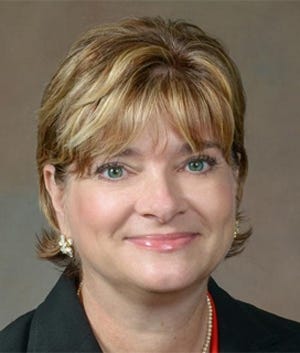
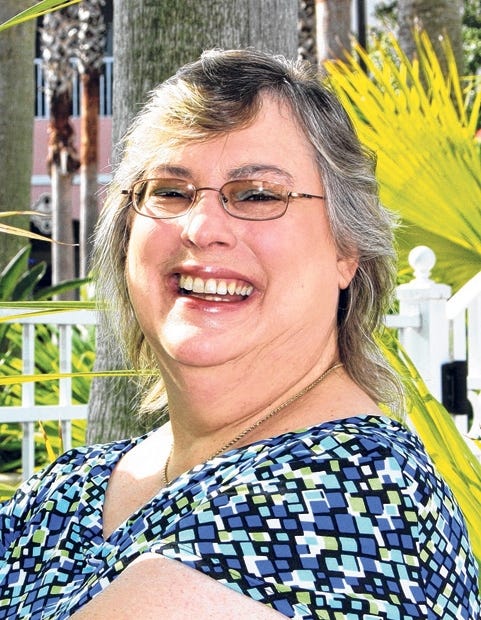
Janice Lynn Crose, a former accountant, lives in Crestview with her husband, Jim; her two rescue collies, Shane and Jasmine; and two cats, Kathryn and Prince Valiant.
Medical insurance is getting lots of attention right now in the media, and there are many viewpoints.

I shared some of mine a few weeks ago about both doctors and hospitals posting their prices for service. I think a free-market fee for services would work in many instances, with a high-deductible insurance plan for a catastrophic occurrence such as cancer.

I enjoyed the article in the Crestview News Bulletin about Dr. J.D. Bailey opening a medical practice here in Crestview, where one pays a membership fee and belongs to this practice.

Dr. Bailey is limiting the number of patients, which should be great for his patients. I love innovative solutions, and this is a great idea. One would have access to medical care when it is needed, and wouldn't have to wait for the insurance company to approve it or wait weeks for an appointment.

The other end of the fee-for-services spectrum is the idea that government should provide insurance for everyone, a system that is financially and logistically unworkable.

An insurance card doesn't mean one will have access to health care, especially if we don't dramatically increase medical professionals.

We have a shortage of medical professionals now, and as more doctors and nurses are retiring, they aren't necessarily being replaced.

Americans, as a nation, are kind, and although we would like to see those with pre-existing conditions get insurance for the same cost as those who are healthy, financially, it can't work.

Would a car insurance company insure a safe, accident-free driver for the same price as a driver that has had three or four accidents?

No, so we need to use our financial sense, not just our emotions.

Another big issue is people buying insurance after they are sick. Would you try to buy auto insurance after you had an accident and expect the insurance to pay for a brand, new car?

We, as consumers, need to take responsibility for our health, not wait until we are ill to exercise and eat right.

We need to allow families to choose insurance or not and allow them to make their own health care decisions, even if we disagree with their decision.

This is what freedom is all about.

Janice Lynn Crose, a former accountant, lives in Crestview with her husband, Jim; her two rescue collies, Shane and Jasmine; and two cats, Kathryn and Prince Valiant.

This article originally appeared on Crestview News Bulletin: What health insurance can — and can't — buy

Greg Iles book concludes his Natchez Burning trilogy

The book, "Mississippi Blood," by Greg Iles, will soon be available for check-out at the Crestview Public Library. [Special to the News Bulletin]

The upcoming book, "Mississippi Blood," by Greg Iles, will soon be available for check-out at the Crestview Public Library.

In this last installment of the Natchez Burning Trilogy, the story of Penn Cage and his father are concluded, according to Publishers Weekly. 

"Both unwieldy and tightly controlled, bestseller Iles' terrific conclusion to his 'Natchez Burning' trilogy (after 2015's 'The Bone Tree') is a sweeping story that remains intimate," Publishers Weekly states.

"The Double Eagles, a savage KKK splinter group, have declared a personal war on Penn Cage, a former prosecutor who's now the mayor of Natchez, Miss., necessitating 24-hour security protection for him and his family. The toxic bigotry escalates as Penn's father, Tom, once a respected physician, goes on trial for the murder of his former nurse and one-time lover, Viola Turner, an African-American who was suffering from terminal cancer.

"Penn teams with Serenity Butler, a famous black author who plans to write about Tom's case. Together, they look into the secrets of the Cage family, the Double Eagles, and the South. Though a side plot about J.F.K.'s assassination stretches credibility, relentless pacing keeps the story churning, with unexpected brutality erupting on nearly every page. The trial scenes are among the most exciting ever written in the genre," Publishers Weekly states.

Be sure to read "Natchez Burning" and "The Bone Tree" first.

This article originally appeared on Crestview News Bulletin: Greg Iles book concludes his Natchez Burning trilogy

Put your tax refund to work

Yvonne Shanklin is an Edward Jones financial adviser. [Special to the News Bulletin]

In 2014, the average tax refund was about $2,700. If you got that much this year, what would you do with it?

You can probably think of a lot of things you might do with $2,700. You might decide to splurge and buy some big-ticket item you’ve been eyeing, or you could use the money to pay down some bills, which might be a good idea, especially if it helps improve your cash flow. As an alternative, though, you might want to consider investing the money.

You might not think $2,700 would make that big a difference to your investment portfolio, but if you invested that $2,700 in a tax-advantaged account, such as an IRA, and you left the money alone, what might you earn? After 30 years, your $2,700 would have grown to more than $20,500, assuming no further contributions and a hypothetical 7 percent annual return. That’s not a fortune, of course, but it would help boost your retirement savings somewhat — and since it originated from a tax refund, it was accumulated pretty effortlessly from your point of view.

Now suppose you put in the same amount — $2,700 — to your IRA each year for 30 years. Again assuming that same hypothetical 7 percent annual return, your money would have grown to more than $272,000. And that amount can indeed make a rather big difference in your retirement lifestyle.

Keep in mind that you’d eventually have to pay taxes on that $272,000 if you had been investing in a traditional IRA, which is tax-deferred but not tax-free. It is possible, however, that if you start taking withdrawals when you retire, you’ll be in a lower tax bracket.

If you meet the income guidelines for contributing to a Roth IRA, though, you could avoid the tax issue altogether on your $272,000. That’s because Roth IRA earnings grow tax-free, provided you don’t start withdrawals until you’re 59½ and you’ve had your account for at least five years.

Thus far, we’ve only talked about putting your tax refund to work in your IRA — which, as we’ve seen, can be a very good idea. But suppose you’ve already developed the excellent habit of “maxing out” on your IRA each year by contributing a set amount each month? You can currently only put in up to $5,500 per year to your IRA, or $6,500 if you’re 50 or older. So you could fully fund your IRA by putting in about $458 per month (or $541 per month if you’re 50 or older). Those amounts are not unreasonable, especially as you move deeper into your career and your salary increases. If you do reach these limits each month, what could you do with your tax refund?

You can start by looking closely at your portfolio to see if any gaps exist. Could you, for example, use your tax refund to further diversify your holdings? While diversification can’t guarantee profits or prevent losses, it can reduce the impact of volatility on your portfolio — and the less you feel the effects of volatility, the more likely you may be to stick with your long-term strategy rather than overreacting to short-term price drops.

So when Uncle Sam sends you that refund, consider investing it one way or another. You’ll be putting it to good use.

Edward Jones wrote this article for use by your local Edward Jones Financial Advisor.

This article originally appeared on Crestview News Bulletin: Put your tax refund to work

Inspect, wash and prevent azalea lace bug infestations

An adult azalea lace bug and excrement are pictured on an azalea leaf. [James Castner | University of Florida]

Now is the time to prevent lace bug attacks on your azaleas.

The azalea lace bug, or Stephanitis pyrioides, overwinters as eggs on the underside of infested leaves.

Eggs hatch in late March and early April. The insect then passes through five stages before becoming an adult. It takes approximately one month for the insect to complete development from egg to adult, and there are at least four generations per year.

Valuable plants that are susceptible to lace bug damage should be inspected in the early spring for the presence of overwintering lace bug adults, eggs and newly hatched nymphs. Inspect these plants every two weeks during the growing season for developing lace bug infestations.

Both adults and nymphs have piercing-sucking mouthparts and remove sap as they feed on the underside of the leaf.

Lace bug damage to the foliage detracts greatly from the plants’ beauty, reduces the plants’ ability to produce food, decreases plant vigor and causes the plant to be more susceptible to damage by other insects, diseases or unfavorable weather conditions.

The azalea can become almost silver or bleached in appearance from the feeding lace bug damage.

However, lace bugs often go undetected until the infested plants show severe damage sometimes into the summer. By then, several generations of lace bugs have been weakening the plant.

Inspecting early in the spring and simply washing them off the underside of the leaves can help to avoid damage later and the need for pesticides.

Adult lace bugs are flattened and rectangular, measuring 1/8- to 1/4-inch long.

The area behind the head and the wing covers forms a broadened, lace-like body covering. The wings are light amber to transparent. Lace bugs leave behind shiny black spots of excrement.

Lace bug nymphs are flat and oval, with spines projecting from their bodies in all directions. At each stage of growth, the nymph sheds its skin and these old skins often remain attached to the lower surface of infested leaves.

Azalea lace bug eggs are football-shaped and transparent to cream colored. The eggs are found on the lower leaf surface, usually alongside or inserted in a leaf vein.

Adult females secrete a varnish-like substance over the eggs, which hardens into a scab-like protective covering.

See http://entomology.ifas.ufl.edu/creatures/orn/shrubs/azalea_lace_bug.htm for more information.

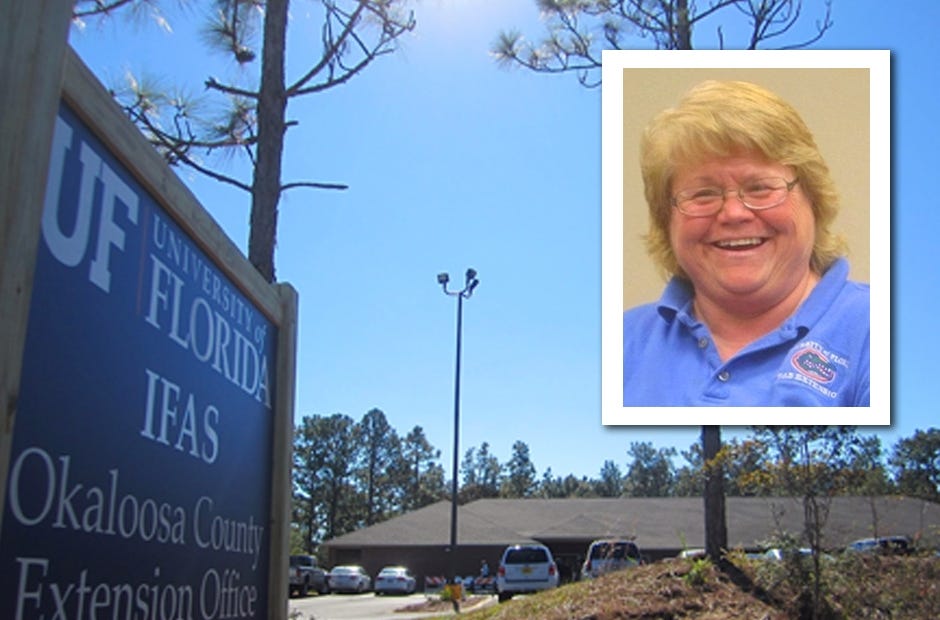
Sheila Dunning is an agent at the University of Florida's Institute of Food and Agricultural Sciences Extension office in Crestview.

This article originally appeared on Crestview News Bulletin: Inspect, wash and prevent azalea lace bug infestations

Problems? Try a different perspective

The Rev. Mark Broadhead is pastor at Laurel Hill Presbyterian Church and First Presbyterian Church of Crestview. [File photos | News Bulletin]

A little boy was telling his grandma how "everything" was going wrong. School problems, family problems, health problems — you name it.

Meanwhile, Grandma was baking a cake. She asked her grandson if he would like a snack. He said yes, of course.

"Here, have some cooking oil."

"Yuck," says the boy.

"How would you like a couple of raw eggs?"

"Gross, Grandma!"

"Would you like some flour then? Or maybe baking soda?"

"Grandma, those are all yucky!"

"Yes, all those things seem bad by themselves, but when they are put together in the right way, and you add a little heat, they make a wonderfully delicious cake!" she said.

God works the same way. Many times, we wonder why he would let us go through such difficult times, but God knows when he puts his things in order, they always work for good. We just have to trust him and, eventually, something wonderful will be made.

Much in life is a matter of perspective.

Far too many people find it easier to complain about circumstances. Far too many people place blame on other persons for their own plight.

What would it be like for you, personally, if your perspective changed just a little bit?

What if, instead of griping about something, you looked for the bit of positive influence the situation can have?

What if you asked God for wisdom and insight to your current situation?

Do you have the patience to work through all the little seemingly disjointed pieces to achieve a much greater purpose?

Can you stand a "little heat" so you can grow in strength and stamina?

It's a matter of perspective. When the soldiers of Israel saw Goliath, they thought to themselves, "He is so big that we could never kill him." When David saw Goliath, he thought to himself, "He is so big that I cannot miss him."

Trust God. Change your perspective. Find life's blessings.

The Rev. Mark Broadhead is pastor at Laurel Hill Presbyterian Church and First Presbyterian Church of Crestview.

This article originally appeared on Crestview News Bulletin: Problems? Try a different perspective

The case to preserve life a little longer

I've assured my wife that I will do everything to save and preserve her life should she ever be in a life and death scenario.

Should she ever be in a hospital hooked up to wires and on the verge of death, doctors and nurses do not have permission to start pulling plugs and rushing hospice into the room.

She has assured me the same support.

We realize that death will come to both of us and neither of us wants to linger in a vegetative state. Of course, we don't know what the scenario will be and no one does. We do believe we deserve every chance to pull through if it's possible.

In 2002, a doctor said this concerning the illness of my first wife: "She has fought a hard battle; we can let her go. Or, we can try to do everything we can to extend her life."

I opted for the latter.

They actually extended her life at least a couple of weeks and she had numerous good visits with her family and two adoring sons. I know we tried everything available to us to extend and save her life. Yet, I will never be free from the disappointment and pain that came from, knowing we could not cure her illness and save her.

My wife's grandfather was about to be released from the hospital and seemed to be feeling great. They decided to keep him and, soon, it seemed they pulled hospice in and he was dead in a couple of days.

Please don't hear me speaking against hospice. I know they do a wonderful job in many scenarios. Frequently, however, they appear to be called in too prematurely.

It seems to me that doctors, hospital staffers and nursing home staffers get tired of some people and help them exit life. I realize you may yell that I'm wrong but I'm entitled to my opinion. Medical insurance doesn't pay forever, nor does it cover any and every kind of treatment and option to extend life.

When the medical insurance company shakes its head "no" to further treatments, then what happens? Is this when life really ends?

I have eulogized over 400 funerals. I've made thousands of hospital and nursing home visits. So many times, I have witnessed exhausted families and tired, overworked and underpaid intensive care staffers caring for a patient who required painstaking treatment and attention.

It was at these moments that it seemed I would hear, "We have tried and done all we can do."  Next would be the onslaught of morphine shots that were supposedly for pain but, in reality, they were the death nail to the helpless person who was being exited from life.

I don't think you or any of us want to be held in this world helplessly tied to a ventilator and multiple devices.

On the other hand, I don't think any of us would mind being plugged up a while if in a couple of weeks we might rouse up and be able to spend a few more months or weeks with our family, eating ice cream or even watching “Wheel of Fortune.”

This is all difficult stuff and I have dear family and friends very involved in the medical profession. I'm not pointing fingers at you. I'm pointing fingers at all of us.

Fight for your loved ones and friends. Value, sustain and protect life as long as you can.

An old friend of mine died when she was about 90 years old. She lived alone. She didn't have much but she was faithful in the church and stayed busy.

She was so fortunate in that she was never in the hospital for any length of time. Nobody had talked to her in a couple of days, and a friend decided she had better go see her.

She was dead.

She was sitting in her chair, the television was playing and she was surrounded by books and newspapers.

She had passed on in the surroundings that were enjoyable and familiar to her.

I hope we can all be so fortunate.

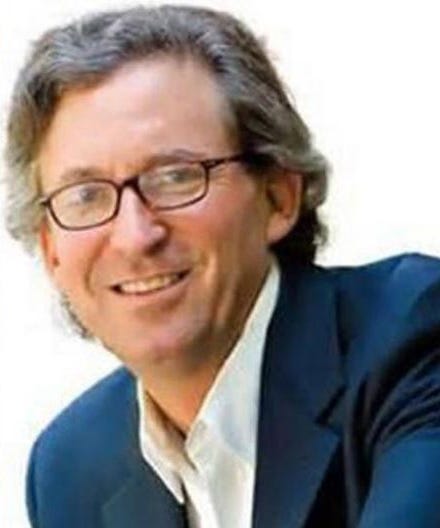
Glenn Mollette is an American syndicated columnist and author.

"When the medical insurance company shakes its head 'no' to further treatments, then what happens? Is this when life really ends?"

This article originally appeared on Crestview News Bulletin: The case to preserve life a little longer

Trump works on campaign promises

One by one, President Trump is working on campaign promises that got him elected: tightening our borders, working on cutting taxes, overturning Obama’s executive orders on regulations, fixing ObamaCare, appointing one of the right-of-center judges on his list for the Supreme Court, etc. 

He has Washington, D.C. politicians on both sides in a tizzy. They just can’t figure this guy out; they are not used to someone who keeps his campaign promises.

The Democrats are still struggling to get their footing. They have no real bench, just old political hacks like Nancy Pelosi and Chuck Schumer, who carp at Trump 24-7. As quirky as Trump is, the nation knows that handing control back to those two liberals would be about as smart as handing the keys to Air Force One to Harrison Ford.

In a very weak response to Trump’s fine speech before Congress, the Dems thought they would fortify the Mason-Dixon Line by having former Democrat Gov. of Kentucky Steve Beshear give the rebuttal.

Sadly, the ex-governor messed up his speech when he said he was a “Republican Democrat.” To figure out this guy for fellow Southerners, I looked into his past. It turns out the ex-Kentucky governor inherited his family-owned funeral business and graveyards. Graveyards are an important voting constituency for Democrats; Beshear must have made his way up the ranks in the Democrat Party by specializing in the get-out-the-vote effort for them.

There are usually just three reasons people are Democrats:

One, they have been convinced they are an aggrieved and persecuted minority.

Second, they work for the government — your schoolteachers, bureaucrats, DMV managers, etc.

Third, there are the folks who did not earn their money but inherited it, and they feel guilty about it. Rest assured, the person who earned the family money was a conservative, but generations of trust fund kids get soft.

After Trump’s triumphant speech, where he actually looked presidential (in a made-for-TV kind of way), the media coordinated a hit campaign on his attorney general, Jefferson Beauregard Sessions III.

In his role as a senator, Sessions met with a Russian ambassador, which we now know Republicans are not supposed to do. So he was forced to recuse himself from looking into himself or something like that. It was the biggest win for Democrats since the ruling that you do not have to have any identification to vote in elections.

Doing what he does best, Trump then flips the script on the Democrats by pulling their go-to trick of diversionary slander against their opponents.

He Tweets out that he thinks the Obama administration had his phones tapped during the presidential campaign. I’m not sure why he did that, and what information he relied on, but it changed the conversation from the Dems’ constant drip-drip-drip of lies and half-truths on the Trump administration’s fabricated, nefarious relationship with Russia to something else entirely.

Pelosi recognized this political trick; she even has a name for it.

She said, “"It's called a wrap-up smear. You make up something. Then you have the press write about it. And then you say everybody is writing about this charge.”

Democrats have done this to their opponents for the last 30 years. With a buddy-buddy press corps, they can start any story, have enough pundits chime in on it, and make it seem true.

If you think such fake news stories are effective and won’t haunt you for life, read about Nazi Propaganda Minister Goebbels — or just about Richard Gere and his views on gerbils.

What might be making Trump paranoid is the “deep state,” as it has been called: the entrenched Washington career bureaucrats in all agencies who seem to be leaking information.  They are the sources, if there are any, of many "anonymously sourced" stories. Based on all the many agencies' political donor records, 90-plus percent of such “deep state,” entrenched D.C. lifers are Democrats.

So if Trump is acting paranoid, as if everybody is against him, he is wrong. Only 90 percent are.

Ron Hart, a libertarian and award-winning author, is a frequent guest on CNN. Contact him at Ron@RonaldHart.com or @RonaldHart on Twitter.

“He has Washington, D.C. politicians on both sides in a tizzy. They just can’t figure this guy out; they are not used to someone who keeps his campaign promises.”

This article originally appeared on Crestview News Bulletin: Trump works on campaign promises

REVIEW: Rooftop garden takes focus in Depression-era story

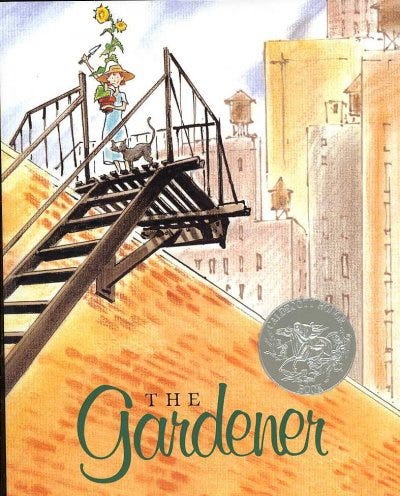
"The Gardener" by Sarah Stewart is about a girl who gets sent to live with her uncle in the city during the Great Depression. [Special to the News Bulletin]

Are you staying in town this spring break, or do you have grandkids visiting?

Come check out books and movies like "The Gardener" by Sarah Stewart. It's a beautiful story too long for our Library Class, about a girl who gets sent to live with her uncle in the city during the Great Depression and how she literally blooms where she's planted.

Come to Ages 3-5 Library Class on Tuesday, March 14 for shorter stories and activities about gardens, including planting a marigold. Older children are welcome!

This article originally appeared on Crestview News Bulletin: REVIEW: Rooftop garden takes focus in Depression-era story

Learn all about bees

Heather Nitzel is the Crestview Public Library's youth services librarian.

What’s the buzz all about? Come learn about how the honeybee lives, and the respectful ways of keeping them, 6:30 p.m. March 21 at the Crestview Public Library.

All over America, city beekeepers are keeping a few honeybee hives in their backyards. Learn what is involved: how, when, where and what you will need to establish a hive.

If you’re thinking about starting a beehive or are just curious about what’s involved with keeping bees, then this is a great introductory presentation for you. This short presentation is designed for absolute beginners so no prior knowledge is required. There will be no hands-on beekeeping, so protective clothing and bravery will not be necessary.

Attendees will be able to taste a variety of local honeys and buy some, if they like.

The Family Library Time event lasts about 45 minutes and is designed for adults and children 4 years old and up. Registration is not required for this free event.

Heather Nitzel is the Crestview Public Library's youth services librarian.

This article originally appeared on Crestview News Bulletin: Learn all about bees

Plan for health care costs during retirement

Yvonne Shanklin is an Edward Jones financial adviser. [Special to the News Bulletin]

When you retire, some of your expenses may go down — but health care is not likely to be one of them. In fact, your health care costs during retirement may well increase, so you may want to plan for these costs well before you leave the workforce.

In fact, your health care costs during retirement may well increase, so you may want to plan for these costs well before you leave the workforce.

How much can you expect to spend on health care during your retirement years?

Consider these statistics:

• A 65-year-old couple who retired in 2016 will need about $288,000 (in today's dollars) during retirement just to pay Medicare Parts B, D and supplemental insurance, according to HealthView Services, a company that provides health care cost projections for financial services firms. If out-of-pocket costs such as deductibles, co-pays, hearing, vision and dental are included, the lifetime figure rises to about $377,000 in today's dollars.

• The national average for a private room in a nursing home is more than $92,000 per year, according to a survey by Genworth, an insurance company. And the services of a home health aide cost more than $45,000 per year, according to the same survey. Medicare typically pays very little of these costs.

To cope with these expenses, you'll want to integrate them into your overall retirement saving and investing strategies. Knowing the size of a potential health care burden may help motivate you to put as much as you can afford into your 401(k), IRA and other retirement accounts.

Even when you're retired, part of your portfolio should be devoted to growth-oriented investments, such as stocks, to help pay for rising health care costs. 

It's true that stocks will always fluctuate, and you don't want to be forced to sell them when their price is down. However, you can help yourself avoid this problem by also owning a good mix of other investments, such as investment-grade corporate bonds, government securities and certificates of deposit, whose value may be more stable than that of stocks.

Another way to help defray the costs of health care is to work part-time a few years after you had originally planned to retire. This added income can help you delay tapping into your IRA and 401(k), thus giving these accounts a chance to potentially grow further.

Plus, you may be able to put off taking Social Security, and the longer you wait until you start collecting benefits, the bigger your checks will be, at least until they top out at age 70.

These suggestions may help you meet many of your typical medical costs during retirement, but what about long-term care expenses, such as an extended stay in a nursing home or the need for home health care assistance? As mentioned above, these costs can be enormous.

Fortunately, the financial marketplace does provide some cost-effective solutions for long-term care — solutions that may help you avoid "self-insuring." A financial professional can provide you with some recommendations in this area.

It's probably unavoidable that your health care costs will rise — and possibly keep rising — when you're retired. But by being aware of these expenses years in advance, and by following a diligent saving and investment strategy — one that may also include a long-term care component — you can improve your "financial fitness" for dealing with health care costs.

This article was written by Edward Jones for use by your local Edward Jones Financial Advisor.

This article originally appeared on Crestview News Bulletin: Plan for health care costs during retirement

error: Content is protected !!