Please ensure Javascript is enabled for purposes of website accessibility
Skip to main content
Advertisement

Financial gifts can help Dad for years to come

One financial Father's Day gift could be a bond that matures just as that parent reaches retirement age. [Pixabay.com]

Father’s Day is almost here. Dad will probably like any gift you give him, of course, but this year, why not go beyond the ordinary? By presenting your father with an appropriate financial gift, you can bring him some benefits that can keep on giving.

For starters, how about a back-to-school gift for Dad? If you have children, you may already be familiar with 529 plans, which many parents use to help their children pay for college. But 529 plans have no age limits, so there’s nothing stopping you from reversing the usual formula and opening an account for your father. While 529 plans are commonly used to pay for four-year colleges, the money can also go toward most two-year community colleges and trade schools, so if Dad has a future interest in learning about anything from anthropology to auto repair, the 529 plan you’ve established can give him the gift of knowledge and enjoyment.

As the owner of a 529 plan, your earnings can accumulate tax-free, provided they are used for qualified higher education expenses. (529 plan distributions not used for qualified expenses may be subject to federal and state income tax, and a 10 percent IRS penalty on the earnings.) Furthermore, if you invest in your own state’s 529 plan, you might be able to deduct the contributions from your taxes.

Here’s another suggestion: Help Dad reach a distant goal. For example, if you know your father will be retiring in, say, 10 years, you could give him some type of bond that matures just when he retires. During those 10 years, he will receive regular semiannual interest payments, and when the bond matures, he’ll get the original principal back. He can then use this money to help fulfill a long-held dream—perhaps one of traveling the world or even opening a small business. Whatever he decides to do with the money, it will make a nice retirement gift.

If you’re giving Dad a corporate bond, make sure it’s “investment grade,” which means it has received one of the highest ratings for safety from one of the major bond-rating agencies. Investment-grade bonds are generally the least likely to default. If your father is in one of the upper tax brackets, he might benefit from a municipal bond, whose interest payments are exempt from federal income taxes and possibly state and local taxes, too. (Some municipal bonds, however, are subject to the alternative minimum tax.)

Finally, you may want to help Dad plan his legacy. Although your father may be interested in what sort of legacy he will leave, he may not yet have taken any steps in this area—in particular, he might not have created a comprehensive estate plan.

You might consider giving your father some resources on estate planning, such as books or online articles. Better yet, though, consider setting him up with a consultation with a legal professional. It will take considerable time and effort to create the necessary documents, such as a will, a living trust, a durable power of attorney, and so on—and since the future is not ours to see, it’s best to take care of these tasks sooner, rather than later.

Father’s Day is just a blip on the calendar. But by giving Dad some valuable financial gifts, you can help brighten all his days.

This article was written by Edward Jones on behalf of your Edward Jones financial adviser.
This article originally appeared on Crestview News Bulletin: Financial gifts can help Dad for years to come

Readers' thoughts on Calandra Stallworth, Crestview crime and traffic

CRESTVIEW — Numerous crestviewbulletin.com and Facebook readers shared their thoughts on local issues. 

Here are some of their comments. 

WONDERING ABOUT CALANDRA STALLWORTH

I highly doubt she just got up and decided to leave. She had children, her family is local!

Did you forget to mention the fact that her own vehicle was found with her "boyfriend" and (another woman)? How is she going to disappear without transportation or her phone? Come on…

Brittany DeMonia Seebeck


CRESTVIEW IS NO NEW ORLEANS

What a joke, "Crestview is not safe.”

Crestview is modern-day Mayberry …. with Sheriff Andy and Deputy Barney.

Sure, there (are) homeless people, drugs, petty theft and the occasional local that is rude and (wants) to fight at the drop of a dime.

But really …. this is not New Orleans or Chicago. Those cities have a crime problem.

What is the violent crime rate? How many murders, rapes, kidnappings, carjackings, home invasions, gang wars?

There is not a street in Crestview that I would not walk down.

Brian Johnson


CONFUSION AT JOHN KING LIGHT

I agree, there's a lot of distracted driving. However, at the John King light, people turn LEFT on RED from the southbound lane frequently. There is also a lack of understanding the right of way in the east and westbound lanes.

Teresa White

U-TURNS ALSO A FACTOR

Yes, texting is a major factor in the wrecks. At the intersection of John King, people making U-TURNS is also a factor. I see many near misses every day there.

William Fortwengler 

TOO MANY HAZARDOUS VEHICLES

I have been wondering for some time if Crestview is a sanctuary city not necessarily for illegals but for vehicles without proper lights. I see 10 to 15 cars every time I leave the house that have headlights out, tail lights (and) brake lights out. We need to do something about this, folks.

Jimmy DuBose 

Join the conversation on crestviewbulletin.com — and your comment could be featured. >>

Signing up for a Viafoura account is easy, fast and free!

Have more to say than a quick comment? Write a letter to the editor.

This article originally appeared on Crestview News Bulletin: Readers' thoughts on Calandra Stallworth, Crestview crime and traffic

Thoughts before Father's Day

Janice Lynn Crose, a former accountant, lives in Crestview with her husband, Jim; her two rescue collies, Shane and Jasmine; and two cats, Kathryn and Prince Valiant.

We often remember and honor our mothers, but what about our fathers? Dads play an important role in their children's lives. While some dads aren't as visible as mothers in families, nevertheless they provide a very important role.

Did you know that on Mother's Day most families go out to lunch or dinner, and for Father's Day most families have a family barbecue? A barbecue certainly makes wonderful family memories and allows children to run around and play.

What role did your father play in your life while growing up?

Did he foster your dreams, encourage you by telling you that anything you desired could be accomplished if you worked for it?

Did he teach you the difference in right and wrong? 

Did he teach you the skills you needed to achieve your dream? 

Did he teach you how to ride a bike and play sports?

My father taught his children to always tell the truth, honor our family name, how to handle our money, and how to take care of tools and equipment so that they would last for many years. He also taught all of his children management skills and all four of us have used those skills in a variety of ways.

The "dreaded" Father's Day tie seems to be a joke each year. This year, why not just ask Dad what he'd like for Father's Day? My husband, Jim, loves ties. My dad, not so much. One year he wanted ping pong equipment for the table and other years he wanted a particular tool. Asking is so much easier than guessing, and then Dad will get what he really desires.

One day, your father will no longer be with you. How will you honor his legacy? Will you carry on the life lessons he taught, virtue, how a good name is to be sought, honesty and righteousness?

Of course, all glory ultimately goes to our Heavenly Father and we thank Him for our earthly fathers, our wonderful world, and the gift of salvation.

To my Dad and all of the awesome fathers in Crestview, Happy Father's Day.

Janice Lynn Crose, a former accountant, lives in Crestview with her husband, Jim; her two rescue collies, Shane and Jasmine; and two cats, Kathryn and Prince Valiant.

This article originally appeared on Crestview News Bulletin: Thoughts before Father's Day

How to preserve fruit

Fruits like blueberries and figs can be canned or made into fruit leathers. [Special to the News Bulletin]

All sorts of delicious treats are coming into the season, including blueberries, blackberries and figs galore. It seems as though all of this tasty, nutritious, low-fat produce comes and goes so quickly we barely get a chance to enjoy it properly.

If you are wondering how to preserve your bounty, there are plenty of ways.

Freezing

Berries and figs freeze well. Sort berries and throw away any fruit that has gone bad. Simply rinse under cool running water and drain well. Freeze on a tray and then pour frozen fruit directly into a freezer bag or container.

To prevent figs from turning dark, sprinkle with an ascorbic acid like Ball-Fruit Fresh (found in the canning section of stores), and follow the freezing instructions.

Canning

Figs and berries can both be canned whole in syrup using the water bath canning method. Jams, jellies, preserves and purees can also be made out of these fantastic fruits. Be sure to follow your canning recipe instructions exactly to lower the risk of food-borne illness.

Drying

Figs are excellent for drying or making a fruit leather. You may have less success drying whole berries, but do try a fruit leather.

For drying figs, select ripe fruit and clean it. Small figs can be left whole. Large figs may be cut in half. Blanch whole figs in boiling water for 30 seconds until the skins split. This will ensure faster drying. Dip figs directly into an ice-water bath to prevent cooking. Figs will take about six to 12 hours in a dehydrator, possibly less if cut in half.

Here is a jam recipe courtesy of the National Center for Home Food Preservation:

Berry Jams (without added pectin)

9 cups crushed berries

6 cups sugar

Yield: About 7 or 8 half-pint jars

Please read Using Boiling Water Canners (http://nchfp.uga.edu/publications/uga/using_bw_canners.html) before beginning. If this is your first time canning, it is recommended that you read Principles of Home Canning (http://nchfp.uga.edu/publications/usda/GUIDE01_HomeCan_rev0715.pdf).

Procedure:

Sterilize canning jars (http://nchfp.uga.edu/how/can_01/sterile_jars.html).

Wash berries before crushing. Combine berries and sugar. Bring slowly to a boil, stirring occasionally until sugar dissolves. Once sugar is dissolved, cook rapidly to, or almost to, the jellying point (http://nchfp.uga.edu/how/can_07/jelly_point.html) depending upon whether a firm or soft jam is desired. As mixture thickens, stir frequently to prevent sticking.

Remove from heat and fill hot, sterile jars with the hot jam, leaving a one-fourth-inch headspace. Wipe rims of jars with a dampened clean paper towel; adjust two-piece metal canning lids. Process in a boiling water canner.

Note: If seedless jam is preferred, crushed berries may be heated until soft and pressed through a sieve or food mill; then add sugar and proceed as above.

Recommended processing time for hot packing half-pints or pints of the jams in a boiling water canner is five minutes at altitudes of 0 to 1,000 feet; 10 minutes at 1,001 to 6,000 feet; and 15 minutes above 6,000 feet.

Contact me at 689-5850 or jbreslawski@ufl.edu for more recipes or information about preserving foods.

You may also register for the extension office's cheese making workshop, set for 6:30-8 p.m. June 20 at 3098 Airport Road, Crestview. The cost is $25 per person. RSVP by June 18 at https://okaloosacheesemaking.eventbrite.com.

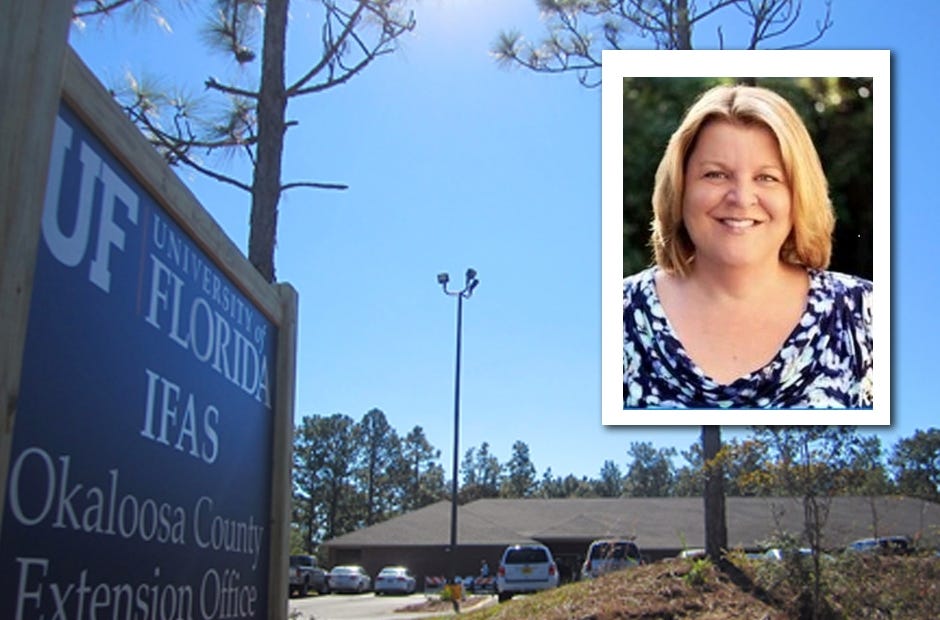
Jill Breslawski is an agent at the University of Florida's Institute of Food and Agricultural Sciences Extension office in Crestview.

This article originally appeared on Crestview News Bulletin: How to preserve fruit

Crestview residents need accurate information on government structure

[Pixabay.com]

It is the city's duty to ask why. How do we know our current form (of government) is the best option for our city? If not, what documentation provides the most appropriate form of government our city should adopt?

The eighth edition of the Model City Charter (from the National Civic League Inc.) states, "Back in 1944, on the occasion of the National Civic League's 50th anniversary, Harold Dodds, then president of Princeton University and a former executive director and president of the National Municipal League, described the purpose of a model as being … to set patterns clearly and specifically, delineating the best practice and the best thought on a problem, to correct existing defects, to set high standards which provide something to fight for instead of against … the model laws brought stability, dignity and scientific fact to 'reform.'"

So, what are the facts?

According to the Florida League of Cities (as of September 2016), there are four options that the city of Crestview can undertake and a fifth hybrid of any of the four options: 

  • Council-manager, 66 percent, 272 cities
  • Council-strong mayor, 12 percent, 49 cities
  • Council-weak mayor, 20.5 percent, 85 cities
  • Commission, 1.0 percent, four cities
  • Hybrid, 0.5 percent, two cities 

We are among the 20.5 percent or 85 cities within Florida running a council-weak mayor form of government. A closer look at the data provided by the Florida League of Cities reveals that of the 85 cities running a council-weak mayor form of government, the populations are 5,000 or less.

According to The Florida Municipal Official's Manual, a publication of the Florida League of Cities with the assistance of the John Scott Dailey Florida Institute of Government: "The council-manager form plan has been especially attractive to small- and medium-sized localities. It is used in a majority of American municipalities with populations of 25,000 to 250,000 … The most common form of city government in Florida today is the council-manager form.

“A second common form, found in many smaller municipalities, is the council-weak mayor form. In Florida, in recent years, most changes of municipal government form have been from some other form to the council-manager form.

"Approximately 270 Florida cities (out of more than 400) have a position of manager or a similar position, such as ‘administrator.’ In all Florida cities, members of the council or commission are elected by the voters of the city. The mayor may be simply a member of the council, elected by the council to serve as mayor; may be a separate office (that is, not a member of the council) or elected by the people. Certain administrative positions are filled by elections in a few cities. These include the offices of clerk, police chief and fire chief."

Under the eighth edition of the Model City Charter, the following alternatives are provided under the model as it relates to the council and mayor.

  • Council elected at large; mayor elected by the council
  • Council elected at large; mayor elected separately
  • Council elected at large with district residency requirement; mayor elected by the council
  • Council elected at large with district residency requirement; mayor elected separately
  • Mixed at-large and single-member district system; mayor elected by the council
  • Mixed at-large and single-member district system; mayor elected separately
  • Single-member district system 

Additionally, Section 2.03. Mayor (states):

(a) Powers and Duties.

(b) Election — Alternative I — Mayor Elected by the Council

     Alternative II — Mayor Elected At Large 

To reiterate, The Florida Municipal Official's Manual does notate certain administrative positions are filled by elections in a few cities. These include the offices of clerk, police chief and fire chief. The eighth edition of the Model City Charter notates, "Section 2.08. City Clerk.

"The city council or the city manager shall appoint an officer of the city who shall have the title of city clerk. The city clerk shall give notice of council meetings to its members and the public, keep the journal of its proceedings and perform such other duties as are assigned by this charter or by the council or by state law."

If The Florida Municipal Official's Manual notates a variation of The Eighth Edition of the Model City Charter where administrative positions are filled by elections in a few cities, why was the council-manager form of government presented at the town hall meeting utilized where the city clerk is not appointed by the city council or city manager?

Why are we deviating from the standard best practice with regards to reform for our city?

My position as a resident of Crestview is that the city put into place the Model City Charter as referenced with the Florida League of Cities and by The Model City Charter, 8th Edition, National Civic League. In addition, any variations to such an alternative should not be disbursed as common practice or methodology to the public.

Additional research with The Florida League of Cities also found that the information being disseminated to the population of the city of Crestview is inaccurate with regards to implementation of this possible government change. Formation of a new city model will not require the terms of those in elected positions to be completed to the end of their elected term. (Terms) can end immediately upon adoption of the new city model or a transition period can be adopted where the new form phases in for a small period of time while the old phases out.

At this time, I would request the City Council to bring Ms. Lynn Tipton, director, FLC University, to come and speak to the council and the citizens to ensure the most accurate information is being given to our city and that we are all being properly educated for the benefit of the city progressing in a continued positive direction.

What's your view? Write a letter to the editor.

This article originally appeared on Crestview News Bulletin: Crestview residents need accurate information on government structure

Build relationships instead of tearing them down

The Rev. Mark Broadhead is pastor at Laurel Hill Presbyterian Church and First Presbyterian Church of Crestview. [File photos | News Bulletin]

Editor's Note: This is the first of two columns discussing the boundaries between people.

There is much in this society that divides us – like politics, ideologies, and theologies. There is much in this world that seeks to take us away from God – like pride, ego, and arrogance among other things.

The gap between individuals and groups of people continues to widen. Individuals gravitate toward those who are of like mind. They solidify their opinions and become like cement – thoroughly mixed up and set in stone.

There is a tendency in human nature for people to be drawn to those of like-minded thoughts and beliefs. This is one reason for so much division in the world. Different nationalities, different allegiances, different systems of government, different political parties and ideologies, different Christian denominations, different religions.

Conflicts start because of conflicting stances on various matters. If two or more do not agree – they tend to become enemies. Walls are erected – whether physical or emotional. And if the differences are great enough, there is a desire to destroy that which is different.

Human nature rarely puts up with disunity or differing points of view. It upsets the equilibrium. People crave a sense of unity, of belonging – as long as it’s in line with “my” personally held beliefs. If you don’t agree with “me” you are not only wrong – you are less of a human being. And there is a good chance you are now my enemy.

I firmly believe we need to learn to agree to disagree and live together in such a way that will build relationships instead of tear them down. But that is a pretty tall order and difficult to achieve because there is another part of human nature that gets in the way. I will write about that next week.

It is essential to remember that God’s Holy Spirit has the ability to cross any boundaries that people erect between each other. His Holy Spirit is the unifying presence among his creation – if and when people will stop to listen and comprehend, if and when we will realize God is to be the main focus in life. God brings unity even among diversity.

Our unity in Jesus Christ is what matters most in this life. The clubs you might belong to, the organizations of which you are a part, your political affiliation, are nowhere near the importance of your faithfulness to Jesus Christ.

When everything else in life is stripped away, the only thing left will be your relationship with God through Jesus. He is the one that gives life, and wholeness, and purpose. He is the one who unites us – even when we may not wholly agree on everything.

Let us learn to agree to disagree without belittling, without condemning. Let us learn to agree to disagree with an attitude of learning and growing.

Let us lean on the ways of Jesus Christ.

The Rev. Mark Broadhead is pastor at Laurel Hill Presbyterian Church and First Presbyterian Church of Crestview.

This article originally appeared on Crestview News Bulletin: Build relationships instead of tearing them down

Every day is a gift — make it count

A dear friend of mine died this week after about three years battling cancer.

He had surgery, chemotherapy and spent extensive amounts of time at a famous cancer hospital in Houston, Texas. Medically, he did everything he could possibly do to beat cancer. Physically, he gave everything he had to beat cancer. Spiritually and emotionally, he gave everything he could possibly give to beat cancer. He wanted to live but it didn't work out.

Fifty-four is a young age to die.

Paul Schmidt was a wonderful Christian man, pastor and loved by hundreds and probably thousands. When someone is so loved, lives such a good life and does much to help other people, it seems harshly unfair for his life to end so quickly.

Another pastor friend of mine was looking forward to retirement but after battling cancer for about three years my friend Bob died an early death as well. He was just 63.

My sister's daughter, Cindy, died at the age of 53. She fought type 1 diabetes almost her entire life. After a kidney transplant and years of medical treatments and hospital stays, she eventually wound up with cancer that overtook her young body.

Good people such as these are reminders of the brevity of life and that each day is a gift. Little children die, babies often never make it a day and young adult and middle-aged adults are taken from us in the prime of life.

None of us were guaranteed a hundred years of life when we were born. We hear about centenarians, and may even know some, but even in this day and time living to be a hundred is a far stretch.

People of faith think about a life beyond this life and teach about being ready for better days beyond the grave. The problem is that it's impossible to know exactly what is beyond the grave. While many believe death is the end of everything, even a few atheists hope there is something to look forward to.

If you are a Christian, you look to the Bible and the very small and few nuggets of information promised about the other side. Other religions point to other books and understandings about the afterlife.

One thing is for sure: death comes to all. Another thing for sure is going to church every Sunday and being an A-plus person with a deep sincere faith does not guarantee longevity.

My wife and I joke about a relative of ours who lived to be 95. He was a character. He wasn't a bad person. He was just a little ornery. I don't think that being ornery adds years to anybody's life but sometimes it does seem like it works out that way.

Although I take it back because a lady lives down the road from me and is 95 years young and she is almost like a saint to us. She lives clean, works hard and is just a good devout person of faith.

Life is short and we all say goodbye at least in this world. Young people, old people and all people leave life by disease, tragedy and sometimes simply old age.

My only point is we should make the best of today. Smell the roses. Hug people and do some good along the way. Every day is a gift and never a guarantee.

Glenn Mollette is an American syndicated columnist and author.

What's your view? Write a letter to the editor.

This article originally appeared on Crestview News Bulletin: Every day is a gift — make it count

Millennials' lack of preparedness hurts economy

A Pew Research Center study confirmed what most of us already knew.  More Millennials (those born after 1982), around 35 percent, are living with their parents rather than alone or with a partner. You’ve heard of “empty nest syndrome.”  We now suffer from full basement syndrome. 

The poll, showing that 26 percent of even college grads move back home, was confirmed recently by USA Today

There are only two ways you can look at this: We have raised (1) a bunch of dependent wussies, incapable of self-reliance, or (2) a generation of kids too afraid to ask their parents for rent money. Neither one is good. 

The Pew study went on to conclude that fewer young people are married than in the past. Even accounting for the increased popularity of cohabitation, there are just fewer 20-somethings and 30-somethings shacking up than there used to be. Millennials cannot decide who they want to stare at their iPhones with for the rest of their lives. 

Delayed marriage may be also driven by the decline of religion among  Facebook/Twitter-obsessed Millennials. Kids may not think as much of Christ because he had only twelve followers. 

Of course, there are exceptions, but essentially we have raised a group of self-important pansies who need “safe places” if they hear any comments they don’t like and “trigger warnings” to help them brace for anything that does not fit their narrative. They are taught to feel, not think. Their trajectory is not good for the country. 

How and when did this happen? It might have started about the time we started printing those “My Child is an Honors Student at Teach to the Mean Elementary” bumper stickers. Sadly, our leftist education system has left our kids not only unappreciative of American exceptionalism but unprepared for life. 

Capitalism, which they disdain, has created incredible technologies that make life easy and 200 cable TV stations at the ready for them. We did not have it so good when I was young. I had to get up off the couch and fight my way through ten yards of shag carpet to change the channel on our TV to one of the two other channels. Then I had to rake the shag carpet on the way back because my mother told me to. 

Having been told their whole lives about all the things they "deserve,"  Millennials' expectations are out of line. There is an unmet sense of entitlement in this generation which disappoints and angers them. Health care became a right, while free speech is something that they can decide to allow — or not. 

Most are still on their parents’ Netflix account, which a judge recently ruled cannot legally be shared by its owner. So heads up, Millennials: If you don’t get your way, there has never been a better time than now to send your parents to prison. 

These kids could make more money if they could find a way to turn always being offended into a money-making proposition. Once college professors put a chip on your shoulder, the anger against any slight — real or imagined — colors your life and outlook. 

So our snowflake kids come out of college with some silly liberal arts degree and $50k in student loan debt their loan shark government put on them. They have few skills employers are looking for and a hard-to-please attitude. ObamaCare lets them stay on their parents’ insurance plans until age 26. Another poll that might astound you: 18-year-old members of the Greatest Generation died on the beaches of Normandy, but this group, when asked, said they thought the average age of reaching adulthood is 26. 

With all this student loan debt and being often unemployable, Millennials are not contributing as much to the economy in the form of spending, resulting in our sluggish economy. Most of their net worth is tied up in their tattoos. Economists predict that Millennials will eventually surpass the spending power of both Elton John and Michael Jackson by 2023. 

They say they don’t spend on things for themselves, but rather on experiences like concerts, where they post selfies constantly. On the bright side, many of these concerts are outdoors. Their selfie-sticks serve nicely as lightning rods, which could thin their ranks over time. 

Ron Hart, a libertarian op-ed humorist and award-winning author, is a frequent guest on CNN. Contact him at Ron@RonaldHart.com or @RonaldHart on Twitter.

What's your view? Write a letter to the editor.

This article originally appeared on Crestview News Bulletin: Millennials' lack of preparedness hurts economy

Life insurance needs will change over time — so be prepared

Yvonne Shanklin is an Edward Jones financial adviser. [Special to the News Bulletin]

If you’re going to achieve all your goals, such as sending your kids to college, retiring in comfort, and leaving a legacy, you will need to save and invest throughout your lifetime. But to really complete your financial picture, you’ll also need to add one more element: protection. And that means you’ll require adequate life insurance for your situation.

However, your need for insurance will vary at different times of your life — so you’ll want to recognize these changing needs and be prepared to act.

When you’re a young adult, and you’re single, life insurance probably will not be that big of a priority. And even married couples without children typically have little need for life insurance; if both spouses contribute equally to household finances, and you don’t own a home, the death of one spouse generally will not be financially catastrophic for the other.

But once you buy a home, things change. Even if you and your spouse are both working, the financial burden of a mortgage may be too much for the surviving spouse. So, to enable the survivor to continue living in the home, you might consider purchasing enough life insurance at least to cover the mortgage.

When you have children, your life insurance needs typically will increase greatly. It’s a good idea for both parents to carry enough life insurance to pay off a mortgage and raise and educate the children, because the surviving parent’s income may be insufficient for these needs. How much insurance do you need?

You might hear of a “formula,” such as buying an amount equal to seven to 10 times your annual income, but this is a rough guideline, at best. You might want to work with a financial professional to weigh various factors – number and ages of children, size of mortgage, current income of you and your spouse, and so on – to determine the amount of coverage and the type of insurance (“term” or “permanent”) appropriate for your situation.

Once you’ve reached the empty nest stage, and your kids are grown and living on their own, you may need to re-evaluate your insurance needs. You might be able to lower your coverage, but if you still have a mortgage, you probably would want to keep enough insurance to pay it off.

After you retire, you may have either paid off your mortgage or moved into a condominium or apartment, so you may require even less life insurance than before. But it’s also possible that your need for life insurance will remain strong. For example, the proceeds of a life insurance policy can be used to pay your final expenses or to replace any income lost to your spouse as a result of your death (e.g., from a pension or Social Security.) Life insurance also can be used in your estate plans to help leave the legacy you desire.

As we’ve seen, insurance can be important at every stage of your life. You’ll help yourself – and your loved ones – by getting the coverage you need when you need it.

This article was written by Edward Jones on behalf of your Edward Jones financial adviser.

This article originally appeared on Crestview News Bulletin: Life insurance needs will change over time — so be prepared

Pitcher plants evolved to survive

Florida Master Naturalist Program participants viewed a field with rare pitcher plants recently in Northwest Florida. [Eric Tiu]

The mission of the Florida Master Naturalist Program, which is taught through the local Extension office, is to promote awareness, understanding, and respect of Florida's natural world among Florida's citizens. The program whets the appetite of students for information on local flora and fauna and often leads to additional research outside the class.

In spring 2017, students took the Freshwater Systems Module in Okaloosa and Walton counties. One student mentioned that she had a large patch of yellow trumpet-leaf pitcher plants growing on her farm, and as many in the class were interested in seeing pitcher plants in bloom in the wetland areas that they were studying; they took an impromptu field trip.

Florida is home to six species of pitcher plants (family: Sarraceniaceae). Five can be found in Okaloosa and Walton counties in the Florida Panhandle: these include the Yellow trumpet, Whitetop, Parrot, Gulf Purple and Gulf Coast Redflower.

Pitcher plants are native perennials that have adapted to living in a habitat that is nitrogen poor, acidic and at least seasonally saturated. These plants are rare and definitely worth seeking out to get a good look.

Pitcher plants have evolved with several adaptations to survive in their sometimes harsh habitats. They are carnivorous and trap insects to compensate for the nitrogen limiting soils where they live. The plants have modified hollow leaves that form tubes. The tubes are open at the top and often completely or partially covered by a specialized flap or hood, helping to reduce the amount of rain entering the tube.

The brightly colored hoods and tubes help attract prey, and often have a strong odor as well. The tubes are slick on the inside, with downward facing hairs, resulting in curious insects sliding to the bottom of the leaf where a small pool of water traps and drowns them. As the insect decomposes, the resulting nitrogen becomes available to the plant. You will often see ants, flies, wasps and bees caught in the pitcher traps.

The yellow trumpet-leaf pitcher plant is one of the largest species, with a yellowish-green tube and hood streaked with dark maroon splotches. The flowers have a musty smell. In Florida, this species is found in the northwest region from Leon County, west to Escambia County. Often, multiple species of pitcher plants can be found growing in the same area.

Protection of the pitcher plants and their habitats is important due to increasing loss of their unique habitats. Baseline surveys and continuing monitoring can help detect changes in pitcher plant populations. 

Restoration efforts often include frequent prescribed burning in order to reduce surrounding hardwood species. Restoration of local hydrology may also help maintain and grow populations. Other threats include feral hogs and humans, as they both have negative impacts on pitcher plant populations. It is also important for the general public to be educated about these unique plants. Collecting pitcher plants in the wild is prohibited by law; however, plants can be purchased from reputable retailers. Following these recommendations will help to conserve these remarkable plants and their habitats.

Other threats include feral hogs and humans, as they both have negative impacts on pitcher plant populations. It is also important for the general public to be educated about these unique plants. Collecting pitcher plants in the wild is prohibited by law; however, plants can be purchased from reputable retailers.

Following these recommendations will help to conserve these remarkable plants and their habitats.

For more information, visit http://www.masternaturalist.ifas.ufl.edu or contact your local Extension office.

Laura Tiu is an agent at the University of Florida's Institute of Food and Agricultural Sciences Extension office in Crestview.

This article originally appeared on Crestview News Bulletin: Pitcher plants evolved to survive

error: Content is protected !!