Please ensure Javascript is enabled for purposes of website accessibility
Skip to main content
Advertisement

People can serve through sign language

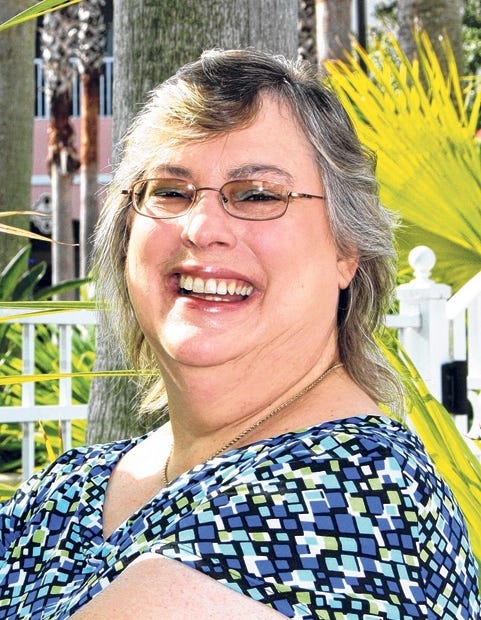
"I saw how great the needs for interpretations were. The people who could be of service through sign language were few and far between," Elisa McCrite said. [Special to the News Bulletin]

Editor's Note: This guest column is a response to the News Bulletin's story, "Overcoming the odds: Though hard of hearing, Crestview student remains in choir, cheer squad," published in the Aug. 16-18, 2017, edition.

The deaf are beautiful people who have — in the past, at least — often been misunderstood and categorized as "less than" or "handicapped."

Nothing could be farther from the truth.

From the first time I observed a high school choral classmate using sign language to interpreting a song, I became passionate to learn the language.

I had never met a deaf person. I did not know about their silent world. I did not realize how isolated they were from society. All I knew as a high school student was that sign language was beautiful and I wanted to perform with my choral group. As shallow as that seems today, it was the catalyst to change all my perceptions.

I enrolled in a sign language class for beginners and, upon completion, had a faint understanding of the importance of this whole new world into which I was entering on tiptoe and with a sense of awe.

After a subsequent advanced course, I was tapped as proficient and invited by the instructor to become a counselor at a summer camp for deaf children.

As a junior in high school I was both honored and excited to participate. Getting to rub elbows with these children, immersing myself in their special culture, and most of all, discovering how being deaf makes for a very lonely world, sent me on a deeper journey of discovery.

I began to just show up at the food court in a local mall where these teenagers hung out. We chatted and, since I never spoke but signed to them in their special language, at first they believed I was one of them. They accepted me into their group.

They were totally surprised I cared enough to come out and meet them when they found out I was not deaf. They were equally surprised that I had such an interest (and) passion to learn their language.

As time passed, I ended up taking a teen to a movie and interpreting for over two hours. Being able to partially lip read in the movie did not give one the full experience of the audio. It was the first time this teenager had ever been to a movie theater!

One day I had just left the doctor's office when a man frantically came up to me and was signing and trying to speak. I instantly recognized he was deaf and I began to use sign language to communicate. Tears came to his eyes. He had been unable to talk to his doctor or nurses and he desperately needed someone to interpret.

I jumped out of my car and we went back in, where I was able to help him. I called such instances "divine appointments."

As Oprah would say, that experience was an ah-ha moment for me. I saw how great the needs for interpretations were. The people who could be of service through sign language were few and far between.

In 1995, Hurricane Eloise was another area-wide wake up call where an entire deaf community was concerned. After the Class 2 strike, emergency personnel searched neighborhoods to assess damage. To their dismay, an entire mobile home park full of deaf residents had not received alerts that Hurricane Eloise had turned around at Mobile, Alabama and headed back to make landfall at Navarre Beach!

The fact that these Okaloosa residents were fairly isolated and protected in an inland wooded area saved their lives! We can now fully appreciate today's technology that alerts the deaf and hard-of-hearing.

Technology is no substitute, however, for that personal touch — that interaction with people which sign language gives those who take the time to study and learn the skill.

It is not necessarily how much we know, or even how much understanding we have, unless we put those skills into practice and show the deaf community the language of love.

Elisa McCrite is a Destin resident.
This article originally appeared on Crestview News Bulletin: People can serve through sign language

Seniors, home repairs and upgrades

Janice Lynn Crose, a former accountant, lives in Crestview with her husband, Jim; her two rescue collies, Shane and Jasmine; and two cats, Kathryn and Prince Valiant.

Life for all of us gets more difficult as we age.

I wrote a few months ago that my Dad said the "golden years aren't so golden."

I see the struggles my parents, friends and others who are growing older face, as well as Jim, my husband, and myself. Things that were once easy, such as laying a brick sidewalk, digging a hole for a tree, trimming bushes or installing new sprinklers become difficult as one's joints stiffen and back hurts.

Prices for home repairs can be extremely expensive, especially for retired seniors who no longer have an income to help offset these costs.

For example, my parents desperately needed their sprinkler system repaired; something Dad could have handled himself five years ago. They hired a contractor on the recommendation of the sprinkler shop; the results, the man broke several pipes, put in a worthless drip system and the expensive automatic controller is no longer automatic.

He charged them a lot of money for a worthless job.

Seniors are often at the mercy of unscrupulous contractors that don't do the job or repair correctly, demand payment and then leave. As the children of aging parents, we need to watch out for our parents and make sure others aren't taking advantage of them.

Some advice would be to keep your home in good repair and do all repairs in a timely manner. Don't put off repairs, as once we are retired our income level drops. Jim and I have a contingency fund; I know that we will need a new roof in the next few years, and probably a new air conditioner, so I save for these certain expenses. Saving for a "rainy day" was the expression our grandparents used.

Make wise decisions while you are still healthy and mobile. I enjoyed growing up in a two-story house, but my Mom warned Dad years ago, that someday they'd get old and the stairs would become difficult; that day has come for them. Plan ahead for what will happen as one ages and it will make retirement much easier.

School is back in session, please be careful when driving around Crestview.

Janice Lynn Crose, a former accountant, lives in Crestview with her husband, Jim; her two rescue collies, Shane and Jasmine; and two cats, Kathryn and Prince Valiant.

This article originally appeared on Crestview News Bulletin: Seniors, home repairs and upgrades

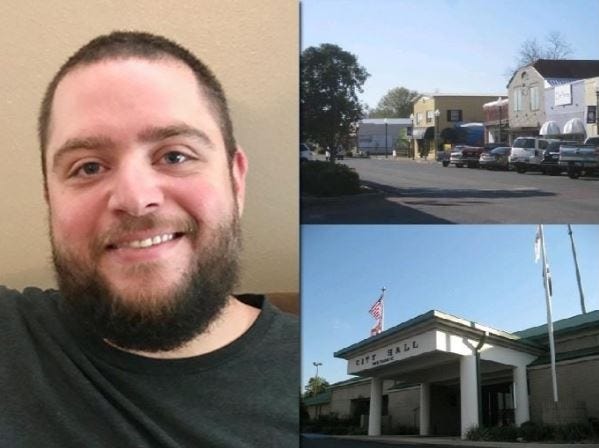
Holding Crestview leaders' feet to fire

Many of the registered voters of Crestview (myself included) have been apathetic in our participation of local elections. If you’re like me, you probably make time for the big ones like the presidential election, but the local ones usually slip through the cracks. The last election, for example, yielded a 3.8% voter turnout, which is pathetic — and we can do better.

We don’t have any elections on the immediate horizon, however in the meantime there are some actions we can take to participate in our city. One such action would be to demand accountability from our elected officials and their campaign promises.

Joe Blocker, Shannon Hayes and Bill Cox were all elected in 2013. Since they are all the longest-sitting council members, much of this op-ed will be directed toward them (also, because of those elected to the council, these three are the only ones I am able to cite quotes back to the Crestview News Bulletin — JB Whitten was elected in 2015, and I was unable to find a “Meet the Candidates” featuring him — possibly because he was uncontested, but I can’t confirm that. The other council member, Doug Faircloth, was appointed and did not run on any campaign promises.)

First we’ll start with their answers to the question, “What do you feel is the biggest challenge you face?” Mr. Blocker’s question was worded slightly different (and in a separate article).

Mr. Blocker was uniquely asked, “What do you see as your biggest challenge and how will you address it?” His answer was “Restoring trust and confidence in our elected and appointed leaders.“

Mr. Hayes’ answer: “I don’t see any large issues at the time that the council cannot adequately address.”

Mr. Cox’s answer: “I will encourage greater citizen turnout at council meetings, including newer arrivals to Crestview who are concentrated in Precinct 2.”

It would appear Mr. Blocker answered half the question, but didn’t offer how he planned to overcome the challenge. My initial reaction to Mr. Hayes’ answer is that it wasn’t extremely well thought out — if you interact with the entire community, the odds of hearing that the only issues facing Crestview can be adequately addressed by a twice/month, part-time council, would be extremely slim. Mr. Cox’s answer sounds awesome — but he focuses his representation to Precinct 2 in the promise which, to me, says “I will only represent Precinct 2.”

At least its transparent?

Another quote of Mr. Blocker in the same “Meet the Candidates” article referenced above: “My goal — and reason for seeking this council seat position — is to restore trust and confidence in our elected and appointed leaders. As your city council representative, I will serve you by passionately advocating for your needs and ensure that our neighborhood is fully represented on the Crestview City Council.”

I am a firm believer that if you don’t vote, you give up your effectiveness in complaining, but that doesn’t mean that elected officials are not accountable to people who did not vote — it just means they’re more likely to hold themselves more accountable to the people who will reelect them, which is a smart move politically — and a terrible one for representing the entire public.

Let’s ask the questions: “What have you done in 4 years to restore trust in the elected & appointed offices?”, “Do you still feel Crestview has no large issues?”, “What are you doing to encourage greater citizen turnout to the meetings?”

If they haven’t made any strides in 4 years, how can we trust they’ll make any in the next 4 years? They don’t get paid a lot ($5,000~/year), but they DO get paid to do a job they ran for, and being accountable to the voting public, it’s not unreasonable to ask for a progress report: Here are the things you said you would do — how’s it coming along? If there’s no fruit to show for their labor, then we, the apathetic voting community, bear the responsibility to change it during future elections — or, continue the apathy & be silent while they get paid to make changes we keep quiet about.

Since it’s my idea to start asking about their accountability, I’ll get the ball rolling.

June 30, 2017, The Good Country’s Cal Zethmayr brought Joe Blocker on as a guest on “The Z Files.” At the 40 minute 37 second mark of this interview, Mr. Blocker asked people to come get involved. And at the 41:45 mark, he went so far as to use the word “beg” — and begged for the public to get involved.

Prior to this interview, I had emailed Mr. Blocker (and the other council members) at least three separate occasions, possibly more. One such email was an expression of support for a decision they were making about forming the charter review committee and sending my prayers. I have received responses from all council members with the exception of Joe Blocker.

As a voter, this is not the sort of representation I expect from someone making a bold stance on “passionately advocating for your needs and ensuring that our neighborhood is fully represented on the Crestview City Council.”

Now to be fair, I don’t live in Mr. Blocker’s precinct — does that mean my voice doesn’t matter to him? Why not make that distinction in his interview: 'Please, people of my district, come out and get involved' — instead, he opts for blanketing his invitation to the entire community.

For that, I expect more transparency out of him. And for someone using the term “advocate” as much as he does, I don’t feel advocated for. I’ve even had an op-ed published asking Mr. Blocker a direct question: What have you done to educate the voters?

I’m still waiting for my response.

I’m also curious as to what strides he has taken to rebuild confidence in the elected & appointed offices — after all, he said he would.

One positive thing has happened — my voter apathy has expired, and you can bet I’ll be at the polls from now on.

How about you?

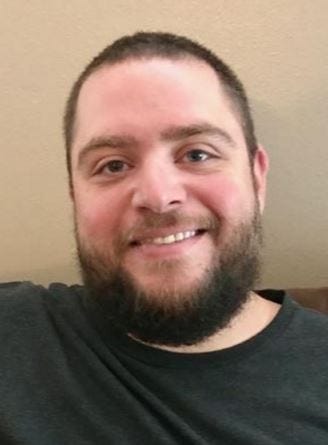
Matt Gates, with the Facebook page Crestview Citizens for Change, is not to be confused with Matt Gaetz, the U.S. congressman. He lives in Crestview.

Editor's Note: Matt Gates clarified his statements via the News Bulletin Facebook page on Aug. 15 about Councilman Cox, saying "Councilman Cox did NOT win the 2013 election for which I'm quoting his campaign promises in this op-ed. In 2013 he ran against Hayes for Precinct 2, however lost to Hayes. Subsequently, he ran again in 2015 for an at-large position, which he now holds. In the 2015 election, he ran unopposed (like JB, as mentioned in the op-ed — running unopposed, he wasn't on record for any promises or commitments). What this means is, from an accountability perspective, Mr. Cox's statements in 2013 for Precinct 2 don't matter — what matters is how he serves the city now from an at-large position. I trust he holds the same goal (but for the whole city) — to get involvement to increase.

This article originally appeared on Crestview News Bulletin: Holding Crestview leaders' feet to fire

Can you save for college and retirement?

Yvonne Shanklin is an Edward Jones financial adviser. [Special to the News Bulletin]

Few of us have unlimited financial resources — which means that almost all of us need to prioritize our financial goals. Consequently, you'll have some decisions to make if you'd like to help pay for your children's college educations someday while, at the same time, saving for your own retirement.

Your first step in addressing these objectives is to maintain realistic expectations. Consider the issue of paying for college. Right now, the average four-year cost (tuition, fees, room and board) is about $80,000 for in-state students at public universities and approximately $180,000 for private schools, according to the College Board. And these costs are likely to keep rising in the years ahead. Can you save this much for your kids' education?

Instead of committing yourself to putting away this type of money, take a holistic approach to saving for your children's higher education. After all, you probably won't be the only one to help pay for college.

Depending on your income and assets, your family might be eligible for some needs-based financial aid awarded by the college. Also, you should encourage your children to apply for as many scholarships as possible — but keep in mind that most scholarships don't provide a "full ride." Here's the bottom line: Don't assume you will receive so much aid that you don't need to save for college at all, but don't burden yourself with the expectation that you need to pick up the full tab for your children's schooling.

On a practical level, you may want to commit to putting a certain amount per month into a college savings vehicle, such as a 529 plan. You can generally invest in the 529 plan offered by most states, but in some cases, you may be eligible for a state income tax incentive. Also, all withdrawals from 529 plans will be free from federal income taxes, as long as the money is used for a qualified college or graduate school expense of the beneficiary you've named. (Withdrawals for expenses other than qualified education expenditures may be subject to federal and state taxes and a 10 percent penalty on the earnings.)

By starting your 529 plan early, when your children are young, you'll give the investments within the plan more time to grow. Plus, you can make smaller contributions on a regular basis, rather than come up with big lump sums later on.

And by following this approach, you may be in a better financial position for investing in your IRA and your 401(k) or other employer-sponsored retirement plan. Obviously, it's to your benefit to contribute as much as you can to these plans, which offer tax advantages and a wide range of investment options. If you're investing in a 401(k) or similar employer-backed plan, try to boost your contributions every time your salary increases. At the very least, always put in enough to earn your employer's matching contribution, if one is offered.

And once your children are through with college, you can discontinue saving in your 529 plan (although you may want to open another one in the future for your grandchildren) and devote more money to your retirement accounts.

It can certainly be challenging to save for education and retirement — but with discipline and perseverance, it can be done.

So, give it the "old college try."

This article was written by Edward Jones on behalf of your Edward Jones financial adviser.

This article originally appeared on Crestview News Bulletin: Can you save for college and retirement?

The Okaloosa 4-H fair is coming soon

Veronica Graham is the 4H Program Assistant for Okaloosa County. [Special to the News Bulletin]

The Okaloosa County Fair is a very busy time for Okaloosa County 4-H. There are just so many things to prepare for. Animals need baths, and their hair and nails must be clipped. 4-H youths are busy polishing off their skills in show and project delivery.

It is the best time of year to come out and see all of what our kids have been working on all year long. The youths have been raising farm animals that range from chickens and cows to other smaller animals such as rabbits and cavy. They have also been perfecting skills such as cooking, sewing, and even canning.

The best part of the annual fair is its diversity of project areas. Local 4-H members are able to display anything from photography to robotics and show animals ranging from steer to turkeys. Throughout the event, they will participate in competitions to demonstrate their knowledge in animal science and showmanship techniques. We even have a dog show on Thursday night which includes some of the best dressed dogs around! It is a fun and eventful time.

Okaloosa County clubs will also have booths available to provide extra information about current 4-H offerings in our area. Nightly demonstrations in the 4-H building are scheduled to give the public a small idea of what these amazing youths are learning throughout the year, so mark your calendars and come visit us at the Northwest Florida Fair this year.

It will be open from 5-10 p.m. Sept. 25-29, and 2-10 p.m. Sept. 30 at the Northwest Florida Fair Grounds in Fort Walton Beach.

This year our fair is open to all Okaloosa, Walton, and Santa Rosa County 4-H members. Contact the University of Florida Institute of Food and Agricultural Sciences' Okaloosa County Extension Office at 689-5850 or email me at graham.v@ufl.edu for registration information if you are interested in participating.

All registration is due by 4:30 p.m. Sept. 15 at the Crestview office. Premium booklets and registration forms are available at http://okaloosa.ifas.ufl.edu/4hy/okaloosa-county-fair/.

Visit http://www.nwffair.com/fair/index.htm for more information on the Northwest Florida Fair.

Veronica  Graham is an agent at the University of Florida's Institute of Food and Agricultural Sciences Extension office in Crestview.

This article originally appeared on Crestview News Bulletin: The Okaloosa 4-H fair is coming soon

Readers' thoughts on nuclear threats, road improvements

CRESTVIEW — Numerous crestviewbulletin.com and Facebook readers shared their thoughts on local issues. 

Here are some of their comments. 

Talk of nuclear war

It's just sad that we're just talking about this like it's nothing at all. I'm scared and I don't want any of us to die like this. It's [B.S.] and we had better do everything in our power to make sure that we don't destroy our beautiful world in nuclear war.

Patty Stepro

Forecasting road improvements

Well, I really thought I would never see the Fairchild Road "pig trail" paved. But after officials talked about it since 1964 it finally happened this year and boy is it nice!

So at that rate, since SR 85 has only been talked about since around the year 2000 I'd say ya have about 36 years to wait yet to match the Fairchild wait.

Daniel Crawley 

About Crestview’s retiring reference librarian

Sandra [Dreaden] has always been a tireless advocate for education. Her energy, professionalism, and toughness are legendary.

Tricia Gould

Praise for Laurel Hill coverage

Thank you, Genevieve DiNatale, for taking time to come to Laurel Hill and attending our City Council meetings. It is refreshing to have [an] unbiased reporter that is always willing report the facts.

Even if we are a small city.

Taking the extra steps and representing North Okaloosa is very much appreciated. We look forward to reading [and] viewing your articles. Keep up the good work.

Kathy Moneypenny 

Join the conversation on crestviewbulletin.com — and your comment could be featured. >>

Signing up for a Viafoura account is easy, fast and free!

Have more to say than a quick comment? Write a letter to the editor.

This article originally appeared on Crestview News Bulletin: Readers' thoughts on nuclear threats, road improvements

Trump Administration ends government shakedown practices

Buried in all micro-drama distractions of the Trump administration are many of the good things it has done. One of the many under-reported accomplishments occurred in June, when Attorney General Jefferson Beauregard Sessions said the Department of Justice would reverse one of the sleazy practices of the Obama administration: allowing prosecutors to cut deals with corporate targets to direct payment of settlements to their pet political causes.

These “slush funds,” created from DOJ prosecutions of American corporations, allowed the hyper-political Obama administration to direct settlement money to politically favored causes. Settlements were sent to the likes of the National Council of La Raza, a Democrat activist group, and other “community redevelopment” and nonprofit “legal aid" organizations. You know, the folks who showed up at all those work-week, midday Obama rallies who happened to be in matching T-shirts.

When a company like Volkswagen slips up and runs afoul of myriad regulations and laws (never mind that no one noticed for years), the DOJ swoops in and shakes the company down for money — some of it sent to pet Democrat causes.

As expected, the CEO of Volkswagen capitulates. He says this is the most humiliating moment in his company’s history. Keep in mind, Volkswagen was founded by Hitler. Hitler was too early with VW.  Had he waited and teamed up with Samsung, he’d have been able to blow up Americans.

Then VW reaches a $15 billion settlement. Democrat friends in the plaintiff  lawyers' bar rake in billions, and the DOJ sends stacks of money to liberal allies and various like-minded activist groups. And VW owners, the supposed "victims" of increased horsepower and performance all those years? Well, they get a $25 gift card they can use on their next purchase of a VW.

Companies see this and, instead of opening another plant in Shakedownville, USA, they build a plant in Mexico. There they only have to bribe local cops. Jobs and revenues go overseas. Trump points this out and becomes president.

Government can do this because it creates all the myriad laws no one understands. In 2010 alone, 81,405 laws and regulations were created. I  suggest you try to read them. If it gets boring, stick with it; it gets real interesting after page 79,205. And if you do not want to read all this, you can watch the movie: Atlas Shrugged.

Washington knows we will not read all their rules or even notice. Most Americans care about and understand the infield fly rule better.

Per the National Review, “Under Eric Holder and Loretta Lynch, the Justice Department regularly designed legal settlements in which well-heeled defendants were encouraged (read: forced) to donate money to third parties with no legal connection to the case being adjudicated.”  So why did this work? The Government Accountability Office said that the practice was legal because the money was provided “voluntarily.” Yeah, much like you “volunteer” your wallet and watch to a robber who has a gun on you.

This dubious practice under Obama needs to be examined. Loretta Lynch would not investigate Eric Holder or any Democrat. For eight years the only animal allowed in the White House was the Attorney General’s guide dog. Yes, companies have constitutional rights to fight this practice but, according to the Obama doctrine, nothing says it has to be a fair fight. They know they are trying companies in the judicial system and the court of public opinion, and they settle.

Not even examined yet is how the practice was used to go after opponents (Rush Limbaugh’s largest sponsor, LifeLock, was shaken town big time), or how many police departments DOJ determined were "racist" and shook down.

The BP settlement was so big. Any time you put more oil on birds than Colonel Sanders ever did, you’re vulnerable. I really would like to see who all got anything beyond lawyers, bureaucrats and environmental groups.

Other cases involved Uber settling on various charges, seemingly weekly. There have been so many settlements, Uber just delivers the money each time — as you would expect — in a white Kia, five minutes later than they say they’d be there. Ticketmaster settled a suit for $9 million, but only paid $3 mil after their “servicing fee.”

LinkedIn paid $7 million in settlements to employees. But the company knew it would never have to pay, because it sent notifications to "victims" on how to get paid in emails from LinkedIn, and then kept deleting them.

Ron Hart is a libertarian op-ed humorist and award-winning author. Contact him at Ron@RonaldHart.com or @RonaldHart on Twitter.

What's your view? Write a letter to the editor.

This article originally appeared on Crestview News Bulletin: Trump Administration ends government shakedown practices

Nuclear attack survival tips — let's hope we don’t need them

President Donald Trump has vowed to meet more North Korea threats with "power the likes of which the world has never seen" and Kim Jong-un has responded with a plan for a nuke attack on the U.S. island of Guam. Plans are being made for a horror scenario we must take seriously.

Most of us want to be confident that America with the aid of Japan and our strategic defense system can stop any missile attack. We know we have plenty of bombs to strike North Korea in return.

Just one of our submarines named "USS Kentucky" has two hundred nuclear bombs, most of which are more powerful than the one bomb that struck Hiroshima.

This is frightening — that enough power is on one submarine to take out an entire country or more.

Such a scenario makes me wonder how much can the planet stand. If four or five countries ever get into an unleashing of nuclear weapons on each other, I believe it would be more than our planet could survive. If our planet could stay intact, the planet might take hundreds of years to ever recoup from the devastation. The planet is amazing but humankind has developed the ability to annihilate our beautiful planet.

Business Insider printed a story a couple of years ago that stated shortly after the end of World War II, the scientists who developed the atomic bombs dropped on Japan tried to envision the kind of nuclear event that could lead to the destruction of not just cities, but the entire world.

A recently declassified document shared by nuclear historian Alex Wellerstein gives the verdict that scientists at the Los Alamos laboratory and test site reached in 1945. They found that "it would require only in the neighborhood of 10 to 100 Supers of this type" to put the human race in peril.

With so many atomic bombs now existing in the world, it would be fathomable that ten to a 100 could be unleashed given the right scenario of hostility between enough countries.

No one is thinking that many will be unleashed by anyone. What if North Korea successfully unleashes several of their stocked nuclear bombs? What if we cannot intercept them all? Our defense may be great but even the greatest defense systems have flaws and holes. How many would die? If North Korea unleashes one then we know President Trump may unleash one on North Korea or take out tens of thousands of lives. The causalities could end up in the millions.

If Kim Jong-un launches one toward our mainland, there is no guarantee it would hit Seattle or Chicago. It could end up hitting any town or even rural area in the United States. Do you think you are safe just because you in an obscure town? If nuclear missiles are fired, we are all at risk.

Please keep in mind that everything will be interrupted. With any kind of national crisis gasoline shortages occur. Grocery store supplies might be interrupted. Power grids could be demolished or interrupted.

The following are things experts recommend you can do to protect yourself, your family and your home if you believe an attack is imminent. Thanks to the UK Sun for supplying this information

Build an emergency supply kit, which includes items like non-perishable food, water, a battery-powered or hand-crank radio, extra flashlights and batteries. You may want to prepare a kit for your workplace and a portable kit to keep in your car in case you are told to evacuate.

Make a family emergency plan. Your family may not be together when disaster strikes, so it is important to know how you will contact one another, how you will get back together and what you will do in case of an emergency.

Find out from officials if any public buildings in your community have been designated as fallout shelters. If none have been designated, make your own list of potential shelters. These places would include basements or the windowless central area of middle floors in high-rise buildings.

What to do during a nuclear blast:

  • The following are guidelines for what to do in the event of a nuclear explosion.
  • Listen for official information via online, radio or TV and follow the instructions provided by emergency response personnel.
  • If an attack warning is issued, take cover as quickly as you can, below ground if possible, and stay there until instructed to do otherwise.
  • Find the nearest building, preferably built of brick or concrete, and go inside to avoid any radioactive material outside.
  • If better shelter, such as a multi-story building or basement can be reached within a few minutes, go there immediately.
  • Go as far below ground as possible or in the center of a tall building. The goal is to put as many walls and as much concrete, brick and soil between you and the radioactive material outside.
  • Expect to stay inside for at least 24 hours unless told otherwise by authorities.

What to do if you are caught outside:

  • Do not look at the flash or fireball — it can blind you.
  • Take cover behind anything that might offer protection.
  • Lie flat on the ground and cover your head. If the explosion is some distance away, it could take 30 seconds or more for the blast wave to hit.
  • Take shelter as soon as you can, even if you are many miles from ground zero where the attack occurred — radioactive fallout can be carried by the winds for hundreds of miles.
  • If you were outside during or after the blast, get clean as soon as possible, to remove radioactive material that may have settled on your body.
  • Remove your clothing to keep radioactive material from spreading. Removing the outer layer of clothing can remove up to 90 percent of radioactive material.
  • If practical, place your contaminated clothing in a plastic bag and seal or tie the bag.
  • When possible, take a shower with lots of soap and water to help remove radioactive contamination. Do not scrub or scratch the skin.
  • Wash your hair with shampoo or soap and water. Do not use conditioner in your hair because it will bind radioactive material to your hair, keeping it from rinsing out easily.

What to do after a nuclear blast:

  • Decay rates of the radioactive fallout are the same for any size nuclear device.
  • However, the amount of fallout will vary based on the size of the device and its proximity to the ground. Therefore, it might be necessary for those in the areas with highest radiation levels to shelter for up to a month.
  • The heaviest fallout would be limited to the area at or downwind from the explosion and 80 percent of the fallout would occur during the first 24 hours.
  • People in most of the areas that would be affected could be allowed to come out of shelter within a few days and, if necessary, evacuate to unaffected areas.
  • Keep listening to the radio and television for news about what to do, where to go and places to avoid.
  • Stay away from damaged areas. Stay away from areas marked 'radiation hazard' or 'HAZMAT.' Remember that radiation cannot be seen, smelled or otherwise detected by human senses.

The bottom line is that we all hope and pray that China, Japan and other nations will work with us to help us resolve this lingering nightmare with Kim Jong-un.

The problem is that it won't be over. There will still be a chance of this recurring nightmare that will come back from North Korea or even very soon Iran.

The scenario of a world holocaust is becoming too imminent. We must seriously answer this question, "Will the world ever really rest with North Korea having nuclear weapons?"

Another question is can we really allow this to continue?

Do we sit back and allow Iran to put us in the same position in the next couple of years?

Glenn Mollette is an American syndicated columnist and author.

What's your view? Write a letter to the editor.

This article originally appeared on Crestview News Bulletin: Nuclear attack survival tips — let's hope we don’t need them

Crestview's musical opportunities abound

Janice Lynn Crose, a former accountant, lives in Crestview with her husband, Jim; her two rescue collies, Shane and Jasmine; and two cats, Kathryn and Prince Valiant.

I enjoy music and appreciate good musicians, so I am pleased to live in a town that values good music.

We are fortunate to have music programs in our schools and to have the North Okaloosa Community Band, under the direction of Kim Whaley, the band director at Shoal River Middle School. Currently, there are also three associate conductors: Lindsay Stuart from Paxton Middle School, Joshua Williams, and Jeanine Connelly.

Lee Emerson, an instrument repairman at Upbeat Music, had the vision to form a community band and asked Bob Allen and some other musicians if they were interested. That is how Crestview got this wonderful band.

The band formed in January last year, starting with about 15 members. It has since grown to over 50. Many of the musicians are high school students and about 40 percent are adults of various ages. The band rehearses on Monday evenings at 6:30 p.m. at Shoal River Middle School. Whether a virtuoso or beginner, musicians with all levels of experience are encouraged to participate.

The next NOCB performance is during the Crestview Fall Festival, and starts about 4 p.m. Oct. 28 on Main Street. The program will be "spooky" music suitable for Halloween. This should be a fun time for all ages.

The band begins every performance with "The Star-Spangled Banner." When the band is playing, if Crestview Mayor David Cadle is present, he is always invited to conduct one piece. Cadle is the former director of the Crestview High School Band.

A Christmas program, in conjunction with the Friends of the Arts, is tentatively scheduled for Dec. 4 at Warriors Hall. I will post more information as it becomes available.

In addition to the community band, we have an outstanding Crestview High School band under the leadership of Jody Dunn.

We are just as fortunate to have an exceptional school choral department under the direction of Kevin Lusk. Both men do an astounding job of teaching musical discipline to those who are interested in music at CHS. We are blessed to live in a music loving community.

Janice Lynn Crose, a former accountant, lives in Crestview with her husband, Jim; her two rescue collies, Shane and Jasmine; and two cats, Kathryn and Prince Valiant.

This article originally appeared on Crestview News Bulletin: Crestview's musical opportunities abound

Stay calm on the investment 'roller coaster'

Unless you live near an amusement park that does a lot of advertising, you probably didn't know that Aug. 16 is National Roller Coaster Day. Actual roller coasters provide people with thrills. But as an investor, how can you stay calm on the "roller coaster" of the financial markets?

Here are some suggestions:

Know what's in front of you. If you've ever ridden a roller coaster in the dark, you may find it scarier than if you boarded it in daylight — after all, it can be unsettling not to know where you're going.

The same can be said about investing. If you have no idea what's in front of you, you might find the journey unnerving — and if that happens, you could make panicky decisions, which are usually bad ones. So prepare for the inevitable market volatility — it's a normal part of the investment landscape.

Buckle up. When you're on a roller coaster, you need to buckle your seat belt or use a restraint. You want to have the excitement of the ride, but you certainly don't want to take unnecessary risks. And you can enjoy some of the excitement of investing without incurring more risk than you are comfortable with, too. One way to lower your risk level is to diversify across a range of investments — stocks, bonds, government securities, and so on. That way, if a market downturn primarily affects just one type of investment, you'll have some protection. However, although diversification can reduce the impact of volatility on your portfolio, it can't protect against all losses or guarantee a profit.

Choose a strategy for the journey. Different people have different ways of handling a roller coaster ride. Some like to throw their hands up, enjoying the feeling of abandon, while others hold on tightly to the bar in front of them. When you invest, you also need a strategy that works for you, and the best one may be the simplest: Buy quality investments and hold them for the long term. How long is "long term"? It could be 10, 20, 30 years or more. Famed investor Warren Buffet says his favorite holding period is "forever."

If you've chosen a mix of quality investments appropriate for your risk tolerance, you may be able to hold them until either your goals change or the investments themselves undergo some transformation.

Stay for the whole "ride." When you hop on a roller coaster, you've got no choice — you're staying until the ride is over. As an investor, though, you can exit the investment world whenever you like. But if you take a "time out" from investing every time the market drops, you risk still being out of the market when it rallies — and the early stages of a rally are often when the biggest gains occur. Furthermore, if you keep investing during a "down" market, you'll be buying shares when their price has dropped, which means your dollars can go further — and you'll be following one of the basic rules of investing: "Buy low."

You can't take out all the twists and turns of the investment road, but by following the above suggestions, you can help make the ride less stressful — and possibly more rewarding.

This article was written by Edward Jones on behalf of your Edward Jones financial adviser.

This article originally appeared on Crestview News Bulletin: Stay calm on the investment 'roller coaster'

error: Content is protected !!