







![[PIXABAY.COM]](https://crestviewbulletin.com/wp-content/uploads/2022/01/ghows-DA-8cb2fa91-26b7-2312-e053-0100007f1f41-23855a86.jpeg)
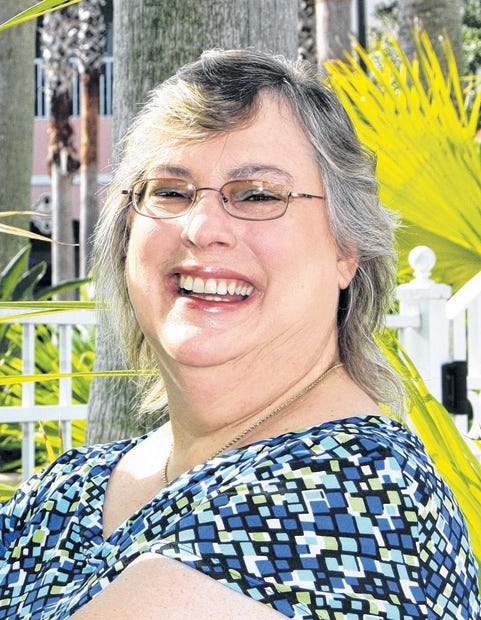
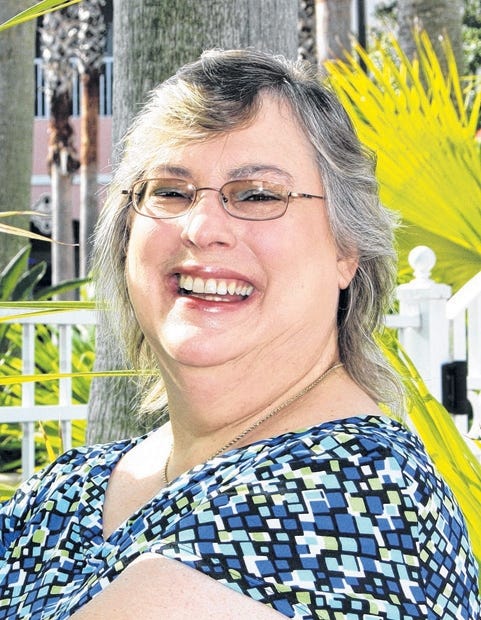
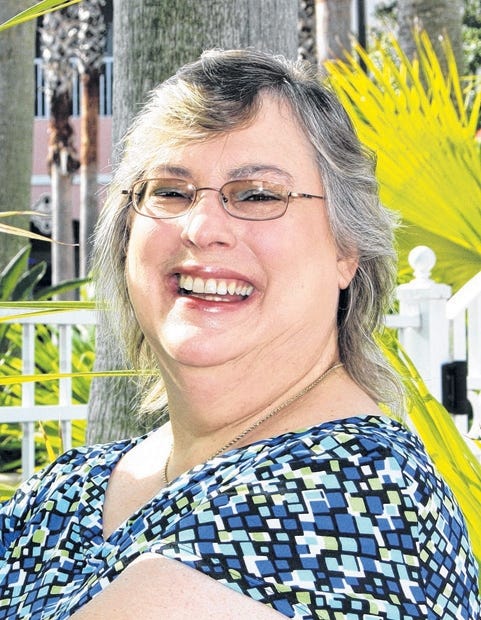
GUEST COLUMN: Reworking the language of women
I was talking to a friend I've known for more than two decades when, twice, she prefaced her opinion with, "I feel." The third time she shared an opinion, she began with, "I think."
"Why do you do that?" I said. "I asked for your thoughts. I know it's you speaking. Why preface your opinions with a disclaimer. Women do this all the time. Men almost never do that."
Fortunately, my friend loves me, even when I'm like this.
"We were talking about jackets," she said. "I didn't think you—." She paused, and recalibrated. "I don't need you to correct how I speak."
Excellent.
I don't want to scold here, but look, too many of us have fallen for this notion that our opinions are incidental. If we weren't raised to believe this, we have plenty of opportunity to learn it in the workplace. We don't want to be "pushy" or "arrogant" and so we become walking apologies for having an independent thought. These throwaway phrases — "I believe," "I think," "I feel" and, the worst, "I'm sorry but" — telegraph uncertainty and give others permission to ignore us.
Every time I bring this up — on Twitter today, for example — the main thread of responses is fascinating, and the chief rebuttal is as predictable as it is righteous. Why should women change when it is men who need to stop acting as if their every opinion erupted from the burning bush?
Excellent point.
It reminds me of the recurring objection whenever I advocate for generous tips for those hourly wage earners on whom we depend, such as restaurant servers, bartenders, hotel housekeepers, airport wheelchair attendants and valets. Why should we the customers have to compensate for cheap bosses refusing to pay their employees a living wage?
Outstanding point. Corporate greed is not our fault.
However, decades of corporate practices have made clear that our refusal to tip or small tips have done nothing to further the cause of justice for these hard-working people. Yes, their bosses should pay them more, but until these workers can join a union, we should never pretend our outrage is going to pay their electric bills or feed their families.
Similarly, while we women are waiting for certain men to experience the epiphany of an unexpressed thought, let's share our opinions as if we mean them, which we surely do.
Quick example. Let's say we are worried about our country and we want other Americans to worry, too. Which of these statements is more likely to recruit others to our cause?
A) "I feel our country is in crisis."
B) "Our country is in crisis."
In the first instance, we are wringing our hands. In the second, we have issued a clarion call.
Yes, there is the risk of appearing to state as fact things that we don't know for sure to be true. Here's how we fix that: Know our facts, and share them. Problem solved.
And now a word about "just."
When I meet someone, and there is time to exchange more than a sentence or two, it is my habit to say, "Tell me about yourself." More than half of women — let's say 85 percent — begin their responses with, "I'm just…"
"I'm just a teacher."
"I'm just a mother."
My personal favorite: "I'm just a physician." To which I responded: "Slacker." And then we had a moment.
Ignore the "just." That part is never true.
This article originally appeared on Crestview News Bulletin: GUEST COLUMN: Reworking the language of women

Phones are more sophisticated — and more expensive
Buying a new cellphone is not near the fun it once was, since we now pay for them ourselves. A new cellphone can set one back hundreds of dollars or more.
Most people buy a new phone and pay a monthly charge. They never pay off their phone — they just keep buying new ones and keep paying, which is a very expensive proposition.
Gone are the days when cellphone companies provided a new phone for being a loyal customer. Phone insurance is quite expensive, with a high deductible.
When you need your phone replaced, you typically receive a used phone someone turned in because they had problems with it, which then become your problems.
Unless one is a technological wizard, a phone purchase can be confusing. There are terms such as 3G, 4G and 5G; as well as MP for the camera. Then there are Android vs. iOS operating systems.
One needs to know the network the phone will work with, AT&T, Verizon, Sprint, Boost, and so on. And cellphones don't work with all the carriers — one must have the right phone for the right carrier.
Some phones work on a GSM network while others on CDMA network.
Make sure you purchase the right phone. If you don't, most carriers charge a hefty restocking fee. Ouch!
My husband Jim and I have no need for the latest and greatest cellphone. I only need a basic phone to call and text. Jim needs something more sophisticated as he uses his for work and scheduling. My niece worked for Verizon's technical support, so I always solicit her advice before purchasing.
Since I am frugal, I use my cellphone until it dies, the circuit boards give out or the network kills it. On the other hand, my husband loses, drops, or leaves them some place.
Jim had an unfortunate accident with his phone this week. Fortunately, we have Walmart and many carrier stores here in Crestview, so replacing it should be easy.
Now I just have to figure out which phone works with our carrier, has the right specifications, and which limb we are willing to sacrifice to pay for it.
Janice Lynn Crose, a former accountant, lives in Crestview with her husband, Jim; her two rescue collies, Shane and Jasmine; and two cats, Kathryn and Prince Valiant.
This article originally appeared on Crestview News Bulletin: Phones are more sophisticated — and more expensive

CARL HIAASEN: Parkland deputy must be haunted by decision
![Scot Peterson [Broward County Sheriff’s Office via TNS]](https://crestviewbulletin.com/wp-content/uploads/2022/01/ghows-DA-8b86a39b-68fc-5926-e053-0100007f87f2-abfbfbd1.jpeg)
The recent arrest of former Broward Sheriff’s deputy Scot Peterson is one more gut-churning, grief-extending chapter of the 2018 massacre at Parkland’s Marjory Stoneman Douglas High.
Not only is the confessed shooter facing trial, but now so is the armed school resource officer who remained outside instead of rushing in while one gunshot after another rang out.
Fourteen students and three staff members died. Seventeen others were wounded. The nightmare, already analyzed second-by-second by investigators, will at least twice more be reconstructed — and relived by survivors — in a courtroom.
After a lengthy investigation by the Florida Department of Law Enforcement, Peterson stands accused of 11 charges, including child neglect, culpable negligence and perjury.
Never before has a law-enforcement officer been prosecuted in such a case, and the chances seem slim that anything except a perjury conviction would be upheld by an appeals court. Nonetheless, some parents of the young victims hailed Peterson’s arrest.
Fred Guttenberg, whose daughter Jaime died at the high school, addressed the ex-deputy on Twitter: “I have no comment except to say rot in hell. You could have saved some of the 17. You could have saved my daughter…”
It’s easy to understand how any family member would burn with anger while watching the security videos of Peterson’s actions — or tragic lack thereof.
He looked scared. He was shouting frantically into his radio, but moving away from the gunfire, not toward it. According to the FDLE, he told arriving officers to stay 500 feet away from the 1200 building, where the killings were taking place.
The tape loops of Peterson hovering in the shadows are infuriating to watch, but prosecutors can’t build a solid case on a community’s outrage. Eventually a jury will be facing dry questions of law, such as: Is it actually a crime for first-responders to make bad decisions, or to show a lack of bravery?
A panel investigating the Stoneman Douglas tragedy already has exposed the slow, unorganized deployment of officers from several agencies. Then-Broward Sheriff Scott Israel lost his job as a result.
Peterson’s failure was only one part of what went wrong.
The FDLE reported the victims on the first floor of the 1200 building already had been shot by the time Peterson arrived, but that he had time to run upstairs to the third-floor and confront the 19-year-old gunman.
While Peterson did nothing, five more persons died and four others were wounded on that floor.
Still, the type of charges filed against the ex-deputy will be hard to prove. Almost all child-neglect cases involve caregivers, and there’s not much legal precedent for putting law-enforcement officers in that category.
Likewise, culpable negligence isn’t a charge often leveled against cops in the line of duty, even when fatal mistakes occur.
Peterson has said he didn’t go into the building because he thought the sniper was outside, firing at people. That contradicts other first-hand accounts, and prosecutors say the deputy was duty-bound to advance toward the gunshots.
Still, it would be unwise to assume that nobody in court will believe Peterson’s story, or that he’ll come off as a completely unsympathetic witness, if he testifies. Jurors are reluctant to convict police officers in situations where bullets are flying.
A guilty verdict would raise legitimate concerns about whether first-responders — whether it’s a cop, firefighter or paramedic — can be criminally prosecuted for doing the wrong thing on an emergency call.
There’s no way to know what would have happened if Peterson had done the right thing. He had a handgun; the killer was firing an assault rifle. It’s possible the deputy would have been shot before he could save a single student.
But, for God’s sake, you’re supposed to try. Peterson must live with the fact he didn’t, and it will haunt him forever whether he’s behind bars or not.
When rampages like the Parkland shooting occur, a scorching torrent of emotions washes over each victim’s family. I know this from personal experience.
There is disbelief, indescribable grief and then anger. You want to punish the killer, of course, but the pain fueling your rage is bigger than that. You want to spread the punishment around, and you don’t have to look very far.
Who let this nut have a gun? Why didn’t the guy receive any psychiatric help, or better help? How could he just walk in and start shooting? Why wasn’t there more security? Who? How? Why?
But in the end, the person you loved and lost to an armed lunatic is still gone. Locking up the killer for life won’t change that, nor will locking up a deputy who was paralyzed with fear.
However, one is a true criminal. The other is a man who failed for the whole world to see, at a terrible cost.
Carl Hiaasen is a syndicated columnist with the Miami Herald and Tribune News Service.
This article originally appeared on Crestview News Bulletin: CARL HIAASEN: Parkland deputy must be haunted by decision

WALTER E. WILLIAMS: How to create conflict
We are living in a time of increasing domestic tension. Some of it stems from the presidency of Donald Trump. Another part of it is various advocacy groups on both sides of the political spectrum demanding one cause or another. But nearly totally ignored is how growing government control over our lives, along with the betrayal of constitutional principles, contributes the most to domestic tension. Let's look at a few examples.
Think about primary and secondary schooling. I think that every parent has the right to decide whether his child will recite a morning prayer in school. Similarly, every parent has the right to decide that his child will not recite a morning prayer. The same can be said about the Pledge of Allegiance to our flag, sex education and other hot-button issues in education. These become contentious issues because schools are owned by the government.
In the case of prayers, there will either be prayers or no prayers in school. It's a political decision whether prayers will be permitted or not, and parent groups with strong preferences will organize to fight one another. A win for one parent means a loss for another parent. The losing parent will be forced to either concede or muster up private school tuition while continuing to pay taxes for a school for which he has no use. Such a conflict would not arise if education were not government-produced but only government-financed, say through education vouchers. Parents with different preferences could have their wishes fulfilled by enrolling their child in a private school of their choice. Instead of being enemies, parents with different preferences could be friends.
People also have strong preferences for goods and services. Some of us have strong preferences for white wine and distaste for reds while others have the opposite preference — strong preferences for red wine. Some of us love classical music while others love rock and roll music. Some of us love Mercedes-Benz while others love Lincoln Continentals. When's the last time you heard red wine drinkers in conflict with white wine drinkers? Have you ever seen classical music lovers organizing against rock and roll lovers or Mercedes-Benz lovers in conflict with Lincoln Continental lovers?
People have strong preferences for these goods just as much as they may have strong preference for schooling. It's a rare occasion, if ever, that one sees the kind of conflict between wine, music and automobile lovers that we see about schooling issues. Why? While government allocation of resources is a zero-sum game — one person's win is another's loss — market allocation is not. Market allocation is a positive-sum game where everybody wins. Lovers of red wine, classical music and Mercedes-Benz get what they want while lovers of white wine, rock and roll music and Lincoln Continentals get what they want. Instead of fighting one another, they can live in peace and maybe be friends.
It would be easy to create conflict among these people. Instead of market allocation, have government, through a democratic majority-rule process, decide what wines, music and cars would be produced. If that were done, I guarantee that red wine lovers would organize against white wine lovers, classical music lovers against rock and roll lovers and Mercedes-Benz lovers against Lincoln Continental lovers.
Conflict would emerge solely because the decision was made in the political arena. Again, the prime feature of political decision-making is that it's a zero-sum game. One person's win is of necessity another person's loss. If red wine lovers win, white wine lovers would lose. As such, political allocation of resources enhances conflict while market allocation reduces conflict. The greater the number of decisions made in the political arena, the greater the potential for conflict. That's the main benefit of limited government.
Unfortunately, too many Americans want government to grow and have more power over our lives. That means conflict among us is going to rise.
Walter E. Williams is a professor of economics at George Mason University.
This article originally appeared on Crestview News Bulletin: WALTER E. WILLIAMS: How to create conflict

Some of the history behind our flag
The Flag of the United States of America is a symbol of our nation and our freedom. We revere and respect our flag each June 14, Flag Day. This date is a tribute to the date our flag was adopted June 14, 1777.
We remember the stories of Betsy Ross stitching our flag, but history indicates that she also had a hand in the layout of that flag. The first flag was red, white and blue, as it is today, with 13 stars for the original 13 colonies, as well as 13 stripes.
Our current flag has 50 stars for the 50 states in the Union and 13 stripes for the original colonies. The stars were put in a circle on the first flag so that no one state was shown preference.
As more states were added to the union, obviously the flag would have become cumbersome if stripes kept being added, so in 1818, Congress changed the flag to keep the original 13 stripes and add stars to represent the new states.
In 1782 when the Seal of the United States was adopted, Charles Thompson, Secretary of the Continental Congress, stated the following: "The colors of the pales (the vertical stripes) are those used in the flag of the United States of America; White signifies purity and innocence, Red, hardiness & valour, and Blue, the color of the Chief (the broad band above the stripes) signifies vigilance, perseverance & justice." (http://usflag.org/colors.html)
I remember learning flag etiquette from my parents and grandparents. We were taught to stand when the fag was presented, face toward it, put our hand over our heart during the Pledge of Allegiance, and to sing the National Anthem.
We were told that we stand in honor of the men and women who fought for our country and can no longer stand. My brothers were instructed to take off any hats they might be wearing as a sign of respect.
We respect our flag when we honor the men and women who fought and died defending our country.
Our flag should never to touch the ground nor be carried flat. It is to be carried on a pole and should be carried higher than any other flags in a procession.
Also, the flag should not be flown at night, unless it is lighted. Tattered flags should be retired respectfully.
Most Veterans of Foreign Wars and American Legion groups will accept old flags and retire them.
Let's fly our flags with pride on Flag Day here in Crestview.
Happy Father's Day to all fathers; we love and appreciate you!
Janice Lynn Crose, a former accountant, lives in Crestview with her husband, Jim; her two rescue collies, Shane and Jasmine; and two cats, Kathryn and Prince Valiant.
This article originally appeared on Crestview News Bulletin: Some of the history behind our flag

Crestview to observe D-Day 75th anniversary
This Thursday, June 6 will be the observance of the 75th anniversary of D-Day.
The event will take place from 4:30 to 8 p.m. at Warriors Hall in Whitehurst Memorial Building, 201 Stillwell Blvd., Crestview. The program begins at 6 p.m. This event is free and sponsored by Mayor J.B. Whitten, the Crestview Area Sister City Program, and MGMR Strategic Solutions.
Before the program, visitors can browse the World War II displays that will be posted around the room. There will be a display about Noirmoutier, our sister city in France, as well as museum pieces from Tom Rice's collection. There will also be original movie posters from World War II films, World War II memorabilia from the Baker Block Museuml and authentic vehicles and field equipment from a personal collection.
The program will begin with Pastor Mark Broadhead, the chaplain for the Crestview Police Department, reciting President Franklin D. Roosevelt's D-Day Prayer.
The first-place D-Day essay contest winners, one from middle and one from high school, will be presented with their scholarship checks and read their essays. All contest winners will be recognized and receive their checks.
Whitten will give a short talk and then the documentary movie "Mother of Normandy" will be shown after an introduction by Mary Richard.
This movie will be the regional premiere of the hour-long documentary about Simone Renaud, the wife of the wartime mayor of Saint-Mére-Église, which was the first French town liberated by Allied forces. She welcomed the liberating American soldiers into the Renaud home and store, wrote to their families letting them know their sons were alive and safe, and also tended the graves of the men who didn't go home.
The D-Day observance is the first in Whitten's Cultural Series. After the documentary presentation, there will be snack foods available called "from then and now." It will feature snacks from today as well as the snacks that would have been eaten during World War II, as well as Spam.
An event of this type takes many local individuals and companies to help sponsor the food, historic photo enlargements and decor. The front of the hall will be decorated in a World War II motif and will include a segment of a "Normandy landing beach" and memorial crosses depicting the American cemetery in Colleville-sur-Mer, the center of the Omaha Beach landing area.
This promises to be an informative event. I hope to see you there and many thanks to all who contributed to make this event a success.
Janice Lynn Crose, a former accountant, lives in Crestview with her husband, Jim; her two rescue collies, Shane and Jasmine; and two cats, Kathryn and Prince Valiant.
This article originally appeared on Crestview News Bulletin: Crestview to observe D-Day 75th anniversary

I am grateful for our freedoms, liberty
We have just celebrated Memorial Day, a time in which we remember those who gave their lives for our country and for our freedom. They deserve more than we can give them. Their memory should bring tears of gratitude to our eyes for their great sacrifice defending our liberty.
Liberty is defined by Webster's Dictionary as: "Freedom from restraint." Freedom is defined as: "A state of exemption from the power or control of another; liberty; exemption from slavery, servitude or confinement."
We take many of our freedoms for granted. We can get in our cars and drive to another state to visit our friends without having to ask permission of the government. We can own cars, homes and so forth; in many countries around the world, this isn't possible.
We need to thank our military for our civil freedoms, but also acknowledge that many of our freedoms come from the Lord. He has given us free will so that we can make our own choices, good or bad.
Edmund Burke, a British statesman, said: "Those who don't know history are doomed to repeat it." He is also the author of this quote: “The only thing necessary for the triumph of evil is for good men to do nothing.”
It is important to know our history. We need to remember those who fought for our freedoms and acknowledge that freedom isn't free. In many cases it cost someone their life.
Here's a quote from John F. Kennedy's inaugural address on Jan. 20, 1961. "In the long history of the world, only a few generations have been granted the role of defending freedom in its hour of maximum danger. I do not shrink from this responsibility — I welcome it.
"I do not believe that any of us would exchange places with any other people or any other generation. The energy, the faith, the devotion which we bring to this endeavor will light our country and all who serve it — and the glow from that fire can truly light the world.
"And so, my fellow Americans: ask not what your country can do for you — ask what you can do for your country."
What inspiring words we have from these statesmen. These are words we can and should live by. We should protect the freedoms of all American citizens and work hard to ensure these freedoms don't disappear.
Thank the families of those who have made the ultimate sacrifice and acknowledge their loss.
Thank you, military members, for your dedicated service and willingness to make the ultimate sacrifice, should it be required.
Janice Lynn Crose, a former accountant, lives in Crestview with her husband, Jim; her two rescue collies, Shane and Jasmine; and two cats, Kathryn and Prince Valiant.
This article originally appeared on Crestview News Bulletin: I am grateful for our freedoms, liberty

Tariffs, trade and tyrants

Democrats agree with Trump that tariffs on China are a good idea. It always concerns me when the political classes in D.C. are in full agreement; the last time that happened, they voted for the Iraq War.
Retaliatory tariffs will hurt the U.S. in the near term and China in the longer term. If ever Trump is going to take on the Chinese, who have cheated on trade for years, it is now. With low inflation, a good economy and the stock markets near highs, we are in the best position to endure a trade war.
When I was attending Georgetown University in a remedial program for Southerners, I worked for President Reagan’s U.S. Trade Representative, former Senator Bill Brock (R-TN). We were free traders. We knew the world was a safer and more prosperous place when nations traded goods with each other. We said, “When goods cross borders, troops don’t.” Missiles and war rhetoric did not bring down the Berlin Wall eight years later; it was Russian citizens’ desire for Levi jeans, Marlboro cigarettes and Jack Daniels whiskey that did.
The acrimonious argument about who pays for tariffs need not be a debate. Trump says China will pay them but, like Mexico paying for The Wall, he conflates bluster with reality. Tariffs are, in essence, a tax on goods imposed by a government to punish another country. Consumers, you and I, pay the tariff in the form of higher prices at the cash register. Whether we pay the full 25% increase or a percent of that depends on if the product can be purchased from a less-tariffed country like Vietnam or India.
China’s communist centralized, command-and-control economy is in a quandary here. Cut prices and maintain market share to continue to employ their masses who demand jobs, or don’t reduce their prices and risk the pitchforks of the proletariat which might start protesting the kleptocracy into which every socialist/communist country devolves.
Trump tried to have a nice relationship with China’s President Xi Jinping. Trump even invited him to Mar-a-Lago and he met the Trump kids. When the Chinese president met 13-year-old Barron Trump, he was very nice and even asked which factory he worked in.
Trade wars were the cause of the War of 1812. Tariffs and French/British trade impediments sparked this war in which we got our tail whooped. The British actually attacked Washington D.C. and burned down the White House. It is a forgotten war that we lost so badly we called it a “tie.”
President Lincoln raised tariffs on cotton and the like, which was one of the factors leading to the Civil War. In fact, Lincoln was very similar to fellow Republican Trump: Both presided over a bitterly divided nation, raised tariffs, and actors of the day wanted to kill them.
Capitalism has a remarkable way of getting the best product to market, at the best price, when government leaves it alone. At this writing, I cannot think of one thing government inserts itself into that is made better.
Ron Hart, formerly of Goldman Sachs, is a libertarian op-ed humorist, an award-winning author, and a frequent guest on TV and radio. He can be contacted at Ron@RonaldHart.com or @RonaldHart on Twitter.
This article originally appeared on Crestview News Bulletin: Tariffs, trade and tyrants
Pelosi pushed on impeachment by Republican representative
In 2018, many Democrats and moderates sent a blue wave into Congress in response to the first two years of the Donald Trump presidency.
Even Oklahoma and Kansas sent Democrats to the House of Representatives from districts that were very pro-Trump in 2016. Most analysts interpreted that election as voters calling for the legislative branch to do its job of being one of the checks and balances for the executive branch.
So why is a Republican the only member of Congress pushing for the House of Representatives to impeach President Trump? The Democrats asked for a mandate from voters. They made promises. They got the votes they asked for but they haven’t delivered much more than a few angry tweets and hearings with no action.
Rep. Justin Amash (R-Michigan) recently made his case on Twitter that impeachment is necessary.
On Twitter, Amash said, “Impeachment, which is a special form of indictment, does not even require probable cause that a crime (e.g., obstruction of justice) has been committed; it simply requires a finding that an official has engaged in careless, abusive, corrupt, or otherwise dishonorable conduct.” He went on to say, “Contrary to (Attorney General William) Barr’s portrayal, Mueller’s report reveals that President Trump engaged in specific actions and a pattern of behavior that meet the threshold for impeachment.”
Speaker of the House Nancy Pelosi agreed. Unlike Rep. Amash, she isn’t willing to do anything about it.
Pelosi said Trump gives her party grounds for impeachment every day, yet she has no intention of pursuing that course of action.
She said impeachment would be divisive for the country, but she isn’t ruling out lesser actions.
“This isn’t about passion, it’s not about prejudice, it’s not about politics, it’s about the presentation of the facts. It’s about patriotism and wherever that path takes us, we cannot resist,” Speaker Pelosi said, “But on the other hand we have to exhaust every other remedy on the way.”
I don’t think voters who supported a Blue Wave did so because they wanted the House of Representatives to scold the president and express their disappointment when he thumbed his nose at their requests for information. The Democrats are satisfied to try to embarrass the president and keep the threat of impeachment alive.
So far, their main accomplishment has been a few hearings and document requests that prove the president has something he deems to be worthy of hiding. It is unclear if the Democrats are concerned about the effects of an impeachment that the GOP-controlled Senate would kill or if they are keeping that card up their sleeve to pull out during a presidential election.
Activists are losing patience with the Blue Wave, but Pelosi will never tip her hand.
Only time will tell if the Democrats will ever do anything of substance with the mid-term electoral victory.
Kent Bush is publisher of Shawnee (Oklahoma) News-Star and can be reached at kent.bush@news-star.com.
This article originally appeared on Crestview News Bulletin: Pelosi pushed on impeachment by Republican representative