Please ensure Javascript is enabled for purposes of website accessibility
Skip to main content
Advertisement

These 3 words dumb down the English language

I’m certainly not a Grammar Nazi or a  word-nerd, but people out there really need to focus on cleaning up their language, especially as it relates to overusing three words dumbing down the English language: "like," "literally" and "amazing."

When folks my age, those who can remember the TV show "Cheers," interview you for a job, use of the word “like” as some filler crutch word is maddening. And when done in a high-pitched, nasal, Kardashian-Valley Girl way, it’s akin to torturing us. It makes you seem vapid and, quite frankly, stupid. So, please, stop it.

You know how you kids use the word “amazing,” like, all the time?  Don’t.

Witnessing your child’s birth is amazing. Your sandwich from Whole Foods is not “amazing.” Synonyms in the dictionary for "amazing" include: astonishing, wonderment, astounding, stunning, shocking, breathtaking, spectacular, stupendous and phenomenal. So please stop using “amazing” for anything mildly above average.

The words “like” and “amazing” tend to be used by young women. For some reason, the men of this generation have taken to ending their sentences with a groan or a tapered-off grunt. I'm not sure why that started happening, but it is also annoying. Please stop.

Lastly, you know how both men and women use the word “literally” way too often? Please stop.

"Literally" is a crutch word, one used when you are trying to bring emphasis to an otherwise boring story about yourself. I heard a guy say the other day, “It was literally raining cats and dogs.” Now, unless there was an explosion at the humane shelter, this cannot “literally” be true. For "literally" to work, what you are saying must have a figurative meaning that is actually happening.

While on her book tour to blame everyone but herself for losing the election, Hillary Clinton was asked about her reaction to the results: “I was gobsmacked.”

Say what you will about Trump, he speaks simply and in blue-collar language America understands, not in pretentious words meant to show how smart he is.

Ron Hart is a libertarian op-ed humorist and award-winning author. Contact him at Ron@RonaldHart.com or @RonaldHart on Twitter.

What's your view? Write a letter to the editor.
This article originally appeared on Crestview News Bulletin: These 3 words dumb down the English language

Working together, Northwest Florida is moving FORWARD

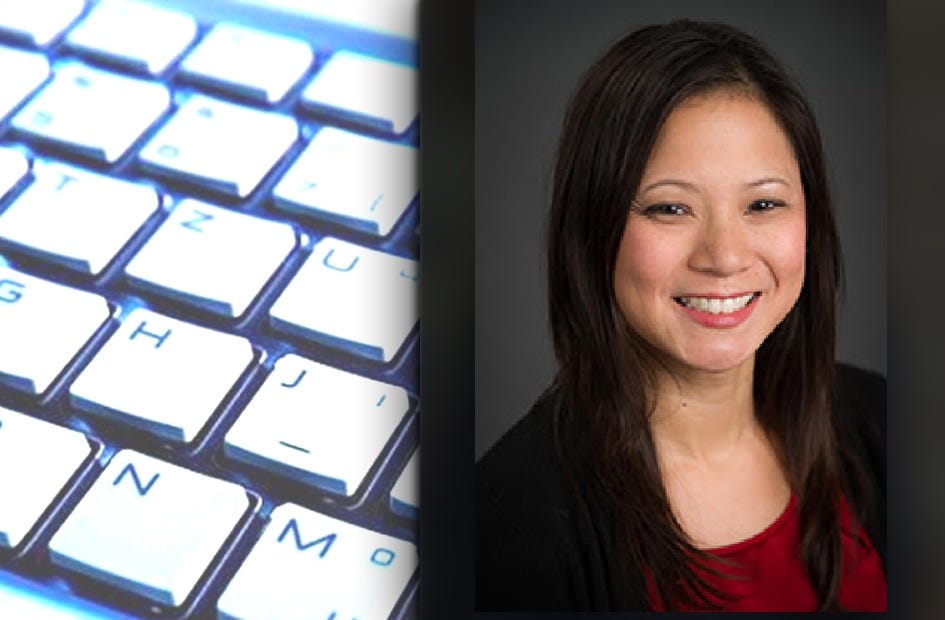
Kim Wilmes, president & CEO, Florida’s Great Northwest

When communities come together as a region to work toward a common goal, they can achieve great things.

For a shining example, you don’t need to look any further than the diverse counties of Northwest Florida, which just marked the six-month anniversary of an extraordinary effort to transform our region’s economic future.

It was remarkable that more than 120 leaders from across the region came together at an event to celebrate progress made in implementing the Northwest Florida FORWARD strategic initiative. When that plan was launched in February, few could have foreseen the extent of regional cooperation that has generated such positive discussion and engagement across county lines.

These leaders from economic, political, civic, business, workforce development, education and other fields acknowledged how exceptional it is to sustain so much enthusiasm and momentum long after the initial burst of excitement has passed.

Speaker after speaker cited the ongoing dialog as a clear indication that Northwest Florida truly speaks with one voice to advance the area’s economy.

The efforts to advance the FORWARD initiative are energized by the work of numerous individuals organized through five key councils — Talent, Business Vitality, Infrastructure, Entrepreneurship and Innovation, and Quality of Place — who have been charged to carefully assess the economic climate and tools of our region and consider how best to utilize them for regional impact.

There is clear excitement and anticipation as the Triumph Gulf Coast board begins developing its process for awarding grants from $300 million in BP oil spill money targeted for economic diversification, and we hope it will utilize Northwest Florida FORWARD as a framework for identifying impactful initiatives that will transform the region. Thanks to these two separate activities, our region now has a long-term vision and road map, as well as the resources to get us there.

At the Northwest Florida FORWARD gathering in Niceville, Gulf Power Company Chairman, President and CEO Stan Connally noted how the attendees’ ongoing involvement sets FORWARD apart from most strategic plans. Nowhere else in the state, he said, have 13 counties come together as a unified entity to move forward in the same positive direction.

State Rep. Mel Ponder, a former Destin mayor, reminded the gathering that success will require working together — as he phrased it, “recognizing that we’re not each other’s competition.”

His House colleague, Rep. Frank White, said the broad regional support of the FORWARD process, paired with a smooth startup of Triumph, will show lawmakers from the rest of the state that “we’ve got a plan, and we’re executing on it.”

The cooperation we have seen across Northwest Florida over the past six months is a monumental achievement. But Florida’s Great Northwest, the regional economic development organization behind the FORWARD initiative, has bigger plans in sight.

Transforming a regional economy will no doubt be a gradual process, but we know these efforts will result in a vastly better region than we see today.

The vibrant Northwest Florida of the future will be indebted to the hard work of those laying the groundwork — visionary individuals who had the foresight and ambition to act now.

To join us in this effort today, visit NorthwestFloridaForward.com to learn how.

Kim Wilmes is president and CEO of Florida’s Great Northwest, the regional economic development organization representing the Florida Panhandle’s counties.

The organization serves as the unified voice for Northwest Florida through advocacy, collaboration and promotion of the 12-county area as a top business location.

FGNW has helped lead the Northwest Florida FORWARD initiative, a regional strategy focused on driving economic vitality and growth in Northwest Florida.

"Transforming a regional economy will no doubt be a gradual process, but we know these efforts will result in a vastly better region than we see today."

This article originally appeared on Crestview News Bulletin: Working together, Northwest Florida is moving FORWARD

Continue hurricane vigilance, neighborly assistance

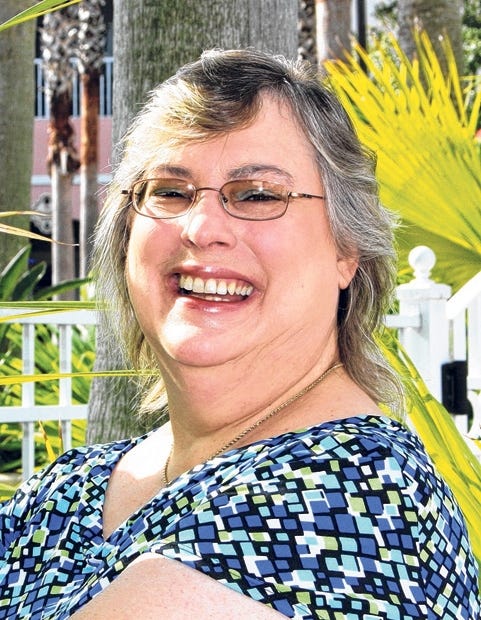
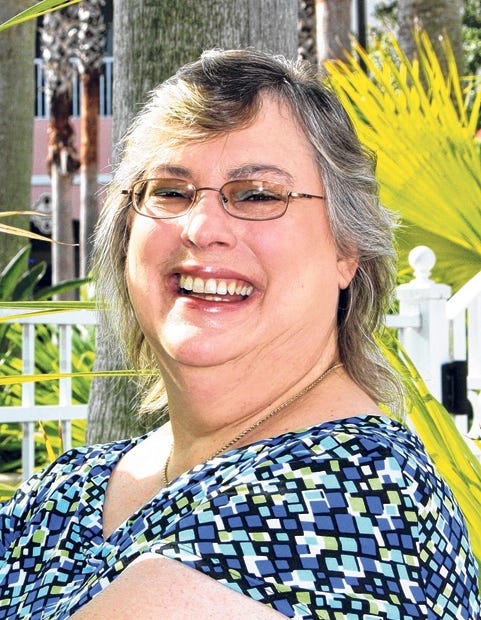
Janice Lynn Crose, a former accountant, lives in Crestview with her husband, Jim; her two rescue collies, Shane and Jasmine; and two cats, Kathryn and Prince Valiant.

We were blessed here in Crestview and Northwest Florida as Hurricane Irma missed us. In other parts of our state, Floridians were hard hit by this monster storm.

It has been heartening to see the pictures of neighbors helping neighbors in Florida as well as Texas. This is what being a friend and neighbor is truly about.

Leviticus 19:18 states, "… but thou shalt love thy neighbor as thyself: I am the LORD." This is not merely a suggestion, rather a commandment from the Lord. It was inspiring to see the young people in Houston in their small boats going around and rescuing dogs from the flood waters, and others rescued cats and horses.

In areas of Florida, many prepared and distributed food to those who were hungry. Christian organizations were on the ground quickly to help. Groups such as Samaritan's Purse, United Methodist Committee on Relief, and the Seventh Adventists were among the groups that offered immediate relief in both Florida and Texas.

I have friends in the Orlando area who, once they had power restored, invited their friends or acquaintances to come and stay with them. This was an open-ended invitation including people they have never met. What a great example of compassion.

Gov. Rick Scott was very proactive in asking those in flood zones and outer lying areas to evacuate. "We can rebuild your home; we cannot rebuild your life. This is a life-threatening storm. Protecting life is an absolute top priority," he said.

As difficult as it is to lose one's home or belongings, they can be replaced. Life can't.

Hurricane season is not over. Don't let down your vigilance. We have Jose and Max gathering strength in the Atlantic. Make sure you have supplies on hand should we get another hurricane and take proper precautions for yourself and your family.

If you desire to help your fellow Floridians or those in Texas and other states hit by these hurricanes, you can donate through your local church or through Samaritan's Purse or the Salvation Army.

Now is the time that we as Americans need to stand strong together.

Janice Lynn Crose, a former accountant, lives in Crestview with her husband, Jim; her two rescue collies, Shane and Jasmine; and two cats, Kathryn and Prince Valiant.

This article originally appeared on Crestview News Bulletin: Continue hurricane vigilance, neighborly assistance

Here’s your retirement countdown

Yvonne Shanklin is an Edward Jones financial adviser. [Special to the News Bulletin]

If you want to enjoy a comfortable retirement lifestyle, you don’t need to have been born rich or even to have earned scads of money during your working years.

But you do need to make the right moves at the right time — which means you might want to start a “retirement countdown” well before you draw your final paycheck.

What might such a countdown look like? Here are a few ideas:

10 years before retirement: At this stage of your career, you might be at, or at least near, your peak earning capacity. At the same time, your kids may have grown and left the home, and you might even have paid off your mortgage.

All these factors, taken together, may mean that you can afford to “max out” on your IRA and your 401(k) or other employer-sponsored retirement plan. And that’s exactly what you should do, if you can, because these retirement accounts offer tax benefits and the opportunity to spread your dollars around a variety of investments.

Five years before retirement: Review your Social Security statement to see how much you can expect to receive each month at various ages. You can typically start collecting benefits as early as 62, but your monthly checks will be significantly larger if you wait until your “full” retirement age, which will likely be 66 (and a few months) or 67. Your payments will be bigger still if you can afford to wait until 70, at which point your benefits reach their ceiling.

In any case, you’ll need to weigh several factors — your health, your family history of longevity, your other sources of retirement income — before deciding on when to start taking Social Security.

One to three years before retirement: To help increase your income stream during retirement, you may want to convert some (but likely not all) of your growth-oriented investments, such as stocks and stock-based vehicles, into income-producing ones, such as bonds.

Keep in mind, though, that even during your retirement years, you’ll still likely need your portfolio to provide you with some growth potential to help keep you ahead of inflation.

One year before retirement: Evaluate your retirement income and expenses. It’s particularly important that you assess your health care costs. Depending on your age at retirement, you may be eligible for Medicare, but you will likely need to pay for some supplemental coverage as well, so you will need to budget for this.

Also, as you get closer to your actual retirement date, you will need to determine an appropriate withdrawal rate for your investments. How much should you take each year from your IRA, 401(k) and other retirement accounts?

The answer depends on many factors: the size of these accounts, your retirement lifestyle, your projected longevity, whether you’ve started taking Social Security, whether your spouse is still working, and so on. A financial professional can help you determine an appropriate withdrawal rate.

These aren’t the only steps you need to take before retirement, nor do they need to be taken in the precise order described above. But they can be useful as guidelines for a retirement countdown that can help ease your transition to the next phase of your life.

This article was written by Edward Jones on behalf of your Edward Jones financial adviser.

This article originally appeared on Crestview News Bulletin: Here’s your retirement countdown

Spotted leaves in lawn, landscape and garden is common

Fungicides can treat some fungal leaf spot diseases, which can affect plants like red buckeye. [Larry Williams | Special to the News Bulletin]

We continue to get many questions from homeowners concerning spots on the leaves of their trees, shrubs, vegetable plants and in their lawns.

These foliage diseases show up mostly as tan, brown or black spots varying in size, shape and number on plant leaves.

The frequent rains and high humidity of summer provided ideal conditions for foliage disease development in our lawns, landscapes and gardens.

Most fungal diseases are dependent on moisture, especially foliage or leaf spot diseases. They are mostly spread by microscopic airborne spores that require moisture to germinate, infect and colonize our plants.

Many fungal leaf spot diseases require a 12- to 14-hour period of uninterrupted wetness.

A University of Florida Institute of Food and Agricultural Sciences Extension fact sheet on gray leaf spot of St. Augustinegrass states, "Warm rainy spells from May through September commonly produce extended periods (12 hours and greater) of leaf wetness and relative humidity greater than 95 percent. During these periods, turfgrass leaf blades can remain wet and air temperatures often hover between 80 and 90 degrees Fahrenheit. Environmental conditions such as these are ideal for the pathogen growth, infection and colonization of St. Augustinegrass."

Leaf spot diseases of vegetables, trees and shrubs follow this same scenario. With higher humidity and frequent rains come diseased leaves.

This wet weather promotes foliage and fruit rot diseases on vegetables too. It's best to remove and dispose of diseased, worn-out vegetable plants as they succumb to summer's heat, frequent rains and diseases.

Not all plants are equally susceptible to foliage diseases. It's wise to learn the landscape and garden plants that are likely to experience disease problems as a result of our wet summer weather here in Florida.

A fungicide spray program can be used to prevent and reduce many of these diseases, but it needs to begin ahead of the symptoms to be effective.

Frequent rains can make it a challenge to apply a fungicide in a timely manner. There are also cultural practices that can be helpful in managing some of these diseases.

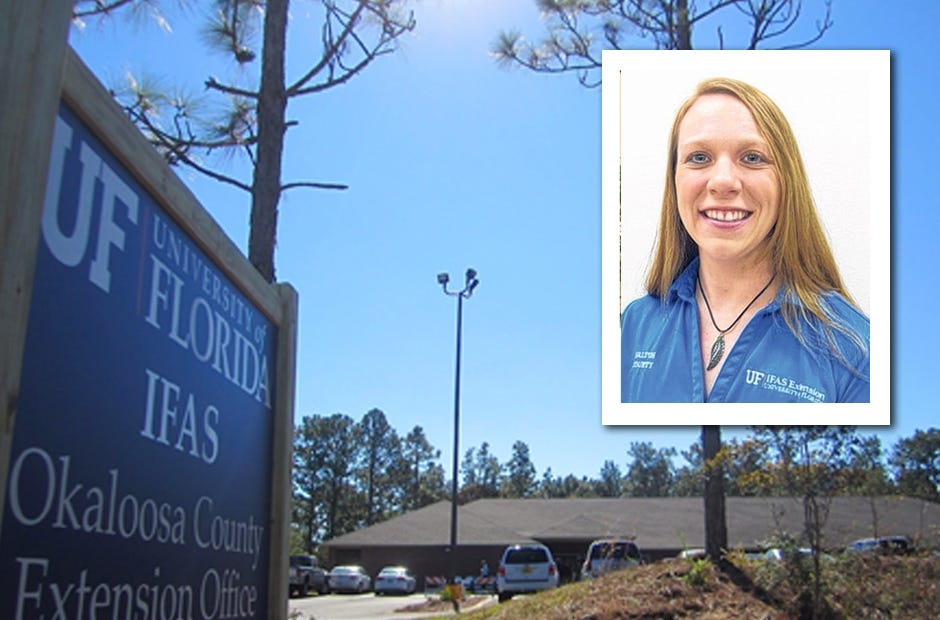
Not all leaf spot diseases are serious. If you need help identifying or controlling a foliage disease, contact the University of Florida Extension Office in your county. The Crestview office is at 3098 Airport Road (689-5850).

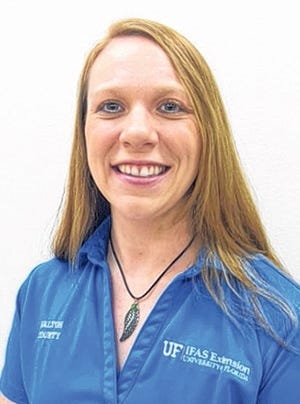
Larry Williams is an agent at the University of Florida's Institute of Food and Agricultural Sciences Extension office in Crestview.

This article originally appeared on Crestview News Bulletin: Spotted leaves in lawn, landscape and garden is common

Focus on expressing kindness to others

The Rev. Mark Broadhead is pastor at Laurel Hill Presbyterian Church and First Presbyterian Church of Crestview. [File photos | News Bulletin]

Why is common sense not so common anymore? What has happened to it? Where did it go?

Why are good manners not readily seen or utilized very much anymore? What has happened to them? Where did they go?

I'm not sure, but common sense and good manners seem to have faded away to near nonexistence.

Is it not simply common sense to not text while you are driving?

Is it not common sense to not drive a vehicle when inebriated?

It is not common sense to not pick a fight with someone who is larger and stronger than you?

When did it become uncommon to hold a door open for someone entering a store behind you, or opening one for a person coming out of a store?

When did it become uncommon to say "thank you" to someone who did something kind?

I think it is a shame that so many of the niceties people used to exhibit toward one another have gone by the wayside. In their place now is a myopic view of life — "What's in it for me?" or "I don't care what you need or think."

That's kind of what it comes down to, isn't it? Not caring — unless of course "my" life is interrupted or injured in some fashion or other. Then a person will raise a ruckus.

For one, I am glad God does not treat us the way we treat one another. Yes, God more than likely gets greatly disappointed with some of our actions and attitudes. He probably gets distressed by letting us endure the consequences of our own actions.

But God never turns his back on us. God never gives up on us. God never stops loving us and hoping our behaviors will turn toward the better. God keeps encouraging us to do better, to walk more solidly in his ways, to follow the kind of lifestyle that is one of kindness, generosity, forgiveness and grace.

Here is my challenge to you. Today, hold open the door for a person entering a store or building after you, or open it for a person coming out. Wish them a good day in the process.

If someone does an act of kindness toward you, say "thank you" with all sincerity. If someone offends you or cuts you off in traffic, remain calm and refrain from a caustic remark, and say a quiet prayer for the other person and for yourself.

The more of us who do this, the more others may follow suit, and God will be pleased.

The Rev. Mark Broadhead is pastor at Laurel Hill Presbyterian Church and First Presbyterian Church of Crestview.

"For one, I am glad God does not treat us the way we treat one another."

This article originally appeared on Crestview News Bulletin: Focus on expressing kindness to others

Florida Keys — would you have evacuated?

Multitudes of people are suffering through the aftermath of Hurricane Irma in Florida. The Keys and the Caribbean Islands are devastated. Other parts of Florida are suffering from damage and no electricity as well.  Food and clean water have run out for some.

Hundreds of thousands of people fled Florida being warned well in advance that disaster was coming. I was on Interstate 75 and Interstate 24 and can attest that the highways headed north were bumper to bumper with many of the license plates saying Florida. Lots of Florida people got out of state. Obviously a lot of people stayed in Florida and rode the hurricane out. Television crews have interviewed more than one person declaring they wished they had evacuated. People throughout the Florida Keys and other parts of Florida have wished they had hit the road north.

Of course, not everyone feels this way, as many stayed at home.

Everyone didn't have the option to leave. Eight people in a Hollywood, Florida nursing home recently reported dead probably didn't have too many options. Some may not have had close relatives who could have transported them north. Most likely relatives of the recently deceased thought that the nursing home was a safe place for their loved ones to be. Sickly people need dialysis, oxygen and medication. Traveling is a major ordeal.

Millions of Florida people may have felt like they couldn't leave. Travel is expensive. Everyone does not have relatives or close enough friends to move in with for a week or so. Hotels north of Florida have been crammed with guests.

Many Floridians simply wanted to stay with their homes and ride it out and many did — some regrettably.

Of course, there are thousands of people who now cannot get back to their homes in the Keys. National media has been broadcasting the angry people trying to get past police barricades to return to whatever is left of their homes.

People should have a right to stay in their homes but people must realize the consequences. The consequences of those who do stay become an ordeal for everyone else. Police, the National Guard and all others involved in rescue efforts often have to risk their lives to try to save those who would not heed the plea for evacuation.

People were warned about Hurricane Irma. While the Caribbean was walloped it could have been much worse for Naples, Miami and many other cities in Florida.

The story is told of a man standing on the roof of his house surrounded by raging floodwaters. A rescue boat pulled up and someone on it said to climb aboard. The man said, "No, I'm staying here because God will save me." A few minutes later another boat pulled up and the rescue crew called out, "Climb in or you will drown." The man yelled back, "I am staying here because God will save me." Soon the man was holding onto the only visible part of his house and that was his chimney. A helicopter crew spotted him and they lowered the cage for him to climb into. He waved them off yelling to them, "I'm staying here because God will save me!" The man finally was covered up in water and drowned. He stood before God and asked, "God why didn't you save me?" God replied, "I sent two boats and a helicopter."

People were warned and warned about Hurricane Irma. Many boarded up and left town. Others boarded up and hung on for their lives. Many tried to prepare. Those who stayed were grossly underprepared for what they are facing. Sadly, the numbers of death and missing people are climbing. Millions of people are suffering with their lives reeling from the kind of chaos and loss that no one wants to experience.

Would you have evacuated? At this point it doesn't matter. Millions formed that opinion and made that decision before the storm hit. Like most of life's decisions we make them and live with them.

Our prayers are with each one and they are not alone. We will do everything we can to help them.

Glenn Mollette is an American syndicated columnist and author.

What's your view? Write a letter to the editor.

This article originally appeared on Crestview News Bulletin: Florida Keys — would you have evacuated?

Protect 3 key goals with life insurance

Yvonne Shanklin is an Edward Jones financial adviser. [Special to the News Bulletin]

September is Life Insurance Awareness Month. And "awareness" is an appropriate designation, because many people remain unaware of the many ways in which life insurance can help families meet their key financial goals. Here are three of the biggest of these objectives, as seen through the eyes of a hypothetical couple, Jim and Joan:

Pay off mortgage — Jim and Joan have a 30-year mortgage. If one of them dies well before that mortgage is paid off, could the other one afford to keep making payments to remain in the house with the children? It might be quite difficult — many families absolutely need two incomes to pay a mortgage, along with all the other costs of living. At the very least, the death of either Jim or Joan would likely put an enormous financial strain on the surviving spouse. But with the proceeds of a life insurance policy, the survivor could continue making the house payments—or possibly even pay the mortgage off completely, depending on the size of the policy and other financial considerations.

Educate children — Higher education is important to Jim and Joan, and they'd like to see both of their young children eventually go to college. Of course, college is expensive: For the 2016-17 school year, the average cost (tuition, fees, room and board) was about $20,000 for in-state students at public universities and more than $45,000 for private schools, according to the College Board. And these costs are likely to continue climbing. Jim and Joan have started putting money away in a tax-advantaged 529 savings plan, but if something were to happen to one of them, the surviving spouse might be hard pressed to continue these savings at the same level — or at any level. But the proceeds of a life insurance death benefit could be enough to fund some, or perhaps all, of the college costs for Jim and Joan's children.

Provide for family's future — Jim and Joan's future income is their most valuable asset as they continue working. However, an unexpected death could leave this dual-income family with a single income that may not cover all financial obligations and retirement contributions — or even preserve the family's current lifestyle. Life insurance could help cover these needs. Plus, the death benefit to the family may be tax-free.

Clearly, a life insurance policy could allow Jim or Joan to continue on with life, despite, of course, the devastating emotional loss of a partner. But how much insurance should they own? You might read that most people need a death benefit of seven to 10 times their annual income. This might be a good starting point, but everyone's situation is different. You should consider all factors — including liabilities, income replacement, final expenses and education — to get an accurate picture of how much insurance is appropriate. A financial professional can help you with this calculation.

During Life Insurance Awareness Month, take some to time review your insurance situation. You may already have some life insurance, but it's a good idea to review your coverage to make certain the amount and type of insurance is still appropriate for your needs. As we've seen, the right coverage can make a huge difference in the lives of your loved ones.

This article was written by Edward Jones on behalf of your Edward Jones financial adviser.

This article originally appeared on Crestview News Bulletin: Protect 3 key goals with life insurance

Don't be caught off guard — storm preparation tips

Jill Breslawksi is an agent at the University of Florida's Institute of Food and Agricultural Sciences Extension office in Crestview.

Being prepared for a storm doesn’t just mean getting through it.

After a storm you must deal with the aftermath, and in order to do that, it is essential to have important documents on hand.

That paperwork should include:

•deeds

•rental agreements

•medical and home insurance policies

•prescription information

•birth, death, and marriage certificates

•passports

•driver’s licenses

•stocks and bonds

These are all necessary documents you may need in order to begin the “clean-up” process.

These documents should be kept in a safe place, such as a lock box or safe, in the event you need to grab and go. There may be no time to collect documents before a storm hits housing.

Original documents should be kept in a waterproof container. This can be as simple as a sealed bag. Copies can be backed up onto a CD or DVD, removable drive, or stored on an online back-up drive. It may be a good idea to give an additional copy to a trusted family member or relative for safe keeping. Safe deposits are another option, but usually have a fee associated with them. Still, it's a small price to pay.

In addition to securing your financial documents, don’t forget to also collect at least three days’ worth of the following basic items for storm survival:

•water — a minimum of one gallon per person per day

•food — canned foods that require little or no cooking are ideal

•manual can opener

•bedding

•clothing and rain gear

•equipment for the elderly or special needs residents

•first aid kit and medications

•toiletries — toilet paper, toothbrushes, hand sanitizer etc…

•radio and extra batteries

•telephones — keep fully charged, and an extra battery on hand.

•cash — ATMs or credit card machines may not be in working order

•flashlight

•pet food, leashes, carriers,etc.

•books or games for the kids

Contact me, Jill Breslawski, at 689-5850 or jbreslawski@ufl.edu, or visit http://bit.ly/ifashurricaneprep for more detailed information.

Jill Breslawski is an agent at the University of Florida's Institute of Food and Agricultural Sciences Extension office in Crestview.

This article originally appeared on Crestview News Bulletin: Don't be caught off guard — storm preparation tips

Include evacuation plans, pets in hurricane preparations

Janice Lynn Crose, a former accountant, lives in Crestview with her husband, Jim; her two rescue collies, Shane and Jasmine; and two cats, Kathryn and Prince Valiant.

We have been very fortunate in Northwest Florida to have no major hurricanes for the past 10 years. Things have changed this year and we are being hit with two hurricanes back to back, Irma and Jose.

By the time you read this article, Irma will have undoubtedly hit and Jose will be upon us. It is always good to be prepared.

Some of these tips should be done as soon as a hurricane is forming across the Atlantic.

•Have an evacuation plan. Know where you will go. Have phone numbers available to hotels in the area you wish to evacuate to and make reservations.

•Make sure your homeowner's insurance is up to date.

•Have full tanks of gas in your cars.

•Have some cash handy.

•Have your cell phone chargers in a bag ready to go. Keep your phones charged.

•Have your essential papers in a waterproof zippered bag: insurance policies, birth certificates, passports, banking information, the deed to your home, etc.

•Have plenty of bottled water. The rule of thumb is 1 gallon of water per person and per pet each day.

•Have plenty of pet food, whether you stay home or evacuate.

•Have canned food for your family and a hand-operated can opener.

•Have a small propane stove and plenty of propane to cook food.

•Have diapers, formula and baby food on hand for your little ones.

•Have working flashlights and plenty of batteries.

•Fill your bathtubs with water for washing and flushing.

•Have your prescriptions filled and in zippered bags for easy transporting.

•Take your jewelry, cameras and other valuables with you.

•If you are told to evacuate, take your kids and pets and leave. It is for your safety.

•Never leave your pets behind. They cannot fend for themselves.

Once the storm has passed, you may wish to volunteer to help those who are displaced by the storm. People will be needed to pass out supplies, prepare and serve food, feed pets and so on.

Many churches will need volunteers to deal with those in need, so be compassionate.

Remember, but for the grace of God we could be in that situation.

Janice Lynn Crose, a former accountant, lives in Crestview with her husband, Jim; her two rescue collies, Shane and Jasmine; and two cats, Kathryn and Prince Valiant.

This article originally appeared on Crestview News Bulletin: Include evacuation plans, pets in hurricane preparations

error: Content is protected !!