Please ensure Javascript is enabled for purposes of website accessibility
Skip to main content
Advertisement
Advertisement

Eglin's 33rd Fighter Wing attends training exercise

EGLIN AIR FORCE BASE, Florida — Members of the 33rd Fighter Wing are at a two-week-long training session at Volk Field, Wisconsin. They departed Eglin Aug. 19.

Exercise Northern Lightning is a total force exercise where Air National Guard, Air Force and Navy aircraft simulate deployment and mission execution in a contested environment.

Instructor pilots, student pilots and professional maintainers from the 33rd FW will take part in the large force exercise to develop and demonstrate the ability to deploy and sustain an F-35A squadron in its intended threat environment alongside legacy aircraft.

“The lessons learned from this exercise, as from previous exercises, will be developed into the future real-world deployment of F-35A squadrons,” said Col. Lance Pilch, 33rd FW commander. “This wing has been and will continue to be integral in building battle-ready F-35 pilots and maintainers capable of employing this weapons system against elevated threats.”

This article originally appeared on Crestview News Bulletin: Eglin's 33rd Fighter Wing attends training exercise

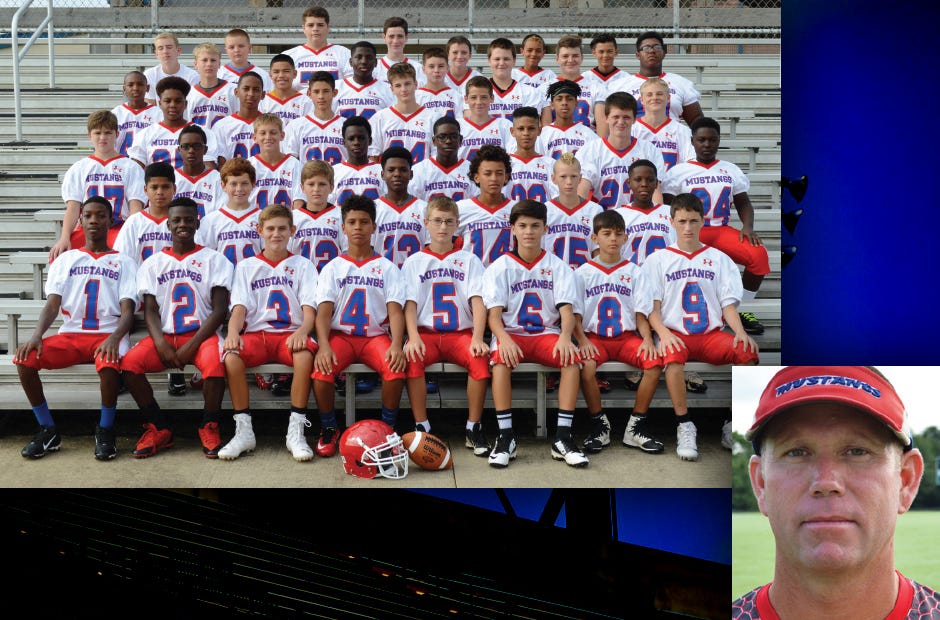
Mustangs regroup for new season

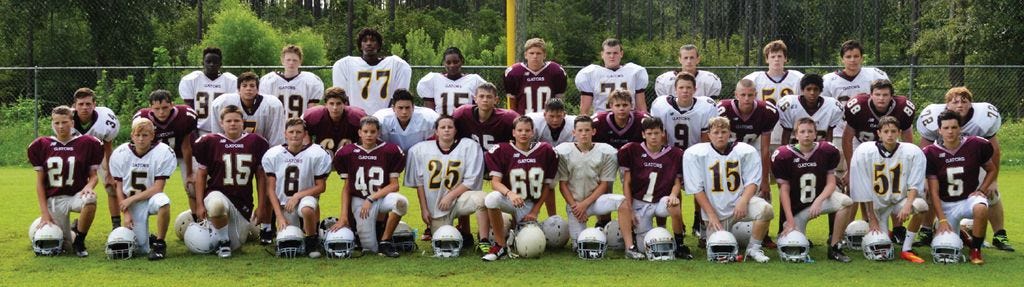
Shoal River Middle School team members are Rahiem Studevan, 1; Xazier Collins, 2; Coleman Gillis, 3; Jayden Sheppard, 4; Tyler Mason, 5; Isiah Gemina, 6; Willie Harrison, 7; Ayden Howell, 8; Ethan Dowdy, 9; Alex Murry, 10; Noah Ross, 11; Devon Estep, 12; Jeremiah Haynes- Ashton, 13; Cecil Perdue, 14; Nate Haston, 15; Marvin Rhodes, 16; Rylan Dewise, 17; Sydney Lee, 18; Gavin Collier, 19; Jaquis Holliday-Dortch, 20; David Davis, 21; Sean Bell, 22; Ferin Davis, 23; Keyvon Chambers, 24; Isiah Grimes, 25; Cameron Wilson, 32; Xavier Martinez, 33; Eoin Whipple, 34; Logan Waller, 40; Jabari Imani, 44; Christian Doucette, 47; Khalil Duncan, 48; David Mclain, 50; Donte Lapierre, 51; Ricardo Webster, 52; Christian Gonzalez, 53; Hunter Branch, 54; Hunter Hicks, 55; Kaleb Young, 58; Jeremiah Chatman, 61; Christian Buddles, 63; Jessie Akins, 71; Jesus Mata, 77; Ayden Schrader, 80; Donald Keen, 81; Anthony Westbrook, 82; Aaron Gemina, 88. Coaches: Ryan Gillis, Kirk Whited, Bobby Hebert and Anthony Brown. Manager: Drew Gillis.

CRESTVIEW  — Creating a  team’s identity  is a recurring theme in  North Okaloosa football,  and Shoal River Middle  School’s team is no  exception.

Coach Ryan Gillis said  he doesn’t look backward  between seasons.

“We’re a new team. Last year’s team, we were  really fortunate, but, guess  what? That will equate to  zero wins this year,” he  said.

Gillis starts every  season with new players  — who have never  competed at the Pee  Wee or Pop Warner level  — by laying down mental  ground  work.

“We  start with  ‘This is a  football,’”  Gillis said.  “This is my  18th year  of coaching  football,  and I’ve learned over  the years that you don’t  assume that they know  anything.”

This year the Mustangs  must take a few steps  back with the influx of new  players.

Even with coaching  experience spanning two  decades, Gillis always  learns something new  from his peers, he said.

“I try not to have an  ego when it comes to  coaching,” Gillis said. “I  will use anything from  anybody.”

Gillis believes that  at the middle school  level, with teaching  fundamentals, a player’s  mistakes can be traced  back to what he was  taught.

“It’s hard to get onto a  kid if you haven’t taught  them how to block and  they’re not blocking,”  he said.

However, mental  mistakes and running  too many plays can make  or break a middle school  team.

Our philosophy is, don’t  bend, don’t break,” Gillis  said. “I’ve told every team  I’ve coached that if you  can make a middle school  team run 10 plays before  they score, you’re going to  win every time.”

This article originally appeared on Crestview News Bulletin: Mustangs regroup for new season

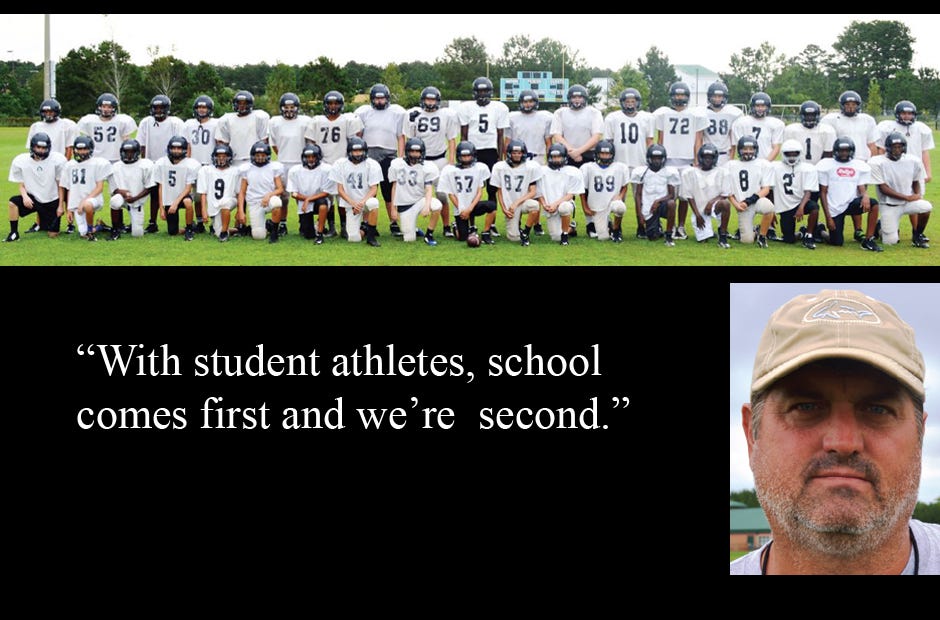
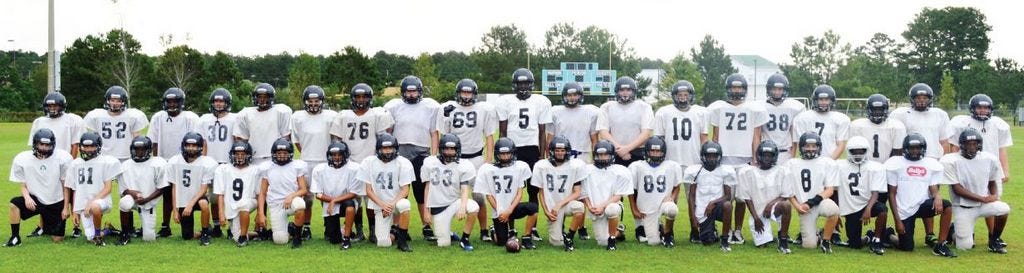
Davidson football team's 5 do's and don'ts

CRESTVIEW — In coaching middle school football, it’s important  to first establish a work ethic for players to understand the  standards they should strive to achieve.

Davidson Panthers coach Chris Small said that  starts in the classroom: “Do your homework,” he said.

“With student athletes, school comes first and we’re  second.” 

Other dos and don’ts?

●”Do the right thing.” A student athlete is an  ambassador to the school for which they play.

●”Do work hard.” Effort is crucial in a physical sport.  In middle school, players learn as they go, so their effort  flows through each tackle and run.

●”Do expect to win.” Attitude is everything in  football. Who expects to lose? 

That leads to:

●”Don’t ever quit; don’t ever give up; don’t ever lose hope,” Small  said. “You fight through it, and whatever goes on, you don’t quit.”

In a sport that at its best is physically demanding, and at its worst is  overall exhausting, tenacity creates the difference between wins and  losses.

The message that Small wants to instill in all his players when it’s  time for them to move on after eighth grade is that they are “Always a  Panther.”

This article originally appeared on Crestview News Bulletin: Davidson football team's 5 do's and don'ts

Bulldogs challenge themselves in tough district

Crestview High Coach Tim Hatten and quarterback Rusty Moorer

CRESTVIEW — Anyone who has  visited Jack Foster Stadium in the  past few football seasons has seen  a show coming from the sidelines.

The star of that show is Crestview  Bulldogs Head Coach Tim Hatten.  “It’s always been a comical thing,  especially as you get excited,” Hatten  said, referring to the unique way he calls  signals to his no-huddle offense. “It can  be very funny to someone who really  doesn’t like football because they can just  watch the theatrics that go on the  sidelines.”

The method to the madness is clear  to players, especially seniors who have  been with Hatten their entire high school  careers. The Bulldogs always want  to do something different from their  competition, and that requires a fastpaced,  yet clear, play-calling style.

Hatten’s motto for this season is “Stay  hungry,” because he wants his players to  always have the desire to know more.

“You’ve got to come to practice every  day ready to learn something new; to  figure something out,” he said.  The Bulldogs avoid high school football  standards, and challenge their skill  players with a run-pass option to keep  opposing defenses guessing.

Crestview’s defense also works on  reads that makes their backs, corners  and safeties dig deep into their football  know-how.

Hatten said his defense is “handling it  really well. We have high expectations for  them and we’re happy about it.”

The Bulldogs belong to the challenging  Class 6A, District 3, which includes their  rival, the Niceville Eagles, but the team  must establish their own identity in  Okaloosa County, Hatten said.

“We’re not where we want to be, but  we don’t want to be like Niceville,” he said.

“We want to be like Crestview.  “We want to make a name for ourselves  with our kids from Crestview.”

This article originally appeared on Crestview News Bulletin: Bulldogs challenge themselves in tough district

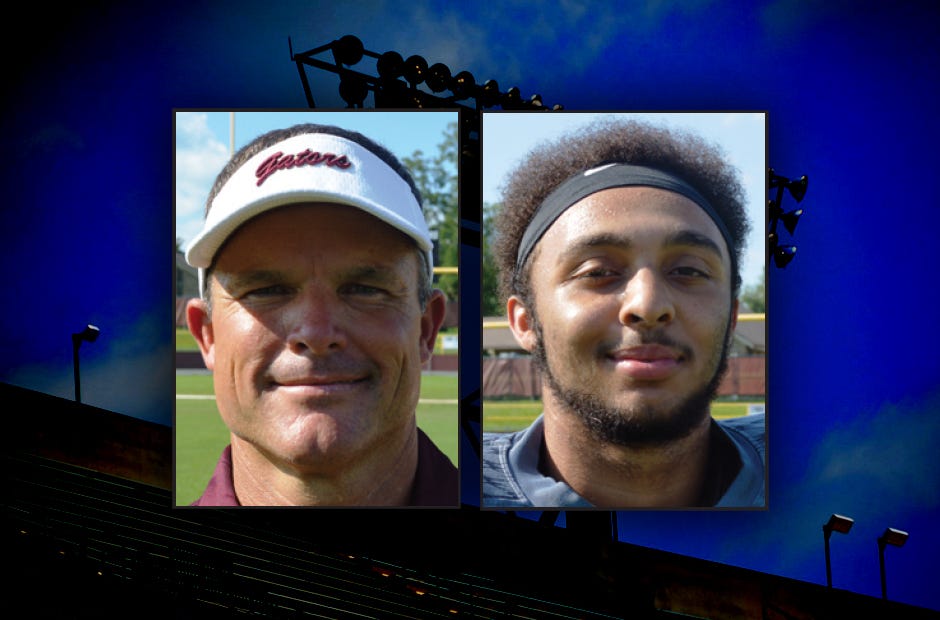
Baker’s dozen ways to defend district title

Baker coach Matt Brunson and quarterback Kalee Ciurleo

BAKER — Baker coach  Matt Brunson must  replace a dozen starters,  on both sides of the ball, from  his 2015 district title team.

“We graduate good players  every year but our guys have  worked hard,” Brunson said.

“We don’t rebuild. I think we  reload.”

With a big senior class  coming through for the 2016  season, the Gators have a full  magazine with which to work.

Here’s Baker’s dozen ways  to defend their district title:

1. Win the line of scrimmage.  Of the 12 seniors the Gators  must replace, five are on the  offensive line. Therefore, Baker  must continue to dominate on  both sides of the neutral zone  by being relentlessly physical.

2. Establish the run. Baker  must use the offensive line to  open holes for their running  backs so they can later set up  for play-action passing.

3. Stop the run. High school  football is run-dominant.  Getting the Gator defense off  the field quickly is essential.

4. Improve quarterback  communication. With an uptempo  offense, it’s up to junior  quarterback Kalee Ciurleo to  run the offense from behind the  center.

5. Pay attention to blocking.  Fullbacks are the wrecking ball  of the spread-option offense,  and senior Oakley Kimbrel has  that responsibility.

6. Rotate running backs.  Baker will have three tailbacks,  including freshman Junior  Mclaughlin, to keep their  running game fresh.

7. Let receivers block, too.  Brunson says wide-outs “have  to block on the perimeter to  play for us.”

8. Note that tight ends must  catch. The bootleg is a staple in  any play-action playbook.  9. Consider size. When  replacing all but one starter on  your line, it helps if they are big  enough to fill those proverbial  shoes.

10. Keep it third and  long. Other spread-option  offenses have fewer  options at third and  seven.

11. Focus man coverage.  Corners and safeties must  plant their flag on their  own island and defend it.

12. Build leadership.  The Gator seniors must  emphasize a sense of  urgency in up-tempo play.

13. Be jacks-of-alltrades.  With a small  school, players must  play well on both sides  of the ball.

This article originally appeared on Crestview News Bulletin: Baker’s dozen ways to defend district title

Baker Middle works on blocking, tackling and trying hard

BAKER — Baker Middle  School’s football coach,  Steve Combest,  knows he must  teach the basics to  his players.

“We understand  that some of them  haven’t played,”  Combest said.

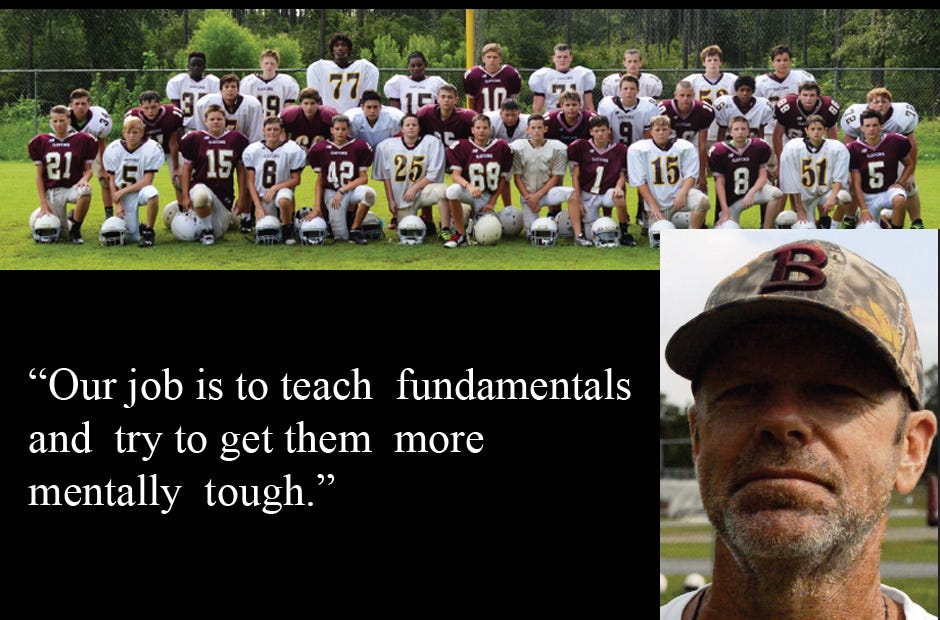
“Our job is to teach  fundamentals and  try to get them  more mentally  tough.”

Skills like blocking  and tackling look easy  when professionals do it.

However, for someone who  has never played the game  with pads or a helmet  that they have to grow  into, everything must be  learned step by step.

One thing that makes  Combest different from  other middle school  football coaches  is the fact that he  doesn’t technically  coach at a middle  school.

With Baker  being a K through  12 school, and a  small school at  that, depth on  the bench is a  luxury found east of the  Yellow River, and south  of the Eglin Reservation.

Combest is tasked with  grooming the future of  the defending district  champions.

However, being at the  same school for an entire  football career has its  advantages.

“The kids stay together  longer, so you have a  chance to create more of  a team camaraderie,” he  said.

This gives Baker a  better chance to prepare  for those whom they must  coach in the future.

They get to see what’s  coming.

This article originally appeared on Crestview News Bulletin: Baker Middle works on blocking, tackling and trying hard

Crestview & Baker: different classes, different destinies

CRESTVIEW — While Crestview High School’s Bulldogs and Baker School’s Gators aren’t in the same town, they are each other’s closest neighbors, with just 11 miles and the Yellow River separating them.

In fact, both stadiums are practically on the exact same latitude.

However, they don’t play in a rival game watched by Okaloosa County’s entire north end; neither school pranks on each other’s home field or has pep rallies with creative disparaging remarks about the other’s mascot.

Baker and Crestview are on opposite ends of the FHSAA spectrum.

Crestview, with a school population nearly quadruple that of Baker’s, has a much deeper program — so deep that the Bulldogs can field a freshman team.

Baker is a K through 12 school, with middle school players conditioned for the Gator Junior Varsity when they reach ninth grade.

Baker and Crestview are two different fish that play in two different ponds. Therein lies the rub. The Bulldogs are trying to improve on a 5-5 record from the 2015 season, something Coach Tim Hatten isn’t used to.

“It’s mediocrity, and that’s what we’re trying to battle,” he said. “We want to make sure that we’re better than that.”

With a group of seniors who started under Hatten their freshman year, the Bulldogs’ coach is optimistic about improvement. “We’re excited about the opportunities that we have,” he said.

West of the Yellow River, the Gators have been chomping away at their district competition, winning three consecutive district titles and going all the way to the Class 1A state semi-finals last season.

“Our goals haven’t lessened,” says Baker coach Matt Brunson, who wants to take his team to Orlando for a state title.

Baker faces Jay and Northview in its district, whose challenges include a two-hour bus ride in either direction. Baker also takes on bigger teams, holding its own last year in a loss against a tough Walton Braves team that eventually went undefeated in its regular season.

In Crestview’s district, the bus rides are much shorter, but the fish are much bigger — as big as they get — on the other side of Eglin Reservation. That’s the reality of being in Class 6A.

The Bulldogs want to land the big three to the south — Choctaw, Fort Walton Beach and Niceville — while the Gators are biting down on what they have, their district title, and are hungry for more: namely, taking state.

This season will have two compelling stories to watch unfold.

This article originally appeared on Crestview News Bulletin: Crestview & Baker: different classes, different destinies

Crestview's turn signal problem (PHOTOS)

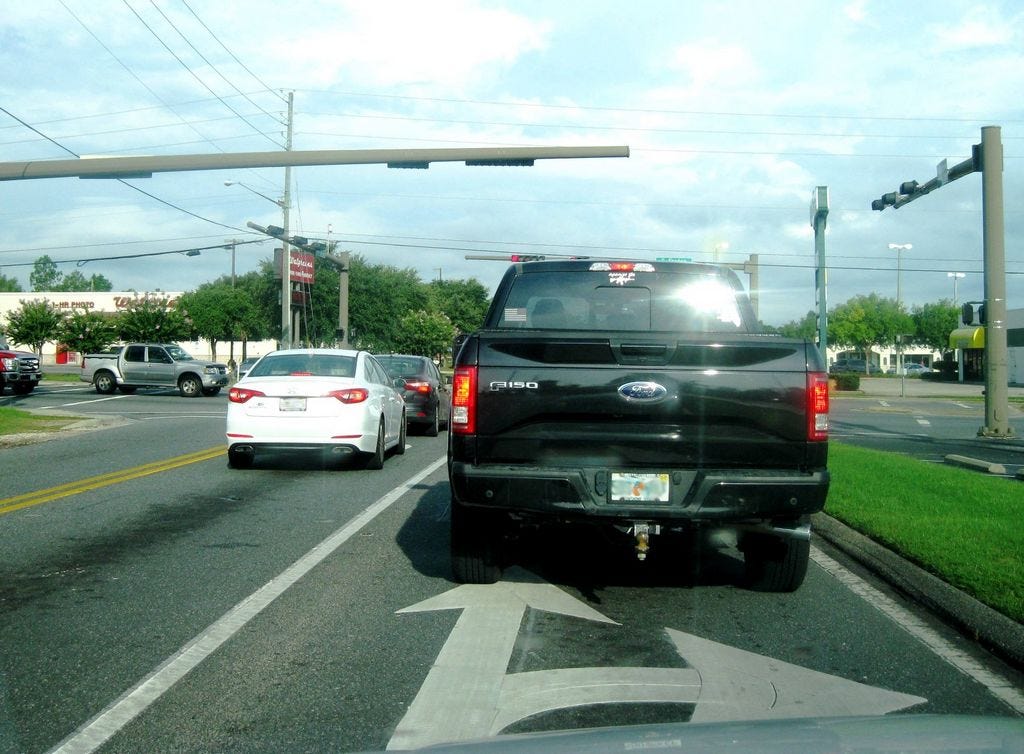
Is the truck going right or straight through the intersection of State Road 85 and Redstone Avenue? The white car was turning, as indicated by it being in a turn lane, not by use of its turn signals. (The truck went straight.)

CRESTVIEW — Trey Duncan moved his family to Crestview in the early 2000s to be close to his parents. While the Duncans embraced their new community, one thing jumped out at them.

“Nobody knows how to use their blinkers,” Duncan said, laughing. “Nobody!”

Turn signal use — or perhaps, the lack of it — is something residents may take for granted. No particular group is more guilty than another when it comes to not signaling, Duncan said.

“It’s kind of Crestview’s great social unifier,” he said. “Moms, dads, grandmas, black, white, student drivers: nobody uses them.”

Okaloosa County Sheriff’s Office Capt. Larry Ward, commander of the agency’s Crestview office, agreed.

“Every person driving a car — and I find myself sometimes being guilty of it — sometimes forgets to use them,” he said.

However, turn signal violations aren’t a reason to pull a motorist over, Ward said.

“It’s more of an annoyance than anything else,” he said. “It’s not something we issue citations for. If we wrote citations, we’d spend all day on a 12-hour shift stopping cars for not using them.”

So when should drivers use turn signals? Here are five main uses and procedures specified in the “Florida Driver’s License Handbook”:

●“You must use hand signals or directional signals to show you are about to turn.”

●“Turn signals are required by law when changing lanes.”

●“Turn signals are required by law when overtaking (passing) a vehicle.”

●“Give a turn signal for at least the last 100 feet before you make your turn …. Be sure that the drivers around you have time to see your signal before you move.”

●When making a turnabout, or “three-point turn,” “move as far right as possible, check traffic and signal a left turn.”

This article originally appeared on Crestview News Bulletin: Crestview's turn signal problem (PHOTOS)

Laurel Hill man saves neighbor's life after bee attack

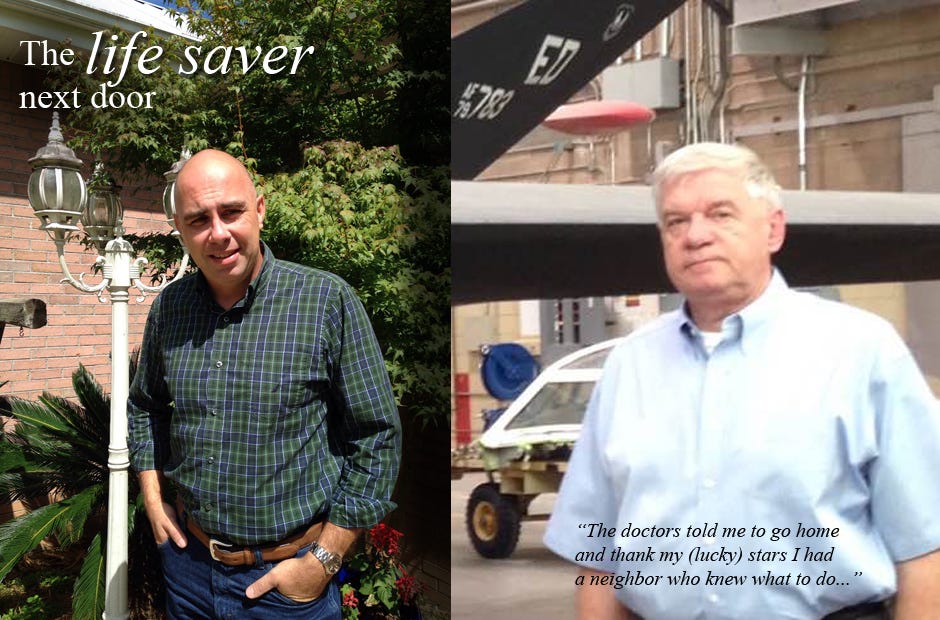
Don Bland saved Laurel Hill's Robert Chedister after yellow jackets swarmed around Chedister and stung him.

LAUREL HILL — Trecia and Robert Chedister have many nice things to say about their neighbor, Don Bland.

The Chedisters, who live in woods outside Laurel Hill, met Bland, 47, a U.S. Air Force Reserve major, when they moved next door to him in May of 2006.

In addition to describing him as the "best neighbor in the world,"  "awesome," and "lucky to have him," they can now add the word "lifesaver."

Bland's quick thinking and actions saved Robert Chedister's life on Aug. 11, when about 15 minutes of yard work led to near tragedy.

‘STUNG THREE TIMES IN FIVE SECONDS’

Robert Chedister and Bland were going to use Bland's tractor to move concrete construction gravel to a driveway for the Chedisters' portable garage.

"I had come home from work and I was there by myself with my four dogs, and I went over to see if he was ready," Chedister said.

They began to place boards at the bottom of the driveway so the gravel wouldn't wash out.

That's when trouble started.

"We disturbed a yellow jacket nest (in the ground) and were swarmed by them," Robert Chedister, 66, a retired U.S. Air Force major general, said. "I got stung three times in five seconds."

"They missed me by inches," Bland said. "I was standing right there and was able to move away in time."

While yellow jacket stings are a painful annoyance to some, in Chedister's case, they were life-threatening.

While he's not officially allergic to insect stings, Chedister said, "About a week and a half before this, I was cleaning our garden and got bit about 15 times by fire ants. I didn't think anything about it."

He said he thinks the combination of fire ant bites that previous week, plus the yellow jacket stings, caused the medical emergency.

A 12-WEEK SCARE

"I have a 10-year history of being ill after bug bites and stings, and spent time in an Atlanta hospital getting 12 weeks of treatment in 2006," Chedister said.

Ten years ago, he had been showing dinner guests around when two fire ants bit him on his left foot.

"Immediately my arm started itching and I told my wife, 'I have to get some Benadryl.' He told her he didn't feel right, and he was going to lie down.

Instead of lying down, he fainted and hit his head. That led to complications including brain injury, a coma, and being clinically dead at least four times, he said.

His wife spent over 12 weeks advocating for his life and continual medical care, making doctors send him to the Shepherd Center for brain and spinal cord injury in Atlanta.

During that hospital stay, doctors exposed him to fire ants — he'd been bitten by two that day — to verify an allergy diagnosis.

Next, "they loaded me up with EpiPens," Chedister said, referring to a device that injects adrenaline. The couple keep some in the house, and Chedister’s coworkers at Bevilacqua Research Corporation in Niceville “have one at every desk.”

While he was in the hospital, Bland "looked after our house for that whole three months," Robert Chedister said. That included mowing their lawn and taking care of other tasks.

"I just made sure everything was secure," Bland said of that time.

After the yellow jackets stung Chedister Wednesday,  he said his neighbor once again came to the rescue.

THANKING HIS LUCKY STARS

After the bee stings, Bland asked Chedister to go indoors and take some Benadryl, "and he said we should just sit down and relax for awhile," Chedister said.

Bland said he'd been around when Chedister had issues, and it was better to discontinue the driveway work in case anything else happened.

"I would say within 10 minutes after (the stings), he started having symptoms, and about 20 minutes later it got more severe and I started looking for the epis," Bland said.

"Don asked for my blood pressure cuff. He could not find it, but he found my EpiPens,” Chedister said. “When he came back to the front room, I tried to move to the bathroom and fell into a chair. A few minutes later I awoke with Don having hit me with an EpiPen and he had called (an) ambulance.

"Two ambulances showed up, and with Don's help they moved me 18 miles down to the Crestview hospital.

"After two hours of testing and Don explaining everything he had done, the doctors told me to go home and thank my (lucky) stars I had a neighbor who knew what to do in an emergency," Chedister said.

‘HE SAVED MY LIFE’

Bland had a plan, and that made all the difference, Chedister said.

"Don knew to get me to take some Benadryl," Chedister stated in a letter to the News Bulletin. "He knew to get me to sit down and rest. He knew what to do with the EpiPen, when it was the only thing that got my heart and lungs started again — when I went into anaphylactic shock.

“In short, he saved my life on 11 Aug 2016.”

Preparedness is the best thing a person can do during crises, Bland said Thursday.

"Basically, all I tried to do was manage the symptoms as they were happening,” Bland said. “When he crashed, which is how I refer to it, he started having a severe breathing difficulty almost immediately.

"The only thing I'd like to say is that you really have to be ready. Situations can evolve into a crisis without warning, and being prepared for the crisis — that's what you have to pay attention to.”

Chedister said Bland also contacted his wife, who was in Arkansas at the time, and his sister, a Valparaiso resident, to let them know what had happened.

For his part, Robert Chedister would like to do the same.

"There are many things our great military folks do every day to keep this country free,” he said.

“I feel like this story may help you recognize one of our heroes for just saving his neighbor's life.”

This article originally appeared on Crestview News Bulletin: Laurel Hill man saves neighbor's life after bee attack


Waste Pro, FWC team up to reduce human-bear conflicts

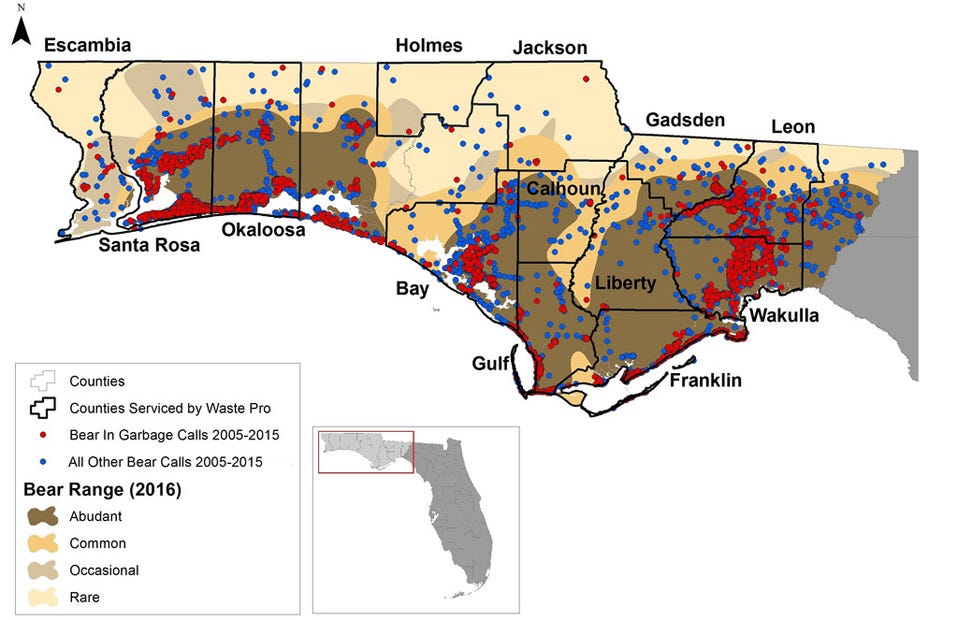
BEAR1.jpg
This Florida Fish and Wildlife Conservation Commission map shows the range of bear incidents across Northwest Florida.

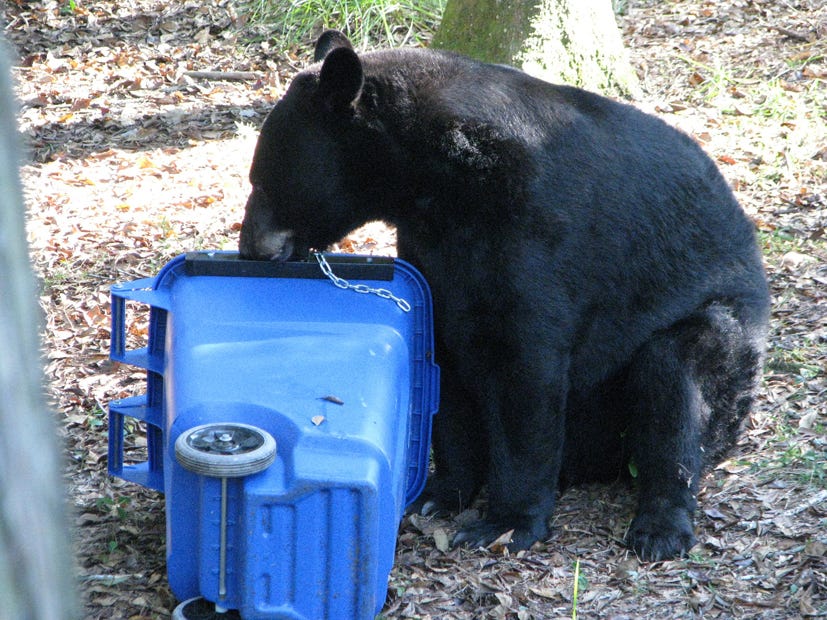
The Florida Fish and Wildlife Conservation Commission and Waste Pro USA Inc. are teaming up to help reduce human-bear conflicts in northwest Florida.

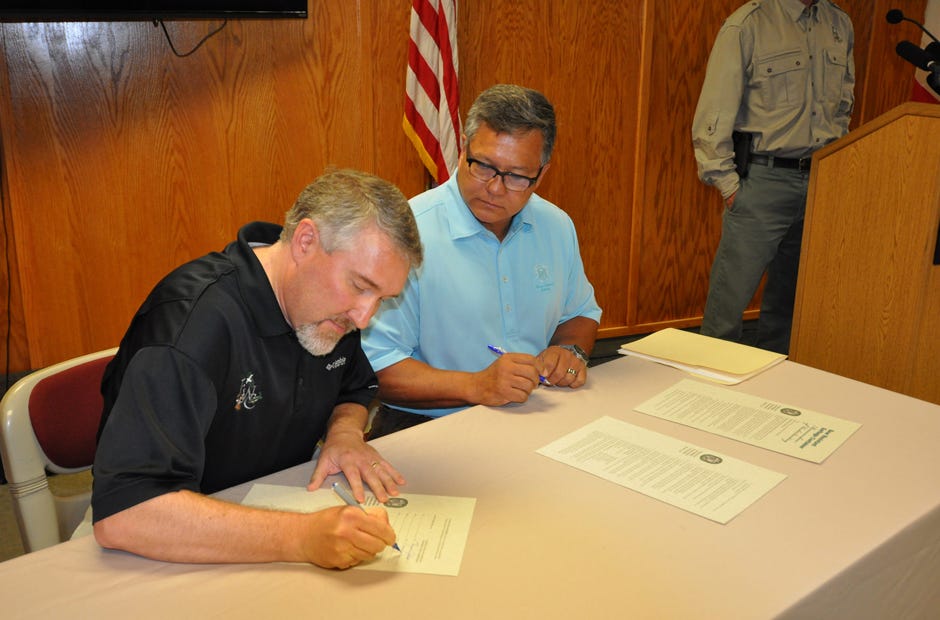
Representatives from the two agencies met this week in Tallahassee to sign a Memorandum of Understanding that will solidify this partnership.

The agreement establishes a partnership between the waste service company and the FWC to make it easier for residents to secure their trash from bears.

“With the signing of this agreement, Waste Pro is stepping up and acknowledging the important role of providing the necessary equipment to help conserve bears and keep their customers safe,” said FWC Commission Chairman Brian Yablonski.

“Waste Pro’s leadership in northwest Florida will serve as an example for other service providers throughout the state. We hope that more waste management companies will follow their lead.”

Black bears are attracted to unsecured trash found at Florida residences and businesses.

By properly securing trash, communities can reduce human-bear conflicts, including the risk of serious injuries to people. This partnership will help ensure that bear-resistant garbage containers are more widely available to residents and businesses in northwest Florida, according to an FWC media release.

Waste Pro provides solid waste and recycling services to the Crestview area, along with more than 30 municipalities in northwest Florida, including Leon and Calhoun counties.

“We are proud to partner with the Florida Fish and Wildlife Conservation Commission,” said Waste Pro of Tallahassee Division Manager, Loyd Childree. “Safety and customized service programs are the hallmarks of our operations, and we are excited to continue providing solutions to the needs of our northwest Florida customers.”

This article originally appeared on Crestview News Bulletin: Waste Pro, FWC team up to reduce human-bear conflicts

error: Content is protected !!