Please ensure Javascript is enabled for purposes of website accessibility
Skip to main content
Advertisement

Northwest Florida Vacation Bible School schedules set

CRESTVIEW — Vacation Bible School is coming! Here's a list of scheduled VBS events in Northwest Florida.

To add your VBS to the list, send an email to news@crestviewbulletin.com. Include your name, daytime phone number, the VBS date, time, location, age group and fee per person.

●●●

FIRST UNITED METHODIST CHURCH OF FLORALA:6-8 p.m. July 18-21 and 6 p.m. July 22, 1310 Fifth St. N. free and for children ages 3 through fifth grade. The end time on Friday has not been set. To sign up, call 266-4850 or 382-3108.

This article originally appeared on Crestview News Bulletin: Northwest Florida Vacation Bible School schedules set

Woodlawn Vacation Bible School starts June 13

CRESTVIEW — Children who complete kindergarten through fifth-graders may attend a free Vacation Bible School in June.

Woodlawn Baptist Church's  VBS hours are  8:30 a.m. to noon June 13-17 at 824 Ferdon Blvd. N.

The theme is "Submerged: Finding the Truth Below the Surface." Activities include Bible stories, music, crafts games and snacks.

For more information, contact Brandi Terrell, brandi@woodlawnbaptist.com or 682-2924.

This article originally appeared on Crestview News Bulletin: Woodlawn Vacation Bible School starts June 13

Florala church offers Vacation Bible School July 18-22

FLORALA, Ala. — First United Methodist Church of Florala is hosting "Cave Quest," a Vacation Bible School, in July. It is free and for children ages 3 through fifth grade.

Hours are 6-8 p.m. July 18-21, and the  last VBS session starts at 6 p.m. July 22 at the church, 1310 Fifth St. N, Florala. Friday's end time has not been set.

To sign up, call 266-4850 or 382-3108.

This article originally appeared on Crestview News Bulletin: Florala church offers Vacation Bible School July 18-22

SHANKLIN: Talk to your adult children about smart financial moves

If you have children who are finishing college or embarking on their first full-time job, you obviously want them to get off to a good start in their adult and working lives.

And by virtue of your years of experience, you probably have some good advice to offer — especially when it comes to making smart financial moves.

Of course, you can find a broad array of financial topics to discuss. But if you want to concentrate on just a few, you might consider these for starters:

Investing for the future. When young people are paying off student loans, they may not think they can also afford to invest for the future.

Indeed, this can be challenging — but it’s not impossible. So, if your children go to work for an employer that offers a retirement plan, such as a 401(k), you may want to point out that they can have money automatically invested — and since they never really “had” this money in the first place, they are less likely to miss it. They can start by deferring small amounts; when their earnings rise, they can increase their contributions.

Buying a home and paying off a mortgage. With interest rates still low, now is not a bad time for prospective first-time homebuyers.

Of course, if your children truly are starting out in the working world, it will likely take them a few years to save up enough for a down payment. But even after they reach that goal, you may want to warn them not to become “house poor” by spending a large portion of their total income on home ownership.

If they do buy a house, though, and their incomes go up as their careers progress, they may wonder if they should pay down their mortgage quicker. While they might feel good about lowering that debt, you may want to point out that an argument could be made for putting money in assets that will likely be more liquid, such as stocks and bonds.

For one thing, if your children were to lose their jobs, and they needed cash to tide them over until they were once again employed, they’d likely find it much harder to get money out of their homes than their investment accounts. Also, in terms of accumulating resources for retirement, they might better off building up their investment portfolios, rather than sinking every extra dollar into their homes.

Using credit wisely. Urge your children to avoid taking on excessive credit card debt and taking out non-essential loans.

As you know, having a good credit score can pay off in several ways, including getting better rates on mortgages. You may want to risk sounding “old fashioned” by encouraging your children to live within their means.

And consider pointing out that it’s often the people who are the most frugal today who may end up with the most money tomorrow.

It’s not always easy for young people to get off on the right foot, financially speaking. But as someone who knows a thing or two about saving, investing and controlling debt, you can help your children out by imparting a few words of wisdom. 

This article was written by Edward Jones for use by your local Edward Jones financial adviser.

This article originally appeared on Crestview News Bulletin: SHANKLIN: Talk to your adult children about smart financial moves

TIU: Tips to protect Okaloosa and Walton's sea turtles

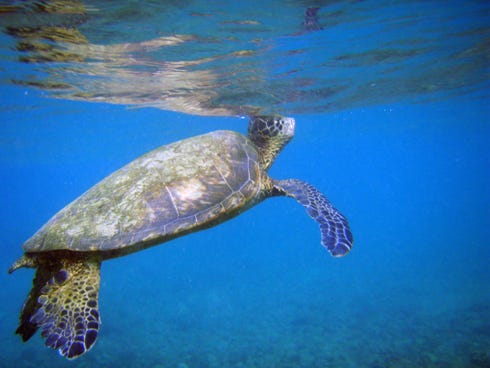
Florida has the highest number of sea turtles of any state in the continental U.S.  Three species — loggerhead, green and leatherback turtles — are common here. 

However, the Federal Endangered Species Act lists all Florida sea turtles as threatened or endangered. So if you see a sea turtle nesting, or nest hatching, stay quiet, keep your distance, and turn any lights off (that means no flash photography).

You should never try to touch a wild sea turtle. Also, do not touch or move any hatchlings. The small turtles need to crawl on the beach to imprint their birth beach on their memory.

During nesting season, keep the beaches "clean, dark and flat." Clean, by removing everything you brought to the beach including trash, food, chairs and toys; dark, by keeping lights off, using sea turtle-friendly lighting and red LED flashlights if necessary; and flat, filling all holes and knocking down sand castles before leaving the beach. 

If you see anyone harassing a sea turtle or a sea turtle in distress, call the Florida Fish and Wildlife Commission hotline, 1-888-404-3922.

If you want to see a sea turtle and learn more about these fascinating creatures, visit the Gulfarium Marine Adventure Park on Okaloosa Island.

Laura Tiu is an agent at the University of Florida's Institute of Food and Agricultural Sciences Extension office in Crestview.

DID YOU KNOW?

●Sea turtle nesting season for the area began May 1, 2016.

●Adult females only nest every two to three years.

●At 20 to 35 years old, adult loggerhead and green female turtles return to the beach of their birth to nest. At this age, they are about 3 feet long and 250-300 pounds. 

●The turtles will lay their eggs from May through September, with 50 to 150 baby turtles hatching after 45 to 60 days, usually at night.

●One female may nest several times in one season.

BY THE NUMBERS


Beach nesting area (miles)

Number of loggerhead sea turtle nests

Number of green sea turtle nests

Number of leatherback sea turtle nests

Okaloosa

24

73

6

0

Walton

30

94

4

3

Source: 2015 Florida Statewide Nesting Beach Survey, available at: www.myfwc.com.

●Sea turtle nesting season for the area began May 1, 2016.

●Adult females only nest every two to three years.

●At 20 to 35 years old, adult loggerhead and green female turtles return to the beach of their birth to nest. At this age, they are about 3 feet long and 250-300 pounds. 

●The turtles will lay their eggs from May through September, with 50 to 150 baby turtles hatching after 45 to 60 days, usually at night.

●One female may nest several times in one season.

BY THE NUMBERS


Beach nesting area (miles)

Number of loggerhead sea turtle nests

Number of green sea turtle nests

Number of leatherback sea turtle nests

Okaloosa

24

73

6

0

Walton

30

94

4

3

Source: 2015 Florida Statewide Nesting Beach Survey, available at: www.myfwc.com.


DID YOU KNOW?

This article originally appeared on Crestview News Bulletin: TIU: Tips to protect Okaloosa and Walton's sea turtles

DREADEN: 8 historical fiction books you should 'check out'

Historical fiction never goes out of style as a literary genre. No longer derided as “bodice-rippers” with anachronisms or boring textbooks dressed up with poor plots, historical fiction is gaining the respect of critics and readers, and regularly appears on bestseller lists around the world.

Definitions vary as to how far in the past the time setting must be to qualify, but Walter Scott, who is credited with “inventing” the historical novel in English during the early 19th century, provides a useful criterion in the subtitle of “Waverley,” his initial historical novel, the story of Scottish life at the time of the Jacobite Rebellion of 1745: “‘Tis Sixty Years Since.”

Generally, this limits it to events that take place at least 60 years before publication, during a historical period with which the author has no personal experience.

Historical fiction is one of the more demanding narrative forms, as the author must master verifiability and invention. The historical novelist must balance the difficulties of representing history accurately and telling a good story while imaginatively filling in the gaps and lack of historical record. Take too much latitude with the facts of history and the illusion of authenticity is shattered; take too little and the information of history never comes to life.

Booklist Online recently listed these as outstanding historical novels (for both adults and youths) of the past year:

“The Marriage of Opposites” by Alice Hoffman

Opening in 1807 in a Jewish enclave on the Caribbean island of Saint Thomas, home to headstrong yet mystical Rachel Pomié, Hoffman’s rhapsodic novel uncloaks the family history of impressionist painter Camille Pissarro.

“The Secret Chord” by Geraldine Brooks

In her gorgeously written novel of ambition, courage, retribution and triumph, Brooks imagines the life and character of King David in all his complexity, from his humble childhood through old age.

The Sympathizer” by Viet Thanh Nguyen

In this dark and unsettling novel of war and disillusionment, Nguyen portrays a nameless spy, interrogator and Vietnamese Communist sympathizer at the mercy of those he once supported. Winner of the 2016 Carnegie Medal for Excellence in Fiction.

“Villa America” by Liza Klaussmann

Klaussmann fictionalizes the lives of Gerald and Sara Murphy, the well-off, alluringly unconventional expat couple who inspired F. Scott Fitzgerald’s “Tender Is the Night,” in this enrapturing historical novel of a loving marriage complicated by suppressed desire during a time of now-legendary creative ferment.

“Burn Baby Burn” by Meg Medina (for ninth- through 12th-graders)

This atmospheric novel sets Cuban American Nora’s teenage struggles with family and independence against the backdrop of New York’s infamous summer of 1977, marked by blackouts, arson and the Son of Sam killings.

“The Lie Tree” by Frances Hardinge (for seventh- through 12th-graders)

When 14-year-old Faith’s father meets a tragic end, she investigates his death while caring for a dangerous plant specimen. The result is a layered mystery that examines science, religion and gender roles in 1868.

“Lillian’s Right to Vote: A Celebration of the Voting Rights Act of 1965” by Jonah Winter (for first- through fourth-graders)

This vibrantly illustrated picture book follows the footsteps of an elderly African American woman on her way to the ballot box while recalling her family’s journey to obtain the right to vote.

“Salt to the Sea” by Ruta Sepetys (for ninth- through 12th-graders)

Four young people give voice to history’s worst maritime disaster, the sinking of the Wilhelm Gustloff during World War II. With exquisite prose, Sepetys shapes a haunting narrative that won’t soon be forgotten. 

Sandra Dreaden is the Crestview Public Library's reference librarian.

This article originally appeared on Crestview News Bulletin: DREADEN: 8 historical fiction books you should 'check out'

Northwest Florida officials offer tips to stay safe from Zika virus

Zika2
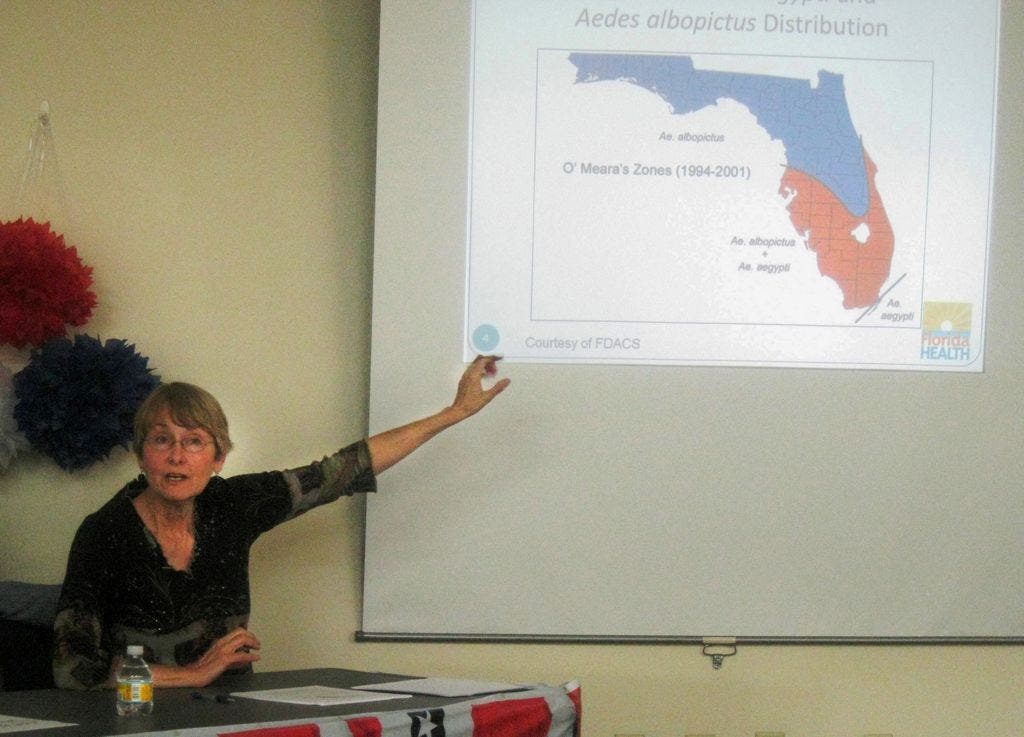
Okaloosa County Public Health Director Dr. Karen Chapman shows a slide indicating the southern part of Florida, in which the mosquito most likely to transmit Zika virus is found.

CRESTVIEW — No one has gotten the Zika virus in Florida — including Okaloosa County — by being bitten by an infected mosquito.

The insect that could spread Zika, Aedes albopictus, is prevalent in Northwest Florida, but south Florida’s Aedes aegypti is most apt to transmit the virus.

Even if someone gets Zika, they probably don’t know it and, even if they do, they’ll be over it in a week to 10 days anyway.

Except for pregnant women, who, health authorities say, can pass on Zika to their fetuses, who might then have birth defects. If that should occur, a Zika outbreak, unlike West Nile, can be broken, especially if prompt action is taken.

KNOW THE FACTS

Being forewarned helps residents become forearmed when it comes to the Zika virus, local public health and county officials said during a recent community update at North Okaloosa Medical Center.

The hospital hosted a May 24 Zika discussion, which included Okaloosa County Public Health Director Dr. Karen Chapman, NOMC Infection Control specialist Lida Deonarine, March of Dimes Gulf Coast Region representative Dannon Byrd, Okaloosa County Public Works mosquito control coordinator Scott Henson, and Okaloosa County Commissioner Wayne Harris.

Chapman said while there have been Zika cases reported in Florida, including one in Santa Rosa County, all are from travelers who were infected outside the country.

However, the potential remains for mosquitoes to transmit the Zika virus by biting an infected person.

“The primary vector is not as common in our area, but it is possible,” Chapman said.

SYMPTOMS

Chapman said Zika’s symptoms are like dengue “but are much, much milder.” In fact, only one in five people with the Zika virus are symptomatic, she said.

“Without the birth component, Zika is very mild,” Chapman said.

But for pregnant women or those trying to become pregnant, Zika is a real concern. It is linked to babies being born with microcephaly, a condition in which their heads are abnormally small, often leading to other developmental issues.

However, if a woman becomes infected after giving birth, she can still breast feed.

“We’ve never seen Zika transmission through breast milk,” Chapman said.

Zika-carrying mosquitoes aren’t a woman’s sole source of Zika infection. An infected man can transmit the bug to her during unprotected sex.

“It lives for an extended period of time in semen,” Chapman said. “We have seen transmission beyond 21 days (of initial infection).”

SWATTING THE BUG

“Preventing ourselves from being bitten by a Zika-carrying mosquito prevents us from transmitting Zika to another mosquito,” which will bite someone else, Chapman said.

And the best way to do that is to drain standing water around the home, and cover the skin with long-sleeved clothing and repellent.

“It’s very important that each citizen empties water containers every two days,” Henson said.

Mosquitoes look for four or five places with standing water to lay their eggs, he said. Removing a breeding habitat dramatically reduces mosquito reproduction.

Because Northwest Florida’s Aedes albopictus mosquito is very territorial, it won’t travel far looking for a new water source if residents remove theirs, Chapman said.

But if they don’t, “more than likely the people you’re going to infect are your neighbors and your family,” Henson said.

COVER UP

“Aedes is an aggressive daytime biter,” Henson said, adding it is important to follow the health department’s advice to “cover your skin.”

The guidelines for fighting Zika-bearing mosquitoes apply equally to bugs carrying West Nile, dengue and chikungunya, Chapman said.

Long sleeves and pants when working outside are the first line of defense, followed by applying a repellent with DEET, picaridin, oil of lemon eucalyptus, and IR3535.

COORDINATED RESPONSE

Deonarine said NOMC has developed a patient screening protocol.

“We’ve been tasked with developing a screening tool at the door,” she said, so if a patient exhibits Zika-like symptoms, “our registration clerks, our ER triage nurse, one of the first things they do is screen for foreign travel … If there is a case, we can indentify it quickly and determine if testing is necessary.”

Several departments are cooperating to prevent an Okaloosa County Zika outbreak, officials said.

“For years we have worked with the county on mosquito control,” Chapman said. “A lot of that infrastructure is already in place. There is a lot of collaboration between hospitals, public health, mosquito control and emergency operations.”

“This collaboration is especially important,” Harris said. “We have a great relationship with hospitals, with the county and with all our care providers in Okaloosa County.”

SYMPTOMS

The Zika virus was first identified in 1947. Most people who have Zika don’t know it. The illness is usually mild with symptoms lasting for several days to a week.

●Joint pain

●Fever

●Rash

●Red eyes (conjunctivitis)

Source: U.S. Department of Health and Human Services/CDC

— 

DRAIN AND COVER

The Florida Department of Health’s “Drain and Cover” campaign provides advice to protect against all mosquitoes, including those carrying Zika, dengue, West Nile and chikungunya.

DRAIN STANDING WATER

Drain: Garbage cans, house gutters, pool covers, coolers, toys, flower pots

Discard: Old tires, drums, bottles, cans, pots, pans, broken appliances

Empty and clean: Bird baths, pets’ water bowls

Protect: Boats and vehicles from rain with tarps that don’t accumulate water

Maintain: The water balance (chemistry) of swimming pools. Empty and overturn plastic wading pools when not in use

COVER YOUR SKIN

Clothing: Wear shoes, socks, long pants and long sleeves

Repellent: Apply mosquito repellent to bare skin and clothing. Repellents with DEET, picaridin, oil of lemon eucalyptus, and IR3535 are effective. Use mosquito netting to protect children younger than 2 months.

Cover doors and windows with screens: Repair broken screens on windows, doors, porches and patios

Source: Florida Department of Health

ZIKA BY THE NUMBERS

122: Total Zika cases reported so far in Florida; all from travelers returning from Zika-infected countries

48: Zika cases in Miami-Dade County, the most of any Florida county

0: new Zika cases in Florida as of May 26

5: Remaining Florida Zika cases still exhibiting symptoms

1: Zika case previously reported in Santa Rosa County

0: Zika cases in Okaloosa and Walton County

0: Zika cases anywhere in Florida caused by mosquito bites

0: Zika cases anywhere in the United States caused by mosquito bites

Source: Florida Department of Health

This article originally appeared on Crestview News Bulletin: Northwest Florida officials offer tips to stay safe from Zika virus


Florida Healthy Babies community meeting set June 6

NICEVILLE — The Florida Department of Health in Okaloosa County (DOH-Okaloosa) will host a community meeting to discuss Florida Healthy Babies.

Florida Healthy Babies is a collaborative statewide initiative designed to positively influence social determinants of health and reduce racial disparities in infant mortality.

The meeting will take place at Crosspoint United Methodist Church in Niceville, Florida on June 6, 2016 at 1:00 PM until 4:00 PM.

“Infant mortality is an important indicator of the overall health of a community. Infant deaths reflect a communities focus on women’s and maternal health, access to quality medical care, socioeconomic conditions, and individual behaviors,” stated Dr. Karen A. Chapman, Director of DOH-Okaloosa. “The health disparities in infant mortality remain a serious problem in Okaloosa County, and we’ve seen little improvement in the last fifteen years. Working more collaboratively with community partners, we can bridge the gap and give all babies a chance at a happy and healthy life.”

Recently, the department invested $1.4 million in the Florida Healthy Babies initiative, which is an effort of the department’s Health Equity Program Council.

The Health Equity Program Council focuses on helping all Floridians achieve health equity. Part of the funding was provided to all 67 counties to conduct an enhanced data analysis of infant mortality and to host community-action planning meetings to address disparities in infant mortality.

What: Florida Department of Health in Okaloosa County

Florida Healthy Babies Community Meeting

When: June 6, 2016, 1:00 PM – 4:00 PM

Where: Crosspoint United Methodist Church

214 Partin Drive South

Niceville, Florida 32578

This article originally appeared on Crestview News Bulletin: Florida Healthy Babies community meeting set June 6

RECALLED: This chicken mango salad may have unlabeled allergens

Taylor Farms Florida, Inc., an Orlando, Fla. establishment, is recalling approximately 151 pounds of a chicken salad product due to misbranding and undeclared allergens, the U.S. Department of Agriculture’s Food Safety and Inspection Service (FSIS) announced today. The product may contain wheat and sesame ingredients, known allergens that are not declared on the mislabeled product label.

The ready-to-eat (RTE) chicken salad item was produced on May 23, 2016. The following product is subject to recall:

11-oz. (312-g) of individually packaged “Wawa thai style chicken mango salad with thai peanut flavored dressing” with a sell by date of 05/28/2016.

The products subject to recall bear establishment number “Est. P-44818” inside the USDA mark of inspection. This item was shipped to Wawa convenience stores in Florida.

The problem was discovered on May 25, 2016, when the establishment notified FSIS personnel of the mislabeling issue affecting the salads. The salads have the correct label on the top of the package, but an incorrect back label saying “Wawa superfood salad.” Taylor Farms Florida, Inc. received notice from their customer. There have been no confirmed reports of adverse reactions due to consumption of this product. Anyone concerned about an injury or illness should contact a healthcare provider.

Consumers who have purchased this product are urged not to consume them. This product should be thrown away or returned to the place of purchase.

FSIS routinely conducts recall effectiveness checks to verify recalling firms notify theircustomers of the recall and that steps are taken to make certain that the product is no longer available to consumers.

This article originally appeared on Crestview News Bulletin: RECALLED: This chicken mango salad may have unlabeled allergens

Okaloosa health department offers swimming safety tips

FORT WALTON BEACH — The Florida Department of Health in Okaloosa County is observing Healthy and Safe Swimming Week for the last week of May.

Water-based physical activity has health benefits for everyone, but it does come with some risks.

Everyone plays a role in preventing illnesses and injuries linked to the water we use and enjoy. Every day in the United States, two children younger than 14 years of age die from drowning.

“Drowning is a leading cause of injury (or) death for children 1 to 4 years of age,” stated Dr. Karen A. Chapman, DOH director. “It’s important that you and your family take precautions before getting into the water to ensure a healthy and safe day at the beach or pool.”

The DOH recommends swimmers and parents of young swimmers do the following before getting into the water:

●Make sure everyone knows how to swim.

●Use life jackets appropriately.

●Check water visibility.

●Check to see if a lifeguard is on duty.

●Provide continuous and attentive supervision to swimmers.

●Protect against sunburn by using a sunscreen with at least an SPF of 15 or higher.

●Know CPR and bring a first aid kit.

To protect swimmers’ health and safety, DOH-Okaloosa uses state and local standards to inspect public pools, hot tubs, spas, water playgrounds, and other places with treated water.

Though chlorine in public pools can kill most germs within minutes, some germs can survive for days. Health concerns can occur when dirt, sweat, urine, fecal matter, or blood from swimmers’ bodies mix with pool water.

It’s important that swimmers

●Stay out of the water if they have diarrhea

●Shower before getting in the water

●Don’t pee or poop in the water

●Don’t swallow the water

Parents should take kids on bathroom breaks, check diapers and change them in a bathroom or diaper changing area—not poolside—to keep germs away from the pool.

This article originally appeared on Crestview News Bulletin: Okaloosa health department offers swimming safety tips

error: Content is protected !!