Please ensure Javascript is enabled for purposes of website accessibility
Skip to main content
Advertisement

NITZEL: Crestview library begins summer reading challenge

Crestview resident Christine Bourque takes a picture of her son Kyle, age 9, while brother Nathan, age 8, hams it up with the drum he made tucked under his arm during an instrument petting zoo May 24 at the Warriors Hall in Crestview.

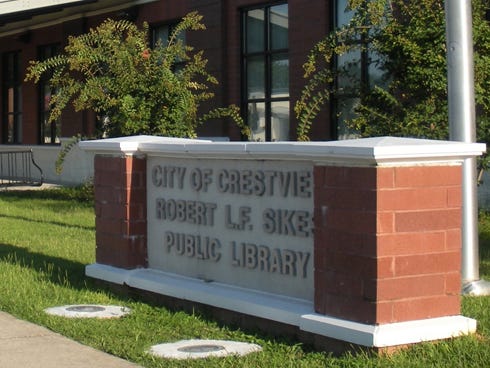
The Crestview Robert L. F. Sikes Public Library officially challenges all children ages 6-14 to exercise your most important muscle…your brain…by reading at least 20 minutes each day from June 10-July 19! 

You can earn 40 Funny Money Dollars by reading every day!  Extra fun reading logs (complete with stickers) are available at the library in front of the Story Room while supplies last. 

Not-as-fun-but-functional reading logs are available at www.cityofcrestview.org/library.php on our calendar. 

Wow next year’s teacher(s) by not letting your brain turn to mush this summer!

This article originally appeared on Crestview News Bulletin: NITZEL: Crestview library begins summer reading challenge

Learn cheesemaking at June 11 University of Florida seminar

A cheesemaking seminar is 2-4 p.m. June 11 in Fort Walton Beach.

FORT WALTON BEACH — The science of cheesemaking is the focus of a June 11 seminar.

Jill Breslawski of the University of  Florida's extension office in Crestview, will present a demonstration and give details on chemistry. Guests may also enjoy food and drink pairings with a variety of cheeses at the event, which is 2-4 p.m. June 11 at the UF Institute of Food and Agricultural Sciences, 127 Hollywood Blvd. NW.

Tickets are $20 for Emerald Coast Science Center members, and $25 for nonmembers. Additional fees start at $2.09.

For more information, go to http://www.ECScience.org or call 664-1261.

This article originally appeared on Crestview News Bulletin: Learn cheesemaking at June 11 University of Florida seminar

First Baptist Church of Milligan offers Vacation Bible School

BAKER —  Vacation Bible School for children ages 1-18 is scheduled at First Baptist Church of Milligan.

The topic is "Submerged," and music, games, Bible study arts and crafts are part of it. Snacks will be provided.

Attendance is free and transportation to and from the event is included.

Meetings are 8:30 to 11:30 a.m. June 13-17 at the church, 5238 Old River Road, Baker.

To arrange for transportation, call  Gayle Lehman, 621-2102. 

This article originally appeared on Crestview News Bulletin: First Baptist Church of Milligan offers Vacation Bible School

Okaloosa genealogy meeting on family migrations is June 11

VALPARAISO — The topic for the next meeting of the Genealogical Society of Okaloosa County is "How I Wound Up Here" — a National Historian's Project about migration patterns by the Society of the Daughters of the American Colonists.

Guest speaker Margaret Lane Nichols will discuss the project, is a member of six lineage societies, and a US Air Force veteran who retired as a chief master sergeant after 21 years of service.

The meeting is 10 a.m. June 11 at the Heritage Museum of Northwest Florida, 115 Westview Ave.

This article originally appeared on Crestview News Bulletin: Okaloosa genealogy meeting on family migrations is June 11

SHANKLIN: Take steps to prevent identity theft

One way to avoid identity theft is to protect your passwords. Changing them periodically also helps.

Identity theft is a big problem. How big? Consider this: In 2015, about 13 million Americans were victimized, with a total fraud amount of $15 billion, according to Javelin Strategy & Research. That’s a lot of victims, and a lot of money. How can you protect yourself from becoming a statistic?

Here are a few suggestions:

•Secure your Social Security number. Identity thieves eagerly seek Social Security numbers — so don’t give out yours to anyone who asks for it. In fact, as a general rule, be reluctant to give it out at all. Always ask whomever you’re dealing with if he or she will accept another form of identification, or at the very least will take just the last four digits of your number. And never carry your Social Security card with you.

•Shred credit card offers and bank statements. If you’re not going to apply for the credit cards offered to you, shred the offers. Identity thieves have been known to go through garbage, fill out credit card offers and take advantage of them. At the same time, shred your bank and brokerage statements – and any other statement containing personal or financial information.

•Study your credit card bills and checking account statements. Question any credit card charge or checking account activity you don’t recognize as your own.

•Don’t give out your credit card number unless you’re initiating a purchase. Many of us shop online. As long as you’re dealing with a reputable merchant who uses a secure site — i.e., one that has “https” in the web address — you should be fairly confident that your credit card information will be protected. Never give out your credit card number to people or businesses who, unsolicited, try to sell you something over the phone or Internet.

•Protect your passwords. Do you use a password to log onto your computer? If so, don’t share it with anyone, outside perhaps your most trusted family members. And use a strong password – one that doesn’t contain your real name or even a complete word that could be used to identify you. Also, it doesn’t hurt to periodically change your password, whether it’s for your computer logon or for entry to any of your financial or consumer accounts.

Even after taking these steps, you could still run into identity theft. That’s why you need to watch for certain signs, such as the arrival of unexpected credit cards or account statements, denials of credit for no clear reason, or calls or letters regarding purchases you didn’t make. If any of these things happen to you, you may want to place a “fraud alert” on your credit reports and review them carefully.

Three national credit-reporting companies  — Equifax, Experian and TransUnion  — keep records of your credit history. If someone has misused your personal or financial information, contact one of the companies and ask for an initial fraud alert on your credit report. A fraud alert is free, but you must provide proof of your identity. And the company you call must tell the other companies about your alert. (For more information on placing a fraud alert, visit the website of any of the three companies.)

You can help preserve your good name from those who want to misuse it – so, stay vigilant.

This article was written by Edward Jones for use by your local Edward Jones financial adviser.

This article originally appeared on Crestview News Bulletin: SHANKLIN: Take steps to prevent identity theft

BRESLAWSKI: Sunscreen use by Florida residents may protect against skin cancer

The Centers for Disease Control recommends people apply and re-apply a sunscreen with an SPF 15 or greater regularly; stay in the shade; and wear a hat and UV protective sunglasses. When possible, wear protective clothing such as long sleeved shirts and pants, and limit time outdoors in peak sun hours of 10 a.m. through 4 p.m.

In Florida, we are so lucky to have access to beautiful beaches and weather.

There are an infinite number of outdoor activities to do. This past week I tried a new one for me, SUP (Stand Up Paddle boarding). I fell a few times, but finally found my balance and had a blast all day long.

Things changed though when the fun was over and I realized that I forgot to wear a hat and had a blistering burn on my scalp. According to the Center for Disease Control, the sun can burn unprotected skin in as little as 15 minutes.

In order to protect yourself from the sun be sure to apply and reapply sunscreen (at least SPF 15) regularly, stay in the shade, wear a hat and UV protective sunglasses. When possible, wear protective clothing such as long sleeved shirts and pants, and limit time outdoors in peak sun hours of 10 a.m. through 4 p.m.

Oh, so you don’t need to because you tan? Well think again.

Besides leaving you with an awful burn, blisters and flaky skin, sitting out in the sun can cause lines, wrinkles and sunspots, as well as increase your chance of skin cancer.

The American Cancer Society is estimating 6,200 new cases of skin cancer this year in Florida alone.

Most of these cases can be linked to too much sun exposure. Regular sun protection can reduce the risk of developing skin cancer. Regular dermatologist skin checks and self-exams can help identify cases early.

The Skin Cancer Foundation recommends keeping watch for individual moles that are:

●misshapen.

●have uneven borders.

●a variety of colors.

●a diameter of over one fourth of an inch

●have changed in any of the ways listed.

This summer have fun, live in the moment, try something new — but don’t forget your SPF.

For more information, contact me at 689-5850 or jbreslawski@ufl.edu.

Jill Breslawski is an agent at the University of Florida's Institute of Food and Agricultural Sciences Extension office in Crestview.

This article originally appeared on Crestview News Bulletin: BRESLAWSKI: Sunscreen use by Florida residents may protect against skin cancer

Florala author sets June 9 book launch

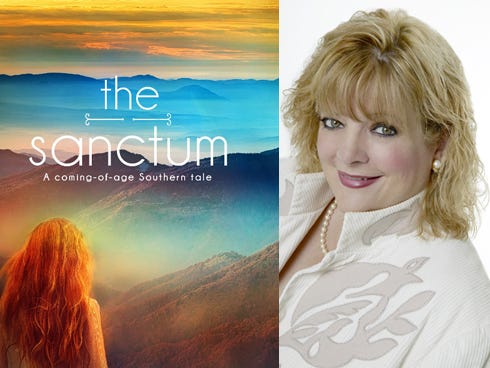
Pamela Cable will have a book sigining for her new Christian novel, "The Sanctum," at 6:30 p.m. June 9 at the Rodney J. Evans Civic Center, 22722 Lake Shore Blvd., Florala, Ala.

FLORALA — Florala resident Pamela Cable will launch her new Christian novel, “The Sanctum,” during a book signing set for 6:30 pm. June 9 at the Rodney J. Evans Civic Center.

Food and door prizes from The One Eared Rabbit will be available.

Here’s the book’s premise, as provided by Cable:

“On a November day in 1946, Neeley McPherson turned 5 years old and accidentally killed her parents. Thrown into the care of her scheming and alcoholic grandfather, she survives by her quick wit, and the watchful eye of an elderly black man, Gideon. In 1959, as equal rights heats up the South, authorities accuse Gideon of stealing a watch and using a Whites Only restroom. Neeley, now 13, determines to break him out of jail.

“… Set in a volatile time in America when the winds of change begin to blow, ‘The Sanctum’ bestows sanctuary, invokes the healing power of second chances, and leads Neeley to tragedy once again but in doing so, grants the desire of her heart.

The center is located at 439 Victoria Lane, Florala.

This article originally appeared on Crestview News Bulletin: Florala author sets June 9 book launch

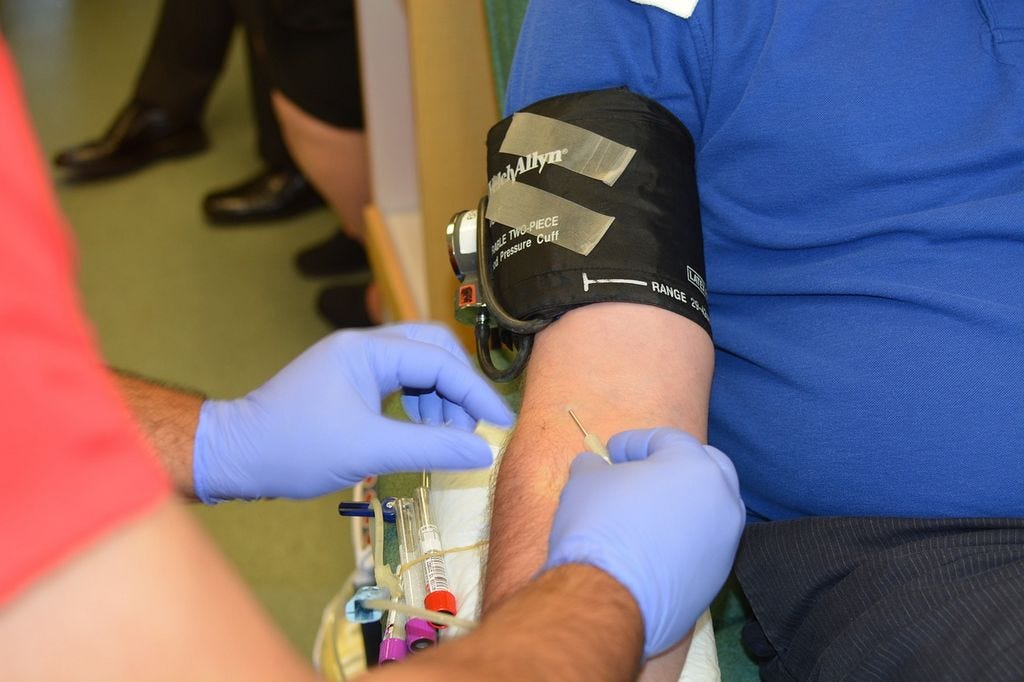
Florida blood donors get buy-one-get-one-free Crayola Experience admission

PENSACOLA — Crayola Experience will thank OneBlood donors this month and next month with an extra ticket to its Orlando location.

 Florida residents who give blood in June or July will get one free admission when they purchase a ticket to Crayola Experience.

CRESTVIEW DONOR CENTER: Hours are 10 a.m. to 5:30 p.m. Mondays and Thursdays; 8 a.m. to 5:30 p.m. Tuesdays and Fridays; and noon to 5 p.m. Sundays at 2400 S. Ferdon Blvd., Suite B. Phone: 306-2455.

FORT WALTON BEACH DONOR CENTER: Hours are 8 a.m. to 5:30 p.m. Mondays and Fridays; 10 a.m. to 5:30 p.m. Wednesday and Thursdays; and 8 a.m. to 2 p.m. Saturdays at 405 NE Racetrack Road, Suite 104. Phone: 862-4216.

PENSACOLA DONOR CENTERS:

9th Ave Donor Center hours: 8 a.m. to 5:30 p.m. Mondays, Tuesdays and Fridays; 10 a.m. to 5:30 p.m. Wednesdays and Thursdays at 2209 N 9th Ave. Phone: 434-2535.

Nine Mile Donor Center hours: 8 a.m. to 5:30 p.m. weekdays; 8 a.m. to 2 p.m. Saturdays, and noon to 5 p.m. Sundays at 1999 East Nine Mile Road. Phone: 473-3853.

Generally healthy people age 16 or older who weigh at least 110 pounds can donate blood. A photo ID is required. 

Donors receive a wellness check-up of blood pressure, pulse, temperature and iron count, including a cholesterol screening and a surprise gift.

See http://www.oneblood.org/crayola to make an appointment or learn more about bloodmobile stops.

This article originally appeared on Crestview News Bulletin: Florida blood donors get buy-one-get-one-free Crayola Experience admission

YOUNG: Summer's the best time to take hunter safety course

Tony Young, Florida Fish & Wildlife Conservation Commission columnist

TALLAHASSEE — With summer comes so many great fishing opportunities that it’s hard to even think about hunting. But if you’re age 16 to 41 and haven’t completed the state’s hunter safety course requirement, now’s a good time to think about signing up. Don’t put it off – summer is the best time to take a class.

Many of these classes, offered statewide, fill up fast during hunting season as people scramble to get certified. So the summer months offer smaller class sizes and a better opportunity for students to take a class, because they have more free time than they will once school cranks up and they get busy with homework and school-related activities.

People born after May 31, 1975, must complete the Florida Fish and Wildlife Conservation Commission’s (FWC) hunter safety class before they can buy the type of hunting license that allows them to legally hunt alone. A law passed a few years ago by the Florida Legislature enables individuals to hunt without having to complete the state’s hunter safety certification, but they may only hunt while supervised. It’s called the Hunter Safety Deferral, and it allows people the opportunity to purchase a license to hunt while under the supervision of a licensed hunter who is at least 21 years old and meets the hunter safety requirement.

It’s designed to encourage experienced hunters to teach novice hunters safety, ethics, conservation, wildlife and hunting skills, and respect for the great outdoors. And it’s a great incentive for getting more people to try hunting. Also, I hope, the experienced hunters among us can introduce new folks to the sport we love. However, to hunt by yourself unsupervised, you still have to take and pass a hunter safety class, and purchase a regular hunting license.

If you’re a youngster and already a hunting fanatic, I suggest you go ahead and take a hunter safety class before you turn 16. And, you can purchase your very first hunting license that’s good until your 17th birthday.

Even if you were born before June 1, 1975, and are exempt from having to take the class, it’s still a good idea, because you’ll learn so much. The FWC encourages beginning hunters to do so. Even the most experienced hunters will learn something new, which will help them become even better hunters or mentors – and safer ones.

If you’re new to our state, these classes will make you aware of Florida’s hunting laws. Or if you just relocated from another town, the classes are a great way to meet other hunters. You can make some new hunting buddies or maybe even get a line on a great hunt club that’s looking for new members.

You can register for a hunter safety class by going to MyFWC.com/HunterSafety or by contacting your nearest FWC regional office. Also, for your convenience, there are two ways to take the course.

TWO COURSE OPTIONS

There’s the traditional course, which is six hours of classroom instruction plus a six-hour skills day. If you’d prefer to complete the classroom portion from the convenience of your own home, you can opt for taking the online course. But you’ll still have to sign up for the skills-day part of the course, which includes time at a shooting range.

The traditional course is offered during two weeknights or on a Saturday-Sunday. If you take it during the week, each session is three hours and offered after normal working hours. On the weekend, you’ll spend six hours Saturday in the classroom and six hours Sunday morning for the Skills Day.

During the skills day, each segment is roughly 50 minutes long, followed by a 10-minute break. The first thing you’ll learn about is Florida’s hunting laws/regulations. An FWC law enforcement officer gives this introduction. Volunteer hunter safety instructors teach the remaining curriculum.

And speaking of that, if you are older than 18 and would like to give something back to the sport of hunting, you might consider becoming a certified, volunteer, hunter safety instructor in your community. The FWC is always in need of people who possess good hunting and gun safety knowledge. If you’re interested in learning more about this great teaching opportunity, go to MyFWC.com/HunterSafety or call 850-413-0084 to find out how to get involved.

One segment of the program teaches ethics and hunter responsibility. You’ll also learn the parts of a firearm, gun and hunting lingo and the proper way to shoot a firearm. This is the longest section of the program, and you’ll spend approximately two hours going over that.

You’ll learn the differences between all the various bullets, calibers and gauges and how to identify different animal species. You will also hear about wildlife conservation and discover best management practices for native game species.

In addition, you’ll find out about outdoor survival techniques and learn how to administer first aid in the field. You’ll gain knowledge of the parts of, and how to shoot, a muzzleloading gun. Furthermore, you’ll be taught archery and the fundamentals of how to hunt with a bow.

If you choose instead to take your hunter safety class online, you’ll learn all of the material that’s taught in the traditional classroom setting, and you’ll be given a practice test, which will go over what you’ve learned and prepare you for the last segment of the requirement – the skills day. 

SKILLS DAY

Skills day takes about five hours to complete, which includes time on the shooting range and serves as the completion for the traditional course and the online class.

Skills days start with a law enforcement officer discussing hunting laws and ethics. After that session, you’ll pass through four different stations. The first station reviews safety rules, then the students demonstrate proper firearm carry positions, safe zones of fire, how to cross obstacles with a firearm and tree-stand safety.

The second station covers safe, effective shot placement; then students walk down a trail where they are presented with shoot/don’t shoot scenarios. The third station discusses clearing, matching, loading and unloading.

After an instructor’s brief presentation, students practice selecting the proper ammunition, loading each of the five major firearms actions, and demonstrating how to properly clear the firearm of ammunition. At the last station, students review marksmanship skills and have different opportunities to practice or demonstrate their skills.

Most students shoot a rifle from various positions, many get to shoot clay pigeons with a shotgun, and others practice archery skills by shooting a bow. Most courses provide a muzzleloader demonstration, where you’ll have the chance to shoot one if you’d like. All guns, bows, targets and ammo are provided. All you have to do is take aim!

In your last hour of the skills day, you’ll be given a standardized test of true-or-false and multiple-choice questions. You need to score 80 percent or better, and then you’ve completed the course.

THE LAST STEPS

After you pass the test, you’ll be given your hunter safety card. At that point, you can purchase your very first Florida hunting license and be ready for opening day.

Just a couple of things for parents to remember: The course is designed for youth ages 12 to 16. If your child is younger than 18 years old, you must fill out our parental release form and present it to the instructor at all courses. This will enable your child to participate in the live-shooting exercises. Also, if your child is younger than 16, you are required to accompany him or her to all classes.

Register to take a hunter safety class today, because the 2016-2017 hunting season is just around the corner!

Tony Young is a Florida Fish and Wildlife Conservation Commission columnist.

This article originally appeared on Crestview News Bulletin: YOUNG: Summer's the best time to take hunter safety course

Okaloosa health department releases water quality results

FORT WALTON BEACH — The Florida Department of Health in Okaloosa County has announced water quality test results for local parks.

No Okaloosa County parks have potentially hazardous bathing water, the Florida Department of Health in Okaloosa County stated May 31.

No parks failed tests based on EPA-recommended enterococci standards. Enteric bacteria's presence indicates fecal pollution from stormwater runoff, pets and wildlife or human sewage.

Only one, James Lee Park, Destin, had moderate (instead of good) water quality.

This article originally appeared on Crestview News Bulletin: Okaloosa health department releases water quality results

error: Content is protected !!