Please ensure Javascript is enabled for purposes of website accessibility
Skip to main content
Advertisement

DREADEN: Use this website to learn more about computers

The https://DigitalLearn.org website has the tools to help you tackle technology at your own pace, Sandra Dreaden says.

If you are new to computers, haven't used them for a while, are a little unsure and uncomfortable, or just need a bit of a refresher, DigitalLearn.org has the tools to help you tackle technology at your own pace and gain the confidence you need to succeed. 

Sections include:

●Getting started on your computer

●Using a PC (Windows 7)

●Navigating a website

●Basic search

●Introduction to email

●Using a MAC (OS X)

●Microsoft Word

●Creating resumes

●Online job searching

●Cloud storage

●Introduction to Skype

●Introduction to Facebook

●Buying a plane ticket

●Online scams

●Internet privacy

●Why use a computer?

DigitalLearn.org is an Institute of Museum and Library Services grant-funded project of the Public Library Association.

The site, launched in June 2013 and updated in 2016, is intended to build upon and foster the work of libraries and community organizations as they work to increase digital literacy across the nation.

Sandra Dreaden is the Crestview Public Library's reference librarian.

This article originally appeared on Crestview News Bulletin: DREADEN: Use this website to learn more about computers

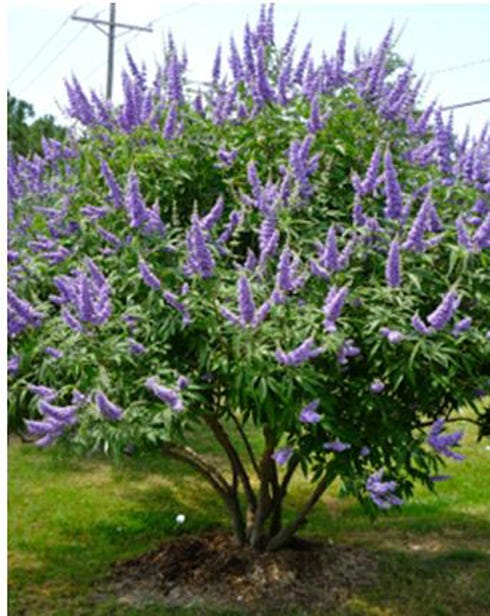
DUNNING: The chaste tree is easy to grow, drought resistant

The chaste tree is "often planted where beekeepers visit in order to promote excellent honey production or simply included in the landscape for the enjoyment of its showy, summer display of violet panicles," says Sheila Dunning.

The chaste tree makes an attractive specimen as your landscape bed’s centerpiece or in a large container on the deck. 

Easy-to-grow, drought resistant and attractive to butterflies and bees, Vitex agnus-castus is a multi-stemmed small tree with fragrant, upwardly-pointing lavender blooms and gray-green foliage. 

The chaste tree’s divided leaves resemble those of the marijuana plant; its flowers can be mistaken for butterfly bush; and the dry, darkened drupes can be used for seasoning — similar to black pepper — making it a conversation piece for those unfamiliar with the tree.

Vitex — with its sage-scented leaves that were once believed to have a sedative effect — has the common name “Chastetree” since Athenian women used the leaves in their beds to remain chaste during the feast of Ceres, a Roman festival held on April 12. 

In modern times, the tree is often planted where beekeepers visit, to promote honey production; or it’s included in the landscape for enjoyment of its showy, summer display of violet panicles.

Chaste tree is native to woodlands and dry areas of southern Europe and western Asia.

It will thrive in almost any soil that has good drainage; prefers full sun or light shade; and can even tolerate moderate salt air. 

Vitex is a sprawling plant that grows 10 to 20 feet high and wide, and looks best unpruned. If pruning is desired to control the size, do so in the winter, since it is a deciduous tree and the blooms form on new wood. 

The chaste tree can take care of itself, but can be pushed to faster growth with light applications of fertilizer in spring and early summer and by mulching around the plant. 

There are no pests of major concern associated with this species, but root rot can cause decline in soils that are kept too moist.

Sheila Dunning is an agent at the University of Florida's Institute of Food and Agricultural Sciences Extension office in Crestview.

This article originally appeared on Crestview News Bulletin: DUNNING: The chaste tree is easy to grow, drought resistant

RECALLED: 18 chicken products may have sand, soil in them

WASHINGTON – GNP Company, a Cold Spring, Minn. establishment, is recalling approximately 55,608 pounds of chicken products that may be contaminated with extraneous materials, the U.S. Department of Agriculture’s Food Safety and Inspection Service announced.

The chicken products were produced on various dates from June 6 to June 9, 2016. The following products are subject to recall:

40-lb. cases containing “Gold’n Plump CHICKEN WINGETTES & DRUMMETTES 32900” with a use-by date of 6/18/2016 and 6/20/16.

40-lb. cases containing “Gold’n Plump Chicken Tenders 34400” with a use-by date of 6/16/2016, 6/18/2016, and6/19/2016.

40-lb. cases containing “Gold’n Plump BONELESS SKINLESS CHICKEN BREAST PORTIONS 24700” with a use-by date of 6/29/2016.

40-lb. cases containing “Gold’n Plump CHICKEN LEG QUARTERS 20500” with a use-by date of 6/20/2016,6/21/2016, and 6/22/2016.

40-lb. cases containing “Gold’n Plump CHICKEN DRUMSTICKS 30800” with a use-by date of 6/20/2016.

40-lb. cases containing “Gold’n Plump BONELESS SKINLESS CHICKEN BREAST PIECES 36400” with a use-by date of 6/22/16.

40-lb. cases containing “Gold’n Plump CHICKEN THIGHS WITHOUT BACKS 37800” with a use-by date of6/20/2016, 6/24/2016, and 6/26/2016.

40-lb. cases containing “Gold’n Plump CHICKEN DRUMSTICKS 20800” with a use-by date of 6/18/2016 and 6/23/2016.

40-lb. cases containing “Gold’n Plump UNDER GRADE CHICKEN WING SEGMENTS 22900” with a use-by date of 6/17/2016, 6/19/2016, 6/20/2016, and 6/21/2016.

40-lb. cases containing “Gold’n Plump CHICKEN WINGS 31100” with a use-by date of 6/17/2016, 6/20/2016, and 6/21/2016.

40-lb. cases containing “Gold’n Plump CHICKEN LIVERS 31300” with a use-by date of 6/18/2016.

40-lb. cases containing “Just BARE BONELESS SKINLESS WHOLE CHICKEN LEG 37200” with a use-by date of 6/22/2016, 6/23/2016, 6/24/2016, and 6/25/2016.

40-lb. cases containing “Gold’n Plump CHICKEN WHOLE LEGS 20700” with a use-by date of 6/20/16.

40-lb. cases containing “Gold’n Plump CHICKEN GIZZARDS 31200” with a use-by date of 6/20/16 and6/23/2016.

40-lb. cases containing “Gold’n Plump Chicken Wingette and Drummettes 33000” with a use-by date of 6/22/2016and 6/24/2016.

40-lb. cases containing “Gold’n Plump Chicken Tenders 34900” with a use-by date of 6/23/2016 and 6/25/2016.

24-lb. cases containing “Just BARE WHOLE CHICKEN 59405” with a use-by date of 6/26/2016.

40-lb. cases containing “Just BARE CLIPPED CHICKEN BREAST TENDERS 53200” with a use-by date of6/18/2016 and 6/20/2016.

The products subject to recall bear establishment number “P-322” inside the USDA mark of inspection. These items were shipped for food service and retail distribution nationwide.

The problem was discovered when the establishment notified FSIS that sand and black soil were found in some of their products. The source of the contamination is currently under investigation by the establishment and law enforcement.

There have been no confirmed reports of adverse reactions due to consumption of these products. Anyone concerned about an injury or illness should contact a healthcare provider.

Consumers who have purchased these products are urged not to consume them. These products should be thrown away or returned to the place of purchase.

This article originally appeared on Crestview News Bulletin: RECALLED: 18 chicken products may have sand, soil in them


FROM THE PULPIT: You reap what you sow

Many issues divide people. But, the Rev. Mark Broadhead says, “Humanity was not created to be at odds with each other. We were created to be in relationship with each other.”

“Racial prejudice, anti-Semitism, or hatred of anyone with different beliefs has no place in the human mind or heart.” — Billy Graham

What is one thing every person on Earth seeks — whether they know it or not? 

They seek love and acceptance.

Each one of us longs to know that we matter to another person; that another wishes the best for us; that we can be in relationships with others.

This longing starts in infancy with the pangs of separation anxiety.

It is then felt as a child does things to please a parent by doing their best in school or in other activities. 

It continues in adolescence with the search for friends, or a boyfriend or a girlfriend. 

This same longing continues as one seeks a life-long mate.

Not everyone receives the kind of love and acceptance sought from other people. Criticisms, rejections and times of inattention leave emotional scars of various sizes. If the scars are large enough and the hurt is deep enough, a person can develop some severe and inappropriate emotional responses to life.

One of those is prejudice. People who have been hurt tend to lump all persons similar to the perpetrator into the same group. All those who look like or act like the one who hurt them are considered “bad,” and are to be avoided or attacked — verbally or physically.

To be prejudiced is to pre-judge someone without knowing who they are as a human being.

Humanity was not created to be at odds with each other. We were created to be in relationship with each other.

God gave us the gift of free choice to use as we see fit.

We can choose to be prejudiced or accepting. We can choose to let our emotional hurts turn us into bitter persons, or let them help us grow. We can choose to see the good in humanity or the bad.

It comes down to recognizing your own worth as a child of God. It comes down to recognizing the worth of others as children of God. 

If you want to be loved and accepted, you need to be loving and accepting of others. What you give is what you will receive.

“A good person produces good deeds from a good heart, and an evil person produces evil deeds from an evil heart. Whatever is in your heart determines what you say.” — Jesus of Nazareth

The Rev. Mark Broadhead is pastor at Laurel Hill Presbyterian Church and First Presbyterian Church of Crestview.

This article originally appeared on Crestview News Bulletin: FROM THE PULPIT: You reap what you sow

2 Okaloosa parks receive advisories for hazardous water

FORT WALTON BEACH — Two Okaloosa County parks have potentially hazardous bathing water, the Florida Department of Health in Okaloosa County stated June 15.

Fred Gannon Rocky Bayou State Park, Niceville, and Liza Jackson Park, Fort Walton Beach  failed tests based on EPA-recommended enterococci standards. Enteric bacteria's presence indicates fecal pollution from stormwater runoff, pets and wildlife or human sewage.

This article originally appeared on Crestview News Bulletin: 2 Okaloosa parks receive advisories for hazardous water

SHANKLIN: Tips for sharing your retirement, estate plans with family

You might work diligently at building a financial roadmap for your retirement years and a comprehensive estate plan.

But you can’t just create these strategies — you also have to communicate them. Specifically, you need to inform your spouse and your grown children what you have in mind for the future — because the more they know, the fewer the surprises that await them down the road.

Let’s start with your spouse. Ideally, of course, you and your spouse should have already communicated about your respective ideas for retirement and have come to an agreement on the big issues, such as when you both plan to retire, where you’ll live during retirement, and what you want to do as retirees (volunteer, travel, work part time and so on).

But what you both might have let slip through the cracks are the important specifics related to financing your retirement.

You’ll need to answer several questions, including these:

●When will you each start taking Social Security?

●Are there strategies for maximizing both of your Social Security payments?

●When will you need to start tapping into your respective retirement accounts, such as your IRA and 401(k)? And, once you do start withdrawing from these accounts, how much should you take out each year?

You may want to work with a financial professional to address these issues, but however you proceed, you and your spouse need to be “on the same page” regarding the key financial components of your retirement.

Now, consider your grown children. You need to clearly communicate your estate plans to them, not only for the sake of openness and honesty, but also because they may well play active roles within those plans. So when talking to your children, make sure you cover these areas:

●Durable power of attorney — You may well decide to give one of your grown children the durable power of attorney to pay bills and make financial choices on your behalf if you are unable to do so.

●Estate executor — An executor is the person or entity you name in your will to carry out your wishes. An executor has a variety of responsibilities, so you’ll want to choose someone who is honest and capable of dealing with legal and financial matters. Again, you could ask a grown child to serve as your executor, but, to avoid potential conflict of interests among your children, you might want to go outside the family. Talk with an attorney about how best to name your executor.

●Status of will and living trust — Assuming you have already drawn up a will, share it with your grown children. The same is true with a living trust, a popular estate-planning tool that may allow your survivors to avoid going through the time-consuming, public and expensive process of probate.

A will and a living trust will obviously contain a great deal of information your children should know about — so take the time to explain your thinking when you created these documents.

You want to enjoy a comfortable retirement, and you want to leave a meaningful legacy through your estate plans.

To help accomplish both these goals, you need to include your loved ones in your arrangements — so open those lines of communication.

This article was written by Edward Jones for use by your local Edward Jones financial adviser.

This article originally appeared on Crestview News Bulletin: SHANKLIN: Tips for sharing your retirement, estate plans with family

WILLIAMS: Get some American beautyberry in your garden

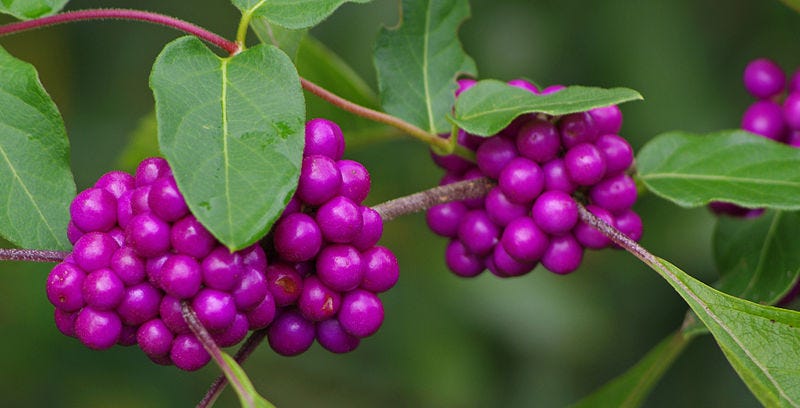
“American beautyberry is a low-maintenance, native plant with no major pest concerns that can be a nice addition to a North Florida landscape,” says Larry Williams, an agent at the University of Florida's Institute of Food and Agricultural Sciences Extension office in Crestview.
“It is great for low-maintenance landscapes and naturalized gardens. I will always have some in my landscape.”

American beautyberry puts on quite a show during the fall with its bright purple fruit.

The profusion of berry-like fruit found along the thin branches result in the plant taking on a weeping habit.

Each fruit is only about 1/3 inch in diameter but collectively form roundish clusters that encircle the stems. The berries are particularly showy in September and October. They remain on the plant, even after its leaves have dropped, into early winter if not eaten by birds and other wildlife.

Many species of birds — including robins, cardinals, mockingbirds, brown thrashers, finches and towhees — will eat beautyberry fruit. Birds are a major method of seed dispersal for this plant.

Even though I consider the showy fruit its best attribute, the small, lavender flowers tightly bunched together along the stems during June to August are attractive, as well. The plant is not well suited for manicured, formal landscapes but can be useful in a naturalized garden.

American beautyberry is a deciduous shrub without much ornamental value during the winter. But during the growing season, its somewhat course, fuzzy, light-green leaves look good in a setting with other darker-leaved shrubs.

It grows well in part shade/part sun as an understory plant beneath larger trees such as pines and oaks.

Be sure to allow enough room for this sprawling shrub to develop into its mature size of three to eight feet in height with an equal spread.

It may also be used as an informal screen or even as a specimen plant. But avoid using it where it will require regular shearing as the flowers and fruit are produced on new growth.

Thinning out old or low-growing branches is a better method of pruning this plant. American beautyberry may self-seed but I have not seen this to be a bothersome problem.

America beautyberry is somewhat available in the nursery trade and is fairly easy to propagate from stem cuttings. It can be propagated from seeds, as well. In addition to the purple fruiting types, look for cultivars such as 'Russell Montgomery' that produce white fruit. There are also other nonnative species of Callicarpa worth looking at, such as C. dichotoma and C. japonica.

Larry Williams is an agent at the University of Florida's Institute of Food and Agricultural Sciences Extension office in Crestview.

This article originally appeared on Crestview News Bulletin: WILLIAMS: Get some American beautyberry in your garden

GARCIA: Crestview library to participate in world’s largest digital book club

The Crestview Public Library will take part in the Big Library Read. The program is the world’s largest digital book club through public libraries; it connects millions of readers around the world with the same eBook at the same time.

For two weeks beginning June 23, Crestview Public Library users will be able to borrow the eBook, "A Murder in Time" by Julie McElwain (Pegasus Books), from http://okaloosa.lib.overdrive.com and participate in a worldwide version of a local book club. There will be no waitlists for this popular mystery with a twist, which was selected based on a survey of more than 20,000 library readers.

"A Murder in Time" is an intricate mystery about a brilliant FBI agent, Kendra, who finds herself transported back in time to the 1800s. Relegated to the servant class, she stumbles across a gruesome murder, and she alone recognizes there is a serial killer in their midst. Kendra scrambles to solve the case before it takes her own life — 200 years before she was ever born. 

At its core, Julie McElwain’s debut novel is a puzzle, a hunt for a murderer and a quest for justice.

“Throughout my life, I’ve loved all genres of books — mystery, romance, paranormal and historical,” said author Julie McElwain. “Maybe that’s why I’ve included a little bit of all those elements in ‘A Murder in Time.’ I sincerely hope readers enjoy Kendra’s story as much as I enjoyed researching and writing it.”

Big Library Read is a free program. To get started reading, all you need is a Crestview, Destin, Fort Walton Beach, Mary Esther, Niceville or Valparaiso library card.

The book can be read on all major computers and devices, including iPhone, iPad, Android phones and tablets, Chromebook and Kindle. The eBook will automatically expire at the end of the lending period, so there are never any late fees.

Big Library Read is facilitated by OverDrive, the leading platform for eBooks and audiobooks from the library. The program is made possible through a partnership between OCPLC member libraries, OverDrive and Pegasus Books, publisher of the McElwain novel.

For more information on Big Library Read, visit BigLibraryRead.com.

Marie Garcia is the Crestview Public Library's director.

This article originally appeared on Crestview News Bulletin: GARCIA: Crestview library to participate in world’s largest digital book club

Crestview church sets 'The Love of Life' concert

CRESTVIEW — Ron and Kelly Whisnand will give music ministry during the Church of the New Covenant’s concert, "The Love of Life"

The event is 6 p.m. June 17 and 18, and continues during the church’s 10 a.m. and 11 a.m. services on June 19. Refreshments will be served afterward.

The church is located at 2392 Whisnand Circle in Crestview. 

This article originally appeared on Crestview News Bulletin: Crestview church sets 'The Love of Life' concert

HELMS: Analyzing David’s divinely inspired psalm

Psalm 69 is not necessarily known as a "Messianic" psalm, and yet it is one of the top five quoted psalms in the New Testament.  

In it, we see a quote concerning the giving of gall for his food, and vinegar for his drink.

It also talks about him being shamed for no known reason, and being hated for the zeal he has for his father's house.

 In the book of Acts chapter 1, Peter quotes this chapter and talks about Judas being removed from his place — becoming desolate — and another taking his place. 

Knowing that this psalm is written by David, and seeing how much attention was paid to a "non-Messianic" passage leaves me with a thought: Looking at all the misery that is included in here, could it not be a psalm written under influence of the Holy Spirit to allow us to peer into the hardships that our Savior faced daily?

 These are the thoughts of a man deep in torment, even questioning whether what he was doing in obedience to the Father was perhaps his own foolishness. 

And yet, at the end of this psalm, we see Him rejoicing at the joy of the eventual, absolute victory that will be had for Mount Zion and all of God's obedient people.

Read it from this point of view: Christ through David, penning words that show the difficulty He endured while in this earthly body.

You will realize that you, too, have been stuck in the mire and it seemed like there was no way out. 

Dear friend, perhaps you too have been searching for someone to give you a little sympathy, and find no one there. 

You are not alone, for Christ, above all, understands. 

Take comfort in the words of this psalm, knowing that Jesus too went through hardships. 

Take joy in knowing that He overcame, and so can you.

One day, we will meet Him and be with Him for eternity. He was raised up with the salvation He offered,  and we can be raised up by taking up His offer of salvation.

The Rev. Richard Helms serves at Miracle Acres Ministries, 3187 E. James Lee Blvd., in Crestview.

This article originally appeared on Crestview News Bulletin: HELMS: Analyzing David’s divinely inspired psalm

error: Content is protected !!