Please ensure Javascript is enabled for purposes of website accessibility
Skip to main content
Advertisement

BEARDEN: Are flies bugging your horses?
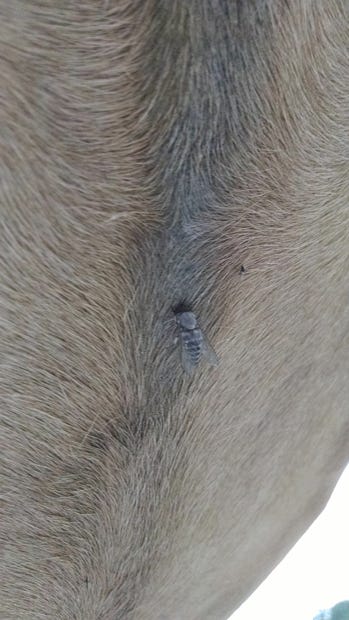
A horse fly feeds off a horse June 27 in Crestview.

There are many external parasites that affect horses. Some are just annoying, but some transmit deadly diseases.

The world’s deadliest creature is also a menace to horses. These creatures transmit Eastern Equine Encephalomyelitis, Western Equine Encephalomyelitis, Venezuelan Equine Encephalomyelitis and West Nile viruses. This deadly creature is the mosquito.

Our best defense against these deadly diseases is vaccination. The most effective mosquito control measure is reducing breeding sites (standing water). Clean water buckets and troughs regularly since mosquitoes will lay eggs in these water sources. Mosquito control sprays also help to decrease populations.

There are many biting flies that can also transmit diseases such as anthrax, equine infectious anemia, and anaplasmosis. Horse, deer and stable flies are vicious biters and strong flyers. Like mosquitoes, horse and deer fly females are the biters, while both stable fly sexes bite. The use of repellents can be effective for decreasing bites on horses but should be applied daily.

Another annoying pest is the biting midge also called the no-see-um. These pests cause horses to lose their hair where they are bit. Often this is on the neck, head, tail, and belly. There are no effective control measures for these pests. No-see-ums are most active dusk and dawn and prefer to be outdoors in calm winds. An effective strategy for horse owners is to stable horses before dusk until after dawn.

We have non-biting flies that are problems as well. These include house flies, eye gnats and blow flies. House flies can transmit diseases and internal parasites.

Control includes removing manure from the stable area and applying larvicide to the manure. Also, space sprays are effective but must be reapplied frequently.

Eye gnats are annoying and cannot be effectively controlled. Blow flies are problematic for open wounds and control focuses on proper wound care and disposal of soiled wound dressing.

Another fly that buzzes around your horse is the bot fly. This fly is an external and internal parasite. The adult bot fly lays its eggs on the hairs of the horse. The egg hatches and the larvae enters the horse when the horse licks or chews the area where the eggs are attached to hairs.

The larvae burrows into the lining of the mouth and lives there for 3-4 weeks. It then migrates to the stomach and intestine, where it remains until the next summer.

It then is passed in the manure and burrows into the soil. In one to two months, the adult fly emerges and begins immediately laying eggs.

Control of this pest involves breaking the life cycle. Use a warm water wash (110-120 degrees Fahrenheit) with an insecticide to remove bot eggs. The warm water signals the bot egg to hatch and the larvae is killed when it contacts the insecticide.

Only use insecticides that are labeled for external treatment of horses. Treatments should be applied weekly during August and September. Also, dewormers containing ivermectin and moxidectin are effective against internal bot larvae.

Controlling external parasites on horses can be a challenge but is important. They transmit diseases and internal parasites. They can also make horses sick or weak due to blood loss. They can cause horses to lose weight and hair due to irritation from the flies.

The use of repellents applied daily to your horse is helpful against horse, deer and stable flies. Proper manure management and the use of a larvicide will reduce house fly populations. Breaking the bot fly life cycle will help control this external and internal parasite.

For more information on these external parasites and others, see ENY-283, a University of Florida article on horse parasites at http://edis.ifas.ufl.edu/ig139.

Jennifer Bearden is an agent at the University of Florida's Institute of Food and Agricultural Sciences Extension office in Crestview.

This article originally appeared on Crestview News Bulletin: BEARDEN: Are flies bugging your horses?

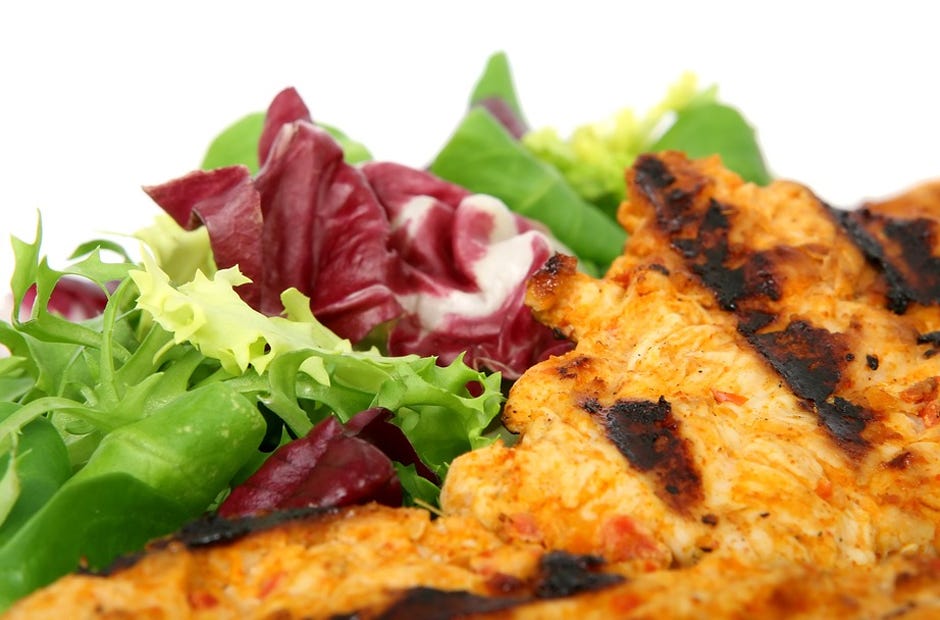
5,682 pounds of Florida salad products recalled

GHSE, LLC, a Green Cove Springs, Fla. establishment, is recalling approximately5,682 pounds of salad products containing chickendue to misbranding and an undeclared allergen, the U.S. Department of Agriculture’s Food Safety and Inspection Service (FSIS) announced today. The product contains wheatknown allergennot declared on the product label. 

The ready-to-eat salads with chili-seasoned chicken itemswere produced on various dates between May 11, 2016 and June 29, 2016. The following products are subject to recall:

  • 11-oz. plastic clam shellcontainers with “TRADER JOSE’S MEXICALI INSPIRED SALAD WITH CHILI SEASONED CHICKEN with BEST BY dates05/18/16 – 07/03/16.

The products subject to recall bear establishment number “EST. P-45781” inside the USDA mark of inspection. These items were shipped to retail locations in Alabama, Florida, Georgia, North Carolina, South Carolina, Tennessee,and Southern Virginia.

The problem was discovered by a plant quality assurance technician during a routine check of ingredients. The salads have the correct label on the top of the package, but exhibit an incorrect back label that does not include soy sauce as an ingredient; the source of the wheat. As a result, wheat is not sub-listed in the ingredients statement or in the“Contains” allergen declaration.

There have been no confirmed reports of adverse reactions due to consumption of these products. Anyone concerned about an injury or illness should contact a healthcare provider.  

Consumers who have purchased these products are urged not to consume them. These products should be thrown away or returned to the place of purchase.

FSIS routinely conducts recall effectiveness checks to verify recalling firms notify their customers of the recall and that steps are taken to make certain that the product is no longer available to consumers.

This article originally appeared on Crestview News Bulletin: 5,682 pounds of Florida salad products recalled

7 tips to avoid foodborne bacteria

avoid food.jpg

This Fourth of July, if you are not sure how long food has been sitting out, throw it out immediately.

Whether you’re enjoying a barbecue outdoors, traveling to see family or friends, or spending time at home, the U.S. Department of Agriculture’s Food Safety and Inspection Service urges everyone to take food safety precautions when planning their Fourth of July menu.

The U.S. Centers for Disease Control and Prevention estimates that 1 in 6 Americans — that’s 48 million people — annually acquire foodborne illness, resulting in roughly 128,000 hospitalizations and 3,000 deaths.

“Because foodborne bacteria thrive and multiply more quickly in warmer temperatures, foodborne illness can spike during summer,” said Deputy Under Secretary for Food Safety Al Almanza. “This is likely because people are spending more time outside — away from the sink and equipment in the kitchen that help consumers keep food safe.”

The Danger Zone is the temperature range between 40 and 140 degrees Fahrenheit in which foodborne bacteria can grow rapidly to dangerous levels that can cause illness.

Here’s how to steer clear of the Danger Zone:

●Without refrigeration or a heat source, perishables should not be left out more than two hours if the temperature is at or below 90 degrees Fahrenheit, and only one hour if the temperature is at or above 90 degrees Fahrenheit. Since the weather will likely be hot on July 4, food should be returned to the cooler within an hour. If you are not sure how long food has been sitting out, throw it out immediately.

●Always keep cold food cold, at or below 40 degrees Fahrenheit, in coolers or in containers with a cold source such as ice or frozen gel packs. Keep hot food hot, at or above 140 degrees Fahrenheit, on the grill or in insulated containers, heated chafing dishes, warming trays or slow cookers. If food needs to be reheated, reheat it to 165 degrees.

●Pack an appliance thermometer in your cooler to ensure food stays at or below 40 degrees. Divide large amounts of food into shallow containers for fast chilling and easier use.

●Packing drinks in a separate cooler is strongly recommended, so the food cooler isn’t opened frequently. Keep the cooler in the shade, and try to cover it with a blanket or tarp to keep it cool. Replenish the ice if it melts.

●Use the food thermometer to check internal temperature of meat, poultry and seafood. You cannot tell whether the meat is safely cooked by just looking.

●If you plan to marinate meat or poultry for several hours or overnight before the event, marinate it in the refrigerator — not on the counter. If you plan to reuse the marinade from raw meat or poultry, boil it first to destroy any harmful bacteria.

●To ensure safety, leftovers must be put in shallow containers for quick cooling and refrigerated to 40 degrees Fahrenheit or below within two hours.

This article originally appeared on Crestview News Bulletin: 7 tips to avoid foodborne bacteria

HILBURN: No matter the occasion, side dishes are important

Prudence Hilburn

Whether you are planning a meal for a special holiday or just for family and friends, keep in mind the importance of the side dishes you serve.

Asparagus can add a healthy and gourmet touch to any meal. When I was growing up, we never had asparagus. In fact, I had never tasted asparagus until many years later, and, to be honest, I really didn’t put it on my list of favorite vegetables.

Several years ago while teaching cooking classes, I found a recipe for an asparagus casserole that I decided to add to the class menu. I can’t remember where I got the recipe, but it quickly became a favorite with the class members and with me. I think it is the white sauce made with cream cheese that adds the memorable flavor. An extra bonus is that it is so easy to make.

When buying fresh asparagus, I like the small stems because they are more tender. If you buy the larger stems, it might be necessary to remove the tougher portions. You can do this by holding each stem in your hands and bending them until they break. The tougher part is usually the lower part. Discard these.

Another interesting side dish is a green bean casserole that my boss and friend, Frances Allen, shared with me when I worked as an accountant at a John Deere dealership. The Mayan salt gives this dish a wonderful flavor. You will probably think that there is an error in the amount of flour called for in this recipe, but the cup of flour is correct.

Once you have tasted these side dishes, I think you will want to serve them often.

CREAMY ASPARAGUS BAKE

1 tablespoon butter

2 tablespoons flour

Salt

1 cup milk

1 teaspoon lemon juice

1 package (3 ounces) cream cheese

1 pound fresh asparagus, cooked and drained

1/2 cup bread crumbs (best if buttered)

Preheat oven to 350 degrees. Make a white sauce by melting butter and blending in the flour, salt, milk and lemon juice. Then blend in cream cheese. Put asparagus into a buttered casserole dish and pour sauce over it. Top with bread crumbs. Bake for 30 minutes. If needed, brown crumbs under broiler.

GREEN BEAN CASSEROLE

3 cans French-style green beans

1 1/2 tablespoons bacon grease

2 teaspoons dill seed

1 stick butter

1 cup flour

9 tablespoons grated onions

2 teaspoons black pepper

Dash Tabasco sauce

Large pinch Mayan salt

1 can water chestnuts, sliced

Buttered bread crumbs

Drain juice from beans. Set aside beans. Add grease and dill seed to juice. Simmer for 45 minutes. Pour over beans and marinate overnight.

In medium saucepan, melt butter. Stir in flour. Add juice from beans and cook until thick. Add onions, black pepper, Tabasco sauce, Mayan salt and water chestnuts. Add to beans, pour in casserole dish and top with crumbs. Bake at 350 degrees for 45 minutes.

Prudence Hilburn of Piedmont has won more than 30 national cooking awards and written several cookbooks, including, “Simply Southern and More.” Write her at prudencehilburn@aol.com or visit www.prudencehilburn.com.

This article originally appeared on Crestview News Bulletin: HILBURN: No matter the occasion, side dishes are important

Mango salad: Fresh, sweet fruit tastes delicious in balanced recipe

Mangoes come in all shapes, sizes and colors. Some are green; others are yellow.

The kind you usually see in the supermarkets, which tend to be imported from Central America, have a rosy cast. Whatever the exterior color, ripe mangoes have a pleasant aroma and are firm but slightly yielding to the touch; interior hues range from pale yellow to deep orange and are easily sliced with a knife (extremely fibrous fruit should be used for smoothies or discarded).

If you buy an under-ripe mango, wrap it in a paper bag and let it sit on the counter for a day or two. You can add an apple or banana to the bag to release gases that speed the ripening process.

How to cut a mango:

Mangoes have two flat planes and two sharp ones, which follow the shape of the pit. Stand a mango on one point and, with a very sharp knife, slice down one flat plane as close to the pit as possible. This will yield a “cheek” of fruit. Crosshatch the interior and bend back the skin, and the fruit will pop out neatly. Repeat with the other flat plane. Then slice down the two sharp planes and skin them for extra wedges.

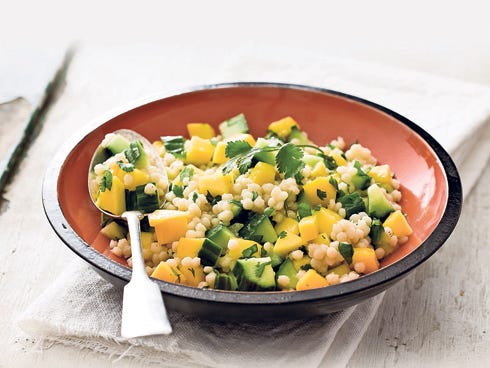
Israeli Couscous with Mango, Cucumber and Cilantro

The key in this salad is balance, with each ingredient

contributing a part but not overwhelming the others. Israeli couscous is sometimes called “pearl couscous” or “giant pasta pearls.”

INGREDIENTS

• 2 cups reduced-sodium chicken broth

• 1/2 cup water

• 1 (6.3-ounce box) Israeli couscous (such as Casbah)

• 2 tablespoons olive oil, divided

• 2 cups chopped mango

• 2 cups chopped English cucumber, unpeeled

• 1 cup chopped cilantro

• 2 tablespoons honey

• Juice of 1 lime

• 1/2 teaspoon coarse salt

• 1/4 teaspoon ground white pepper

1. Combine broth and water in a large saucepan; bring to a boil. Add couscous; cover and cook, stirring occasionally, until liquid is absorbed and couscous is al dente. Remove from heat and place into a mixing bowl. Stir in 1 tablespoon olive oil to prevent grains from sticking. Let cool.

2. Add mango, cucumber and cilantro; toss well.

3. Whisk together honey, lime juice, remaining 1 tablespoon olive oil, salt and pepper. Pour over couscous; mix well. Serves 8.

— Recipe by Jen Karetnick

This article originally appeared on Crestview News Bulletin: Mango salad: Fresh, sweet fruit tastes delicious in balanced recipe

LAROCHE: Fly with the eagles or soar with the turkeys

Loretta LaRoche

I recently read an article in Psychology Today that discussed the “dumbing down of America,” something I have witnessed for quite some time. Believe me when I tell you I am not an intellectual snob, although I do love to be around individuals that are interested in developing their mind. I am a very curious person and was brought up by a mother who encouraged me to broaden my horizons. She always advocated for finding people that could bring me to a higher standard of consciousness rather than those who might bring me down. It reminds me of a quote I once heard by a motivational speaker: “You can fly with the eagles or soar with the turkeys.”

Bill Keller, writing in the New York Times states, “Reality TV and pop culture presented in magazines and online sites claim to provide useful information about the importance of the Housewives of Wherever that can somehow enrich our lives. After all, how else can one explain the insipid and pointless stories that tout divorces, cheating and weight gain? How else can we explain the Kardashians or Paris Hilton, who are known for being famous without actually contributing anything worth discussing? The artificial events of their lives become the mainstay of populist media to distract (us from) the real issues and concerns facing us.”

I know that if my grandmother had laid her eyes on one of the myriad of Kim Kardashian’s “almost dressed” photos, she would have immediately grabbed her rosary beads and prayed for her. I realize that times have changed but what are we thinking? Basically I don’t think we are.

Numbers of people now consider themselves experts in some area of life. Blogging, vlogging, YouTube and Twitter are loaded with misinformation for information's sake. Want to know if gorillas get pimples? Just look it up on Google or wherever and you’ll find someone who knows not only the answer, but the cure. You’ll be seduced into their site with some soundbites and then they begin their sales pitch. For only $25 a month you can get all you ever wanted to know about gorilla acne, and special creams to eliminate it. Some of which have been found to eliminate wrinkles on human skin.

There is more acceptance of information that is spewed night and day that often does not have much basis in fact. The misinformation becomes valid in lieu of getting it quickly. The more it becomes the status quo, the more we will see intellectual complacency grow.

As the author of several books, I was at the mercy of editors, fact checkers, and lawyers. My Sicilian mother and grandmother could have had their jobs. I’m glad they demanded critical thinking and common sense rather than fostering a mentality that seeks millions of Twitter followers who are following the proverbial lemming off the cliff.

Loretta LaRoche is an author, humorist, PBS star and Fortune 500 trainer.

This article originally appeared on Crestview News Bulletin: LAROCHE: Fly with the eagles or soar with the turkeys

ALLEVA: Core strength is foundation for all other muscles

Marlo Alleva demonstrates a reverse elevated single knee tuck.

Core strength is truly the foundation for strength in every other muscle group of the body. Think about it — everything you do in fitness, you have to prepare your body for resistance. In other words, you need to brace yourself for any amount of resistance.

All of this starts in the midsection, otherwise known as the core. There are many different styles and positions you can use to build strength. Many of these moves can also be combination exercises to work numerous parts of your body all at one time.

Our move today is a reverse elevated knee tuck, and all you need is yourself and an elevated surface, such as a coffee table or fitness bench.

This move will be targeting your abdominals, but your triceps, glutes, and hamstrings will get their fair share of work as well.

Begin this move by sitting on the floor and placing the lower part of your legs on top of your elevated surface. Place your hands on the floor just behind you, palms down and elbows facing behind you. Now, lift your rear end up off of the floor and engage your core by rotating the hips upward. Lift the chest, and engage the glutes as well. Now you are ready to tuck.

Once your body is in position, proceed to pull one knee at a time in toward your chest. Then return it back to the starting position and proceed onto the next leg. Continue alternating between each knee tuck for either a determined number of tucks or for a desired amount of time.

Shoot for at least 10 tucks on both legs for one set. Giving yourself five sets. This move can be intensified by placing a hand weight or barbell plate on your tummy, although after one or two sets, your own body weight resistance may be more than enough.

This is a great at-home workout at your convenience or just as good at the gym, as part of your training session. Happy tucking!

Marlo Alleva, an instructor at Gold’s Gym and group fitness coordinator, can be reached at faluvzpa@msn.com.

This article originally appeared on Crestview News Bulletin: ALLEVA: Core strength is foundation for all other muscles

Mission Okaloosa youths begin seventh year of summer service

Mission Okaloosa members have taken on several tasks to benefit area residents June 26 through July 1. In this photo, the group gets ready to build a wheelchair ramp for a Crestview resident. Pictured are adult leaders Earl Timmons, Matt Hasty, and Tom Converse with students Parker Athearn, Adam Mistretta, Ethan Parker, Joe Decker, Gage Carter, Harrison Dorsett, Caleigh Lloyd, Gina Locastro, Kallie Rasmussen, Jenna Skalicky, Annie James Walsh, Kathalina Wurst, Jared Chase and Trace Matthews.

CRESTVIEW — Mission Okaloosa is a week-long summer experience where youths from Crosspoint  United Methodist Churches in Niceville and Crestview serve local nonprofits and people across Northwest Florida.

"Our vision as a church is to connect people to Christ and we love getting to do this through service," Matt Hasty, mission trip leader, said.

Its outreach began in Okaloosa County originally, but now extends to over 30 nonprofits in areas including Andalusia, Ala., Baker, Milton, Niceville, Fort Walton, Crestview.

The students are sixth- through 12th-graders. More than 250 people are involved across 14 teams and 30 projects all over the Panhandle.

Missions Pastor Tyler Fuller said Mission Okaloosa partners this year are Grace Rides, Ronald McDonald House, Feeding the Gulf Coast, Youth Village, Children’s Advocacy Center, the United Methodist Children’s Home, the City of Crestview, Emerald Coast Autism Center, Soul Care, Choctaw Beach United Methodist Church and the Crestview Manor, among others.

"The group eats, sleeps, and serves together.  They are together for an entire week serving our community.  Every night our group gathers for worship and talks about their day serving," Fuller said.

The group also does projects for individuals. Some of the work they've performed this week is "yard work and visitation … care packages and yard work for families of deployed service men and women, and (construction of) a wheel chair ramp."

For a map of where the mission members are working, go to https://www.facebook.com/crosspointmission/.

This article originally appeared on Crestview News Bulletin: Mission Okaloosa youths begin seventh year of summer service

Florida university study: Teens' potential for trying marijuana peaks at 16, 18

GAINESVILLE — The likelihood adolescents will try marijuana rises steadily from age 11 to age 16, then decreases before hitting another peak at age 18, according to a new University of Florida study.

The study findings, which appear in the American Journal of Drug and Alcohol Abuse, may help experts develop new marijuana prevention strategies, says lead author Xinguang (Jim) Chen, M.D., Ph.D., a professor in the department of epidemiology in the UF College of Public Health and Health Professions and the UF College of Medicine, which are both part of UF Health.

“Many existing marijuana intervention programs target students age 15 and older,” Chen said. “Our findings demonstrate the need to start drug education much earlier, in the fourth or fifth grade. This gives us an opportunity to make a preemptive strike before they actually start using marijuana.”

As medical marijuana laws are passed in more states, there is concern among some experts that adolescents may view marijuana as a substance that can be used safely by anyone, regardless of whether it is part of a treatment plan under a physician’s supervision.

Using marijuana at a young age could put adolescents at risk for cognitive problems, according to the National Institute on Drug Abuse. Teens who use marijuana may have impaired brain development and lower IQ. They may receive lower grades and are more likely to drop out of high school.

The UF study was designed to learn when adolescents are most at risk for starting marijuana use. It is one of the first studies to examine the likelihood of marijuana initiation as a function of age and it used a study method called survival analysis that is more sensitive to fluctuations across age groups, Chen said.

The team analyzed data from the 2013 National Survey on Drug Use and Health, a nationwide cross-sectional survey including approximately 27,000 respondents ages 12 to 21, sponsored by the Substance Abuse and Mental Health Services Administration.

The researchers found the likelihood that adolescents would start using marijuana climbed steadily starting at age 11, reaching a first peak at age 16. But the researchers were surprised to discover that at age 17, there was a dip in the possibility that teens would start using marijuana.

The team theorizes that many 17-year-olds are focused on improving grades and preparing for college entrance exams, which could pull their attention away from experimenting with drugs. This finding may represent an additional approach for developing interventions, Chen said.

“Increasing adolescents’ academic responsibilities and placing more emphasis on education could be one way to postpone drug use initiation, ultimately preventing drug use,” he said.

The likelihood of marijuana initiation rebounded at age 18 for a second peak. This corresponds to another major milestone in the lives of many young adults, said Bin Yu, M.D., M.P.H., one of the study’s co-authors, and a research assistant in the UF department of epidemiology.

“At 18, many adolescents leave their parents’ homes to start college or enter the workforce,” Yu said. “They may be more susceptible to influence from peers and they have less monitoring by their parents and the community.”

The researchers found that by age 21, 54 percent of young adults will have used marijuana.

The research team, which also included Sonam Lasopa, Ph.D., a recent graduate of the UF doctoral program in epidemiology, and Linda B. Cottler, Ph.D., M.P.H., a dean’s professor, chair of the UF department of epidemiology and PHHP’s associate dean for research, noted a second surprise finding when they analyzed the likelihood of marijuana use by race. Adolescents who self-identified as having a multiracial background were significantly more likely to use marijuana than any other racial or ethnic group.

More research is needed to understand the reasons why adolescents from multiracial backgrounds may be at increased risk for initiating marijuana use, Chen said. With that knowledge, experts can develop prevention programs that take into account racial and ethnic differences, as well as age.

“This study finding supports the idea of precision intervention,” he said. “Intervention programs should be developed for both parents and adolescents, and delivered to the right target population at the right time for the best prevention effect.”

Jill Pease is the public relations director for the University of Florida College of Public Health and Health Professions.

This article originally appeared on Crestview News Bulletin: Florida university study: Teens' potential for trying marijuana peaks at 16, 18

LDS church graduation ceremony set

From left are the 2016 Church of Jesus Christ of Latter-day Saints seminary graduates Mary Sumrall, Isabelle Jones, Kini Makaneole, Rebecca Ives, Mathew Samuolis, Sara Curdy, Rachel Riley, Micah Hammond. Graduates not shown are: Sara Nunley, Madison Corbin, Christopher Lawson, and Lyndon Clifton.

NICEVILLE — Crestview residents are among Early Morning Seminary graduates for The Church of Jesus Christ of Latter-day Saints.

Graduates are Sara Curdy, Madison Cobin, Micah Hammond, Isabelle Jones, and Sarah Nunley, all of Crestview; and Lyndon Clifton,  Rebecca Ives, Christopher Lawson, Rachel Riley and Mary Sumrall.

The students, who celebrated graduation on Sunday, would attend seminary classes at 5:45 a.m., before their high school classes.

During their four years of seminary education, they study the Old Testament, the New Testament, the Book of Mormon, The Pearl of Great Price and Church History. 

This article originally appeared on Crestview News Bulletin: LDS church graduation ceremony set

error: Content is protected !!