Please ensure Javascript is enabled for purposes of website accessibility
Skip to main content
Advertisement

Cold shrimp for hot days

Shrimp are ideal for the dog days of summer. They require a nanosecond of cooking and are great served chilled. Here, they elevate gazpacho to dinner-course level, providing simple and refreshing nourishment.

You can purchase cooked, chilled shrimp for this recipe, but if you’re cooking your own, try this easy recipe.

Bring about 3 quarts of water to a boil in a large pot over medium-high heat. Cut 1 lemon in half and squeeze into the water. Toss in the squeezed lemon peel as well. Add 1 teaspoon black peppercorn and as much Old Bay Seasoning as you like. Remove the pot from the heat and add 1 pound shrimp. Cover the pot and let stand 5 minutes, until the shrimp turn pink. Drain and pour shrimp into a large bowl of ice water. Let cool 10 minutes.

Bloody Mary Gazpacho with Shrimp

• 1 quart tomato juice

• 1 1/2 cups grape tomatoes, chopped

• 3 celery ribs, finely diced (about 1 cup)

• 1 English cucumber, seeds removed, finely diced

• 1 medium red bell pepper, diced

• 1 medium red onion, diced (about 1 cup)

• 1 jalapeno pepper, stemmed, seeded, minced

• 1 large garlic clove, minced

1/3 cup fresh lemon or lime juice

• 2 teaspoons Worcestershire sauce

• 1 to 2 teaspoon prepared horseradish

• 1 teaspoon Tabasco sauce

• 1 pound large shrimp, poached

Combine all ingredients except shrimp in a large bowl. Mix well. Cover and refrigerate at least 1 hour and up to 6 hours. To serve, ladle gazpacho into bowls or large glasses. Top with shrimp, or drape the shrimp over the glass rims. Serves 4.

— Photo and recipe by LYNDA BALSLE

This article originally appeared on Crestview News Bulletin: Cold shrimp for hot days

Crestview food festival raises $3,300 for Belize medical mission (PHOTOS, VIDEO)

CRESTVIEW — What do Cajun red beans ‘n’ rice, Vietnamese pork tacos, Korean bulgoki, Peruvian pickled fish salad, southern peach barbecued chicken and Filipino lumpia have in common?

Together, they and cuisine from several other countries raised more than $3,300 to purchase medicine for Operation Medical Care’s ninth annual medical mission to Belize.

PHOTOS: See photos from the International Food Festival>>

Chefs for Sunday’s International Food Festival were mostly among the volunteers who leave Aug. 31 for the weeklong annual mission.

“We’ll arrive in Belize at 11:45, get our stuff to the hotel, put on our scrubs, then travel an hour and a half inland to Orange Walk,” Operation Medical Care treasurer Sharlene Cox said.

“We go to see patients at two businesses and we get done about 6 o’clock that night after having been up at 4 to get to the airport.”

NO WINDOWS, A/C

Businesses throughout the Orange Walk District and neighboring communities donate facilities for the mission to receive patients.

“The places we go, maybe like a school or a business, are usually a concrete building,” Cox said. “It may or may not have window panes, and they don’t have air conditioning. We’re lucky if they have fans we can blow on the doctors as they see people.”

For most patients, the Crestview group’s trip is their lone opportunity to receive medical care in the largely poverty-stricken Central American nation’s rural interior.

“When we get there, there are 300 or 400 people already lined up,” Cox said. “We get out our soccer balls so the children can play until it’s time to be seen.”

990 PATIENTS

Last year, Operation Medical Care saw 990 patients. Among them was Adair Blanco, now 21. He came to Crestview for treatment of a brain tumor after having seen the mission’s founder, retired Crestview pediatrician Dr. Joseph Peter, during last year’s mission.

Peter and Dr. John Johnson were among the more than 300 people who feasted during Sunday’s festival at Bob Sikes Elementary School.

Fort Walton Beach optometrist Dr. Tom Streeter will join them on the Belize mission.

“With the hot sun, they don’t wear sunshades, they don’t wear hats, so they get glaucoma,” Cox said of some of the Belizean patients.

“We are grateful for so much support,” Peter said.

_________________

WANT TO HELP?

Crestview-based Operation Medical Care needs donations of these items for its Aug. 31 to Sept. 5 mission to Belize:

●Small toys for pediatric patients

●Baseball caps and hair bows for children

●Ball caps for adults

●School supplies including pens, pencils, notebooks and paper

●Cash to purchase de-worming medicine and vitamins for adults and children

Drop donations at Our Lady of Victory Catholic Church, 550 Adams Drive, Crestview, 682-4622.

Operation Medical Care is a 501c3 non-profit. Donations are tax-deductible.

Contact Sharlene Cox, 682-6824, for more information.

Crestview-based Operation Medical Care needs donations of these items for its Aug. 31 to Sept. 5 mission to Belize:

●Small toys for pediatric patients

●Baseball caps and hair bows for children

●Ball caps for adults

●School supplies including pens, pencils, notebooks and paper

●Cash to purchase de-worming medicine and vitamins for adults and children

Drop donations at Our Lady of Victory Catholic Church, 550 Adams Drive, Crestview, 682-4622.

Operation Medical Care is a 501c3 non-profit. Donations are tax-deductible.

Contact Sharlene Cox, 682-6824, for more information.

WANT TO HELP?

This article originally appeared on Crestview News Bulletin: Crestview food festival raises $3,300 for Belize medical mission (PHOTOS, VIDEO)

Northwest Florida Ballet class registration opens

FORT WALTON BEACH — Northwest Florida Ballet registration for evening dance classes for children, teens, and adults starts Aug. 1.

See the class schedule here: http://nfballet.org/classes/class-schedule/.

New classes include adult master classes for $20 each, open to middle school through adult students; and group Pilates classes costing $10 per person for beginner through advanced Pilates students. Download this schedule at http://bit.ly/2a5KDk8.

Additional classes available include adult barre, which are low impact, full body classes for adults of any age; and Kindermusik with Katie, a class for children and parents who learn, bond, socialize, sing and dance in a personalized and pressure-free environment. Cost is $60 per kindermusic class. Details are at http://bit.ly/29tvtbu.

Visit nfballet.org for more information.

This article originally appeared on Crestview News Bulletin: Northwest Florida Ballet class registration opens

SHANKLIN: What are the key USES of cash?

As an investor, you may find that the  elements of your portfolio that seem to draw most of your attention are stocks and bonds.

After all, these investment vehicles, and others derived from them, provide you with potential growth and income opportunities — which is why you invest in the first place.

Yet, you also may find significant value in a more humble financial asset: cash.

In fact, you might be surprised at the various ways in which the cash, and cash equivalents, in your portfolio can help you complete your financial picture.

One way to understand the uses of cash is to look at the “USES” of cash.

In other words, consider the acronym USES:

Unexpected expenses and emergencies — You’ll need sufficient cash for situations such as a job loss, a home repair or an unplanned medical expense.

During your working years, you should keep three to six months’ worth of living expenses in a cash account specifically designed to meet unexpected expenses.

Once you’re retired, you may be able to get by on a smaller emergency fund — up to three months’ worth of living expenses, although you will need more for everyday spending.

Specific short-term savings goal — Are you anticipating a big expense —a wedding, a big vacation, a down payment on a new home, etc. — sometime within the next few years?

If so, you’ll want to set aside sufficient cash, with the exact amount depending on your specific short-term goal.

Everyday spending — It goes without saying that you’ll need adequate cash for your everyday spending needs — groceries, utilities, entertainment, mortgage/ debt payments, and so on.

Of course, while you’re working, you will probably handle most of these costs with your paychecks, but you may still need to set aside one or two months’ worth of living expenses.

Once you’re retired, though, it’s a somewhat different story.

While your expenses may go down in some areas (such as costs associated with employment), they are likely to go up in others (such as health care).

So your overall cost of living may not drop much, if at all.

Consequently, it may be a good idea to set aside 12 months’ worth of living expenses, after incorporating other sources of income, such as Social Security and outside employment.

In addition, you’ll have to decide on the most efficient way of drawing on your other sources of income, including Social Security and investment accounts such as an IRA, a 401(k), etc.

It’s especially important to create a sustainable withdrawal strategy for your investment portfolio because you don’t want to run the risk of outliving your money.

Source of investment — You’ll want to have some cash available in your portfolio — perhaps 2 percent to 3 percent of the portfolio’s value — to take advantage of investment opportunities as they arise.

Also, having even a small percentage of your portfolio devoted to cash can modestly improve your overall diversification — and a diversified portfolio is your best defense against market volatility. (Keep in mind, though, that diversification can’t guarantee a profit or protect against loss.)

So, there you have it: four key USES of cash. Taken together, they provide some good reasons to keep at least a modest “stream” of liquid assets in your portfolio.

This article was written by Edward Jones for use by your local Edward Jones financial adviser.

This article originally appeared on Crestview News Bulletin: SHANKLIN: What are the key USES of cash?


BEARDEN: Drone technology useful for farming

Farmers can use Normalized Differential Vegetation Index pictures — like this one of cotton and soybean fields in Baker — to show the crops' problem areas.

Drones have caught on these days. I’ve seen drone tours of properties for sale. I’ve seen a video of the Fourth of July fireworks from a drone.

Drones may be the wave of the future for farmers, too. This technology can give them an aerial view of their crops without having to leave the ground themselves.

This provides extremely useful data to the farmer. Ordinary pictures or video of the fields can be helpful to find weeds, diseases or even insect damage before they become widespread. We can even see where deer and hog damage occur in the fields.

Another technology allows farmers to capture images using near infrared cameras mounted on drones and computer software to evaluate the Normalized Differential Vegetation Index (NDVI for short).

Plants with healthy chlorophyll reflect near infrared light; plants with damaged chlorophyll absorb it. NDVI picks up this difference and can quickly alert the farmer to problem areas in the field.

All this extra data helps farmers target areas of the fields that need attention. Farmers can target any pesticide or fertilizer applications to the area in need only. This decreases the amount of unnecessary chemicals on the crops and thus in the environment. It’s another precision agriculture tool that farmers can rely on.

The cost of this technology varies greatly depending on the type of drone and camera used.

A few companies make drones specifically for agricultural use, and some farmers and crop consultants are using these machines to scout their fields.

Will drones become the next big thing on farms? Only time will tell.

Jennifer Bearden is an agent at the University of Florida's Institute of Food and Agricultural Sciences Extension office in Crestview.

This article originally appeared on Crestview News Bulletin: BEARDEN: Drone technology useful for farming

DREADEN: Gale digital access puts legal forms at your fingertips

Need legal documents? Just go to www.cityofcrestview.org/library.php, click on Electronic Resources and scroll down to the individual databases to find Gale LegalForms. Your 14-digit Crestview Public Library card is required for access.

Take the law into your own hands — and fingertips — with Gale LegalForms.

Now it’s easy to create accurate, reliable legal documents with no hassle or stress. You can remove much of the mystery, anxiety and expense out of many legal transactions with the online reference that puts library patrons in control.

Gale LegalForms is the only digital resource to offer legal forms that are state-specific.

The most popular legal form searches include bankruptcy, divorce, power of attorney, wills and estates, landlord tenant, name change, real estate, incorporation and sample letters, but over 70 main categories are included.

Users may download the specific form, choose the desired format (such as Microsoft Word or Adobe Acrobat), edit the form by entering all relevant information, complete it and print it. Completed forms can also be saved to the computer’s hard drive or emailed.

Also included are a comprehensive attorney state directory and a dictionary of legal definitions explained in laymen's language.

More good news! Gale LegalForms is going mobile responsive and will undergo an interface update Aug. 1. These enhancements improve usability and increase accessibility so that it’s easy for users to navigate anytime on any device.

Your 14-digit Crestview Public Library card is required for access. Just go to www.cityofcrestview.org/library.php, click on Electronic Resources and scroll down to the individual databases to find Gale LegalForms.

Be sure to also check out the additional Legal Resource links at the bottom of the page.

Sandra Dreaden is the Crestview Public Library's reference librarian.

This article originally appeared on Crestview News Bulletin: DREADEN: Gale digital access puts legal forms at your fingertips

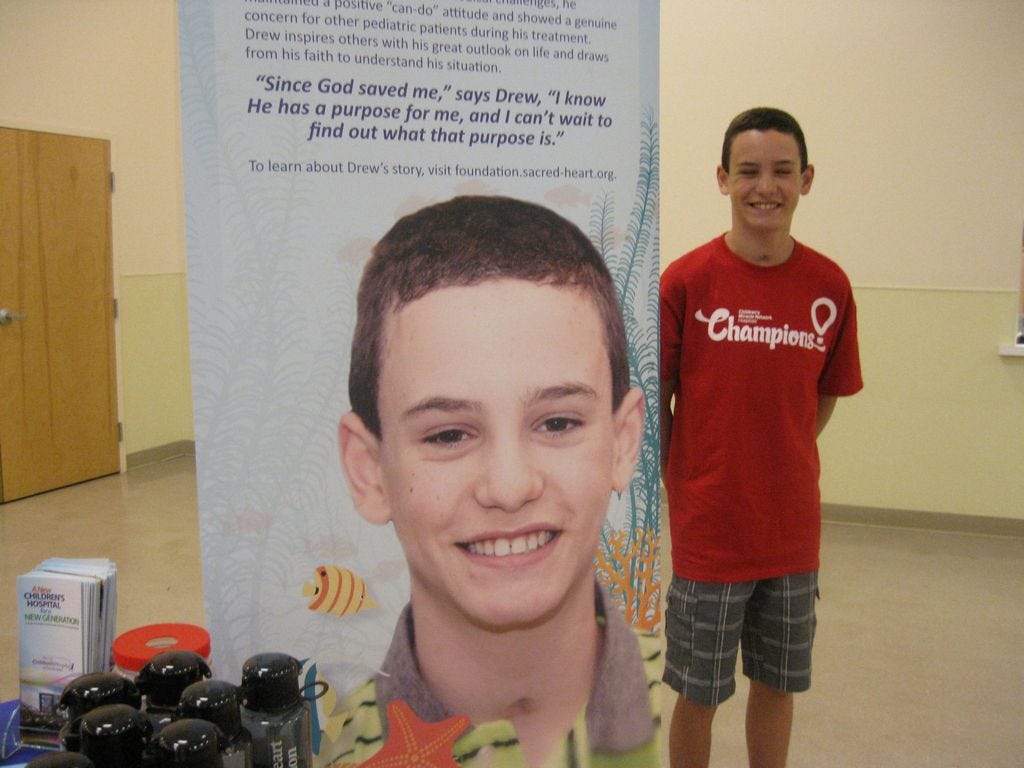
Crestview chamber members encounter big Drew, regular-sized Drew

Drew Barefield poses next to a standee bearing his photo while helping raise money at the Crestview Area Chamber of Commerce July breakfast meeting for the Children's Hospital at Sacred Heart Hospital in Pensacola.

CRESTVIEW — Drew Barefield, back from his tour of Washington, D.C., with 49 other state Children’s Miracle Network Hospitals Champions, appeared at the Crestview Area Chamber of Commerce’s July breakfast meeting July 7.

Drew said his favorite experience in the capital was exploring the Smithsonian’s National Air and Space Museum.

"It wasn't my favorite thing but it was fun seeing it through Drew's eyes," his mom, Wendy Barefield, said.

Drew is an ambassador for The Children’s Hospital at Sacred Heart Hospital in Pensacola, where he was treated following a June 28, 2014, boating accident. During the breakfast, chamber President Dawn Mann challenged other members to match her $100 contribution to the hospital, which serves pediatric trauma patients.

This article originally appeared on Crestview News Bulletin: Crestview chamber members encounter big Drew, regular-sized Drew

3 ways to know if a bug bite is serious

CRESTVIEW — It's summertime, meaning cookouts, picnics, trips to the park and family vacations. All this extra time spent outdoors also means more exposure to bugs. From ants, ticks and spiders to bees and wasps, the potential to get bitten or stung by one of these outdoor pests also grows.

Most of the time, common over-the-counter medications can help relieve bug bite or sting symptoms. Acetaminophen can help with pain, and a 1 percent hydrocortisone cream can help relieve redness, itching or swelling. But sometimes, bug bites can require medical attention, especially if the bite causes an allergic reaction or becomes infected. Seek medical attention if any of these occur:

●a large rash around the bite

●pain or swelling that lasts longer than three days or extends beyond the original site of the bite or sting

●rapidly changing symptoms

Severe allergic reactions to bug bites and stings can be life-threatening. If you notice any of these signs, call 911 immediately:

●shortness of breath, wheezing or difficulty breathing

●chest pain

●bee or wasp sting in the mouth that causes severe swelling that could interfere with breathing

●dizziness or fainting

●facial swelling

●nausea or vomiting

If you think you've been bitten by a black widow or brown recluse spider, or stung by a scorpion, head to the ER, as these can be life-threatening — especially for children and seniors — and may require immediate medical attention.

For a non-emergency bug bite or sting that requires medical attention, or if you are looking for a primary care doctor, visit the North Okaloosa Medical Center website, NorthOkaloosa.com, or call 800-347-1733 to find a primary care doctor near you.

This article originally appeared on Crestview News Bulletin: 3 ways to know if a bug bite is serious

What pine to plant? A case for longleaf

"Although longleaf can cost more on the front end to establish, it recoups the cost all along the way," says Arlo Kane, a conservation planning coordinator for Florida Fish and Wildlife Conservation Commission.

You have just harvested your timber stand, and now have at least 20 acres cleared.

What do you do next?

If you are going to replant pines in your cutover, you have two basic options here in Florida. You can plant longleaf pine or you can plant slash or loblolly pines. I combine loblolly and slash because the decision making process is the similar for those species, yet different from longleaf.

If you have drier sandy soils then longleaf is your best choice. It grows better than any other pine in sandy soils with the exception of sand pine. Sand pine though is not a great choice for commercial stands because it’s only used for pulp wood, the lowest value product.

If you have wet soils then you would look to slash or loblolly pines and a forester can help you decide which is best for your land. If you have good loamy soil that is not frequently flooded or ponded then you could reasonably plant any of the three main commercial species.

So how do you decide when soil is not an issue? Well, longleaf is usually planted using containerized plugs that cost around $200 per thousand. Slash and loblolly are usually planted using bare-root seedlings that cost around $60 per thousand. But factor in your chances of receiving cost-share money to help establish a stand and the cost of longleaf comes way down. Longleaf pine is the focus of most state and federal cost share programs and you are much more likely to get a contract to plant longleaf than you are to plant slash or loblolly.

Although longleaf can cost more on the front end to establish, it recoups the cost all along the way. A longleaf forest can be leased to hunters for more money because it makes better wildlife habitat.

Longleaf has a more open structure to its branches that allow more sunlight on the ground and that allows more herbaceous ground cover, which means more food and more nesting cover. It can be burned as early as one year after planting, which reduces competition from brush. So whether you are leasing your land for deer, turkey or quail, a longleaf pine forest can command a higher fee.

Longleaf pine straw is also the most preferred pine straw used for landscaping and commands a higher price. Landowners can be paid twice as much for longleaf pine straw compared to slash and three times more than loblolly pine straw, which is the lowest grade. When harvest time comes you are likely to have many more poles and saw timber with longleaf than slash or loblolly.

I am partial to longleaf because you have so many more options than with the other species. Landowners often focus on the upfront cost and how fast slash and loblolly grow in the first 10 years. But you never know what the market will look like 10 or 20 years down the road, and longleaf will catch up to slash and loblolly by age 20.

Longleaf is more disease resistant, aesthetically pleasing, wildlife friendly, hurricane resistant and therefore is a better tree for reducing financial risk. So if you can produce more valuable products, and have the flexibility to let the timber ride out bad markets, then longleaf is a better choice.

Resources

Several organizations can help you establish, restore and manage longleaf pine. A variety of programs are also available to help improve wildlife habitat on your forest. Some are listed below.

Natural Resources Conservation Service: Several programs give financial and technical assistance to plant longleaf pine in Florida. The Longleaf Pine Initiative is available to forest owners in select counties and Working Lands for Wildlife is for enhancing habitat for the gopher tortoise. Landowners apply through NRCS’s Environmental Quality Incentive Program. A district conservationist at your local USDA service center will help guide you through the application process.

Florida Fish and Wildlife Conservation Commission: Landowner Assistance Program biologists provide technical assistance to manage and restore longleaf pine and manage wildlife habitat. They can also provide information about cost share opportunities.

Florida Forest Service: County foresters give technical assistance managing your stands.

The Longleaf Alliance website: A comprehensive source of information, history, education, workshops and management information for restoring the longleaf pine ecosystem.

America’s Longleaf website: Also a comprehensive resource, including workshops and reports.

Arlo Kane is the northwest region conservation planning coordinator for Florida Fish and Wildlife Conservation Commission.

This article originally appeared on Crestview News Bulletin: What pine to plant? A case for longleaf

Okaloosa health department releases water quality results

FORT WALTON BEACH — The Florida Department of Health in Okaloosa County has announced water quality test results for local parks.

Two Okaloosa County parks have potentially hazardous bathing water, the FDOH stated July 5.

Fred Gannon Rocky Bayou State Park, Niceville, and Emerald Promenade, Okaloosa Island, failed tests based on EPA-recommended enterococci standards. Enteric bacteria's presence indicates fecal pollution from stormwater runoff, pets and wildlife or human sewage.

This article originally appeared on Crestview News Bulletin: Okaloosa health department releases water quality results

error: Content is protected !!