Please ensure Javascript is enabled for purposes of website accessibility
Skip to main content
Advertisement

SHANKLIN: Avoid expensive errors when paying for college

You'll want to avoid making costly mistakes when preparing for, and paying, those big college bills.

Here are some

It’s back-to-school time again. If you have young children, you might be hustling them to the store for backpacks and binders.

But if you fast-forward a few years, you can envision driving your kids a little farther — to their college dorms. And when that day comes, you’ll want to be financially prepared.

So you’ll want to avoid making costly mistakes when preparing for, and paying, those big bills.

Here are some of the most common of these errors:

Not saving enough — Only about 40 percent of families have created a plan to pay for college, according to a recent study by SLM Corporation, commonly known as Sallie Mae, a consumer banking company. In those families that do plan, parents save 3.5 times more than non-planners, according to the same study.

You might find it easier to save for college if you automatically move a set amount each month from your checking or savings account to a college savings vehicle.

Not considering vehicles with growth potential — The same Sallie Mae study found that more parents use a general savings account than any other method of saving for college.

But since most savings accounts these days pay only a minimal rate of return, you will have trouble getting the growth potential you need to achieve your college savings goals.

Consider working toward your college savings goals by investing in a vehicle specifically designed for college, such as a 529 plan or a Coverdell plan.

 There are differences between these plans, such as contribution limits and tax treatments, but both allow you to invest for growth potential.

As with any investment account, there are risks involved, including market risk.

Stopping your savings once your children are in college — Unless your children plan to take an awful lot of credits, they’re not going to finish college in just one year.

Consequently, you’ll want to keep investing in your plan or other college savings vehicle while your children are in school.

Taking out 401(k) loans — Your employer may allow you to take out a loan against your 401(k) to help pay for college.

But this may not be a good idea for two reasons: First, when you remove money from your 401(k) — even if you plan on eventually paying it back — you will slow the potential accumulation in your account, thereby depriving yourself of resources you will eventually need for retirement.

Second, should you leave the company, you might have to repay the loan within a limited number of days.

Not using available tax credits — Depending on your income, you might qualify for the American Opportunity tax credit, which is worth up to $2,500, provided you spend at least $4,000 on college expenses.

Check with your tax professional to see if you qualify for this credit and how to most effectively incorporate it. And be careful you don’t waste the credit, because you may not be able to use it and your plan distributions at the same time.

Paying for college can be challenging — but if you can avoid making the above mistakes, you’ve got a better chance of getting your kids through school without derailing the progress you’d like to make toward your other financial goals. 

This article was written by Edward Jones on behalf of your Edward Jones financial adviser.

Editor's Note: An earlier version of this article erroneously stated that Sallie Mae is “the country’s largest originator of federally insured student loans.” 

This article originally appeared on Crestview News Bulletin: SHANKLIN: Avoid expensive errors when paying for college

SMITH: Get ready for the 4-H Chick Chain Show and Auction

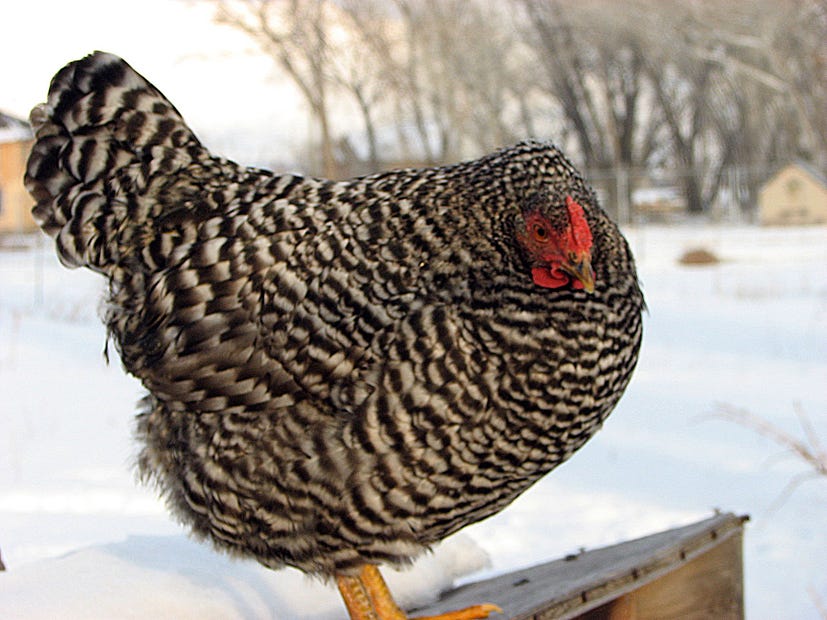
Chicken breeds up for auction Oct. 29 in Bonifay include Dominique, pictured; Golden Laced Wyandotte; Light Brahma; Pearl White Leghorn; Polish Top Hat; and Rhode Island Reds.

Eighty-three Northwest Florida youths are participating in the 2016 Florida 4-H Chick Chain Show and Auction on Oct. 29 in Bonifay.

In May, these outstanding youths received day-old pullet (female) chicks, and are proudly raising them with care and attention until the day of the show and auction.

When the pullet chicks are about 20 weeks old — that’s generally the magic time when production birds enter the laying cycle — the 4-Hers will bring them to this special poultry show and auction.

After the show, a professional auctioneer will be on hand to auction off the birds.

All proceeds benefit the 4-H youth and the Florida 4-H Chick Chain program.

The Chick Chain Project encourages 4-H youths to produce healthy chickens. Along the way, they get an introduction to business management, develop record-keeping skills (income and expenses), contribute to their family’s home food supply and realize the pride of accomplishment!

4-Hers follow very structured guidelines for protein diet and housing.

Are these birds healthy? Yes! The chicks come from National Poultry Improvement Plan-certified stock (clean from Pullorum-Typhoid and Avian Influenza) and are vaccinated against Marek’s disease on the day of hatch.

Breeds for auction are Dominique; Golden Laced Wyandotte; Light Brahma; Pearl White Leghorn; Polish Top Hat; and Rhode Island Reds.

The program benefits 4-H members in Okaloosa, Santa Rosa, Walton, Gadsden, Gulf, Holmes, Jackson, Jefferson, Leon, Liberty, Wakulla and Washington counties.

Misty Smith is an agent at the University of Florida's Institute of Food and Agricultural Sciences Extension office in Crestview. 

WANT TO GO?

WHAT: 4-H Chicken Auction

WHEN: 3 p.m. Oct. 29

WHERE: Holmes County 4-H Barn, 1169 U.S. Highway 90 E., Bonifay

WHAT: 4-H Chicken Auction

WHEN: 3 p.m. Oct. 29

WHERE: Holmes County 4-H Barn, 1169 U.S. Highway 90 E., Bonifay

WANT TO GO?

This article originally appeared on Crestview News Bulletin: SMITH: Get ready for the 4-H Chick Chain Show and Auction

Crestview girl sells lemonade, boosts Ronald McDonald House

Siblings of a sick child receiving care at the Ronald McDonald House in Pensacola flank Summer Jimmerson, the nonprofit organization's local development director, 
Cindy Cornett, RMH's Family Services Manager, and Kadance Fredericksen, Little Miss Tallashassee Northwest Florida, hold a check for $1,031.12.

CRESTVIEW — The Ronald McDonald House has extra support due to the efforts of a “Little Miss” from the Hub City.

Kadance Fredericksen, Little Miss Tallahassee Northwest Florida, recently hosted a lemonade stand fundraiser benefiting the Pensacola Ronald McDonald House. She raised $1,031.12, according to her parents.

The nonprofit organization provides housing for parents near their hospitalized children, along with medical and dental care, among other services, according to its website.

Kadance presented the check to the Ronald McDonald House and hosted a pizza party there to bring some cheer to families receiving assistance.

Papa John's Pizza donated food; Characters on the Go provided SpongeBob Squarepants in costume for the event.  

This article originally appeared on Crestview News Bulletin: Crestview girl sells lemonade, boosts Ronald McDonald House

Okaloosa health department issues West Nile advisory (FILE)

DOH-Okaloosa reminds residents and visitors to avoid being bitten by mosquitoes and to take basic precautions to help limit exposure. To protect yourself from mosquitoes, you should remember to “Drain and Cover”:

FORT WALTON BEACH, Florida — The Florida Department of Health in Okaloosa County is issuing a mosquito-borne illness advisory for residents and visitors Aug. 19, as one human case of West Nile illness is now confirmed in Okaloosa County.

See the mosquito bite prevention chart provide by DOH-Okaloosa>>

Okaloosa County Mosquito Control and DOH-Okaloosa continue to implement surveillance and prevention efforts.

 DOH-Okaloosa reminds residents and visitors to avoid being bitten by mosquitoes and to take basic precautions to help limit exposure. To protect yourself from mosquitoes, you should remember to “Drain and Cover”:

DRAIN standing water to stop mosquitoes from multiplying

●Drain water from garbage cans, house gutters, buckets, pool covers, coolers, toys, flower pots or any other containers where sprinkler or rain water has collected.

●Discard old tires, drums, bottles, cans, pots and pans, broken appliances and other items that aren't being used.

●Empty and clean birdbaths and pet's water bowls at least once or twice a week.

●Protect boats and vehicles from rain with tarps that don’t accumulate water.

●Maintain swimming pools in good condition and appropriately chlorinated. Empty plastic swimming pools when not in use.

COVER skin with clothing or repellent

Clothing: Wear shoes, socks, and long pants and long-sleeves. This type of protection may be necessary for people who must work in areas where mosquitoes are present.

Repellent: Apply mosquito repellent to bare skin and clothing.

1. Always use repellents according to the label. Repellents with DEET, picaridin, oil of lemon eucalyptus, para-menthane-diol, and IR3535 are effective.

2. Use mosquito netting to protect children younger than 2 months old.

3. Apply insect repellent to exposed skin or onto clothing, but not under clothing.

4. In protecting children, read label instructions to be sure the repellent is age-appropriate. According to the Centers for Disease Control and Prevention (CDC), mosquito repellents containing oil of lemon eucalyptus should not be used on children under the age of three years. DEET is not recommended on children younger than two months old.

5. Avoid applying repellents to the hands of children. Adults should apply repellent first to their own hands and then transfer it to the child’s skin and clothing.

6. If additional protection is necessary, apply a permethrin repellent directly to your clothing. Again, always follow the manufacturer’s directions.

COVER doors and windows with screens to keep mosquitoes out of your house

●Repair broken screening on windows, doors, porches, and patios.

 For more information on what repellent is right for you, consider using the Environmental Protection Agency’s search tool to help you choose skin-applied repellent product, http://bit.ly/2bzYkIs.

The department continues to conduct statewide surveillance for mosquito-borne illnesses, including West Nile virus infections, Eastern equine encephalitis, St. Louis encephalitis, malaria, chikungunya, dengue and Zika. Residents of Florida are encouraged to report dead birds via the Florida Fish and Wildlife Conservation Commission’s site, legacy.myfwc.com/bird/default.asp. For more information, visit DOH’s website, www.floridahealth.gov/diseases-and-conditions/mosquito-borne-diseases/index.html.

This article originally appeared on Crestview News Bulletin: Okaloosa health department issues West Nile advisory (FILE)

DREADEN: Where to find Okaloosa voter and election information

Voter, election and candidate information is available from numerous sources, but an important first stop is the Okaloosa County Supervisor of Elections website, www.govote-okaloosa.com.

The Crestview Public Library is an early voting site for the Aug. 30 Primary Election.

Early voting is 10 a.m. to 6 p.m. Aug. 20-27. There is no early voting on Sunday or Monday, Aug. 28 or 29.

If you wait until the Primary Election on Tuesday, you must go to your precinct to vote.

Voter, election and candidate information is available from numerous sources, but an important first stop is the Okaloosa County Supervisor of Elections website, www.govote-okaloosa.com. With the Voter Lookup Tool, you can find your precinct, check your registration status, and view sample ballots.

Another online source of information is the Florida Department of State, Florida Division of Elections website, http://dos.myflorida.com/elections/. Download the 2016 Voter Education Toolkit.

The Center for Responsive Politics is a guide to money in U.S. politics, including campaign money amounts and sources, searchable by party, candidate, lobbyist and election cycle. Find them at www.opensecrets.org.

The Federal Voting Assistance Program works to ensure Service members, their eligible family members and overseas citizens are aware of their right to vote and have the tools and resources to successfully do so – from anywhere in the world. Go to https://www.fvap.gov/florida for Florida-specific information.

Vote Smart is a non-profit, non-partisan research organization that collects and distributes information on candidates for U.S. public office. It covers candidates and elected officials in six basic areas: background information, issue positions, voting records, campaign finances, interest group ratings, and speeches and public statements. Go to www.votesmart.org or call 888-Vote-Smart (888-868-3762).

Finally, the League of Women Voters of Okaloosa County provides information on www.lwvokaloosa.org, including notices of local candidate events and forums.

So check out all of the above … and come in and vote!

Sandra Dreaden is the Crestview Public Library's reference librarian.

This article originally appeared on Crestview News Bulletin: DREADEN: Where to find Okaloosa voter and election information

Crestview church sets yard sale — with a twist!

CRESTVIEW — Oak Ridge Assembly of God has scheduled a yard sale.

There's a twist: this yard sale is actually indoors. 

The sale is 7 a.m. to 2 p.m. Aug. 27 at 5297 Shoffner Blvd., Crestview.

Clothing and shoes for all ages, books, furniture, vintage Avon items, knick-knacks, bikes and much more will be available.

"And everything will be priced to go!" an event spokesperson said. 

This article originally appeared on Crestview News Bulletin: Crestview church sets yard sale — with a twist!

In-door vs. outdoor Florida water conservation

Respondents to a University of Florida water use survey were asked how often they engage in water-related behaviors. Among the results, 68 percent saved water when brushing their teeth, but only 29 percent reduced irrigating their lawns in the summer, according to the document, http://bit.ly/2bjQGSm.

GAINESVILLE — Apparently, it’s more convenient to Florida residents to save water while brushing their teeth than to cut back on lawn irrigation, according to a new University of Florida Institute of Food and Agricultural Sciences Extension report.

Alexa Lamm, a UF/IFAS assistant professor of agricultural education and communication and Extension specialist, surveyed 932 people deemed to be high-water users in Orlando, Tampa/Sarasota and Miami/Fort Lauderdale.

Respondents were asked how often they engage in water-related behaviors. Among the results, 68 percent saved water when brushing their teeth, but only 29 percent reduced irrigating their lawns in the summer, according to the document, http://bit.ly/2bjQGSm.

To put this data into context, about 50 percent of Floridians’ daily water use is for outdoor purposes, such as landscape irrigation, according to the South Florida Water Management District. The 50 percent figure is 20 percent more than the national average, according to the U.S. Environmental Protection Agency.

In Lamm’s opinion, homeowners’ association rules – which often require lush landscapes — are part of the reason homeowners won’t reduce their outdoor watering. But she said there’s probably more to it than that.

“It is easier to save water indoors,” Lamm said. “You can turn off the faucet easily when washing dishes or only run your dishwasher and laundry when they are full.”

But when it comes to their sprinkler system, some homeowners are more hesitant and will probably rely on either the installer to have done it correctly or the person that maintains their yard to manage it, she said.

“This puts their decision-making in the hands of others,” Lamm said. “The second reason is because I believe, and the literature says, many move to Florida for the lush, green lifestyle it represents. When homeowners move from another part of the U.S., where they had brown lawns a significant part of the year, they want a lawn that is pretty and green year-round because they can here. They are willing to pay to have it and may not be thinking about the environmental consequences.”

Homeowners can do a lot to become more environmentally friendly, Lamm said. They can:

•Learn more about their irrigation system to ensure it is working properly.

•Manage the amount of fertilizer they use to ensure it is applied appropriately.

•Make their outdoor systems don’t leak.

•Install moisture sensors.

•Get more engaged and be part of the decision-making process.

In addition to the data being useful for homeowners, Lamm hopes it helps UF/IFAS Extension educators.

They can work with water management districts, local governments and utility companies to develop sound policy that will assist in saving water while maintaining the lifestyle we all enjoy in Florida.

“Extension faculty can teach homeowner’s how to manage their technology and tell them it doesn’t have to be a scary, unknown thing that is outside and not thought about,” she said.

“They can also assist in developing incentive programs related to outdoor water use – installing sensors, rain barrels and replacing landscapes so they are Florida Friendly, just like we have done with indoor water use through water conserving appliances – toilets and showerheads.”

For more information, go to http://bit.ly/2bkt68j.

Brad Buck is a University of Florida Institute of Food and Agricultural Sciences science writer.

This article originally appeared on Crestview News Bulletin: In-door vs. outdoor Florida water conservation

Sweet potato crop shows promise as feed, fuel

Sweet potato vines, usually thrown out during harvest, can serve well as livestock feed while the roots are an ideal source for biofuel.

GAINESVILLE, Florida — As some Florida growers try to find new crops and the demand for biofuel stock increases globally, University of Florida Institute of Food and Agricultural Sciences researchers have found that sweet potato vines, usually thrown out during harvest, can serve well as livestock feed while the roots are an ideal source for biofuel.

This could be a key finding for the agriculture industry in Florida and to biofuel needs worldwide, said post-doctoral researcher Wendy Mussoline.

“The agriculture industry in Florida is looking to find new, viable crops to replace the citrus groves that have been diminished by the greening disease,” Mussoline said. “Potato farmers are also trying to find new crops that offer both biofuel alternatives as well as food and/or animal feed opportunities. They are conducting field trials on several varieties of sweet potatoes to determine if they are an economically viable crop that they can market.”

According to a newly published study by professor Ann Wilkie and Mussoline, an industrial sweet potato variety (CX-1) may do the trick.

Currently, 99 percent of the ethanol produced in the United States comes from corn or sorghum, the study says. But scientists and business interests are considering highly productive alternatives such as sweet potatoes for biofuel. Although China produces 81 percent of the world’s sweet potatoes, U.S. sweet potato production reached a record high of 3.2 billion pounds in 2014, according to the U.S. Department of Agriculture.

Wilkie and Mussoline, both researchers in the UF/IFAS soil and water sciences department, found that CX-1 is a superior choice as a dual-purpose crop than the so-called “table” varieties – which people would normally eat — known as Beauregard and Hernandez. They determined this by putting CX-1, Beauregard and Hernandez, through multiple tests in the field and laboratory in Gainesville. 

“The CX-1 roots have higher starch content and thus higher potential for fuel ethanol yields than the table varieties,” Mussoline said.

 The study demonstrated CX-1’s value as animal feed and promotes the industrial sweet potato crop as a dual-purpose crop that could be used for both fuel ethanol from the starchy roots, and nutritious animal feed from the vines.

“Although this would be a ‘new’ feedstock for biofuels in the U.S., sweet potato is currently used in other countries; for example, China and Brazil, use it as a biofuel feedstock,” Mussoline said. 

“The sweet potato is a high-yielding crop suited to tropical and subtropical climates that requires minimal fertilization and irrigation, and the CX-1 industrial cultivar offers superior potential for feed and fuel,” Wilkie said.

The research was sponsored by the Florida Department of Agriculture and Consumer Services Office of Energy.

The new study is published online in the Journal of the Science of Food and Agriculture, http://bit.ly/29RLhpS.

Brad Buck is a University of Florida Institute of Food and Agricultural Sciences science writer.

This article originally appeared on Crestview News Bulletin: Sweet potato crop shows promise as feed, fuel

A Tennessee fan issues Florida, Alabama challenge

Bill Everett

College football season is just around the corner, and I would like to give some background info and a challenge to two of the big fans of Alabama and Florida — but first some background.

I have run the SEC/ACC “Pick the Team to Win” competition each week, on and off, for over 50 years, with none during the Vietnam War, my time of 1965 to 1972.

We used to run it on the Army Post, with the prize of a dinner for four at a restaurant that got free PR from the flyer, “College Picks SEC/ACC.”

It would cost $1 for a sheet, and the money and sheet were sent in to benefit a nonprofit organization. You chose where the money goes; to Army Emergency Relief or the Red Cross.

The cut-off was 1700 hours Friday, and we would go around to the two offices and pick up the College Pick sheets, bring them back to headquarters, and wait until Sunday morning to grade them. Monday, we announced the winner to the post.

These events took place on Fort Bragg, Fort Benning, and Fort Knox, and the Army Emergency Relief and Red Cross loved it — they received up and over $5,000 per week.

After retiring from the Army, we moved to New Jersey for work in the casino business, but I still had time on my hands, and still loved college football, so I went to Ocean City’s local newspaper and they loved the idea. So we went with $1 donations to one of four charitable organizations within the area, with restaurant visits (dinner for four) and pizza-and-pub (dinner for four) for the winner.

I have been doing this again here in Florida, and my audience has been the Military Order of the Purple Heart, active duty military all over the world, and part of the East Coast civilian population who love SEC/ACC football — with no cost and no prize; just trying to be the only one to pick all the winners of that weekend’s games and the tie breakers. Seventy percent of winners were men; 30 percent were women.

Now for the challenge: With Florida and Alabama winning their SEC Division, and Alabama winning the National Championship, and both beating Tennessee, I’ve challenged two friends that Tennessee will beat both Alabama and Florida.

And the deal is, when and if they do, I’ll send them a Tennessee Orange Bush Hat with a white “T” on it, and they have to wear it in public with a picture of more than 10 people with them.  

I’ll get it in the Crestview News Bulletin, too.

The same goes for me: I’ll wear an item of either Alabama or Florida in public, with more than 10 people in the picture.

William Everett is a member of the Military Order of the Purple Heart and lives in the Baker area.

This article originally appeared on Crestview News Bulletin: A Tennessee fan issues Florida, Alabama challenge

Okaloosa health department releases water quality results

FORT WALTON BEACH — The Florida Department of Health in Okaloosa County has announced water quality test results for local parks.

No Okaloosa County parks have potentially hazardous bathing water, the FDOH-Okaloosa stated Aug. 15.

None of the parks failed tests based on EPA-recommended enterococci standards. Enteric bacteria's presence indicates fecal pollution from stormwater runoff, pets and wildlife or human sewage.

This article originally appeared on Crestview News Bulletin: Okaloosa health department releases water quality results

error: Content is protected !!