Please ensure Javascript is enabled for purposes of website accessibility
Skip to main content
Advertisement

Breaking Bread: GMO labeling due on packaged foods by summer 2018

Last year, Congress passed a law requiring that foods containing genetically modified ingredients reveal that on their labels.

By the summer of 2018, the marketing division of the U.S. Department of Agriculture is charged with defining what that label will say.

Will it actually list the ingredients (as in: “This product contains genetically modified corn and soy”), or will it be a QR code connecting the consumer to the information on a website?

The debate over the label’s wording could prove as contentious as the fight over genetically modified organisms themselves.

GMOs are plants whose DNA has been changed. The development is beyond the typical cross-breeding of plants because the changes are made in the laboratory at the cellular level.

Opponents of GMOs fought hard for the labeling. They consider GMOs less safe than non-GMO foods, have ethical concerns about tampering with nature, have issues with the corporations behind GMO seed (namely Monsanto), and fear environmental damage from widespread GMO crops.

GMOs were developed 20 years ago to help farmers by changing the structure of plants to make them more resistant to disease so that farms could produce higher yields while applying fewer pesticides. GMOs are produced mostly for commodity crops: Corn, soy, canola and sugar beet.

Recently, I had the chance to sit in while a group of Ohio food manufacturers learned about the new labeling law from Steve Armstrong of EAS Consulting.

Armstrong is a lawyer who specializes in food labeling and food-regulation compliance; until recently, he served as the chief food-law counsel for Campbell’s Soup Co. Armstrong traveled to Columbus to speak at the Ohio Food Industry Summit, sponsored by the Center for Innovative Food Technology in Toledo.

Armstrong’s time at Campbell’s is significant because, under his counsel, the company adopted a corporate strategy not to oppose GMO labeling but to embrace the transparency.

He encouraged the Ohio food makers at the summit to do the same.

Some already are.

Orrville-based J.M. Smucker Co. already has introduced its labeling: On the back of a jar of apricot preserves, for example, you might be surprised to read: “Partially produced with genetic engineering.”

Farmers, food manufacturers and the companies that produce genetically modified seed fought hard to avoid the labeling. Their fight made consumers trust GMOs even less, Armstrong emphasized, as consumers wondered what the industries were trying to cover up.

Armstrong pointed to recent research showing that 87 percent of global consumers think that GMOs are less safe and less healthy than non-GMO foods. This despite statements to the contrary from the USDA, U.S. Food and Drug Administration, World Health Organization, American Medical Association and National Academies of Sciences, Engineering and Medicine.

Armstrong’s point is this: Consumers want to know everything about their food — where it comes from, what’s in it, who produced it. Such knowledge is the consumer’s right, Armstrong emphasized.

Soon, however, consumers might see their concerns about GMOs tested in a new way. The Arctic Apple, a fruit sold sliced that is genetically modified to not turn brown, is about to hit grocery stores nationwide. It represents the first GMO convenience product — rather than a commodity ingredient such as corn syrup — and producers want to see how Americans will react to it.

Scientific advancements in food production have helped to feed a hungry world, and that’s a good thing. I know that the canola oil I often use probably comes from a GMO plant, and I don’t think I’m suffering negative effects from it.

But I have concerns about corporate domination over the seed for American commodity crops. And an apple that doesn’t brown, although it might be perfectly safe, strikes me as downright unnatural. Convenient, yes, but unnatural nonetheless.

Eventually, there might be enough research to convince everyone that GMOs are safe, or to prove that they’re not.

Until then, providing as much information to consumers as possible is the right thing to do.

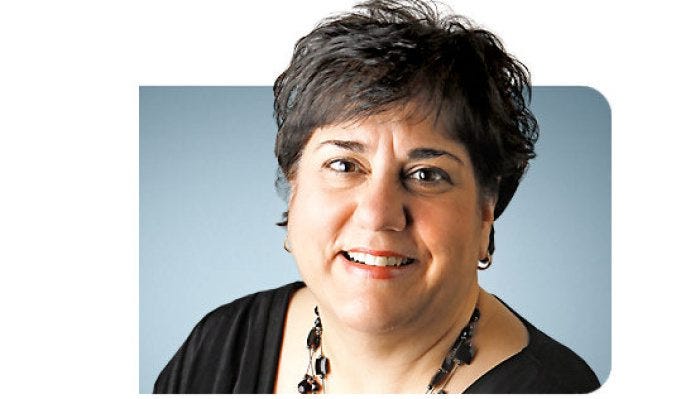
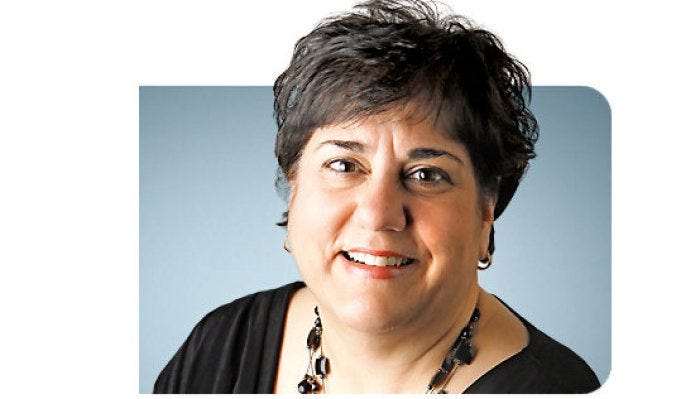
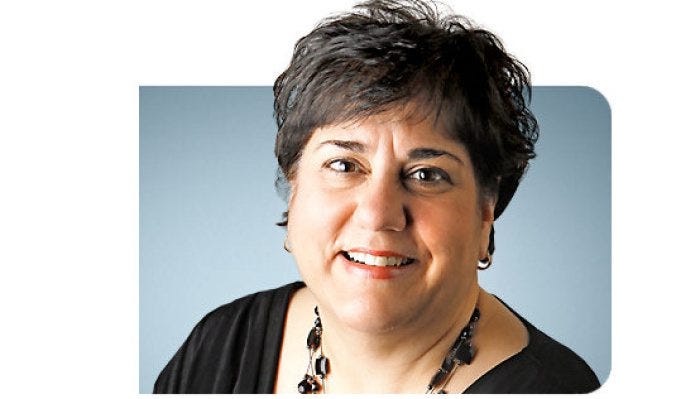
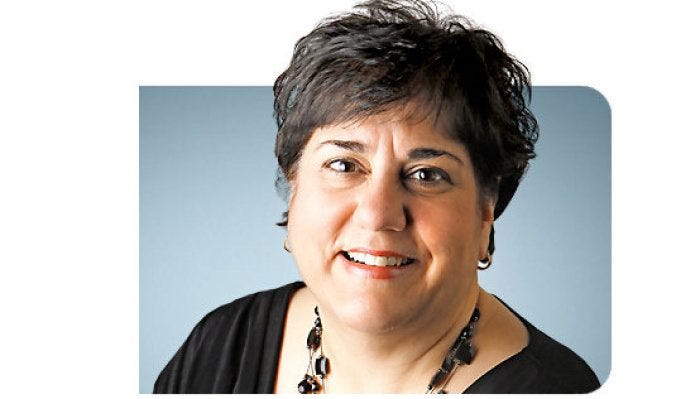
— Lisa Abraham writes about food for The Columbus (Ohio) Dispatch. Email her at labraham@dispatch.com or follow her on Twitter at @DispatchKitchen.

This article originally appeared on Crestview News Bulletin: Breaking Bread: GMO labeling due on packaged foods by summer 2018

Breaking Bread: GMO labeling due on packaged foods by summer 2018

Last year, Congress passed a law requiring that foods containing genetically modified ingredients reveal that on their labels.

By the summer of 2018, the marketing division of the U.S. Department of Agriculture is charged with defining what that label will say.

Will it actually list the ingredients (as in: “This product contains genetically modified corn and soy”), or will it be a QR code connecting the consumer to the information on a website?

The debate over the label’s wording could prove as contentious as the fight over genetically modified organisms themselves.

GMOs are plants whose DNA has been changed. The development is beyond the typical cross-breeding of plants because the changes are made in the laboratory at the cellular level.

Opponents of GMOs fought hard for the labeling. They consider GMOs less safe than non-GMO foods, have ethical concerns about tampering with nature, have issues with the corporations behind GMO seed (namely Monsanto), and fear environmental damage from widespread GMO crops.

GMOs were developed 20 years ago to help farmers by changing the structure of plants to make them more resistant to disease so that farms could produce higher yields while applying fewer pesticides. GMOs are produced mostly for commodity crops: Corn, soy, canola and sugar beet.

Recently, I had the chance to sit in while a group of Ohio food manufacturers learned about the new labeling law from Steve Armstrong of EAS Consulting.

Armstrong is a lawyer who specializes in food labeling and food-regulation compliance; until recently, he served as the chief food-law counsel for Campbell’s Soup Co. Armstrong traveled to Columbus to speak at the Ohio Food Industry Summit, sponsored by the Center for Innovative Food Technology in Toledo.

Armstrong’s time at Campbell’s is significant because, under his counsel, the company adopted a corporate strategy not to oppose GMO labeling but to embrace the transparency.

He encouraged the Ohio food makers at the summit to do the same.

Some already are.

Orrville-based J.M. Smucker Co. already has introduced its labeling: On the back of a jar of apricot preserves, for example, you might be surprised to read: “Partially produced with genetic engineering.”

Farmers, food manufacturers and the companies that produce genetically modified seed fought hard to avoid the labeling. Their fight made consumers trust GMOs even less, Armstrong emphasized, as consumers wondered what the industries were trying to cover up.

Armstrong pointed to recent research showing that 87 percent of global consumers think that GMOs are less safe and less healthy than non-GMO foods. This despite statements to the contrary from the USDA, U.S. Food and Drug Administration, World Health Organization, American Medical Association and National Academies of Sciences, Engineering and Medicine.

Armstrong’s point is this: Consumers want to know everything about their food — where it comes from, what’s in it, who produced it. Such knowledge is the consumer’s right, Armstrong emphasized.

Soon, however, consumers might see their concerns about GMOs tested in a new way. The Arctic Apple, a fruit sold sliced that is genetically modified to not turn brown, is about to hit grocery stores nationwide. It represents the first GMO convenience product — rather than a commodity ingredient such as corn syrup — and producers want to see how Americans will react to it.

Scientific advancements in food production have helped to feed a hungry world, and that’s a good thing. I know that the canola oil I often use probably comes from a GMO plant, and I don’t think I’m suffering negative effects from it.

But I have concerns about corporate domination over the seed for American commodity crops. And an apple that doesn’t brown, although it might be perfectly safe, strikes me as downright unnatural. Convenient, yes, but unnatural nonetheless.

Eventually, there might be enough research to convince everyone that GMOs are safe, or to prove that they’re not.

Until then, providing as much information to consumers as possible is the right thing to do.

— Lisa Abraham writes about food for The Columbus (Ohio) Dispatch. Email her at labraham@dispatch.com or follow her on Twitter at @DispatchKitchen.

This article originally appeared on Crestview News Bulletin: Breaking Bread: GMO labeling due on packaged foods by summer 2018

Christian writers retreat scheduled

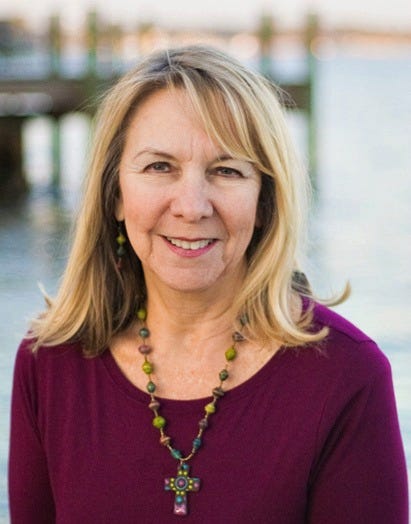
Marilyn Turk is the organizer of a Christian writers retreat in Alabama. [Special to the News Bulletin]

CRESTVIEW — A Christian writers retreat will soon serve Northwest Florida residents who don’t mind a little drive to Alabama.

The retreat — March 22-25 at Blue Lake in Andalusia, Alabama — offers basic, intermediate and experienced levels of instruction in fiction and nonfiction topics.

"For several years, I've attended Christian writers conferences all over the country, but they are far away and relatively expensive. I wanted to offer a conference similar to those I'd attended, but closer to home and less expensive," retreat organizer Marilyn Turk said.

The Niceville author, who moved to Florida in 2004, met her husband, Chuck, at the Crosspoint Crestview church in 2008, where they are still active members. They have four sons, one daughter and three grandsons.

She said, as a writer, she prefers the more hospitable aspects of a Christian conference.

"I've attended a couple of conferences that are not specifically Christian, and the atmosphere is more competitive and cold, whereas Christian writers like to help each other out.

"Another difference I prefer is the lack of foul language and erotica that is found in secular writing."

Turk’s works include "Rebel Light," "The Gilded Curse," and "Lighthouse Devotions." She also writes for Guideposts magazine and contributes to Daily Guideposts, the yearly devotional book.

She hopes to take some of the classes at the retreat herself, if she's not too busy with the arrangements.

The conference’s keynote speakers are published authors Kim Vogel Sawyer, James Watkins and Dan Walsh; attendees can also purchase critiques of their works during the event.

"I need to improve my fiction, so I'll probably take Kim Vogel Sawyer's continuing class and I'd like to know more about Indie Publishing from Dan Walsh," Turk said.

Classes and activities at the Blue Lake retreat include fiction and nonfiction topics; workshops at beginner, intermediate and experienced levels; and book signings.

Some faculty members are:

•Veteran author Cecil Murphey, who wrote "90 Minutes in Heaven," with Don Piper.

•Eva Marie Everson, author and Florida Christian Writers Conference director.

•Susan King, Upper Room magazine's associate editor.

Some of the topics and workshops are:

•Building a Strong Story Foundation

•Brainstorming

•How to Write a Good Proposal

•Indie Publishing

•Memoirs and Autobiographies

A Christian writers retreat is set for March 22-25 at Blue Lake in Andalusia, Alabama.

Prices range from $75 for one-day attendance to $475. Meal packages are also available.

See http://bluelakecwr.com/ for more details.

WANT TO GO?

This article originally appeared on Crestview News Bulletin: Christian writers retreat scheduled

'It’s a community, it’s a family'

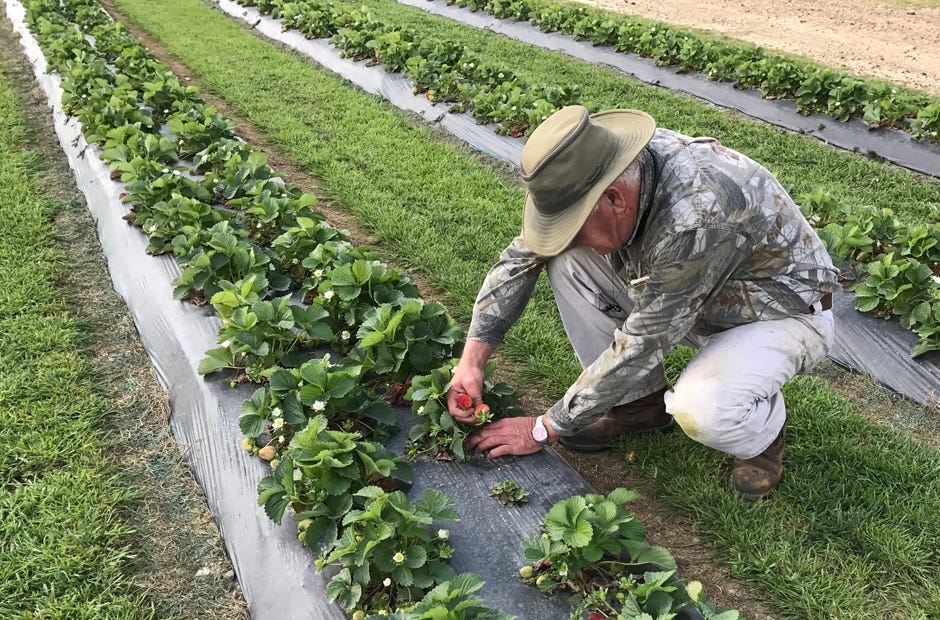
Greg Evers from Akers of Strawberries shows off one of the berries visitors skipped over during its opening weekend. [MARK JUDSON/NEWS BULLETIN]

BAKER — Greg Evers understood that many people want fresh strawberries from a farm they know, not a chain grocery store.

That’s why in 1990, he opened Akers of Strawberries for families and individuals to pick the sweet fruit from the very plants they were growing on.

“It’s a community, it’s a family,” Evers said. “It’s a nice little get-together for the family to come out and pick their berries.”

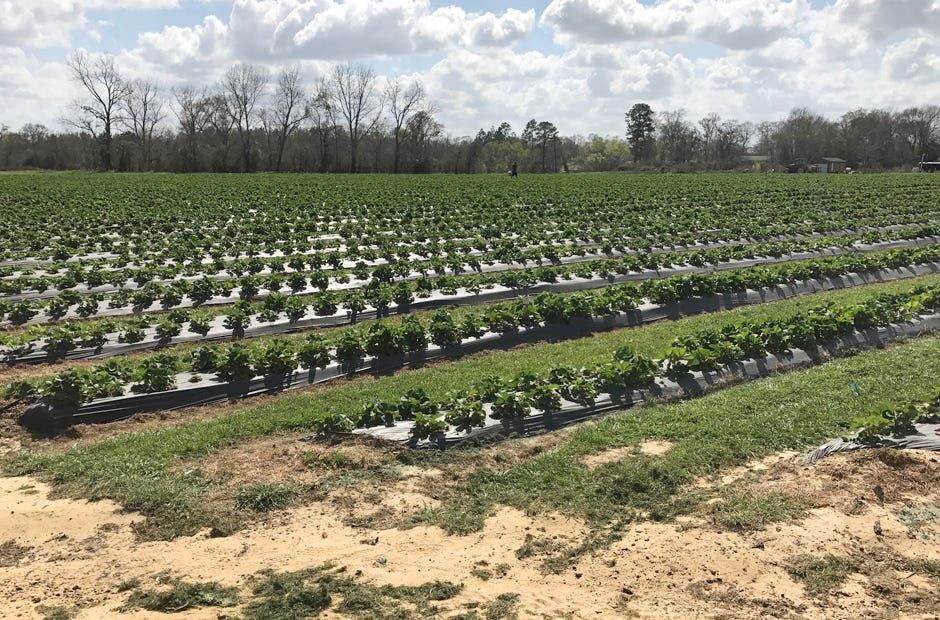
Visitors collect a box near the entrance and stroll the rows of strawberries that line the property’s 10 acres. Pick what you want and how many you want, and then return to the entrance for checkout.

“You just get you a box and go to the field,” Evers said.

That’s what about 3,000 people did this past weekend for the farm’s seasonal opening. It was so many, Akers said, that he won’t have ripe berries to pick until Thursday.

Picking is the only way to get your hands, and tastebuds, on strawberries grown by Evers. Currently, he’s not selling to a distributor or grocery store, he said.

“Ours are sweeter than those you can get at the store and I think that’s our calling card,” Evers said. “It’s just better produce and tastes better.”

After picking, visitors can pair their strawberries with frozen yogurt or shortcake available from a kitchen on the property.

“We started doing the yogurt and shortcake when we first opened in 1990,” Evers said.

There was still plenty of work to be done, even though there were no berries for families to pick after the busy, opening weekend. Several workers were mowing the grass between rows and tending to the farm’s thousands of plants.

On an average day, two or three people work in the fields and another three or four work inside, according to Evers. Most of the staffers are part-timers and there’s no shortage of help.

“If you got two hands when you come here, you might find yourself working,” Evers said.

Akers of Strawberries only sells its namesake fruit, but Evers has experimented with other farms and products. His last venture was a neighboring farm that grew various vegetables.

However, Akers was the prime focus of Evers when he wasn’t wearing a suit and tie in Tallahassee.

In 2001, Evers was elected to the Florida House of Representatives from the state’s first district. He served in the House until 2010, when he was elected to the State Senate. Evers’ run in politics ended in 2016 when he left office and focused on his farm.

This extra focus came into use when a short Florida winter resulted in an early strawberry harvest. The season for strawberries runs from the end of March until the first week of June, according to Evers.

However, Akers saw ripe berries about a month early, he added. He attributed this to a mild winter with no hard freeze period. 

Visitors are welcome to visit Akers of Strawberries from 10 a.m. to 5 p.m. Monday through Saturday and from noon to 5 p.m. on Sundays. The farm is located at 1074 Melton Road, Baker.

WANT TO GO?

This article originally appeared on Crestview News Bulletin: 'It’s a community, it’s a family'

Enrollment, open house set for Crestview Christian school

A open house is scheduled for the Crestview campus of Rocky Bayou Christian School. [Special to the News Bulletin]

CRESTVIEW — Rocky Bayou Christian School is enrolling students for its fall classes in Crestview.

Parents may sign up kindergarten through fifth grade students for a Christian curriculum, sports and fine arts.

An open house is scheduled 10 a.m. to 6 p.m. March 9 at Central Baptist Church, 951 Ferdon Blvd. S., Crestview.

Special Service classes are offered exclusively at the RBCS Niceville campus.

Class size will not exceed 18 students, with a lead teacher and assistant in the kindergarten classes and a lead teacher in the elementary classes.

Tuition and fee pricing is online at rbcs.org, under the Admission tab. "We do not want finances to be the reason that a Christian family cannot receive a Godly education for their children, the school stated in a media release. "Please check out the many tuition assistance options that RBCS and the state of Florida offer under the Admission tab."

Parents with more questions can talk with RBCS staff during the open house for answers, or contact Holly Riches, 279-3729 or admission@rbcs.org, for more information.

This article originally appeared on Crestview News Bulletin: Enrollment, open house set for Crestview Christian school

REVIEW: Rooftop garden takes focus in Depression-era story

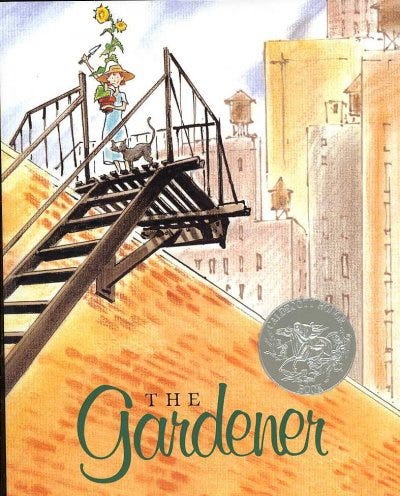
"The Gardener" by Sarah Stewart is about a girl who gets sent to live with her uncle in the city during the Great Depression. [Special to the News Bulletin]

Are you staying in town this spring break, or do you have grandkids visiting?

Come check out books and movies like "The Gardener" by Sarah Stewart. It's a beautiful story too long for our Library Class, about a girl who gets sent to live with her uncle in the city during the Great Depression and how she literally blooms where she's planted.

Come to Ages 3-5 Library Class on Tuesday, March 14 for shorter stories and activities about gardens, including planting a marigold. Older children are welcome!

This article originally appeared on Crestview News Bulletin: REVIEW: Rooftop garden takes focus in Depression-era story

Learn all about bees

Heather Nitzel is the Crestview Public Library's youth services librarian.

What’s the buzz all about? Come learn about how the honeybee lives, and the respectful ways of keeping them, 6:30 p.m. March 21 at the Crestview Public Library.

All over America, city beekeepers are keeping a few honeybee hives in their backyards. Learn what is involved: how, when, where and what you will need to establish a hive.

If you’re thinking about starting a beehive or are just curious about what’s involved with keeping bees, then this is a great introductory presentation for you. This short presentation is designed for absolute beginners so no prior knowledge is required. There will be no hands-on beekeeping, so protective clothing and bravery will not be necessary.

Attendees will be able to taste a variety of local honeys and buy some, if they like.

The Family Library Time event lasts about 45 minutes and is designed for adults and children 4 years old and up. Registration is not required for this free event.

Heather Nitzel is the Crestview Public Library's youth services librarian.

This article originally appeared on Crestview News Bulletin: Learn all about bees

Plan for health care costs during retirement

Yvonne Shanklin is an Edward Jones financial adviser. [Special to the News Bulletin]

When you retire, some of your expenses may go down — but health care is not likely to be one of them. In fact, your health care costs during retirement may well increase, so you may want to plan for these costs well before you leave the workforce.

In fact, your health care costs during retirement may well increase, so you may want to plan for these costs well before you leave the workforce.

How much can you expect to spend on health care during your retirement years?

Consider these statistics:

• A 65-year-old couple who retired in 2016 will need about $288,000 (in today's dollars) during retirement just to pay Medicare Parts B, D and supplemental insurance, according to HealthView Services, a company that provides health care cost projections for financial services firms. If out-of-pocket costs such as deductibles, co-pays, hearing, vision and dental are included, the lifetime figure rises to about $377,000 in today's dollars.

• The national average for a private room in a nursing home is more than $92,000 per year, according to a survey by Genworth, an insurance company. And the services of a home health aide cost more than $45,000 per year, according to the same survey. Medicare typically pays very little of these costs.

To cope with these expenses, you'll want to integrate them into your overall retirement saving and investing strategies. Knowing the size of a potential health care burden may help motivate you to put as much as you can afford into your 401(k), IRA and other retirement accounts.

Even when you're retired, part of your portfolio should be devoted to growth-oriented investments, such as stocks, to help pay for rising health care costs. 

It's true that stocks will always fluctuate, and you don't want to be forced to sell them when their price is down. However, you can help yourself avoid this problem by also owning a good mix of other investments, such as investment-grade corporate bonds, government securities and certificates of deposit, whose value may be more stable than that of stocks.

Another way to help defray the costs of health care is to work part-time a few years after you had originally planned to retire. This added income can help you delay tapping into your IRA and 401(k), thus giving these accounts a chance to potentially grow further.

Plus, you may be able to put off taking Social Security, and the longer you wait until you start collecting benefits, the bigger your checks will be, at least until they top out at age 70.

These suggestions may help you meet many of your typical medical costs during retirement, but what about long-term care expenses, such as an extended stay in a nursing home or the need for home health care assistance? As mentioned above, these costs can be enormous.

Fortunately, the financial marketplace does provide some cost-effective solutions for long-term care — solutions that may help you avoid "self-insuring." A financial professional can provide you with some recommendations in this area.

It's probably unavoidable that your health care costs will rise — and possibly keep rising — when you're retired. But by being aware of these expenses years in advance, and by following a diligent saving and investment strategy — one that may also include a long-term care component — you can improve your "financial fitness" for dealing with health care costs.

This article was written by Edward Jones for use by your local Edward Jones Financial Advisor.

This article originally appeared on Crestview News Bulletin: Plan for health care costs during retirement

'Weed and feed' is not foolproof

This lawn shows weed-and-feed damage that can occur in area lawns. [Special to the News Bulletin]

The weed-and-feed concept is very popular. Fertilizing a lawn and controlling weeds at the same time sounds like a winning combination.

But be cautious — it's not foolproof.

When the herbicide (weed killer) in a weed-and-feed product is a pre-emergent, the product must be applied prior to weed emergence.

Applying a pre-emergence herbicide, after weed emergence (when weed seedlings are visible), will have little or no effect.

In general, a pre-emergence herbicide should be applied Feb. 15 to March 1 in North Florida, when day temperatures reach 65 degrees to 70 degrees Fahrenheit for four or five consecutive days. This is about the time that azaleas and dogwoods first begin to bloom.

Many common weed-and-feed products contain high amounts of nitrogen fertilizer. Nitrogen stimulates top growth in lawns. Applying a high-nitrogen fertilizer too early increases the likelihood of frost or freeze injury to the tender new growth induced by the early nitrogen application.

If the weed-and-feed is applied mid-February to early March (as a pre-emergent), it's too early for the fertilizer. If it is applied mid-March through April (as a fertilizer), it's too late for the pre-emergence.

There are additional concerns with the weed-and-feed approach, which:

*Does not lend itself to spot treatment of small weed-infested areas in a lawn, because fertilizer is typically applied throughout the lawn.

*Does lend itself to blanket application of the herbicide, even where weeds aren't a problem; again, because the herbicide is mixed with the fertilizer.

*Herbicide can easily end up on paved surfaces and ultimately in waterways.

*Many weed-and-feed products contain too much nitrogen and too little potassium.

*Herbicide in some weed-and-feed products can injure nearby trees and shrubs.

*Overuse of some pre-emergence herbicides can result in stunted lawn roots.

*Pre-emergence herbicides can interfere with lawn-grass seed germination.

*Some pre-emergence herbicides can severely injure newly sprigged lawns.

Give these considerations some thought and you may decide to do your weed control and fertilization separately.

It is the user's responsibility to read and follow all label directions and precautions when applying any pesticide, including herbicides.

Larry Williams is an agent at the University of Florida's Institute of Food and Agricultural Sciences Extension office in Crestview.

This article originally appeared on Crestview News Bulletin: 'Weed and feed' is not foolproof

Photographer, coffee shop plan visual art gallery night

Photographer Dale Riley prepares pieces for the first monthly gallery night at Casbah Coffee. [MARK JUDSON/NEWS BULLETIN]

CRESTVIEW — When Dale Riley approached Casbah Coffee Company about hosting a gallery night for visual artists, he was just the spark they sought.

It all started when Riley saw a musician friend perform at Casbah; he noted the number of attendees.

From there, ideas started flowing about how to capture that energy for non-musical artists. Riley, a photographer, formed the plan to host a night that highlights Crestview’s visual artists.

“The idea is to focus on only local artists and give them a place they can show their work and people can meet the artists behind them,” Riley said.

He pitched the idea to Casbah, along with some initial plans for how the night would run.

“We’ve been tossing the idea for something like this for over a year,” Casbah owner Bill Toannon said. “When Dale came to us, we knew he was the person to get it off the ground.”

The first gallery night — 6-8 p.m. March 7 at Casbah Coffee, 196 W. Pine Ave. — will feature work from 15 Crestview-based artists, representing various mediums, both presenting and selling their creations.

Artists will display their work throughout the coffee shop for the evening and a featured artist will get to keep their work on display for a full month.

“I’m going to see what brings people in and try to perfect it while it’s small,” Riley said.

Riley and Toannon’s goal is to have the gallery show spread beyond Casbah’s walls.  Riley envisioned artists displaying along the sidewalk outside the building and increasing the number of participating artists.

“It’d be great if we could get other businesses near us to get on board and start hosting artists as well,” Toannon said. “Create an area for people to walk around and explore the different art — because people shouldn’t have to drive 20 minutes for something to do.”

Riley intends to host the event the first Tuesday of each month. Although slots for the initial show are filled, he has opened the list for April — which is already filling up.

See www.dalerileyphoto.com to contact Riley if you are interested in displaying work at an upcoming gallery night.

This article originally appeared on Crestview News Bulletin: Photographer, coffee shop plan visual art gallery night

error: Content is protected !!