Please ensure Javascript is enabled for purposes of website accessibility
Skip to main content
Advertisement

Inspect, wash and prevent azalea lace bug infestations

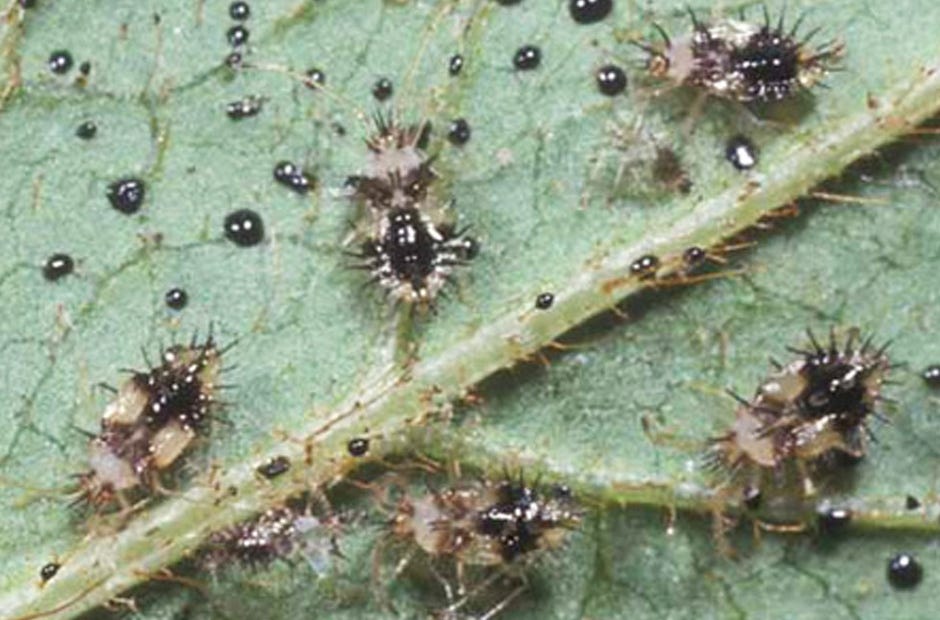
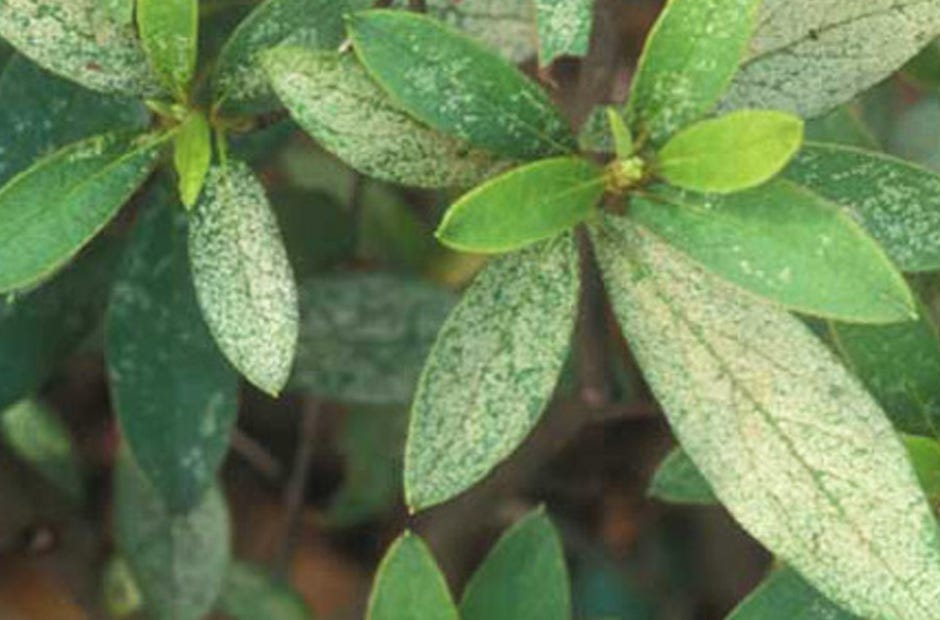
An adult azalea lace bug and excrement are pictured on an azalea leaf. [James Castner | University of Florida]

Now is the time to prevent lace bug attacks on your azaleas.

The azalea lace bug, or Stephanitis pyrioides, overwinters as eggs on the underside of infested leaves.

Eggs hatch in late March and early April. The insect then passes through five stages before becoming an adult. It takes approximately one month for the insect to complete development from egg to adult, and there are at least four generations per year.

Valuable plants that are susceptible to lace bug damage should be inspected in the early spring for the presence of overwintering lace bug adults, eggs and newly hatched nymphs. Inspect these plants every two weeks during the growing season for developing lace bug infestations.

Both adults and nymphs have piercing-sucking mouthparts and remove sap as they feed on the underside of the leaf.

Lace bug damage to the foliage detracts greatly from the plants’ beauty, reduces the plants’ ability to produce food, decreases plant vigor and causes the plant to be more susceptible to damage by other insects, diseases or unfavorable weather conditions.

The azalea can become almost silver or bleached in appearance from the feeding lace bug damage.

However, lace bugs often go undetected until the infested plants show severe damage sometimes into the summer. By then, several generations of lace bugs have been weakening the plant.

Inspecting early in the spring and simply washing them off the underside of the leaves can help to avoid damage later and the need for pesticides.

Adult lace bugs are flattened and rectangular, measuring 1/8- to 1/4-inch long.

The area behind the head and the wing covers forms a broadened, lace-like body covering. The wings are light amber to transparent. Lace bugs leave behind shiny black spots of excrement.

Lace bug nymphs are flat and oval, with spines projecting from their bodies in all directions. At each stage of growth, the nymph sheds its skin and these old skins often remain attached to the lower surface of infested leaves.

Azalea lace bug eggs are football-shaped and transparent to cream colored. The eggs are found on the lower leaf surface, usually alongside or inserted in a leaf vein.

Adult females secrete a varnish-like substance over the eggs, which hardens into a scab-like protective covering.

See http://entomology.ifas.ufl.edu/creatures/orn/shrubs/azalea_lace_bug.htm for more information.

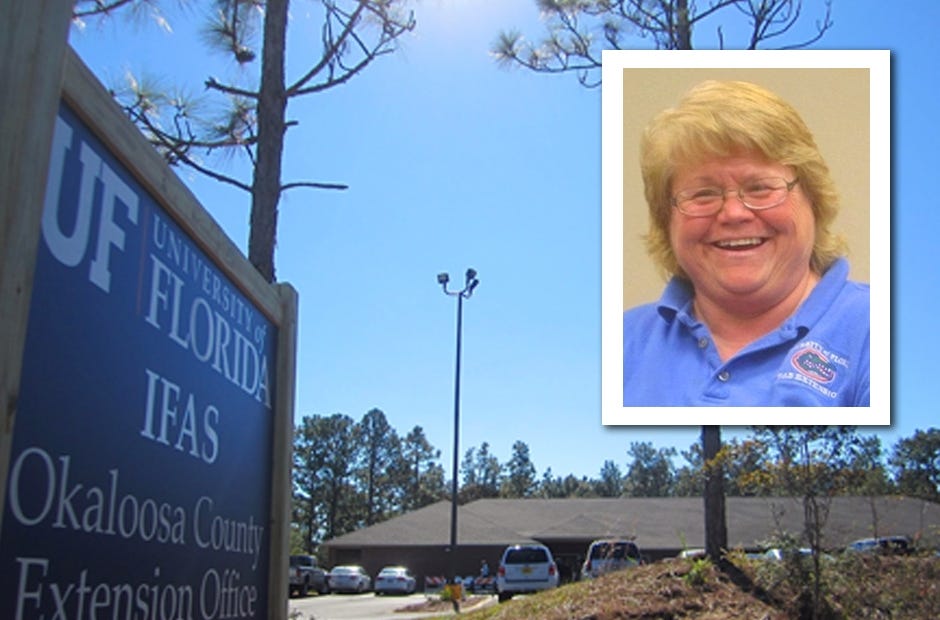
Sheila Dunning is an agent at the University of Florida's Institute of Food and Agricultural Sciences Extension office in Crestview.

This article originally appeared on Crestview News Bulletin: Inspect, wash and prevent azalea lace bug infestations

CHS students raise awareness of tobacco's dangers

Crestview High School students are participating in an anti-smoking effort on March 15. [Pixabay.com]

FORT WALTON BEACH — Crestview High School students are among Northwest Florida youths participating in Kick Butts Day.

The national day of activism, observed March 15 and sponsored by the Campaign for Tobacco-Free Kids, empowers youths to fight back against Big Tobacco.

As part of Okaloosa County's Students Working Against Tobacco, CHS members will set up a photo booth and educational table during school lunches.

SWAT's 2017 theme is "Exposing Big Tobacco: You Can't Make This Up."

The student-led organization aims to expose the kinds of marketing practices that tobacco industry uses to draw in young people. The initiative also raises awareness about the harm caused by addictive tobacco products.

"SWAT at Crestview High School is working to derail the deceit and manipulation that tobacco industries have on people by educating them on the dangers and making it fun for others to step up and knock Big Tobacco down," Sean Gabany, CHS SWAT vice president, said.

"We are the future — and we don't want tobacco to be a part of it."

This article originally appeared on Crestview News Bulletin: CHS students raise awareness of tobacco's dangers

Kingdom Life to present women's ministry conference

A conference celebrating all women is scheduled in Crestview. [Pixabay.com]

CRESTVIEW — The Women Walking In Ministry quarterly conference, with a theme of celebrating all women, is coming soon.

The event begins 10 a.m. May 13 at the Kingdom Life Worship & Training Center, 798 Martin Luther King Jr. Ave., Crestview.

The guest speaker is the Rev. Nikki Mathis of The Summit Crestview church. The event also features The Summit Crestview worship leader, Stephanie Mills, Dance Minister Barbara Oxendine of the Eglin Air Force Base chapel, and Kindom Life's pastor, the Rev. Darlene Haynes-Scheuermann.

This article originally appeared on Crestview News Bulletin: Kingdom Life to present women's ministry conference

Seminar to focus on arthritis

A medical presentation on arthritis is scheduled in Crestview. [Pixabay.com]

CRESTVIEW — Area residents may participate in a lunch and learn seminar titled “Arthritis: What it is and What We Can Do about It.”

The seminar begins at 12:30 p.m. March 17 in the Holiday Inn Express Conference Room, 125 Cracker Barrel Road, Crestview. Sacred Heart Hospital on the Emerald Coast is hosting the event, which is free to attend.

Dr. William Markowski, a board-certified orthopedic surgeon with Bluewater Orthopedics, will present information on arthritis and discuss advancements in adult reconstruction. He specializes in joint replacement; hip, knee and shoulder arthroscopy; sports medicine; direct anterior hip replacement; hand surgery; and fracture care. 

Markowski will discuss diagnosis and treatment options for degenerative or inflammatory bone disease and the benefits of minimally invasive, direct anterior hip replacement.

After the seminar, attendees may discuss areas of concern and ask questions. Reservations are required due to limited space.

After non-surgical treatments for arthritis have been exhausted, hip replacements can be beneficial to ease pain, according to a Sacred Heart media release. This procedure has gained widespread popularity because of the proven accelerated recovery time for patients.

Call 278-3600 to register for the seminar. Visit www.sacredheartemerald.org for more information about Sacred Heart on the Emerald Coast.

This article originally appeared on Crestview News Bulletin: Seminar to focus on arthritis

Drop-off locations set for shoe drive

ServantCARE, a nonprofit organization, is collecting shoes in Crestview to raise funds for people in developing nations. [Pixabay.com]

CRESTVIEW — ServantCARE, a non-profit ministry, needs new or "gently worn" shoes of all kinds: men’s, women’s, children’s, cleats, flip flops, boat shoes, athletic shoes, sandals, heels, flats and Crocs, for example.

The organization will accept shoes through March 31 at these drop-off locations: 

•BodyBHealthy, the Car Wash, Day’s Tire and Coney Island

•Hello Beautiful, Hair World and Soap Opera Laundromat

•Exodos Thrift Store, Riviera Fitness and Blonde Bellagio

•Joy Fellowship Church, New Life International Church and New Life Missionary Baptist Church.

• Live Oak Baptist Church and Farm Bureau Insurance. 

ServantCARE will receive $1,000 for every 2,500 pairs of shoes collected. Funds2Orgs will take the donated shoes to impoverished people in Haiti and central Africa and teach them to start, maintain and grow their own business. 

Contact Larry Tuggle, 830-4224, for details.

This article originally appeared on Crestview News Bulletin: Drop-off locations set for shoe drive

Joy Fellowship sets flamingo fundraiser

Joy Fellowship Senior High Youth Group's "Flamingo Flocking" fundraiser runs through June 1. [Special to the News Bulletin]

CRESTVIEW — The Joy Fellowship Ministries Senior High Youth Group will have a "Flamingo Flocking" fundraiser through June 1 to raise money for its summer trip to North Carolina.

Suggested donations are as follows:

•Small flock of 10 large flamingos, $10

•Medium flock of 20, $20

•Large flock of 30, $30

•Super-size flock of 30 large and 18 small flamingos, $40

"Have you ever seen some beautiful flamingos around Crestview and wondered how you could get them to migrate to a friend's yard?” Joe Butryn, Joy Fellowship pastor, said. “Well, here is your opportunity …

“How many flamingos do you want to migrate to your friend’s yard? Once you decide who your 'victim' will be, just let me know."

Potential donors may email their phone number to Butryn, jbutryn@joyfellowship.net, who will send the paperwork to start the "flocking."

"I and some of the most highly trained 'flamingo flockers' will make sure that the flamingos appear in the yard of your choice," Butryn said.

“The flock will appear the night before the date donors want to flock their 'victims,' so they will wake up to a beautiful pink yard of flamingos on the date you requested,” the event media release states. “The flamingos will be removed between 5 (and) 8 p.m. so they can get some rest and get energized for their next ‘Flamingo Flocking,’”

If there is a conflict with the requested date, Butryn will call to reschedule.

"Flockings can only take place on private property (in Crestview). We cannot flock a business or an apartment building," Butryn said.

This article originally appeared on Crestview News Bulletin: Joy Fellowship sets flamingo fundraiser

Crestview Concerned Citizens to present deacon dinner

Concerned Citizens Group Outreach members will serve free dinner for deacons, deaconesses and stewards. [Special to the News Bulletin]

CRESTVIEW — The Crestview Concerned Citizens Group Outreach will serve dinner for community deacons, deaconesses and stewards.

The event, free for these people to attend, is 1-4 p.m. March 18 at New Life Missionary Baptist Church, 285 Duggan Ave., Crestview.

Contact Catherine Dortch, 682-6287, or Pearl Bess, 682-5733, for details.

The Crestview Concerned Citizens group is a civic organization that provides street ministry, community dinners and other activities for area residents.

This article originally appeared on Crestview News Bulletin: Crestview Concerned Citizens to present deacon dinner

Okaloosa health department releases water quality results

The Florida Department of Health in Okaloosa County has released water quality results. [Special to the News Bulletin]

CRESTVIEW — Here are the Florida Department of Health in Okaloosa County’s water quality test results for local parks.

One Okaloosa County park has potentially hazardous bathing water, the FDOH-Okaloosa stated March 6.

Liza Jackson Park in Fort Walton Beach failed tests based on EPA-recommended enterococci standards. Enteric bacteria's presence indicates fecal pollution from stormwater runoff, pets and wildlife or human sewage.

The tests are based on EPA-recommended enterococci standards. Enteric bacteria's presence indicates fecal pollution from stormwater runoff, pets and wildlife or human sewage.

This article originally appeared on Crestview News Bulletin: Okaloosa health department releases water quality results

Breaking Bread: GMO labeling due on packaged foods by summer 2018

Last year, Congress passed a law requiring that foods containing genetically modified ingredients reveal that on their labels.

By the summer of 2018, the marketing division of the U.S. Department of Agriculture is charged with defining what that label will say.

Will it actually list the ingredients (as in: “This product contains genetically modified corn and soy”), or will it be a QR code connecting the consumer to the information on a website?

The debate over the label’s wording could prove as contentious as the fight over genetically modified organisms themselves.

GMOs are plants whose DNA has been changed. The development is beyond the typical cross-breeding of plants because the changes are made in the laboratory at the cellular level.

Opponents of GMOs fought hard for the labeling. They consider GMOs less safe than non-GMO foods, have ethical concerns about tampering with nature, have issues with the corporations behind GMO seed (namely Monsanto), and fear environmental damage from widespread GMO crops.

GMOs were developed 20 years ago to help farmers by changing the structure of plants to make them more resistant to disease so that farms could produce higher yields while applying fewer pesticides. GMOs are produced mostly for commodity crops: Corn, soy, canola and sugar beet.

Recently, I had the chance to sit in while a group of Ohio food manufacturers learned about the new labeling law from Steve Armstrong of EAS Consulting.

Armstrong is a lawyer who specializes in food labeling and food-regulation compliance; until recently, he served as the chief food-law counsel for Campbell’s Soup Co. Armstrong traveled to Columbus to speak at the Ohio Food Industry Summit, sponsored by the Center for Innovative Food Technology in Toledo.

Armstrong’s time at Campbell’s is significant because, under his counsel, the company adopted a corporate strategy not to oppose GMO labeling but to embrace the transparency.

He encouraged the Ohio food makers at the summit to do the same.

Some already are.

Orrville-based J.M. Smucker Co. already has introduced its labeling: On the back of a jar of apricot preserves, for example, you might be surprised to read: “Partially produced with genetic engineering.”

Farmers, food manufacturers and the companies that produce genetically modified seed fought hard to avoid the labeling. Their fight made consumers trust GMOs even less, Armstrong emphasized, as consumers wondered what the industries were trying to cover up.

Armstrong pointed to recent research showing that 87 percent of global consumers think that GMOs are less safe and less healthy than non-GMO foods. This despite statements to the contrary from the USDA, U.S. Food and Drug Administration, World Health Organization, American Medical Association and National Academies of Sciences, Engineering and Medicine.

Armstrong’s point is this: Consumers want to know everything about their food — where it comes from, what’s in it, who produced it. Such knowledge is the consumer’s right, Armstrong emphasized.

Soon, however, consumers might see their concerns about GMOs tested in a new way. The Arctic Apple, a fruit sold sliced that is genetically modified to not turn brown, is about to hit grocery stores nationwide. It represents the first GMO convenience product — rather than a commodity ingredient such as corn syrup — and producers want to see how Americans will react to it.

Scientific advancements in food production have helped to feed a hungry world, and that’s a good thing. I know that the canola oil I often use probably comes from a GMO plant, and I don’t think I’m suffering negative effects from it.

But I have concerns about corporate domination over the seed for American commodity crops. And an apple that doesn’t brown, although it might be perfectly safe, strikes me as downright unnatural. Convenient, yes, but unnatural nonetheless.

Eventually, there might be enough research to convince everyone that GMOs are safe, or to prove that they’re not.

Until then, providing as much information to consumers as possible is the right thing to do.

— Lisa Abraham writes about food for The Columbus (Ohio) Dispatch. Email her at labraham@dispatch.com or follow her on Twitter at @DispatchKitchen.

This article originally appeared on Crestview News Bulletin: Breaking Bread: GMO labeling due on packaged foods by summer 2018

Breaking Bread: GMO labeling due on packaged foods by summer 2018

Last year, Congress passed a law requiring that foods containing genetically modified ingredients reveal that on their labels.

By the summer of 2018, the marketing division of the U.S. Department of Agriculture is charged with defining what that label will say.

Will it actually list the ingredients (as in: “This product contains genetically modified corn and soy”), or will it be a QR code connecting the consumer to the information on a website?

The debate over the label’s wording could prove as contentious as the fight over genetically modified organisms themselves.

GMOs are plants whose DNA has been changed. The development is beyond the typical cross-breeding of plants because the changes are made in the laboratory at the cellular level.

Opponents of GMOs fought hard for the labeling. They consider GMOs less safe than non-GMO foods, have ethical concerns about tampering with nature, have issues with the corporations behind GMO seed (namely Monsanto), and fear environmental damage from widespread GMO crops.

GMOs were developed 20 years ago to help farmers by changing the structure of plants to make them more resistant to disease so that farms could produce higher yields while applying fewer pesticides. GMOs are produced mostly for commodity crops: Corn, soy, canola and sugar beet.

Recently, I had the chance to sit in while a group of Ohio food manufacturers learned about the new labeling law from Steve Armstrong of EAS Consulting.

Armstrong is a lawyer who specializes in food labeling and food-regulation compliance; until recently, he served as the chief food-law counsel for Campbell’s Soup Co. Armstrong traveled to Columbus to speak at the Ohio Food Industry Summit, sponsored by the Center for Innovative Food Technology in Toledo.

Armstrong’s time at Campbell’s is significant because, under his counsel, the company adopted a corporate strategy not to oppose GMO labeling but to embrace the transparency.

He encouraged the Ohio food makers at the summit to do the same.

Some already are.

Orrville-based J.M. Smucker Co. already has introduced its labeling: On the back of a jar of apricot preserves, for example, you might be surprised to read: “Partially produced with genetic engineering.”

Farmers, food manufacturers and the companies that produce genetically modified seed fought hard to avoid the labeling. Their fight made consumers trust GMOs even less, Armstrong emphasized, as consumers wondered what the industries were trying to cover up.

Armstrong pointed to recent research showing that 87 percent of global consumers think that GMOs are less safe and less healthy than non-GMO foods. This despite statements to the contrary from the USDA, U.S. Food and Drug Administration, World Health Organization, American Medical Association and National Academies of Sciences, Engineering and Medicine.

Armstrong’s point is this: Consumers want to know everything about their food — where it comes from, what’s in it, who produced it. Such knowledge is the consumer’s right, Armstrong emphasized.

Soon, however, consumers might see their concerns about GMOs tested in a new way. The Arctic Apple, a fruit sold sliced that is genetically modified to not turn brown, is about to hit grocery stores nationwide. It represents the first GMO convenience product — rather than a commodity ingredient such as corn syrup — and producers want to see how Americans will react to it.

Scientific advancements in food production have helped to feed a hungry world, and that’s a good thing. I know that the canola oil I often use probably comes from a GMO plant, and I don’t think I’m suffering negative effects from it.

But I have concerns about corporate domination over the seed for American commodity crops. And an apple that doesn’t brown, although it might be perfectly safe, strikes me as downright unnatural. Convenient, yes, but unnatural nonetheless.

Eventually, there might be enough research to convince everyone that GMOs are safe, or to prove that they’re not.

Until then, providing as much information to consumers as possible is the right thing to do.

— Lisa Abraham writes about food for The Columbus (Ohio) Dispatch. Email her at labraham@dispatch.com or follow her on Twitter at @DispatchKitchen.

This article originally appeared on Crestview News Bulletin: Breaking Bread: GMO labeling due on packaged foods by summer 2018

error: Content is protected !!