Please ensure Javascript is enabled for purposes of website accessibility
Skip to main content
Advertisement

Okaloosa promenade receives hazardous water advisory

The Florida Department of Health in Okaloosa County regularly monitors water quality at local parks. [FILE PHOTO]

FORT WALTON BEACH — An Okaloosa County promenade has potentially hazardous bathing water, the Florida Department of Health in Okaloosa County stated July 12.

Emerald Promenade of Okaloosa Island failed tests based on EPA-recommended enterococci standards. Enteric bacteria's presence indicates fecal pollution from stormwater runoff, pets and wildlife or human sewage.

This article originally appeared on Crestview News Bulletin: Okaloosa promenade receives hazardous water advisory

Customer service 'is not what it used to be'

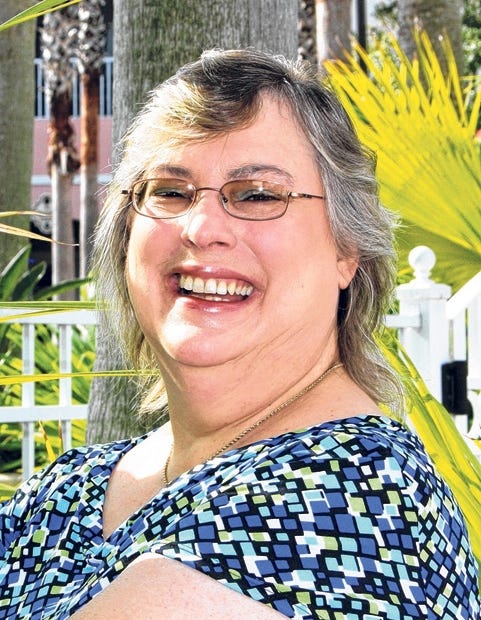
Janice Lynn Crose, a former accountant, lives in Crestview with her husband, Jim; her two rescue collies, Shane and Jasmine; and two cats, Kathryn and Prince Valiant.

Customer service is an important function of most businesses and most of them take it seriously, but there are some that just brush off their customers.

The statistic quoted when I was in college was that it takes 10 new customers to take the place of one lost customer. It is six to seven times more expensive to acquire a new customer than to keep a current one, according to the White House Office of Consumer Affairs (https://www.helpscout.net/75-customer-service-facts-quotes-statistics).

Telephone customer service is not what it used to be. A few years ago, one would call and get a pleasant-sounding person who wanted to help resolve the caller's issue. It seems these days that callers (often) reach a surly person who doesn't care whether the issue is resolved.

For example, my mother paid her Southern California Automobile Club dues for the coming year in early June. A week later, she received a letter stating that since she hadn't paid her membership that AAA would cover her car emergencies for 30 days but charge her for any services received.

She checked with the bank and the payment had cleared, so she went to the bank and got a copy of the electronic fund transfer, and mailed it per their request. The proof of payment from the bank still didn't clear up the matter. After numerous phone calls and hours on the phone, she finally got a young man who took the time to locate her payment; her AAA membership money had been applied to her homeowner's insurance.

Why did it take so long to locate her payment? Because no one else cared enough to take the time to really look.

If at all possible, it is better to go into the place of business and get the matter resolved face to face. If the only option is calling, be kind to the person on the phone as people (usually) try harder to help those who are kind. Also, if you get a rude person, thank them for their time and hang up. Call back later. You may get a nicer person.

We have two customer call service centers here in Crestview. I expect they provide outstanding service.

Janice Lynn Crose, a former accountant, lives in Crestview with her husband, Jim; her two rescue collies, Shane and Jasmine; and two cats, Kathryn and Prince Valiant.

This article originally appeared on Crestview News Bulletin: Customer service 'is not what it used to be'

Match short-and long-term goals with the right investments

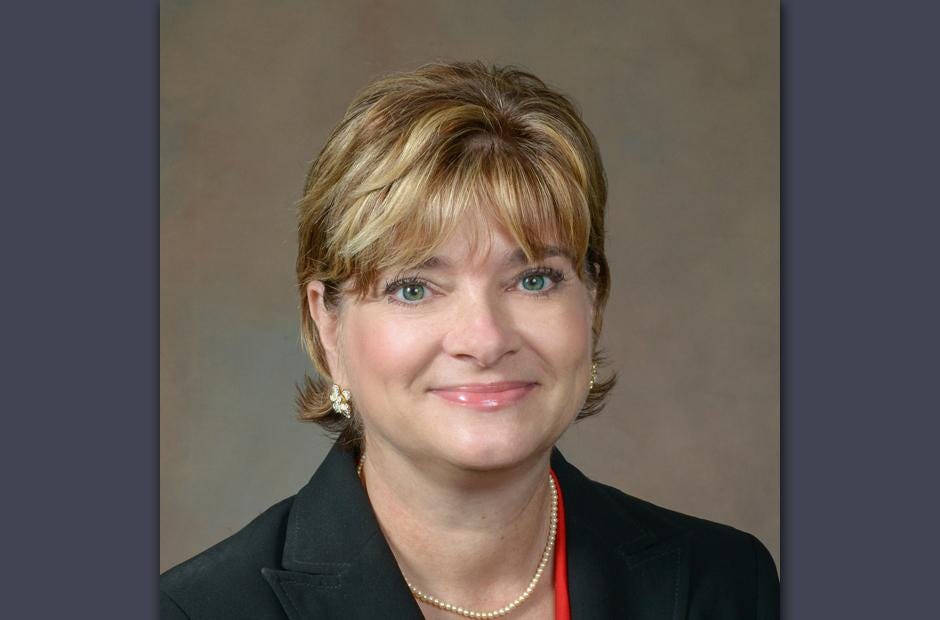
Yvonne Shanklin

Not all investments are created equal. Some are better suited for short-term goals, while others can help you build resources for objectives far in the future. As an investor, then, one of your biggest challenges will be to match your short- and long-term goals with the appropriate investment vehicles.

How should you proceed?

For starters, identify your short- and long-term goals. Your short-term goals will change throughout your life. When you are starting out in your career, for example, you might aspire to purchase a home in the next three to five years. Later on, though, your biggest short-term objective might be to save enough money for a long tour of Europe without picking up credit card debt.

As for long-term goals, your biggest one likely will be to enjoy a comfortable retirement, but you may well have other long-term plans, too, such as sending your kids to college in 10 or 15 years.

After you have a clear sense of your short- and long-term goals, you can choose the right investments to help you meet them.

Let's start with the shorter-term ones. When you're saving for a down payment on a home or for an expensive European vacation, you want to make sure that a certain amount of money will be available to you at a certain time. Consequently, you may want to avoid stocks or stock-based vehicles, which will constantly fluctuate in price, because you don't want the value of your investment to be down at the moment you need the money.

Instead, for short-term goals, you may want to consider a fixed-income vehicle, such as a bond, which is designed to provide regular interest payments and return your principal upon the bond’s maturity (providing the issuer doesn't default, which, with investment-grade bonds is generally unlikely).

For longer-term goals, such as college for your kids and a comfortable retirement for yourself, it’s a different story. To achieve these goals — and especially for retirement — you generally need to accumulate as much as you can. As a result, you need investments with growth potential, which means you will need to consider stocks and stock-based instruments. As mentioned above, stocks will always fluctuate in value, and they may be worth more or less than your original investment when sold. However, building a portfolio with an investment mix that's appropriate for your risk tolerance, and that contains a reasonable amount of growth-oriented vehicles, can potentially help you overcome short-term volatility and continue making progress toward your long-term goals.

Plus, you have some attractive long-term options available. With a 529 college savings plan, you can save for college and possibly achieve tax benefits, too. And by contributing regularly to your IRA and 401(k) or similar employer-sponsored plan, you can defer taxes while spreading your dollars among a wide range of investments. But there's one thing all long-term investments have in common: You need patience and discipline to stick with them.

So, there you have some ideas on short and long-term investing. Keeping this distinction in mind when you invest can help boost your confidence that you're making appropriate moves for all your goals. 

This article was written by Edward Jones for use by your local Edward Jones financial adviser. 

This article originally appeared on Crestview News Bulletin: Match short-and long-term goals with the right investments

Here are 4 ways to protect crops

Timing — in everything from planting to harvesting — is crucial in crop farming. [Pixabay.com]

Farmers worry a lot about the fate of the crops that they plant. A good deal of time and money are invested into planting these crops.

The last thing farmers want to see is a pest destroying their crop before it yields anything.

Pests come in many forms: diseases, weeds, insects and even vertebrates.

To protect crops from pests, Integrated Pest Management is employed. This system starts with correctly identifying pests or potential pests in a crop or field. Pest populations are then monitored. When pests reach or exceed the economic threshold, a plan is formulated and implemented to control the pest.

The economic threshold is the density of pest population at which the losses caused by the pest are equal to the cost of the control measures.

They include:

•Physical control

•Cultural control

•Biological control

•Chemical control

Physical control is the most labor- and time-intensive. This method includes mowing, hand pulling weeds and using exclusion devices. Exclusion devices keep pests out of the field or off the crop. Examples of such devices include bird netting to keep birds out of crops, row covers to keep insects off crops and fencing to keep vertebrates out of fields.

Cultural controls are important. This method includes planting date, variety selection, fertility management and irrigation management. Variety selection is very important to successful farming. Farmers select varieties that are resistant to diseases and will grow well in our area. Planting date is also critical. This involves planting the crop at the right time to avoid certain pests that are known to be an issue.

Biological control is the use of living organisms to control pests. Examples include goats controlling kudzu, air potato beetles controlling air potato vine, or a virus controlling tropical soda apple. Care must be taken to ensure that off-target plants are not harmed by the biological control.

Last is chemical control. This is the use of pesticides to control pests. These pesticides can be synthetic or organic. Pesticide is not a dirty word. This is a tool that farmers can use to protect their crops (the crops that feed and clothe us). Pesticides are highly regulated. Pesticides that have low acute and chronic toxicity are preferred by both the farmer and the consumer. Farmers also must adhere to strict timing for pesticide applications to ensure that little to no pesticide residue is detected on the crop after it leaves the field.

In conclusion, much more than just chemicals go into protecting crops from pests. Starting with proper pest identification, farmers evaluate the best control measures for each specific pest. They scout the crops throughout the season to keep an eye on emerging pests and pest densities.

Pesticides are not cheap, so the decision to apply them to the crop is not taken lightly. When the decision is made to apply pesticides, they are applied with the safety of the farmer, consumer and environment in mind.

Jennifer Bearden is an agent at the University of Florida's Institute of Food and Agricultural Sciences Extension office in Crestview.

This article originally appeared on Crestview News Bulletin: Here are 4 ways to protect crops

Crestview man advances in Assemblies of God competition

Crestview resident Doug Black will compete as a vocalist at the Assemblies of God Fine Art Festival in August in Anaheim, California. The Collegiate High School graduate plays several stringed instruments, as well as piano and drums. [Special to the News Bulletin]

CRESTVIEW — Doug Black, 18, of Crestview, will compete in the last stage of competition in the annual Assemblies of God National Fine Arts Festival. The finals are Aug. 7-11 in Anaheim, California.

Black is the only male solo vocalist advancing to nationals after the April 8 West Florida district preliminary contest in Marianna.

"I felt like I had a decent chance of making it," Black said about his advancement to this year's finals. "I made it (during) my first year of fine arts but I dropped out that year from the singing area, so this year I felt like I've improved vocally from that last year." 

The Collegiate High School graduate said he looks forward to the trip to Anaheim, especially meeting people and "getting out and being able to see places and experience things I've never been and experienced before." 

If he does well, he may get scholarships to Assemblies of God colleges and other prizes, according to his mom, Nancy.

"These will help him to determine what college he will ultimately attend. The top winner in the vocal solo divisions may even have a chance at a recording contract or tour offers," she said.

When asked what school he's considering, Doug said, "At this point, I'm not really set on one specific school. It really just depends on what the results are at the end of the competition, and I'm looking forward to all the changes in the future that will potentially lead me places."

Doug's family also includes his dad, Corey, brother Robert, and sisters Tabitha and Brittni. They attend Holt Assembly of God.

The teenager performed at this year's Laurel Hill Arts & Heritage Festival, and while he likes entertaining crowds, he prefers performing in more intimate settings such as birthday parties. 

"Even though it's a smaller group, I get to genuinely connect with the people that I'm singing to and know they're enjoying it as much as I am," he said.

In addition to singing, he enjoys drawing and painting.

And "I like animals a lot; I currently work at a pet store. I just enjoy being able to help people and see people be happy with what I'm doing," Doug said.

After the art competition is over, he will attend some AG missions schools over the next year.

"Hopefully I'll be doing some music with them and helping people in different countries if I can. Hopefully, that will give me some time to think about what I want to pursue in the near future."

That includes participation in the Youth with a Mission AG program in Colorado Springs, Colo.

"This is another 'raise your tuition before you come' situation," his mom said, "but we feel it is very much worth it."

While airfare to the California competition for him and his chaperone (his sister Tabitha) is completely paid for, Doug is working at Petland in Fort Walton Beach to raise the remaining $3,000 needed for the trip.

Supporters can visit https://www.gofundme.com/get-doug-to-anaheim, or email corey@ctpromedia.com to help.

This article originally appeared on Crestview News Bulletin: Crestview man advances in Assemblies of God competition

Concerned Citizens to honor pastors, city officials

An appreciation dinner for pastors, city officials and their wives is scheduled. [Pixabay.com]

CRESTVIEW — The Crestview Concerned Citizens Outreach group will have its annual dinner for Northwest Florida pastors and their wives, and Crestview officials and their wives.

The dinner is 3-6 p.m. July 15 at the Carver-Hill School Center, 461 School Ave., Crestview. It is free to attend. 

"This is something we just want to do for our leaders in our community. We just want to give back to them like they give back to us," Crestview resident and group member Pearl Bess said.

The Crestview Concerned Citizens group is a civic organization founded in the 1990s that provides street ministry, community dinners and other activities for area residents.

Contact Bess, 682-5733, or Catherine Dortch, 682-6287, for details.

This article originally appeared on Crestview News Bulletin: Concerned Citizens to honor pastors, city officials

How to handle 'he said, she said' situations

The Rev. Mark Broadhead is pastor at Laurel Hill Presbyterian Church and First Presbyterian Church of Crestview. [File photos | News Bulletin]

This is the first of two articles that may help with difficult situations at work, within an organization, or even at home. For the sake of simplicity, I will use work as the setting. Use this within whatever circumstances fit for you.

Here's the scenario:

Someone at work goes to the boss and declares that you are not pulling your weight. The boss then makes a declaration that because "everyone" is not doing as they should, everyone is going to be punished by being given more work, or by changing around everyone's responsibilities.

The mistakes with that reaction are:

•The boss took one person's word as being true.

•The boss did not check the facts.

•The boss lumped everyone into the situation instead of checking with the person about whom the matter was raised.

The mistakes could lead to:

•Hurt feelings.

•Very upset and disgruntled workers.

•People responding by doing only the minimum to satisfy requirements.

•People looking for new jobs or simply quitting.

There is a biblical, Christian way to deal with such matters. Jesus tells us that if we have a dispute with another person we are to go to that person to settle it. If that doesn't work, take two people with you as witnesses to your attempt to settle the matter. If that doesn't work, go up the chain to rectify it.

Those in a leadership position, biblically speaking, should check the facts before doing anything. Do not take one person's word of complaint or criticism of another as truth. What the other has said may simply be an attempt to discredit another. It may be an attempt at self-promotion. It may be an attempt to simply stir up trouble.

A better way to deal with the matter is to have the complainer remain seated while the one complained about is brought in to deal with the matter. Then, have the complainer state once again the criticism or concern raised to you.

There are several possible outcomes.

•The complainer will retract their criticism before the "victim" arrives because it was false to begin with.

•You, as the boss, won't get sucked into a "he-said-she-said" debate.

•The victim will hear the complaint and be able to address the matter immediately.

If the criticism is merited, possible solutions can be discussed and the matter remains a private conversation among just the three of you.

Addressing conflict is never comfortable or easy. However, when handled carefully and with a biblical foundation, matters will stop festering and be resolved. Healing will take place and people will grow, become stronger, and work better and harder for having been treated as a human being with proper discipline and respect.

Next week I will share with you how, if you are ever the victim of such criticism, you can respond in a Biblical manner.

The Rev. Mark Broadhead is pastor at Laurel Hill Presbyterian Church and First Presbyterian Church of Crestview.

This article originally appeared on Crestview News Bulletin: How to handle 'he said, she said' situations

Bicyclist raises over $10k for cancer research

4k For Cancer riders present a high school student (sixth from right) in Chicago with a $2,500 scholarship to attend the University of Alabama. [Special to the News Bulletin]

CRESTVIEW — Joshua Valdivia-McDonald began raising funds for cancer patients two years ago in the 4k For Cancer bike ride program sponsored by The Ulman Cancer Fund for Young Adults.

The 25-year-old took a cue from his sister, an aspiring brain surgeon who completed the 2011 San Francisco ride while studying neuroscience at John Hopkins University in Baltimore, Md., where the fund is based.

“Hopefully, I can inspire some people in this area to do something larger than life,” said Valdivia-McDonald, a 2010 Crestview High School graduate who raised over $10,000 for UCF in the summer ride programs of 2015 and 2016. “I think the earlier you can help other people, the better off you are, and to get involved in charitable actions at an earlier age, that way you can get involved early, and stay involved for years to come.”

The UCF is one of a few non-profit organizations dedicated to raising money for young adults who have cancer, and the program limits participating bicyclists to the ages of 18 to 25.  

“It’s a forgotten age, you know, because there are a lot of funds for children with cancer and adults with cancer, but there is this middle ground that is forgotten,” he said. 

In addition, participants must raise at least $4,500 to bike the 4,000-mile cross-country routes, with bicyclists often traveling a total of 70 days. This year, the 4k for Life program is offering three cross-country bike tours in Seattle, Portland and San Francisco, and not only do participants bike, but they also make stops along the route to volunteer for cancer patients.

“During the ride we would help out at cancer centers and talk to patients going through radiation and I became extremely connected with their stories as well as the communities we went to along the way; we touched over 60 communities across the United States,” Valdivia-McDonald said. “And every community had connections to cancer. I fell in love with helping those who are going through those times and the patients going through chemo.”

On the third day of his first ride, Valdivia-McDonald was in Charlottesville, Va., at the University of Virginia Cancer Center when he met Sharon Kohler, a cancer patient whose story resonates with him to this day.  

“She had been a teacher and also played the banjo, which was pretty neat,” he said. “And even though she was dying — completely bald — she had such a positive attitude that I became connected because of her.”

And now that he’s too old to participate in the 4k for Cancer program, Valdivia-McDonald is raising funds to bicycle for Pelotonia, a 180-mile charity bicycle ride taking place from Aug. 5-6 in Columbus, Ohio. 

“It’s a ride, not a race,” he said philosophically. “This isn’t a racing mentality, it’s a tour, and it gives it a different connotation in the bicycling community. We would ride from city to city and experience each along the way and stop at gas stations and communities and talk to people, and a race gives it a ‘got to get there mentality.’”

This article originally appeared on Crestview News Bulletin: Bicyclist raises over $10k for cancer research

Thoughts on Independence Day's beginnings

Janice Lynn Crose, a former accountant, lives in Crestview with her husband, Jim; her two rescue collies, Shane and Jasmine; and two cats, Kathryn and Prince Valiant.

Tuesday, with fun, fireworks and great fanfare, we celebrated our nation's 241st Independence Day. 

Perhaps area residents joined the fun at Twin Hills Park, with food, the North Okaloosa Community Band and then of course, beautiful fireworks. Hopefully, everyone got a head start and went to the Lifepoint Church annual Independence Day celebration with food, music and fabulous fireworks on Sunday. What a wonderful gift Lifepoint offers to the community each year.

Independence Day came about because American colonists were tired of England taxing them and having no say in the taxation. The phrase "no taxation without representation" became the slogan that many used as an indication of their unhappiness with England and having no representation in the English government. It seems as though politicians, even today, like to raise taxes and pass laws in which their citizens have no say.

The Continental Congress, a group of men elected to the task of forming a new nation, appointed five members to draft the Declaration of Independence: John Adams, Roger Sherman, Robert Livingston, Benjamin Franklin and Thomas Jefferson, who was the author of our Declaration of Independence. James Madison was the "father" of our Constitution.

The Continental Congress adopted the Declaration on July 4, 1776. The colonists were declaring their independence from King George III and Great Britain. They wanted freedom and sovereignty over themselves to be an independent nation. John Hancock, the president of the Continental Congress, was the first signer of the document and signed his name in large letters. This is why a signature is often referred to as a "John Hancock" today.

Here is the title and first paragraph of our Declaration: "Action of Second Continental Congress, July 4, 1776. The unanimous Declaration of the thirteen United States of America, WHEN in the Course of human Events, it becomes necessary for one People to dissolve the Political Bands which have connected them with another, and to assume among the Powers of the Earth, the separate and equal Station to which the Laws of Nature and of Nature’s God entitle them, a decent Respect to the Opinions of Mankind requires that they should declare the causes which impel them to the Separation."

Let's give thanks to our country's founders for the freedoms that we enjoy here. God bless America!

Janice Lynn Crose, a former accountant, lives in Crestview with her husband, Jim; her two rescue collies, Shane and Jasmine; and two cats, Kathryn and Prince Valiant.

This article originally appeared on Crestview News Bulletin: Thoughts on Independence Day's beginnings

How to prepare for entrepreneurship

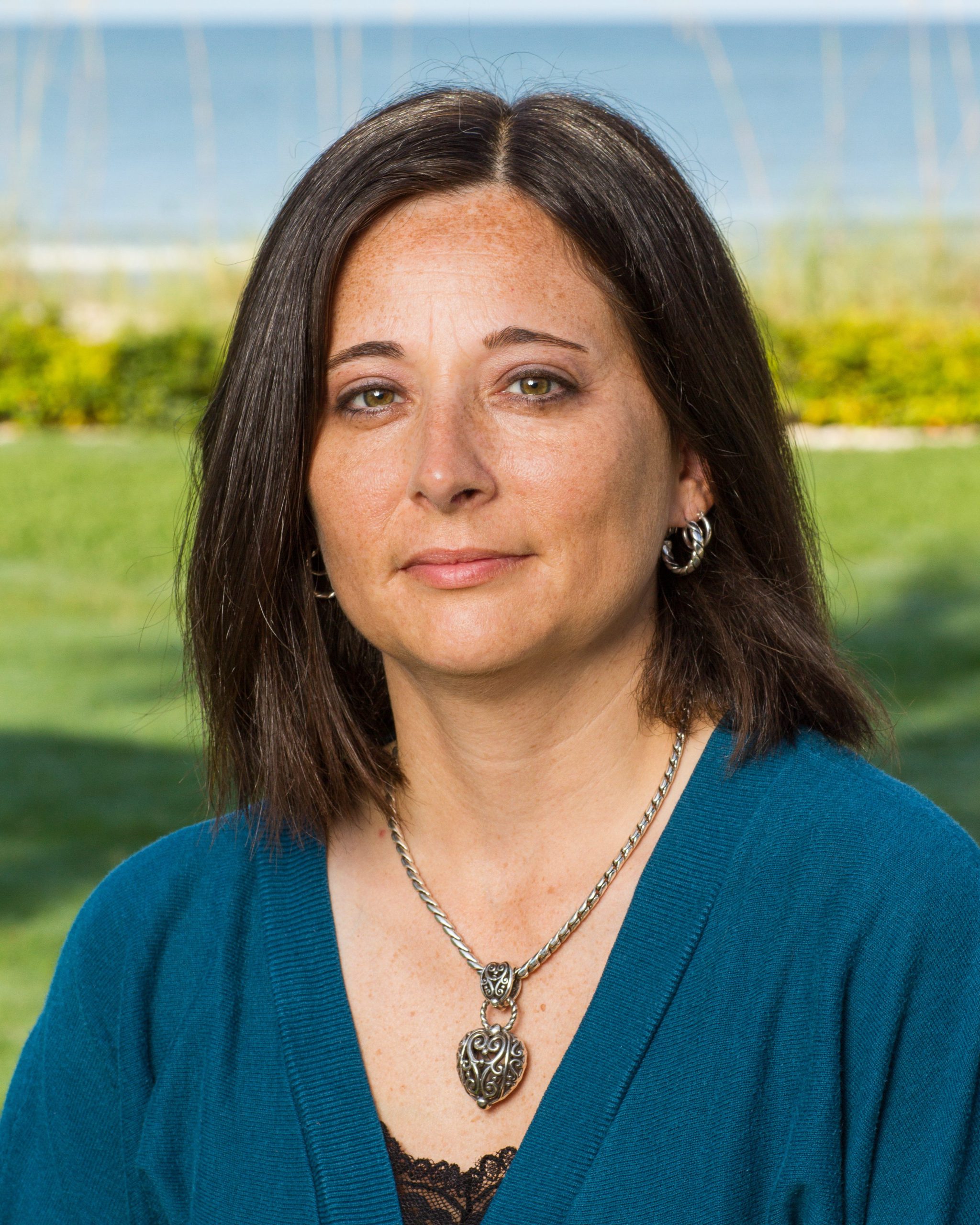
Yvonne Shanklin

July is Independent Retailer Month. As you know, local stores bring vitality, creativity and economic growth to their communities, so it's worth celebrating those "mom and pop" shops. 

But they aren't the only entrepreneurs in the country — about 10 percent of workers in the U.S. are self-employed, according to the U.S. Bureau of Labor Statistics. If you're thinking of joining these ranks, you may want to prepare yourself financially.

For one thing, you may need to pay more in taxes, depending on your income.

Self-employed individuals typically have to pay twice the amount in Social Security and Medicare taxes because they have to cover the portion that employers normally pay.

Also, unless you're fortunate enough to have a spouse who can put you on their employer-based health insurance, you'll need to find your own, at least until you're eligible for Medicare.

Furthermore, you will need to take charge of your own retirement savings. Fortunately, several retirement plans are available to the self-employed. These plans typically offer tax-deferred growth potential and tax-deductible contributions.

Here are a few options to consider:

Owner-only 401(k) — This plan, which is also known as an individual 401(k), is available to self-employed individuals and business owners with no full-time employees other than themselves or a spouse. For 2017, you can put in up to 25 percent of your annual income as an "employer" contribution, and you can defer up to $18,000 (or $24,000 if you're 50 or older). The sum of your employer contribution and your salary deferrals cannot exceed $54,000, or $60,000 if you're 50 or older.

SEP IRA — If you have just a few employees or are self-employed with no employees, you may want to consider an SEP IRA. You'll fund the plan with tax-deductible contributions, and you must cover all eligible employees. As an employer, you can contribute the lesser of 25 percent of your compensation (if you're also an employee of your own business) or $54,000.

Solo defined benefit plan — Pension plans, also known as defined benefit plans, are still around — and you can set one up for yourself if you're self-employed or own your own business. This plan has high contribution limits, which are determined by an actuarial calculation, and, as is the case with other retirement plans, your contributions are typically tax-deductible.

SIMPLE IRA — A SIMPLE IRA, as its name suggests, is easy to set up and maintain, and it can be a good plan if your business has fewer than 10 employees.

Although planning for your retirement is important, you also need to prepare for unanticipated short-term expenses, such as a major car repair or a new furnace. While everyone should be ready to meet these needs, it's especially important if you're self-employed and have a variable income. So, work to build an emergency fund containing three to six months' worth of living expenses, with the money kept in a liquid, low-risk account.

You may find self-employment to be quite rewarding — but you'll likely enjoy it even more if you make the right financial moves.

This article was written by Edward Jones on behalf of your Edward Jones financial adviser.

This article originally appeared on Crestview News Bulletin: How to prepare for entrepreneurship

error: Content is protected !!