Please ensure Javascript is enabled for purposes of website accessibility
Skip to main content
Advertisement

North Okaloosa County Faith Calendar

North Okaloosa County churches can send listings to news@crestviewbulletin.com. Items run on a first-come, first-served, space-available basis. [Pixabay.com]

KIDS FUN DAY: 10 a.m. to 2 p.m. July 29, Blackman Community Center, 7590 U.S. Highway 189, Baker. Free.  Lighthouse Church and Golan Assembly of God event features water slides, snow cones, puppetry, hotdogs and goody bags. Door prize winners must be present to win. Children should bring swimsuits, towels and sunscreen.

AWANA PROGRAM: 6:30-8 p.m. Wednesdays, Joy Fellowship, 5978 Old Bethel Road, Crestview. Approved Workmen Are Not Ashamed is for 3-year-olds through eighth-graders. Register: $35 for the uniform, book bag and book. Dues: $15 per year, with a $25 maximum per family. 682-6219.

RESTORATION AND RECOVERY MINISTRY: 6 p.m. Fridays, Kingdom Life Worship and Training Center, 798 Martin Luther King Jr. Ave., Crestview. This weekly outreach ministry focuses on healing, restoration, wellness and wholeness.

OUTREACH MINISTRY: 6 p.m. Fridays, Kingdom Life Worship and Training Center, 798 Martin Luther King Jr. Ave., Crestview. The ministry’s leaders are the Rev. Anthony Bryant, Deacon Phyllis Gage and Elder Candace Cotton.

CELEBRATE FREEDOM: 7-8:30 p.m. Fridays, Church of New Covenant, 3191 New Ave. N., Crestview. A faith-based 12-step program for people seeking healing from things that prevent healthy, balanced lives. Karen Faulkner, 227-4712.

REFORMERS UNANIMOUS: 7-9:30 p.m. Fridays, Central Baptist Church, 951 Ferdon Blvd. S., Crestview. Faith-based recovery program for people with any addiction. Directed by Wendell Morgan. 682-5525.

SUBMISSIONS: Send your church’s announcements to news@crestviewbulletin.com

This article originally appeared on Crestview News Bulletin: North Okaloosa County Faith Calendar

Film poster exhibit is at the library

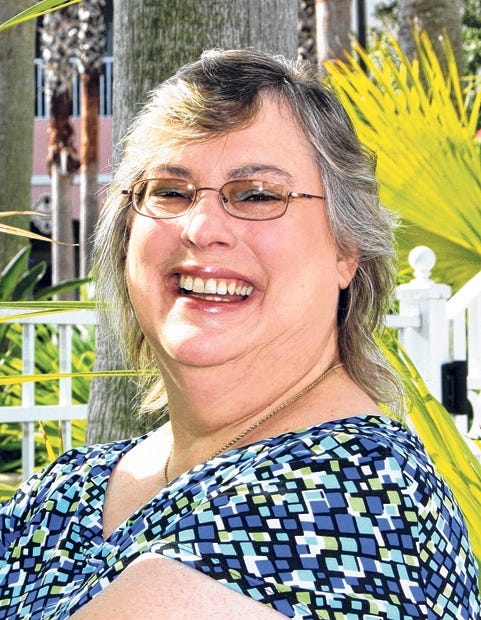
Janice Lynn Crose, a former accountant, lives in Crestview with her husband, Jim; her two rescue collies, Shane and Jasmine; and two cats, Kathryn and Prince Valiant.

The Robert L. F. Sikes Public Library in Crestview is wonderful. It has an amazing collection of books on many different subjects, from technical information to history to science fiction. Whatever one may be looking for is available.

The library also hosts an open microphone night for musicians, writers and poets as well as exhibits of different types, all to enrich our learning.

The exhibit currently on display is "1967: A pivotal year in American film" and displays some film posters from movies made that year. Brian Hughes and his friend Clyde Ponder have graciously put their movie posters on display from now until the end of August.

It is hard to believe that 1967 was 50 years ago, and a big year for movies of all types. Here are a few titles you may have heard of or remember:

•"40 Guns to Apache Pass"

•"Barefoot in the Park"

•"Bonnie and Clyde"

•"Camelot"

•"Cool Hand Luke"

•"The Dirty Dozen"

•"Doctor Doolittle"

•"El Dorado"

•"The Gnome-Mobile"

•"Guess Who's Coming to Dinner"

•"Jungle Book" (animated)

•"The Taming of the Shrew"

•"Wait Until Dark"

•"The War Wagon"

•"Thoroughly Modern Millie"

•"You Only Live Twice"

There were many more films that year. Some were memorable, and some were not.

Library patrons can see an interesting variety of film poster types, including rare "three-sheet" posters for "The Good, The Bad and The Ugly" and the year's Best Picture Oscar winner, "In the Heat of the Night," according to Brian Hughes. There are more film posters exhibited and a plethora of information. He has done a wonderful job with this exhibit.

Dr. David Simmons, Film and Humanities professor at Northwest Florida State College, will give a presentation on the significance of 1967 in American film at 6:30 p.m. Aug. 14 at the library, 1445 Commerce Drive, Crestview. It promises to be fascinating as well as informative. There will be a reception afterward. I hope to see you there.

Janice Lynn Crose, a former accountant, lives in Crestview with her husband, Jim; her two rescue collies, Shane and Jasmine; and two cats, Kathryn and Prince Valiant.

This article originally appeared on Crestview News Bulletin: Film poster exhibit is at the library

Okaloosa health department: Prepare for school vaccinations

The Okaloosa County Department of Health gives a few options for back-to-school vaccinations. [Pixabay.com]

The Florida Department of Health in Okaloosa County urges parents and guardians to review their children's immunization records and start getting required vaccinations now.

To comply with requirements, parents and guardians of students going into kindergarten and seventh grades should make vaccination plans in time for the first day of class and avoid delays.

Pediatricians, primary care and family doctors can typically provide vaccinations to children. Parents should call to verify that their children’s medical provider has the vaccines available.

Parents can also schedule an appointment for back-to-school vaccinations at DOH-Okaloosa.

There is no cost for required vaccinations for children up to 19 years old. Call 833-9246 to make an appointment.

Visit www.HealthyOkaloosa.com for more information.

This article originally appeared on Crestview News Bulletin: Okaloosa health department: Prepare for school vaccinations

Vintage organ returns to Laurel Hill church

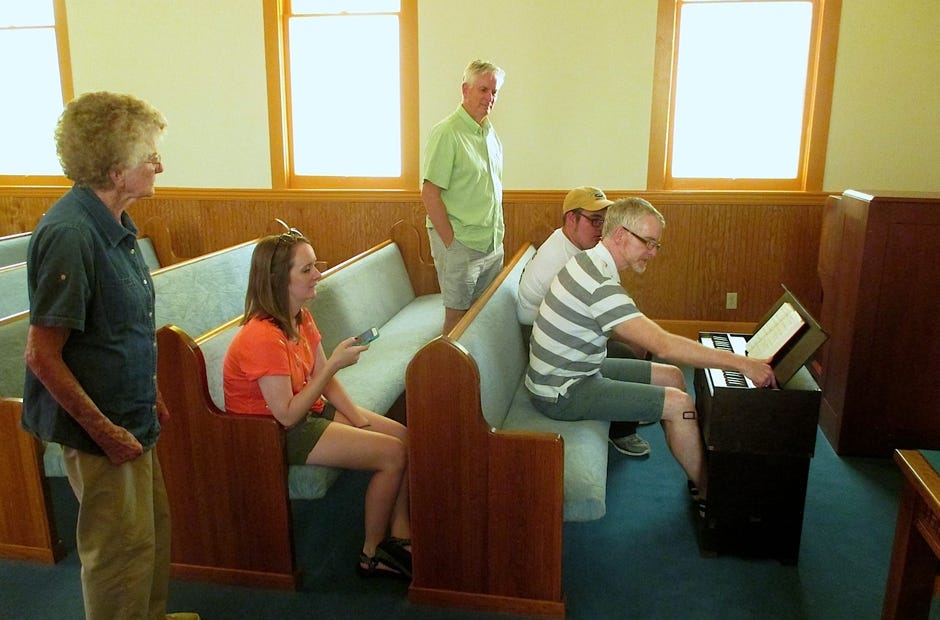
Laurel Hill Presbyterian Church organist Leon Curenton Jr. sits at the church's newly restored 1927 Bilhorn Bros. Style V pump organ. [Brian Hughes | Special to the News Bulletin]

LAUREL HILL—An early 20th-century portable pump organ has made its way back to the church where it started its service to the Lord.

Laurel Hill Presbyterian Church officials originally purchased the 1927 Bilhorn Bros. Style V "world famous folding organ," as its manufacturer’s label proclaims, for use at the church’s mission in Clear Springs, a small community midway between Laurel Hill and Crestview off Bill Lundy Road.

Bilhorn Bros. built their instruments to be portable, making them popular with missionaries. They even made special models with rot-resistant hardwoods for use in tropical missions.

The reed organ originally folded into an approximately 3-feet by 18-inch by 1-foot box, with its legs flipping up under the case. A metal handle is attached for carrying, though given its weight, two people carry it much more readily.

With only one keyboard — the church’s pipe organ has two — a player can push wind through reeds enclosed in the instrument’s wooden body by pumping the two opposing foot pedals that drive built-in bellows.

That sometimes poses a problem for Laurel Hill Presbyterian’s organist, Leon Curenton Jr., a fourth-generation member of the church.

"You want to try to pump in time to the music," he said. "But you’re supposed to keep up a steady pumping rhythm."

The Clear Springs mission eventually came to an end and church organizers stored the little organ in the historic 1903 church building. It nearly met its doom during a late 1960s housekeeping spree.

"They were just cleaning out, getting rid of extraneous stuff in the church, and she took it rather than let it get thrown out," Curenton said.

"She" was Sandra Thomas Conley, a longtime member of the church who later moved out of state. When she began downsizing her home last year, she called Curenton and asked if the church would be interested in having the organ back.

The congregation jumped on the chance to have a piece of its history returned, which Conley happily did. The instrument was in sturdy condition, though after years of storage and disuse, the straps that drove the bellows had rotted, and the works within the chest needed cleaning and restoration.

Curenton turned to Florala, Alabama, master organ repairman and restorer, David Finch, who maintains and tunes pipe organs throughout Northwest Florida, Mississippi, Alabama and parts of Georgia and Tennessee. Finch tends to the pipe organs at Laurel Hill Presbyterian Church and First United Methodist Church of Crestview, among other clients.

"When I asked David if he worked on reed organs, he said one of his first jobs was playing an organ just like that for the Salvation Army," Curenton said.

He sent the organ to Finch’s home workshop where it received his TLC over a period of almost a year. Finch returned the organ a few days before Laurel Hill Presbyterian’s June 25 worship service, during which Curenton hopped down from the main organ bench and performed the offertory, Bavarian composer Max Reger’s "Eins ist Not, Ach Herr, dies Eine," on the portable one.

The rich fullness of sound emitted by such a small instrument surprised and delighted congregation members.

In addition to being a link to the church’s 119-year history, the church’s pastor, the Rev. Mark Broadhead, sees practical uses for the organ now that it is back home.

"Every now and then we have church at McDonald Campbell’s house," he said, referring to the church’s 102-year-old matriarch, who is homebound. "We can take this organ with us and have organ music during the service."

And when the church hosts its 120th anniversary homecoming next April, Curenton foresees an outdoor performance during the planned "dinner on the grounds."

Meanwhile, visitors may view and, if fortunate, hear the Bilhorn Bros. Style V during worship services 9 a.m. Sundays at 8115 Fourth Street in Laurel Hill.

This article originally appeared on Crestview News Bulletin: Vintage organ returns to Laurel Hill church

Showing their gratitude

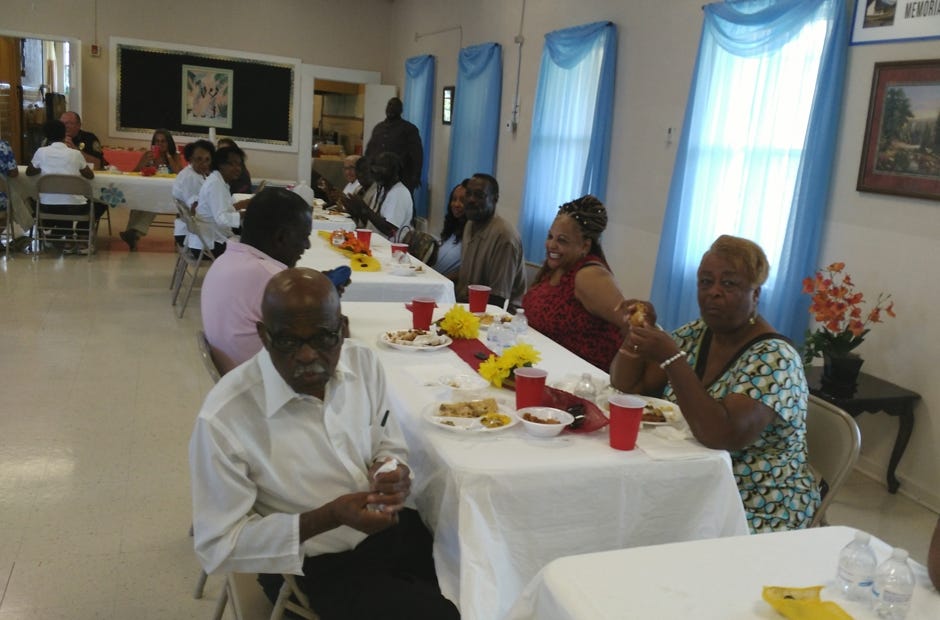
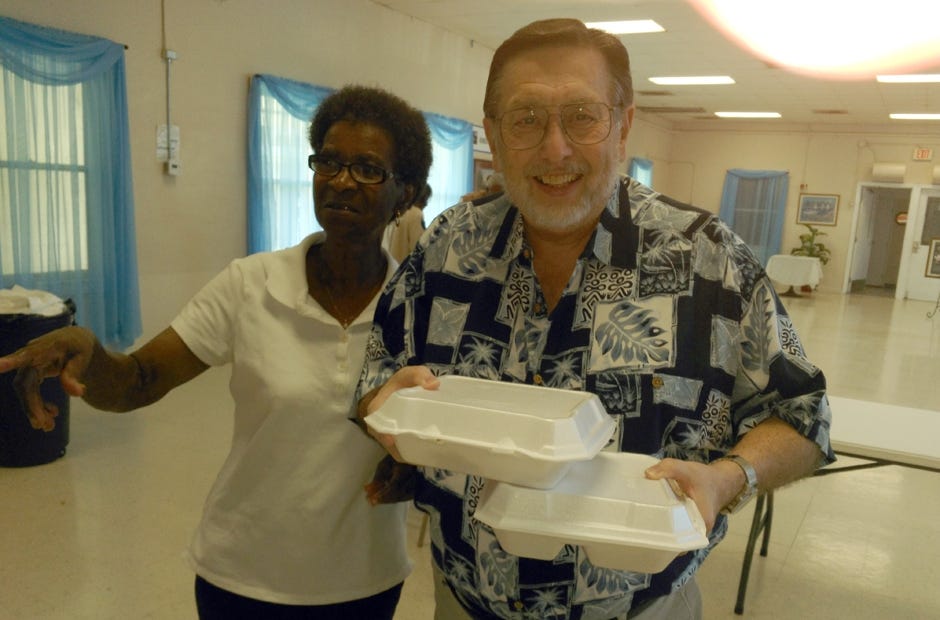
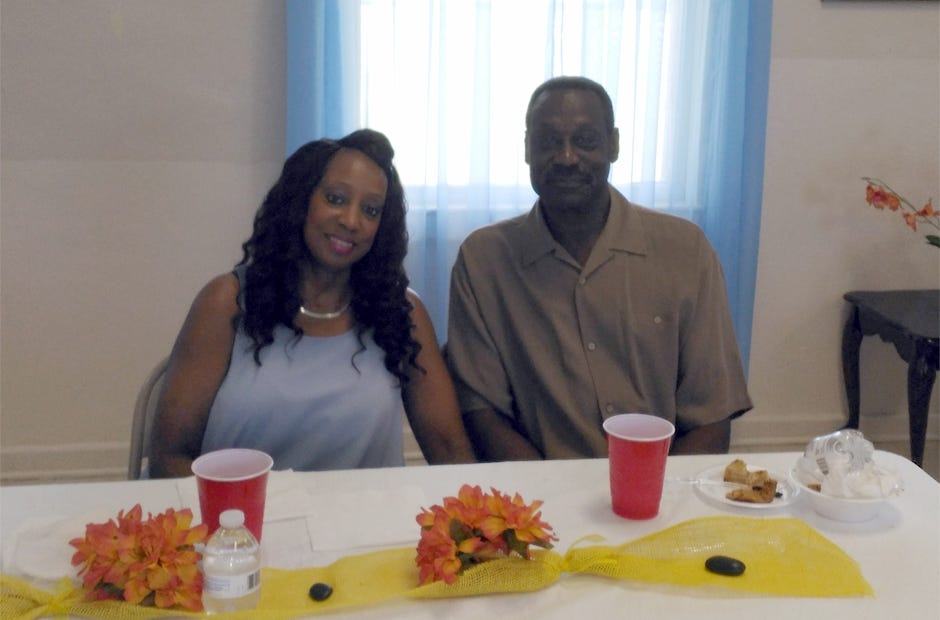
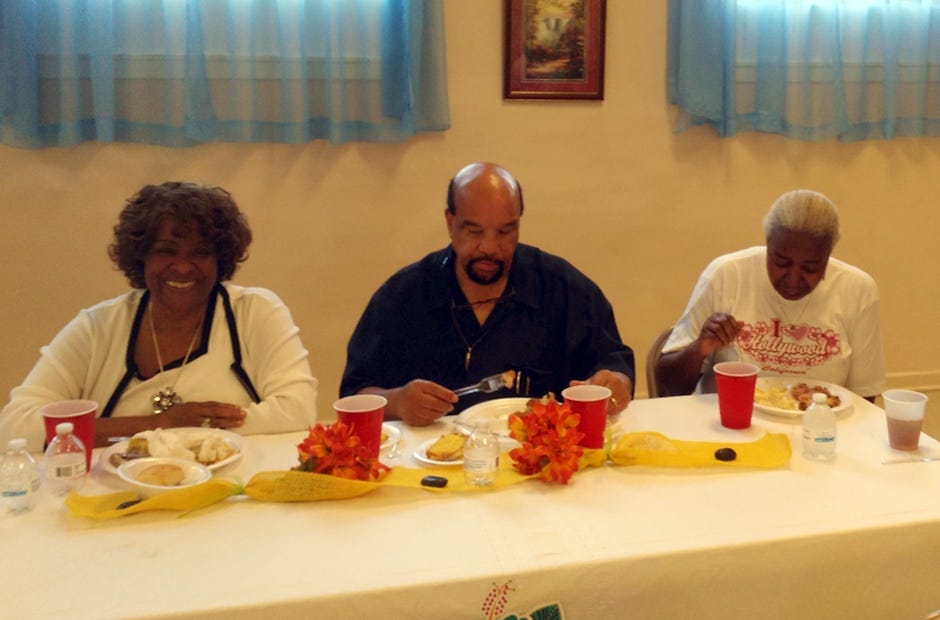
Crestview city officials and Concerned Citizens group members share a meal July 15 in Crestview. [Sara Westbrook | Special to the News Bulletin]

Editor’s Note: This continues our Celebrate Community series on nonprofit organizations that improve North Okaloosa County residents’ quality of life.

CRESTVIEW — The Crestview Concerned Citizens Outreach Group hosted a free appreciation dinner for area pastors, city officials and their wives. The meal was a way to thank faith-based and civic leaders for what they've done to take care of area residents physically and spiritually, according to a group spokesperson.

The dinner took place July 15 at the Carver-Hill School Center. About 50 people attended the event, and more dropped by to visit and fellowship with one another. 

City officials in attendance included Mayor David Cadle; and city council members JB Whitten and Joe Blocker, Crestview Police Chief Tony Taylor and their spouses.

Group members served a meal including ribs, fried chicken, rice, peas, potato salad and several desserts.

The Crestview Concerned Citizens group is a civic organization founded in the 1990s. Members provide street ministry, community dinners and other activities for area residents.

This article originally appeared on Crestview News Bulletin: Showing their gratitude

Citizen science is a growing hobby

Master Naturalist and citizen scientist Diana Moore, left, assists with outreach at a local event. [Laura Tiu | News Bulletin]

Many people are fascinated by my job as a marine scientist. I often hear wistful comments like, "I wish I had chosen an exciting career like that." I'm here to tell you it's not too late. A phenomenon called citizen science is gaining in popularity, particularly in our coastal communities.

Citizen science is public participation in scientific research by volunteers or amateur scientists. It often involves monitoring or research activities capable of being accomplished by non-professional scientists. These programs are designed to engage community members as collaborators throughout the research process including identifying research topics, monitoring and data collection, or information dissemination.

Citizen science is a fun and interesting way for people to understand and learn about what is taking place in their own neighborhoods.

Citizen scientists report joining research projects for a variety of reasons. Some want to make a difference and contribute to society. Others love science, are curious about their communities and want to ensure that local research projects include a layperson's perspective. CS projects can build trust, as scientists recognize the value of public outreach, while participants see how science can advance their understanding of the world they live in.

The University of Florida has a long history of recruiting and utilizing citizen scientists in a host of research projects. Researchers have long relied on citizen scientists to report the spread of the invasive Cuban treefrog by documenting and submitting frog sightings. The first Cuban treefrog in Okaloosa County was caught and reported by a local citizen scientist. Participating can be as simple as taking photos of the frogs (http://ufwildlife.ifas.ufl.edu/citizen_sci.shtml).

The Choctawhatchee Basin Alliance and the University of Florida Lake Watch Program have partnered for years with local citizens to monitor over 130 sampling sites within the Choctawhatchee Bay, Choctawhatchee River, all the coastal dune lakes in Walton County, and even in the Gulf of Mexico, just off shore in Okaloosa and Walton counties (http://www.basinalliance.org/page.cfm?articleID=4). They frequently recruit citizen scientists for many of their other local research projects including building living shorelines and a new oyster gardening initiative.

The Florida Fish and Wildlife Conservation Commission lists citizen science as a smart, cost-effective strategy to enhance the FWC's ability to conserve Florida's diversity of fish and wildlife species and habitats, according to its website. See http://myfwc.com/get-involved/citizen-science/ for more information.

The FWC is currently seeking volunteers and college students to assist with the 2017 Seagrass Integrated Monitoring and Mapping program in Franklin County (http://myfwc.com/research/habitat/seagrasses/projects/active/simm/). This is a statewide collaborative effort which facilitates the collection and publication of monitoring and mapping data for Florida seagrasses in order to assess the status and trends of this vital ecosystem. This would be a great opportunity for those students wanting to gain some field experiences to add to their resume.

If being a citizen scientist sounds like a fun activity for you or your family, take a look at the links provided in this article, or contact me at lgtiu@ufl.edu for additional suggestions.

Laura Tiu is an agent at the University of Florida's Institute of Food and Agricultural Sciences Extension office in Crestview.

This article originally appeared on Crestview News Bulletin: Citizen science is a growing hobby

Financial moves for 'empty nesters'

Yvonne Shanklin is an Edward Jones financial adviser. [Special to the News Bulletin]

When your children leave home and you become an "empty nester," you'll probably make several adjustments in your lifestyle. But how will your empty nest status affect your financial situation?

Everyone's story is different, involving a range of variables. But here are a few issues to consider:

Insurance. If your kids are through school, your mortgage is nearly paid off and your spouse has accumulated a reasonable amount of money in an employer-sponsored retirement plan, you may not need life insurance to replace income or pay off debts.

However, you might start thinking about other goals, such as ensuring your savings will last your lifetime or leaving a legacy to your loved ones or a charity. Life insurance may be able to help in these areas.

Downsizing. Deciding whether to downsize your living space isn't just a financial decision — it's also a highly personal one. Still, downsizing can offer you some potential economic benefits.

For one thing, if you still are paying off your mortgage, a move to a smaller place could free up some of your monthly cash flow, which, again, you could use to boost your retirement accounts. Furthermore, if your home has greatly appreciated in value, you might make a sizable profit by selling.

If you are single, you may be able to exclude $250,000 of the gain on the sale of your home; married couples may have a $500,000 exemption. Some restrictions exist on this exemption, though, so you'll need to consult with your tax advisor before selling.

Estate plans. Years ago, you might have made various arrangements in a will or a living trust that dealt with taking care of your children if something should happen to you and your spouse.

For example, you might have established a trust and directed it to make payments to your children at certain times and for certain purposes, such as education. But once your children are grown and have left your home, you may need to review and update your estate plans.

Keep in mind, though, that "empty nester" status is not always permanent. You've no doubt heard about "boomerang" kids who return home after college and stay until they can afford a place of their own.

If your children become "boomerangers," even for a short while, will it greatly affect your financial situation? Probably not. However, if your children are going to drive your car, you may want to be sure that they are listed on your car insurance.

Also, if they are going to bring guests to your home, you might want to consider an "umbrella" insurance policy, which typically provides you with significantly greater liability protection than your regular homeowners policy.

In fact, it may be a good idea to purchase an umbrella policy even if you don't have grown kids at home, as this coverage offers you wide-ranging protection from potentially devastating lawsuits that could arise from injuries on your property or through an auto accident in which you are involved.

You may have mixed feelings about becoming an empty nester, but like most people, you will adjust. And by making the right financial moves, you can get off to a good start on this new phase of your life. 

This article was written by Edward Jones on behalf of your Edward Jones financial adviser.

This article originally appeared on Crestview News Bulletin: Financial moves for 'empty nesters'

Mount Zion to honor pastor

The pastor appreciation service at Mount Zion will include examination of the scripture at 1 Peter, Chapter 5, verses 2-4. [Pixabay.com]

CRESTVIEW — The members of Mount Zion African Methodist Episcopal Church will have an appreciation program for their pastor, the Rev. Darryl Hooks, and his wife, Ramon.

The service is 3 p.m. July 16 at the church, 502 McDonald St., Crestview.

The guest speaker is the Rev. Marcellas Davis of Adoration for a New Beginning Church, who will discuss I Peter chapter 5, verses 2-4, and the theme of God's servant being empowered by the Holy Spirit to be a good example for the flock.

This article originally appeared on Crestview News Bulletin: Mount Zion to honor pastor

Preparing for 100

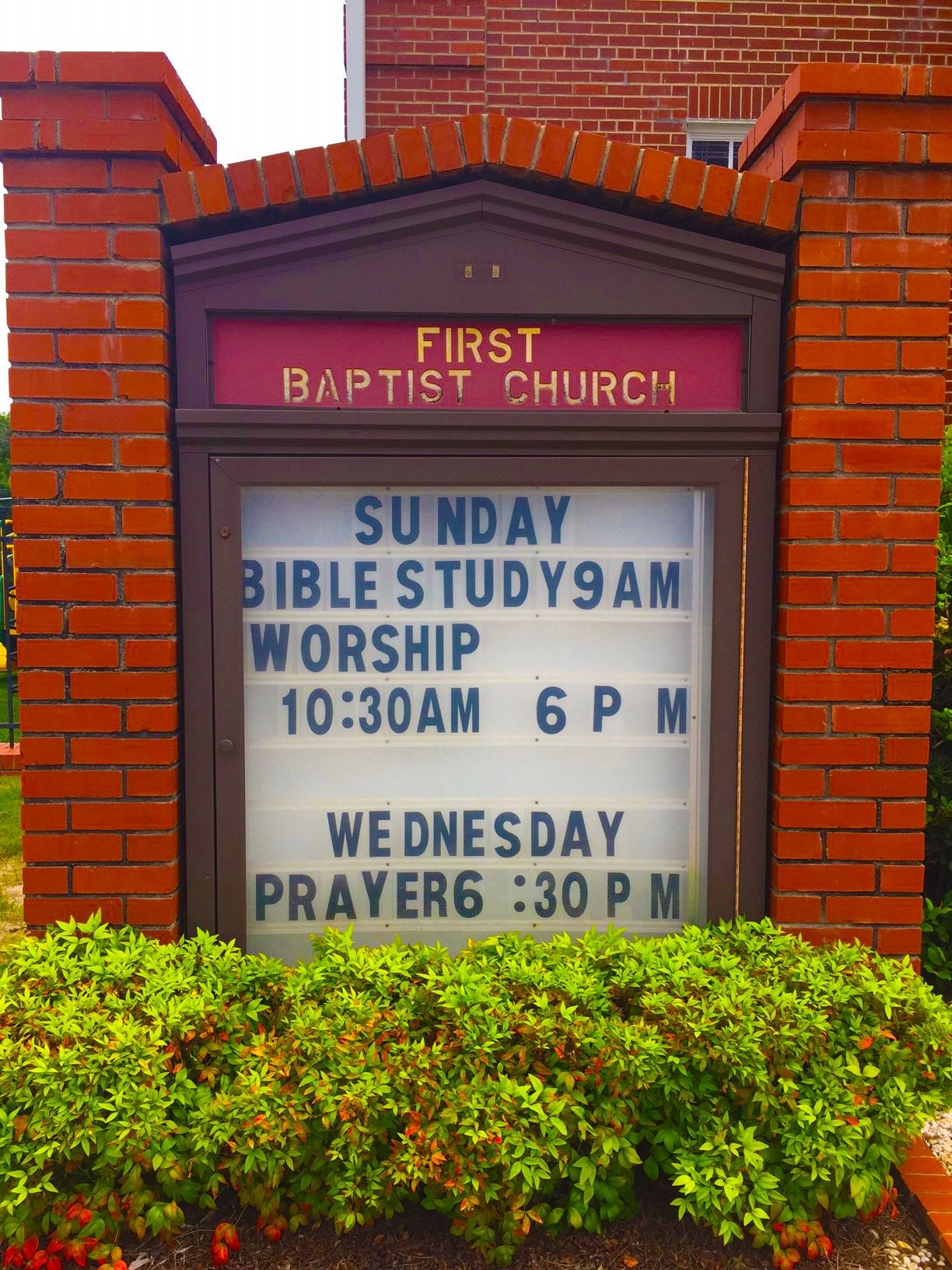
The "lettered" sign outside of the First Baptist Church in Crestview. [GENEIVEVE DiNATALE | NEWS BULLETIN]

CRESTVIEW — The associate pastor of music at Crestview’s First Baptist Church, Andrew Heathershaw, has been planning for the church’s 100th anniversary celebration, which is scheduled to take place from 2-4 p.m. on Aug. 12.

When asked what he has in store for the celebration, Heathershaw said, “We are starting service with ‘Find Us Faithful,’ a song which questions if people in the future will see us as faithful to the Lord when they look back on us.” He also said that at the luncheon, the reunion youth choir will be singing, “Some Day My Lord Will Come," and a few former ministers of music will sing as well.

Heathershaw, who also oversees the technical aspects of the church’s music production, selects music from Christian publishers with song samples that pique his interest. His personal favorite songs, he said, are “Great Is Thy Faithfulness” and “10,000 Reasons,” a newer song about praising the goodness of God.

According to Heathershaw, American Baptist churches tend to either stick to the old or go with the "new" when it comes to musical style, but at Crestview’s First Baptist Church, they are somewhere in between. “Traditional churches do hymns only and some other Baptist churches only do new music — we are somewhere in the middle.”

He said, “It varies a lot within denominations — there isn’t a Baptist style — it just always points people to God with excellence, whatever it is.”

This article originally appeared on Crestview News Bulletin: Preparing for 100

Crestview mom holds onto hope as her baby awaits new heart

CRESTVIEW — When an ultrasound uncovered more than her baby’s gender, 29-year-old Ashley Hewett’s life became a living nightmare. 

“This was supposed to be an exciting appointment to find out we were having a boy and then now it’s deeper than that,” she said.

The ultrasound revealed that the left ventricle of her son’s heart was significantly smaller than the right, but Hewett wasn’t too concerned when she visited doctors at Sacred Heart Hospital in Bluewater. 

“They didn’t give me a lot of information when they referred me to get checked,” she said. “When I was referred they just said, ‘well, it looks like one side of the heart must be smaller, so you might want him to get checked just to be sure.’”

She added, “I didn’t have the impression that it was anything to worry about.”

The following week, a high-risk specialist at Sacred Heart Hospital in Pensacola diagnosed her son with hypoplastic left heart syndrome, a rare, congenital heart defect that affects normal blood flow because the left side of the heart cannot pump oxygen-rich blood throughout the body.

According to the Centers for Disease Control and Prevention, HLHS affects about one out of every 4,344 babies, or roughly 960 babies born in the U.S. each year. Babies born with this birth defect often have bluish, ashen skin and a weak pulse. And although a cause for the disease is still largely unknown, it’s thought to be genetic in origin. 

Hewett’s son, David, arrived five weeks prematurely on April 23. Shortly thereafter, doctors determined that he would need a new heart because his tricuspid valve was leaking. “At first we felt like we were going to have a baby that might not live and this was our first baby,” Hewett said. “We almost felt hopeless.”

Generally, babies born with HLHS normally undergo a three-step surgical procedure before a transplant is required:

Step 1: The Norwood Operation — takes place in the first few weeks after birth. Surgeons rebuild the aorta then reconnect it to the heart’s right ventricle, allowing the right ventricle to efficiently pump blood to both the body and the lungs.  If a baby survives this procedure their odds of survival are said to increase. According to an article in the Journal of Pediatric Health titled “Hypoplastic left heart syndrome: Prognosis and management options,” the survival rate for babies who have the Norwood Operation ranges from 47 percent – 85 percent.

Step 2: Hemi-Fontan and a bi-directional Glenn procedure — takes places when the baby is between four and 12 months old. In this procedure, surgeons reroute the circulation so the superior vena casa drains into the right pulmonary artery. Hospital survival rates for the Hemi-Fontan procedure are 94 percent – 98 percent.

Step 3: The Fontan operation — takes place when the child is between 18 months and 2 years old. According to an article by the University of California San Francisco’s Department of Pediatric Cardiothoracic Surgery, the Fontan procedure connects the inferior vena cava to the pulmonary artery by making a channel through or just outside of the heart to direct blood to the pulmonary artery.  Survival rates for the Fontan procedure are 86 percent – 94 percent.

Hewett's baby, David, who had to forgo the aforementioned procedure because of a leaking tricuspid valve, was placed on the heart transplant list a few weeks ago. Since then, a lack of blood flow has caused his organs to partially shut down. The Hewetts can only hope that a heart becomes available quickly because longer wait times on the heart transplant list have been linked to higher infant mortality rates.

“According to the doctors last month, he wasn’t going to make it,” said Hewett. “They took him off the transplant list and gave us options to basically watch him die.” But in the last week or so, there has been a bit of a turnaround for David, whose condition has improved somewhat since he was taken off medication that was adversely affecting his liver. 

“He is showing all the doctors that he’s moving in the right direction and the doctors keep coming in and commenting on how much better he looks, they are really impressed, they almost can’t believe it,” said Hewett. “I think one doctor said, ‘this is suspiciously good.’”

Ashley and her husband, Chuck, also 29, have been staying at the UF Health Shands Hospital in Gainsville for the last two months after moving out of the Ronald McDonald House. “About a month ago after things started to look worse we moved into his hospital room and have been staying by his side,” she said.

Survivors of HLHS require constant medical attention, and since their hearts do not function at full capacity, those born with HLHS who make it into adulthood cannot exercise, and/or stand for long periods of time without having to sit; and often, most need more than one heart transplant.

Some of the longest-living survivors are now in their late 20s and early 30s.

This article originally appeared on Crestview News Bulletin: Crestview mom holds onto hope as her baby awaits new heart


error: Content is protected !!