Please ensure Javascript is enabled for purposes of website accessibility
Skip to main content
Advertisement

Women of Valor conference celebrates 22 program participants

Editor’s Note: This continues our Celebrate Community series on nonprofit organizations that improve North Okaloosa County residents’ quality of life.

CRESTVIEW — The Women of Valor group celebrated 22 girls and women who completed their summer mentoring for girls and women ages 4-19.

"We crowned beautiful winners, not first, second- and third-place girls," the Rev. Sherrell Compton, program creator, said during the Sept. 16 group conference and brunch at the Crestview Community Center. The free event, with the theme "He Crowned Me With His Glory," included recognition of the girls completing the program, a fashion show, and a presentation by guest speaker Ashley Rogers of Chesser & Barr P.A.

Ashley Rogers discusses mentoring

The girls, referred to as Junior and Senior Beautiful Ones by Women of Valor members, learned about such things as inner and outer beauty, social etiquette and its importance, hygiene and the importance of validation. They attended workshops on skin, hair and body care. They learned about respecting themselves, and how to follow their dreams and fulfill God's purpose for their lives.

The senior Beautiful Ones also participated in a community service outreach where they delivered toiletries to the homeless patients at North Okaloosa Medical Center. 

Each participant received a letter from Crestview Mayor David Cadle, who congratulated them on participation in the program and thanked them for their contributions to the homeless, stating, in part, "how important small things become to those in need of basic necessities."

Rogers spoke on the importance of making God's will your will, and the peace she felt when a personal decision about child bearing led her to that conclusion.

Fashions, Senior Beautiful Ones presented

The conference ended with a crowning ceremony where Miss Emerald Coast 2015-2016 Aisha Scott crowned and presented flowers to the Senior Beautiful Ones.

Cato's and J&P's Glitz and Glitter provided fashions and accessories for the fashion show. McLain's Family Steakhouse provided breakfast and brunch at the event.

This article originally appeared on Crestview News Bulletin: Women of Valor conference celebrates 22 program participants

Crestview man serves, teaches at Brazil mission

Crestview resident Chapman Tew, third from left, is pictured with his Brazil associates. He recently returned from a mission trip there. [Special to the News Bulletin]

CRESTVIEW — Chapman Tew was young when he decided to serve a mission for the Church of Jesus Christ of Latter-day Saints.

When he turned 18, he filled out all the papers, waited for the letter and learned he would serve the people of Brazil's Sao Paulo South Mission.

Chapman states that throughout his childhood and youth, he was always active in the church programs. This provided him with a broad knowledge base and gave him a wide variety of experiences that prepared him to serve a mission and his fellow man.

Tew's parents are Holly and Aaron Tew of Crestview. To prepare financially for his mission, he worked for his father's construction company, washed cars, built websites and did some digital design for local businesses and friends.

Tew attended Early Morning Seminary at 5:45 a.m. every school day for four years. An LDS scripture study class taught him a number of things, including the importance of sacrifice to achieve higher goals. The principles that he learned also gave him a knowledge and reference base that helped him in his teaching the people of Brazil for two years.

In one of his areas he taught a 15-year-old boy named Rodrigo.

"This young man already had a number of experiences in his life with the drug trade that most adults have never had," an LDS media release states. "Over time, Tew and his fellow missionaries taught Rodrigo about God's plan in his life and his purpose here on earth. They watched him as he gradually made changes that allowed him to live a happier life through obedience to God's commandments. This young man made a 180-degree turnaround and was richly blessed for his decision to change."

"This was one of the most rewarding experiences that I had while on my mission," Tew said.

"One of the most important lessons I learned was that we are all imperfect and hopeless without the atoning sacrifice of Jesus Christ. He allows us to repent and become clean of our sins so that we may return to our Heavenly Father's presence once again."

Chapman has these words of advice for those contemplating a mission: "Do it. It is the best decision you could ever make in in your life. God will bless you in ways you could never imagine.

"If there are are any impediments to your serving a mission, eliminate them now and get ready to go," he said.

This article originally appeared on Crestview News Bulletin: Crestview man serves, teaches at Brazil mission

Here’s your retirement countdown

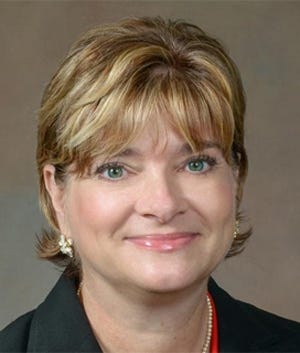
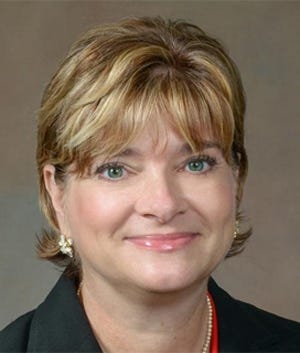
Yvonne Shanklin is an Edward Jones financial adviser. [Special to the News Bulletin]

If you want to enjoy a comfortable retirement lifestyle, you don’t need to have been born rich or even to have earned scads of money during your working years.

But you do need to make the right moves at the right time — which means you might want to start a “retirement countdown” well before you draw your final paycheck.

What might such a countdown look like? Here are a few ideas:

10 years before retirement: At this stage of your career, you might be at, or at least near, your peak earning capacity. At the same time, your kids may have grown and left the home, and you might even have paid off your mortgage.

All these factors, taken together, may mean that you can afford to “max out” on your IRA and your 401(k) or other employer-sponsored retirement plan. And that’s exactly what you should do, if you can, because these retirement accounts offer tax benefits and the opportunity to spread your dollars around a variety of investments.

Five years before retirement: Review your Social Security statement to see how much you can expect to receive each month at various ages. You can typically start collecting benefits as early as 62, but your monthly checks will be significantly larger if you wait until your “full” retirement age, which will likely be 66 (and a few months) or 67. Your payments will be bigger still if you can afford to wait until 70, at which point your benefits reach their ceiling.

In any case, you’ll need to weigh several factors — your health, your family history of longevity, your other sources of retirement income — before deciding on when to start taking Social Security.

One to three years before retirement: To help increase your income stream during retirement, you may want to convert some (but likely not all) of your growth-oriented investments, such as stocks and stock-based vehicles, into income-producing ones, such as bonds.

Keep in mind, though, that even during your retirement years, you’ll still likely need your portfolio to provide you with some growth potential to help keep you ahead of inflation.

One year before retirement: Evaluate your retirement income and expenses. It’s particularly important that you assess your health care costs. Depending on your age at retirement, you may be eligible for Medicare, but you will likely need to pay for some supplemental coverage as well, so you will need to budget for this.

Also, as you get closer to your actual retirement date, you will need to determine an appropriate withdrawal rate for your investments. How much should you take each year from your IRA, 401(k) and other retirement accounts?

The answer depends on many factors: the size of these accounts, your retirement lifestyle, your projected longevity, whether you’ve started taking Social Security, whether your spouse is still working, and so on. A financial professional can help you determine an appropriate withdrawal rate.

These aren’t the only steps you need to take before retirement, nor do they need to be taken in the precise order described above. But they can be useful as guidelines for a retirement countdown that can help ease your transition to the next phase of your life.

This article was written by Edward Jones on behalf of your Edward Jones financial adviser.

This article originally appeared on Crestview News Bulletin: Here’s your retirement countdown

Spotted leaves in lawn, landscape and garden is common

Fungicides can treat some fungal leaf spot diseases, which can affect plants like red buckeye. [Larry Williams | Special to the News Bulletin]

We continue to get many questions from homeowners concerning spots on the leaves of their trees, shrubs, vegetable plants and in their lawns.

These foliage diseases show up mostly as tan, brown or black spots varying in size, shape and number on plant leaves.

The frequent rains and high humidity of summer provided ideal conditions for foliage disease development in our lawns, landscapes and gardens.

Most fungal diseases are dependent on moisture, especially foliage or leaf spot diseases. They are mostly spread by microscopic airborne spores that require moisture to germinate, infect and colonize our plants.

Many fungal leaf spot diseases require a 12- to 14-hour period of uninterrupted wetness.

A University of Florida Institute of Food and Agricultural Sciences Extension fact sheet on gray leaf spot of St. Augustinegrass states, "Warm rainy spells from May through September commonly produce extended periods (12 hours and greater) of leaf wetness and relative humidity greater than 95 percent. During these periods, turfgrass leaf blades can remain wet and air temperatures often hover between 80 and 90 degrees Fahrenheit. Environmental conditions such as these are ideal for the pathogen growth, infection and colonization of St. Augustinegrass."

Leaf spot diseases of vegetables, trees and shrubs follow this same scenario. With higher humidity and frequent rains come diseased leaves.

This wet weather promotes foliage and fruit rot diseases on vegetables too. It's best to remove and dispose of diseased, worn-out vegetable plants as they succumb to summer's heat, frequent rains and diseases.

Not all plants are equally susceptible to foliage diseases. It's wise to learn the landscape and garden plants that are likely to experience disease problems as a result of our wet summer weather here in Florida.

A fungicide spray program can be used to prevent and reduce many of these diseases, but it needs to begin ahead of the symptoms to be effective.

Frequent rains can make it a challenge to apply a fungicide in a timely manner. There are also cultural practices that can be helpful in managing some of these diseases.

Not all leaf spot diseases are serious. If you need help identifying or controlling a foliage disease, contact the University of Florida Extension Office in your county. The Crestview office is at 3098 Airport Road (689-5850).

Larry Williams is an agent at the University of Florida's Institute of Food and Agricultural Sciences Extension office in Crestview.

This article originally appeared on Crestview News Bulletin: Spotted leaves in lawn, landscape and garden is common

Focus on expressing kindness to others

The Rev. Mark Broadhead is pastor at Laurel Hill Presbyterian Church and First Presbyterian Church of Crestview. [File photos | News Bulletin]

Why is common sense not so common anymore? What has happened to it? Where did it go?

Why are good manners not readily seen or utilized very much anymore? What has happened to them? Where did they go?

I'm not sure, but common sense and good manners seem to have faded away to near nonexistence.

Is it not simply common sense to not text while you are driving?

Is it not common sense to not drive a vehicle when inebriated?

It is not common sense to not pick a fight with someone who is larger and stronger than you?

When did it become uncommon to hold a door open for someone entering a store behind you, or opening one for a person coming out of a store?

When did it become uncommon to say "thank you" to someone who did something kind?

I think it is a shame that so many of the niceties people used to exhibit toward one another have gone by the wayside. In their place now is a myopic view of life — "What's in it for me?" or "I don't care what you need or think."

That's kind of what it comes down to, isn't it? Not caring — unless of course "my" life is interrupted or injured in some fashion or other. Then a person will raise a ruckus.

For one, I am glad God does not treat us the way we treat one another. Yes, God more than likely gets greatly disappointed with some of our actions and attitudes. He probably gets distressed by letting us endure the consequences of our own actions.

But God never turns his back on us. God never gives up on us. God never stops loving us and hoping our behaviors will turn toward the better. God keeps encouraging us to do better, to walk more solidly in his ways, to follow the kind of lifestyle that is one of kindness, generosity, forgiveness and grace.

Here is my challenge to you. Today, hold open the door for a person entering a store or building after you, or open it for a person coming out. Wish them a good day in the process.

If someone does an act of kindness toward you, say "thank you" with all sincerity. If someone offends you or cuts you off in traffic, remain calm and refrain from a caustic remark, and say a quiet prayer for the other person and for yourself.

The more of us who do this, the more others may follow suit, and God will be pleased.

The Rev. Mark Broadhead is pastor at Laurel Hill Presbyterian Church and First Presbyterian Church of Crestview.

"For one, I am glad God does not treat us the way we treat one another."

This article originally appeared on Crestview News Bulletin: Focus on expressing kindness to others

Crestview Scouts aid Irma evacuees

CRESTVIEW — Troop 30 Second Class Scout Kenneth Mayfield heard Shoal River Middle School, where he is a seventh-grade student, was being used as a Red Cross Shelter for people displaced by Hurricane Irma.

He visited the shelter and saw a need for help. He contacted Senior Patrol Leader Spencer Whitten, Scout Master Abe Rodriguez and Committee Chair Iris Valdez to ask if the troop was willing to help. Immediate needs included setting up the shelter, preparing meals and occupying the time of kids in the shelter; there were no activities planned for kids.

Troop 30 responded. Nearly two dozen Scouts, leaders and family members volunteered at the shelter on Sept. 9 and 10.

They brought balls, games, toys, movies and an X-Box game system. They organized games, prepared and served food, set up cots and helped evacuees get settled into the shelter.

Word of the need for assistance passed to other units. Scouts, leaders and parents from Troop 773, Crestview Cub Scout Pack 799 and Explorers from The Okaloosa County Sheriff Post, among others, also responded.

About 10 Troop 773 members and four of their adults spent hours at the shelter Sept.  9 and 10. They then returned Monday to help evacuees load items into their cars, break down shelter use items, sanitize cots and load everything into the Red Cross trucks, finishing up about 4 p.m. Monday.

There were at least two Cub Scouts from Pack 799 helping out, along with pack adults. A troop mom/Girl Scout leader was also assisting. A leader involved with both Pack 799 and Troop 30 organized a location to collect items for delivery to the shelter, including coloring books and crayons for the kids.

The shelter served more than 100 evacuees in the two days it was opened. The Red Cross, which ran the shelter, and the Crestview Rotary Club, which organized meals, as well as the residents praised the scouts for their consideration and efforts.

This article originally appeared on Crestview News Bulletin: Crestview Scouts aid Irma evacuees

Protect 3 key goals with life insurance

Yvonne Shanklin is an Edward Jones financial adviser. [Special to the News Bulletin]

September is Life Insurance Awareness Month. And "awareness" is an appropriate designation, because many people remain unaware of the many ways in which life insurance can help families meet their key financial goals. Here are three of the biggest of these objectives, as seen through the eyes of a hypothetical couple, Jim and Joan:

Pay off mortgage — Jim and Joan have a 30-year mortgage. If one of them dies well before that mortgage is paid off, could the other one afford to keep making payments to remain in the house with the children? It might be quite difficult — many families absolutely need two incomes to pay a mortgage, along with all the other costs of living. At the very least, the death of either Jim or Joan would likely put an enormous financial strain on the surviving spouse. But with the proceeds of a life insurance policy, the survivor could continue making the house payments—or possibly even pay the mortgage off completely, depending on the size of the policy and other financial considerations.

Educate children — Higher education is important to Jim and Joan, and they'd like to see both of their young children eventually go to college. Of course, college is expensive: For the 2016-17 school year, the average cost (tuition, fees, room and board) was about $20,000 for in-state students at public universities and more than $45,000 for private schools, according to the College Board. And these costs are likely to continue climbing. Jim and Joan have started putting money away in a tax-advantaged 529 savings plan, but if something were to happen to one of them, the surviving spouse might be hard pressed to continue these savings at the same level — or at any level. But the proceeds of a life insurance death benefit could be enough to fund some, or perhaps all, of the college costs for Jim and Joan's children.

Provide for family's future — Jim and Joan's future income is their most valuable asset as they continue working. However, an unexpected death could leave this dual-income family with a single income that may not cover all financial obligations and retirement contributions — or even preserve the family's current lifestyle. Life insurance could help cover these needs. Plus, the death benefit to the family may be tax-free.

Clearly, a life insurance policy could allow Jim or Joan to continue on with life, despite, of course, the devastating emotional loss of a partner. But how much insurance should they own? You might read that most people need a death benefit of seven to 10 times their annual income. This might be a good starting point, but everyone's situation is different. You should consider all factors — including liabilities, income replacement, final expenses and education — to get an accurate picture of how much insurance is appropriate. A financial professional can help you with this calculation.

During Life Insurance Awareness Month, take some to time review your insurance situation. You may already have some life insurance, but it's a good idea to review your coverage to make certain the amount and type of insurance is still appropriate for your needs. As we've seen, the right coverage can make a huge difference in the lives of your loved ones.

This article was written by Edward Jones on behalf of your Edward Jones financial adviser.

This article originally appeared on Crestview News Bulletin: Protect 3 key goals with life insurance

Don't be caught off guard — storm preparation tips

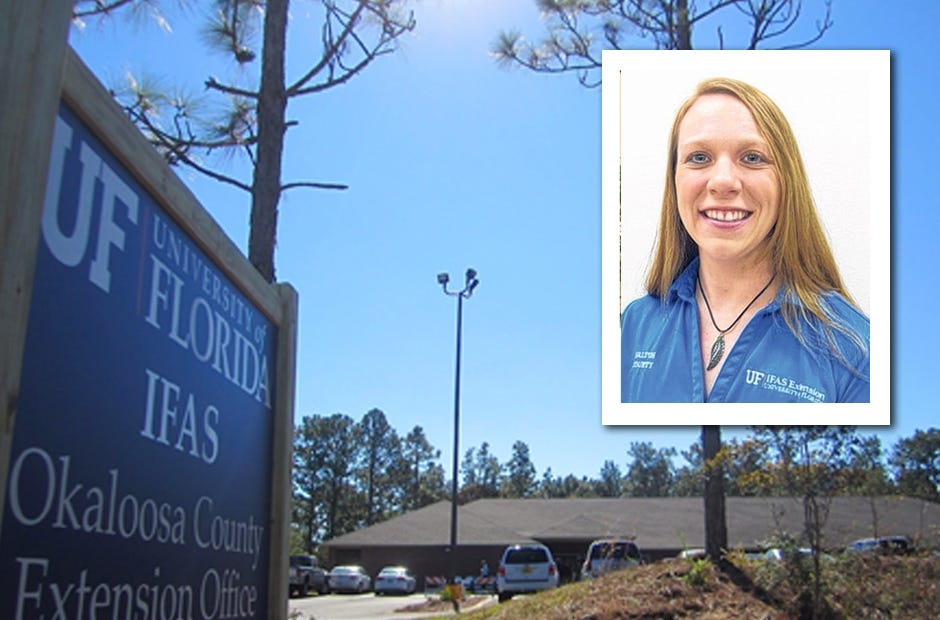
Jill Breslawksi is an agent at the University of Florida's Institute of Food and Agricultural Sciences Extension office in Crestview.

Being prepared for a storm doesn’t just mean getting through it.

After a storm you must deal with the aftermath, and in order to do that, it is essential to have important documents on hand.

That paperwork should include:

•deeds

•rental agreements

•medical and home insurance policies

•prescription information

•birth, death, and marriage certificates

•passports

•driver’s licenses

•stocks and bonds

These are all necessary documents you may need in order to begin the “clean-up” process.

These documents should be kept in a safe place, such as a lock box or safe, in the event you need to grab and go. There may be no time to collect documents before a storm hits housing.

Original documents should be kept in a waterproof container. This can be as simple as a sealed bag. Copies can be backed up onto a CD or DVD, removable drive, or stored on an online back-up drive. It may be a good idea to give an additional copy to a trusted family member or relative for safe keeping. Safe deposits are another option, but usually have a fee associated with them. Still, it's a small price to pay.

In addition to securing your financial documents, don’t forget to also collect at least three days’ worth of the following basic items for storm survival:

•water — a minimum of one gallon per person per day

•food — canned foods that require little or no cooking are ideal

•manual can opener

•bedding

•clothing and rain gear

•equipment for the elderly or special needs residents

•first aid kit and medications

•toiletries — toilet paper, toothbrushes, hand sanitizer etc…

•radio and extra batteries

•telephones — keep fully charged, and an extra battery on hand.

•cash — ATMs or credit card machines may not be in working order

•flashlight

•pet food, leashes, carriers,etc.

•books or games for the kids

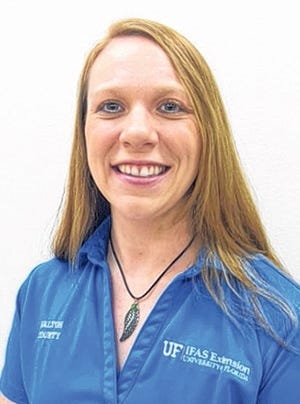
Contact me, Jill Breslawski, at 689-5850 or jbreslawski@ufl.edu, or visit http://bit.ly/ifashurricaneprep for more detailed information.

Jill Breslawski is an agent at the University of Florida's Institute of Food and Agricultural Sciences Extension office in Crestview.

This article originally appeared on Crestview News Bulletin: Don't be caught off guard — storm preparation tips

Include evacuation plans, pets in hurricane preparations

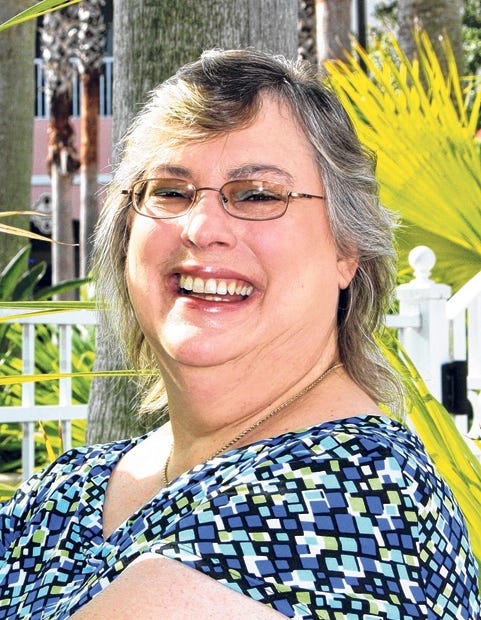
Janice Lynn Crose, a former accountant, lives in Crestview with her husband, Jim; her two rescue collies, Shane and Jasmine; and two cats, Kathryn and Prince Valiant.

We have been very fortunate in Northwest Florida to have no major hurricanes for the past 10 years. Things have changed this year and we are being hit with two hurricanes back to back, Irma and Jose.

By the time you read this article, Irma will have undoubtedly hit and Jose will be upon us. It is always good to be prepared.

Some of these tips should be done as soon as a hurricane is forming across the Atlantic.

•Have an evacuation plan. Know where you will go. Have phone numbers available to hotels in the area you wish to evacuate to and make reservations.

•Make sure your homeowner's insurance is up to date.

•Have full tanks of gas in your cars.

•Have some cash handy.

•Have your cell phone chargers in a bag ready to go. Keep your phones charged.

•Have your essential papers in a waterproof zippered bag: insurance policies, birth certificates, passports, banking information, the deed to your home, etc.

•Have plenty of bottled water. The rule of thumb is 1 gallon of water per person and per pet each day.

•Have plenty of pet food, whether you stay home or evacuate.

•Have canned food for your family and a hand-operated can opener.

•Have a small propane stove and plenty of propane to cook food.

•Have diapers, formula and baby food on hand for your little ones.

•Have working flashlights and plenty of batteries.

•Fill your bathtubs with water for washing and flushing.

•Have your prescriptions filled and in zippered bags for easy transporting.

•Take your jewelry, cameras and other valuables with you.

•If you are told to evacuate, take your kids and pets and leave. It is for your safety.

•Never leave your pets behind. They cannot fend for themselves.

Once the storm has passed, you may wish to volunteer to help those who are displaced by the storm. People will be needed to pass out supplies, prepare and serve food, feed pets and so on.

Many churches will need volunteers to deal with those in need, so be compassionate.

Remember, but for the grace of God we could be in that situation.

Janice Lynn Crose, a former accountant, lives in Crestview with her husband, Jim; her two rescue collies, Shane and Jasmine; and two cats, Kathryn and Prince Valiant.

This article originally appeared on Crestview News Bulletin: Include evacuation plans, pets in hurricane preparations

Motorcycle club sets cancer awareness fundraiser

A Crestview poker run is open to motorcyclists, car and truck drivers. [Pixabay.com]

CRESTVIEW — The Wingmen Motorcycle Club of Northwest Florida will have its third annual Emerald Coast Breast Cancer Awareness Poker Run. All proceeds go the American Cancer Society.

The event is open to the public. Motorcyclists, car and truck drivers are welcome to participate. It starts at 9 a.m. Oct. 14 at Hooters restaurant, 180 Cracker Barrel Drive, Crestview.

Cost is a $20 donation and $10 per extra hand. Cash prizes will be awarded and a 50/50 raffle is part of the fundraiser.

Participants will also travel to The Edge in Niceville from 10 a.m. to noon; Crestview Amvets Post 35 from 1-2 p.m.; and Crestview Veterans of Foreign Wars Post 5450 from 3-4 p.m. The final stop is 4 p.m. to midnight at the Wingmen's club house at 160 Cayson Ave., Crestview, where Juke Joint Willie will provide live music.

Contact Joe Hernandez, 910-689-6901, for more information.

Editor's Note: An earlier version of this article did not include Joe Hernandez's area code. 


This article originally appeared on Crestview News Bulletin: Motorcycle club sets cancer awareness fundraiser

error: Content is protected !!