Please ensure Javascript is enabled for purposes of website accessibility
Skip to main content
Advertisement

COVER STORY: Auburn couple's marriage is built to last

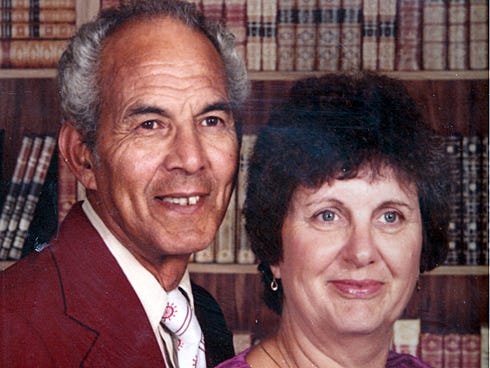
Manuel and Bobbie Andujar, of the nearby Auburn community — pictured three years ago — have endured separation from war, family tragedies and property loss, but divorce was never an option, they said.

CRESTVIEW — When Manuel and Bobbie Andujar wed in 1948, friends forecast a short union.

"To tell you the truth, some of our friends said we would not last over a month," Manuel, a resident of the nearby Auburn community, said. "That was just their way of thinking."

That wasn't an option once vows were exchanged, Bobbie, a Guntersville, Ala., native, said.

"When you get married, you can't just up and run and get a divorce," she said. "My idea was it had to work out."

So it has, for more than 65 years, as the couple raised three boys and a girl, and weathered separation from war, family tragedies, sickness and property loss.

Full story in the Feb. 15-18 edition!

This article originally appeared on Crestview News Bulletin: COVER STORY: Auburn couple's marriage is built to last

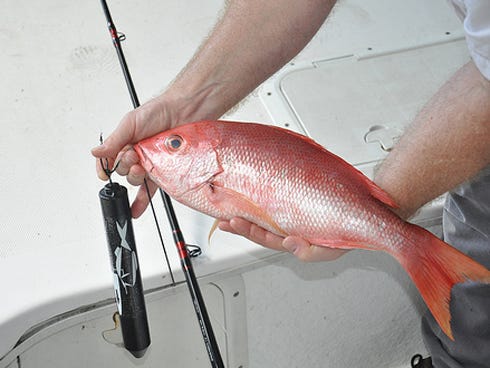
FWC proposes 2014 Gulf recreational red snapper season

The Florida Fish and Wildlife Conservation Commission proposed 2014 Gulf recreational red snapper season dates in state waters. This proposed season will be brought back before the Commission for final approval at its April 15-17 meeting in Tallahassee.

The 2014 proposed season, if approved in April, would be 52 days long, starting the Saturday before Memorial Day, which is May 24 this year, and remaining open through July 14, closing July 15. The commission could choose to change the season length and dates at the April meeting. Starting the season the Saturday before Memorial Day could increase recreational fishing opportunities for anglers by giving them the chance to fish for red snapper in state waters during the holiday weekend.

The federal season is scheduled to be 40 days long, starting June 1 and remaining open through July 10. This season is subject to change if NOAA Fisheries data indicate that the recreational red snapper quota will be caught before or after the end of the federal season.

State waters in the Gulf are from shore to 9 nautical miles. Federal waters extend from where state waters end out to about 200 nautical miles.

Visit the FWC website to learn more about commission agenda items, or, for more on recreational red snapper fishing in the Gulf of Mexico, click on “Saltwater,” “Recreational Regulations” and “Gulf Snapper.”

This article originally appeared on Crestview News Bulletin: FWC proposes 2014 Gulf recreational red snapper season

EXTENSION CONNECTION: Help save the Florida beach mouse's habitat

Many animals — notably, the sea turtle — are associated with Florida's coastal habitats. However, few people get a chance to see a tiny, nocturnal beach mouse that depends on the coastal dune system.

The Florida Panhandle's beach mouse subspecies include the St. Andrew beach mouse, Choctawhatchee beach mouse, Santa Rosa beach mouse and the Perdido Key beach mouse.

Beach mice use primary and secondary dunes for food, water, cover and raising young. They often have many burrows throughout the dunes, and forage on seeds, beach plants' fruits and insects. 

During the night, they make several trips in and out of their burrows to find and cache food, which also helps with seed dispersal in the dunes.

Due to loss of their primary and secondary dune habitats, all beach mice subspecies — except for one — are classified threatened or endangered. Most of the Santa Rosa beach mouse's habitat is protected within Santa Rosa Island's conservation lands. 

Locally, many agencies monitor beach mice populations. Currently, studies are being conducted on the Santa Rosa and Choctawhatchee beach mouse. 

Three state agencies just concluded a five-day trapping effort on the Choctawhatchee beach mouse in south Walton County to evaluate populations. They aimed to study movement in heavily beach mice-populated areas and non-native predators' — specifically feral cats, foxes and coyotes — effects on those populations. 

This follows a 2011 effort that introduced 50 beach mice from the Topsail Hill Preserve State Park population into the Grayton Beach State Park population. This was to boost the mice's numbers in that area and expand that subspecies' gene pool. Data from the current effort are still being analyzed, but positive results are expected due to healthy beach mice being found.

Parks and other public lands are important for the preservation of beach mice and other coastal dune species that use similar habitats. 

Brooke Saari is an agent at the University of Florida's Institute of Food and Agricultural Sciences Extension office in Crestview.

This article originally appeared on Crestview News Bulletin: EXTENSION CONNECTION: Help save the Florida beach mouse's habitat

Anglers have more options to maximize released fish survival rates

Example of a dehooking device.

Florida anglers now are no longer required to have and use a venting tool when fishing for reef fish such as snapper and grouper in Gulf of Mexico state waters. Removal of this rule means anglers will have the freedom to determine how to best maximize survival of released reef fish using devices they feel are appropriate, depending on the circumstances.

Maximizing post-release survival of fish is important in marine fisheries management, because it means more fish survive to potentially reproduce and be harvested in the future.

Venting tools are hollow, sharpened instruments (see picture) that provide one way to treat barotrauma, a condition that occurs when fish are brought quickly to the surface from deep water. The change in pressure from depth to surface can cause gases within the fish’s swim bladder to expand, which can damage internal organs and reduce the likelihood a fish will survive when returned to the water.

Venting allows gases to escape from a fish’s body cavity so the fish can swim back down to depth. While they are still a useful way to increase chances of fish survival after release, fish do not always need to be vented to survive upon release.

Descending devices, which send fish back down to deeper waters, are another, more recently developed alternative to venting that also can be used now to increase survival rates among fish with barotrauma.

The requirement to have a venting tool was removed during the Florida Fish and Wildlife Conservation Commission’s (FWC) Nov. 21 meeting, making state regulations consistent with rules in federal waters.

Venting tools are not required in Atlantic state or federal waters.

The use of non-stainless steel, non-offset circle hooks and dehooking devices are still required in state and federal Gulf waters when fishing for reef fish. These tools minimize handling time for reef fish, which aids in survival of the fish upon release.

To learn more about recognizing barotrauma and venting tools, and what to do if a fish is suffering from barotrauma, go to the FWC website and click on “Saltwater Fishing,” “Recreational Regulations” and “Fish Handling” and look under “Tackle.” Information about reef fish gear rules is available under “Recreational Regulations.”

This article originally appeared on Crestview News Bulletin: Anglers have more options to maximize released fish survival rates

40 percent of area population could be carrying MRSA bacteria

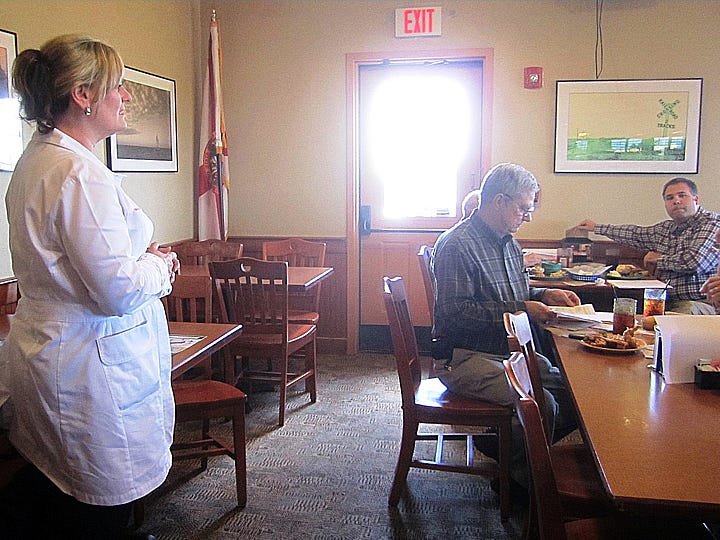
North Okaloosa Medical Center infection control nurse Lida Deonarine discusses methods to avoid spreading infections with members of the Crestview Area Ministerial Association.

CRESTVIEW — An estimated 40 percent of North Okaloosa residents carry an infectious bug on their skin, but taking preventive actions can curb its effects, according to local health care professionals. 

MRSA, the common name for Methicillin-resistant Staphylococcus aureus, is among infectious diseases spreading in the area, North Okaloosa Medical Center infection control nurse Lida Deonarine said.

Symptoms can include red bumps, which initially resemble acne and eventually can become painful, potentially life-threatening abscesses that require draining, according to the Mayo Clinic.

"MRSA is very easy to kill until it gets inside (the body) — then it gets very hard to kill because it is resistant to antibiotics," Deonarine said.

However, "it is not as scary as it might sound," she said. "Most of the time, if we (practice) good hand hygiene, we're not going to spread it. It's not airborne. It's just spread by contact."

Deonarine, speaking last week to the Crestview Area Ministerial Association,  said applying alcohol-based hand sanitizer helps prevent infection.

Flu admissions increase

NOMC is admitting more flu patients this year than in previous years, including 2009 when the H1N1 strain was first identified, Deonarine said.

Influenza, like MRSA, is an infection that can be spread by contact.

"It's not floating in the air. It's spread by secretions," Deonarine said, adding that people should cough in their elbow, rather than their hands, to prevent touching something and spreading the disease.

Everyone should keep a bottle of hand sanitizer in their car or purse for when they come in contact with commonly touched surfaces such as gas pump handles and door knobs, Deonarine said.

Take precautions — don't panic

The Rev. Joe Butryn, youth minister at Joy Fellowship, took the message in stride, acknowledging the importance of taking preventive measures while cautioning his colleagues about over-reacting to infectious bacteria's presence.

The Rev. Jim Vail of First Baptist Church of Baker agreed. For him, he said, the simple hand-sanitizing precaution Deonarine advised has been effective.

"After shaking hands after church, I always wash the fellowship off my hands," Vail joked.

About MRSA

Methicillin-resistant Staphylococcus aureus infection is caused by a staph bacteria strain that's become resistant to antibiotics that treat most staph infections. Applying alcohol-based hand sanitizer can help prevent spread of the disease.

Health care-associated MRSA infections typically are associated with invasive procedures, such as surgeries, intravenous tubing or artificial joints.

Community-associated MRSA is spread by skin-to-skin contact. At-risk populations include high school wrestlers, child care workers and people who live in crowded areas.

Source: The Mayo Clinic

How to be a good visitor

Here's how to prevent spreading infections when visiting someone in the hospital:

• Wash your hands before and after visiting the patient. Soap and hand sanitizer are in each NOMC room and in the hallways.

• Stay home if you are sick or have been sick in the past three days.

• Ask hospital staffers if it's safe to take children, food or flowers into the room

• Follow special precautions, if necessary, if the patient is on "isolation precautions"

• Don't contribute to the clutter by bringing too many patient belongings.

Source: North Okaloosa Medical Center

Email News Bulletin Staff Writer Brian Hughes, follow him on Twitter or call 850-682-6524.

This article originally appeared on Crestview News Bulletin: 40 percent of area population could be carrying MRSA bacteria


Crestview woman quits job, focuses on cooking

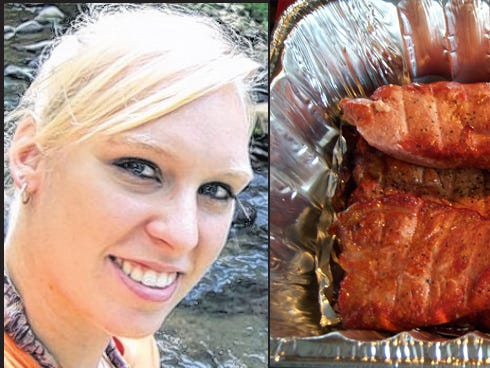
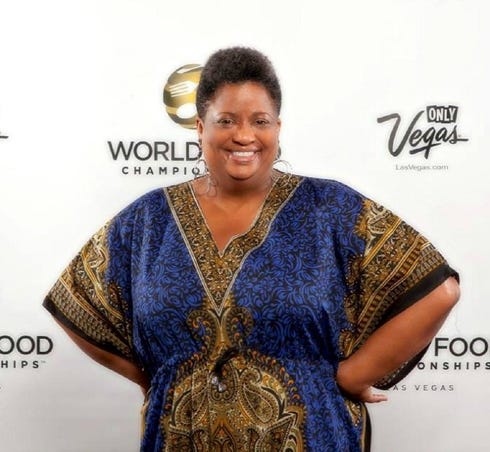
Crestview chef and frequent cooking contest winner Sherri Williams recently won a "Good Morning America" recipe competition with her Barbecue Pulled Pork Pepper Poppers.

CRESTVIEW — One of the community's top prize-winning home chefs has fared so well in nationwide competitions that she quit her job to make cooking her main focus.

"I wanted to concentrate on my cooking adventures," Sherri Williams said. "I'm an actual homemaker right now and I enjoy it."

Recently, she defeated hundreds of competitors from across the nation to win "Good Morning America's" Game Day Grub Contest with her Barbecue Pulled Pork Pepper Poppers.

"They are so good and they are so easy," Williams said. "You can make them the day before. Even if you don't eat pork you can use any kind of protein in them. You can use veggie crumbles or veggie cheese and they will still be just as good."

When area residents learned that a Crestview cook was a finalist in the contest, Williams' Facebook page, Cooking With Love and Passion, was swamped with "friend" requests.

"They were excited when they saw someone from Crestview was on 'Good Morning America,'" Williams said. "I've met a lot of friends from my cooking."

They can look forward to Williams' next nationwide appearance later this spring when she appears on the A&E network's World Food Championship, taped a couple months ago in Las Vegas.

Stymied by ice

An ice storm that struck the area closed Northwest Florida Regional Airport and precluded her being in ABC's Times Square TV studios for her moment of triumph.

"I didn't even get to go! It was crazy," Williams said. "I was looking forward to going. And of course, the show was pre-empted here. I got the link later on to see it on Facebook."

After her victory was announced, heralded by a squad of school-age cheerleaders running through the GMA set, Williams appeared on the show via a Skype link from her Crestview kitchen.

Williams joins her "foodie friends" in Cooking Contest Central, an Internet group that follows recipe contest opportunities. In fact, she competed against a friend on the GMA contest.

"We have a lot of the same friends in common," Williams said. "We were up against hundreds of people in the nation but we were against each other too. That was kind of hard."

Williams said she'll keep submitting recipes as cooking contests that tickle her fancy are announced, using Roy, her husband of 32 years, as her chief taste-tester and food critic.

"I'm at that age when I can do what I love to do, and that's cooking and sharing it with everybody else," Williams said.

Email News Bulletin Staff Writer Brian Hughes, follow him on Twitter or call 850-682-6524.

This article originally appeared on Crestview News Bulletin: Crestview woman quits job, focuses on cooking

Swordfish management expands fishing opportunities Feb. 13

Swordfish management is a success story. Overfished in the 1980s and ’90s, the swordfish stock has since been fully rebuilt, thanks to domestic and international conservation measures.

Recently, NOAA Fisheries Highly Migratory Species Division created a new open-access commercial swordfish fishery in federal waters to provide additional commercial swordfish harvest opportunities using gears that minimize bycatch.

The Florida Fish and Wildlife Conservation Commission (FWC) approved several changes to state rules recently, many of which will allow fishermen who participate in this new commercial fishery to land and sell their catch in Florida. Recently adopted changes will go into effect Feb. 13.

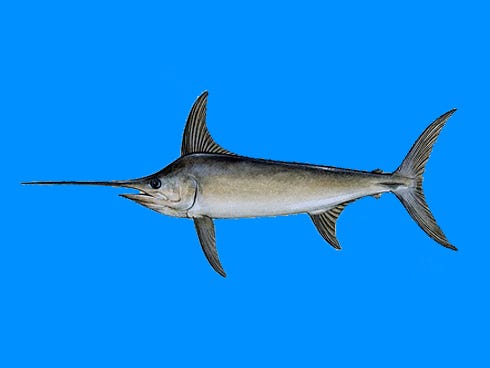
Several changes to state rules are also consistent with existing federal rules, including a change to the cleithrum-to-keel (see image below) minimum size limit for recreational and commercial swordfish harvest.

Changes affecting commercial harvest include:

•Designating swordfish as a restricted species.

•Exempting commercial harvesters who possess a Swordfish General Commercial permit or a Highly Migratory Species Charter/Headboat permit (when not on a for-hire trip) from the recreational bag and vessel limits. Permit holders must abide by HMS regional vessel limits.

•Allowing the sale of commercially caught swordfish under these permits.

•Closing state waters to commercial harvest if adjacent federal waters are closed.

•Requiring wholesale dealers purchasing swordfish to possess a valid federal Atlantic Swordfish Dealer permit. This change affects wholesale dealers in both the Atlantic and Gulf.

•Allowing transit of swordfish through state waters when harvested in federal waters with gear that is legal to use in federal waters.

Changes that affect commercial and recreational harvest:

•Modifying the minimum cleithrum-to-keel (CK) limit from 29 to 25 inches for all harvesters. The cleithrum is the bony area right behind the gill slit, and the keel is the horizontal ridge right before the tail fin (see photo). There is no change to the lower jaw fork length measurement also used when measuring swordfish.

 •Restricting gear to hook and line in state waters.

•Clarifying federal rule references.

Learn more about swordfish and other highly migratory species by visiting MyFWC.com/Fishing and click on “Saltwater,” “Recreational Regulations” and “Highly Migratory Species.”

This article originally appeared on Crestview News Bulletin: Swordfish management expands fishing opportunities Feb. 13

HOBO HOMEFRONT: Exploring Valentine's Day: a history

Greetings, neighbors! I'm writing from the big city of Atlanta.

This shows, if there was ever any doubt, that our community is among my top priorities. I traveled here this week to attend the 2014 Annual Training Conference for Region 1V Head Start Association. I’ve attended many seminars, with the key goals of strengthening community and family.

While I’m in awe of my surroundings, they reinforce my fondness and appreciation for our community. It's truly a wonderful experience, but I’m ready to be home!

For now, as I experience the unknown in Georgia, I think about other unknown things. Like Valentine's Day, the month's most commercialized event.

Here is some interesting history:

•Lupercalia, a pre-Roman ceremony from Feb. 13-15, involved men sacrificing a goat and dog, and whipping women with the hides. Woman would actually line up to be hit, believing the lashings would make them fertile. The brutal event included a matchmaking lottery in which young men drew women's names from a jar. The couple would be together a minimum of the festival's duration.

•According to legend, Roman Emperor Claudius Gothicus II ordered the beheading of Valentine, a priest and physician, for attempting to convert him to Christianity. The Catholic Church founded a Feb. 14 feast for drinking and exchanging trinkets celebrate the martyrdom.  

•In 1915, Hallmark cards of Kansas — then known as Hall Brothers — began mass producing Valentine’s Day cards. Since then, Cupid has taken focus, and gifts may have changed, but the drunken revelry and essences of fertility and love have remained part of the day.

It's interesting to see how things have changed over time. But let's get back to current events.

Laurel Hill School will be closed on Feb. 17 for Presidents Day. In party-planning news, we are trying to put together Valentine’s day celebrations at LHS and Head Start.

That's all for now!

Amber Kelley lives in Laurel Hill. Send news, comments, or donations for Maudy Carper's family to Hobo.homefront@gmail.com or P.O. Box 163, Laurel Hill, FL, 32567.

This article originally appeared on Crestview News Bulletin: HOBO HOMEFRONT: Exploring Valentine's Day: a history

Boston butts fundraiser set for Laurel Hill woman

LAUREL HILL — Katlyn "Katie" Free, a 2009 Laurel Hill School graduate, was a fierce competitor in basketball, softball and volleyball.

Free will need that competitive spirit as she faces her greatest challenge, awaiting a heart transplant at the Mayo Clinic in Jacksonville.

The Laurel Hill community is rallying around Katie and her family, offering emotional and financial support.

First Baptist Church of Laurel Hill and Laurel Hill School athletic department members will have a Boston butt sale from 3-6 p.m. Feb. 21 to raise funds for Katie. Orders are being taken for the $20 3- to 4-pound butts, which Jeff Jones will cook.

Keep reading to learn how to help>>

Laurel Hill baseball and junior varsity basketball coach Ronnie Smith, who coached girls basketball when Free was part of the program, said helping her and her family is fitting.

"We went to Ole Miss (for a basketball camp) when she was an eighth-grader and her daddy (Keith Free) got out and helped me raise money. Now it's my turn to turn around and give back to a family that has been so good to Laurel Hill."

The Rev. Mike McVay, pastor of First Baptist Church said, "Katlyn is one of ours at Laurel Hill School and the church as well. She is having a life change. This procedure is going to change her life completely."

Katie recently had open heart surgery to install a heart pump as she awaits a new heart, McVay said. Katie and her family will need to stay in Jacksonville for at least three months while they wait for her transplant.

And every bit of financial support helps, which is why, Smith said, he'll even deliver the Boston butts to Crestview if someone can't make it to Laurel Hill.

"If I need to deliver a Boston butt to Crestview, or even a truckload of Boston butts to Crestview, call me and I'll bring them to you after they are cooked," he said. "We will cook them on the honor system if someone orders one. They are so good I'll sell them."

Other fundraisers, including a March 8 yard sale and late-spring Gospel sing at the church, are in the works.

If Boston butts, yard sales and gospel sings aren't your thing, you can make a donation through the church, McVay said.

Just make sure you designate the donation for the Katlyn Free Fund.

HOW TO HELP

What: Katlyn Free fundraiser, Boston butt sale

When: 3-6 p.m. Feb. 21, across from Laurel Hill School, 8078 4th St., Laurel Hill

Cost: $20

Contact: Ronnie Smith, 652-4111 or 585-3503, or the Rev. Mike McVay, 519-0120

Email News Bulletin Sports Editor Randy Dickson, follow him on Twitter or call 850-682-6524.

This article originally appeared on Crestview News Bulletin: Boston butts fundraiser set for Laurel Hill woman

'New Works,' local artists: Northwest Florida Ballet premieres works by local choreographers

Northwest Florida Ballet company members Ayaka Okubo and Timothy Knoll, Katia Garza and Billy Blanken, Catherine Grimley and J. Ryan Carroll, Sabrina Lobner and Jason Bailey will perform during The New Works Project.

Beginning today, the Northwest Florida Ballet premieres "The New Works Project," ballets by three local choreographers, in a specially created black box theatre. Tickets for the Fort Walton Beach studio venue are limited.

An Okaloosa Public Arts exhibit — featuring artists' interpretations of the Northwest Florida Ballet's 2013 productions "A Midsummer Night's Dream" and "Afterglow" — accompanies the performances.

"The Northwest Florida Ballet has long been known for its stunning classical repertoire," the company's marketing assistant Megan Fontaine said. "What many may not realize, however, is that the ballet is also a center for creation and innovation."

The new works display three of the ballet school faculty members' choreography talents.

Jazz Rozer's "hi-er-ar-chy" "tells the story of human aspiration from birth and maturation, leading towards awareness, self-actualization and potential," Fontaine said. Rozer teaches jazz and hip hop at the NFB.

Kelly Murdock's "Super Mario MG" explores what happens when Shigeru Miyamoto’s Super Mario Brothers combine with renowned choreographer Martha Graham’s trademark technique.

"Life's Rich Experience," NFB associate director Sharon Allen's first composition, "explores thoughtful emotions and lyrical expressions of dance movement with the human connection to the essence of our earth, wind and water."

"Atomic Trio," another dance by Allen, is choreographed to music from Radiohead lead vocalist Thom Yorke's "Atoms for Peace," and explores the repetitive cycles of life.

Want to go?

WHAT: The New Works Project

WHO: Northwest Florida Ballet premiere of works by three local choreographers

WHEN: 7:30 p.m. Feb. 21; 2:30 and 7:30 p.m. Feb. 22; 2:30 Feb. 23

WHERE: NWF Ballet Studio, 310 Perry Ave., Fort Walton Beach.

DETAILS: Tickets $28 adult, $14 children 12 and under. Tickets are limited and available at the ballet organization's website, or by phone at 664-7787.

Email News Bulletin Staff Arts and Entertainment Editor Brian Hughes, follow him on Twitter or call 850-682-6524.

This article originally appeared on Crestview News Bulletin: 'New Works,' local artists: Northwest Florida Ballet premieres works by local choreographers

error: Content is protected !!